
Chapter 5 DNA Gene Expression and Biotechnology q
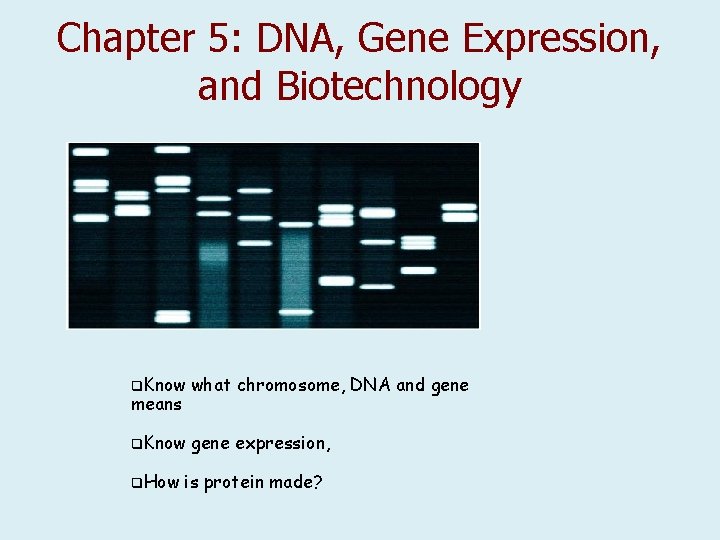
Chapter 5: DNA, Gene Expression, and Biotechnology q. Know what chromosome, DNA and gene q. Know gene expression, means q. How is protein made?
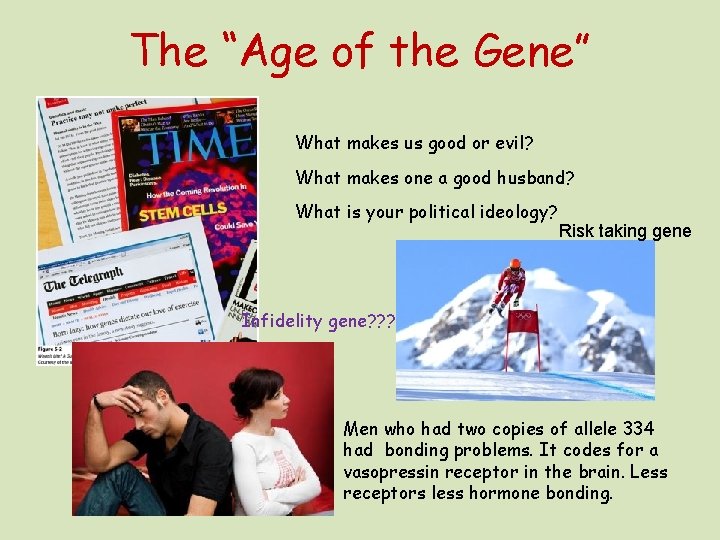
The “Age of the Gene” What makes us good or evil? What makes one a good husband? What is your political ideology? Risk taking gene Infidelity gene? ? ? Men who had two copies of allele 334 had bonding problems. It codes for a vasopressin receptor in the brain. Less receptors less hormone bonding.
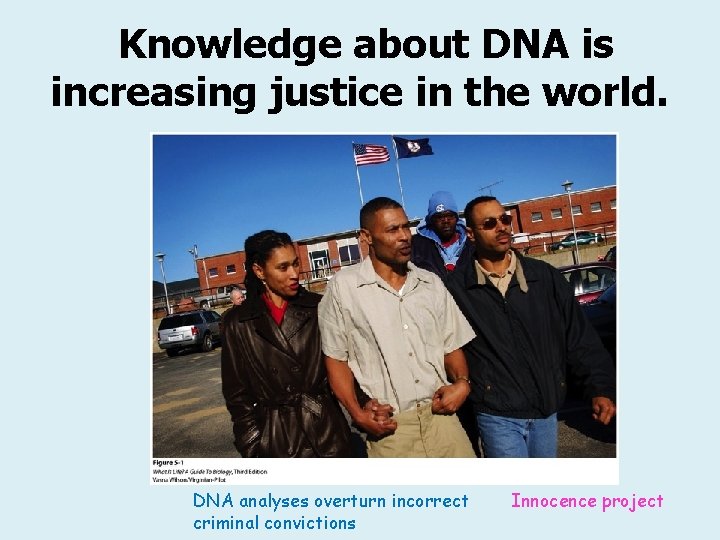
Knowledge about DNA is increasing justice in the world. DNA analyses overturn incorrect criminal convictions Innocence project
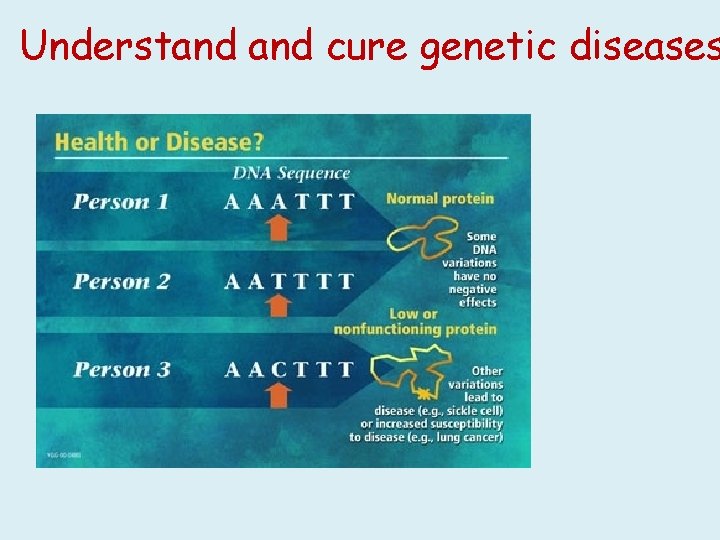
Understand cure genetic diseases
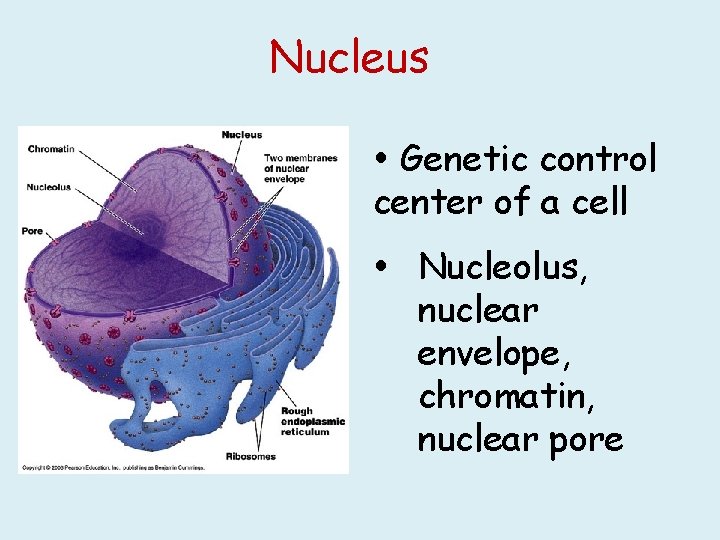
Nucleus Genetic control center of a cell Nucleolus, nuclear envelope, chromatin, nuclear pore
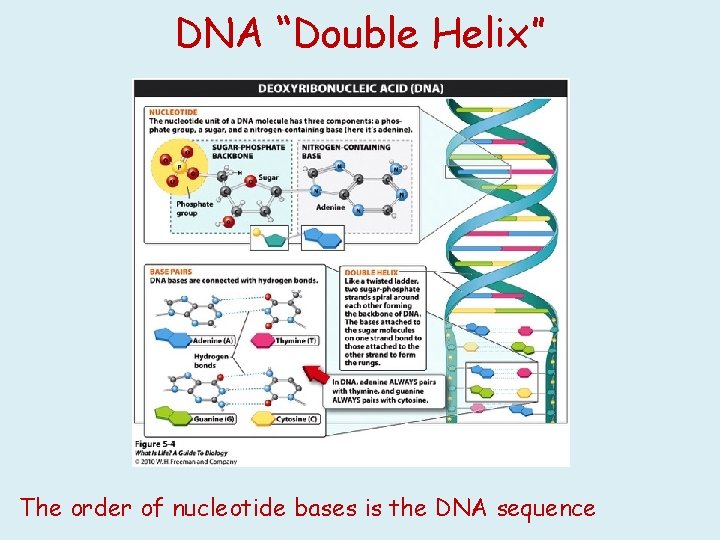
DNA “Double Helix” The order of nucleotide bases is the DNA sequence
The DNA of humans differs from chimpanzee in its ____ A. Sugar group B. Phosphate group C. Base sequence D. All of the above
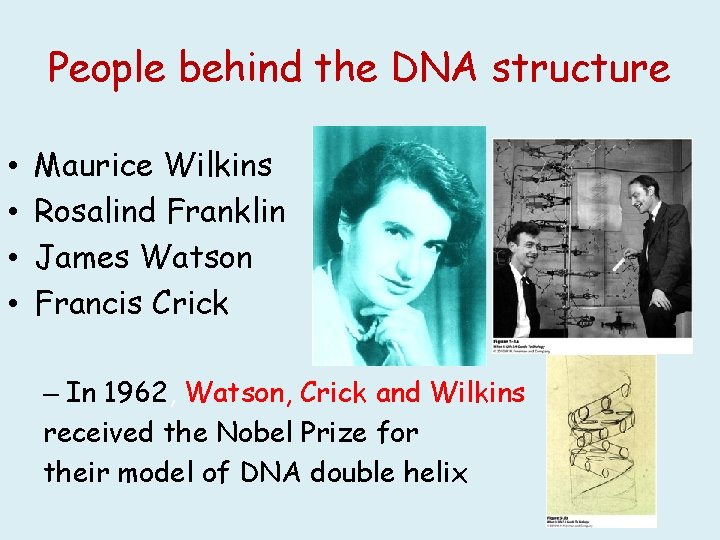
People behind the DNA structure • • Maurice Wilkins Rosalind Franklin James Watson Francis Crick – In 1962, Watson, Crick and Wilkins received the Nobel Prize for their model of DNA double helix
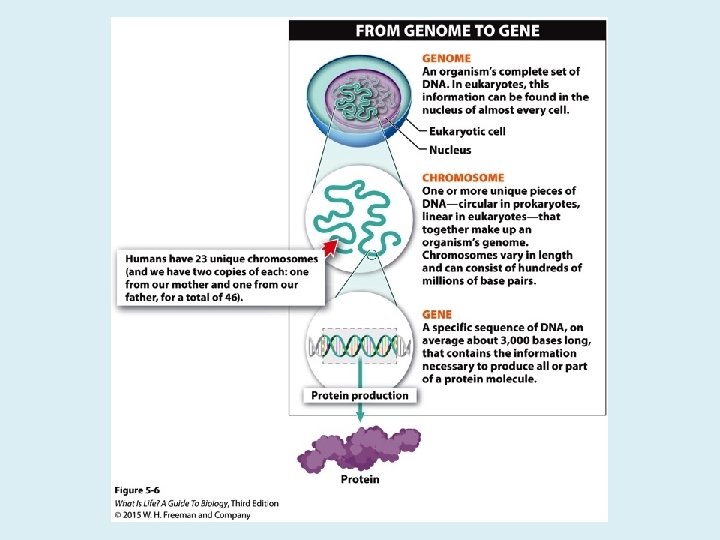
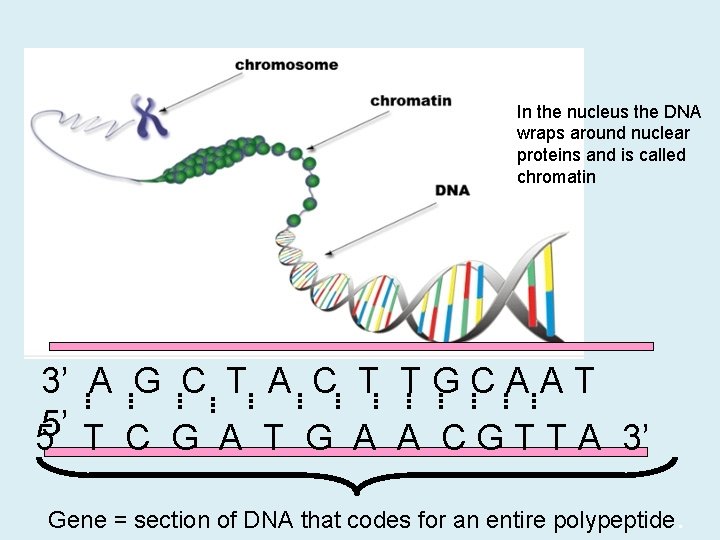
In the nucleus the DNA wraps around nuclear proteins and is called chromatin 3’ A G C T A C T T G C A A T 5’ T C G A T G A A C G T T A 3’ 5’ Gene = section of DNA that codes for an entire polypeptide.
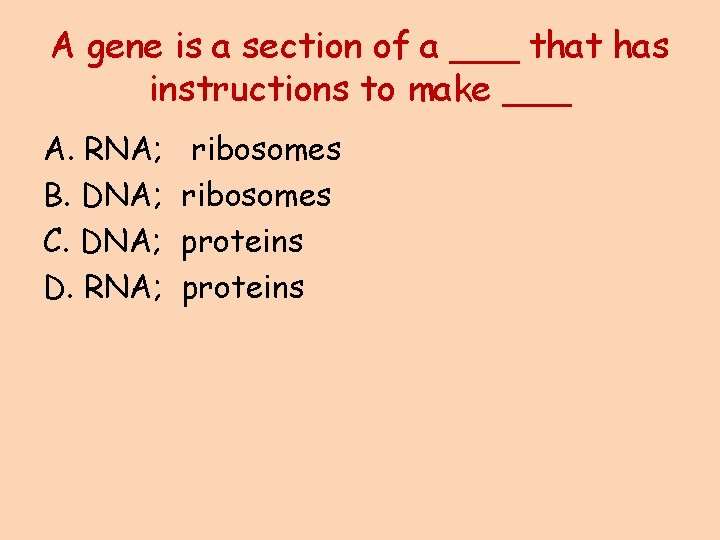
A gene is a section of a ___ that has instructions to make ___ A. RNA; B. DNA; C. DNA; D. RNA; ribosomes proteins
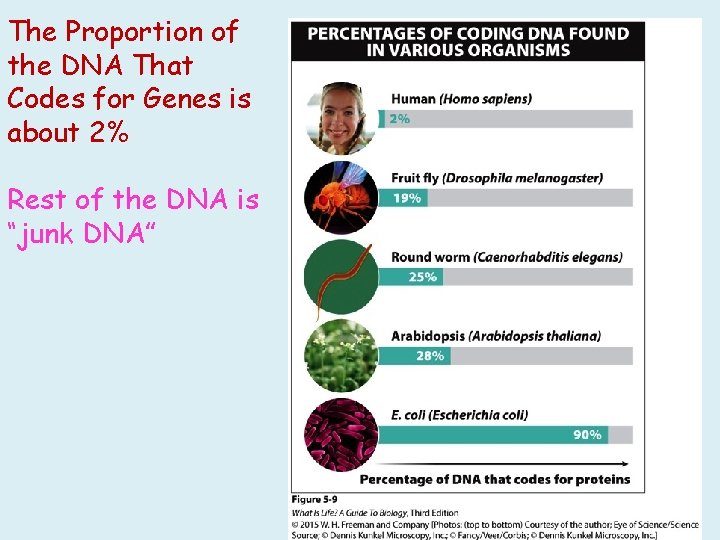
The Proportion of the DNA That Codes for Genes is about 2% Rest of the DNA is “junk DNA”
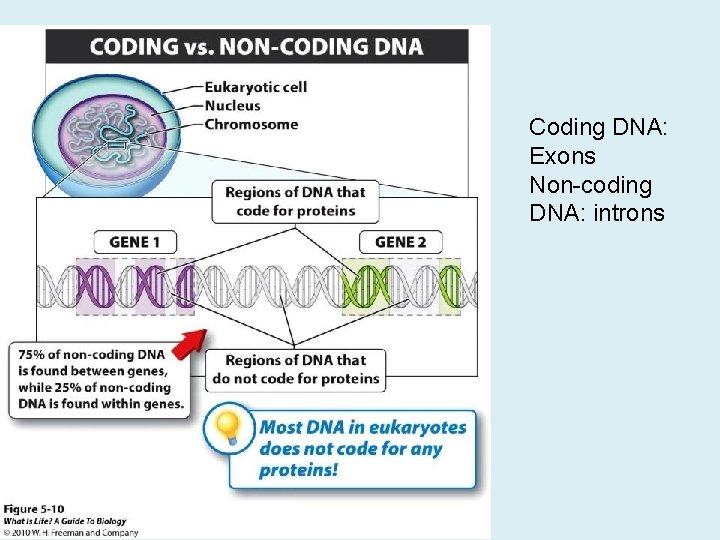
Coding DNA: Exons Non-coding DNA: introns
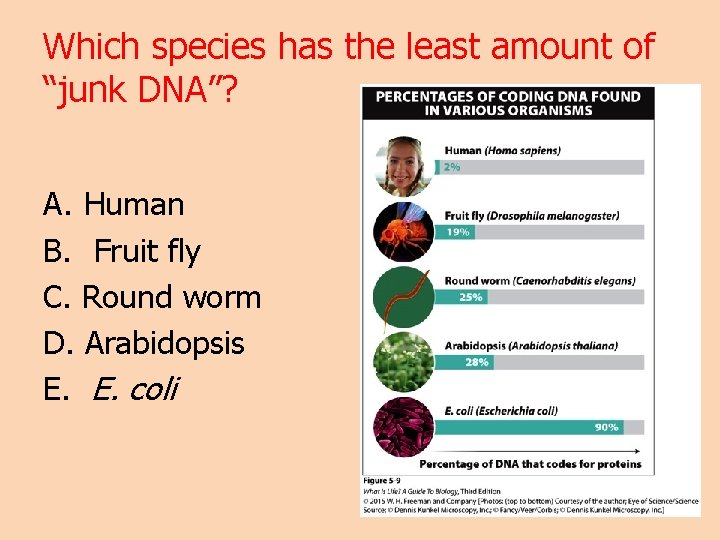
Which species has the least amount of “junk DNA”? A. Human B. Fruit fly C. Round worm D. Arabidopsis E. E. coli
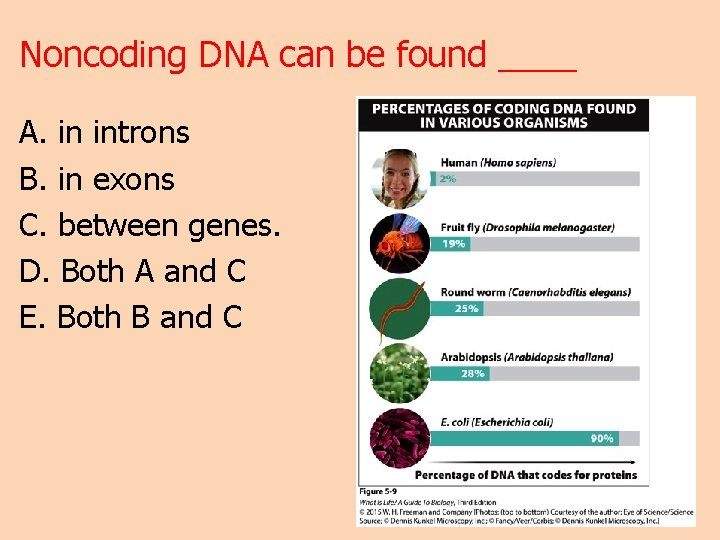
Noncoding DNA can be found ____ A. in introns B. in exons C. between genes. D. Both A and C E. Both B and C
ENCODE Project: finds that junk DNA is not really junk but has a regulatory function Nature Paper Finds "Biochemical Functions for 80% of the Genome” Sept 5, 2012 ENCyclopedia Of DNA Elements (ENCODE) What is the purpose of the remaining 98% of the genes? Answer: More than 80% of this remaining non -gene component of the genome has a role in regulating gene activity.
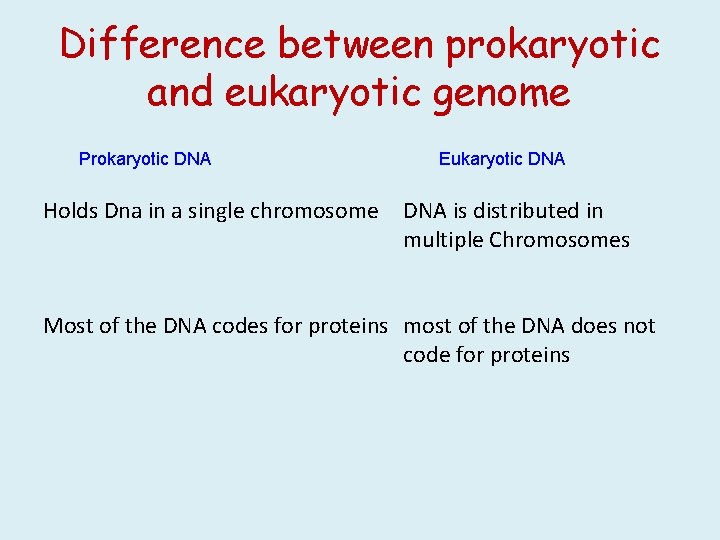
Difference between prokaryotic and eukaryotic genome Prokaryotic DNA Holds Dna in a single chromosome Eukaryotic DNA is distributed in multiple Chromosomes Most of the DNA codes for proteins most of the DNA does not code for proteins
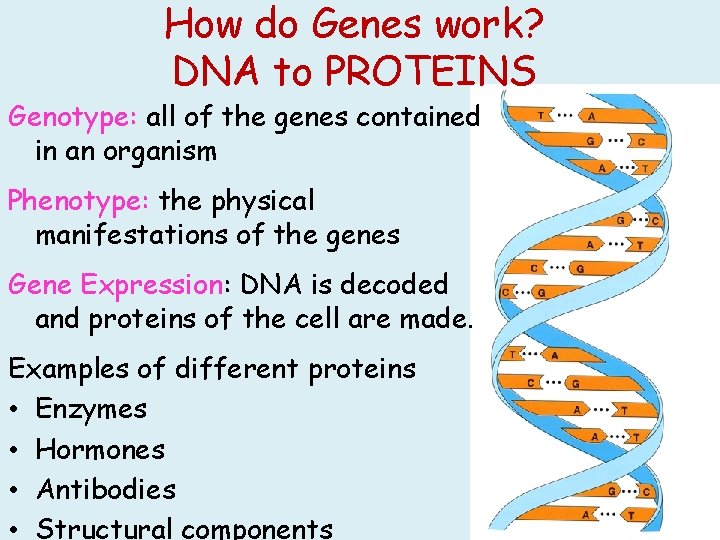
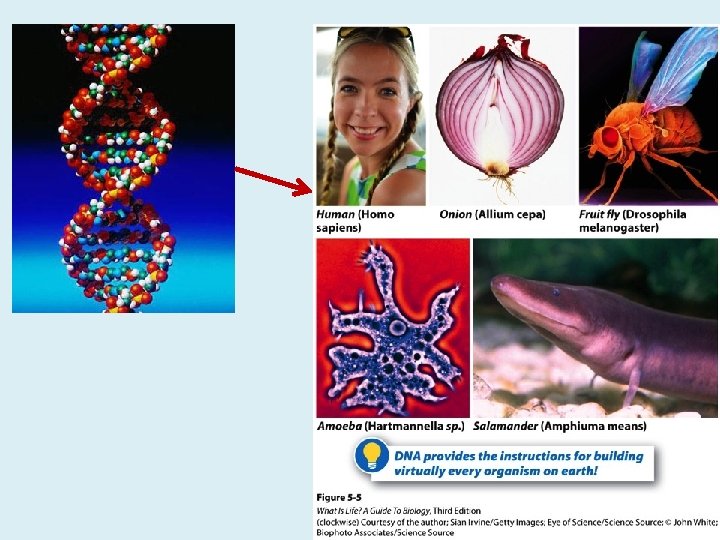
How do Genes work? DNA to PROTEINS Genotype: all of the genes contained in an organism Phenotype: the physical manifestations of the genes Gene Expression: DNA is decoded and proteins of the cell are made. Examples of different proteins • Enzymes • Hormones • Antibodies • Structural components
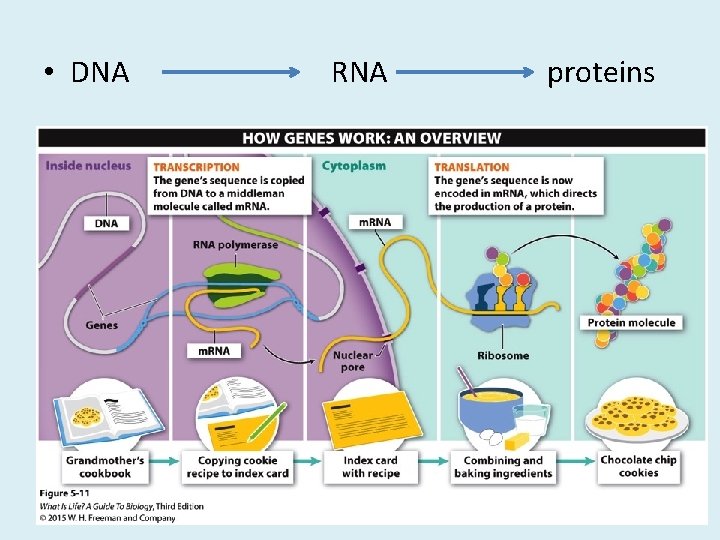
• DNA RNA proteins
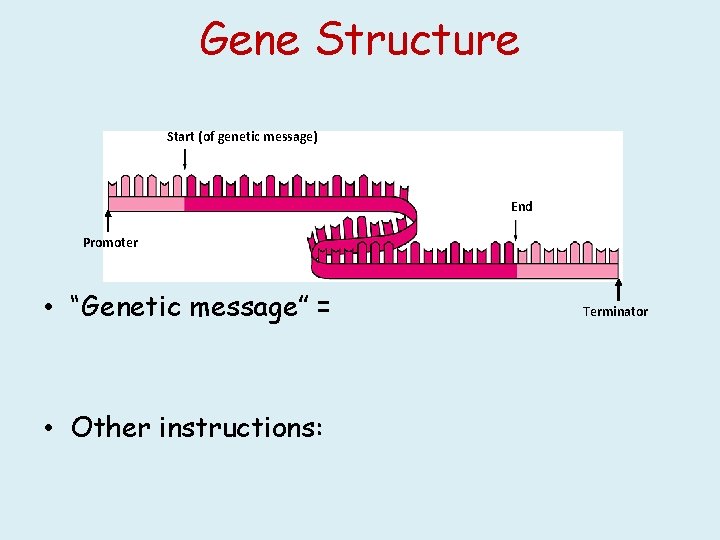
Gene Structure Start (of genetic message) End Promoter • “Genetic message” = • Other instructions: Terminator
What would be the easiest way to get something OUT of the nucleus, into the cytoplasm? A. through vesicles B. through pores C. through the cytoskeleton
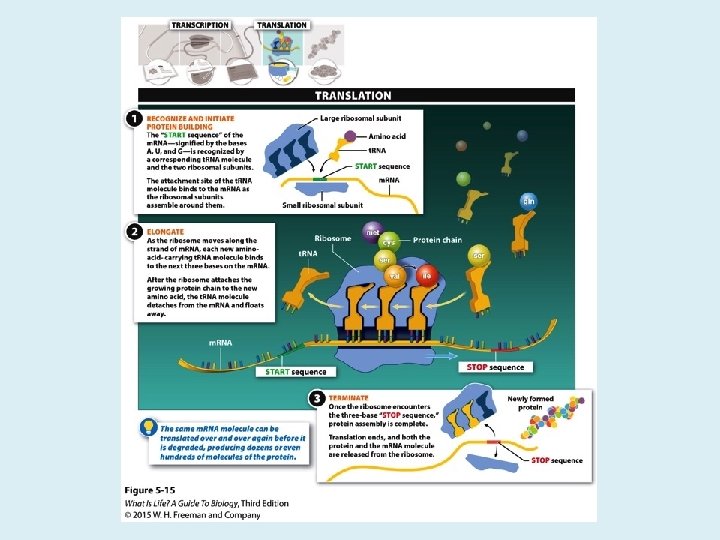
Building organisms: information in DNA directs the production of the molecules that make up an organism. The process by which this information is used to build an organism occurs in two main steps: q transcription, in which a copy of a gene’s base sequence is made, and q translation, in which that copy is used to direct the production of a polypeptide.
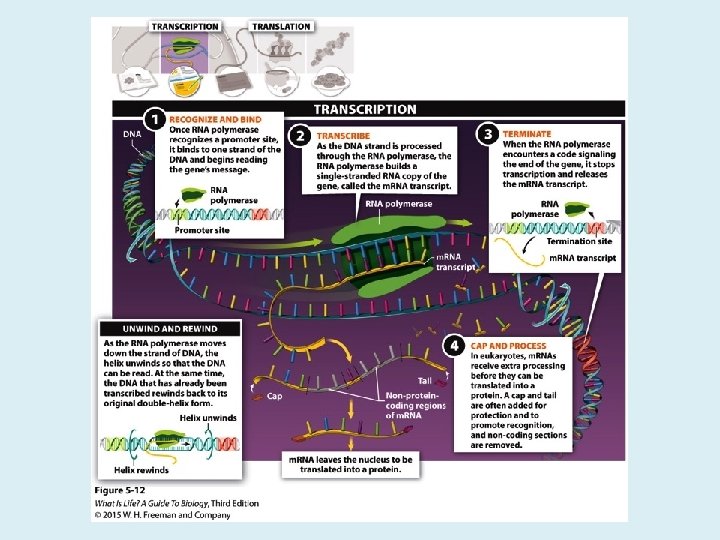
If DNA contains the sequence GTA, what sequence will RNA polymerase build? A. B. C. D. GTA GUA CAU CAT
Types of RNA • m. RNA : messenger RNA – carries the genetic code • t. RNA : transfer RNA – carries amino acids to the ribosomes • r. RNA : ribosomal RNA – along with ribosomes help make proteins
In translation, the m. RNA copy of the information from DNA is used to build functional molecules Several ingredients must be present in the cytoplasm for translation to occur. q Free amino acids q Ribosomal units q Transfer RNA
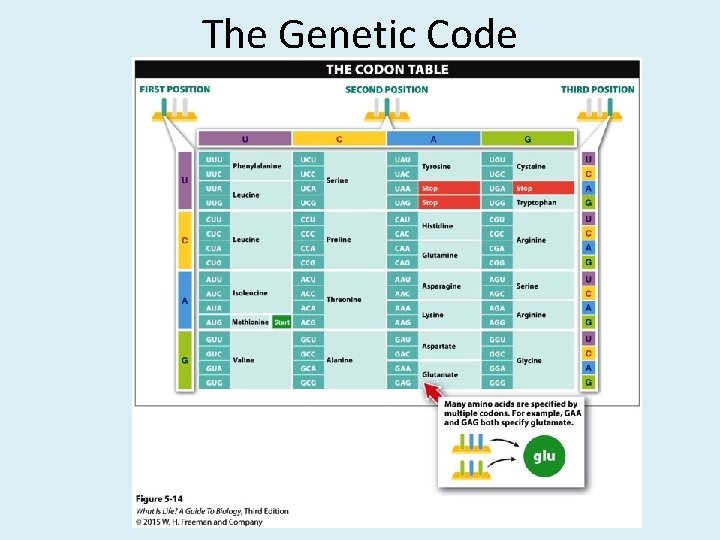
The Genetic Code
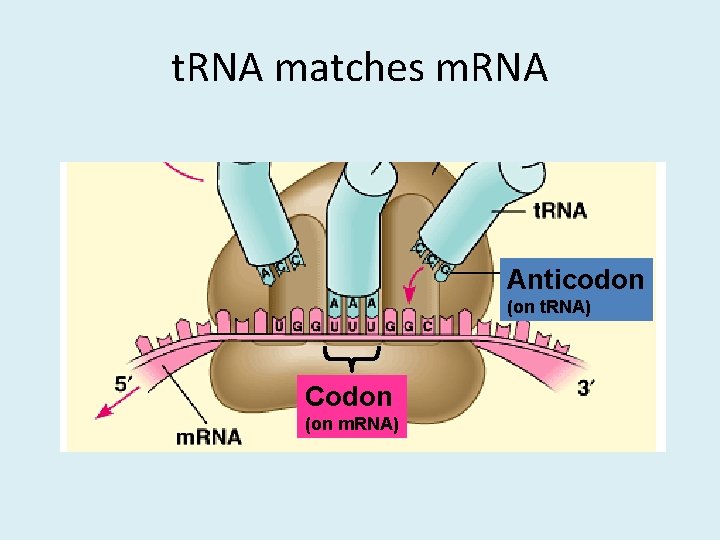
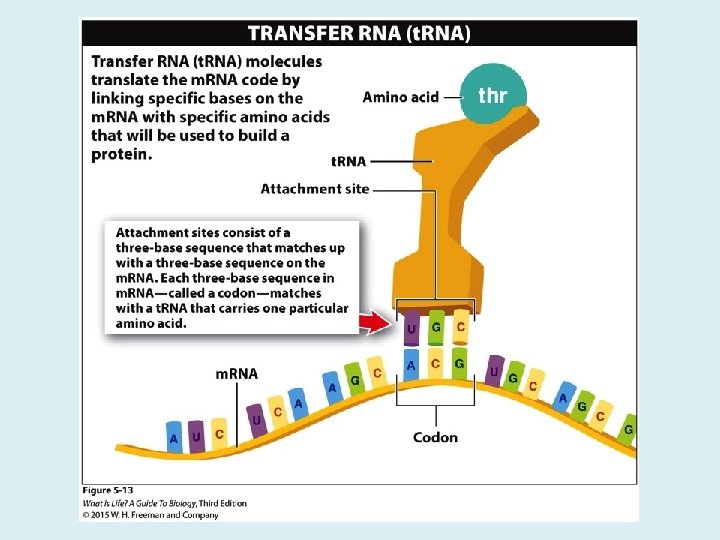
t. RNA matches m. RNA Anticodon (on t. RNA) Codon (on m. RNA)
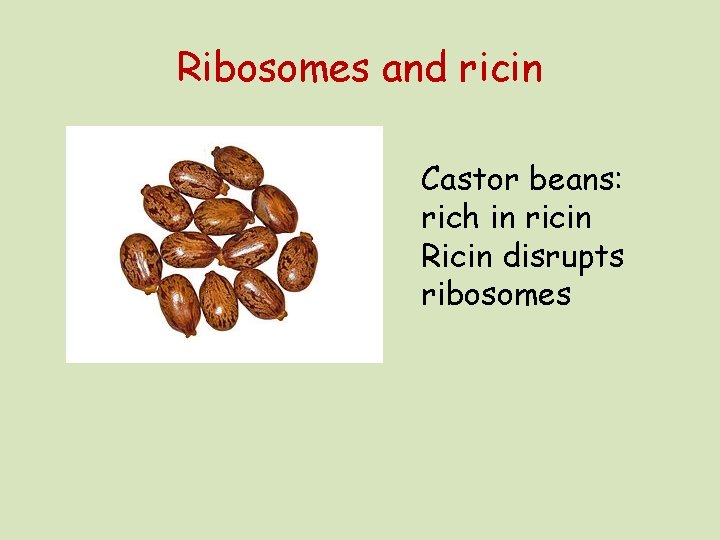
Ribosomes and ricin Castor beans: rich in ricin Ricin disrupts ribosomes
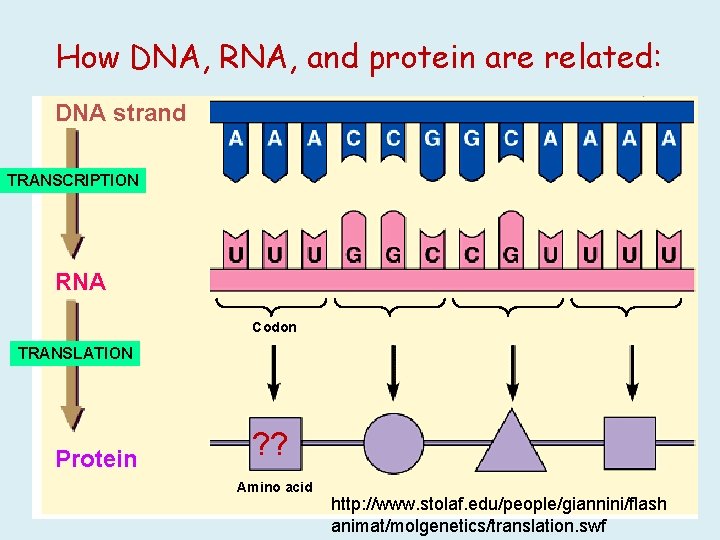
How DNA, RNA, and protein are related: DNA strand TRANSCRIPTION RNA Codon TRANSLATION Protein ? ? Amino acid http: //www. stolaf. edu/people/giannini/flash animat/molgenetics/translation. swf
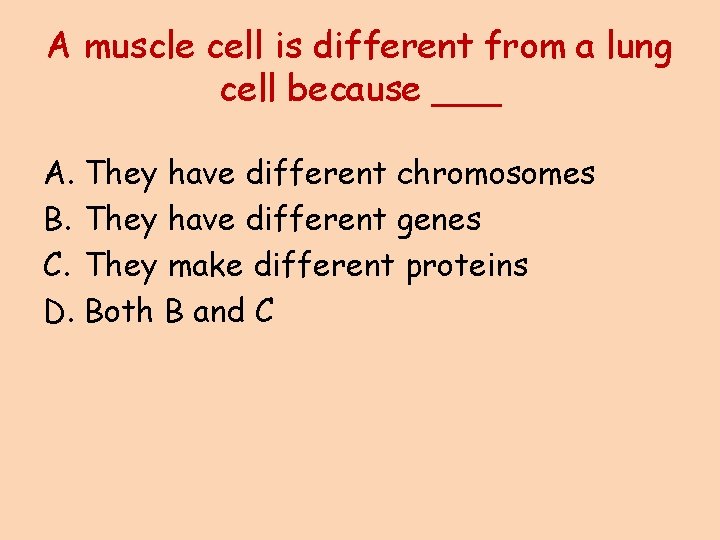
A muscle cell is different from a lung cell because ___ A. They have different chromosomes B. They have different genes C. They make different proteins D. Both B and C
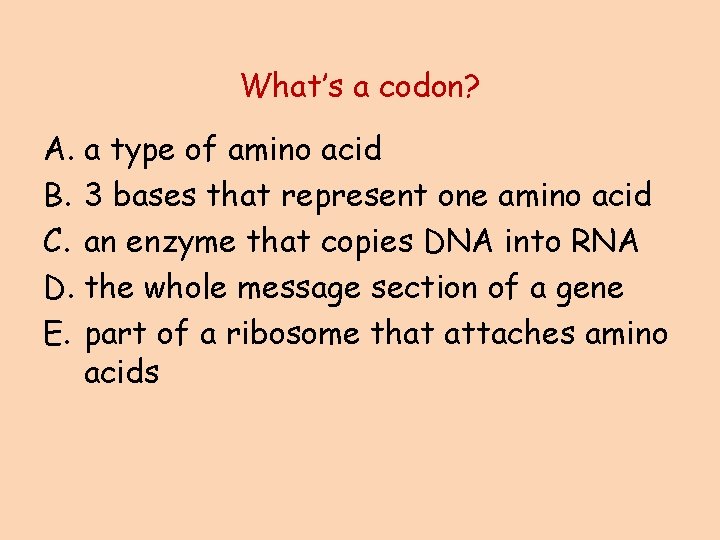
What’s a codon? A. a type of amino acid B. 3 bases that represent one amino acid C. an enzyme that copies DNA into RNA D. the whole message section of a gene E. part of a ribosome that attaches amino acids
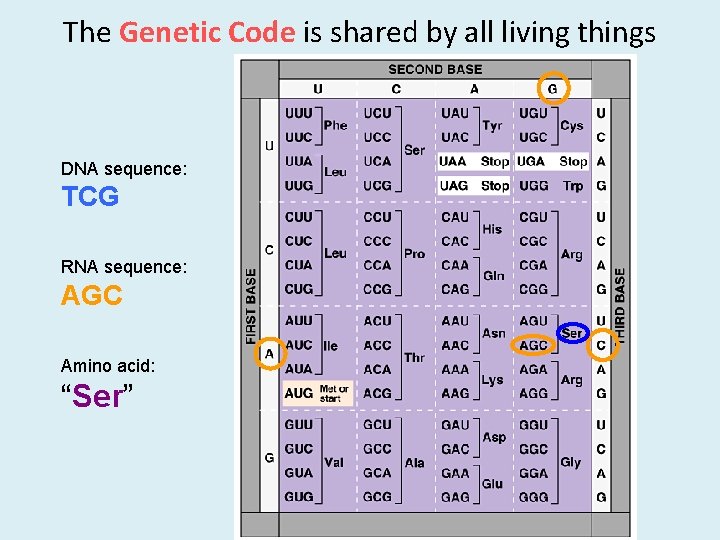
The Genetic Code is shared by all living things DNA sequence: TCG RNA sequence: AGC Amino acid: “Ser”
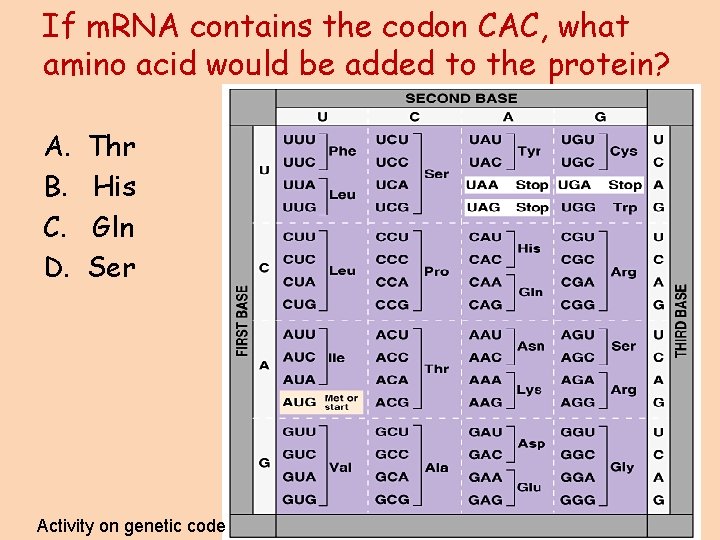
If m. RNA contains the codon CAC, what amino acid would be added to the protein? A. B. C. D. Thr His Gln Ser Activity on genetic code
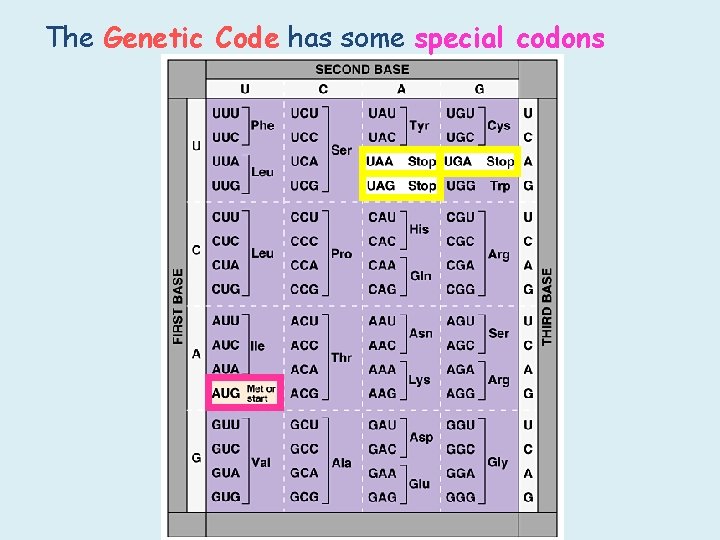
The Genetic Code has some special codons
What would be the first amino acid incorporated in all proteins? (look at the genetic code handout) A. Serine (Ser) B. Leucine (leu) C. Methionine (met) D. Alanine (ala)
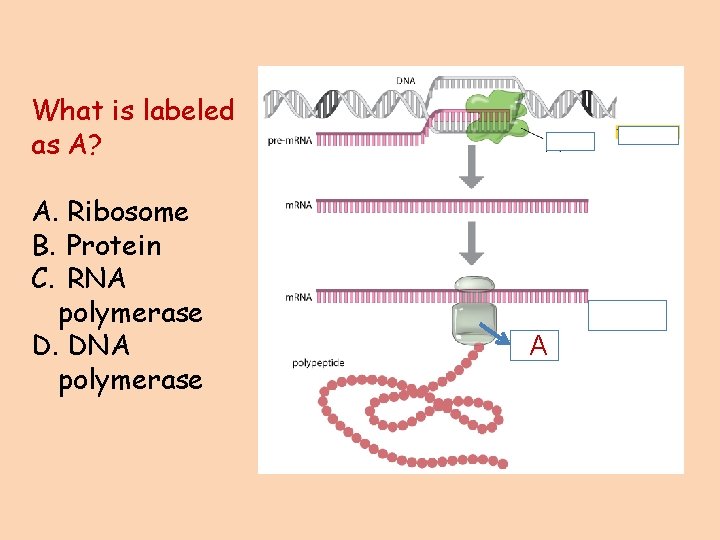
What is labeled as A? A. Ribosome B. Protein C. RNA polymerase D. DNA polymerase a A
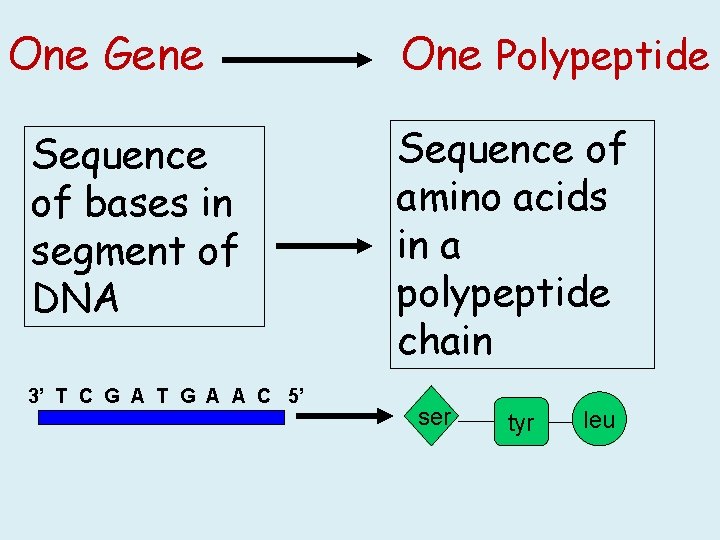
One Gene Sequence of bases in segment of DNA 3’ T C G A T G A A C 5’ One Polypeptide Sequence of amino acids in a polypeptide chain ser tyr leu
Some helpful websites http: //www. genome. gov/Pages/Education. Kit/download. html Exploring Our Molecular Selves http: //www. pbs. org/wgbh/aso/tryit/dna/shockwave. html DNA workshop http: //www. stolaf. edu/people/giannini/flashanimat/molgenetics/transcription. swf About transcription http: //www. stolaf. edu/people/giannini/flashanimat/molgenetics/translation. swf About translation
- Slides: 42