
Chapter 5 Design and Redesign of Work Systems

- Slides: 25
Chapter 5 Design and Redesign of Work Systems References: • Strategic Human Resource Management by Jeffrey A. Mello • Strategic Human Resource Management by Charles R. Greer Resource Person: Furqan-ul-haq Siddiqui
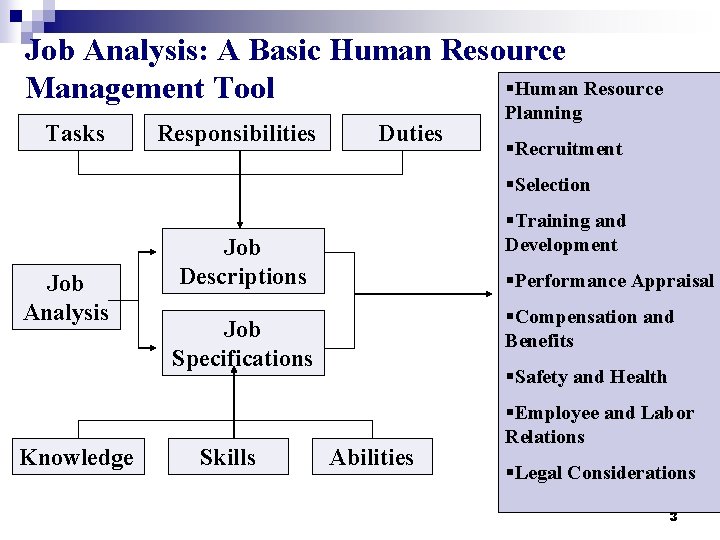
Job Analysis: A Basic Human Resource §Human Resource Management Tool Tasks Responsibilities Duties Planning §Recruitment §Selection Job Analysis Knowledge §Training and Development Job Descriptions §Performance Appraisal §Compensation and Benefits Job Specifications Skills §Safety and Health Abilities §Employee and Labor Relations §Legal Considerations 3
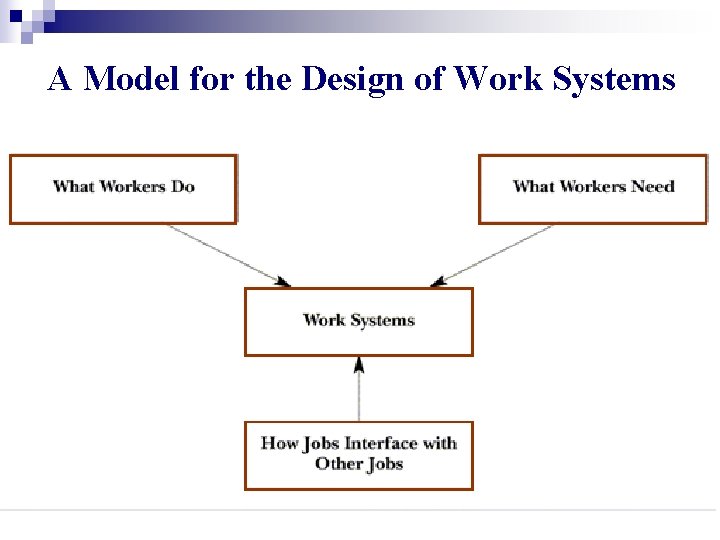
A Model for the Design of Work Systems
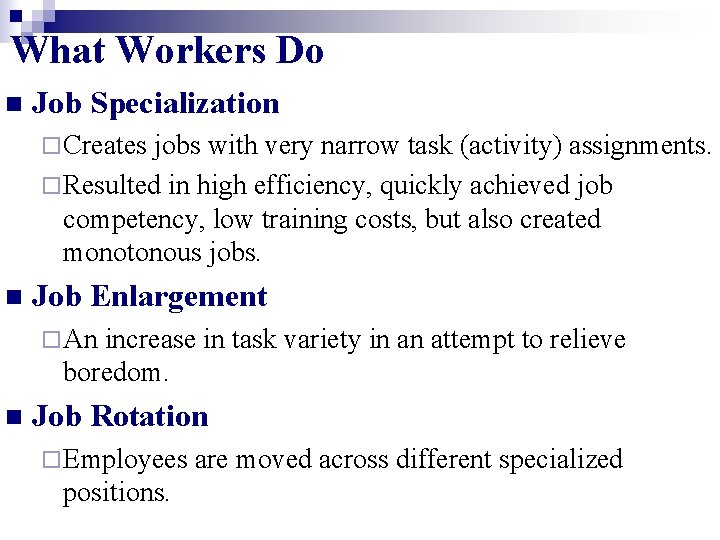
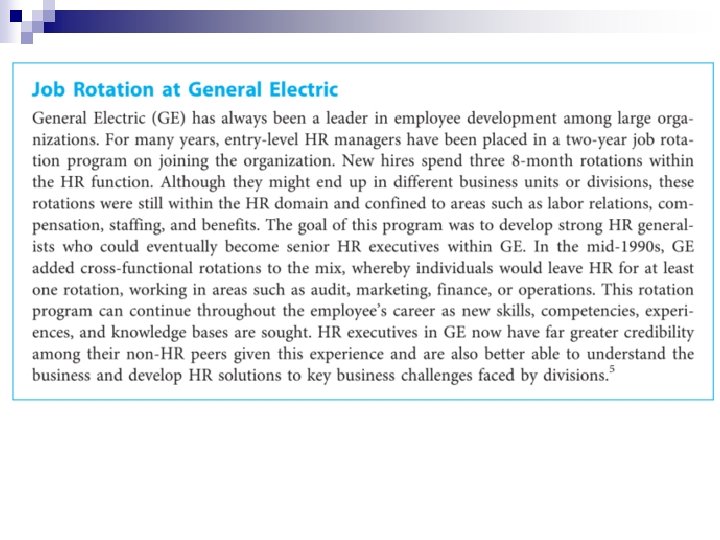
What Workers Do n Job Specialization ¨ Creates jobs with very narrow task (activity) assignments. ¨ Resulted in high efficiency, quickly achieved job competency, low training costs, but also created monotonous jobs. n Job Enlargement ¨ An increase in task variety in an attempt to relieve boredom. n Job Rotation ¨ Employees positions. are moved across different specialized
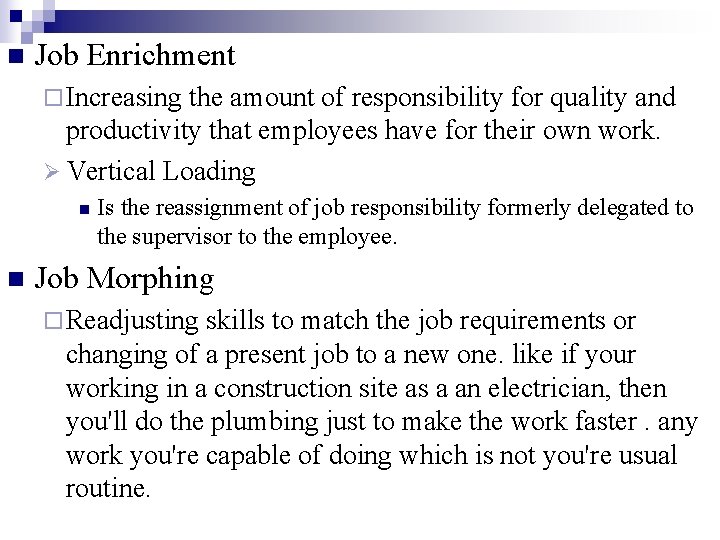
n Job Enrichment ¨ Increasing the amount of responsibility for quality and productivity that employees have for their own work. Ø Vertical Loading n n Is the reassignment of job responsibility formerly delegated to the supervisor to the employee. Job Morphing ¨ Readjusting skills to match the job requirements or changing of a present job to a new one. like if your working in a construction site as a an electrician, then you'll do the plumbing just to make the work faster. any work you're capable of doing which is not you're usual routine.
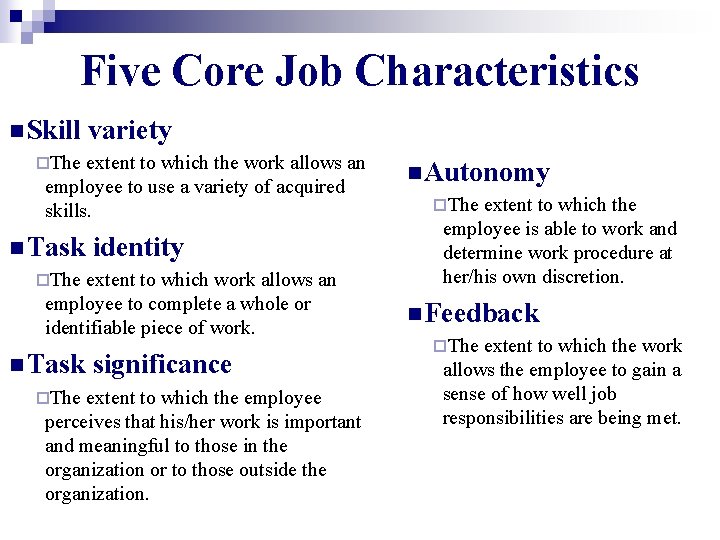
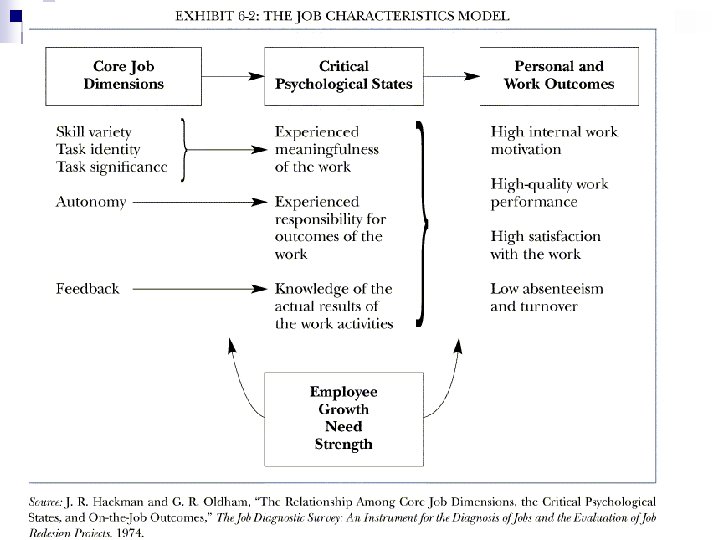
Five Core Job Characteristics n Skill variety ¨The extent to which the work allows an employee to use a variety of acquired skills. n Task identity ¨The extent to which work allows an employee to complete a whole or identifiable piece of work. n Task ¨The significance extent to which the employee perceives that his/her work is important and meaningful to those in the organization or to those outside the organization. n Autonomy ¨The extent to which the employee is able to work and determine work procedure at her/his own discretion. n Feedback ¨The extent to which the work allows the employee to gain a sense of how well job responsibilities are being met.
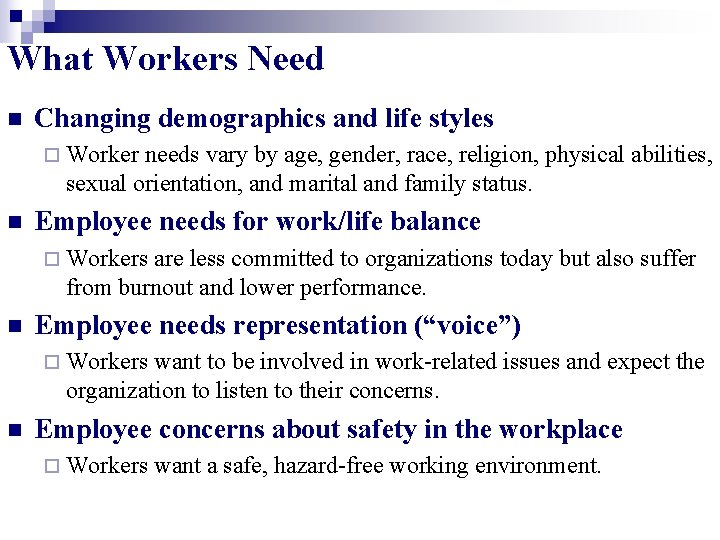
What Workers Need n Changing demographics and life styles ¨ Worker needs vary by age, gender, race, religion, physical abilities, sexual orientation, and marital and family status. n Employee needs for work/life balance ¨ Workers are less committed to organizations today but also suffer from burnout and lower performance. n Employee needs representation (“voice”) ¨ Workers want to be involved in work-related issues and expect the organization to listen to their concerns. n Employee concerns about safety in the workplace ¨ Workers want a safe, hazard-free working environment.
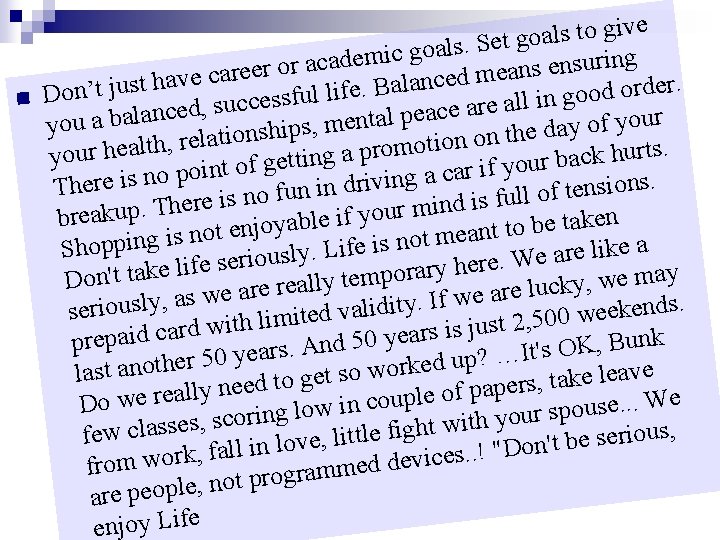
n ive g o t s l a o g Set. s l a o g c i em ng d i r a c u s a n r e o s r n e a e me car e d e v c a n h a. t l r s a e u j d B r. o e f d i l o l Don’t o ssfu in g e l l c a c u e s r , a d e e c c pea l a ur t o n y e f m o you a balan , s y a p i d h the ons i n t a o l e n r o i , t h o t l. a m s o t r r p u h a k g your he c n i a t get ur b f o o y t f i n i r o a p c a o g n i s. v i n r o d i s n There is n n i e t n u f f o l o ful sn i s i e r d e n h i T m. r p u yo f i en breaku e k l a b t a e y b o j o n t e t t no ean s m i t g o n n i p s i p o e ea f i k i Sh l L. e r y l a s e u o i W ser re. e e f h i l y r e a k r a t o ay t p ' m m e e t Don w y , l l y a k e c r re e lu a r a e e w w s a f I , . y. l y s t i d d n i e l k a e v serious e d w e t 00 mi i 5 l , 2 h t t i s u w j d s r i a ars e y nk 0 u 5 B prepaid c d , n K A O. s s ' r t I yea … 0 ? 5 p r u e d h t e o k r n e wo v a o last a e s l t e e k g a t o t , s er eed p n a p y l f l o a e e r l p e e u W o c. . . n Do w e i s u w o o l p rs ng i u r o o y c s h t , i s e w s t s s, figh u e o l i t r few cla t i e l s , e e b v t o ' nl on i D l l " a ! f. . , s k e r c o i v de d e from w m m a r g pro t o n , e l p o e are p enjoy Life
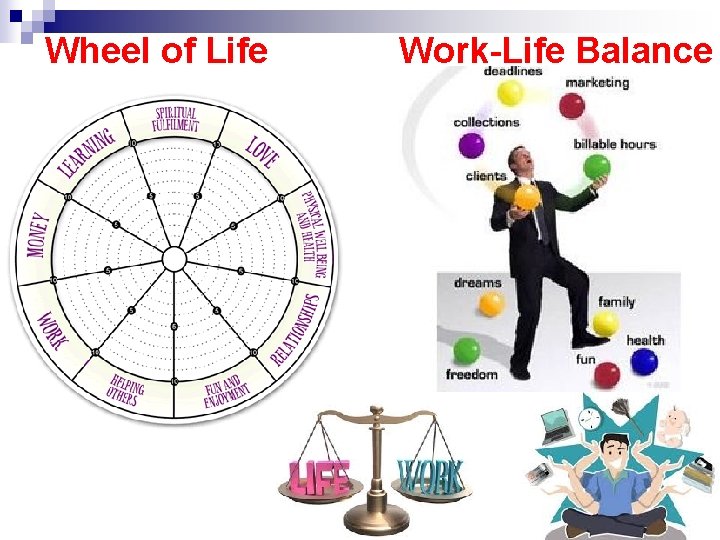
Wheel of Life Work-Life Balance
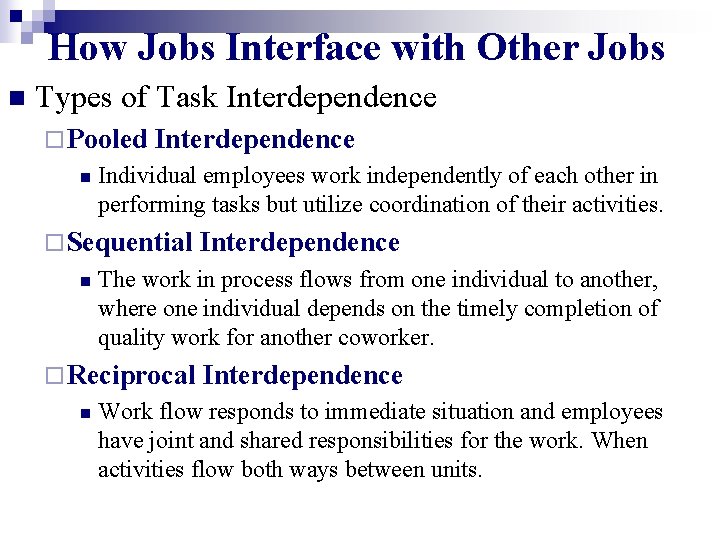
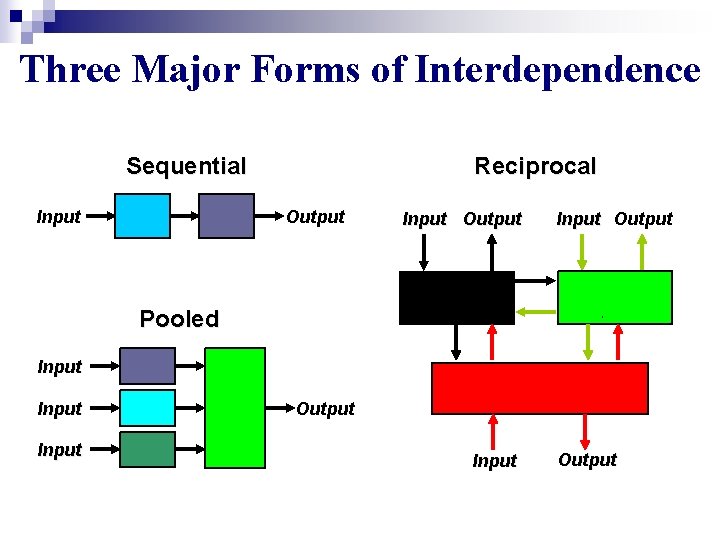
How Jobs Interface with Other Jobs n Types of Task Interdependence ¨ Pooled n Interdependence Individual employees work independently of each other in performing tasks but utilize coordination of their activities. ¨ Sequential n The work in process flows from one individual to another, where one individual depends on the timely completion of quality work for another coworker. ¨ Reciprocal n Interdependence Work flow responds to immediate situation and employees have joint and shared responsibilities for the work. When activities flow both ways between units.
Three Major Forms of Interdependence Sequential Input Reciprocal Output Input Output Pooled Input Output
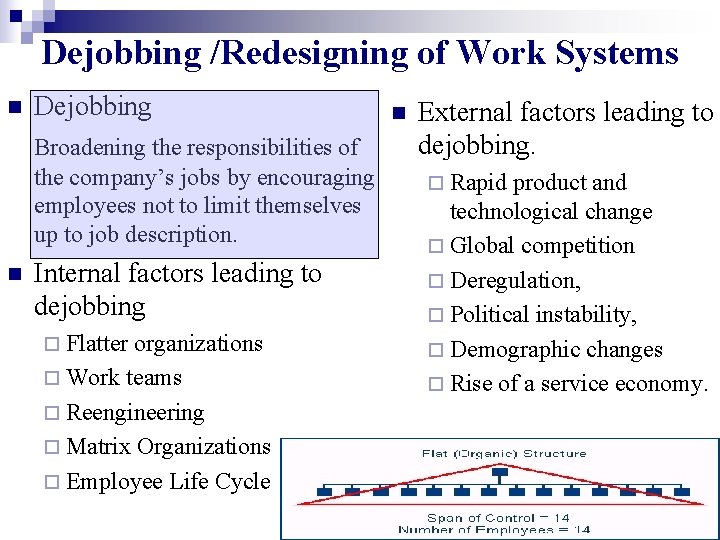
Dejobbing /Redesigning of Work Systems n Dejobbing Broadening the responsibilities of the company’s jobs by encouraging employees not to limit themselves up to job description. n Internal factors leading to dejobbing ¨ Flatter organizations ¨ Work teams ¨ Reengineering ¨ Matrix Organizations ¨ Employee Life Cycle n External factors leading to dejobbing. ¨ Rapid product and technological change ¨ Global competition ¨ Deregulation, ¨ Political instability, ¨ Demographic changes ¨ Rise of a service economy. 15
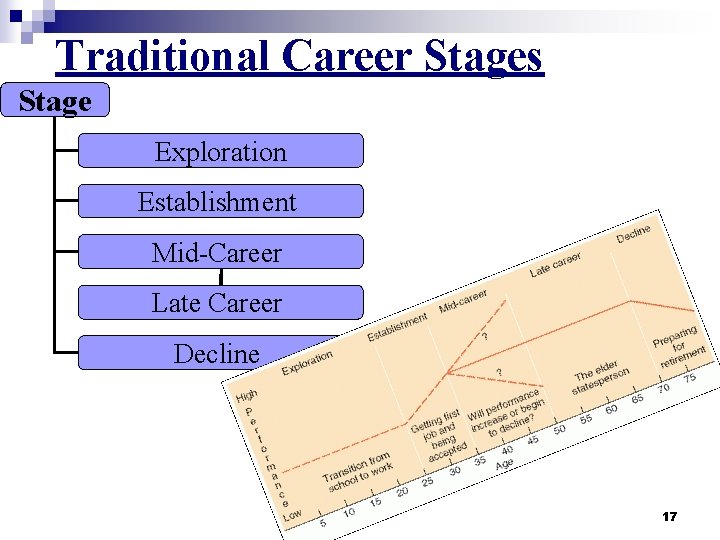
Traditional Career Stages Stage Exploration Establishment Mid-Career Late Career Decline 17
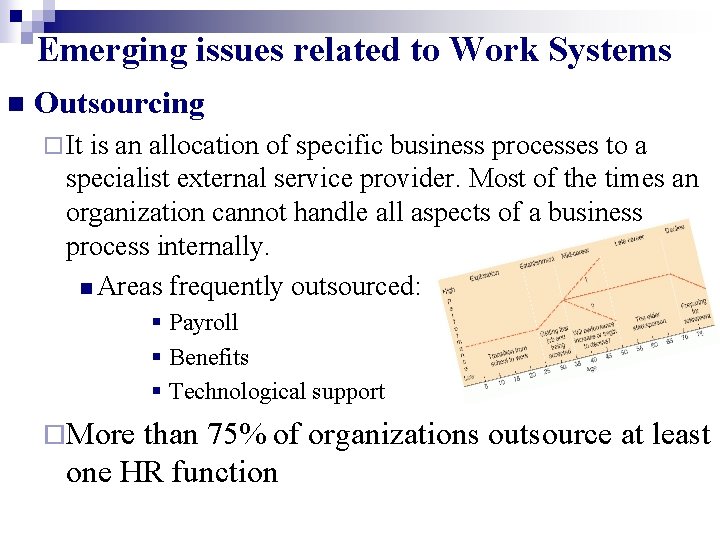
Emerging issues related to Work Systems n Outsourcing ¨ It is an allocation of specific business processes to a specialist external service provider. Most of the times an organization cannot handle all aspects of a business process internally. n Areas frequently outsourced: § Payroll § Benefits § Technological support ¨More than 75% of organizations outsource at least one HR function
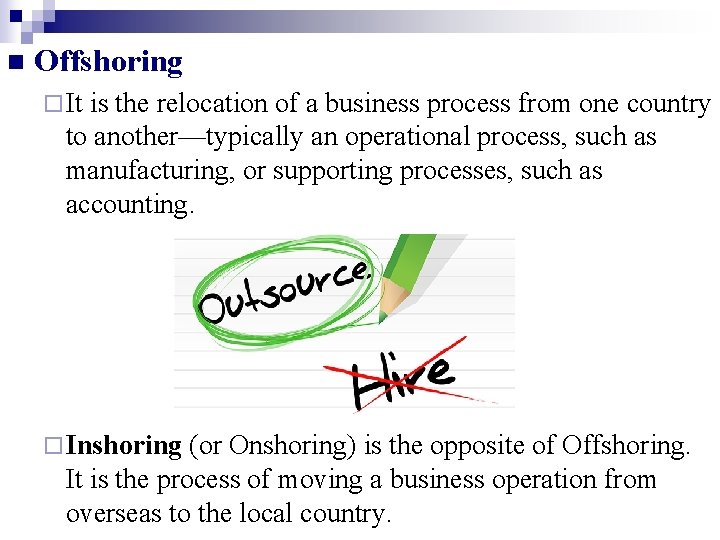
n Offshoring ¨ It is the relocation of a business process from one country to another—typically an operational process, such as manufacturing, or supporting processes, such as accounting. ¨ Inshoring (or Onshoring) is the opposite of Offshoring. It is the process of moving a business operation from overseas to the local country.
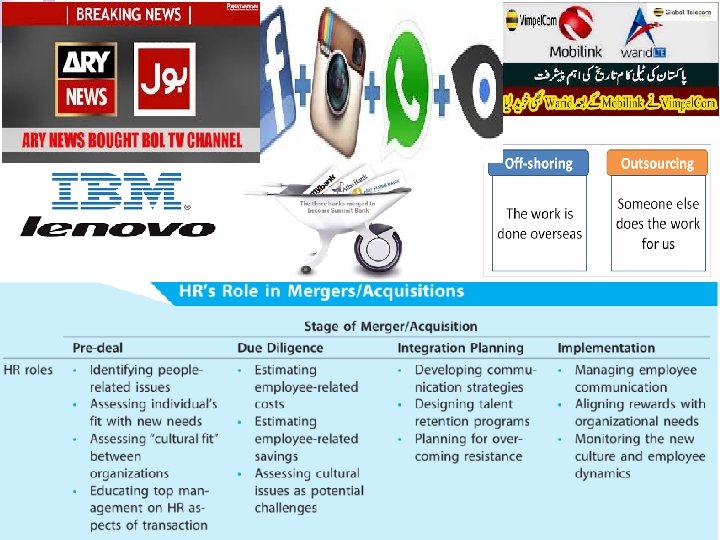
n Mergers and Acquisitions ¨ In a merger, two organizations join forces to become a new business, usually with a new name. ¨ In an acquisition, on the other hand, one business buys a second and generally smaller company which may be absorbed into the parent organization or run as a subsidiary. n Two thirds of mergers fail– Largely because of inability to merge cultural and other human factors v Mergers pursued for a variety of reasons: ¨– Economies of scale in operations ¨ – Consolidation in saturated markets ¨ – Improving competitive position through larger asset base
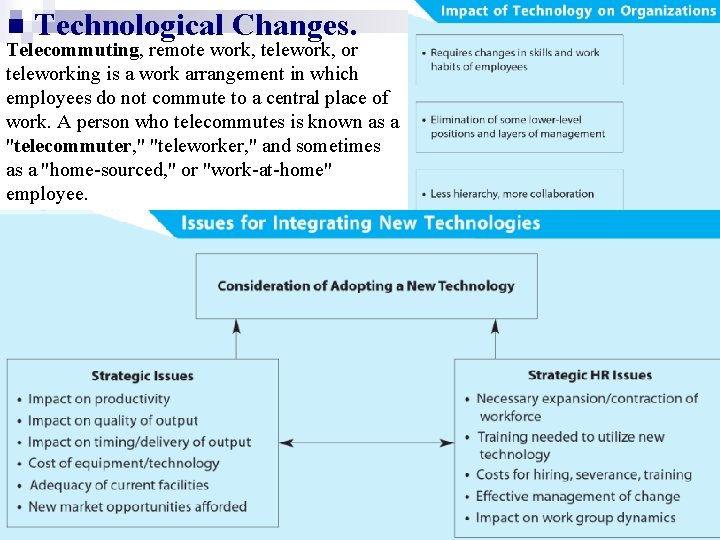
n Technological Changes. Telecommuting, remote work, telework, or teleworking is a work arrangement in which employees do not commute to a central place of work. A person who telecommutes is known as a "telecommuter, " "teleworker, " and sometimes as a "home-sourced, " or "work-at-home" employee.
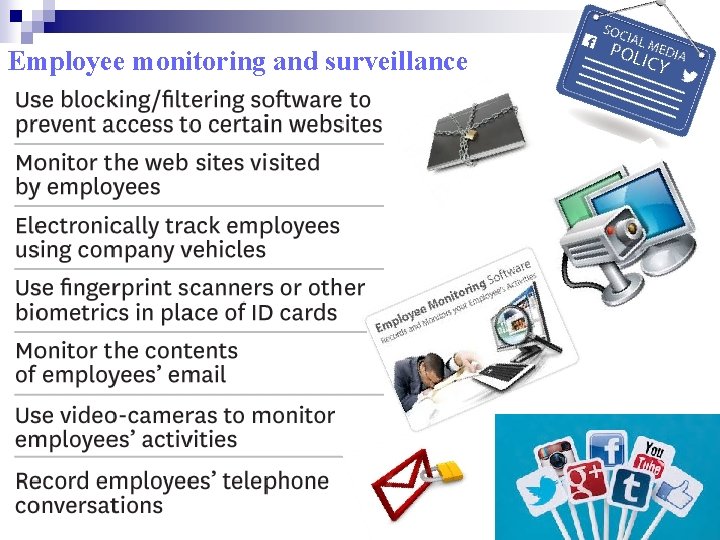
Employee monitoring and surveillance
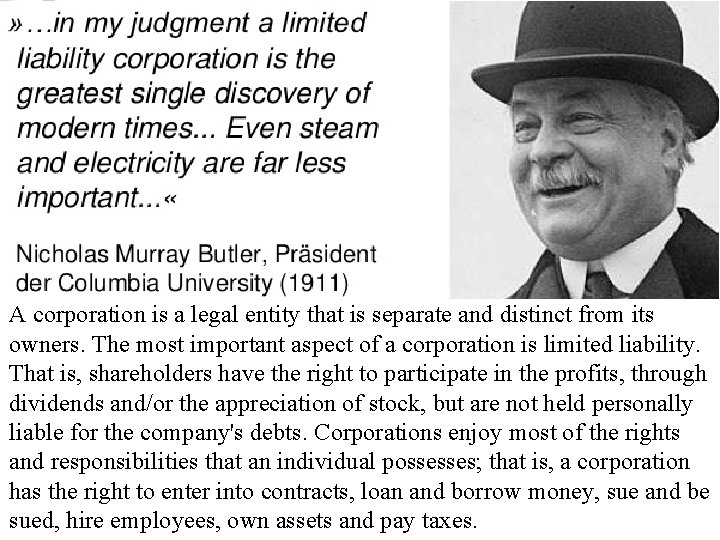
A corporation is a legal entity that is separate and distinct from its owners. The most important aspect of a corporation is limited liability. That is, shareholders have the right to participate in the profits, through dividends and/or the appreciation of stock, but are not held personally liable for the company's debts. Corporations enjoy most of the rights and responsibilities that an individual possesses; that is, a corporation has the right to enter into contracts, loan and borrow money, sue and be sued, hire employees, own assets and pay taxes.