
Chapter 5 Describe Wheel of Retailing Scrambled Merchandising
Chapter 5

• Describe – Wheel of Retailing – Scrambled Merchandising – Retail Life Cycle • Discuss Retail Strategy Evolution • Examine Store-Based Retail Strategies – Food-Oriented – General Merchandise
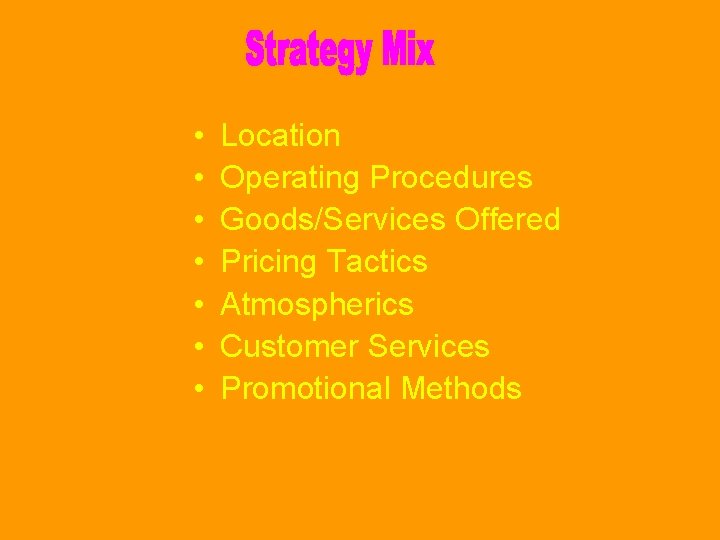
• • Location Operating Procedures Goods/Services Offered Pricing Tactics Atmospherics Customer Services Promotional Methods
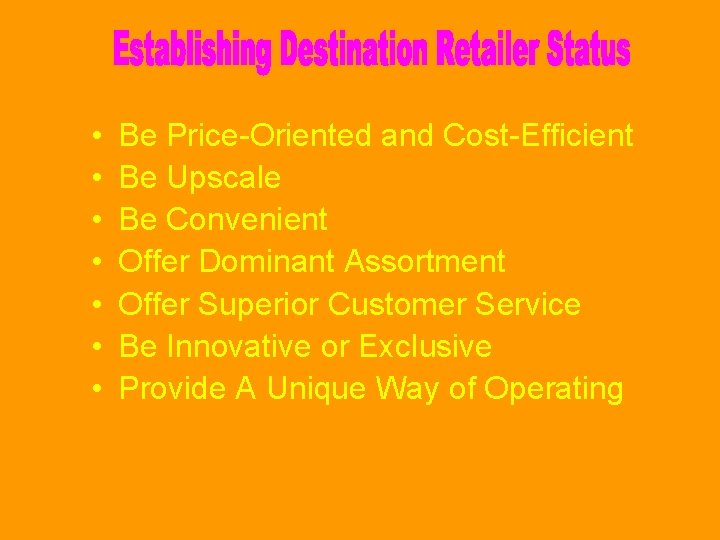
• • Be Price-Oriented and Cost-Efficient Be Upscale Be Convenient Offer Dominant Assortment Offer Superior Customer Service Be Innovative or Exclusive Provide A Unique Way of Operating
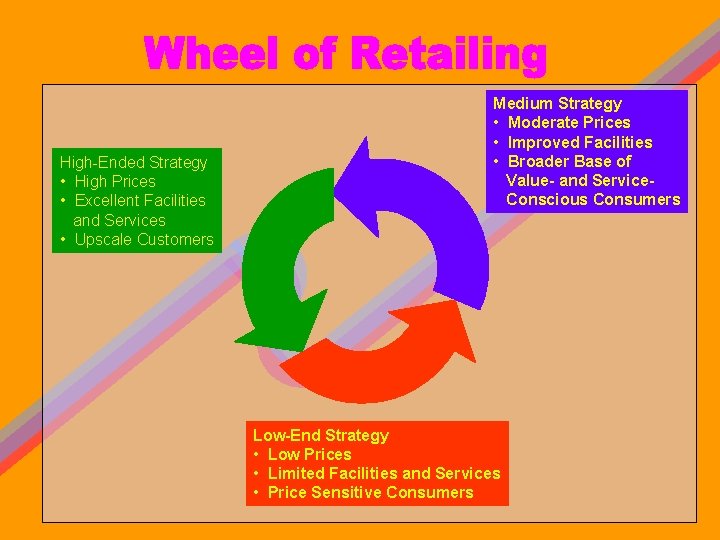
High-Ended Strategy • High Prices • Excellent Facilities and Services • Upscale Customers Medium Strategy • Moderate Prices • Improved Facilities • Broader Base of Value- and Service. Conscious Consumers Low-End Strategy • Low Prices • Limited Facilities and Services • Price Sensitive Consumers
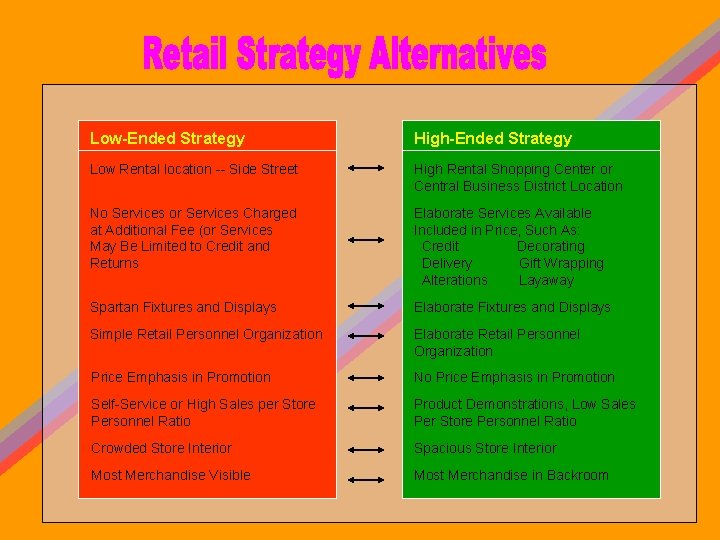
Low-Ended Strategy High-Ended Strategy Low Rental location -- Side Street High Rental Shopping Center or Central Business District Location No Services or Services Charged at Additional Fee (or Services May Be Limited to Credit and Returns Elaborate Services Available Included in Price, Such As: Credit Decorating Delivery Gift Wrapping Alterations Layaway Spartan Fixtures and Displays Elaborate Fixtures and Displays Simple Retail Personnel Organization Elaborate Retail Personnel Organization Price Emphasis in Promotion No Price Emphasis in Promotion Self-Service or High Sales per Store Personnel Ratio Product Demonstrations, Low Sales Per Store Personnel Ratio Crowded Store Interior Spacious Store Interior Most Merchandise Visible Most Merchandise in Backroom
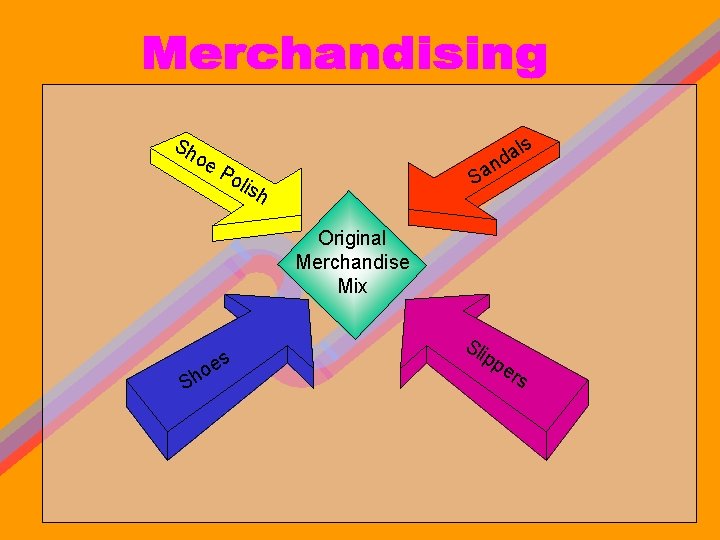
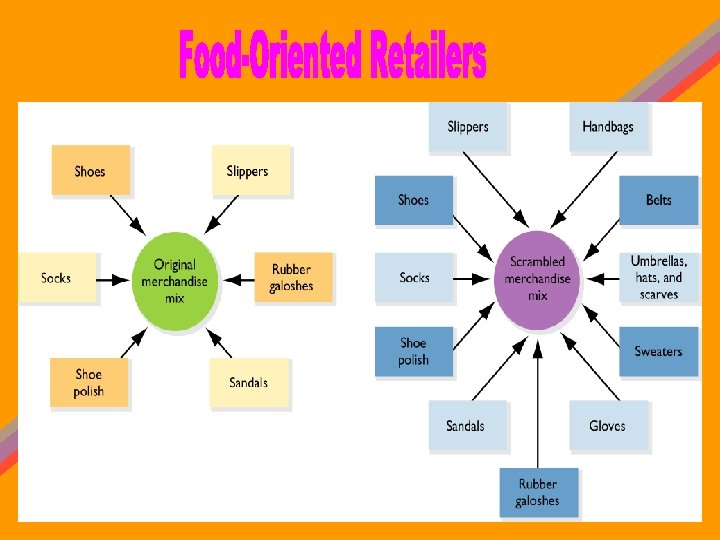
Sh oe ls a d n Po Sa lish Original Merchandise Mix es o Sh Sli pp ers
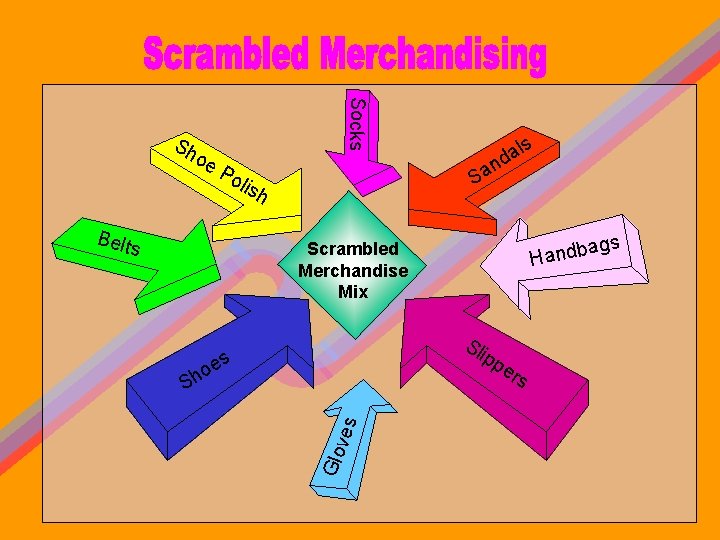
oe Socks Sh n Po Belt s ls a d Sa lish gs a Handb Scrambled Merchandise Mix Sli Glo ves es o Sh pp ers
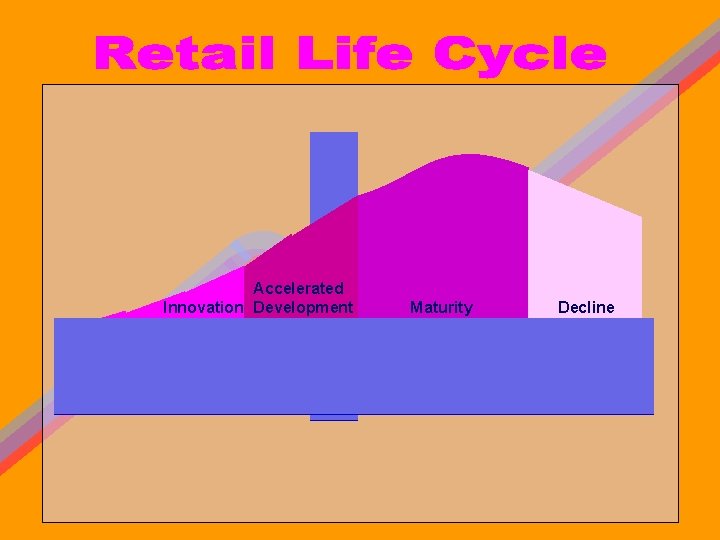
Accelerated Innovation Development Maturity Decline
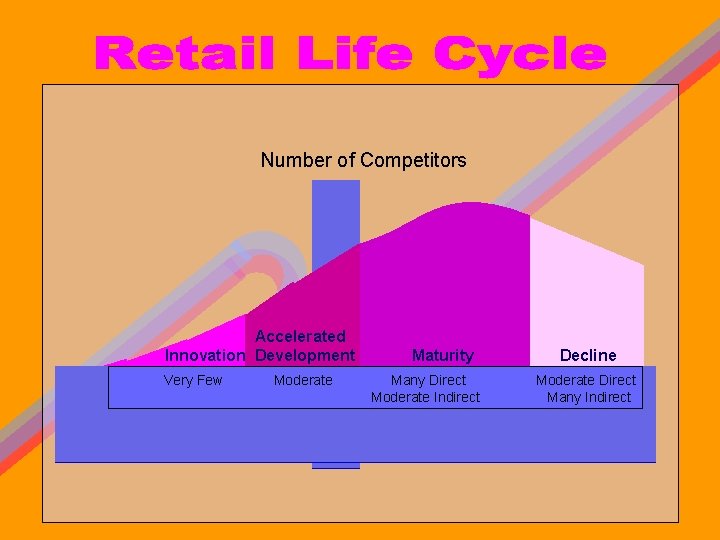
Number of Competitors Accelerated Innovation Development Very Few Moderate Maturity Many Direct Moderate Indirect Decline Moderate Direct Many Indirect
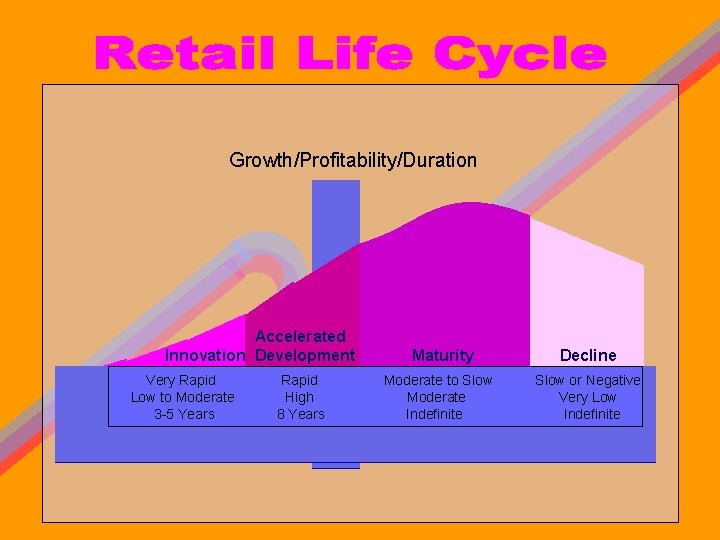
Growth/Profitability/Duration L Accelerated Innovation Development Very Rapid Very Few Low to Moderate 3 -5 Years Rapid High 8 Years Maturity Moderate to Slow Moderate Indefinite Decline Slow or Negative Very Low Indefinite
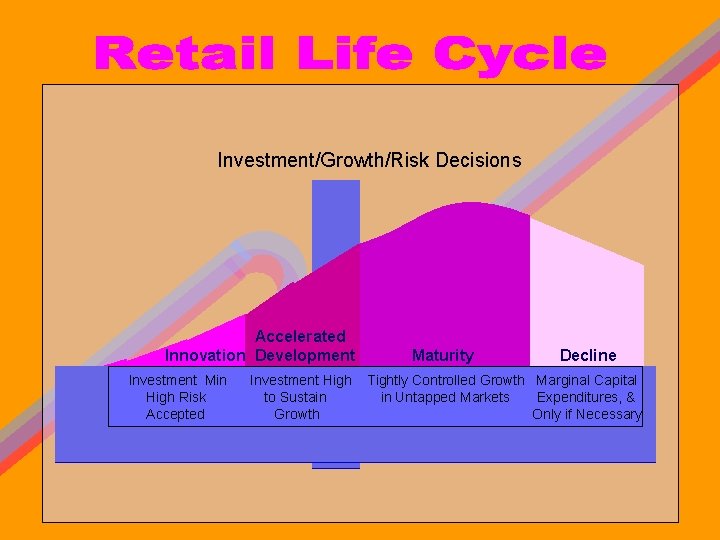
Investment/Growth/Risk Decisions L Accelerated Innovation Development Investment Min Very Few High Risk Accepted Investment High to Sustain Growth Maturity Decline Tightly Controlled Growth Marginal Capital in Untapped Markets Expenditures, & Only if Necessary
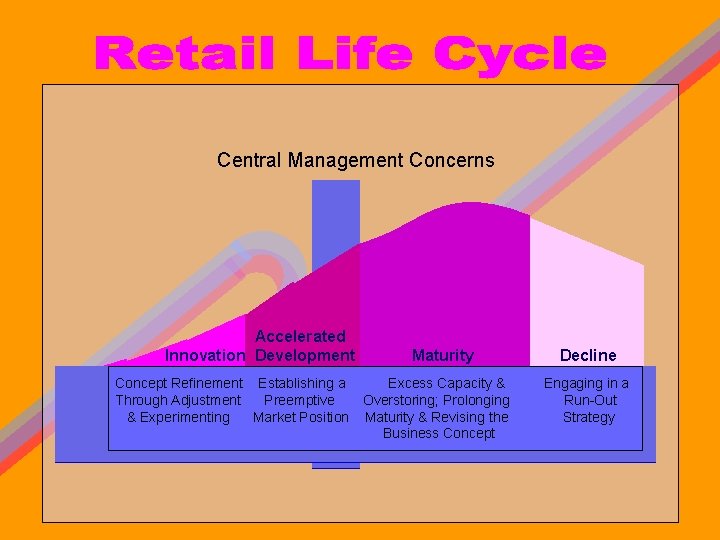
Central Management Concerns L Accelerated Innovation Development Maturity Concept Refinement Establishing a Excess Capacity & Very Few Through Adjustment Preemptive Overstoring; Prolonging & Experimenting Market Position Maturity & Revising the Business Concept Decline Engaging in a Run-Out Strategy
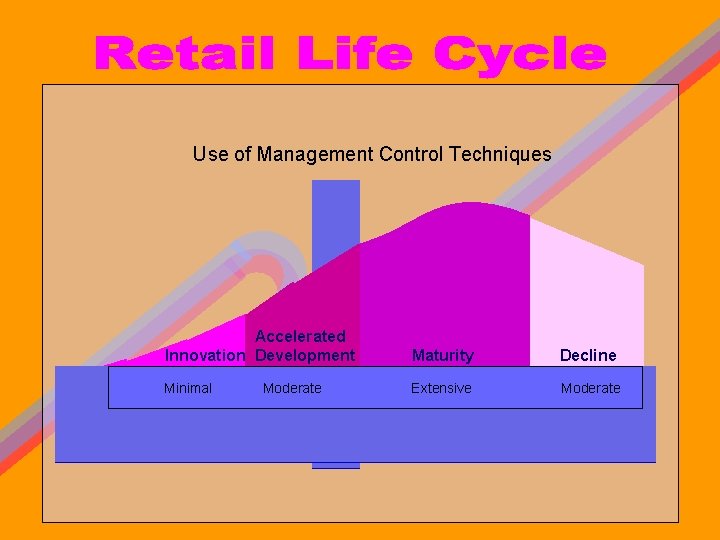
Use of Management Control Techniques Accelerated Innovation Development Minimal Very Few Moderate Maturity Decline Extensive Moderate
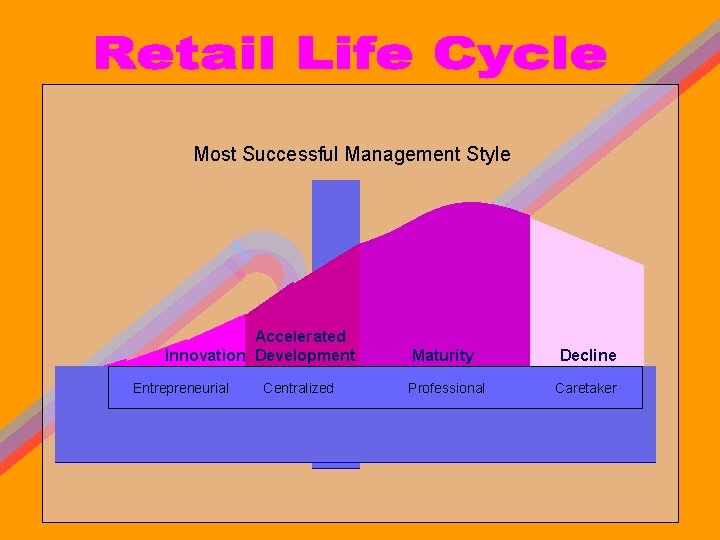
Most Successful Management Style Accelerated Innovation Development Entrepreneurial Very Few Centralized Maturity Decline Professional Caretaker
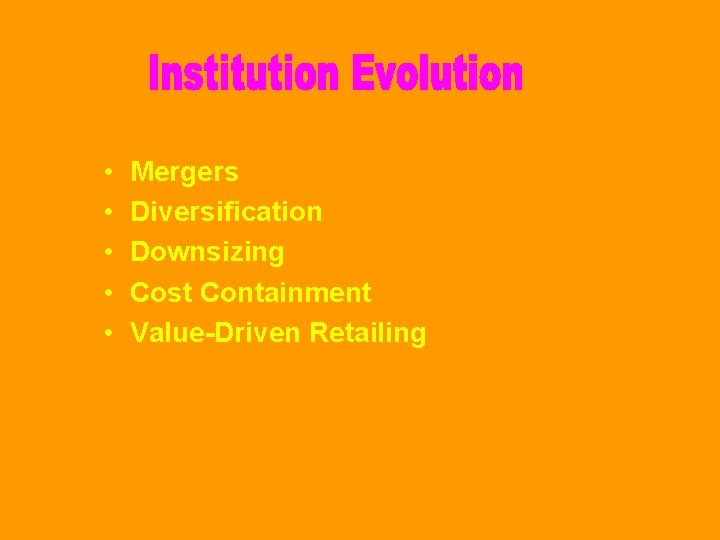
• • • Mergers Diversification Downsizing Cost Containment Value-Driven Retailing
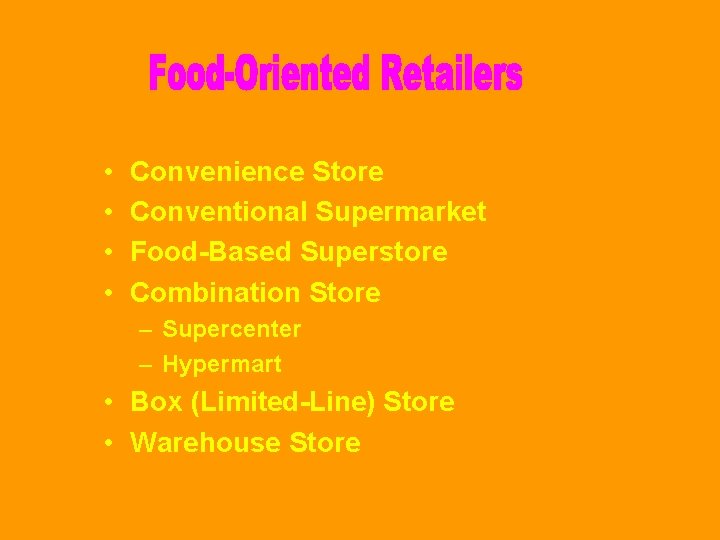
• • Convenience Store Conventional Supermarket Food-Based Superstore Combination Store – Supercenter – Hypermart • Box (Limited-Line) Store • Warehouse Store
• Specialty – Category Killer • Traditional Department Store • Full-Line Discount Store • Variety Store • Off-Price Chain • Factory Outlet • Membership Club • Flea Market
• How the Wheel of Retailing, Scrambled Merchandising, and Retail Life Cycle Help Explain Performance • The Evolution of Retail Strategy Mix • The Nature of Store-Based Retailers – Food-Oriented – General Merchandise

Questions?
- Slides: 21