
Chapter 5 Datapath Circuits Digital Design and Computer
- Slides: 46
Chapter 5 – Datapath Circuits Digital Design and Computer Architecture: ARM® Edition Sarah L. Harris and David Money Harris Digital Design and Computer Architecture: ARM® Edition © 2015 Chapter 5 <1>
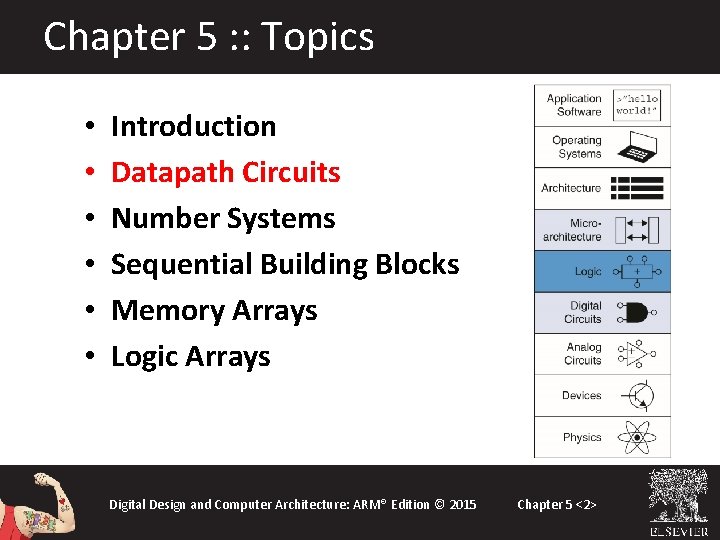
Chapter 5 : : Topics • • • Introduction Datapath Circuits Number Systems Sequential Building Blocks Memory Arrays Logic Arrays Digital Design and Computer Architecture: ARM® Edition © 2015 Chapter 5 <2>
Introduction • Digital building blocks: – Gates, multiplexers, decoders, registers, arithmetic circuits, counters, memory arrays, logic arrays • Building blocks demonstrate hierarchy, modularity, and regularity: – Hierarchy of simpler components – Well-defined interfaces and functions – Regular structure easily extends to different sizes • Will use these building blocks in Chapter 7 to build microprocessor Digital Design and Computer Architecture: ARM® Edition © 2015 Chapter 5 <3>
Combinational Building Blocks • Multiplexers • Decoders Digital Design and Computer Architecture: ARM® Edition © 2015 Chapter 5 <4>
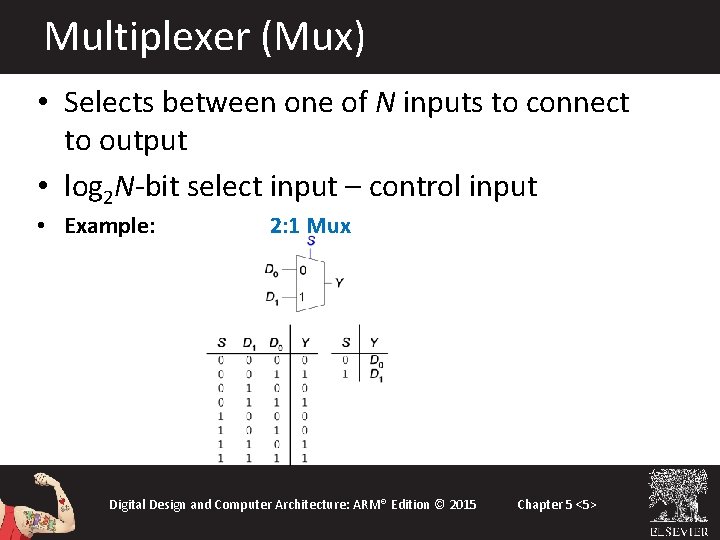
Multiplexer (Mux) • Selects between one of N inputs to connect to output • log 2 N-bit select input – control input • Example: 2: 1 Mux Digital Design and Computer Architecture: ARM® Edition © 2015 Chapter 5 <5>
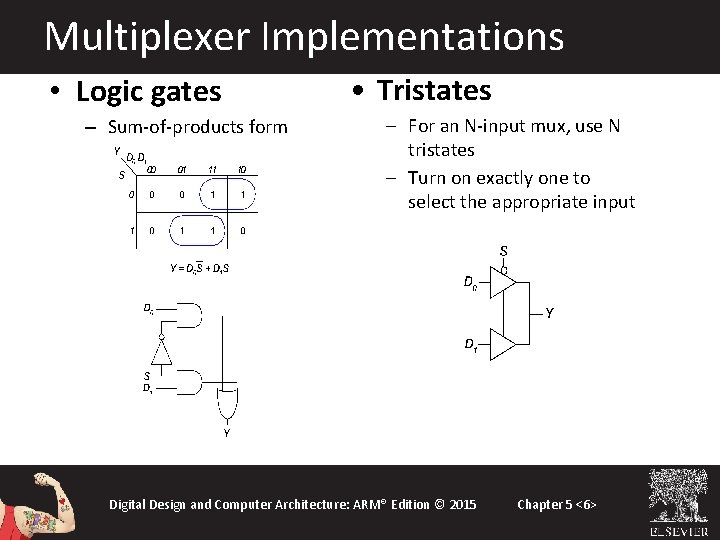
Multiplexer Implementations • Logic gates – Sum-of-products form • Tristates – For an N-input mux, use N tristates – Turn on exactly one to select the appropriate input 2 -<6> Digital Design and Computer Architecture: ARM® Edition © 2015 Chapter 5 <6>
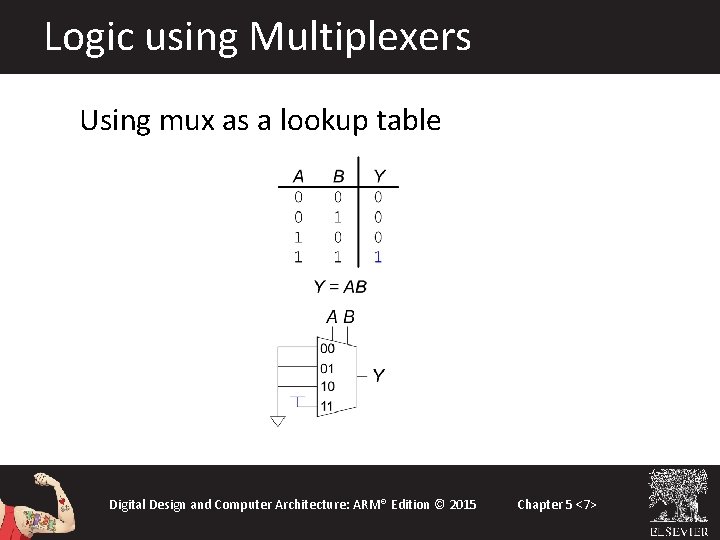
Logic using Multiplexers Using mux as a lookup table Digital Design and Computer Architecture: ARM® Edition © 2015 Chapter 5 <7>
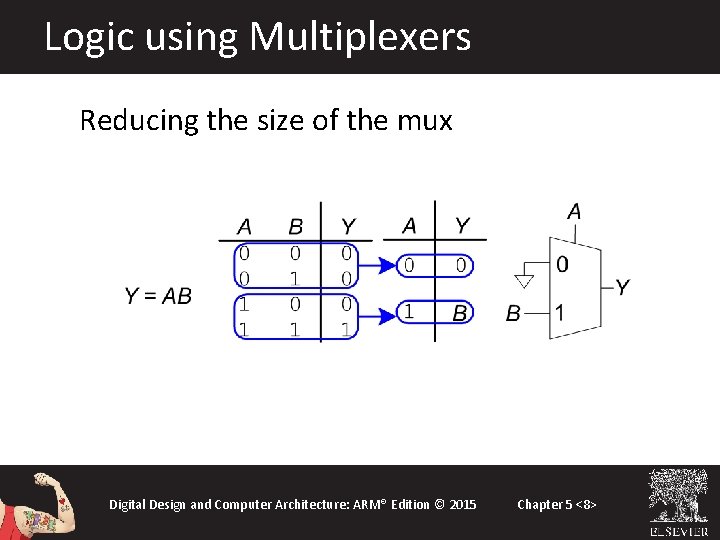
Logic using Multiplexers Reducing the size of the mux Digital Design and Computer Architecture: ARM® Edition © 2015 Chapter 5 <8>
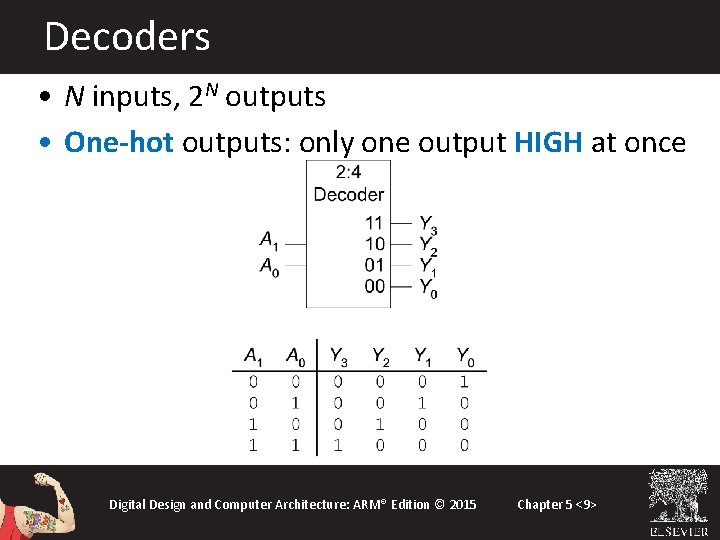
Decoders • N inputs, 2 N outputs • One-hot outputs: only one output HIGH at once Digital Design and Computer Architecture: ARM® Edition © 2015 Chapter 5 <9>
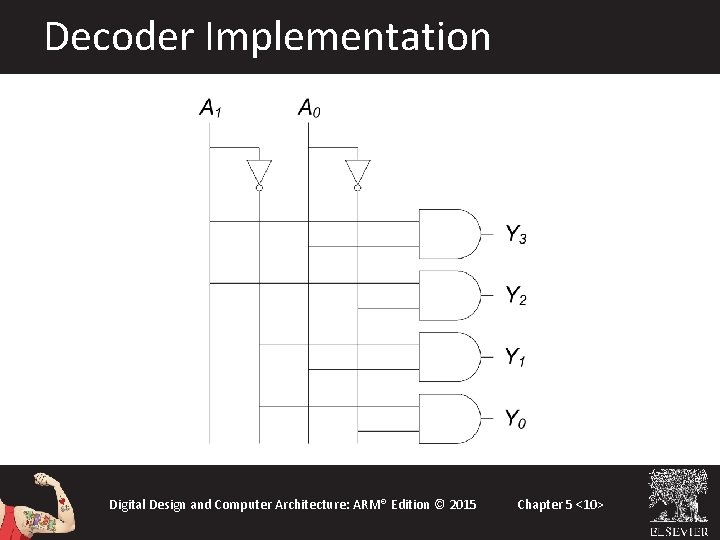
Decoder Implementation Digital Design and Computer Architecture: ARM® Edition © 2015 Chapter 5 <10>
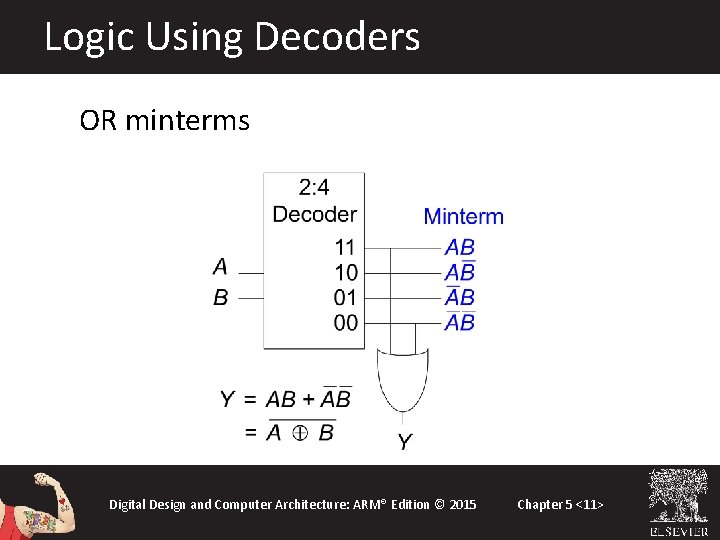
Logic Using Decoders OR minterms Digital Design and Computer Architecture: ARM® Edition © 2015 Chapter 5 <11>
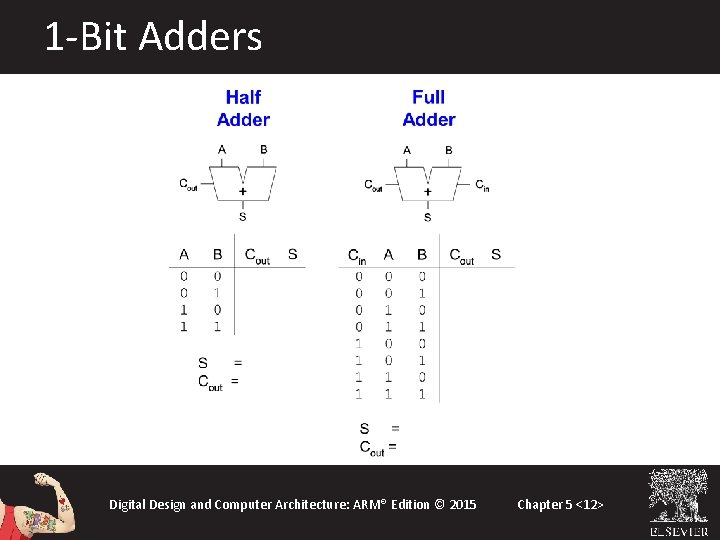
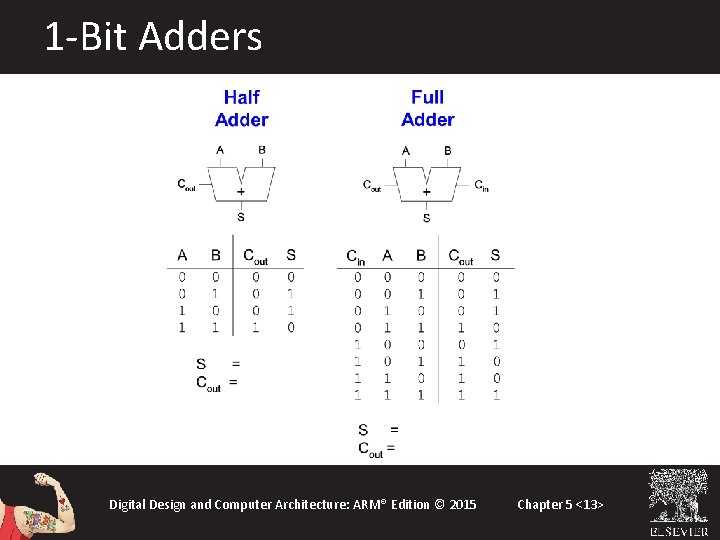
1 -Bit Adders Digital Design and Computer Architecture: ARM® Edition © 2015 Chapter 5 <12>
1 -Bit Adders Digital Design and Computer Architecture: ARM® Edition © 2015 Chapter 5 <13>
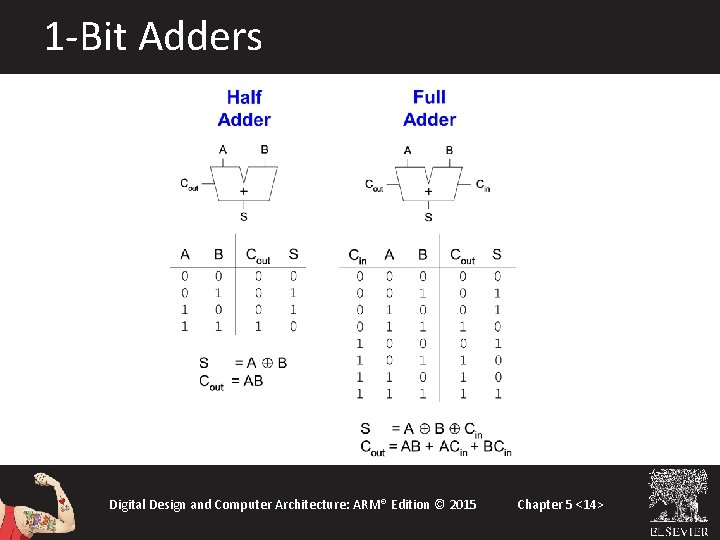
1 -Bit Adders Digital Design and Computer Architecture: ARM® Edition © 2015 Chapter 5 <14>
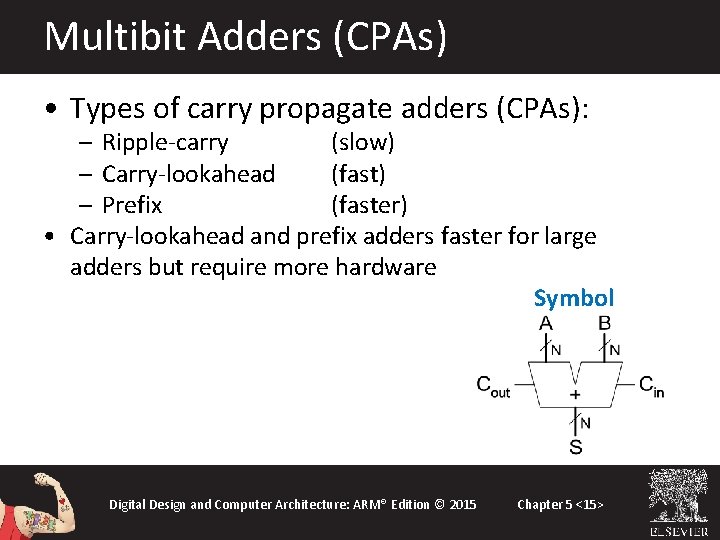
Multibit Adders (CPAs) • Types of carry propagate adders (CPAs): – Ripple-carry (slow) – Carry-lookahead (fast) – Prefix (faster) • Carry-lookahead and prefix adders faster for large adders but require more hardware Symbol Digital Design and Computer Architecture: ARM® Edition © 2015 Chapter 5 <15>
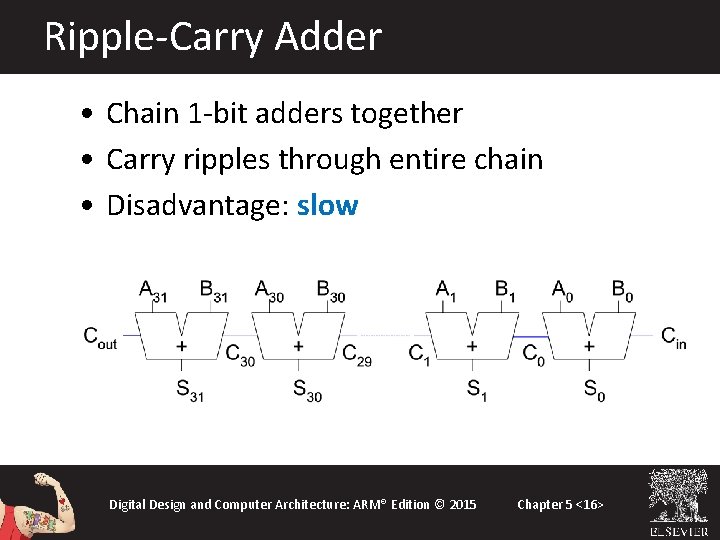
Ripple-Carry Adder • Chain 1 -bit adders together • Carry ripples through entire chain • Disadvantage: slow Digital Design and Computer Architecture: ARM® Edition © 2015 Chapter 5 <16>
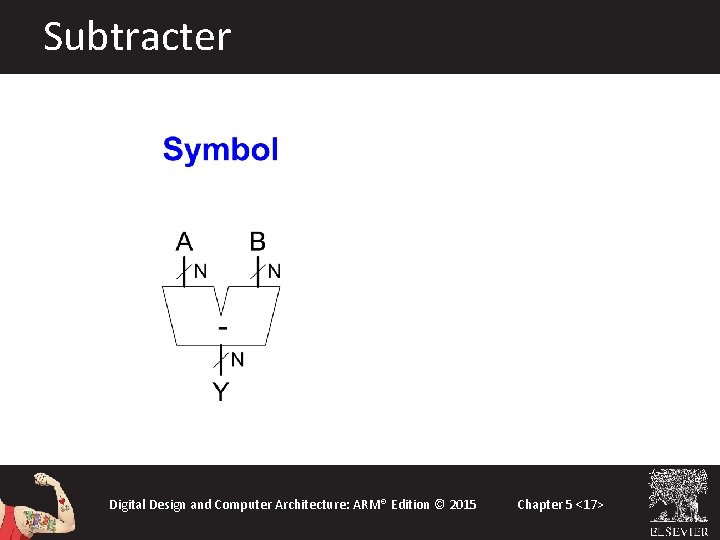
Subtracter Digital Design and Computer Architecture: ARM® Edition © 2015 Chapter 5 <17>
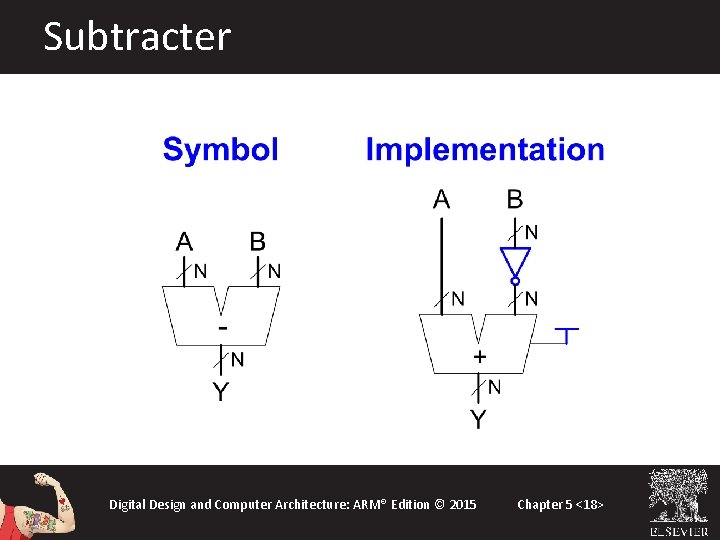
Subtracter Digital Design and Computer Architecture: ARM® Edition © 2015 Chapter 5 <18>
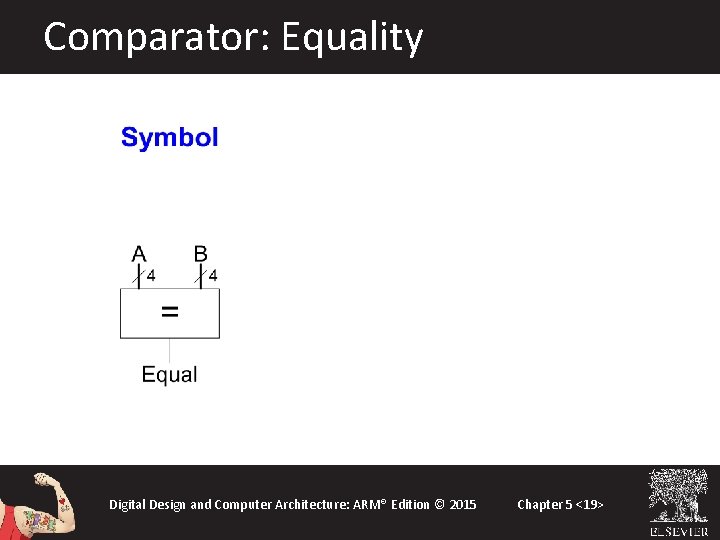
Comparator: Equality Digital Design and Computer Architecture: ARM® Edition © 2015 Chapter 5 <19>
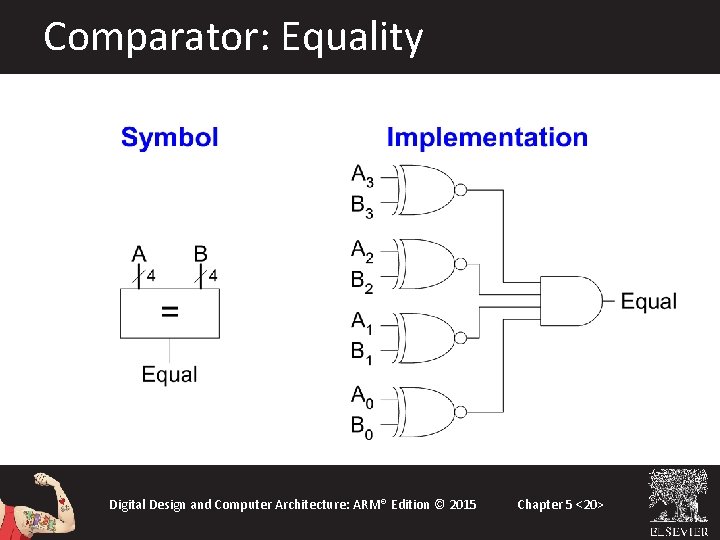
Comparator: Equality Digital Design and Computer Architecture: ARM® Edition © 2015 Chapter 5 <20>
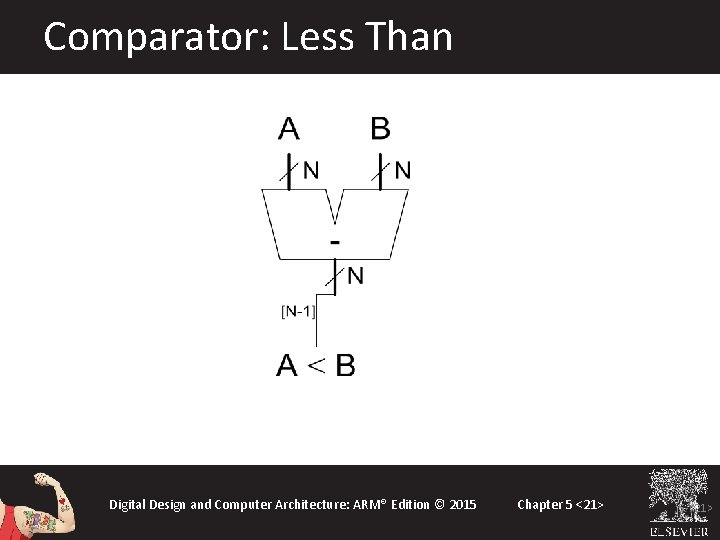
Comparator: Less Than Digital Design and Computer Architecture: ARM® Edition © 2015 Chapter 5 <21> 5 -<21>
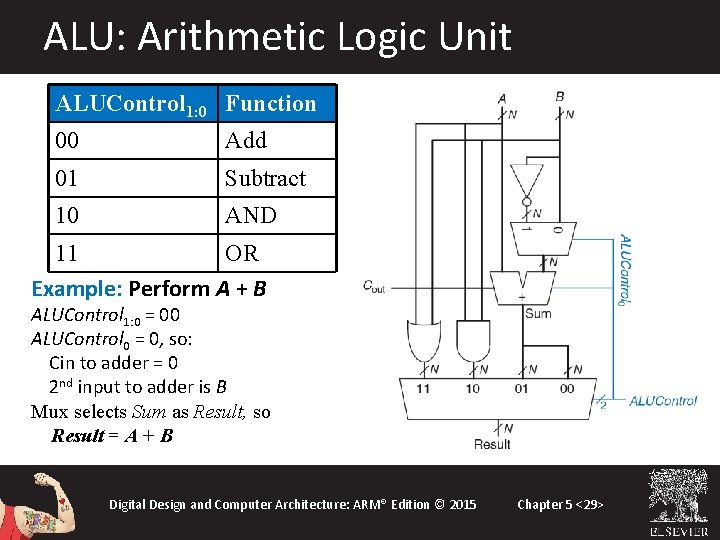
ALU: Arithmetic Logic Unit ALU should perform: • Addition • Subtraction • AND • OR Digital Design and Computer Architecture: ARM® Edition © 2015 Chapter 5 <22>
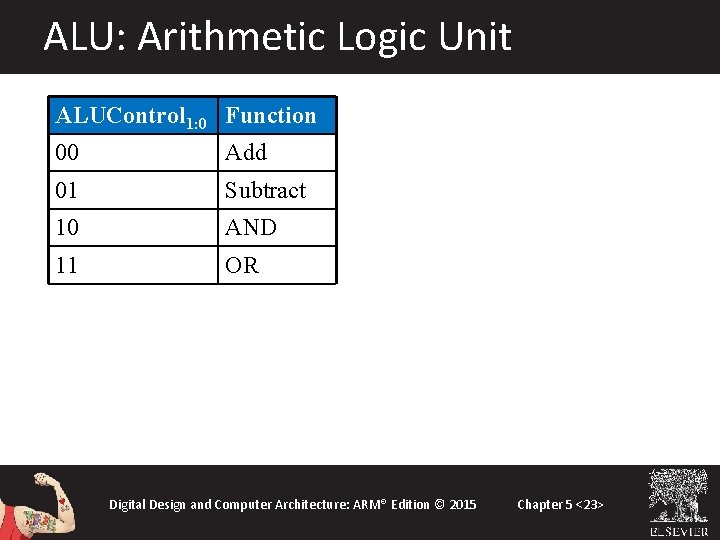
ALU: Arithmetic Logic Unit ALUControl 1: 0 Function 00 Add 01 Subtract 10 AND 11 OR Digital Design and Computer Architecture: ARM® Edition © 2015 Chapter 5 <23>
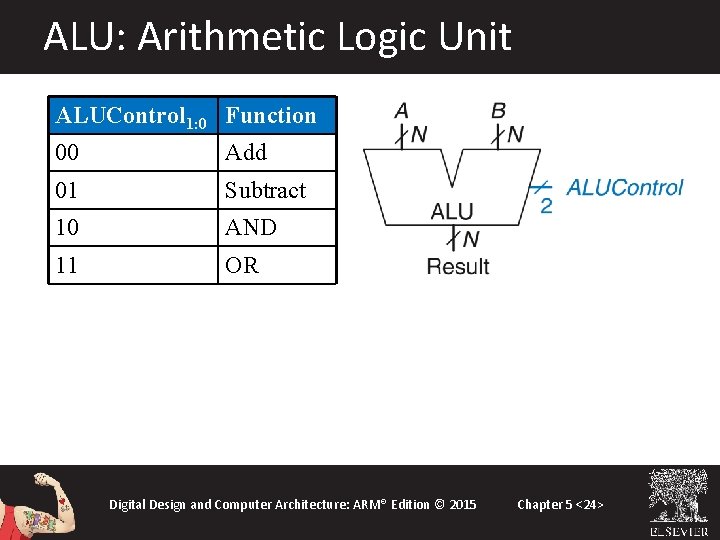
ALU: Arithmetic Logic Unit ALUControl 1: 0 Function 00 Add 01 Subtract 10 AND 11 OR Digital Design and Computer Architecture: ARM® Edition © 2015 Chapter 5 <24>
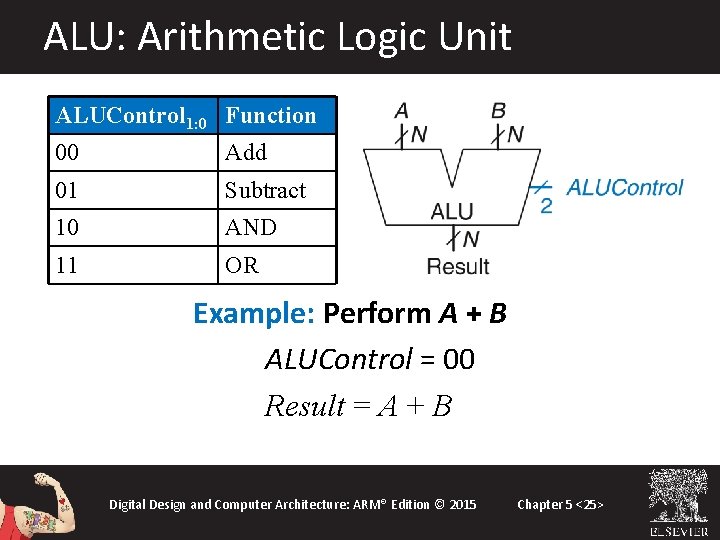
ALU: Arithmetic Logic Unit ALUControl 1: 0 Function 00 Add 01 Subtract 10 AND 11 OR Example: Perform A + B ALUControl = 00 Result = A + B Digital Design and Computer Architecture: ARM® Edition © 2015 Chapter 5 <25>
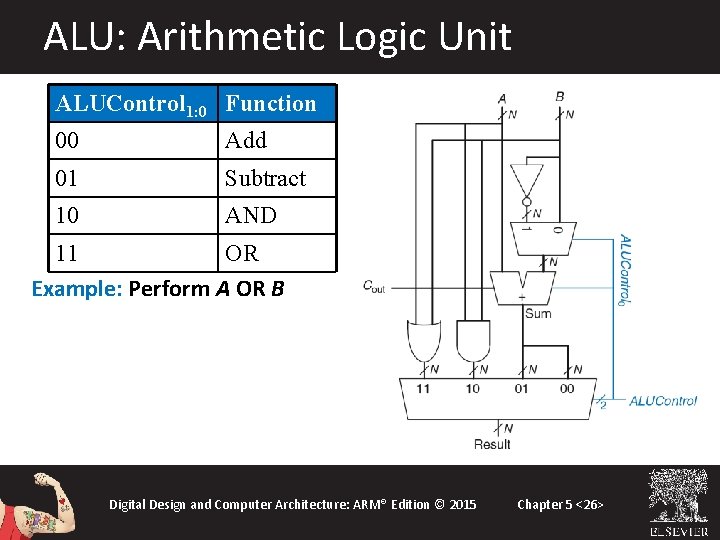
ALU: Arithmetic Logic Unit ALUControl 1: 0 Function 00 Add 01 Subtract 10 AND 11 OR Example: Perform A OR B Digital Design and Computer Architecture: ARM® Edition © 2015 Chapter 5 <26>
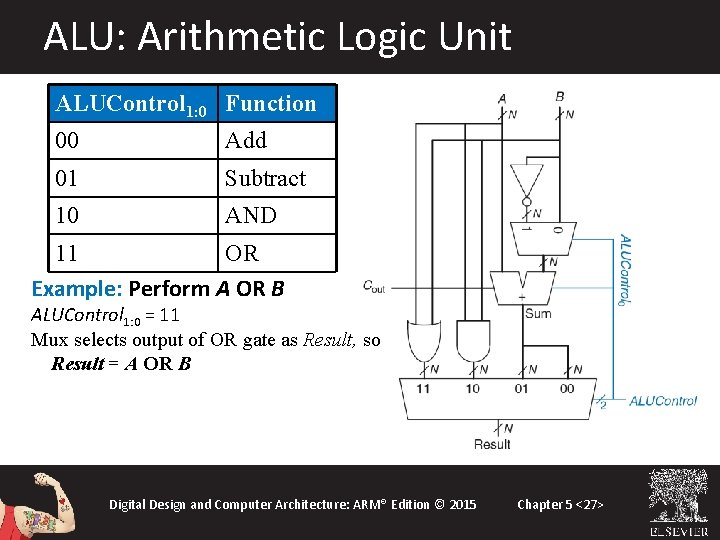
ALU: Arithmetic Logic Unit ALUControl 1: 0 Function 00 Add 01 Subtract 10 AND 11 OR Example: Perform A OR B ALUControl 1: 0 = 11 Mux selects output of OR gate as Result, so Result = A OR B Digital Design and Computer Architecture: ARM® Edition © 2015 Chapter 5 <27>
ALU: Arithmetic Logic Unit ALUControl 1: 0 Function 00 Add 01 Subtract 10 AND 11 OR Example: Perform A + B Digital Design and Computer Architecture: ARM® Edition © 2015 Chapter 5 <28>
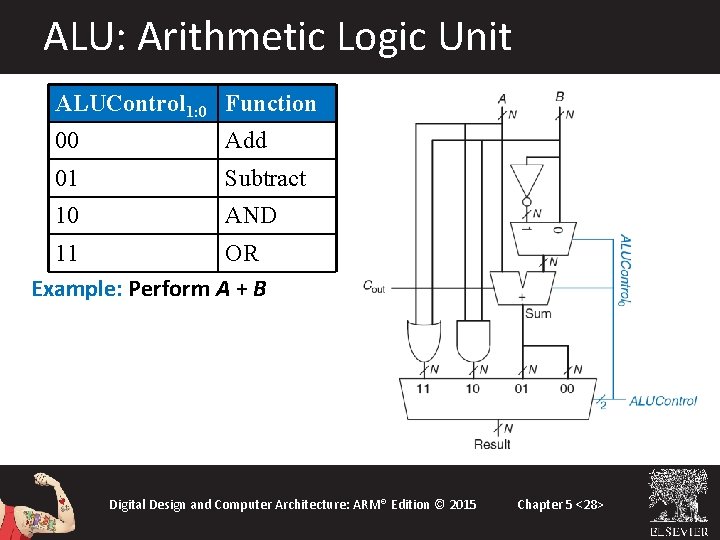
ALU: Arithmetic Logic Unit ALUControl 1: 0 Function 00 Add 01 Subtract 10 AND 11 OR Example: Perform A + B ALUControl 1: 0 = 00 ALUControl 0 = 0, so: Cin to adder = 0 2 nd input to adder is B Mux selects Sum as Result, so Result = A + B Digital Design and Computer Architecture: ARM® Edition © 2015 Chapter 5 <29>
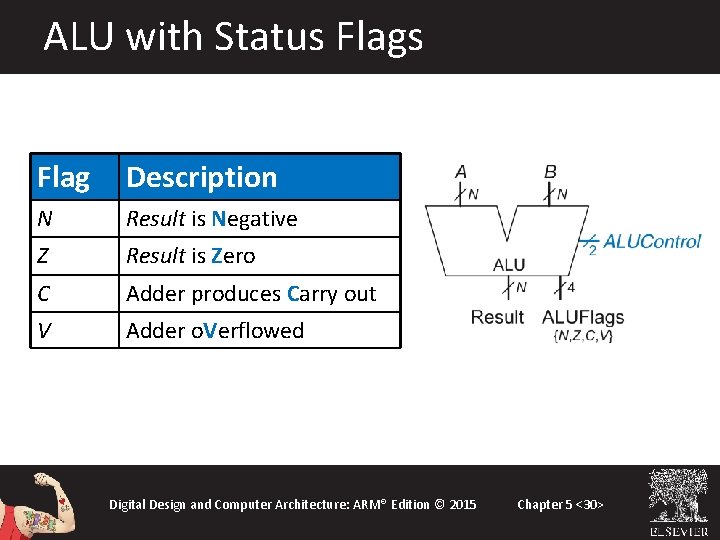
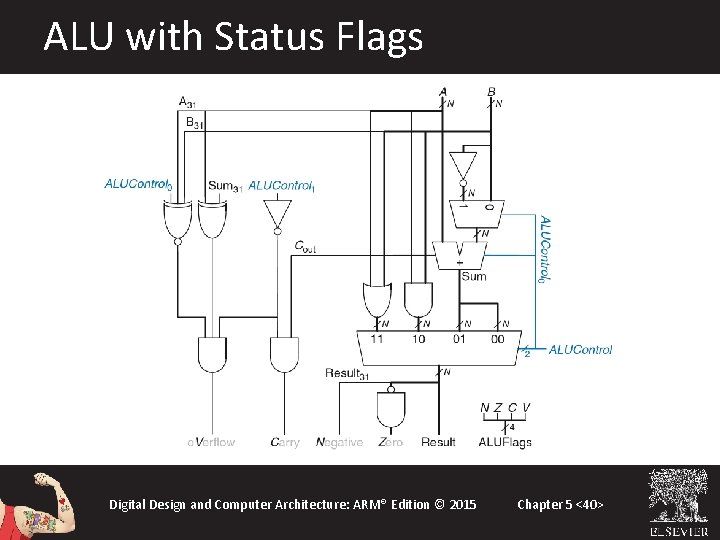
ALU with Status Flag Description N Result is Negative Z Result is Zero C Adder produces Carry out V Adder o. Verflowed Digital Design and Computer Architecture: ARM® Edition © 2015 Chapter 5 <30>
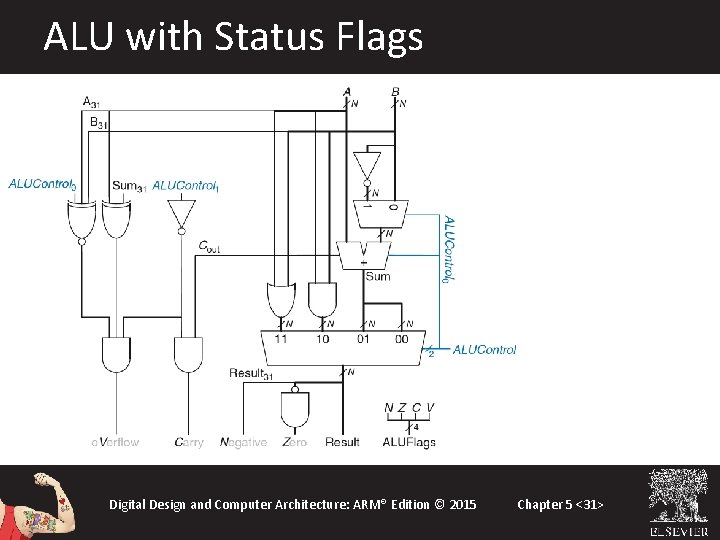
ALU with Status Flags Digital Design and Computer Architecture: ARM® Edition © 2015 Chapter 5 <31>
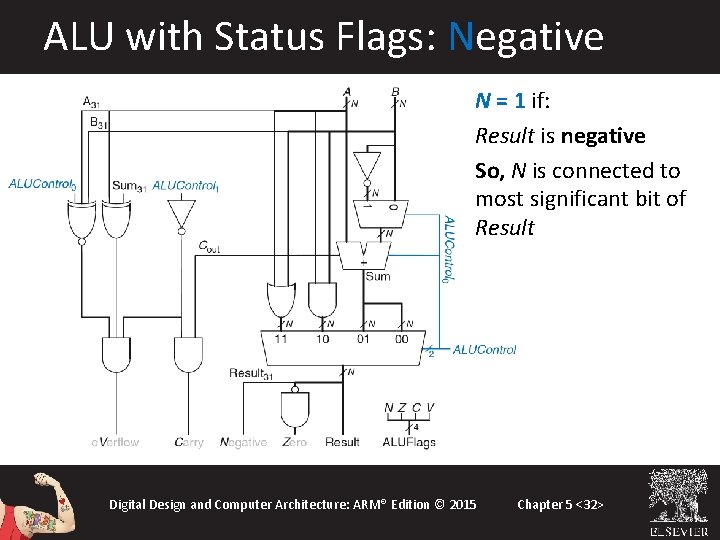
ALU with Status Flags: Negative N = 1 if: Result is negative So, N is connected to most significant bit of Result Digital Design and Computer Architecture: ARM® Edition © 2015 Chapter 5 <32>
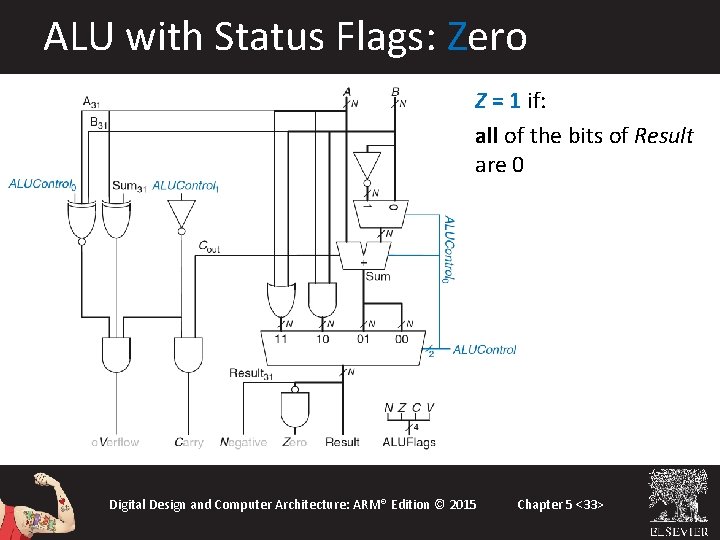
ALU with Status Flags: Zero Z = 1 if: all of the bits of Result are 0 Digital Design and Computer Architecture: ARM® Edition © 2015 Chapter 5 <33>
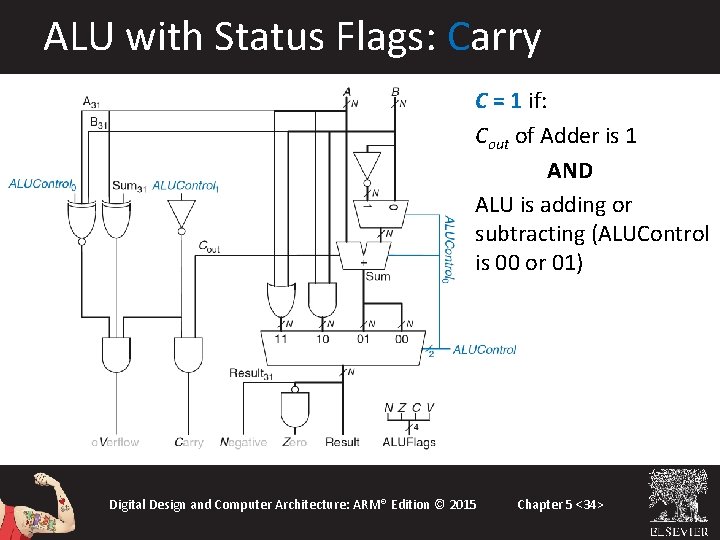
ALU with Status Flags: Carry C = 1 if: Cout of Adder is 1 AND ALU is adding or subtracting (ALUControl is 00 or 01) Digital Design and Computer Architecture: ARM® Edition © 2015 Chapter 5 <34>
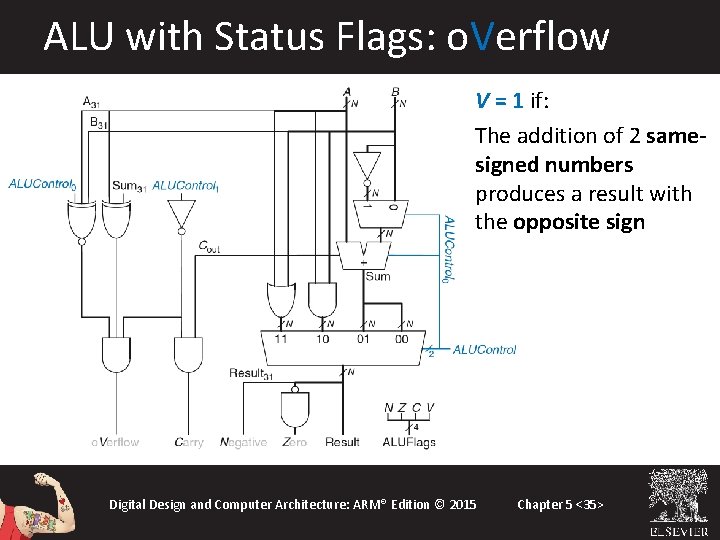
ALU with Status Flags: o. Verflow V = 1 if: The addition of 2 samesigned numbers produces a result with the opposite sign Digital Design and Computer Architecture: ARM® Edition © 2015 Chapter 5 <35>
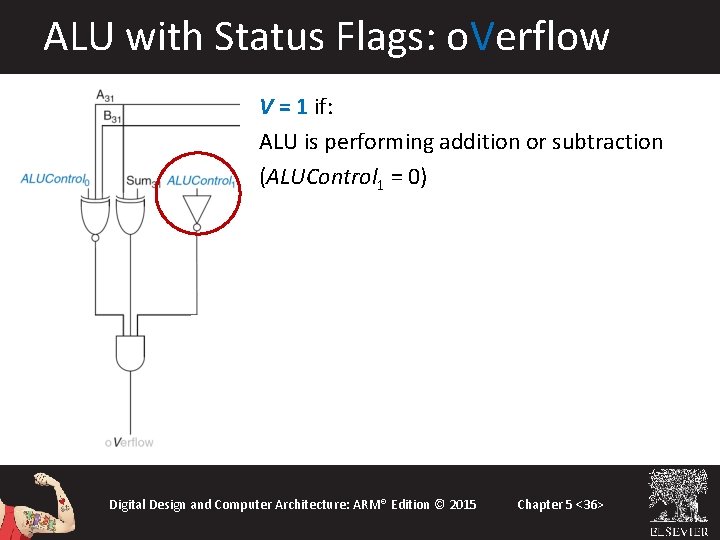
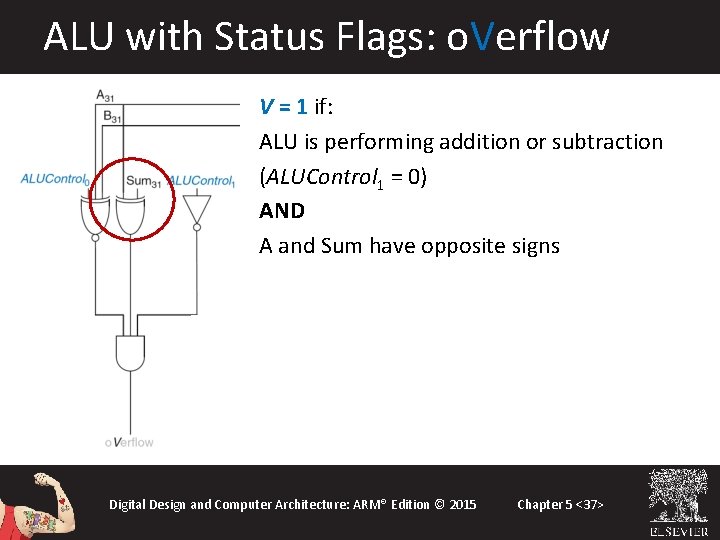
ALU with Status Flags: o. Verflow V = 1 if: ALU is performing addition or subtraction (ALUControl 1 = 0) Digital Design and Computer Architecture: ARM® Edition © 2015 Chapter 5 <36>
ALU with Status Flags: o. Verflow V = 1 if: ALU is performing addition or subtraction (ALUControl 1 = 0) AND A and Sum have opposite signs Digital Design and Computer Architecture: ARM® Edition © 2015 Chapter 5 <37>
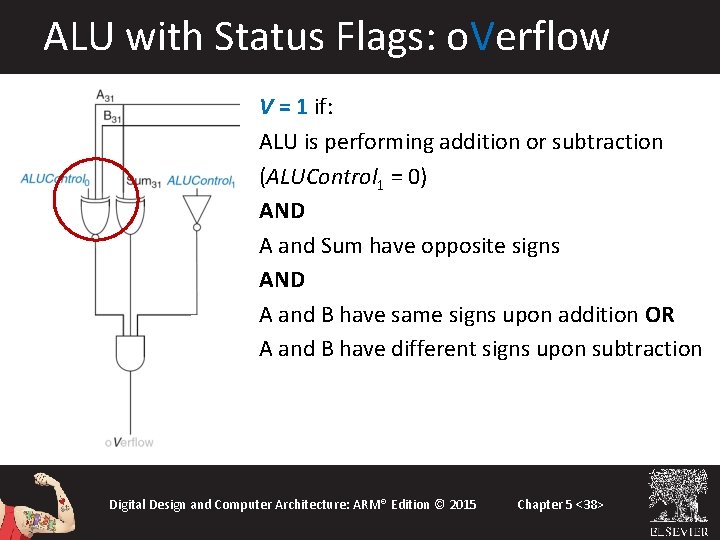
ALU with Status Flags: o. Verflow V = 1 if: ALU is performing addition or subtraction (ALUControl 1 = 0) AND A and Sum have opposite signs AND A and B have same signs upon addition OR A and B have different signs upon subtraction Digital Design and Computer Architecture: ARM® Edition © 2015 Chapter 5 <38>
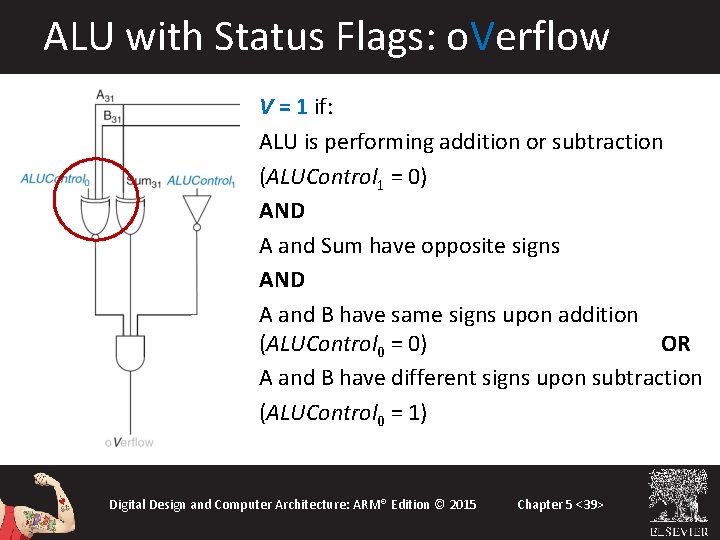
ALU with Status Flags: o. Verflow V = 1 if: ALU is performing addition or subtraction (ALUControl 1 = 0) AND A and Sum have opposite signs AND A and B have same signs upon addition (ALUControl 0 = 0) OR A and B have different signs upon subtraction (ALUControl 0 = 1) Digital Design and Computer Architecture: ARM® Edition © 2015 Chapter 5 <39>
ALU with Status Flags Digital Design and Computer Architecture: ARM® Edition © 2015 Chapter 5 <40>
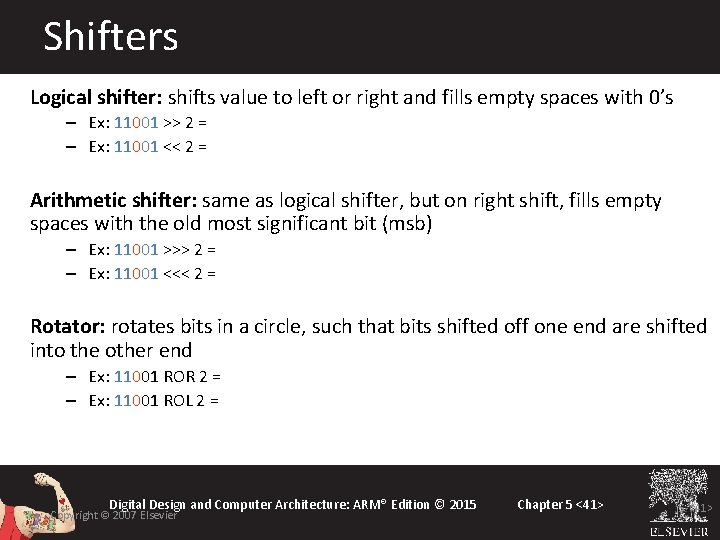
Shifters Logical shifter: shifts value to left or right and fills empty spaces with 0’s – Ex: 11001 >> 2 = – Ex: 11001 << 2 = Arithmetic shifter: same as logical shifter, but on right shift, fills empty spaces with the old most significant bit (msb) – Ex: 11001 >>> 2 = – Ex: 11001 <<< 2 = Rotator: rotates bits in a circle, such that bits shifted off one end are shifted into the other end – Ex: 11001 ROR 2 = – Ex: 11001 ROL 2 = Digital Design and Computer Architecture: ARM® Edition © 2015 Copyright © 2007 Elsevier Chapter 5 <41> 5 -<41>
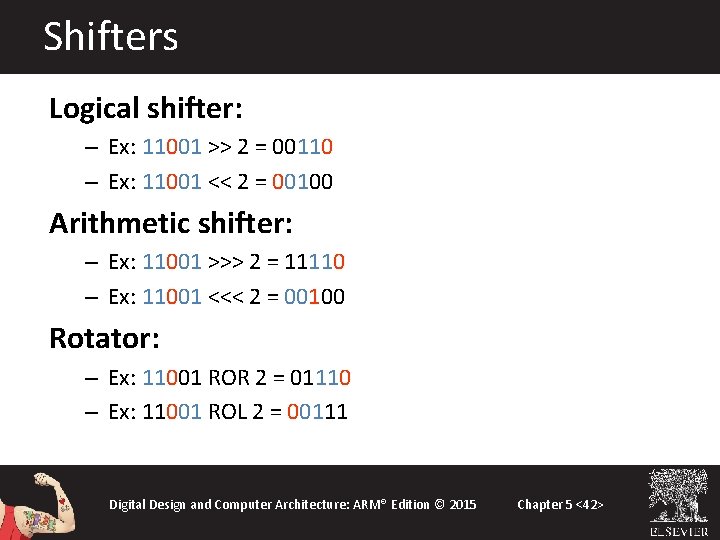
Shifters Logical shifter: – Ex: 11001 >> 2 = 00110 – Ex: 11001 << 2 = 00100 Arithmetic shifter: – Ex: 11001 >>> 2 = 11110 – Ex: 11001 <<< 2 = 00100 Rotator: – Ex: 11001 ROR 2 = 01110 – Ex: 11001 ROL 2 = 00111 Digital Design and Computer Architecture: ARM® Edition © 2015 Chapter 5 <42>
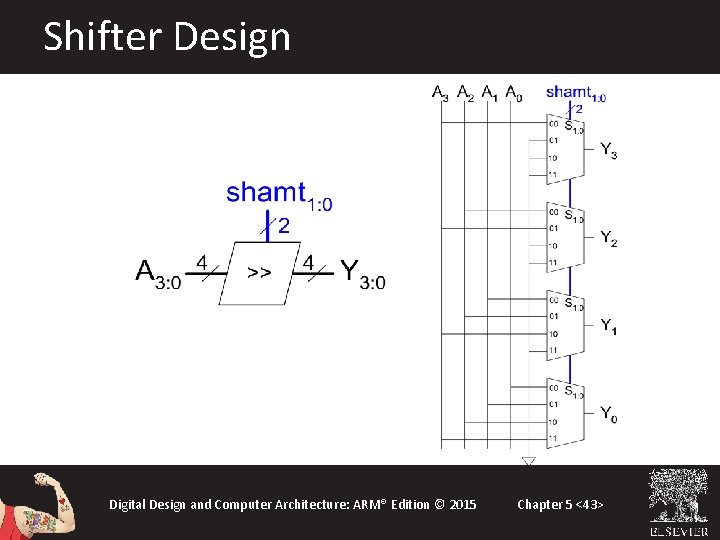
Shifter Design Digital Design and Computer Architecture: ARM® Edition © 2015 Chapter 5 <43>
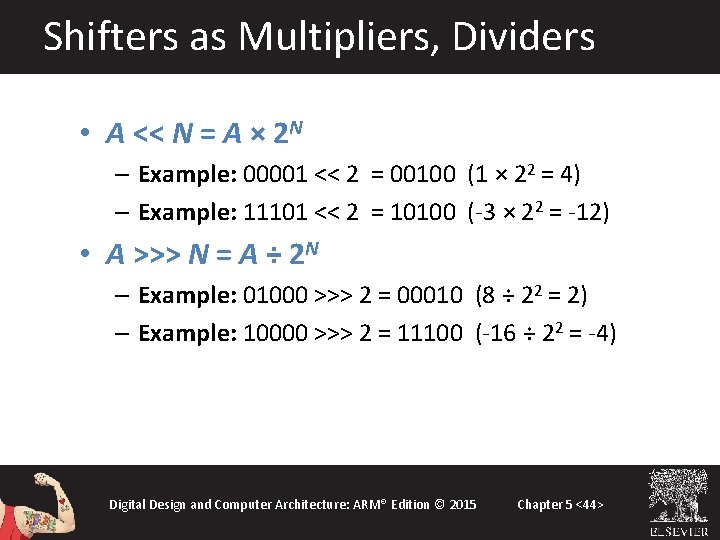
Shifters as Multipliers, Dividers • A << N = A × 2 N – Example: 00001 << 2 = 00100 (1 × 22 = 4) – Example: 11101 << 2 = 10100 (-3 × 22 = -12) • A >>> N = A ÷ 2 N – Example: 01000 >>> 2 = 00010 (8 ÷ 22 = 2) – Example: 10000 >>> 2 = 11100 (-16 ÷ 22 = -4) Digital Design and Computer Architecture: ARM® Edition © 2015 Chapter 5 <44>
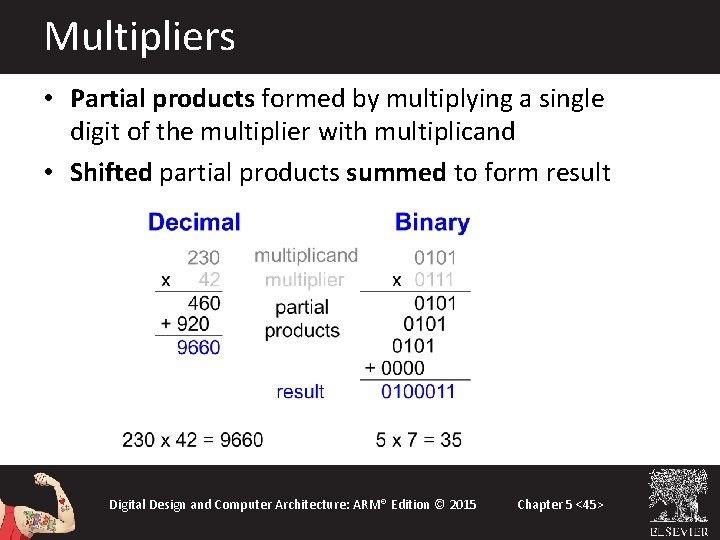
Multipliers • Partial products formed by multiplying a single digit of the multiplier with multiplicand • Shifted partial products summed to form result Digital Design and Computer Architecture: ARM® Edition © 2015 Chapter 5 <45>
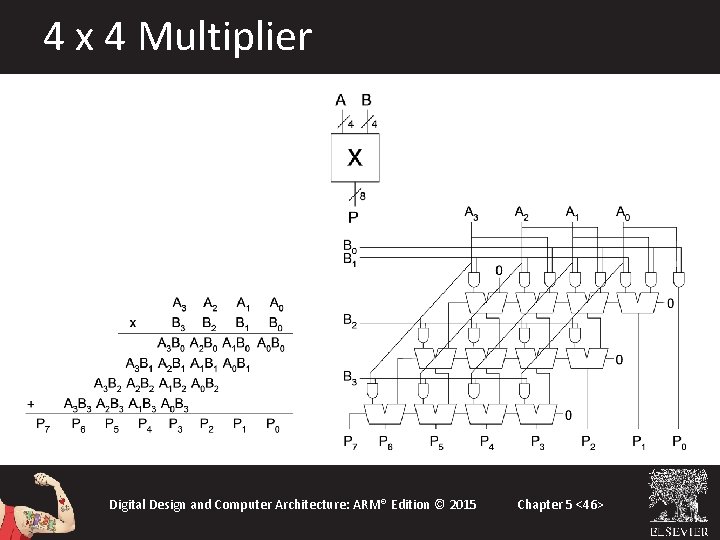
4 x 4 Multiplier Digital Design and Computer Architecture: ARM® Edition © 2015 Chapter 5 <46>