
CHAPTER 5 Data and Knowledge Management CHAPTER OUTLINE

- Slides: 33
CHAPTER 5 Data and Knowledge Management
CHAPTER OUTLINE 5. 1 5. 2 5. 3 5. 4 5. 5 Managing Data The Database Approach Database Management Systems Data Warehouses and Data Marts Knowledge Management
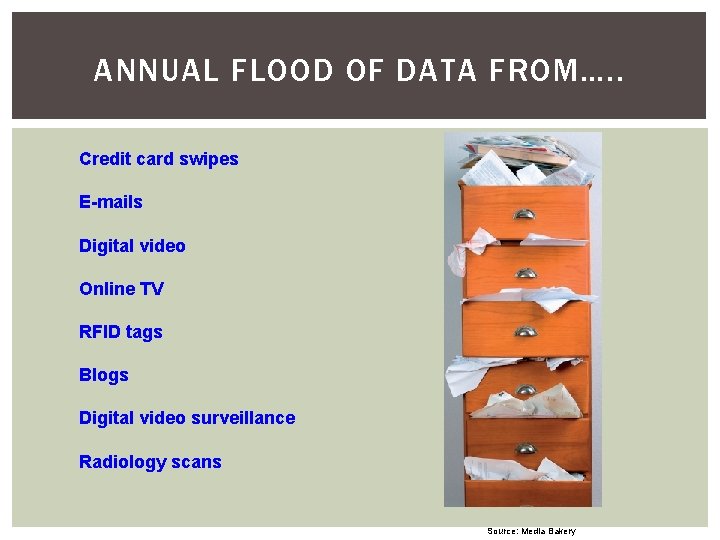
ANNUAL FLOOD OF DATA FROM…. . Credit card swipes E-mails Digital video Online TV RFID tags Blogs Digital video surveillance Radiology scans Source: Media Bakery
5. 1 MANAGING DATA The Difficulties of Managing Data Governance
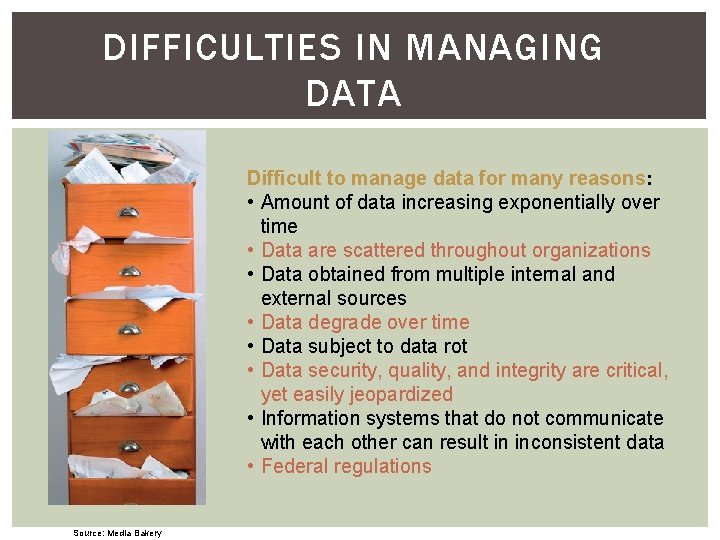
DIFFICULTIES IN MANAGING DATA Difficult to manage data for many reasons: • Amount of data increasing exponentially over time • Data are scattered throughout organizations • Data obtained from multiple internal and external sources • Data degrade over time • Data subject to data rot • Data security, quality, and integrity are critical, yet easily jeopardized • Information systems that do not communicate with each other can result in inconsistent data • Federal regulations Source: Media Bakery
DATA GOVERNANCE • Data Governance • Master Data Management • Master Data See video
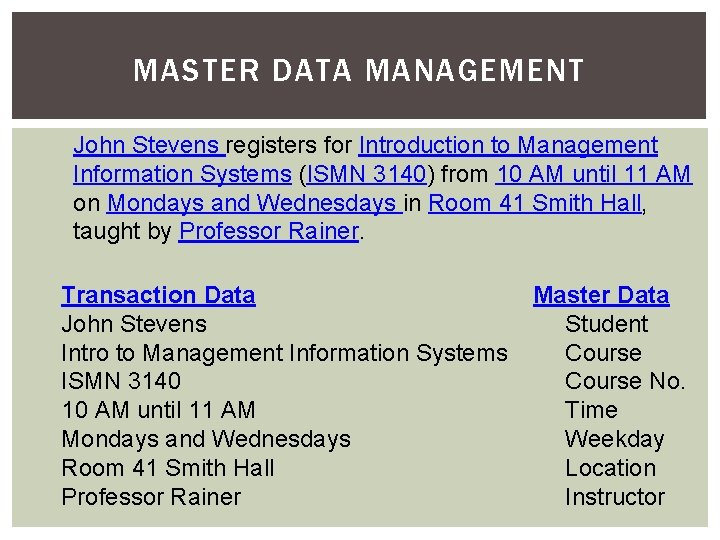
MASTER DATA MANAGEMENT John Stevens registers for Introduction to Management Information Systems (ISMN 3140) from 10 AM until 11 AM on Mondays and Wednesdays in Room 41 Smith Hall, taught by Professor Rainer. Transaction Data John Stevens Intro to Management Information Systems ISMN 3140 10 AM until 11 AM Mondays and Wednesdays Room 41 Smith Hall Professor Rainer Master Data Student Course No. Time Weekday Location Instructor
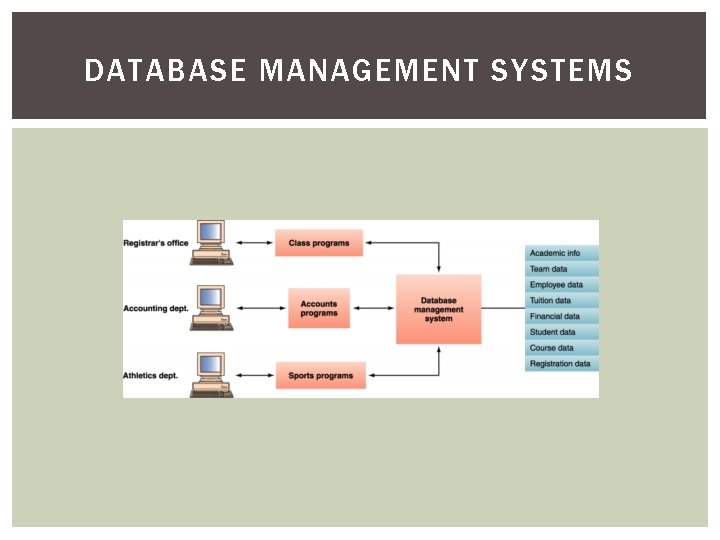
5. 2 THE DATABASE APPROACH Database management system (DBMS) minimize the following problems: Data redundancy Data isolation Data inconsistency
DATABASE APPROACH (CONTINUED) DBMSs maximize the following issues: Data security Data integrity Data independence
DATABASE MANAGEMENT SYSTEMS
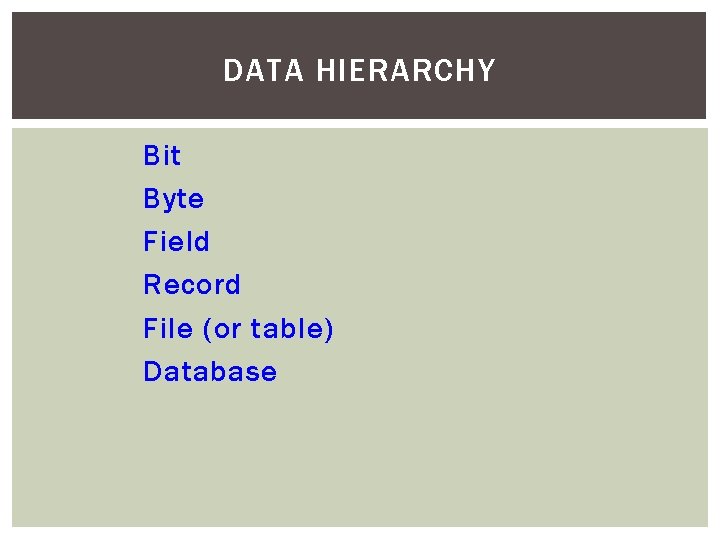
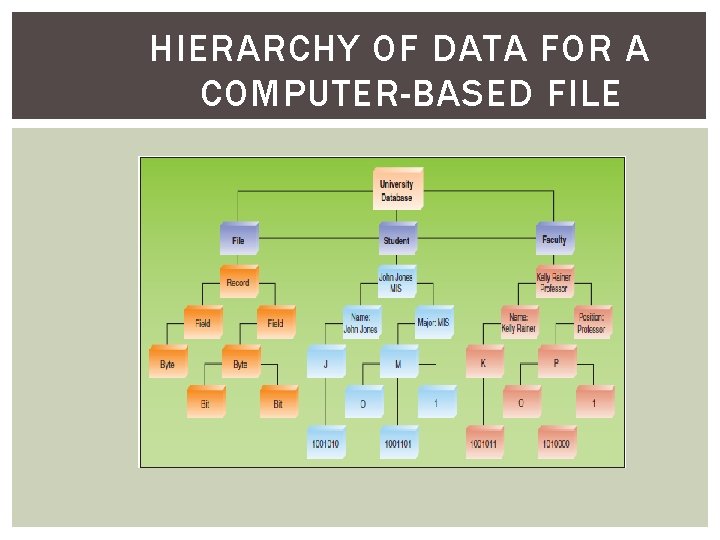
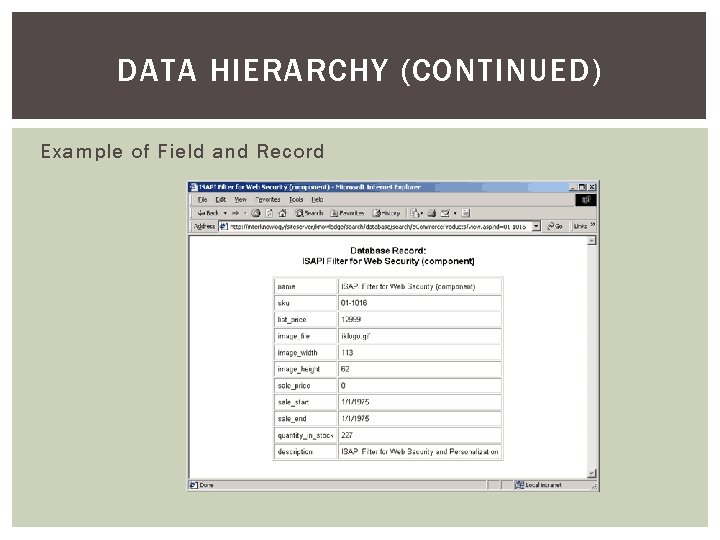
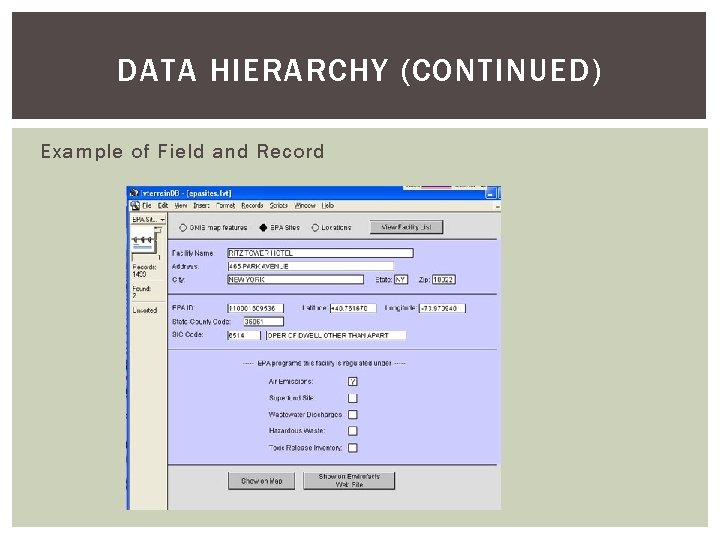
DATA HIERARCHY Bit Byte Field Record File (or table) Database
HIERARCHY OF DATA FOR A COMPUTER-BASED FILE
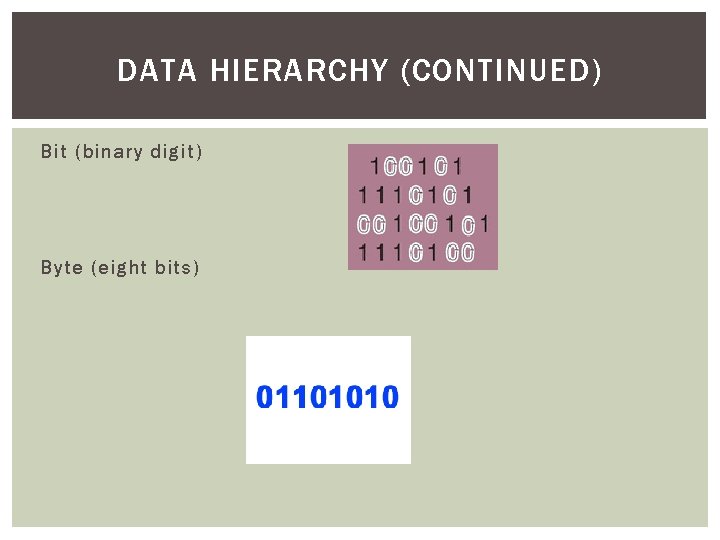
DATA HIERARCHY (CONTINUED) Bit (binary digit) Byte (eight bits)
DATA HIERARCHY (CONTINUED) Example of Field and Record
DATA HIERARCHY (CONTINUED) Example of Field and Record
DESIGNING THE DATABASE Data model Entity - is a person, place, thing, or event about which information is maintained. A record generally describes an entity. Attribute- is a particular characteristic or quality of a particular entity. Primary key- is a field that uniquely identifies a record. Secondary keys- are other field that have some identifying information but typically do not identify the file with complete accuracy.
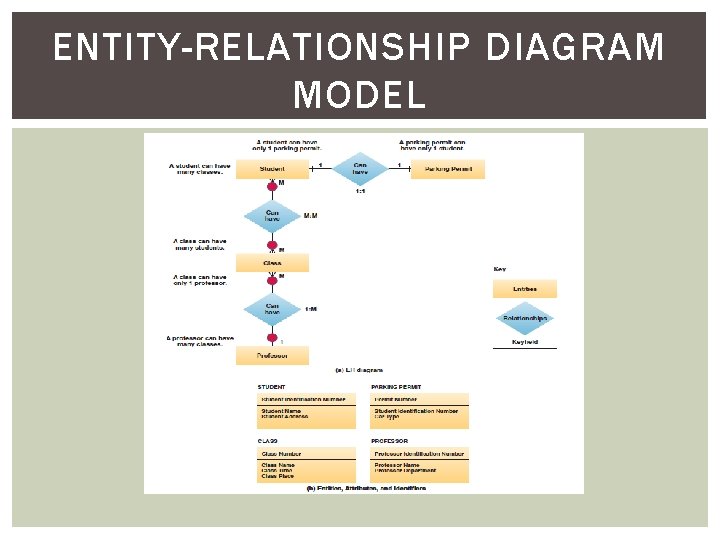
ENTITY-RELATIONSHIP MODELING Database designers plan the database design in a process called entity-relationship (ER) modeling. ER diagrams consists of entities, attributes and relationships. Entity classes Instance Identifiers
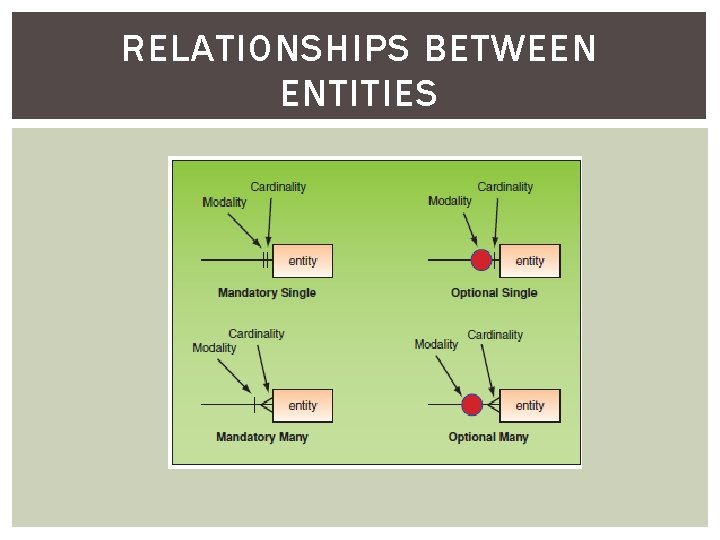
RELATIONSHIPS BETWEEN ENTITIES
ENTITY-RELATIONSHIP DIAGRAM MODEL
5. 3 DATABASE MANAGEMENT SYSTEMS Database management system (DBMS) Relational database model Structured Query Language (SQL) Query by Example (QBE)
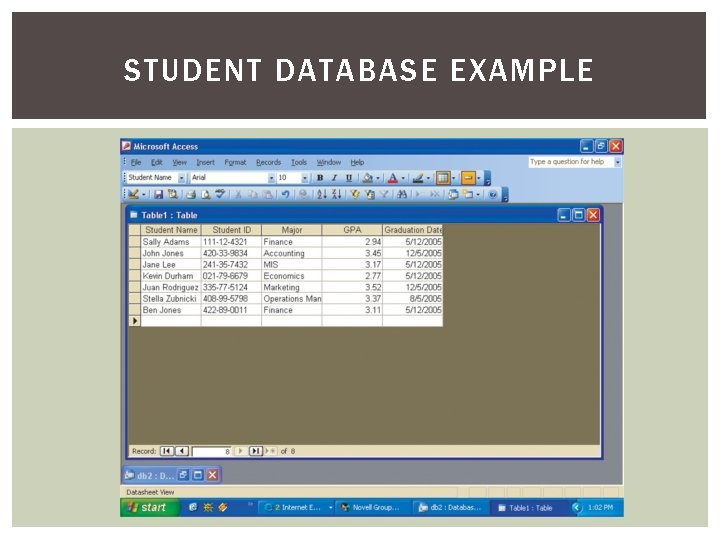
STUDENT DATABASE EXAMPLE
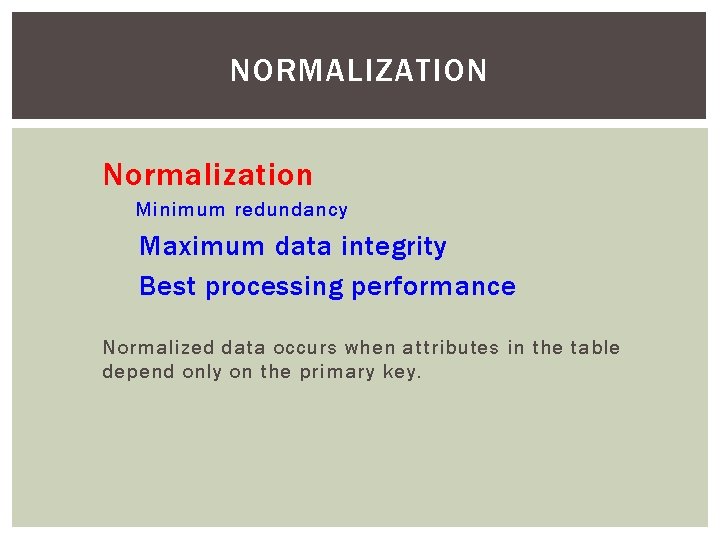
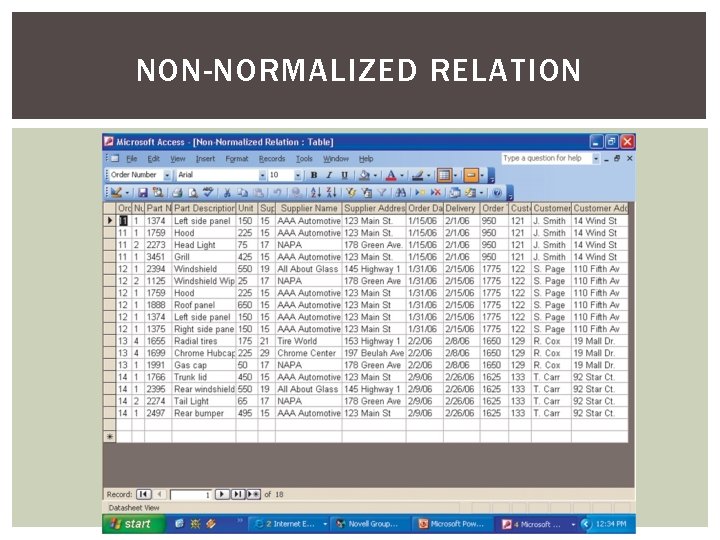
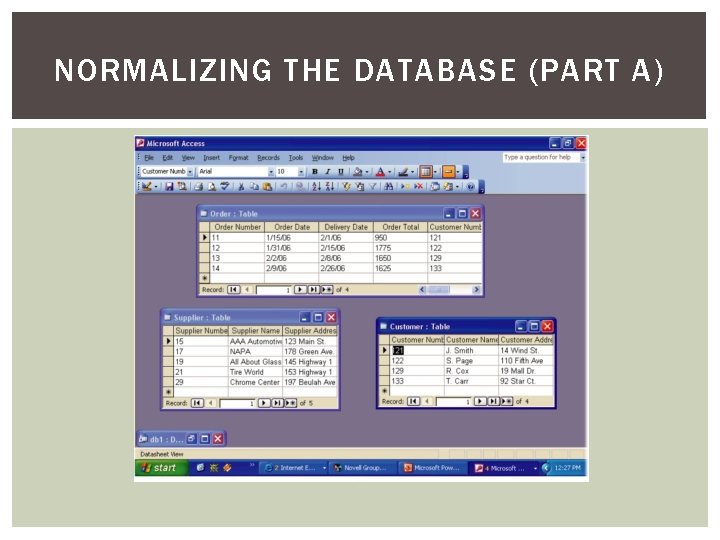
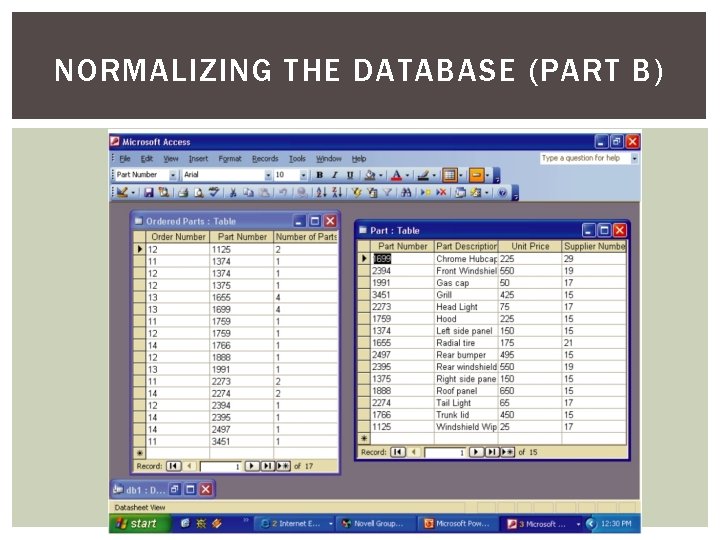
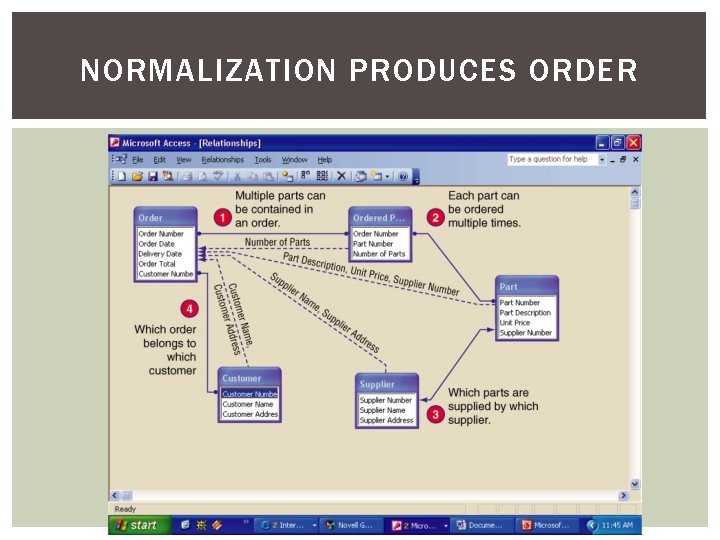
NORMALIZATION Normalization Minimum redundancy Maximum data integrity Best processing performance Normalized data occurs when attributes in the table depend only on the primary key.
NON-NORMALIZED RELATION
NORMALIZING THE DATABASE (PART A)
NORMALIZING THE DATABASE (PART B)
NORMALIZATION PRODUCES ORDER
5. 4 DATA WAREHOUSING Data warehouses and Data Marts Organized by business dimension or subject Multidimensional Historical Use online analytical processing
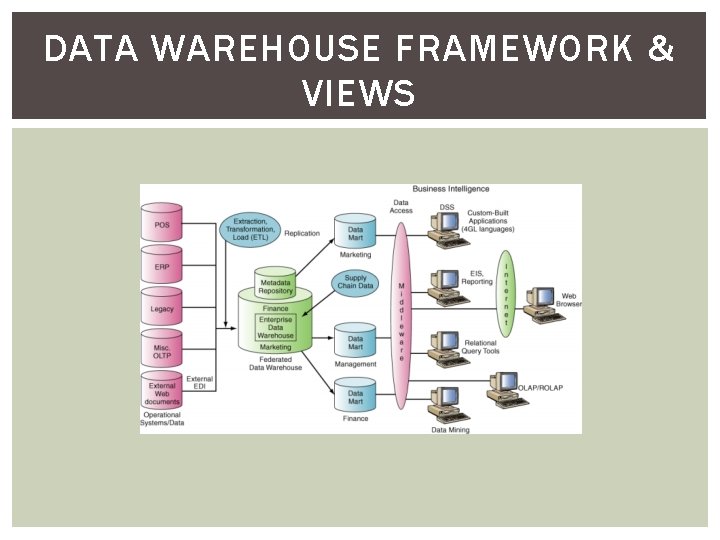
DATA WAREHOUSE FRAMEWORK & VIEWS
BENEFITS OF DATA WAREHOUSING End users can access data quickly and easily via Web browsers because they are located in one place. End users can conduct extensive analysis with data in ways that may not have been possible before. End users have a consolidated view of organizational data.
5. 5 KNOWLEDGE MANAGEMENT Knowledge management (KM) and Knowledge management systems Knowledge Intellectual capital (or intellectual assets) Best Practices © Peter Eggermann/Age Fotostock America, Inc.
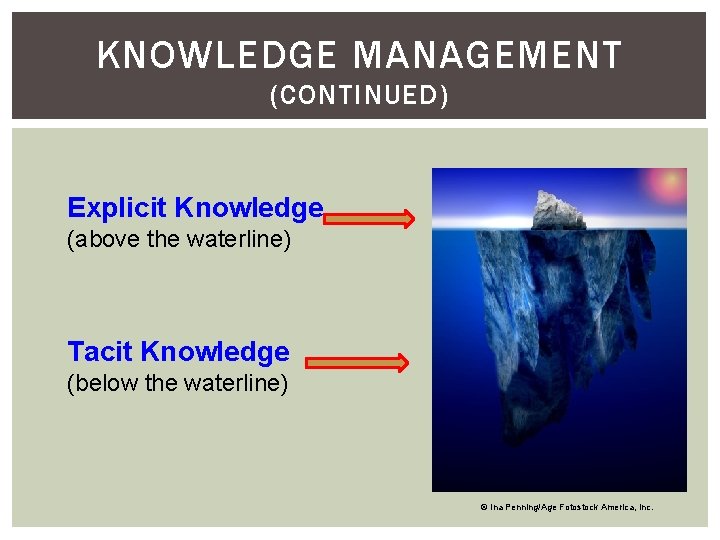
KNOWLEDGE MANAGEMENT (CONTINUED) Explicit Knowledge (above the waterline) Tacit Knowledge (below the waterline) © Ina Penning/Age Fotostock America, Inc.
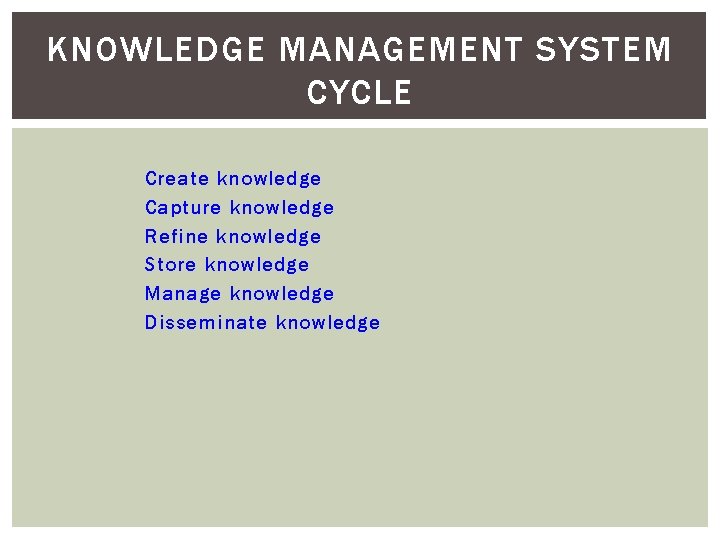
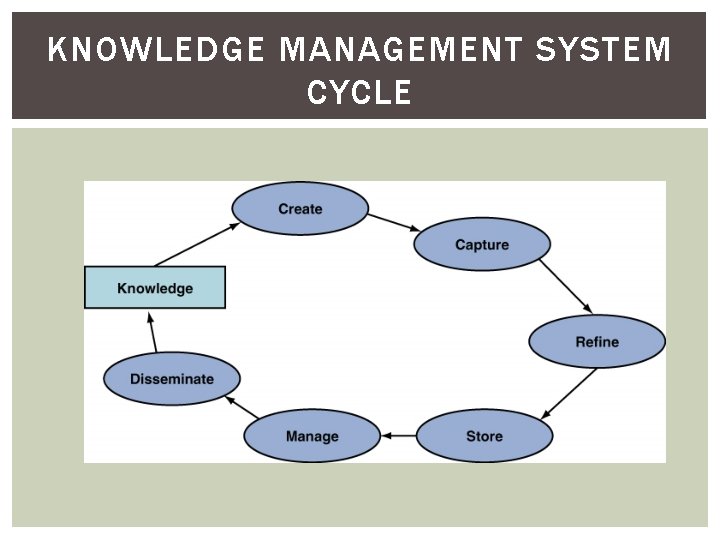
KNOWLEDGE MANAGEMENT SYSTEM CYCLE Create knowledge Capture knowledge Refine knowledge Store knowledge Manage knowledge Disseminate knowledge
KNOWLEDGE MANAGEMENT SYSTEM CYCLE