
Chapter 5 Components of a Solution A solvent


- Slides: 51
Chapter 5
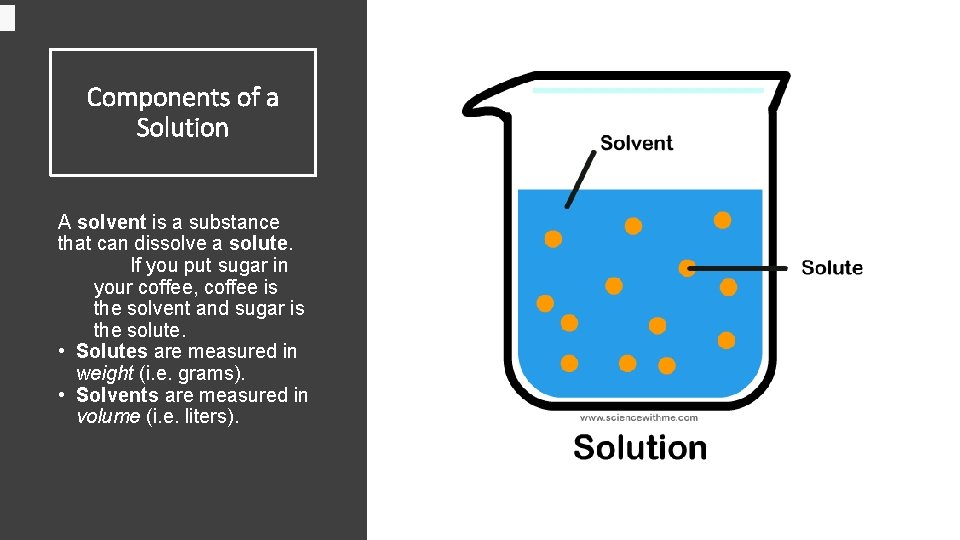
Components of a Solution A solvent is a substance that can dissolve a solute. If you put sugar in your coffee, coffee is the solvent and sugar is the solute. • Solutes are measured in weight (i. e. grams). • Solvents are measured in volume (i. e. liters).
5. 1 Osmosis and Tonicity Water moves freely between the cells and extracellular fluid, resulting in a state of osmotic equilibrium. The movement of water across a membrane in response to a concentration gradient is called osmosis.
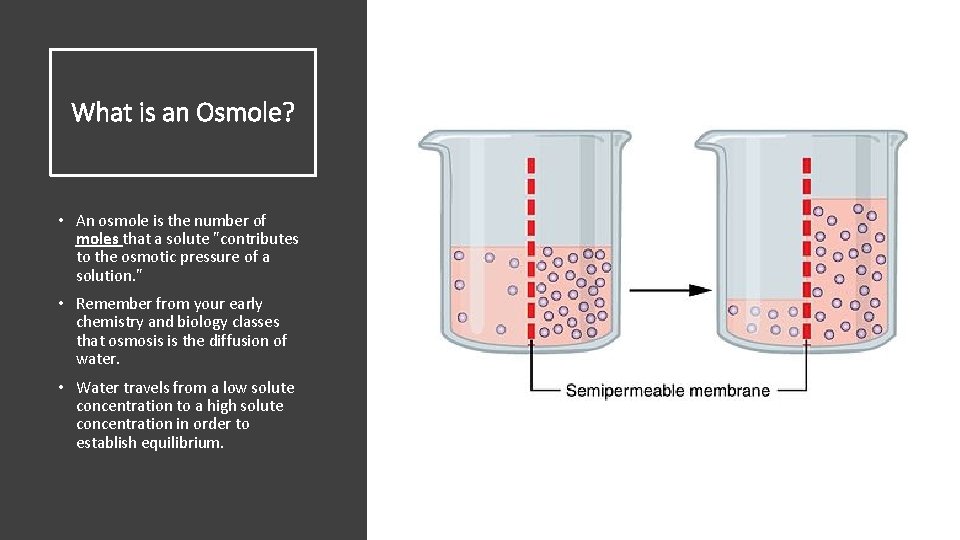
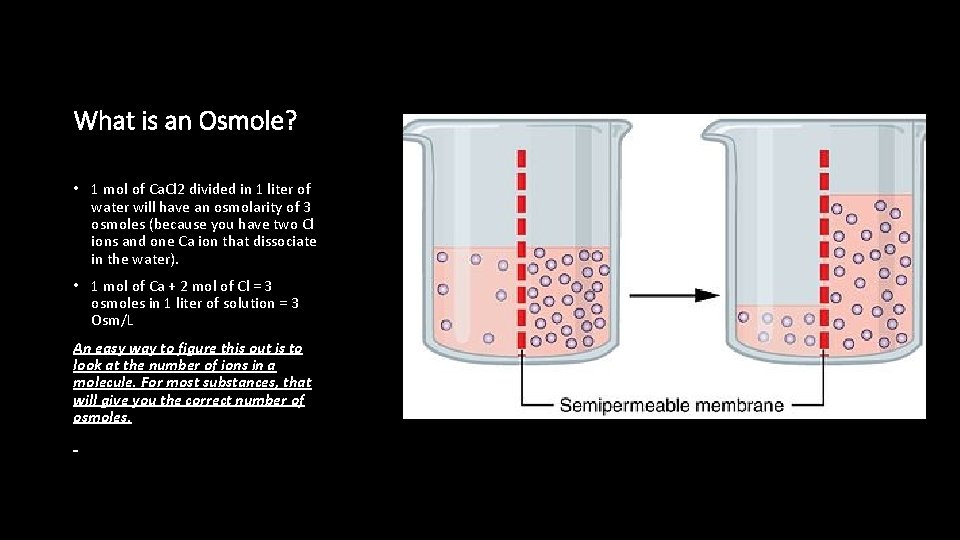
What is an Osmole? • An osmole is the number of moles that a solute "contributes to the osmotic pressure of a solution. " • Remember from your early chemistry and biology classes that osmosis is the diffusion of water. • Water travels from a low solute concentration to a high solute concentration in order to establish equilibrium.
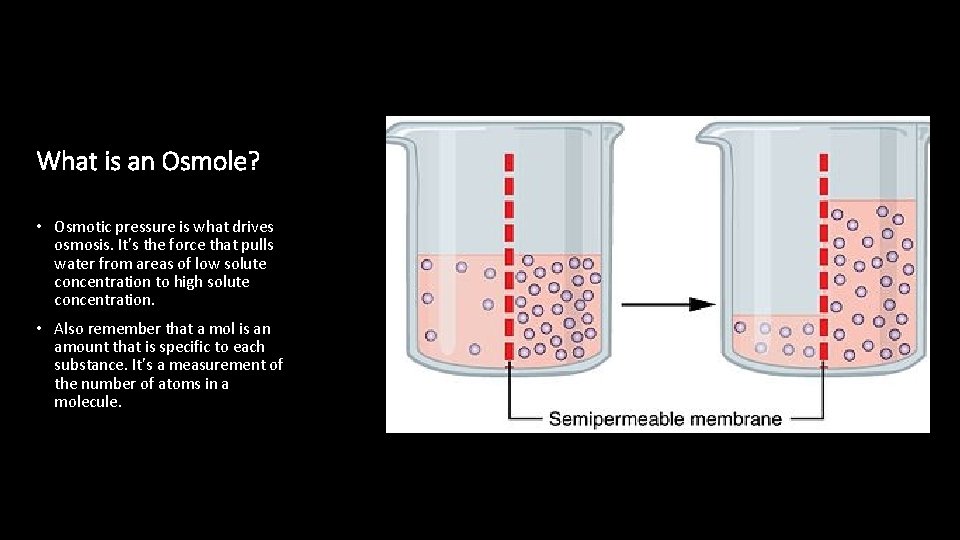
What is an Osmole? • Osmotic pressure is what drives osmosis. It’s the force that pulls water from areas of low solute concentration to high solute concentration. • Also remember that a mol is an amount that is specific to each substance. It’s a measurement of the number of atoms in a molecule.
What is an Osmole? • 1 mol of Ca. Cl 2 divided in 1 liter of water will have an osmolarity of 3 osmoles (because you have two Cl ions and one Ca ion that dissociate in the water). • 1 mol of Ca + 2 mol of Cl = 3 osmoles in 1 liter of solution = 3 Osm/L An easy way to figure this out is to look at the number of ions in a molecule. For most substances, that will give you the correct number of osmoles.
Osmolarity Describes the Number of Particles in Solution • The important factor for osmosis is the number of osmotically active particles in a given volume of solution, not the number of molecules. • Because some molecules dissociate into ions when they dissolve in a solution, the number of particles in solution is not always the same as the number of molecules. • For example, one glucose molecule dissolved in water yields one particle, but one Na. Cl dissolved in water theoretically yields two ions (particles): Na+ and Cl-. • Water moves by osmosis in response to the total concentration of all particles in the solution. The particles may be ions, uncharged molecules, or a mixture of both.
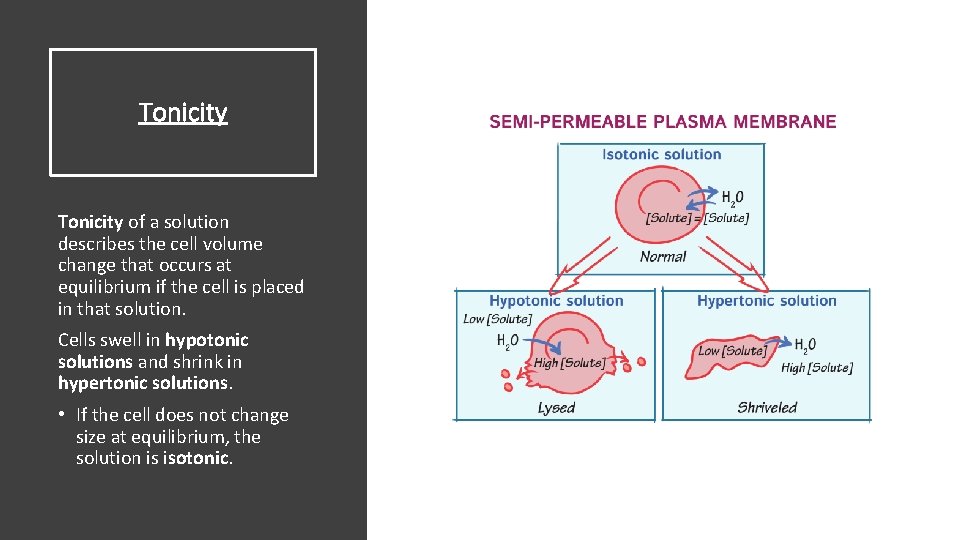
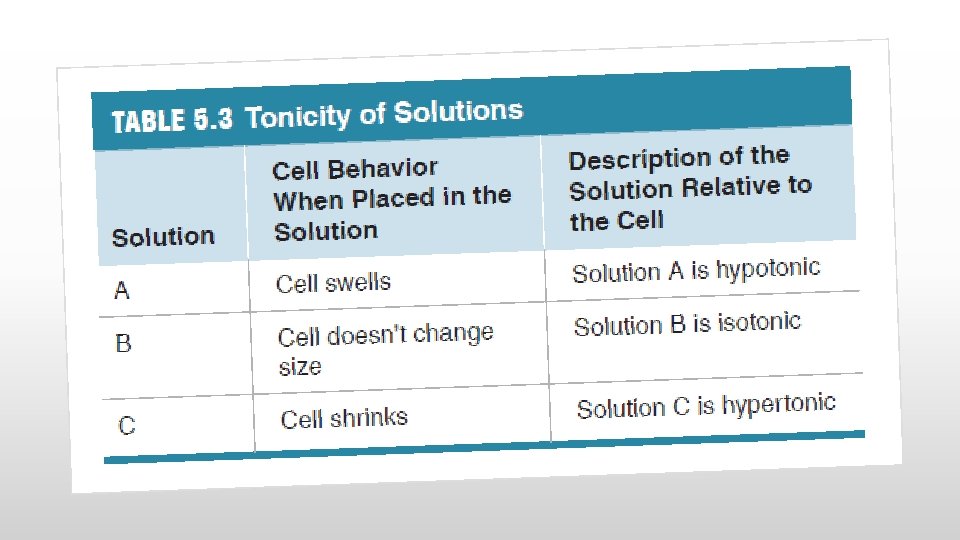
Tonicity of a solution describes the cell volume change that occurs at equilibrium if the cell is placed in that solution. Cells swell in hypotonic solutions and shrink in hypertonic solutions. • If the cell does not change size at equilibrium, the solution is isotonic.
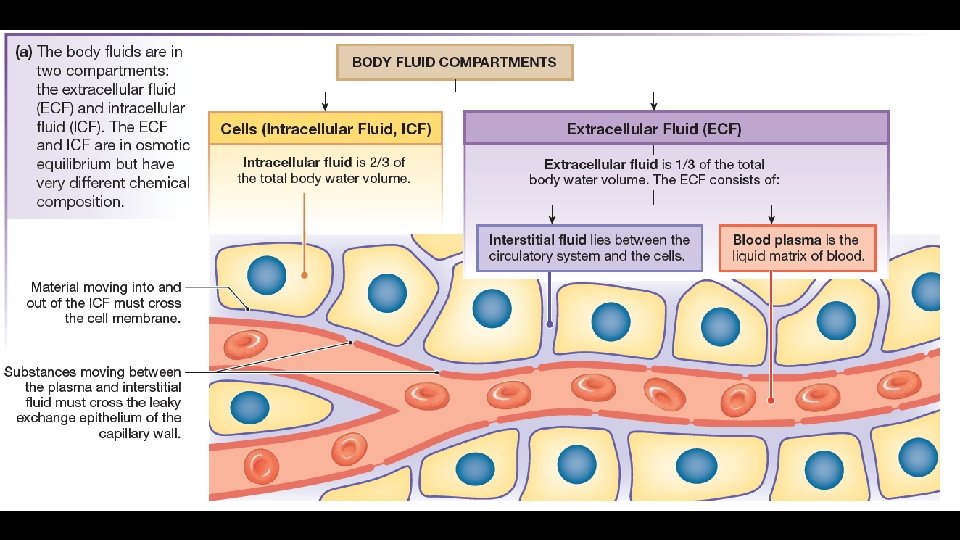
The Body Is in Osmotic Equilibrium • Water is able to move freely between cells and the extracellular fluid and distributes itself until water concentrations are equal throughout the body—in other words, until the body is in a state of osmotic equilibrium. • The movement of water across a membrane in response to a solute concentration gradient is called osmosis. • In osmosis, water moves to dilute the more concentrated solution. • Once concentrations are equal, net movement of water stops.
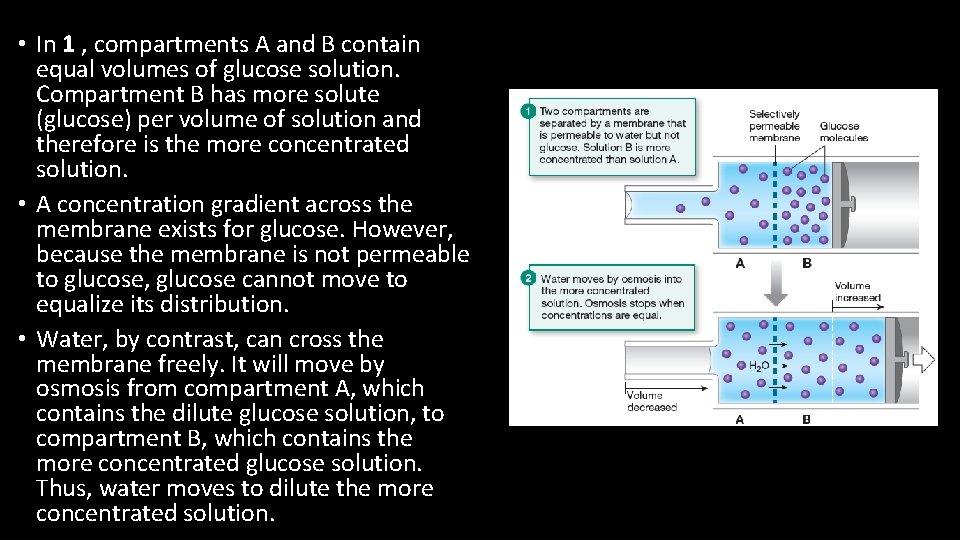
• In 1 , compartments A and B contain equal volumes of glucose solution. Compartment B has more solute (glucose) per volume of solution and therefore is the more concentrated solution. • A concentration gradient across the membrane exists for glucose. However, because the membrane is not permeable to glucose, glucose cannot move to equalize its distribution. • Water, by contrast, can cross the membrane freely. It will move by osmosis from compartment A, which contains the dilute glucose solution, to compartment B, which contains the more concentrated glucose solution. Thus, water moves to dilute the more concentrated solution.
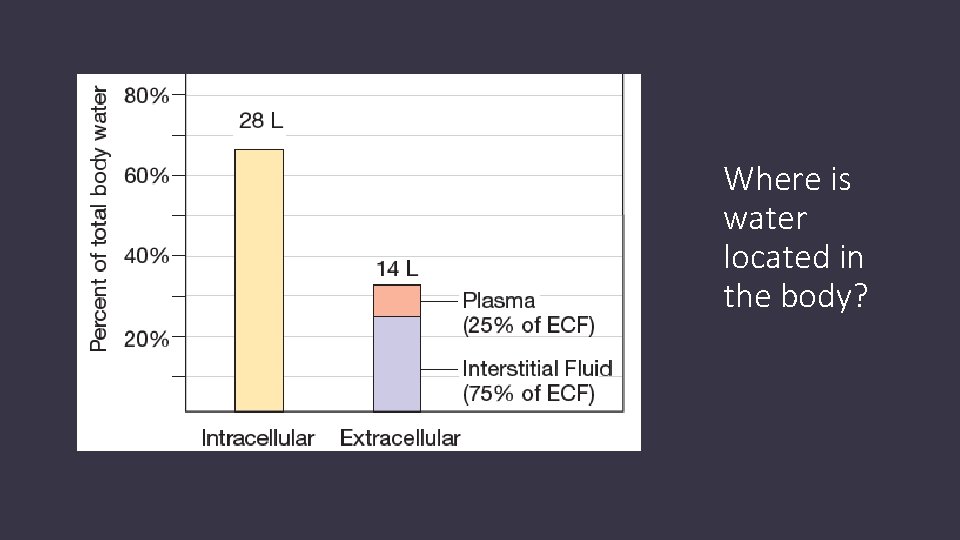
Where is water located in the body?
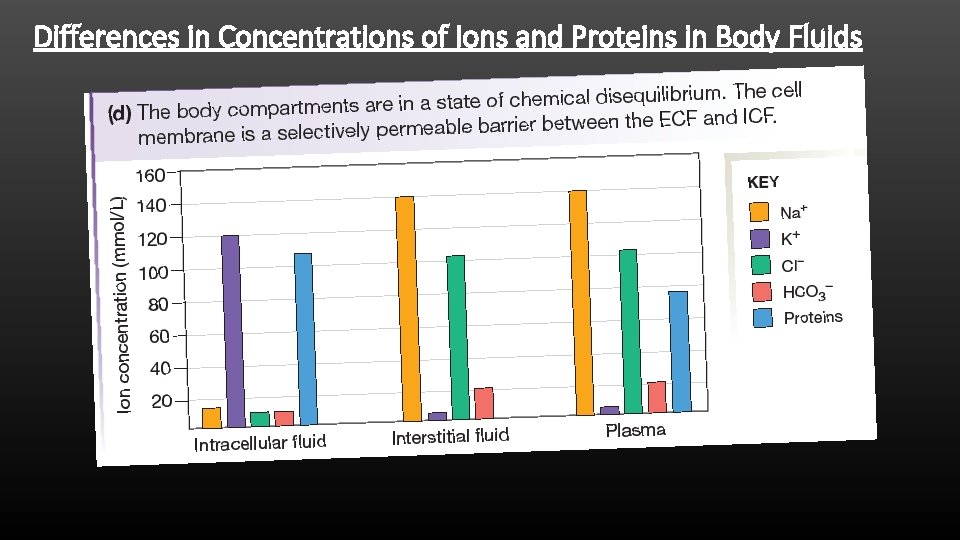
Differences in Concentrations of Ions and Proteins in Body Fluids
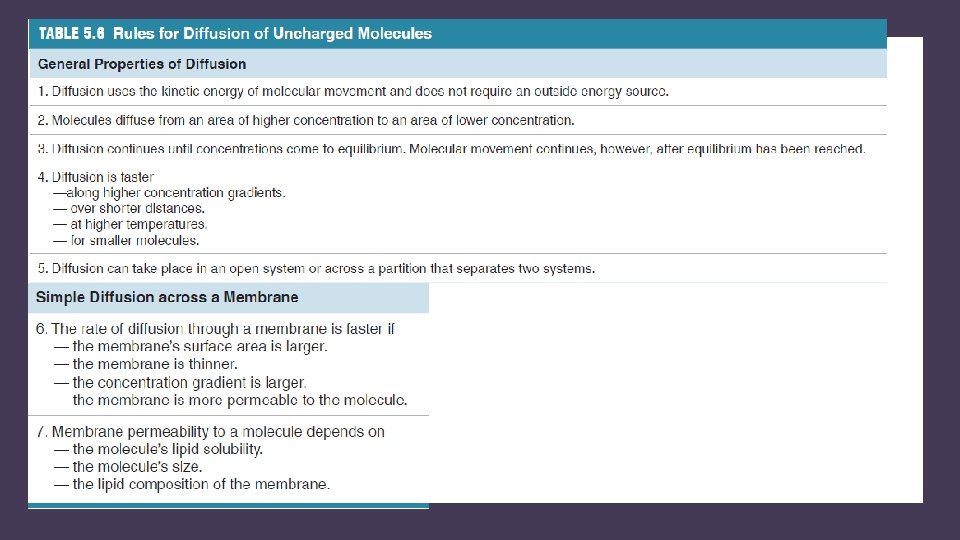
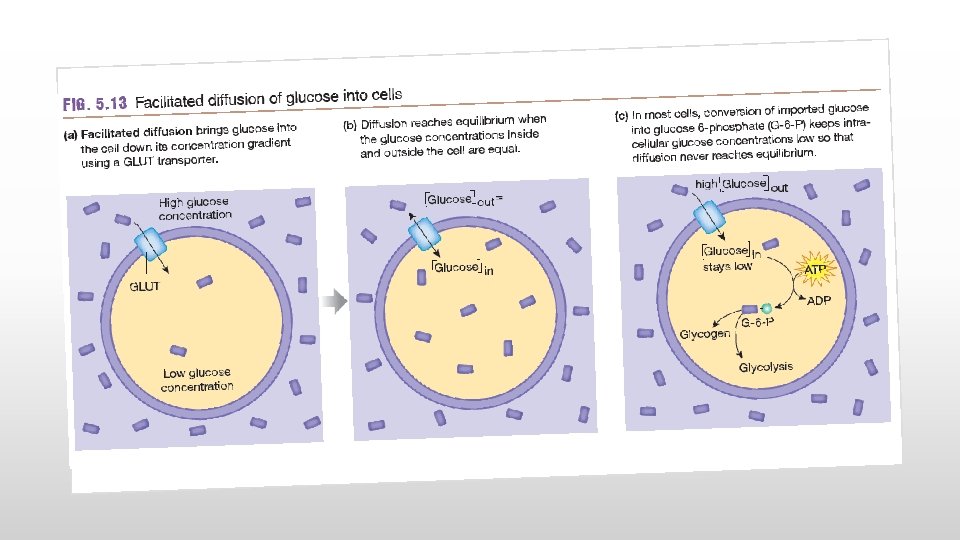
concentration gradient Molecules move from an area of higher concentration to an area of lower concentration. The difference in the concentration of a substance between two places is called a concentration gradient, also known as a chemical gradient.
concentration gradient • We say that molecules diffuse down the gradient, from higher concentration to lower concentration. • The rate of diffusion depends on the magnitude of the concentration gradient. • The larger the concentration gradient, the faster diffusion takes place. • For example, when you open a bottle of cologne, the rate of diffusion is most rapid as the molecules first escape from the bottle into the air. • Later, when the cologne has spread evenly throughout the room, the rate of diffusion has dropped to zero because there is no longer a concentration gradient.
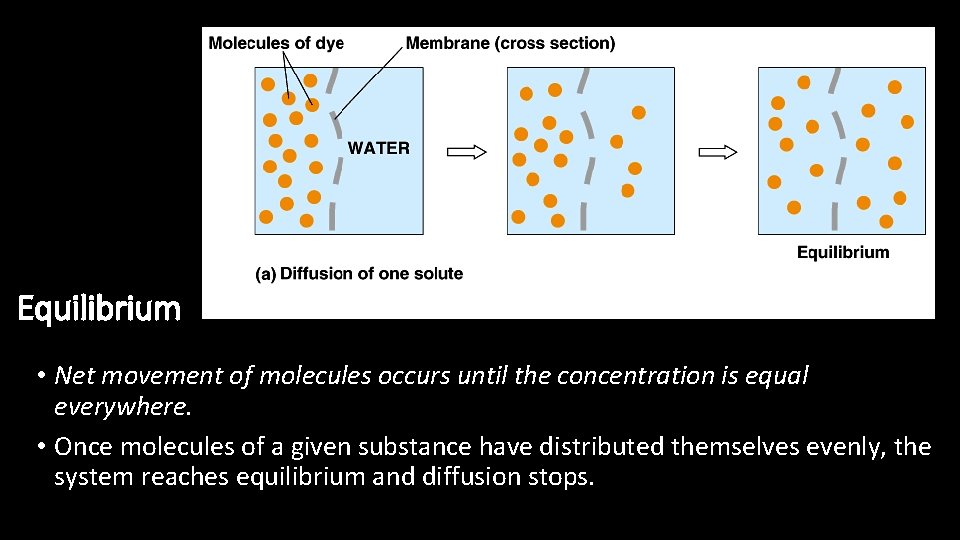
Equilibrium • Net movement of molecules occurs until the concentration is equal everywhere. • Once molecules of a given substance have distributed themselves evenly, the system reaches equilibrium and diffusion stops.
Factors affecting Diffusion - distance DISTANCE - Diffusion is rapid over short distances but much slower over long distances. What does the slow rate of diffusion over long distances mean for biological systems? In humans, nutrients take 5 seconds to diffuse from the blood to a cell that is 100 mm from the nearest capillary. At that rate, it would take years for nutrients to diffuse from the small intestine to cells in the big toe, and the cells would starve to death.
Factors affecting Diffusion - Distance To overcome the limitations of diffusion over distance, organisms use various transport mechanisms that speed up the movement of molecules. For example, the circulatory system to bring oxygen and nutrients rapidly from the point at which they enter the body to the cells.
Diffusion is directly related to temperature. Factors affecting Diffusion - temperature At higher temperatures, molecules move faster. Because diffusion results from molecular movement, the rate of diffusion increases as temperature increases. Generally, changes in temperature do not significantly affect diffusion rates in humans because we maintain a relatively constant body temperature.
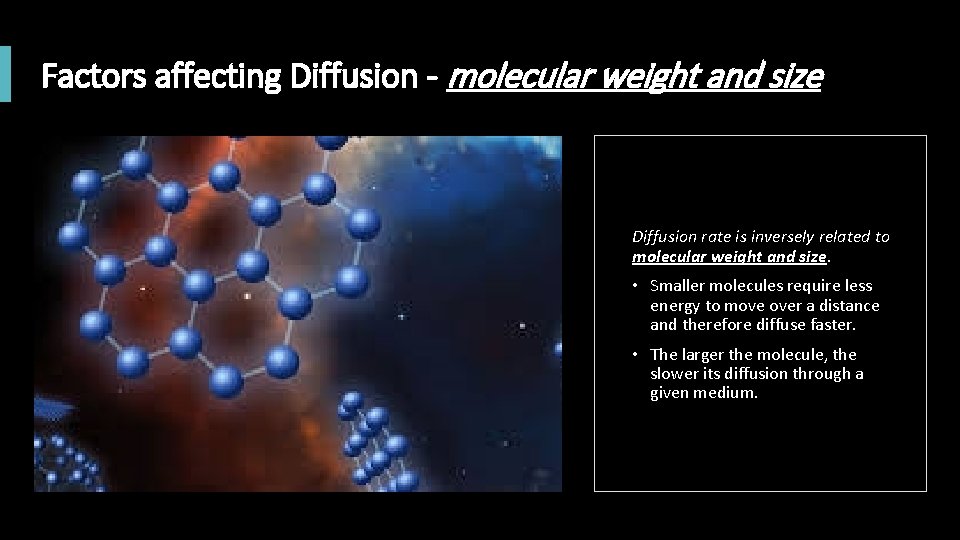
Factors affecting Diffusion - molecular weight and size Diffusion rate is inversely related to molecular weight and size. • Smaller molecules require less energy to move over a distance and therefore diffuse faster. • The larger the molecule, the slower its diffusion through a given medium.
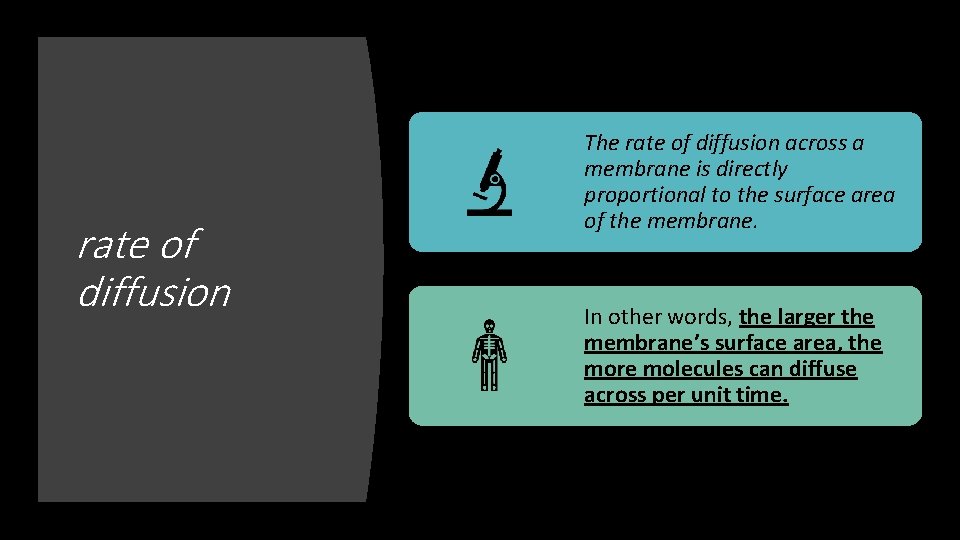
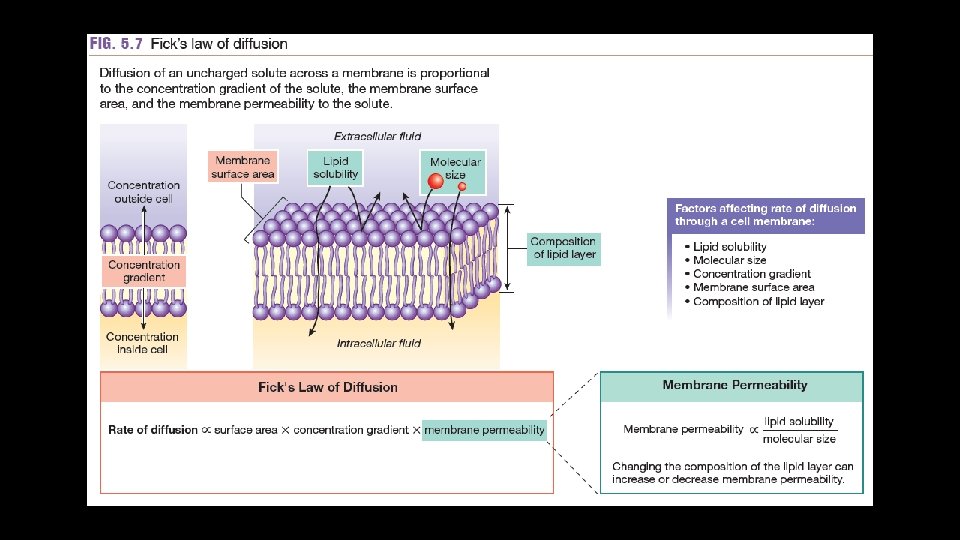
rate of diffusion The rate of diffusion across a membrane is directly proportional to the surface area of the membrane. In other words, the larger the membrane’s surface area, the more molecules can diffuse across per unit time.
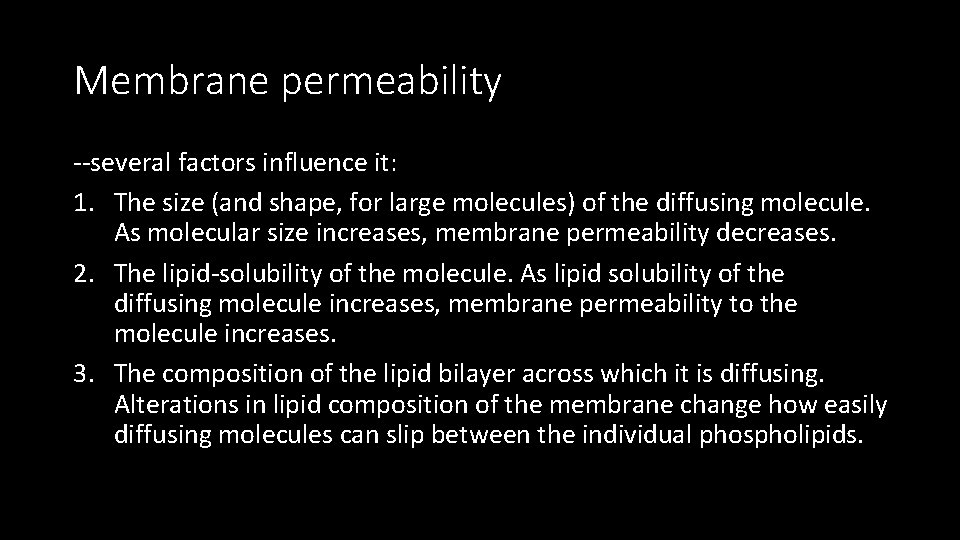
Membrane permeability --several factors influence it: 1. The size (and shape, for large molecules) of the diffusing molecule. As molecular size increases, membrane permeability decreases. 2. The lipid-solubility of the molecule. As lipid solubility of the diffusing molecule increases, membrane permeability to the molecule increases. 3. The composition of the lipid bilayer across which it is diffusing. Alterations in lipid composition of the membrane change how easily diffusing molecules can slip between the individual phospholipids.
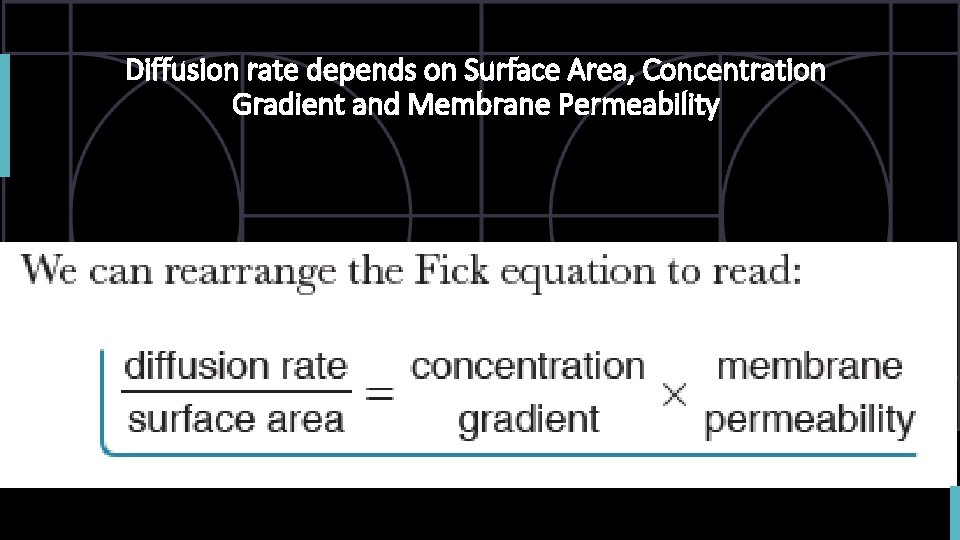
Diffusion rate depends on Surface Area, Concentration Gradient and Membrane Permeability
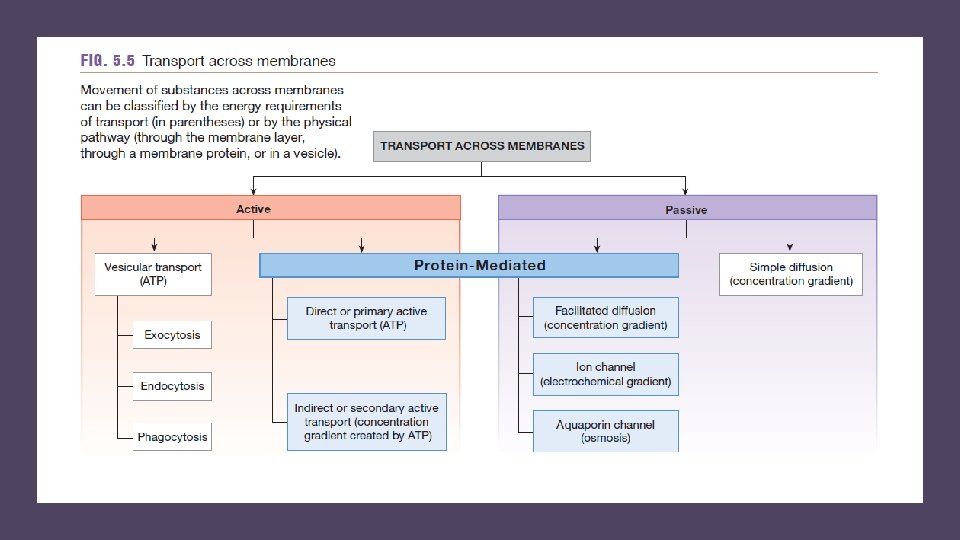
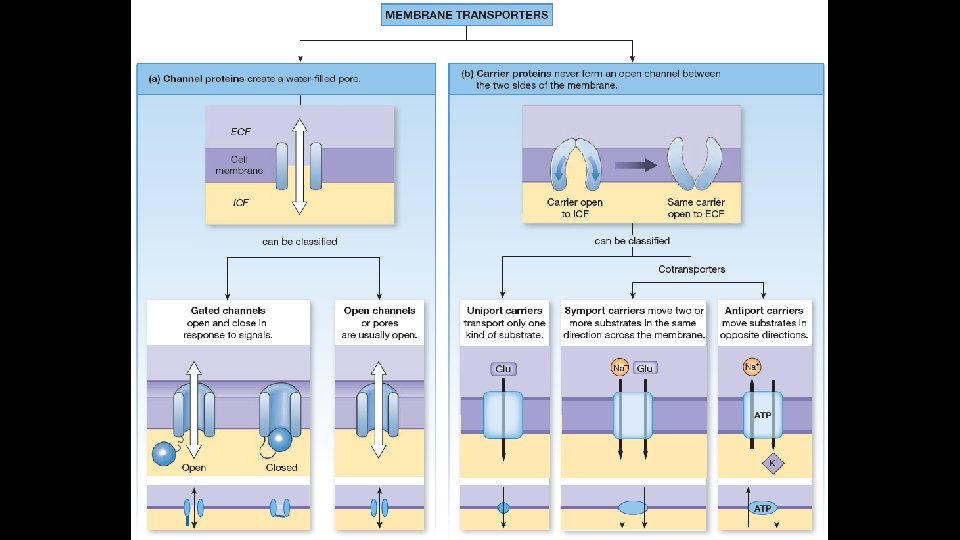
5. 4 Protein-Mediated Transport Most molecules cross membranes with the aid of membrane proteins. • Membrane proteins have four functional roles: 1. structural proteins - maintain cell shape and form cell junctions; 2. Membrane-associated enzymes - catalyze chemical reactions and help transfer signals across the membrane; 3. receptor proteins - are part of the body’s signaling system; and 4. transport proteins - move many molecules into or out of the cell.
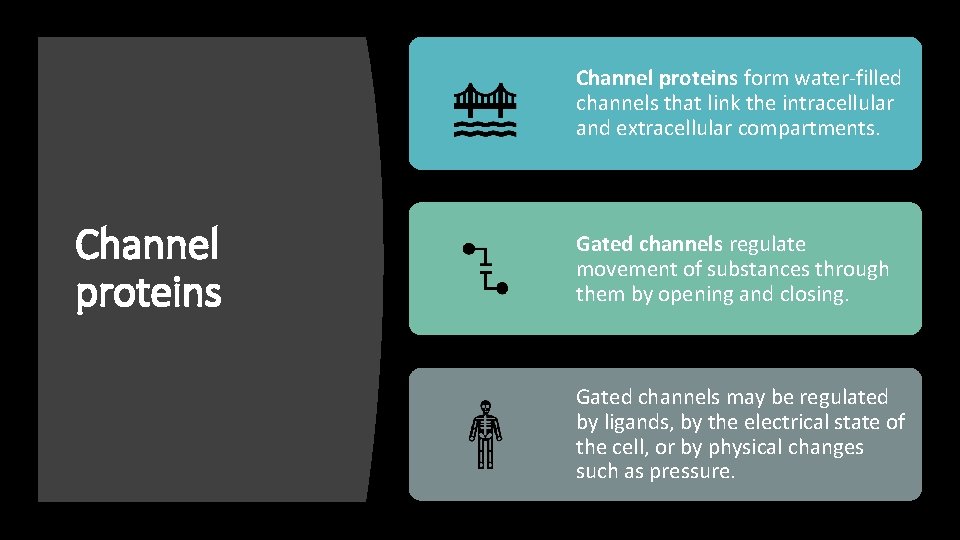
Channel proteins form water-filled channels that link the intracellular and extracellular compartments. Channel proteins Gated channels regulate movement of substances through them by opening and closing. Gated channels may be regulated by ligands, by the electrical state of the cell, or by physical changes such as pressure.
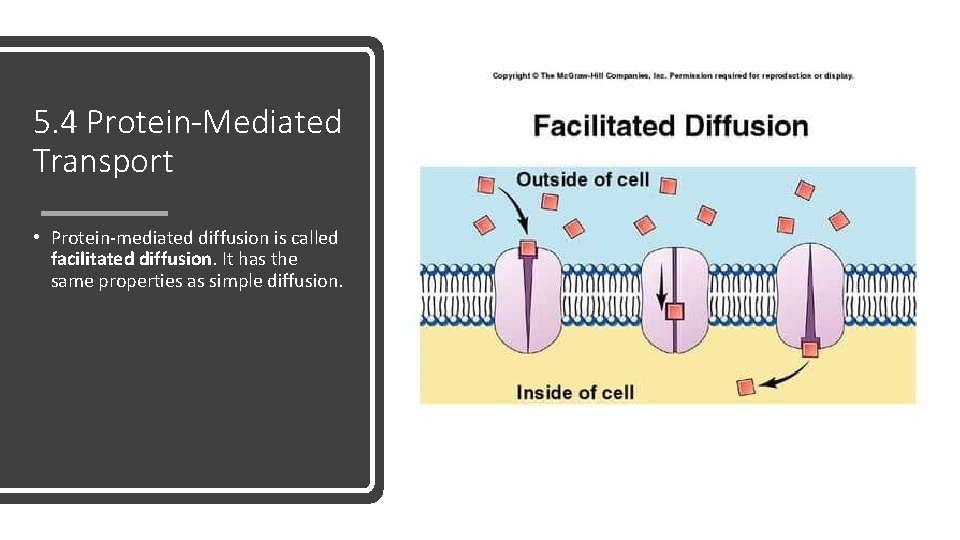
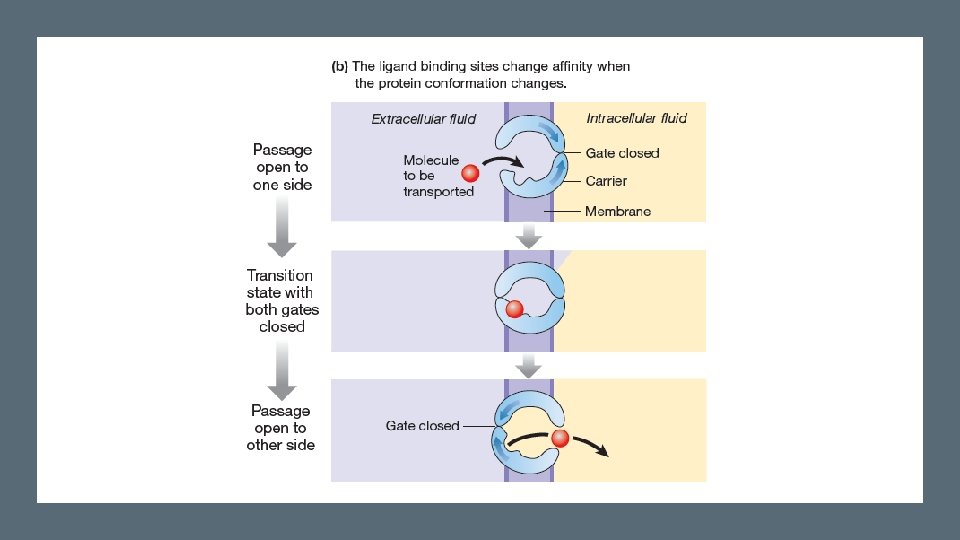
5. 4 Protein-Mediated Transport • Protein-mediated diffusion is called facilitated diffusion. It has the same properties as simple diffusion.
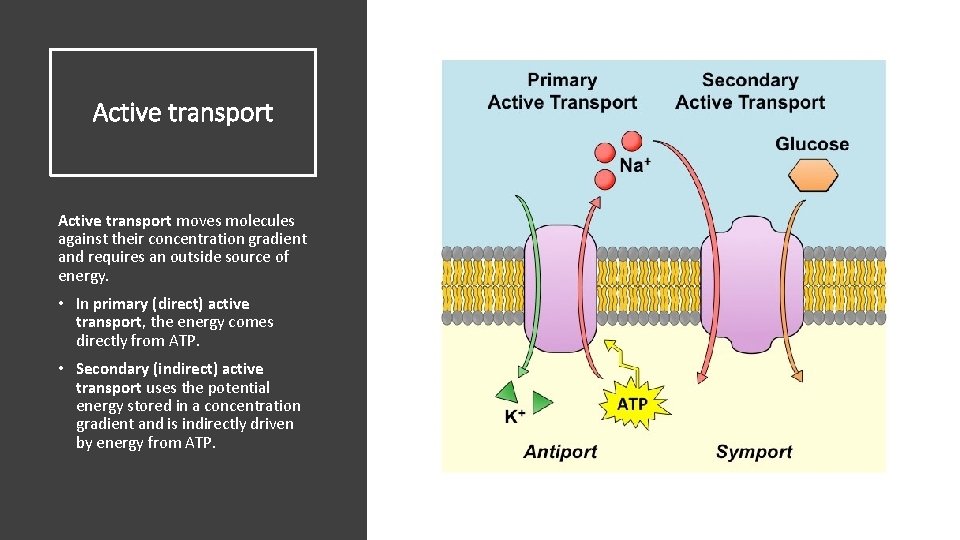
Active transport moves molecules against their concentration gradient and requires an outside source of energy. • In primary (direct) active transport, the energy comes directly from ATP. • Secondary (indirect) active transport uses the potential energy stored in a concentration gradient and is indirectly driven by energy from ATP.
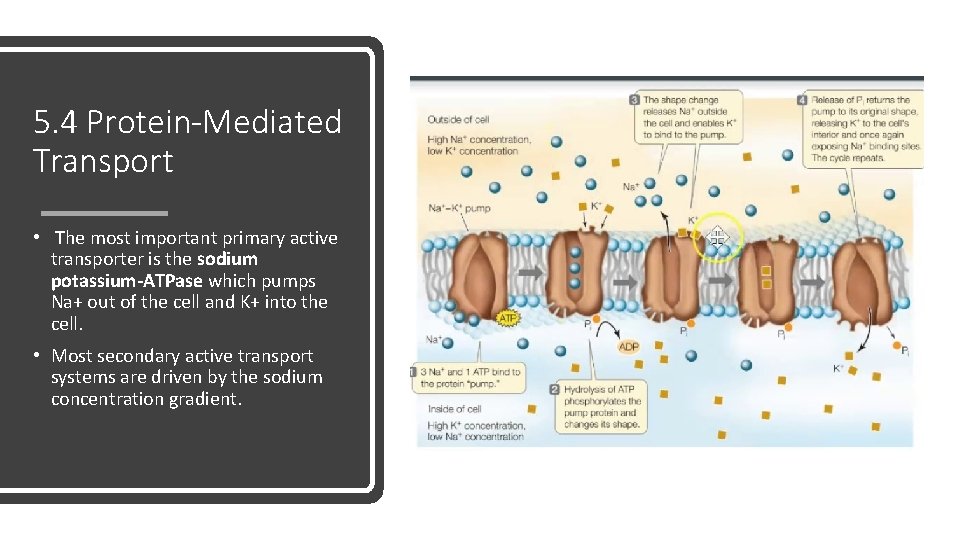
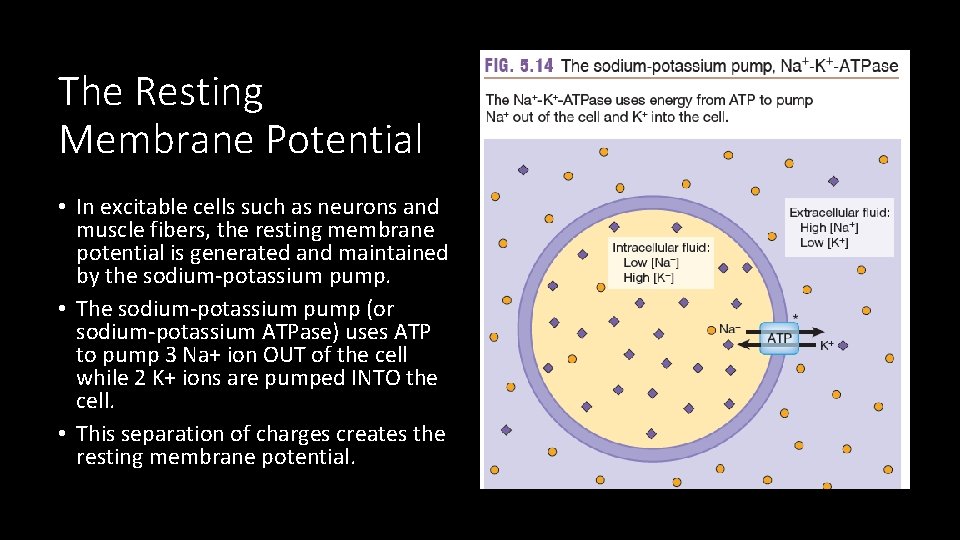
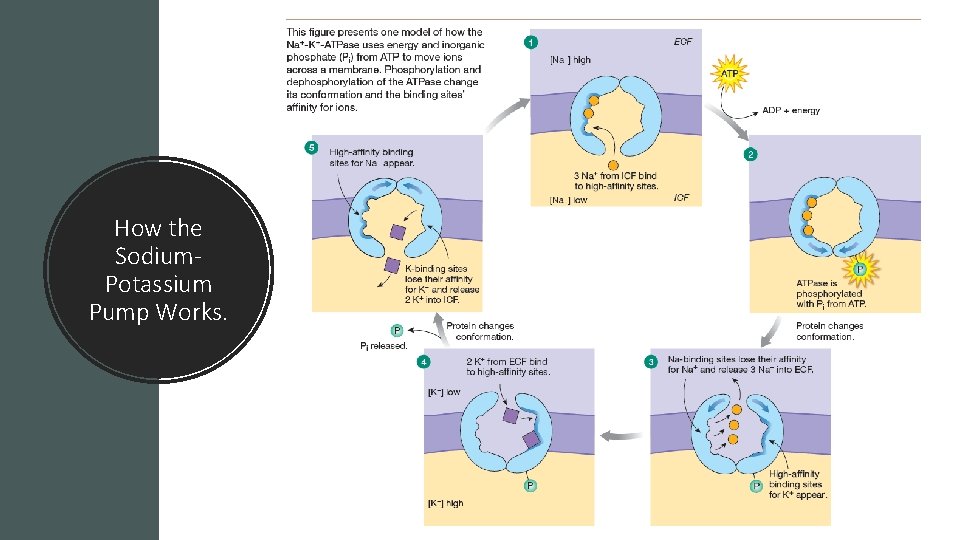
5. 4 Protein-Mediated Transport • The most important primary active transporter is the sodium potassium-ATPase which pumps Na+ out of the cell and K+ into the cell. • Most secondary active transport systems are driven by the sodium concentration gradient.
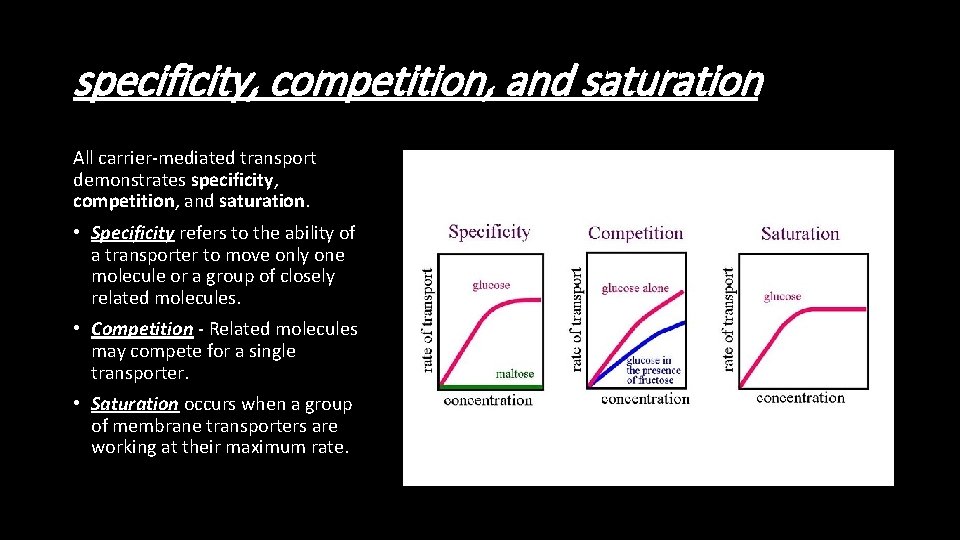
specificity, competition, and saturation All carrier-mediated transport demonstrates specificity, competition, and saturation. • Specificity refers to the ability of a transporter to move only one molecule or a group of closely related molecules. • Competition - Related molecules may compete for a single transporter. • Saturation occurs when a group of membrane transporters are working at their maximum rate.
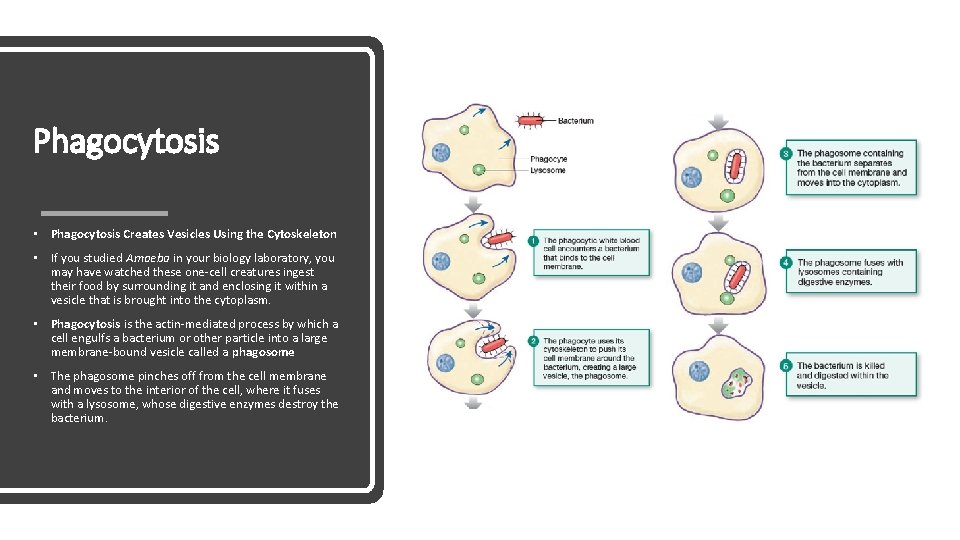
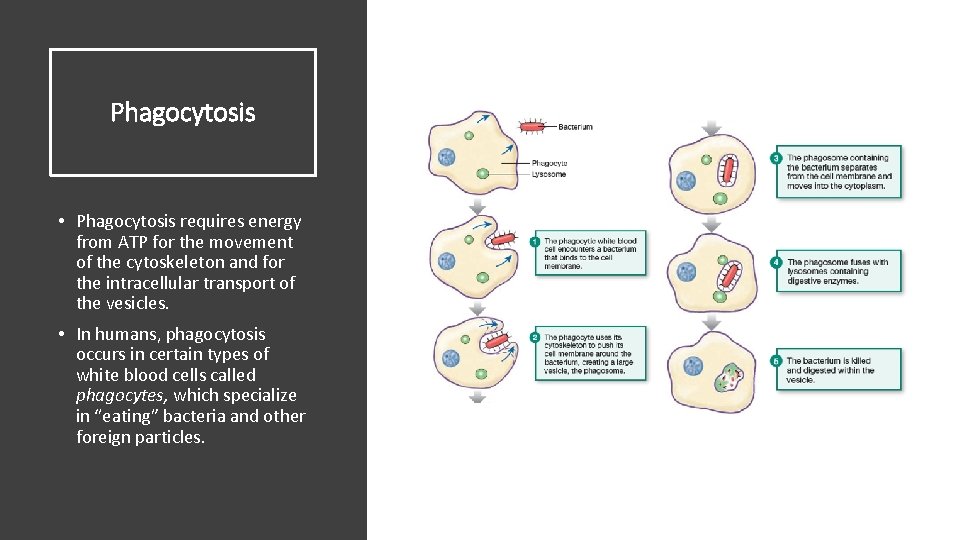
Phagocytosis • Phagocytosis Creates Vesicles Using the Cytoskeleton • If you studied Amoeba in your biology laboratory, you may have watched these one-cell creatures ingest their food by surrounding it and enclosing it within a vesicle that is brought into the cytoplasm. • Phagocytosis is the actin-mediated process by which a cell engulfs a bacterium or other particle into a large membrane-bound vesicle called a phagosome • The phagosome pinches off from the cell membrane and moves to the interior of the cell, where it fuses with a lysosome, whose digestive enzymes destroy the bacterium.
Phagocytosis • Phagocytosis requires energy from ATP for the movement of the cytoskeleton and for the intracellular transport of the vesicles. • In humans, phagocytosis occurs in certain types of white blood cells called phagocytes, which specialize in “eating” bacteria and other foreign particles.
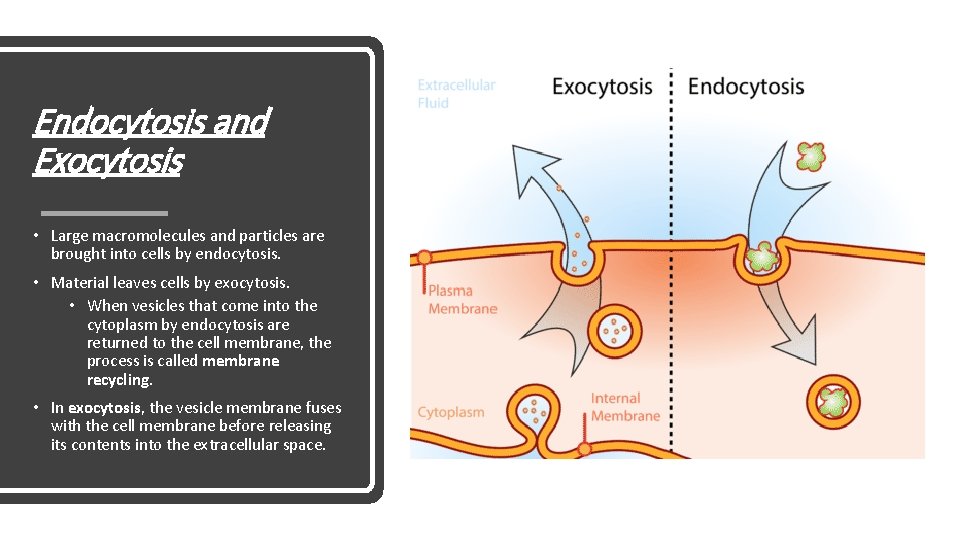
Endocytosis and Exocytosis • Large macromolecules and particles are brought into cells by endocytosis. • Material leaves cells by exocytosis. • When vesicles that come into the cytoplasm by endocytosis are returned to the cell membrane, the process is called membrane recycling. • In exocytosis, the vesicle membrane fuses with the cell membrane before releasing its contents into the extracellular space.
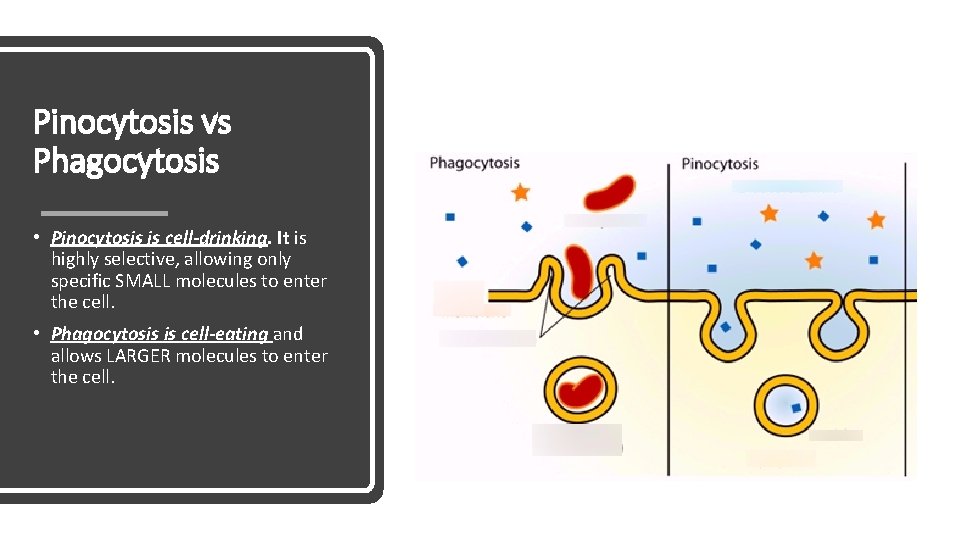
Pinocytosis vs Phagocytosis • Pinocytosis is cell-drinking. It is highly selective, allowing only specific SMALL molecules to enter the cell. • Phagocytosis is cell-eating and allows LARGER molecules to enter the cell.
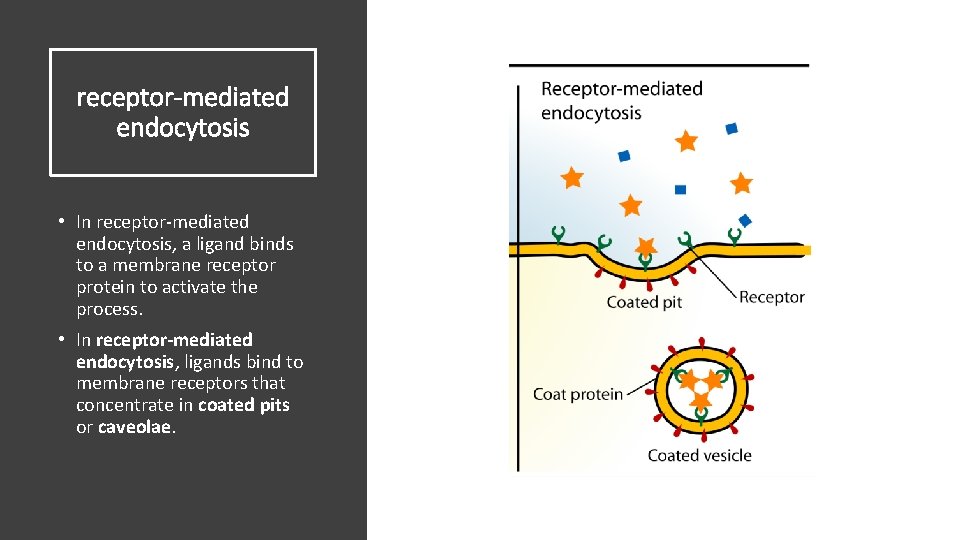
receptor-mediated endocytosis • In receptor-mediated endocytosis, a ligand binds to a membrane receptor protein to activate the process. • In receptor-mediated endocytosis, ligands bind to membrane receptors that concentrate in coated pits or caveolae.
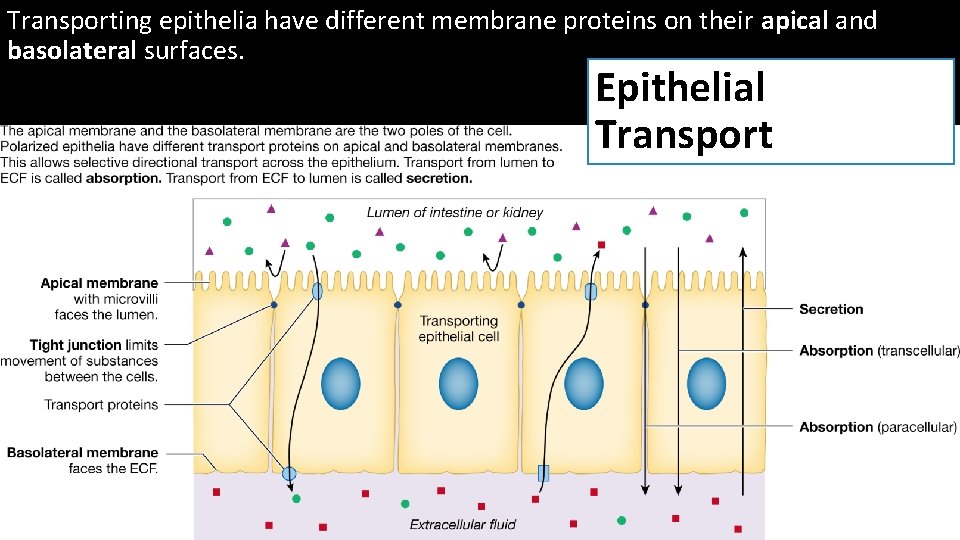
Transporting epithelia have different membrane proteins on their apical and basolateral surfaces. Epithelial Transport
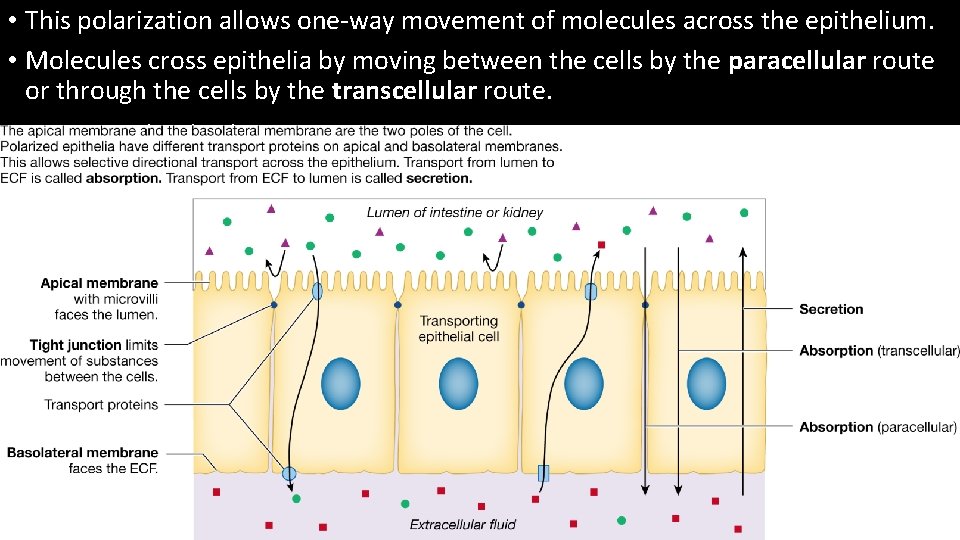
• This polarization allows one-way movement of molecules across the epithelium. • Molecules cross epithelia by moving between the cells by the paracellular route or through the cells by the transcellular route. Epithelial Transport
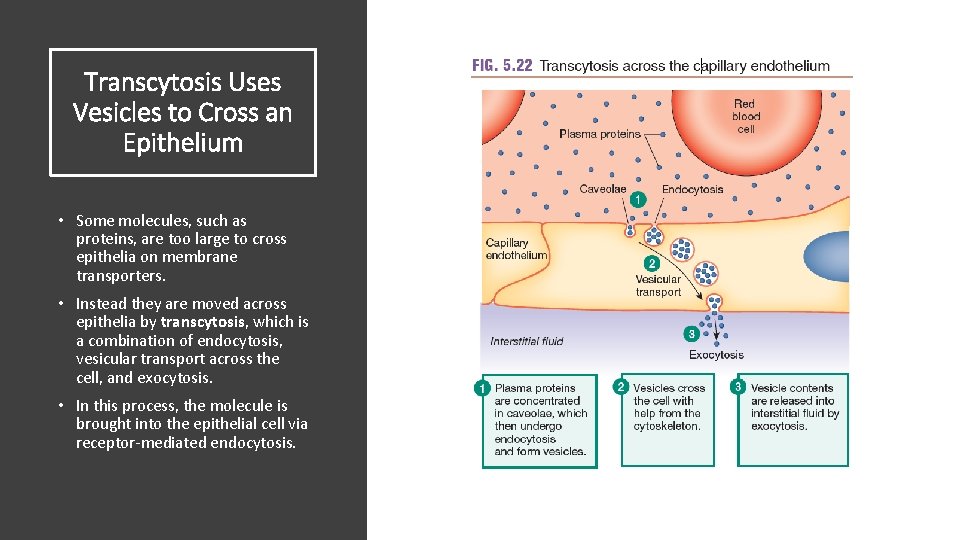
Transcytosis Uses Vesicles to Cross an Epithelium • Some molecules, such as proteins, are too large to cross epithelia on membrane transporters. • Instead they are moved across epithelia by transcytosis, which is a combination of endocytosis, vesicular transport across the cell, and exocytosis. • In this process, the molecule is brought into the epithelial cell via receptor-mediated endocytosis.
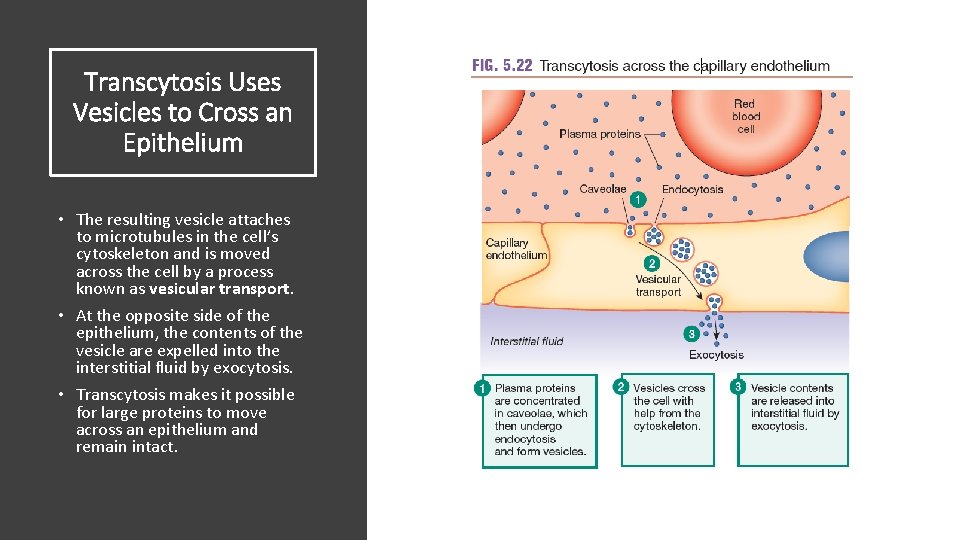
Transcytosis Uses Vesicles to Cross an Epithelium • The resulting vesicle attaches to microtubules in the cell’s cytoskeleton and is moved across the cell by a process known as vesicular transport. • At the opposite side of the epithelium, the contents of the vesicle are expelled into the interstitial fluid by exocytosis. • Transcytosis makes it possible for large proteins to move across an epithelium and remain intact.
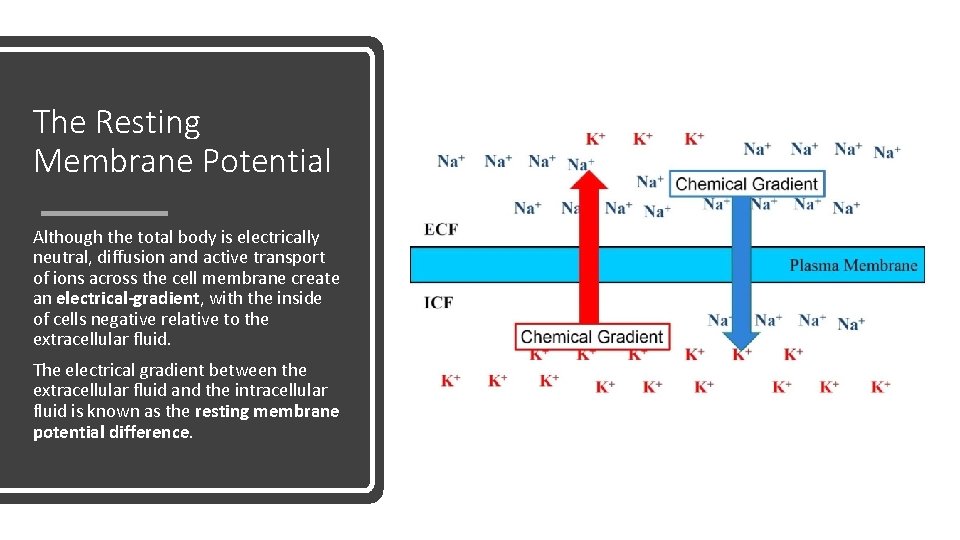
The Resting Membrane Potential Although the total body is electrically neutral, diffusion and active transport of ions across the cell membrane create an electrical-gradient, with the inside of cells negative relative to the extracellular fluid. The electrical gradient between the extracellular fluid and the intracellular fluid is known as the resting membrane potential difference.
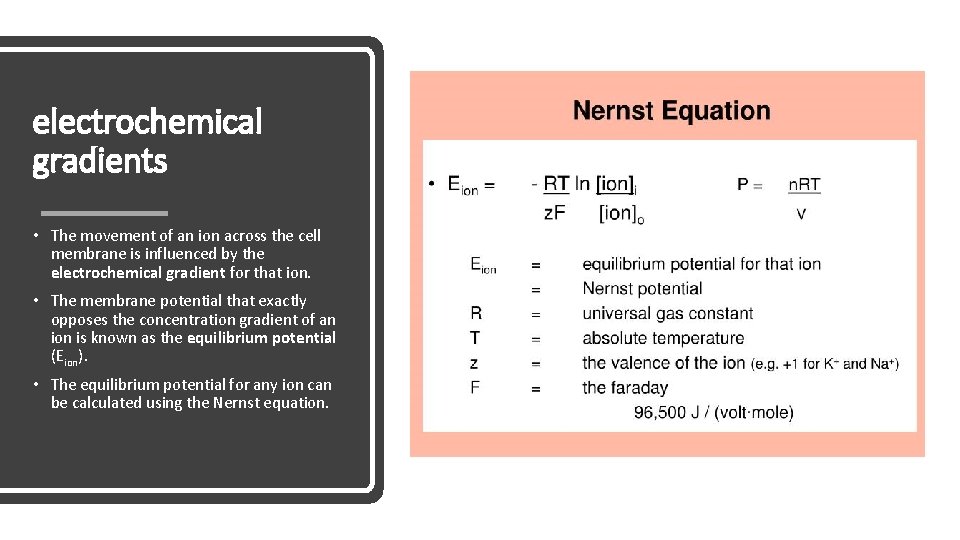
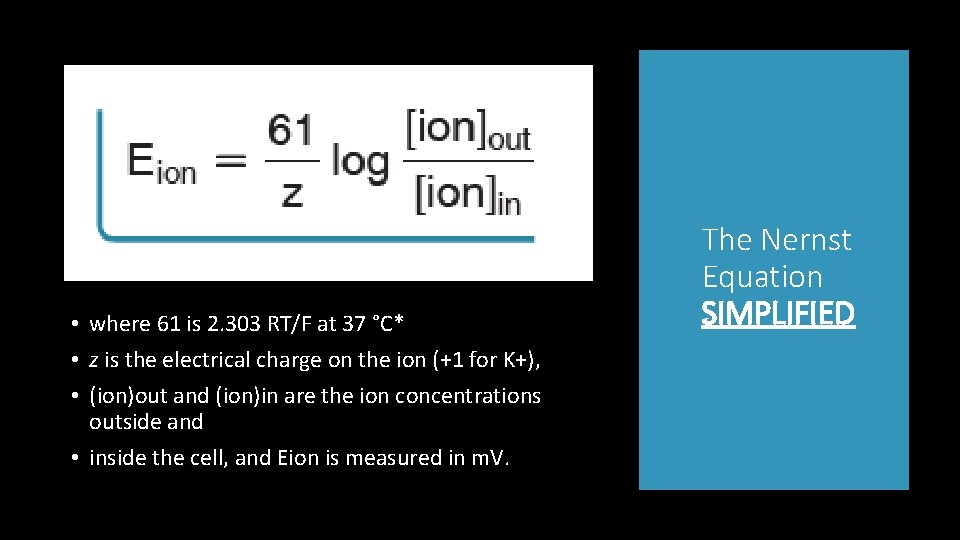
electrochemical gradients • The movement of an ion across the cell membrane is influenced by the electrochemical gradient for that ion. • The membrane potential that exactly opposes the concentration gradient of an ion is known as the equilibrium potential (Eion). • The equilibrium potential for any ion can be calculated using the Nernst equation.
• where 61 is 2. 303 RT/F at 37 °C* • z is the electrical charge on the ion (+1 for K+), • (ion)out and (ion)in are the ion concentrations outside and • inside the cell, and Eion is measured in m. V. The Nernst Equation SIMPLIFIED
The Resting Membrane Potential In most living cells, K+ is the primary ion that determines the resting membrane potential. Changes in membrane permeability to ions such as K+, Na+, Ca 2+, or Cl- alter membrane potential and create electrical signals.
The Resting Membrane Potential • In excitable cells such as neurons and muscle fibers, the resting membrane potential is generated and maintained by the sodium-potassium pump. • The sodium-potassium pump (or sodium-potassium ATPase) uses ATP to pump 3 Na+ ion OUT of the cell while 2 K+ ions are pumped INTO the cell. • This separation of charges creates the resting membrane potential.
How the Sodium. Potassium Pump Works.