
Chapter 5 Comparative Digestion Herbivores nonruminants ruminants Carnivores
Chapter 5 Comparative Digestion Herbivores (non-ruminants & ruminants), Carnivores, Nectar & Pollen feeders. http: //www. slideshare. net/MJellinek/12 -comparitive-digestion
Digestion in the mouth • Mastication or chewing – To crush the food – increase surface area – allow enzymes to act on molecules • Carnivores need only to reduce the size of the particle • Herbivores must chew continuously (40 -50, 000 times a day)
Adaptations for mastication – Carnivores • Large canines and incisors, • tearing but little to no chewing activity – Herbivores • Specialized molars, • lots of chewing and grinding – Omnivores • grinding teeth -patterns on molars • piercing and ripping cusps on incisors
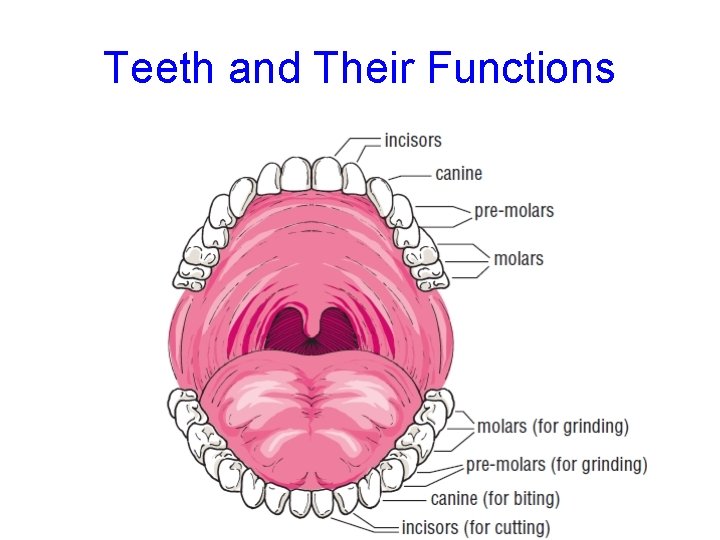
Teeth and Their Functions
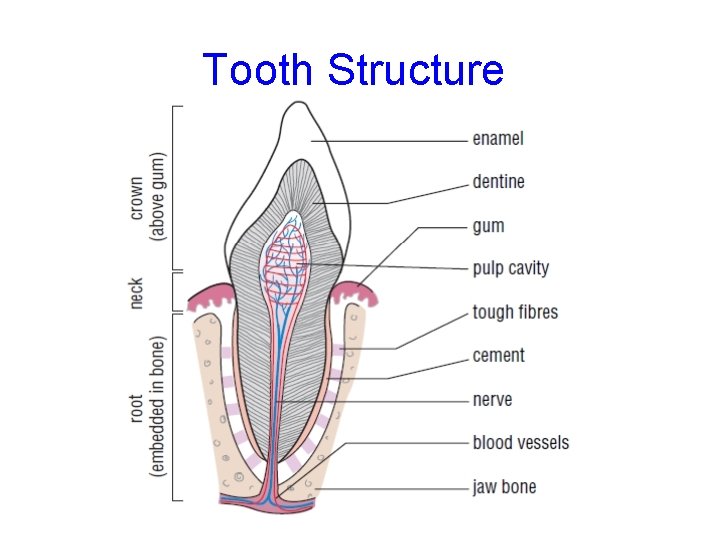
Tooth Structure
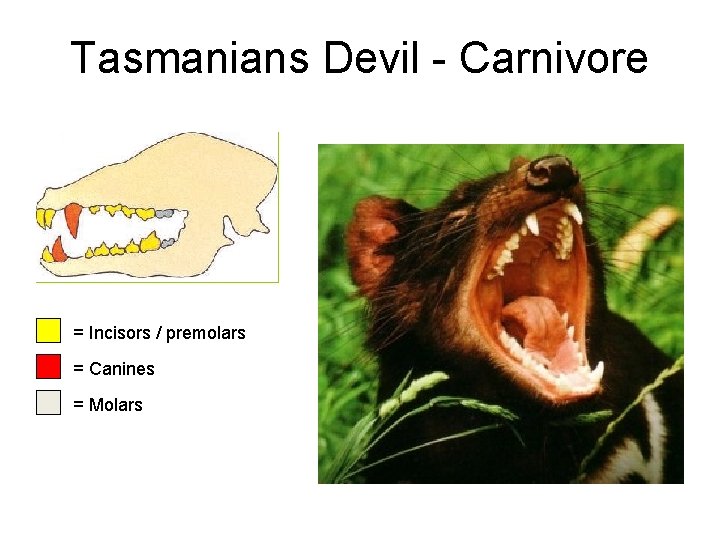
Tasmanians Devil - Carnivore = Incisors / premolars = Canines = Molars
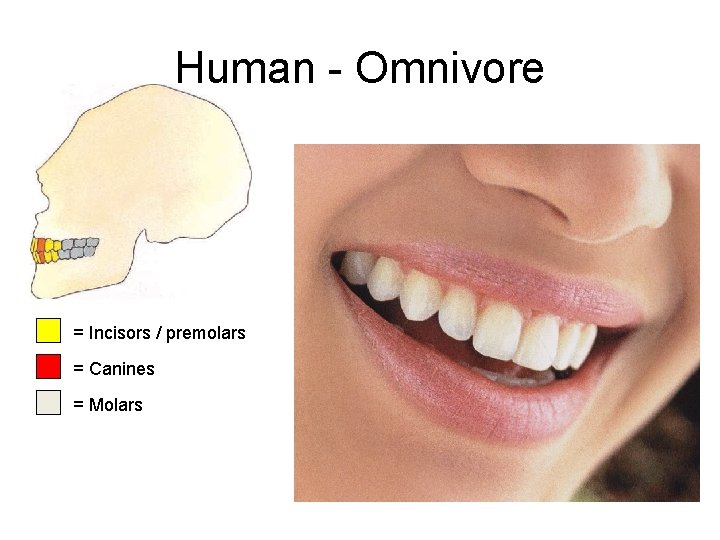
Human - Omnivore = Incisors / premolars = Canines = Molars
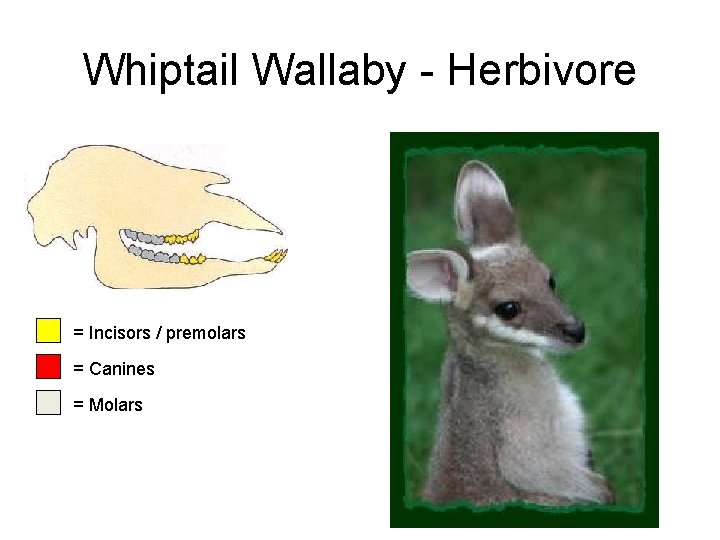
Whiptail Wallaby - Herbivore = Incisors / premolars = Canines = Molars
Digestion in mammals • http: //www. youtube. com/watch? v=P 5 ly. QUtq 1 KQ&feature=related -3 mins cartoon • http: //www. youtube. com/watch? v=BZUz. Kp_Z CLQ
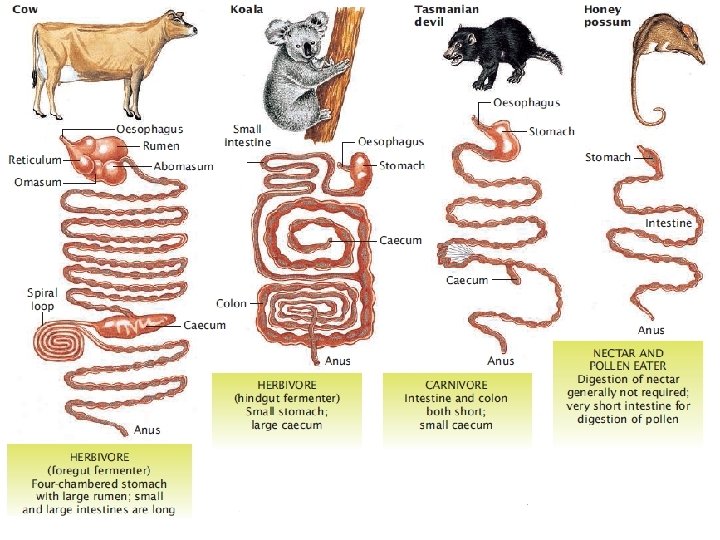
Herbivores • …are designed to be able to consume the most indigestible foods. • …can be divided in to two distinct categories: • Hindgut fermenters (non-ruminants) • Foregut fermenters (ruminants)
Hindgut Fermenters • These animals have a very long and well developed large intestine (specifically the caecum) containing vast amounts of bacteria to aid digestion. • Non-ruminant herbivores (horse) – incisors for nipping – molars slightly angled – jaws move circularly (vertical and lateral http: //www. youtube. com/watch? v=ma. WXVKI-gq 4 digestion in a horse
Foregut Fermenters • …are called RUMINANTS as their major adaptation is an enlarged part of the oesophagus / stomach called the RUMEN. • Ruminants (cow) – no upper incisors – have dental pad instead – molars allow only lateral movements
Ruminant Digestion 1 • Food is chewed and swallowed • Bacterial fermentation in the rumen breaks down plant cellulose • Food passes to the reticulum and is packaged in to wads and pushed back up the oesophagus to be re-chewed. http: //www. youtube. com/watch? v=d. Y 4 Qkhw. QMRA&feature=related 2 mins port in cow for bacterial samples
Ruminant Digestion 2 • Food returns to the omasum • Food continues to the abomasum which is the equivalent of our stomach. • Here food is digested with stomach acids and other enzymes before passing to the small intestine.
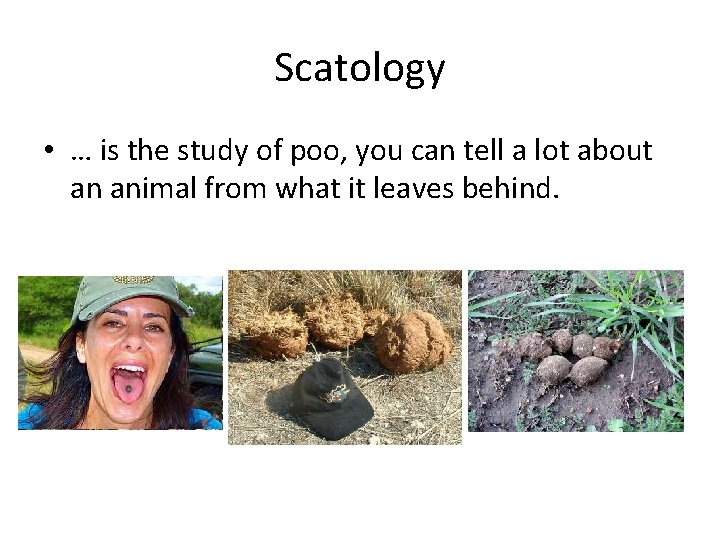
Scatology • … is the study of poo, you can tell a lot about an animal from what it leaves behind.
- Slides: 16