
Chapter 5 Clarifying the Research Question through Secondary

- Slides: 33
Chapter 5 Clarifying the Research Question through Secondary Data and Exploration Mc. Graw-Hill/Irwin Business Research Methods, 10 e Copyright © 2008 by The Mc. Graw-Hill Companies, Inc. All Rights Reserved.
2 Learning Objectives Understand. . . • The purpose and process of exploratory research. • The two types and three levels of management decision-related secondary sources. • The five types of external information and the factors for evaluating the value of a source and its content.
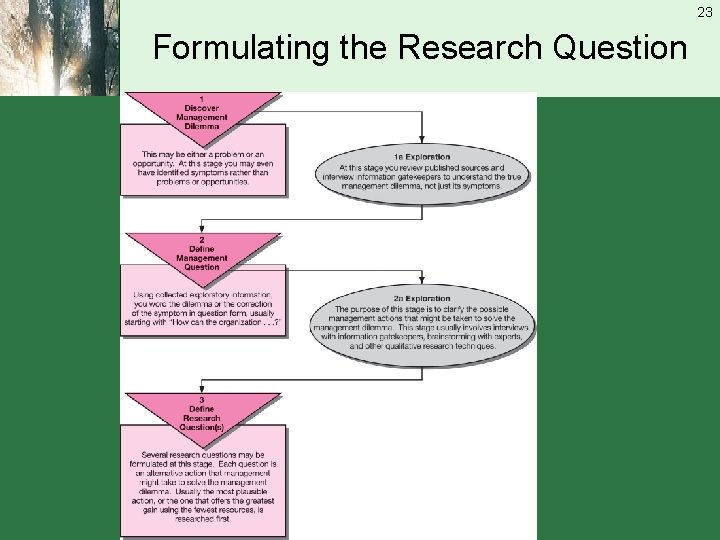
3 Learning Objectives Understand. . . • The process of using exploratory research to understand the management dilemma and work through the stages of analysis necessary to formulate the research question (and, ultimately, investigative questions and measurement questions). • What is involved in internal data mining and how internal data-mining techniques differ from literature searches.
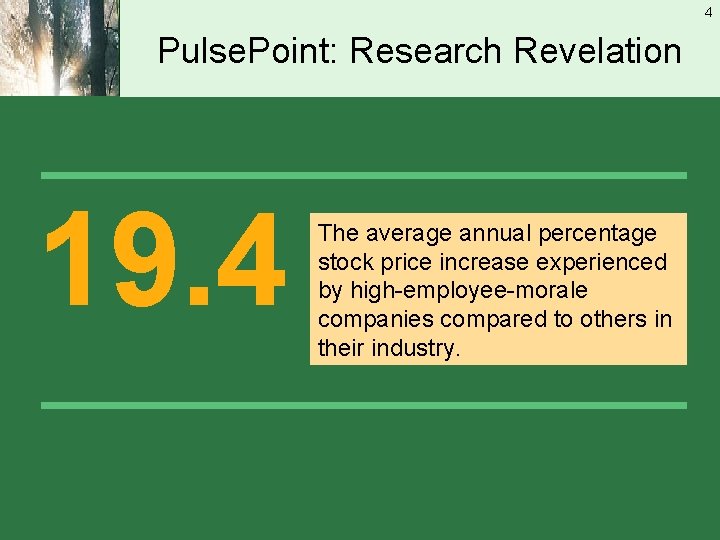
4 Pulse. Point: Research Revelation 19. 4 The average annual percentage stock price increase experienced by high-employee-morale companies compared to others in their industry.
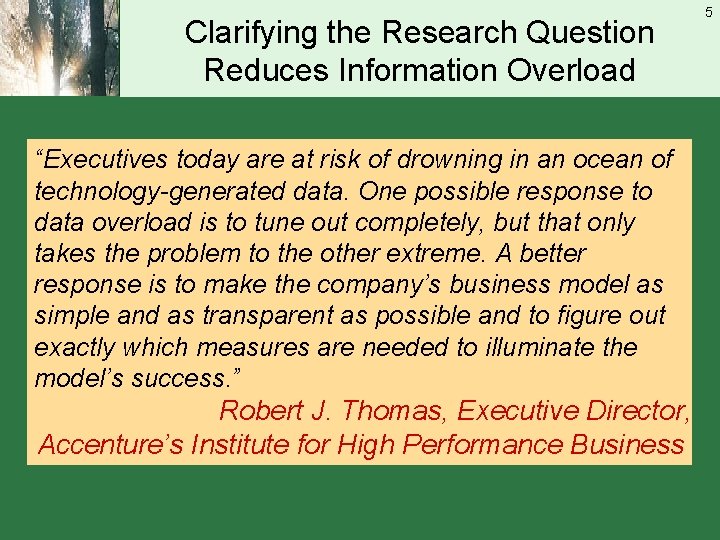
Clarifying the Research Question Reduces Information Overload “Executives today are at risk of drowning in an ocean of technology-generated data. One possible response to data overload is to tune out completely, but that only takes the problem to the other extreme. A better response is to make the company’s business model as simple and as transparent as possible and to figure out exactly which measures are needed to illuminate the model’s success. ” Robert J. Thomas, Executive Director, Accenture’s Institute for High Performance Business 5
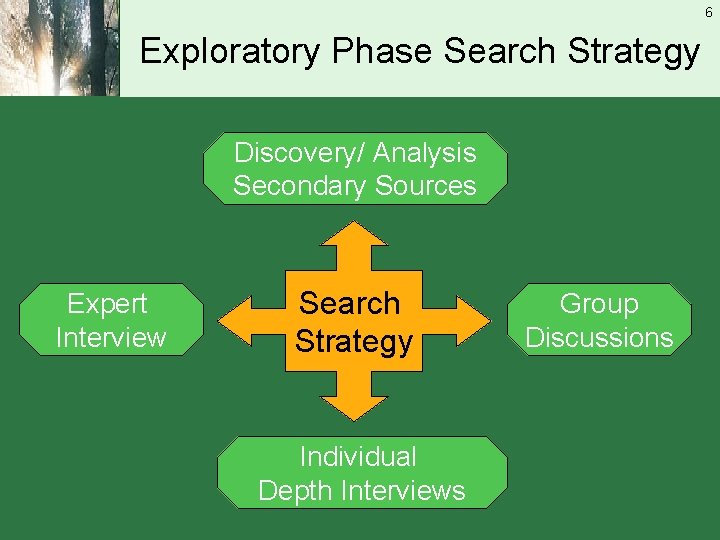
6 Exploratory Phase Search Strategy Discovery/ Analysis Secondary Sources Expert Interview Search Strategy Individual Depth Interviews Group Discussions
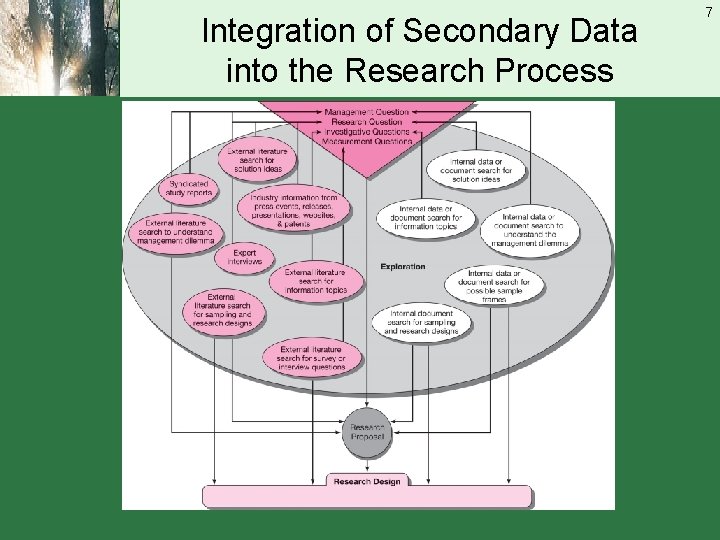
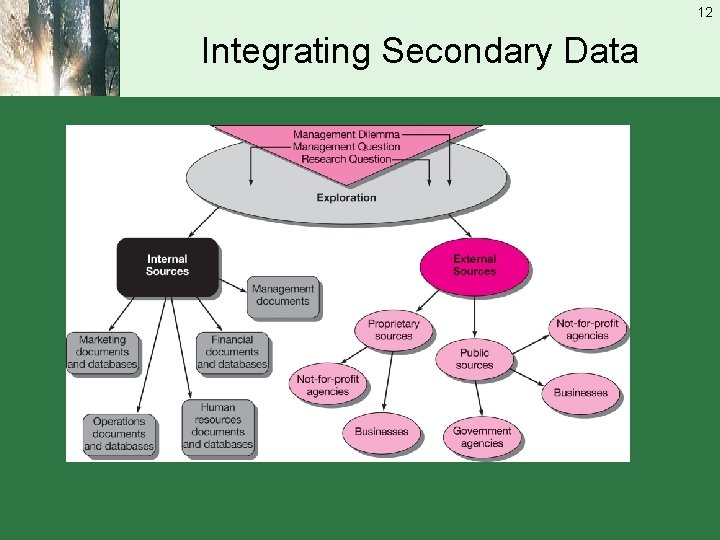
Integration of Secondary Data into the Research Process 7
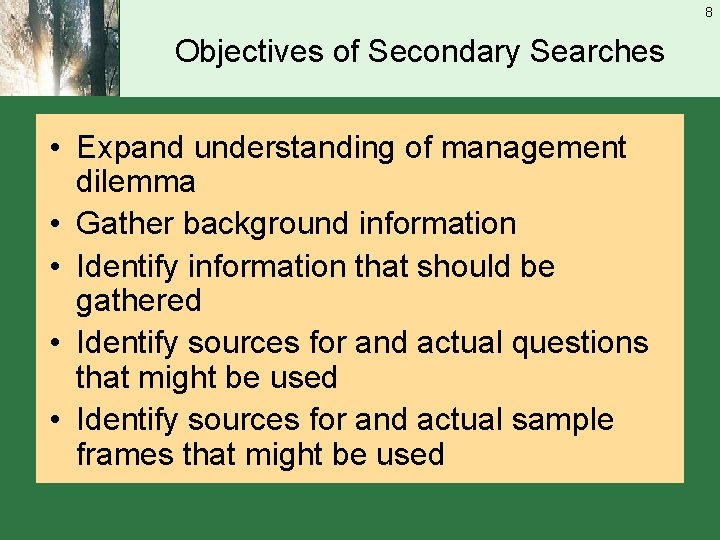
8 Objectives of Secondary Searches • Expand understanding of management dilemma • Gather background information • Identify information that should be gathered • Identify sources for and actual questions that might be used • Identify sources for and actual sample frames that might be used
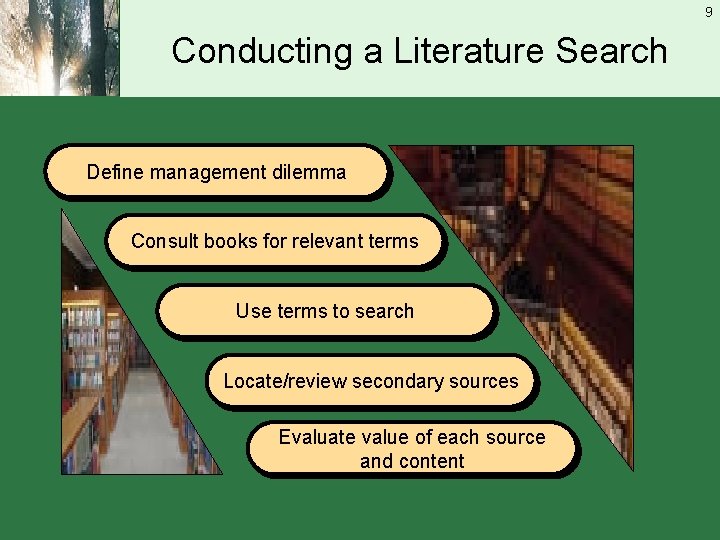
9 Conducting a Literature Search Define management dilemma Consult books for relevant terms Use terms to search Locate/review secondary sources Evaluate value of each source and content
10 • Whiteboard technology makes the discussion of symptoms relevant to the managementresearch question hierarchy easier
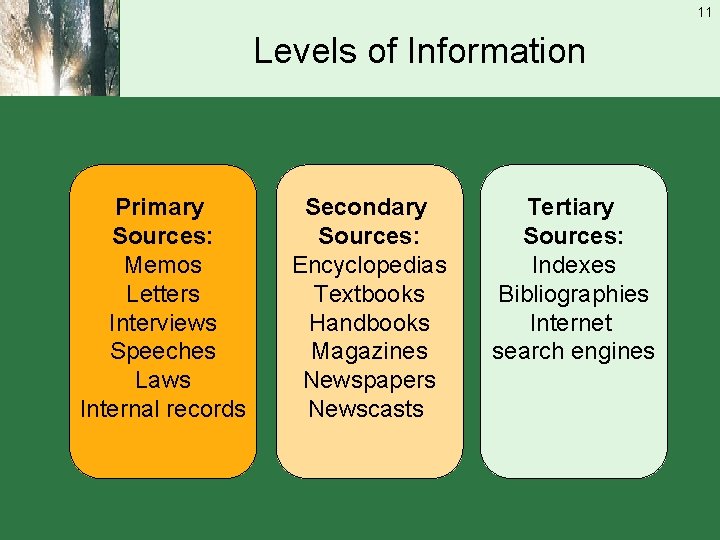
11 Levels of Information Primary Sources: Memos Letters Interviews Speeches Laws Internal records Secondary Sources: Encyclopedias Textbooks Handbooks Magazines Newspapers Newscasts Tertiary Sources: Indexes Bibliographies Internet search engines
12 Integrating Secondary Data
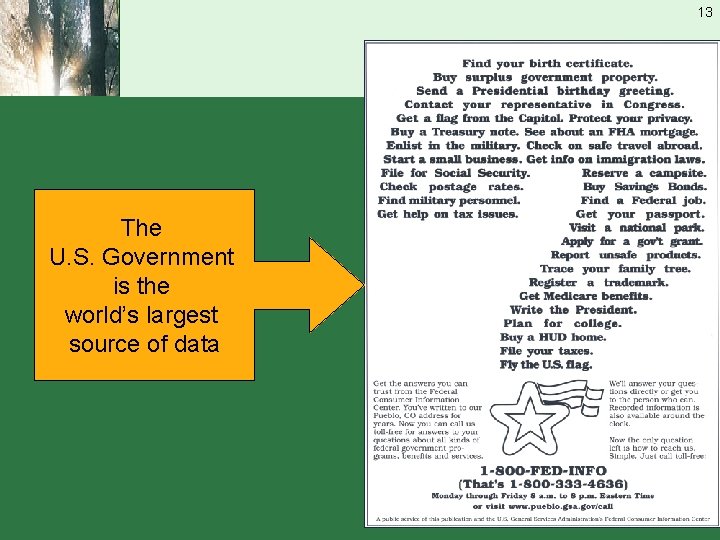
13 The U. S. Government is the world’s largest source of data
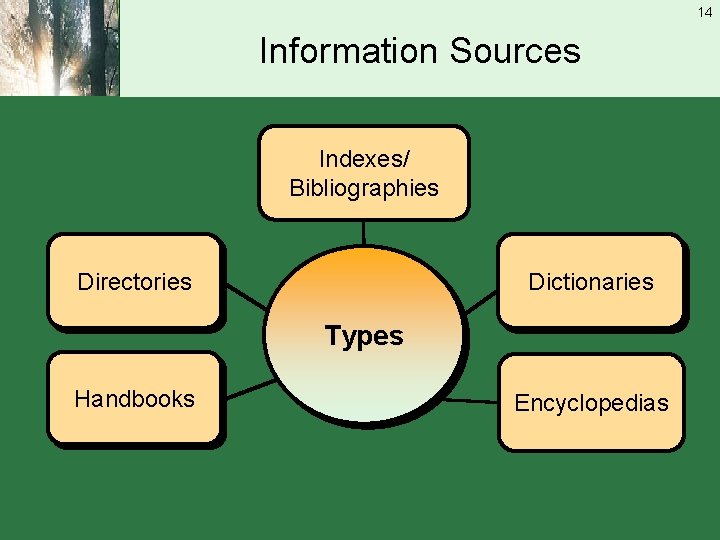
14 Information Sources Indexes/ Bibliographies Directories Dictionaries Types Handbooks Encyclopedias
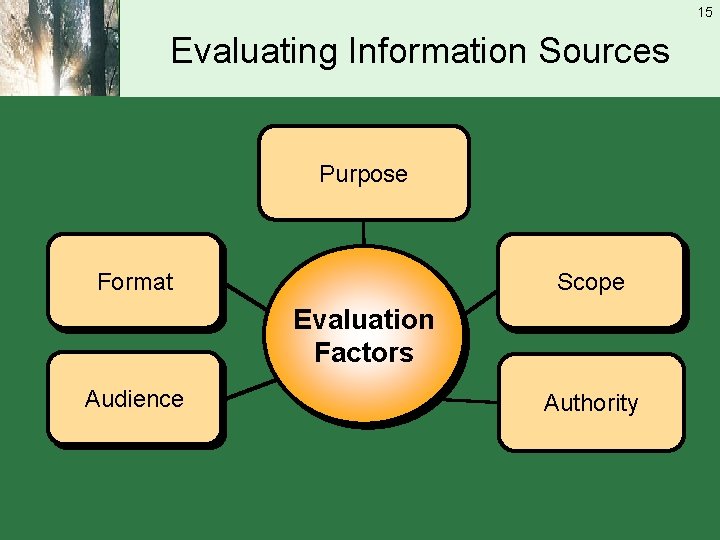
15 Evaluating Information Sources Purpose Format Scope Evaluation Factors Audience Authority
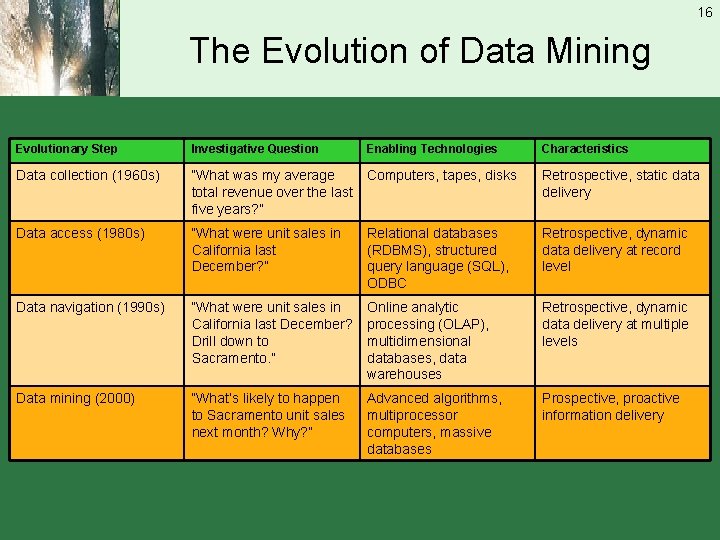
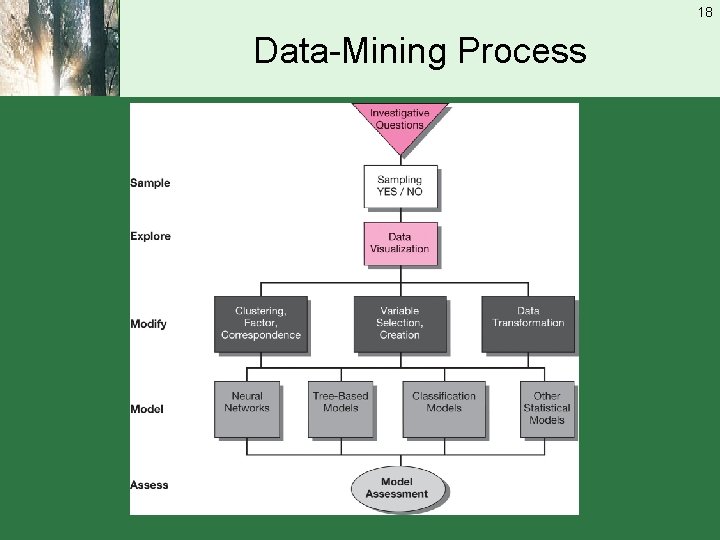
16 The Evolution of Data Mining Evolutionary Step Investigative Question Enabling Technologies Characteristics Data collection (1960 s) “What was my average total revenue over the last five years? ” Computers, tapes, disks Retrospective, static data delivery Data access (1980 s) “What were unit sales in California last December? ” Relational databases (RDBMS), structured query language (SQL), ODBC Retrospective, dynamic data delivery at record level Data navigation (1990 s) “What were unit sales in California last December? Drill down to Sacramento. ” Online analytic processing (OLAP), multidimensional databases, data warehouses Retrospective, dynamic data delivery at multiple levels Data mining (2000) “What’s likely to happen to Sacramento unit sales next month? Why? ” Advanced algorithms, multiprocessor computers, massive databases Prospective, proactive information delivery
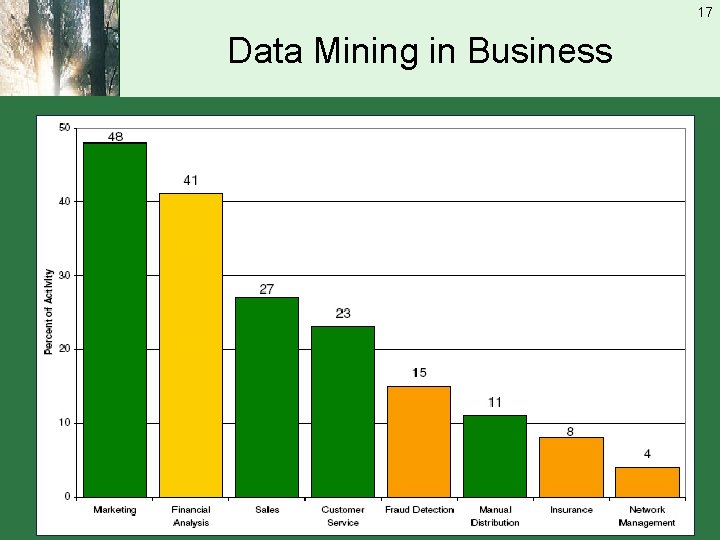
17 Data Mining in Business
18 Data-Mining Process
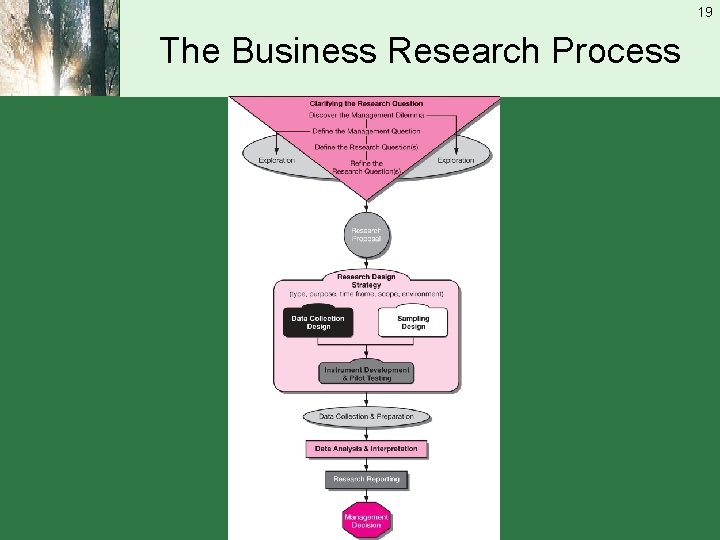
19 The Business Research Process
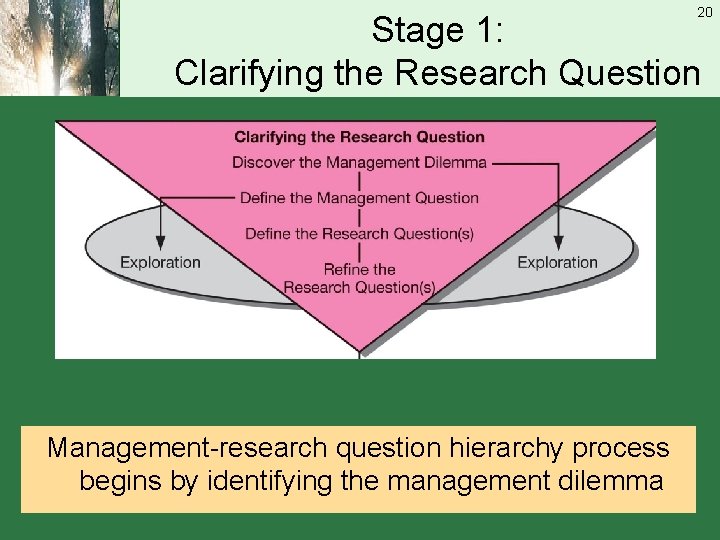
20 Stage 1: Clarifying the Research Question Management-research question hierarchy process begins by identifying the management dilemma
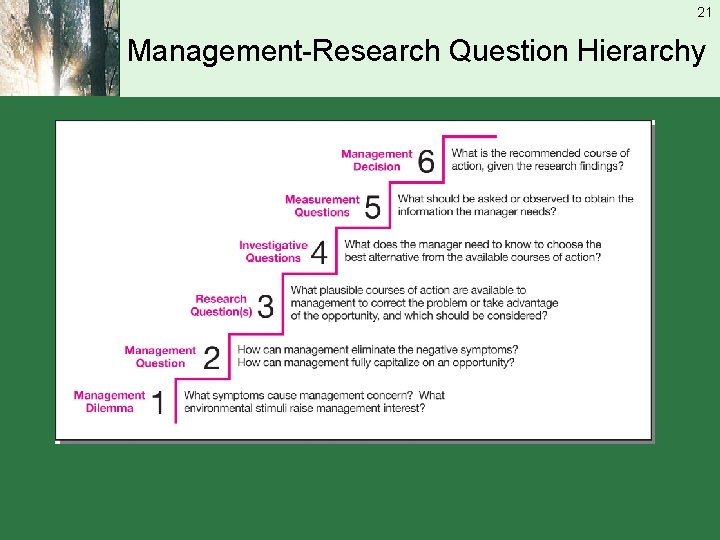
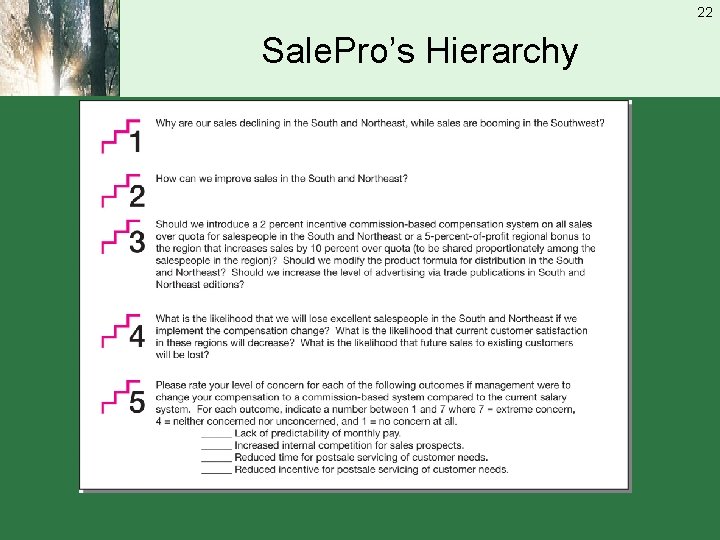
21 Management-Research Question Hierarchy
22 Sale. Pro’s Hierarchy
23 Formulating the Research Question
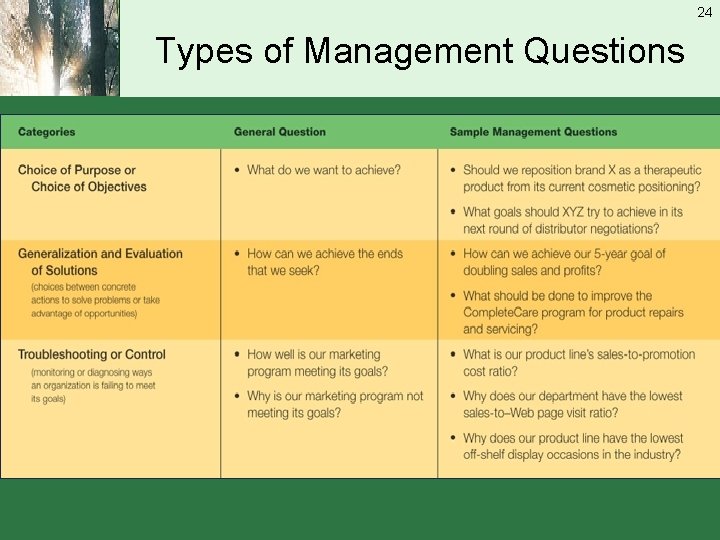
24 Types of Management Questions
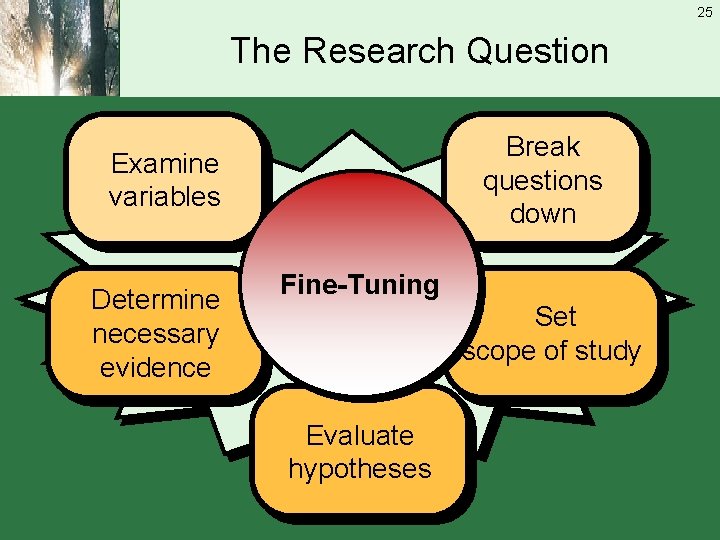
25 The Research Question Break questions down Examine variables Determine necessary evidence Fine-Tuning Set scope of study Evaluate hypotheses
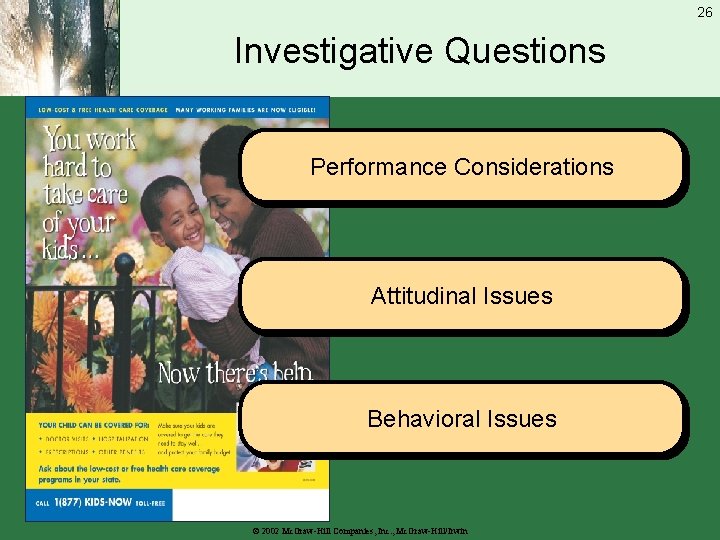
26 Investigative Questions Performance Considerations Attitudinal Issues Behavioral Issues © 2002 Mc. Graw-Hill Companies, Inc. , Mc. Graw-Hill/Irwin
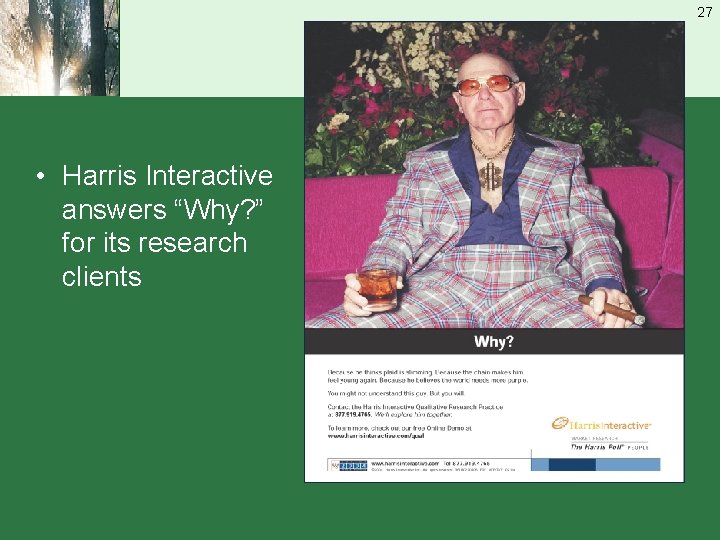
27 • Harris Interactive answers “Why? ” for its research clients
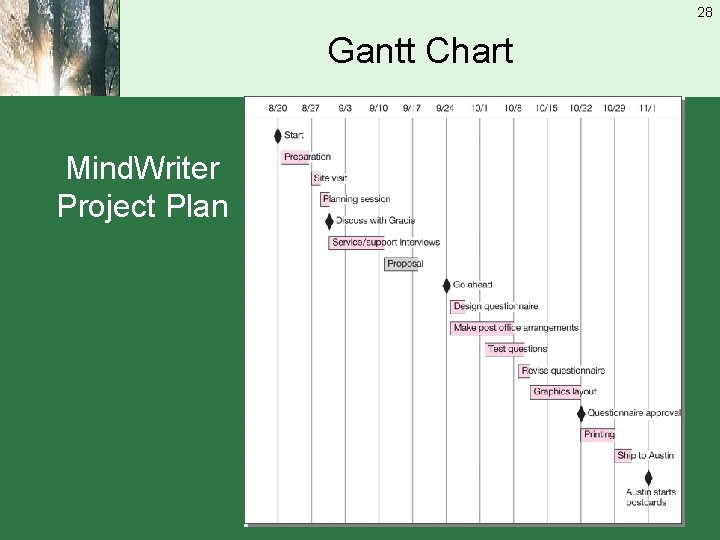
28 Gantt Chart Mind. Writer Project Plan
29 Key Terms • • • • Bibliography Bibliographic Database Data Mart Data Mining Data Visualization Data Warehouse Dictionary Directory Encyclopedia Expert interview Exploratory research Handbook Index Individual depth interview • • Investigative questions Literature search Management question Measurement question – Custom-designed – Predesigned • • Primary sources Research questions Secondary sources Source evaluation – – – Purpose Scope Authority Audience Format • Tertiary sources
Appendices 5 a & 5 b Bibliographic Database Searches/ Advanced Searches Mc. Graw-Hill/Irwin Business Research Methods, 10 e Copyright © 2008 by The Mc. Graw-Hill Companies, Inc. All Rights Reserved.
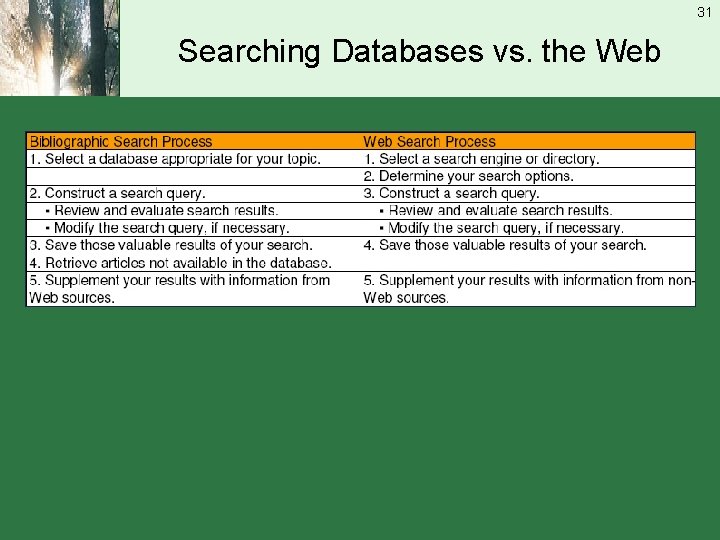
31 Searching Databases vs. the Web
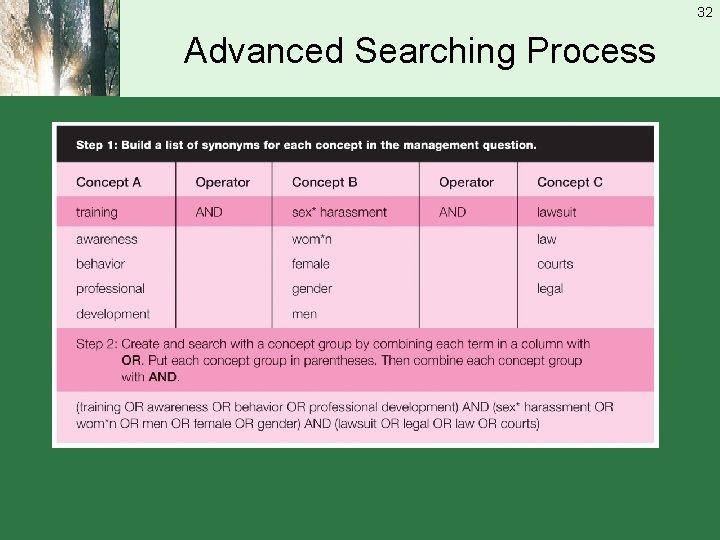
32 Advanced Searching Process
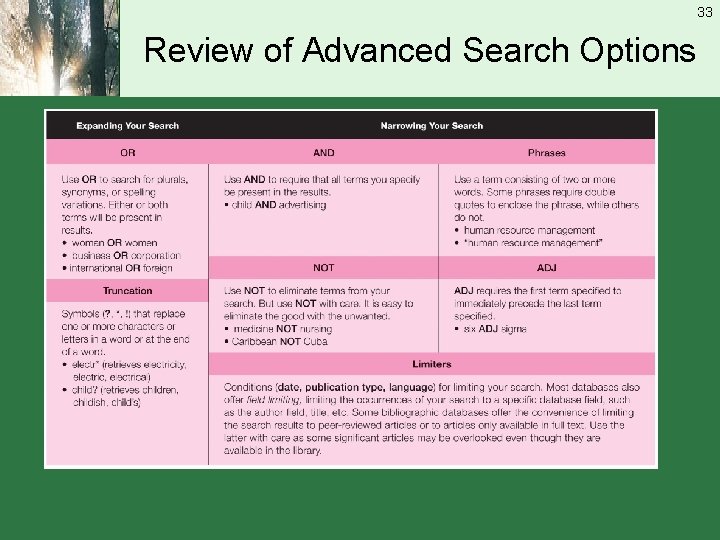
33 Review of Advanced Search Options