
Chapter 5 CHEMICAL REACTIONS 5 1 Introduction to
- Slides: 9
Chapter 5 CHEMICAL REACTIONS 5. 1 Introduction to Chemical Reactions
Big 7 - Chapter 5. 1 –Intro to Chemical Reactions 1. What is a Chemical Reaction? 2. How do we know it’s happening? 3. Reactants vs. Products 4. How to we begin a reaction? 5. Chemical Energy? 6. Exothermic Reaction 7. Endothermic Reaction
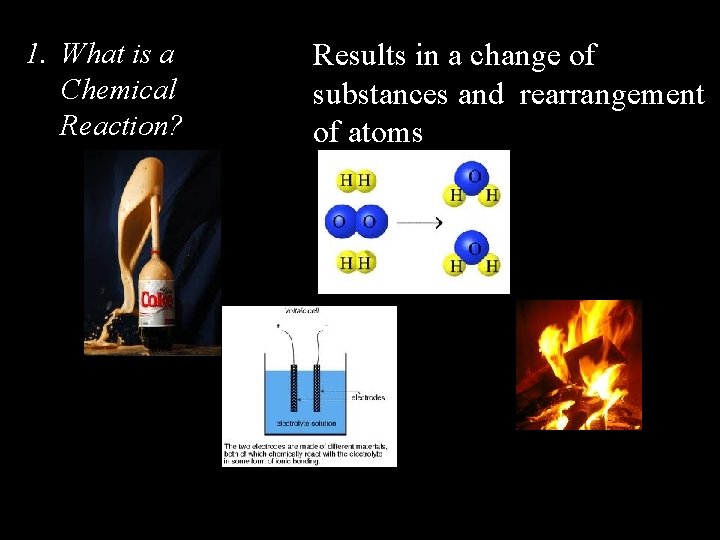
1. What is a Chemical Reaction? Results in a change of substances and rearrangement of atoms
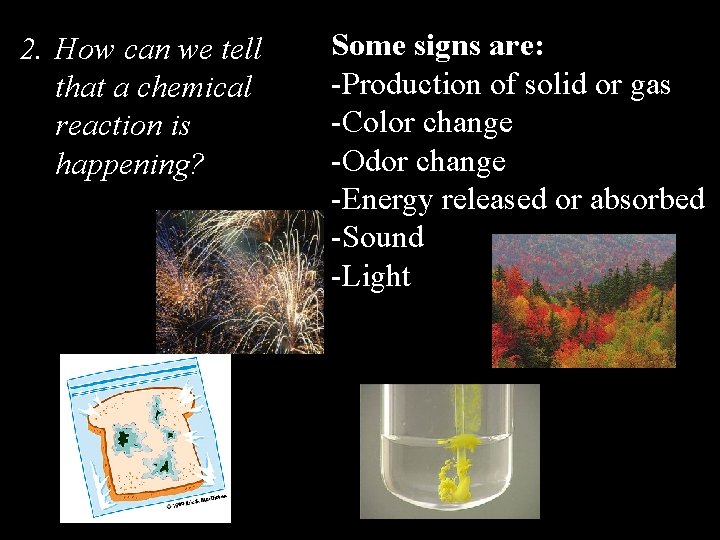
2. How can we tell that a chemical reaction is happening? Some signs are: -Production of solid or gas -Color change -Odor change -Energy released or absorbed -Sound -Light
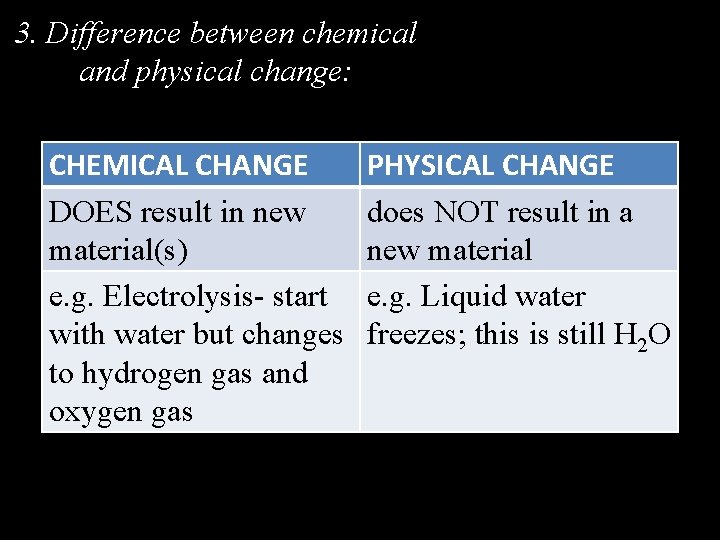
3. Difference between chemical and physical change: CHEMICAL CHANGE DOES result in new material(s) e. g. Electrolysis- start with water but changes to hydrogen gas and oxygen gas PHYSICAL CHANGE does NOT result in a new material e. g. Liquid water freezes; this is still H 2 O
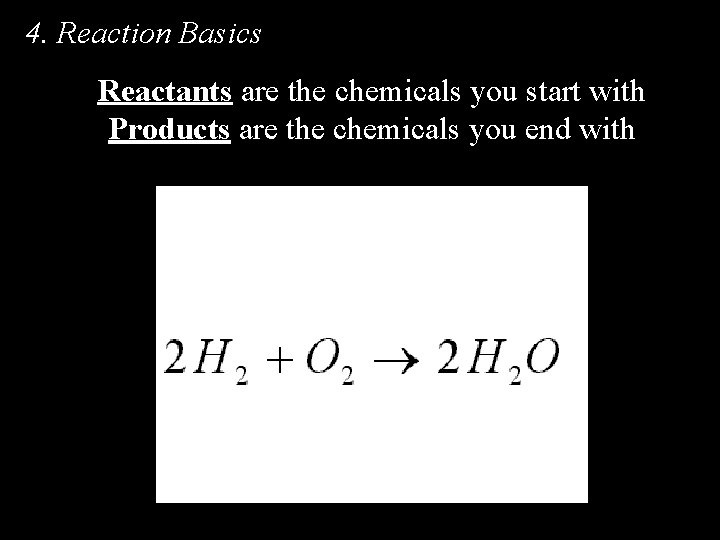
4. Reaction Basics Reactants are the chemicals you start with Products are the chemicals you end with
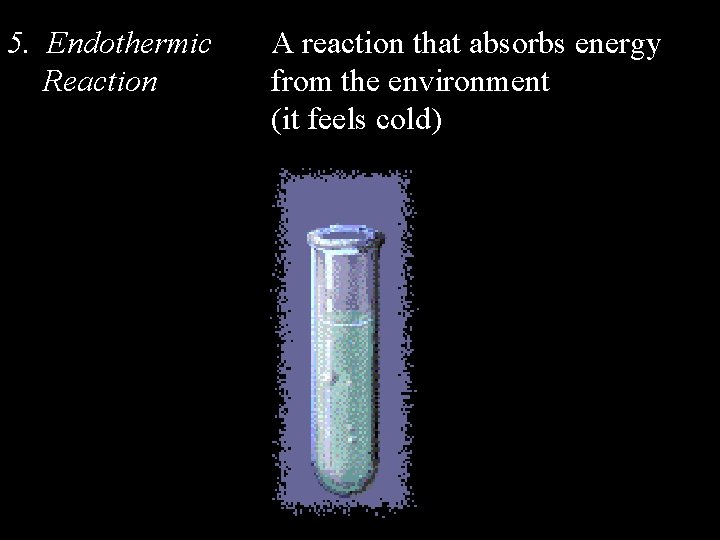
5. Endothermic Reaction A reaction that absorbs energy from the environment (it feels cold)
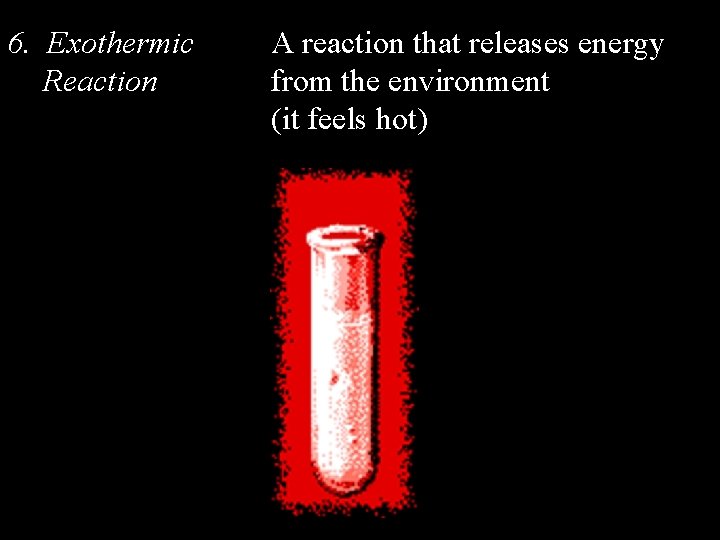
6. Exothermic Reaction A reaction that releases energy from the environment (it feels hot)
7. Why would we 1. To make things that we don’t want to do have naturally. perform chemical 2. To make things that are less reactions? expensive. 3. To release energy so we can use it to do stuff.