
Chapter 5 Carbohydrates 5 1 SUGARS AS MONOMERS
Chapter 5 Carbohydrates
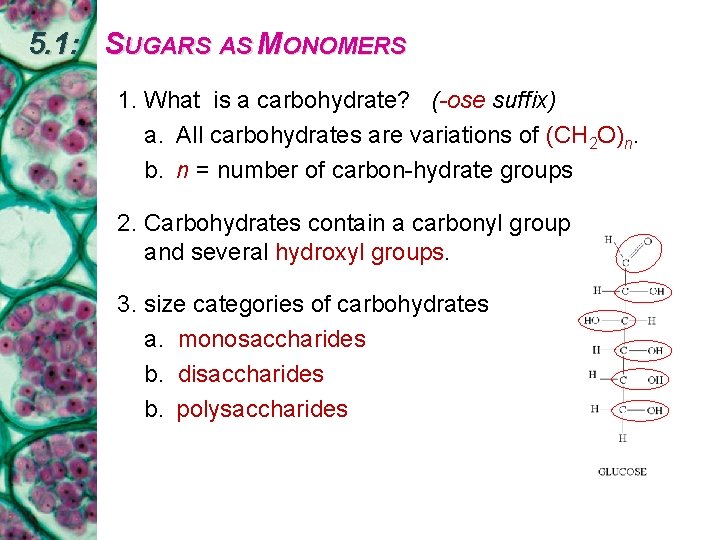
5. 1: SUGARS AS MONOMERS 1. What is a carbohydrate? (-ose suffix) a. All carbohydrates are variations of (CH 2 O)n. b. n = number of carbon-hydrate groups 2. Carbohydrates contain a carbonyl group and several hydroxyl groups. 3. size categories of carbohydrates a. monosaccharides b. disaccharides b. polysaccharides

4. Monosaccharides (simple sugars) a. Function (1) Monomer of carbohydrate (2) Immediate source of energy b. Structural variation allows variation in function. (1) Isomers: same molecular formula, different structural formula 5. 1

(2) Variation in the number of carbons – triose (3 C), pentose (5 C), and hexose (6 C) triose (glyceraldehyde) 5. 1 pentose (ribose) hexose (glucose)

(3) linear and ring forms (of pentoses and hexoses) (4) In the ring form, mirror images form - called alpha (α) and beta (β) – exist, depending on position of hydroxyl group when ring forms. 5. 1
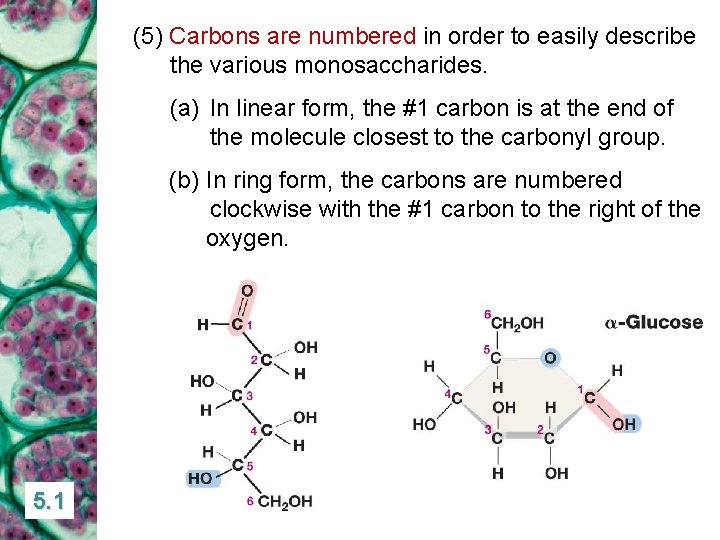
(5) Carbons are numbered in order to easily describe the various monosaccharides. (a) In linear form, the #1 carbon is at the end of the molecule closest to the carbonyl group. (b) In ring form, the carbons are numbered clockwise with the #1 carbon to the right of the oxygen. 5. 1

5. 2: THE STRUCTURE OF POLYSACCHARIDES 1. Polysaccharides are formed by covalently bonding monosaccharides together (condensation reaction). a. Disaccharides �double sugars b. complex carbohydrates long polymers of glucose (example = starch)
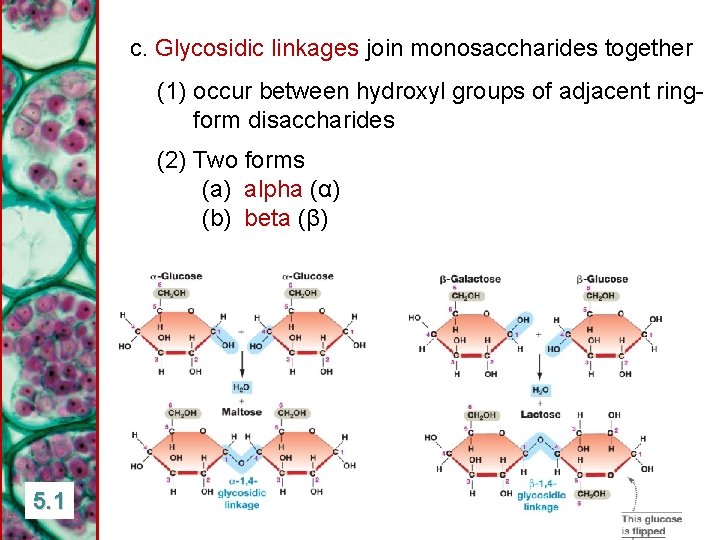
c. Glycosidic linkages join monosaccharides together (1) occur between hydroxyl groups of adjacent ringform disaccharides (2) Two forms (a) alpha (α) (b) beta (β) 5. 1
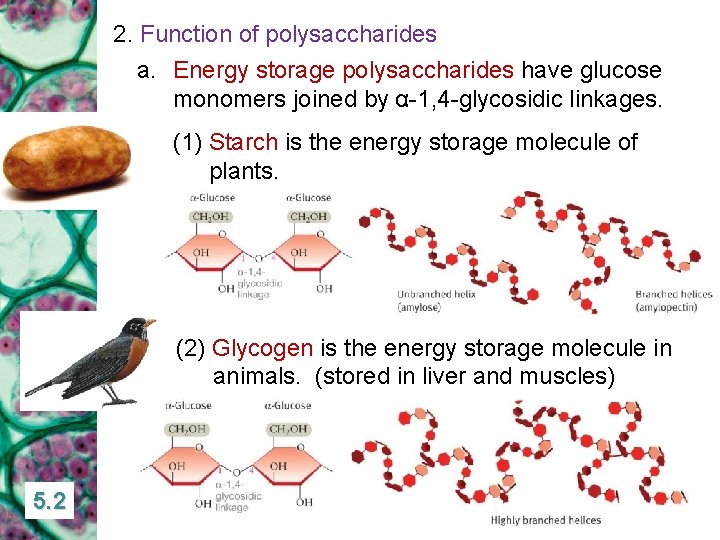
2. Function of polysaccharides a. Energy storage polysaccharides have glucose monomers joined by α-1, 4 -glycosidic linkages. (1) Starch is the energy storage molecule of plants. (2) Glycogen is the energy storage molecule in animals. (stored in liver and muscles) 5. 2
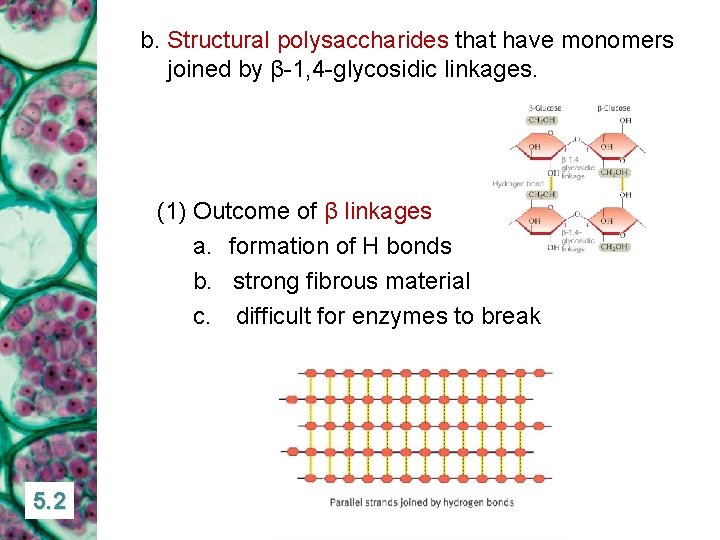
b. Structural polysaccharides that have monomers joined by β-1, 4 -glycosidic linkages. (1) Outcome of β linkages a. formation of H bonds b. strong fibrous material c. difficult for enzymes to break 5. 2
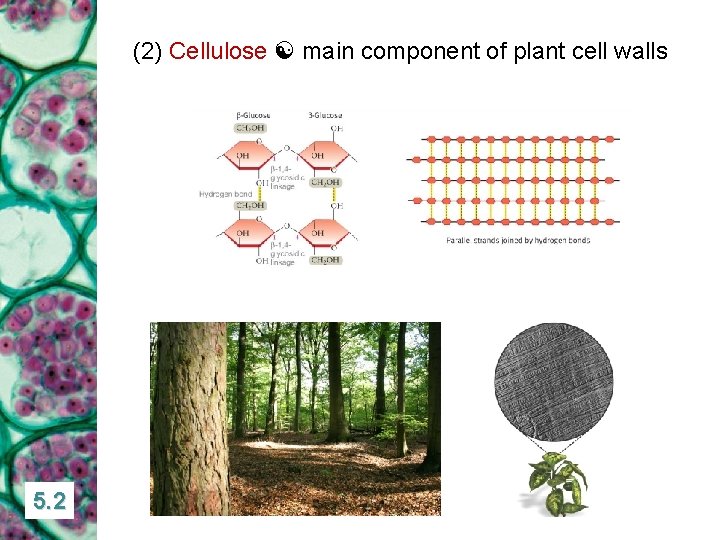
(2) Cellulose main component of plant cell walls 5. 2
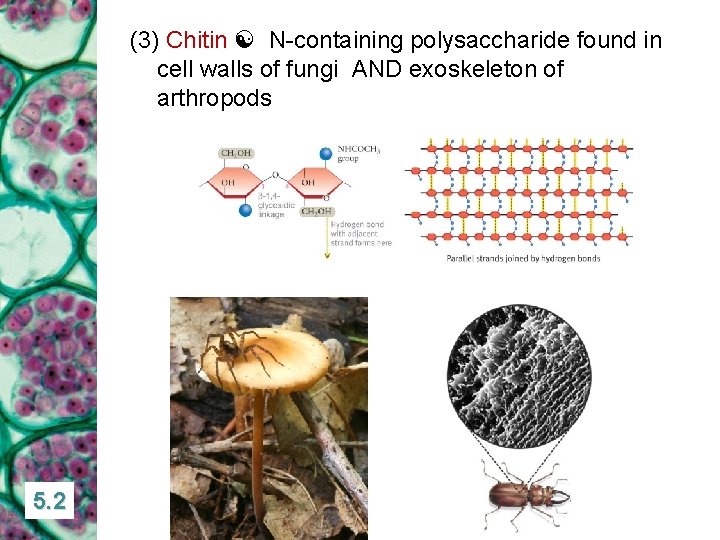
(3) Chitin N-containing polysaccharide found in cell walls of fungi AND exoskeleton of arthropods 5. 2
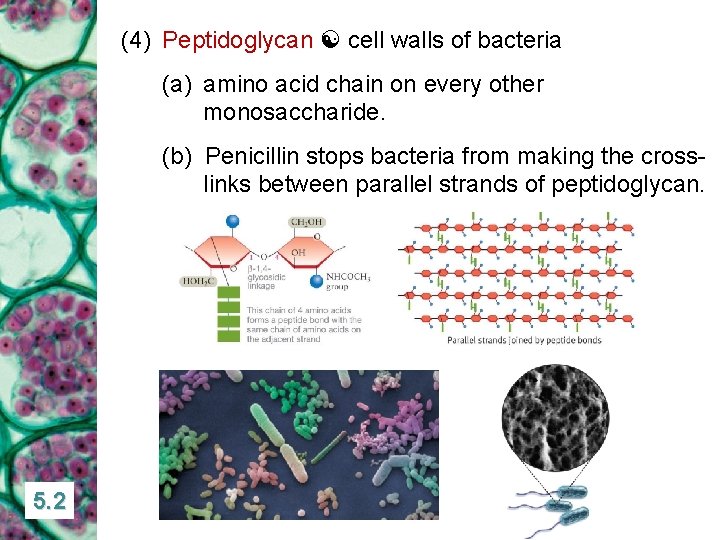
(4) Peptidoglycan cell walls of bacteria (a) amino acid chain on every other monosaccharide. (b) Penicillin stops bacteria from making the crosslinks between parallel strands of peptidoglycan. 5. 2
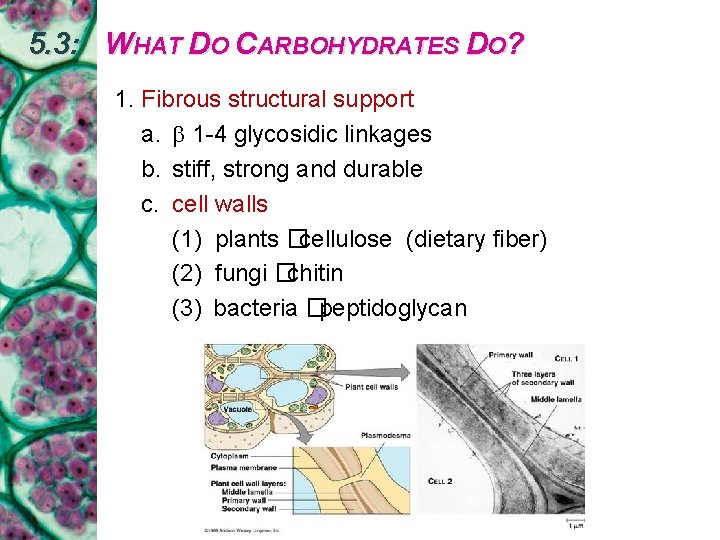
5. 3: WHAT DO CARBOHYDRATES DO? 1. Fibrous structural support a. 1 -4 glycosidic linkages b. stiff, strong and durable c. cell walls (1) plants �cellulose (dietary fiber) (2) fungi �chitin (3) bacteria �peptidoglycan
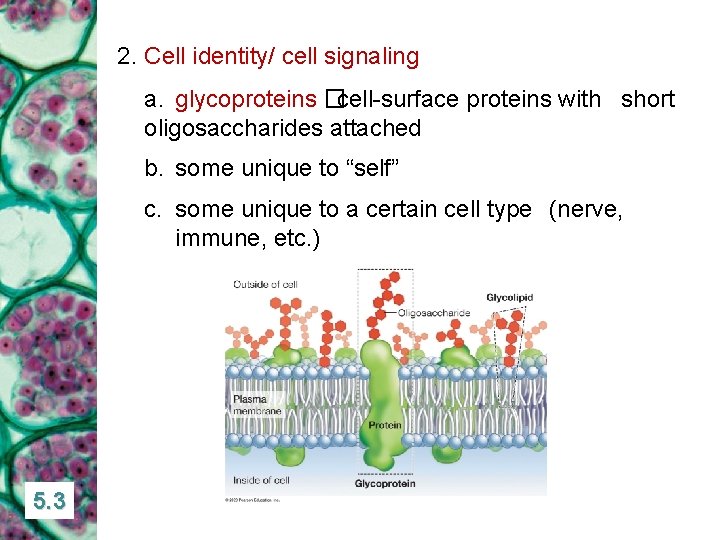
2. Cell identity/ cell signaling a. glycoproteins �cell-surface proteins with short oligosaccharides attached b. some unique to “self” c. some unique to a certain cell type (nerve, immune, etc. ) 5. 3
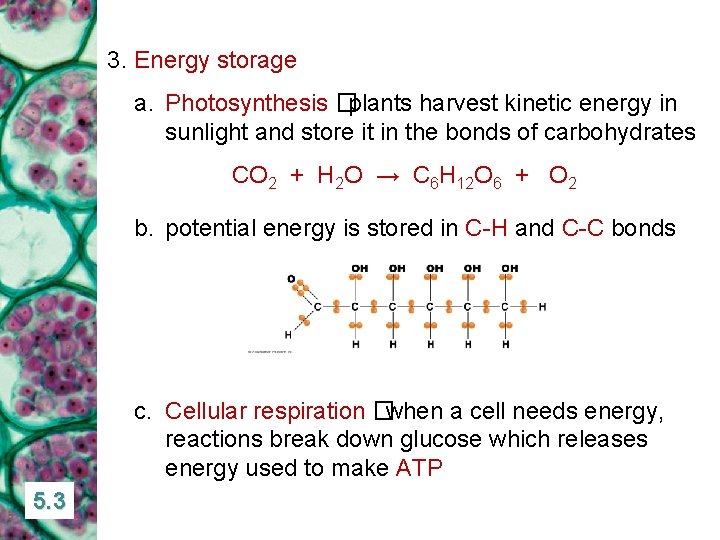
3. Energy storage a. Photosynthesis �plants harvest kinetic energy in sunlight and store it in the bonds of carbohydrates CO 2 + H 2 O → C 6 H 12 O 6 + O 2 b. potential energy is stored in C-H and C-C bonds c. Cellular respiration �when a cell needs energy, reactions break down glucose which releases energy used to make ATP 5. 3
- Slides: 16