
CHAPTER 5 BUILDING THE startup TEAM Learning Objectives
CHAPTER 5 BUILDING THE startup TEAM

Learning Objectives � Explain how to effectively build a founding team. � Understand how to work with professional advisers. � Discuss when to add a board of directors. � Compare and contrast the pros and cons of outsourcing with independent contractors versus hiring employees.
Building Effective Founding Teams � Why ◦ ◦ ◦ do teams lead to a better chance for success? Shared intense effort required by a startup Loss of one member less likely to result in startup abandonment Team concept permits expertise across major functional areas: marketing, finance, operations Skilled team lends legitimacy to the startup in the eyes of lenders, investors, etc. Diverse experience of the team allows entrepreneur to make better decisions
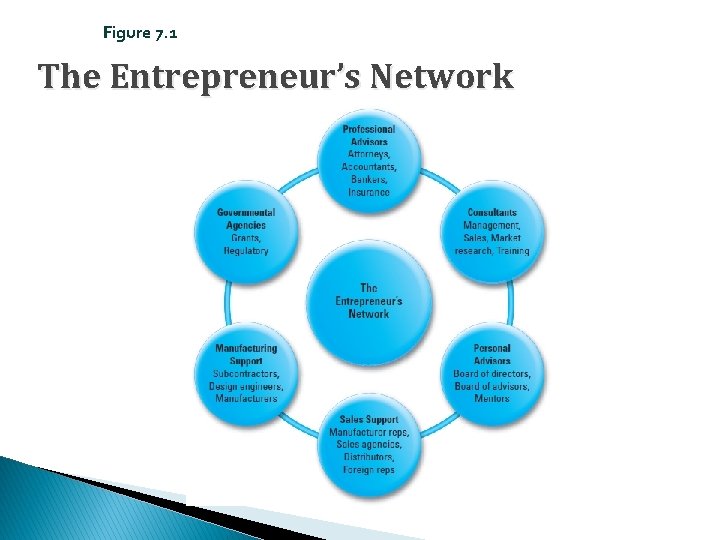
Figure 7. 1 The Entrepreneur’s Network
Creating the Founding Team � Benchmarks ◦ ◦ ◦ ◦ for an effective team: Shared vision between lead entrepreneur and the team Shared passion leads to shared hard work Industry experience relevant to the new venture Solid industry contacts with sources of capital Functional areas of the business are represented Team members have good credit ratings Team members have the time and money to endure startup constraints
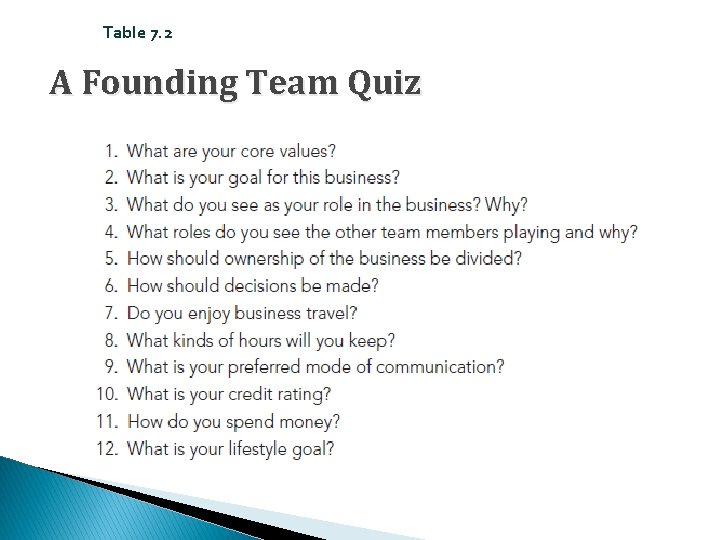
Table 7. 2 A Founding Team Quiz
Special Issues for High-Tech Teams � Funding is through angel and venture capital. � Founding team consists of scientists-engineers with little market or business experience. � The venture requires professional management outside of the founding team. � The investors help with forming this team.
Unique Issues Surrounding Virtual Teams � Virtual teams function differently and affect how the team interacts. � Synchronous-asynchronous communication media alleviate physical distance issues. � Trust is critical to effective virtual teamwork.
Founding Teams for International Ventures � Success in the international market depends on the skills and knowledge of the team. � Successful characteristics include: ◦ Extent to which founding team members have traveled or worked abroad ◦ The number of languages they speak � Experienced founding teams likely to form partnerships to facilitate entering the foreign market.
Rules for Friends and Families � Friends/family members must possess real skills and expertise required by the venture. � They need to share the same work ethic as the entrepreneur. � The advisory board must include outsiders to balance input objectivity. � All relationships are business oriented and must be stated clearly spelled out.
Seeking Professional Advisers � Outsourcing solutions for professional help: ◦ Attorneys ◦ Accountants ◦ Bankers ◦ Insurance agents � “As-needed” assistance for information, assistance in reviewing business concept, and reality checks
Seeking Personal Advisors � Building a board of directors ◦ Legal form of the business influences the decision to have a Board of Directors. ◦ Boards provide beneficial expertise in establishing corporate strategy and philosophy. ◦ Boards of publicly traded companies are elected by shareholders and represent their interests. ◦ Members assist with business development, act as arbitrators for dispute resolution, and give credibility to the new company’s image.
Building a Board of Directors � Considerations ◦ ◦ ◦ ◦ when choosing board members: The necessary technical skill related to the business Significant, successful experience in the industry Experience running a company at the level the entrepreneur wants to grow to next Important contacts in the industry Experience in finance, capital acquisition, or IPOs A personality compatible with the rest of the Board Good problem-solving skills Honesty and integrity, to engender a sense of mutual trust
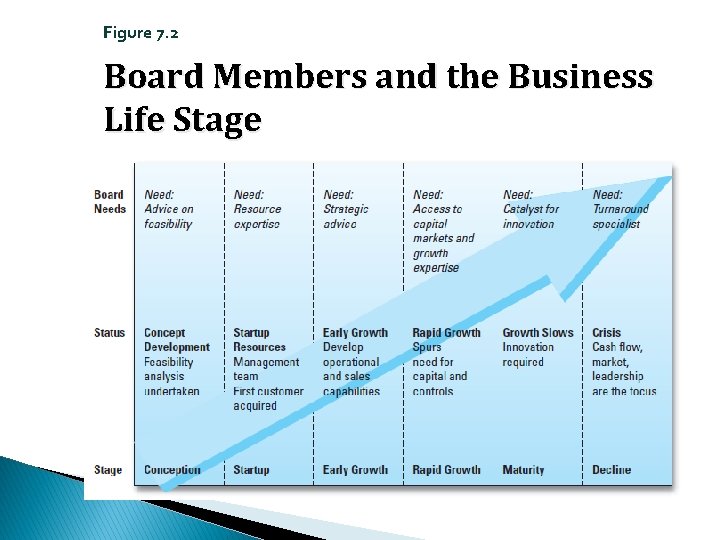
Figure 7. 2 Board Members and the Business Life Stage
Advisory Board � Consists of a panel of experts interested in the new venture’s success � Ranges from infrequent meetings and no pay to frequent meetings and provided equity stake in company � Often used when board of directors is not required or in the startup phase � Helps the entrepreneur to overcome “tunnel vision”
The Mentor Board � The entrepreneur’s personal board who serve as a sounding board, coach, advisor � A safe haven for entrepreneur’s to air their fears, concerns, hopes, dreams � Generally role models and individuals who have businesses and lifestyles like the one the entrepreneur wants to create
Mistakes to Avoid � All team members should have the required experience and qualifications, and the same goals for the business. � Avoid using only family and friends. � Only give stock incentives after an individual has proven him or herself.
Mistakes to Avoid (cont’d) � Equity distribution: it is important to clearly understand what each team member is contributing and value it appropriately. � Buy-sell agreement: used to prevent an owner from selling his/her interests in company without consent of the other owners and to determine what happens should owner leave the business.
Outsourcing with Independent Contractors � Independent contractors (ICs) own their own businesses and are hired by the entrepreneur to do a specific job. ◦ Including: consultants, manufacturers, distributors, employee leasing firms, and professional advisers. ◦ Hidden costs: �Searching and contracting ICs �Transferring activities to ICs �Managing IC �Bringing activity in-house
Types of Independent Contractors � Consultants � Professional employer organizations (PEOs) � Manufacturing support � Sales support
- Slides: 20