
Chapter 5 Audience Analysis Audience Analysis Introduction When
- Slides: 43
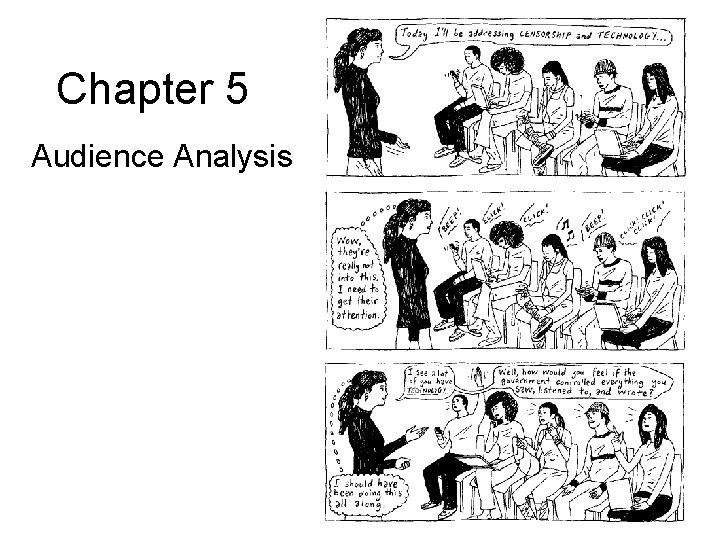
Chapter 5 Audience Analysis
Audience Analysis: Introduction • When speakers tailor messages to audiences, audience members: – Become more attentive to the speech – Experience positive feelings toward the speaker – Open their minds to ideas that target their needs, interests, and values
Audience Analysis: An Overview • Understanding an audience involves: – Understanding situational characteristics – Incorporating demographics – Seeking common ground – Identifying prior exposure – Identifying audience disposition – Gathering information about your audience – Situational audience analysis
Understanding Situational Characteristics • Observable factors about a speech situation: – Size – Time – Location – Mobility
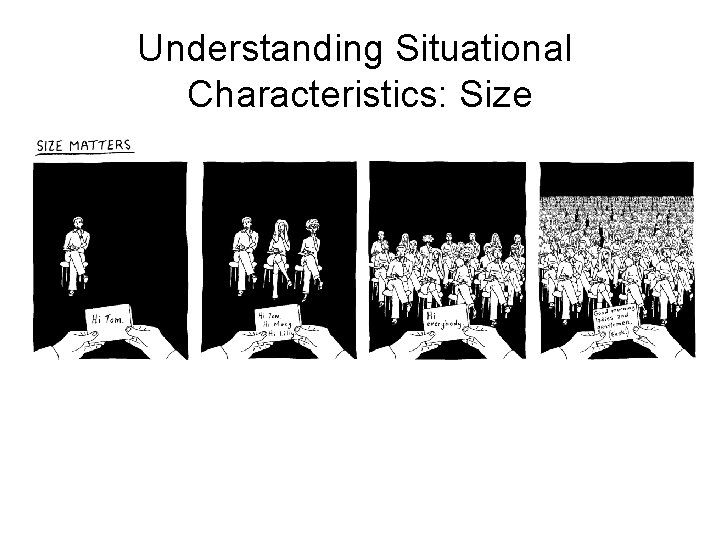
Understanding Situational Characteristics: Size • How many people will be in the audience? – Small groups • • More interaction Can tailor more detailed and specific message – Large Groups • • • Less interaction Must anticipate reactions Craft a widely accessible message
Understanding Situational Characteristics: Size
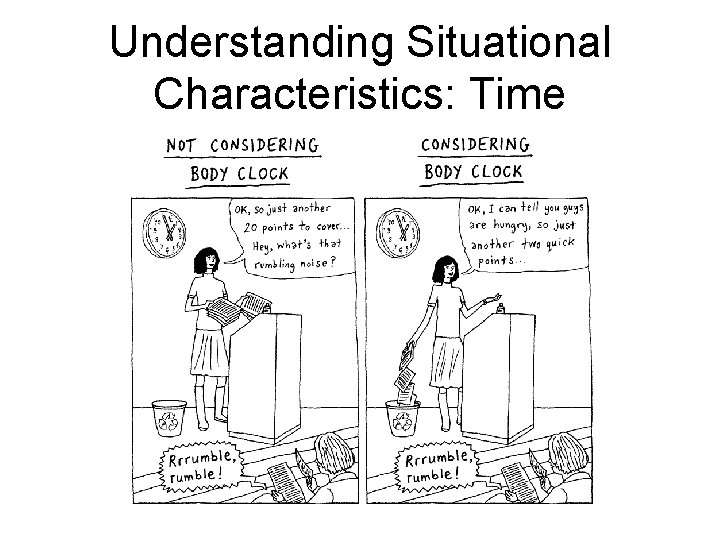
Understanding Situational Characteristics: Time • Presentation time issues: – Short speeches need to be concise. – Longer speeches can take more time to develop a message.
Understanding Situational Characteristics: Time • Chronemics or body clock refers to the time of day or day of the week speech is given. – Certain times (e. g. , early Monday morning) can impede an audience’s attention. – Be sensitive to body clock and adjust speech as needed.
Understanding Situational Characteristics: Time
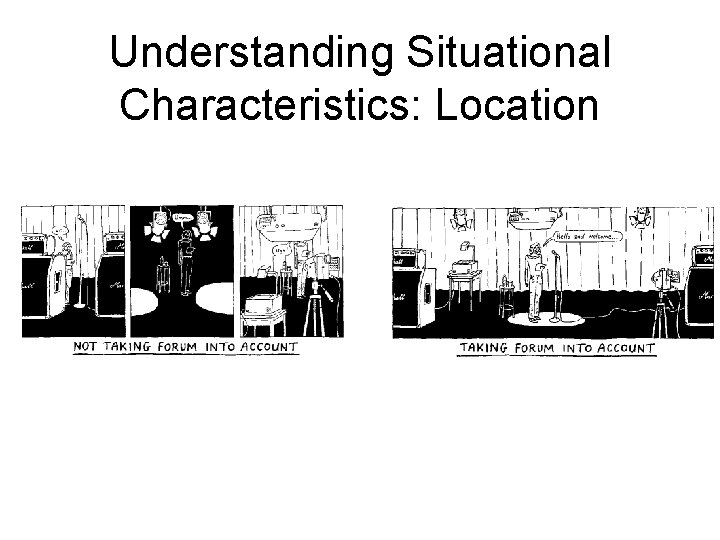
Understanding Situational Characteristics: Location • The setting where you deliver the speech (also called forum) • Take into account: – Acoustic characteristics – Level of technology – Sight lines – Lighting
Understanding Situational Characteristics: Location
Understanding Situational Characteristics: Mobility • Stationary audience: Sitting or standing • Mobile audience: Strolling by, stopping briefly – If audience members are free to leave during the speech, you must work extra hard to keep their attention.
Tips for Situational Characteristics • Tip: Don’t take captive audiences for granted, good speakers work just as hard at keeping their attention. • Tip: If it’s appropriate, consider rewarding a captive audience for their participation.
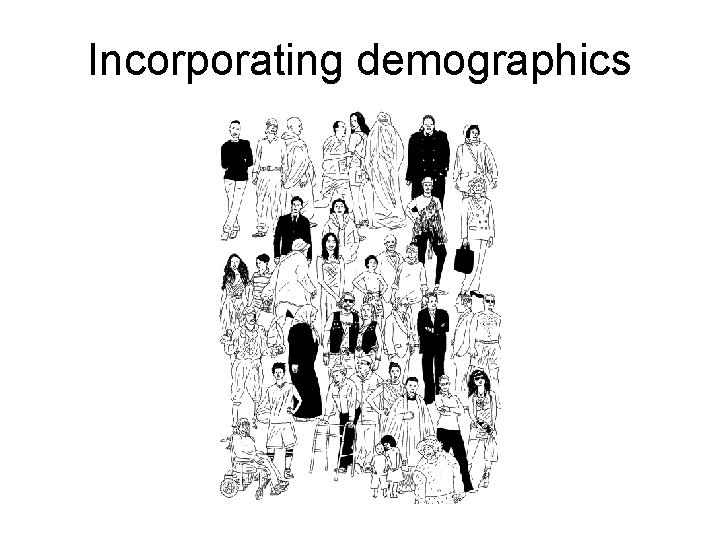
Incorporating Demographics • Characteristics of listeners that help you anticipate your audience’s beliefs about your topic: – – – – Age Gender composition Sexual orientation Race and ethnicity Religious orientation Socioeconomic background Political affiliation
Incorporating demographics
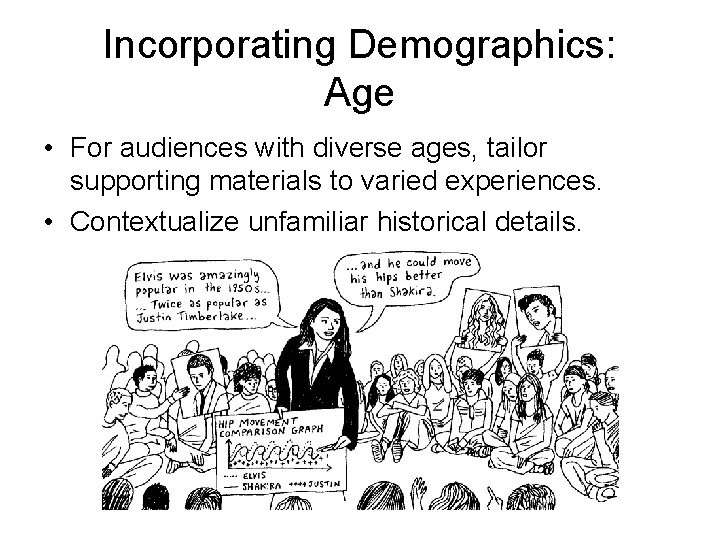
Incorporating Demographics: Age • For audiences with diverse ages, tailor supporting materials to varied experiences. • Contextualize unfamiliar historical details.
Incorporating Demographics: Gender Composition • Craft messages that will appeal to the needs of both genders. • Do not use gender stereotypes or sexist language.
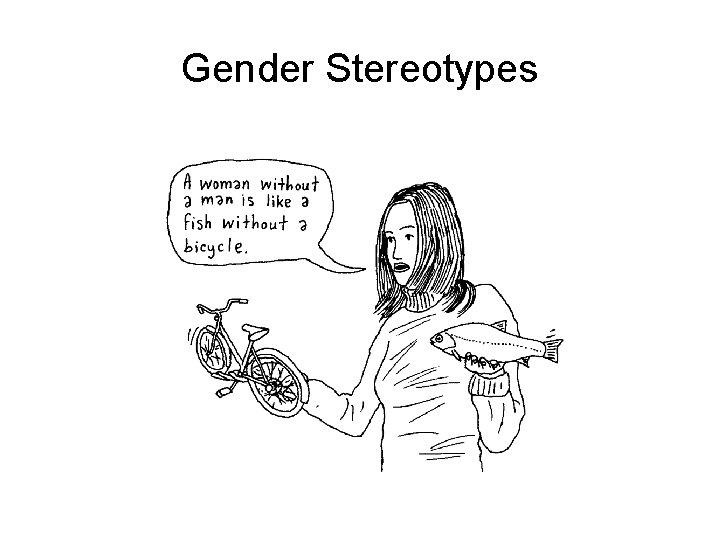
Gender Stereotypes
Incorporating Demographics: Sexual Orientation • Do not assume everyone is heterosexual. • Acronym GLBT includes various sexual orientations. • Inclusive word choice can help. – Overt: Gay couple – Passive: Loving couple
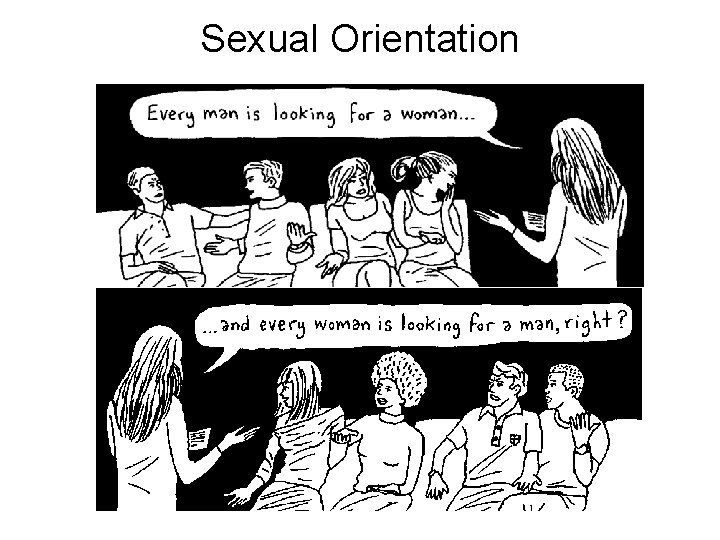
Sexual Orientation
Incorporating Demographics: Race and Ethnicity • Race: Common heritage based on genetically shared physical characteristics • Ethnicity: Cultural background • Be sensitive to racial and ethnic backgrounds. • Do not assume all people from the same backgrounds think alike.
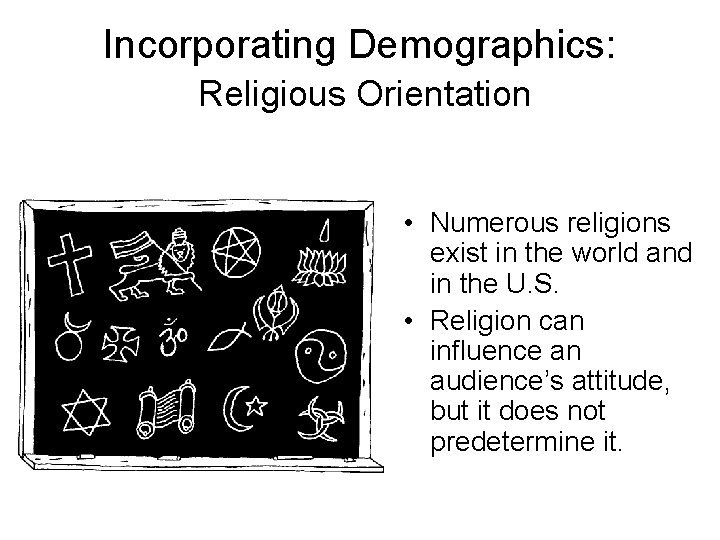
Incorporating Demographics: Religious Orientation • Numerous religions exist in the world and in the U. S. • Religion can influence an audience’s attitude, but it does not predetermine it.
Incorporating Demographics: Socioeconomic Background • Refers to audience’s socioeconomic status – Measure of financial resources, educational level, and occupation • Consider how this influences audience’s individual and collective concerns – Tailor examples as needed
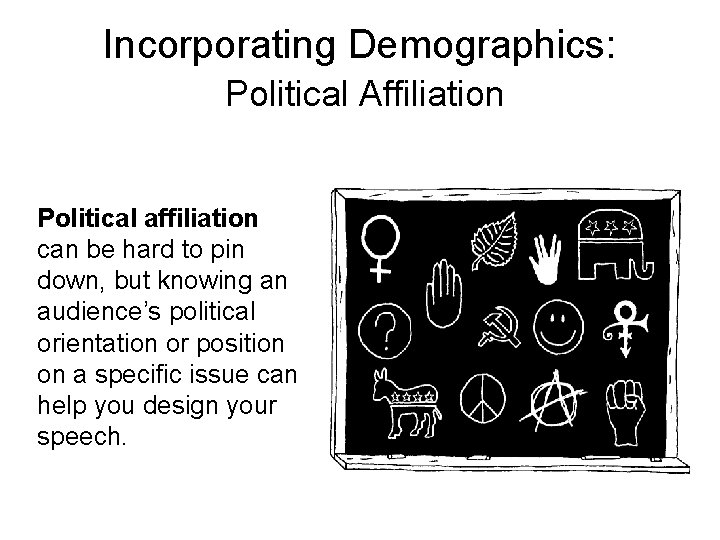
Incorporating Demographics: Political Affiliation Political affiliation can be hard to pin down, but knowing an audience’s political orientation or position on a specific issue can help you design your speech.
Incorporating Demographics: Putting the Demographic Pieces Together • Every audience is unique. • Analyzing shared audience characteristics can help you frame your message effectively.
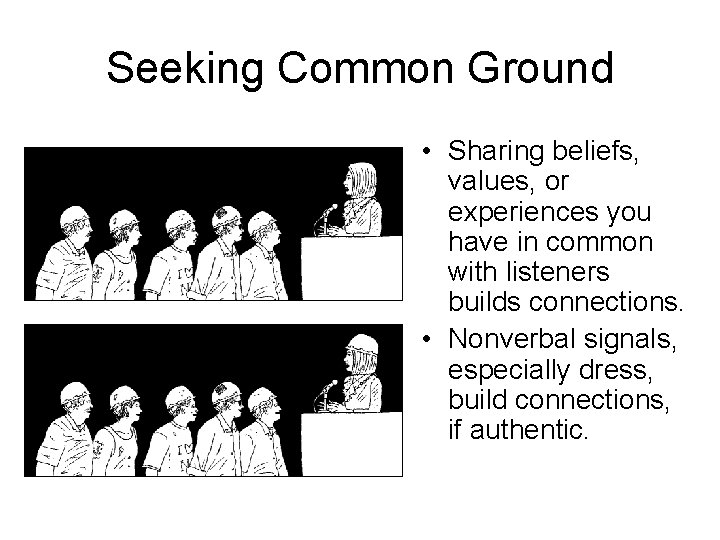
Seeking Common Ground • Sharing beliefs, values, or experiences you have in common with listeners builds connections. • Nonverbal signals, especially dress, build connections, if authentic.
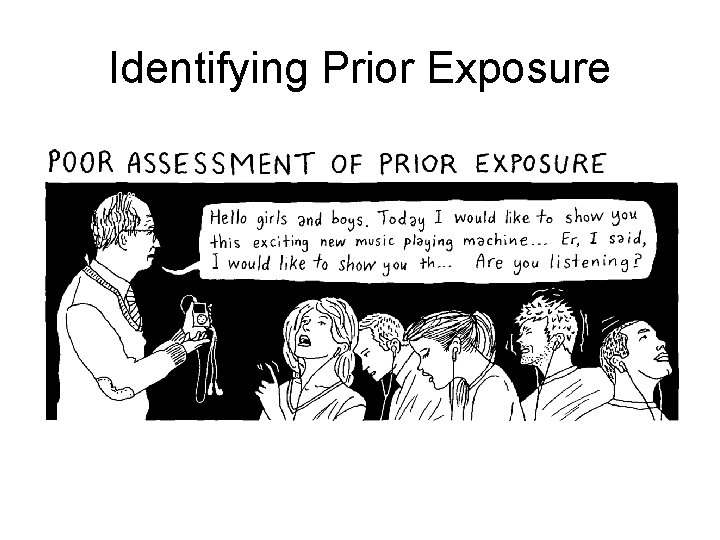
Identifying Prior Exposure • Extent to which audience has already been exposed to the message • Prior exposure can change how you present a message. • Speaker should answer the three following questions ahead of time.
Identifying Prior Exposure: Has My Audience Heard This Message Before? • If “No, ” craft the message you want, as few will have strong prior beliefs (you may have to provide more details) • If “Yes, ” move on to the next question
Identifying Prior Exposure: Has My Audience Responded Positively to the Message? • If “Yes, ” use this speech to reinforce the previous message and motivate your audience to take action. • If “No, ” move on to the next question
Identifying Prior Exposure: Why Did the Previous Message Fail? • Ask why the previous message failed. • Use those insights to tailor your speech for a more successful approach.
Identifying Prior Exposure
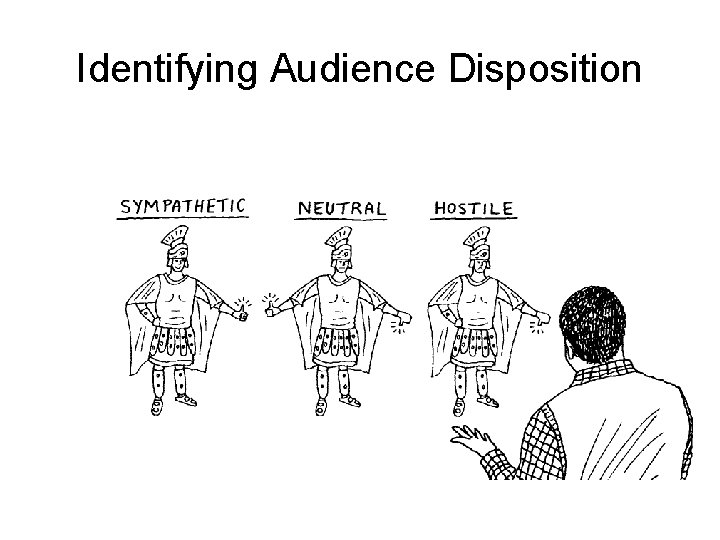
Identifying Audience Disposition: Sympathetic Audience • Already likes you or your message – They already agree, so get them to act. – Do not spend extra time on persuasion.
Identifying Audience Disposition: Hostile Audience • Opposes you or your message – You probably will not persuade them to act. – Set smaller, more realistic goals.
Identifying Audience Disposition: Neutral Audience • Has no opinion of you or your message – May be apathetic or interested – May act positively or negatively
Identifying Audience Disposition
Gathering Information About Your Audience: Surveying Your Audience • Survey: A set of written questions you ask audience before speech • Three common forms: – Fixed-response questions: Multiple choice, true/false – Scaled questions: Range of feelings (strongly agree to disagree) – Open-ended questions: Invite respondents to write what they want
Tips for Surveying Your Audience • Tip: If the way an audience feels about a topic is important to you, try scaled questions. • Tip: If you are unsure what issues your audience is concerned with in regard to your topic, use open-ended questions.
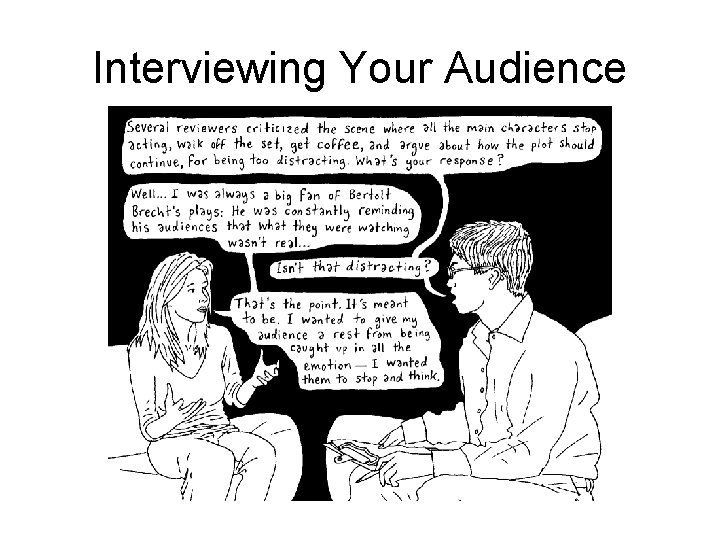
Gathering Information About Your Audience: Interviewing Your Audience • Interview: Face-to-face or phone interactions with audience – Interaction gives more depth in responses. – Interview a few audience members. – Ask any type of survey question. – Interview a range of audience members. – Be sure to use good listening skills and to thank the interviewee.
Interviewing Your Audience
Gathering Information About Your Audience: Considering and Observing Your Audience • Ask yourself questions about what the forum or event tells you about the audience. – Stationary or mobile audience? – Sympathetic, hostile, or neutral? • Seek literature about the organization or audience you are addressing ahead of time.
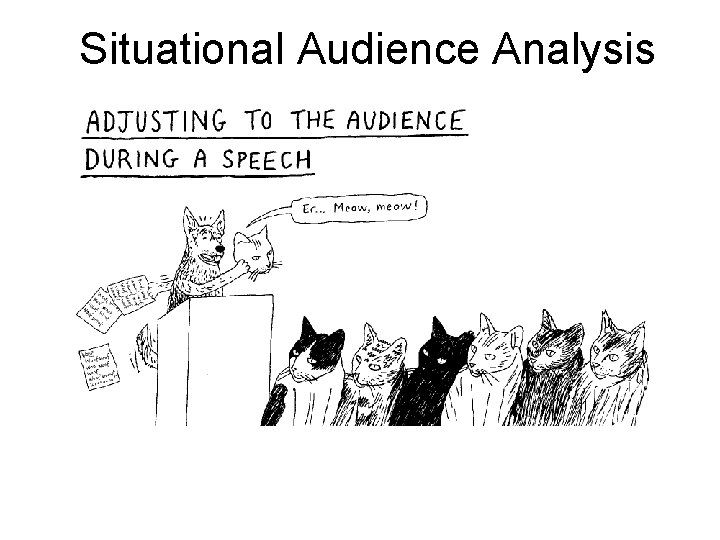
Situational Audience Analysis • What to do if the audience is not like the one you expected. – Don't act surprised—the audience may hear this as a lack of preparation. – Check outline and adjust it if necessary. – Check visual aids: Are some now unnecessary, or do some of them now need more explanation? – Use audience feedback to adjust. – If an audience unexpectedly appears hostile, seek common ground.
Situational Audience Analysis
Tips for Audience Analysis • Tip: Using the extemporaneous style makes it easier to adapt to audience feedback during your speech. • Tip: The more you learn about your audience before your speech, the more specific you can make your persuasive pitch, so don’t skip this step.