
CHAPTER 5 Asexual Reproduction Types Section 5 2
- Slides: 16
CHAPTER 5 Asexual Reproduction Types Section 5. 2
Asexual Reproduction Remember Most of the time (~95%) the cell is in interphase (doing its job, growing, surviving, etc. ). • When a cell gets too big (its volume outgrows its surface area), it must divide/reproduce. • Some animals have adopted a reproductive strategy that is as simple and efficient as that of a cell. In order to reproduce they create an identical copy of themselves using the same process of mitosis that a single cells uses.
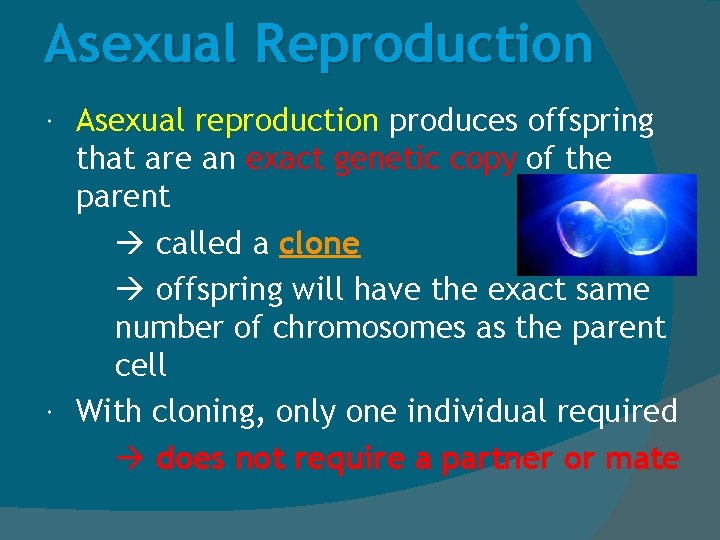
Asexual Reproduction Asexual reproduction produces offspring that are an exact genetic copy of the parent called a clone offspring will have the exact same number of chromosomes as the parent cell With cloning, only one individual required does not require a partner or mate
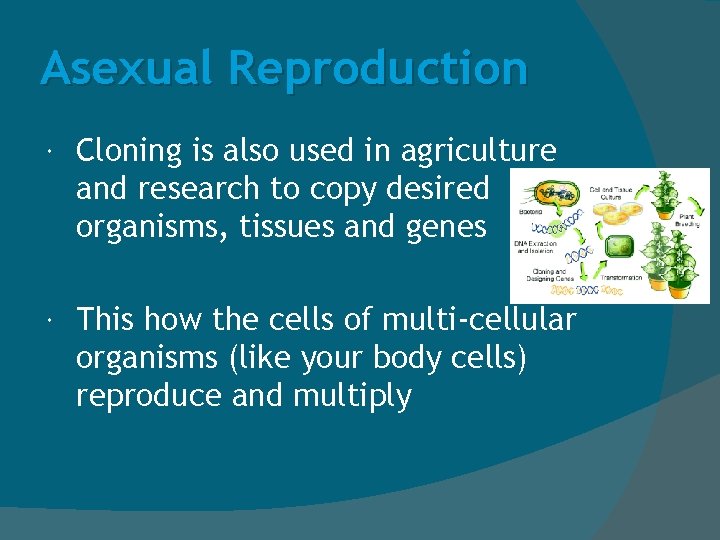
Asexual Reproduction Cloning is also used in agriculture and research to copy desired organisms, tissues and genes This how the cells of multi-cellular organisms (like your body cells) reproduce and multiply
Asexual Reproduction Asexual reproduction is common in many types of plants, single-celled organisms, as well as some multi-cellular organisms. Types of Asexual Reproduction • Binary fission • Budding • Fragmentation • Vegetative reproduction • Spore formation Asexual Reproduction (3 min. video)
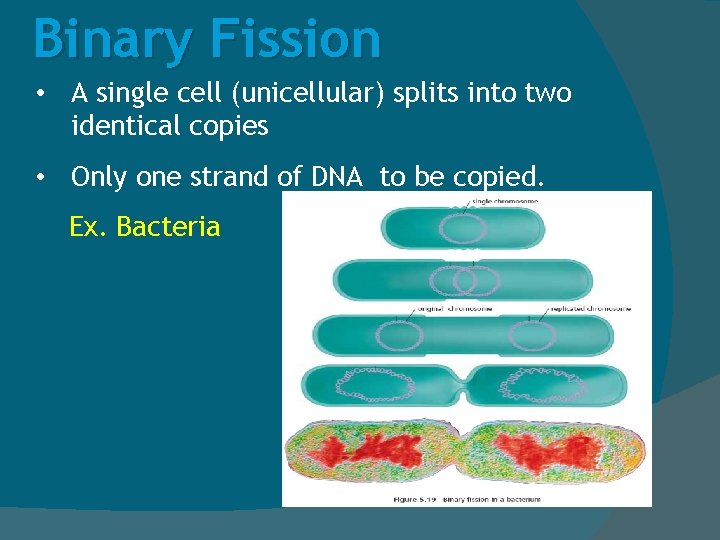
Binary Fission • A single cell (unicellular) splits into two identical copies • Only one strand of DNA to be copied. Ex. Bacteria
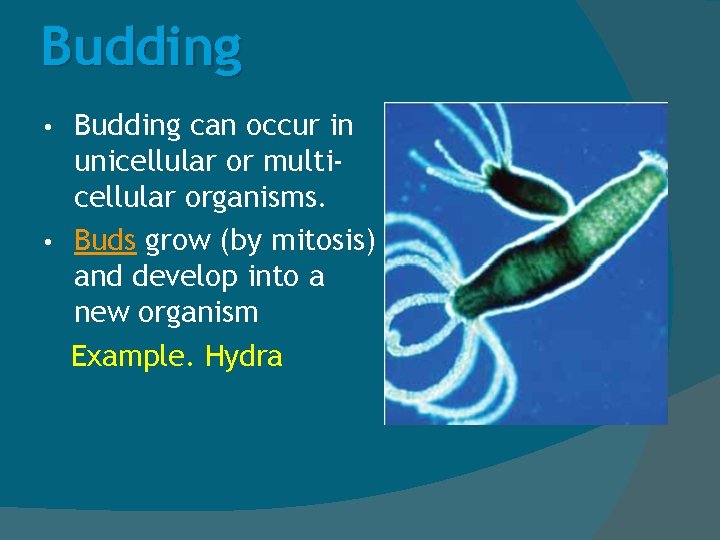
Budding can occur in unicellular or multicellular organisms. • Buds grow (by mitosis) and develop into a new organism Example. Hydra •
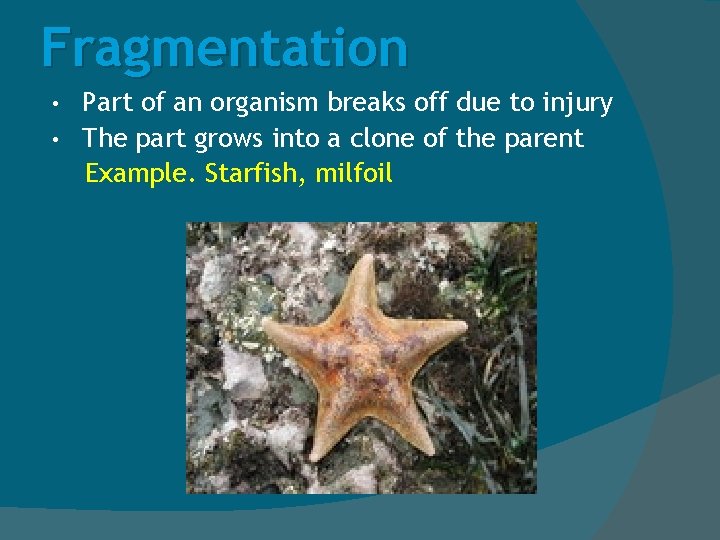
Fragmentation Part of an organism breaks off due to injury • The part grows into a clone of the parent Example. Starfish, milfoil •
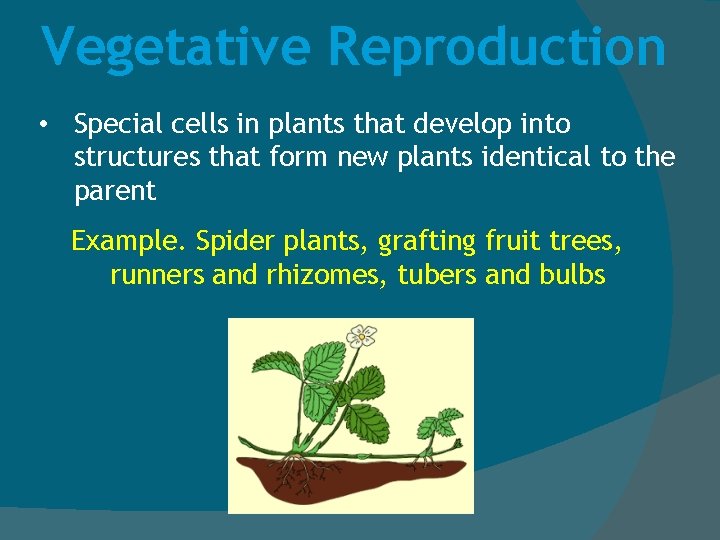
Vegetative Reproduction • Special cells in plants that develop into structures that form new plants identical to the parent Example. Spider plants, grafting fruit trees, runners and rhizomes, tubers and bulbs
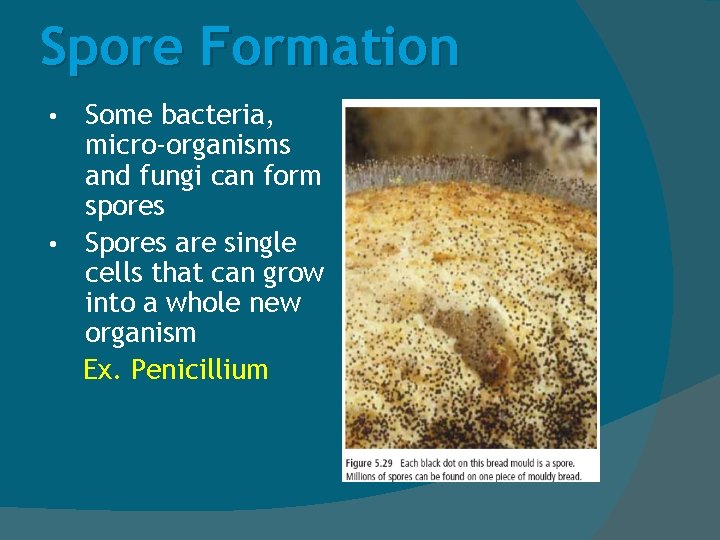
Spore Formation Some bacteria, micro-organisms and fungi can form spores • Spores are single cells that can grow into a whole new organism Ex. Penicillium •
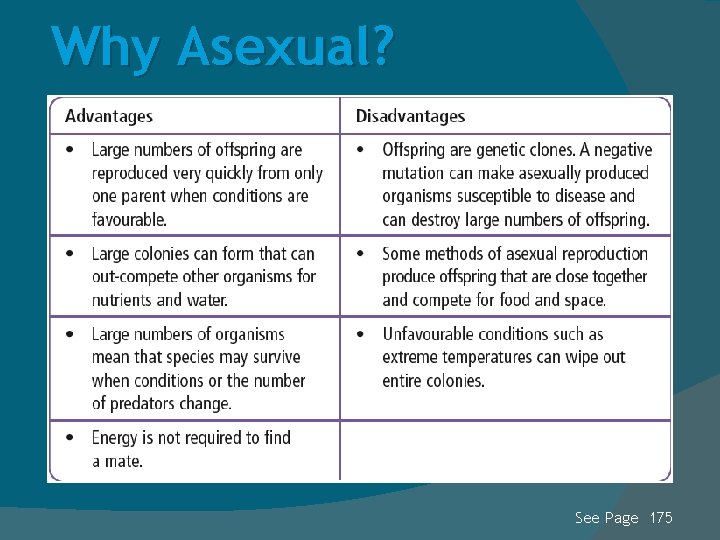
Why Asexual? See Page 175
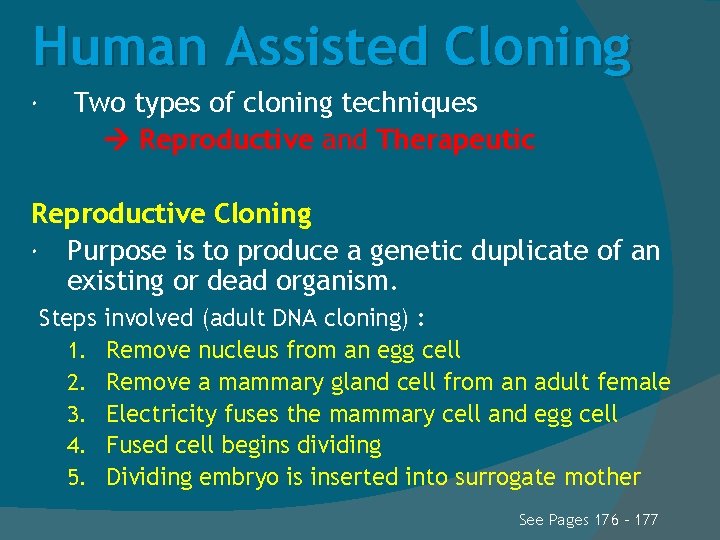
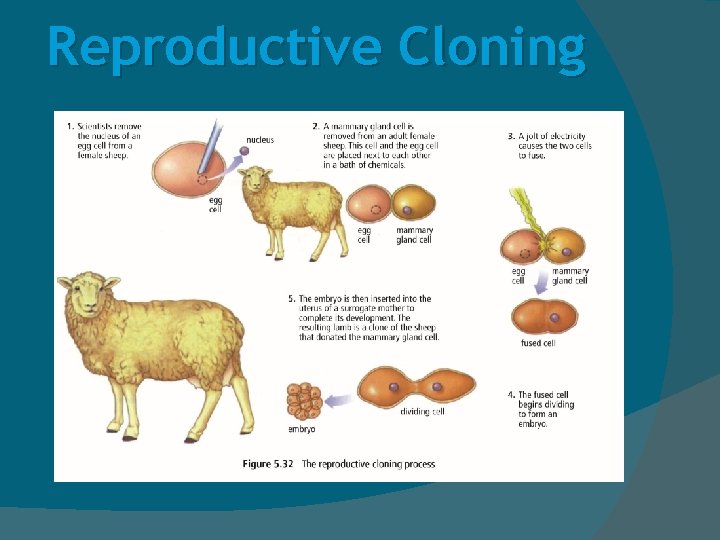
Human Assisted Cloning Two types of cloning techniques Reproductive and Therapeutic Reproductive Cloning Purpose is to produce a genetic duplicate of an existing or dead organism. Steps involved (adult DNA cloning) : 1. Remove nucleus from an egg cell 2. Remove a mammary gland cell from an adult female 3. Electricity fuses the mammary cell and egg cell 4. Fused cell begins dividing 5. Dividing embryo is inserted into surrogate mother See Pages 176 - 177
Reproductive Cloning
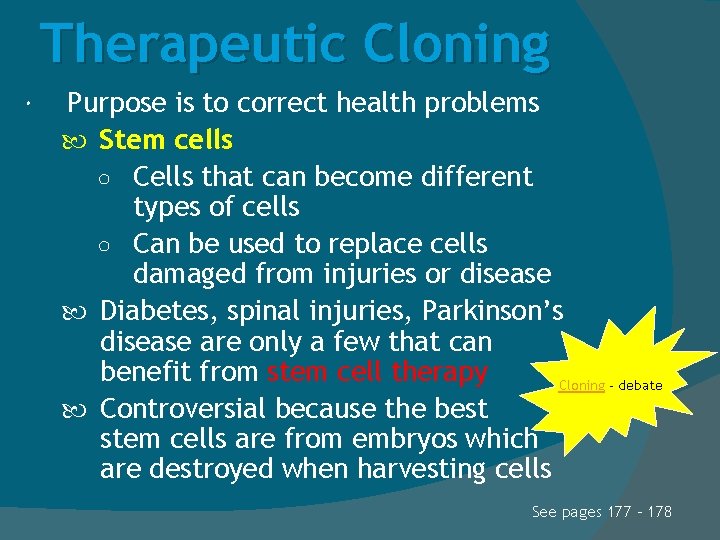
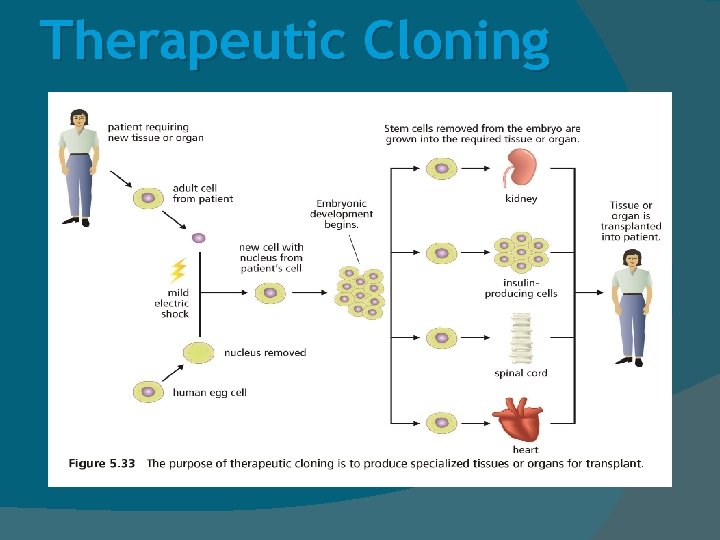
Therapeutic Cloning Purpose is to correct health problems Stem cells ○ Cells that can become different types of cells ○ Can be used to replace cells damaged from injuries or disease Diabetes, spinal injuries, Parkinson’s disease are only a few that can benefit from stem cell therapy Cloning - debate Controversial because the best stem cells are from embryos which are destroyed when harvesting cells See pages 177 - 178
Therapeutic Cloning
Summary Can you… • Explain what asexual reproduction is? • Explain the different methods of asexual reproduction? • What are some of the benefits of reproducing asexually? • What are some of the problems with reproducing asexually? • What is Reproductive Cloning? • What is Therapeutic Cloning?