
Chapter 5 Applying the Contiguity Principle Align Words

- Slides: 14
Chapter 5: Applying the Contiguity Principle Align Words To Corresponding Graphics Presented By: Chivonda Coleman
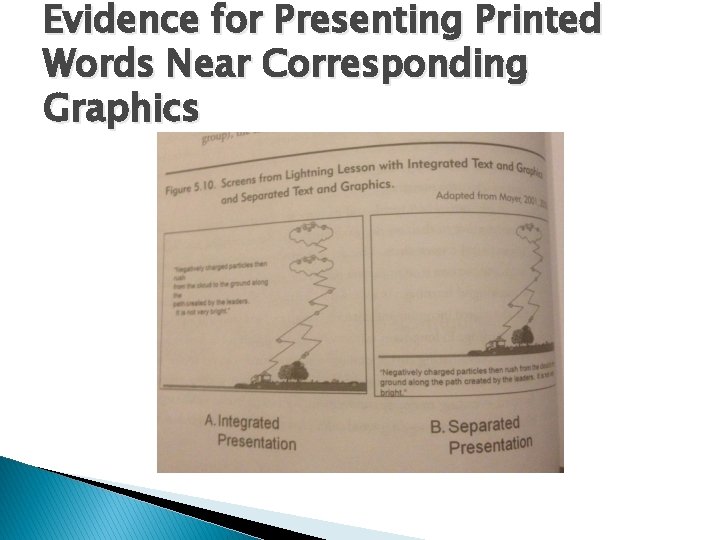
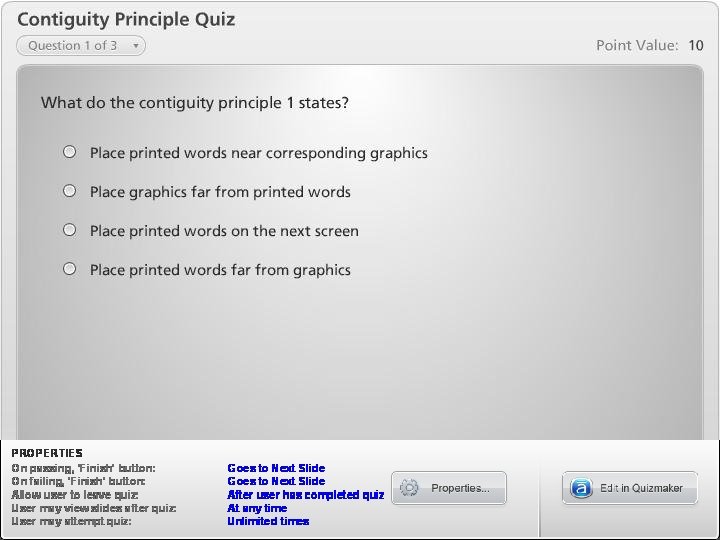
Contiguity Principle 1: Place Printed Words Near Corresponding Graphics � This principle states that on-screen words should be placed near the parts of the onscreen graphics to which they refer. � When there is too much text to fit on the screen the text describing each action or state can appear as a small pop-up message that appears when the mouse touches the graphics.
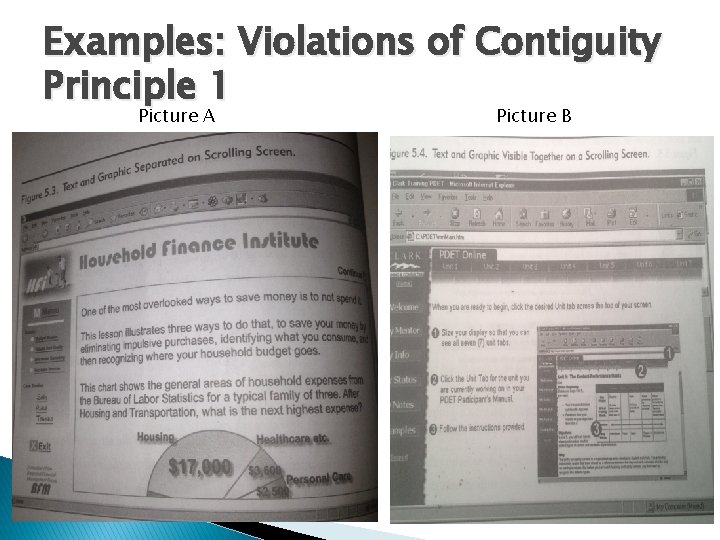
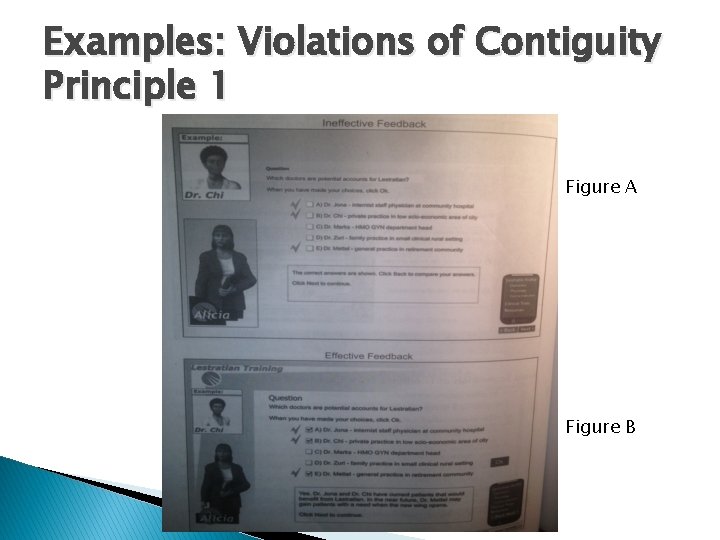
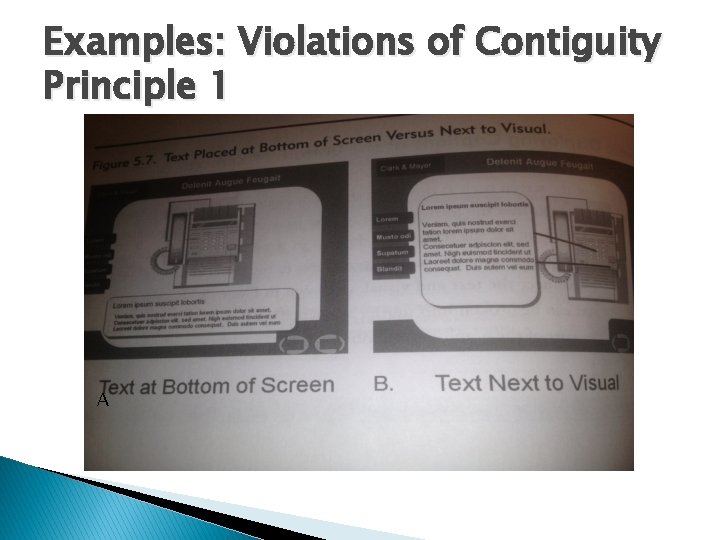
Violations of Contiguity Principle 1 � Avoid separation of text and graphic scrolling screens. � Avoid separation of feedback from questions or response. � Avoid separating lesson screens with linked windows. � Avoid presenting exercise directions separate from the exercise. � Avoid displaying captions at the bottom of screens.
Violations of Contiguity Principle 1 (cont’d) � Avoid simultaneous display of animation and related text. � Avoid using a legend to indicate the parts of a graphic.
Examples: Violations of Contiguity Principle 1 Picture A Picture B
Examples: Violations of Contiguity Principle 1 Figure A Figure B
Examples: Violations of Contiguity Principle 1 A
Contiguity Principle 2: Synchronize Spoken Words with Corresponding Graphics � This principle deals with coordinating spoken words and graphics at the same time. � When designing your e-learning course consider how spoken words are integrated with on-screen graphics.
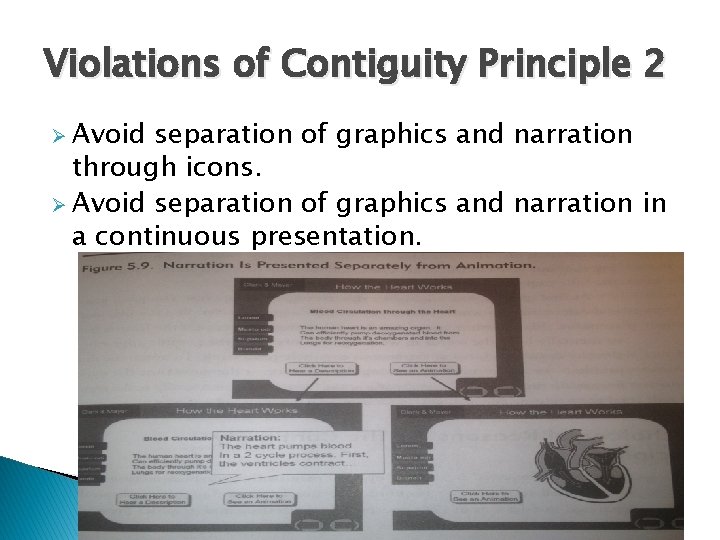
Violations of Contiguity Principle 2 Ø Avoid separation of graphics and narration through icons. Ø Avoid separation of graphics and narration in a continuous presentation.
Psychological Reasons for the Contiguity Principle � When learners use their limited cognitive capacity for extraneous processing, they have less capacity to use to mentally organize and integrate the material. � Limited capacity of working memory leads to a cognitive overload.
Evidence for Presenting Printed Words Near Corresponding Graphics
Evidence for Presenting Spoken Words at the Same Time as Corresponding Graphics � In eight different experimental comparisons the students who received integrated presentations generated 60 percent more solutions on a transfer test than did students who received separated presentations.
References