
Chapter 5 Alkenes and Alkynes II Reactions Elimination
- Slides: 34
Chapter 5. Alkenes and Alkynes II: Reactions
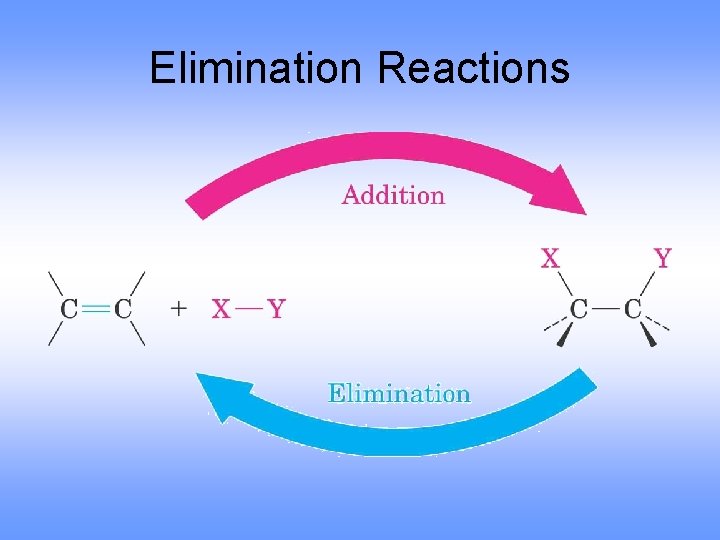
Elimination Reactions
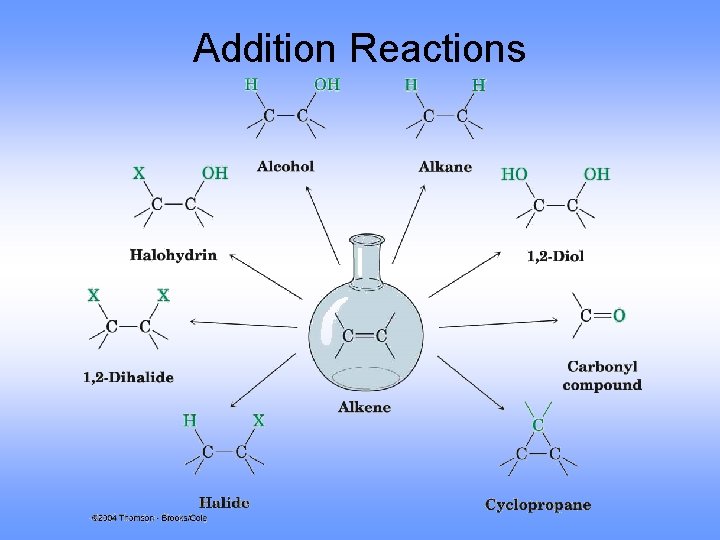
Addition Reactions
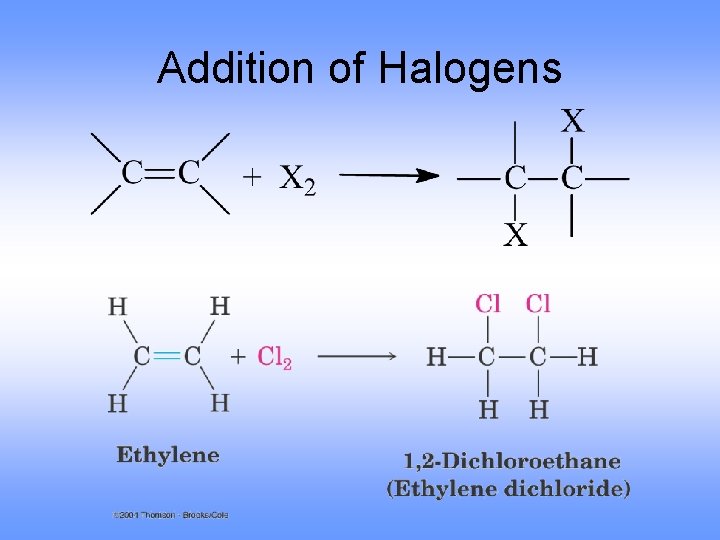
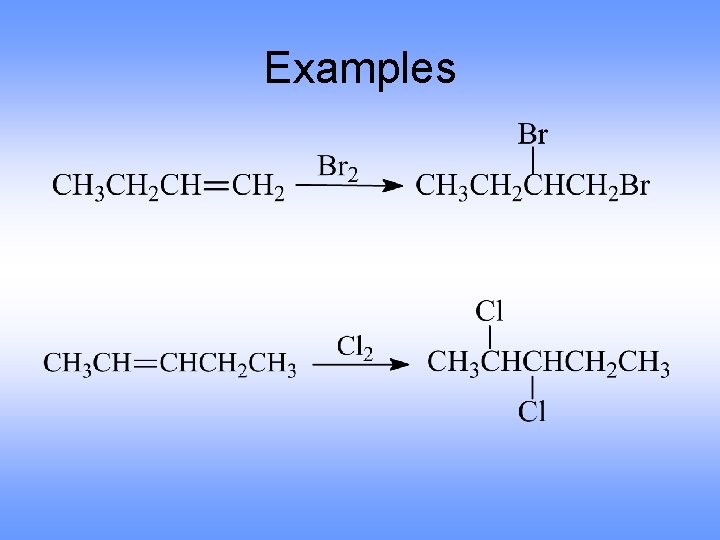
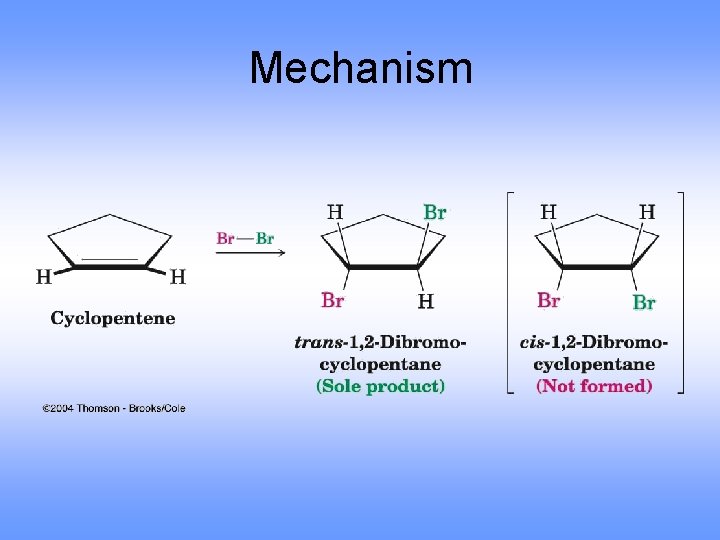
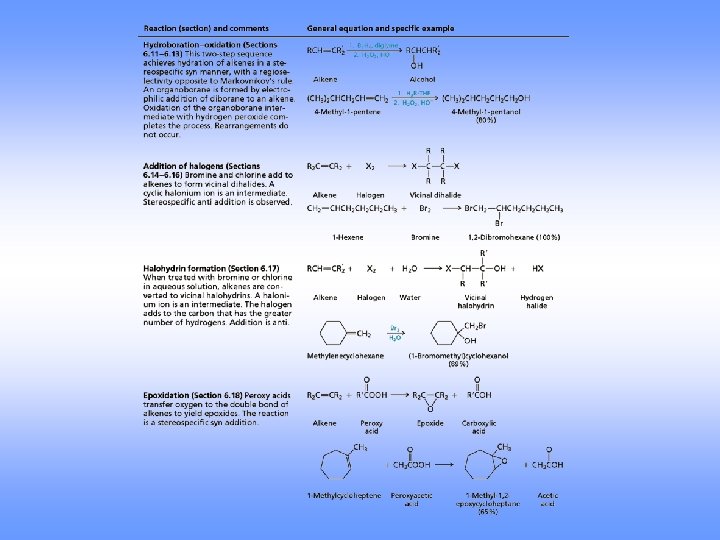
Addition of Halogens
Examples
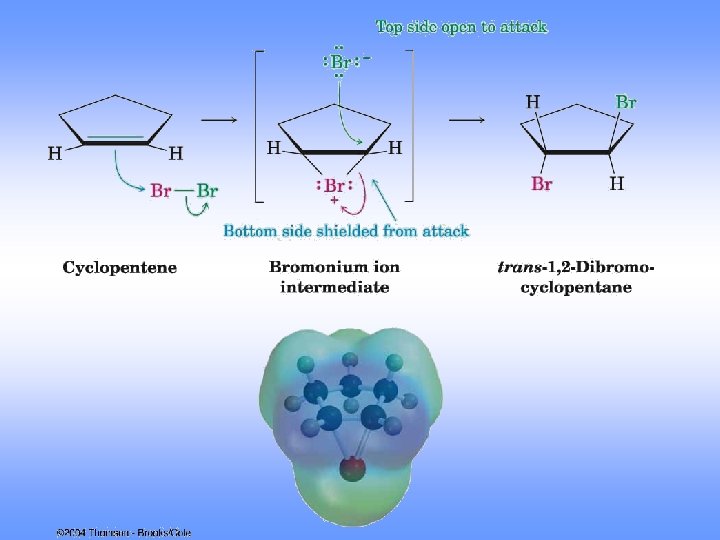
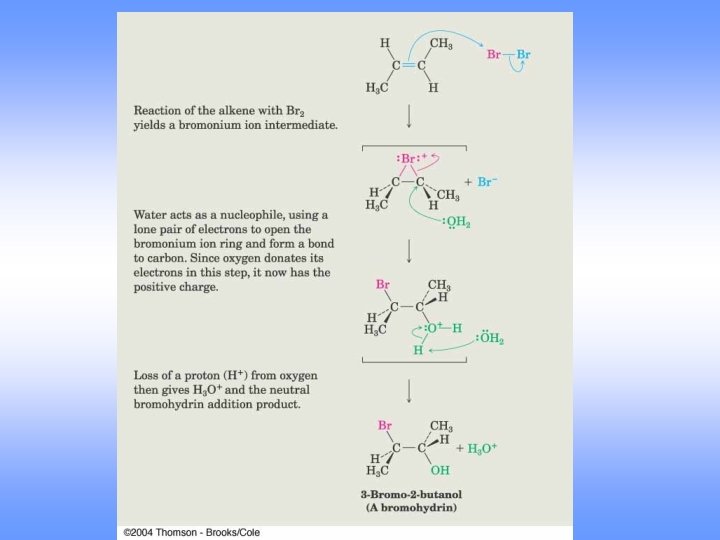
Mechanism
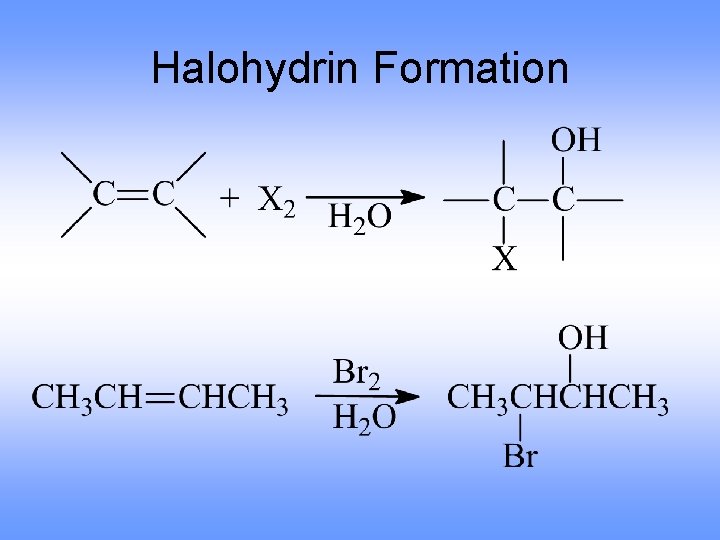
Halohydrin Formation
Mechanism
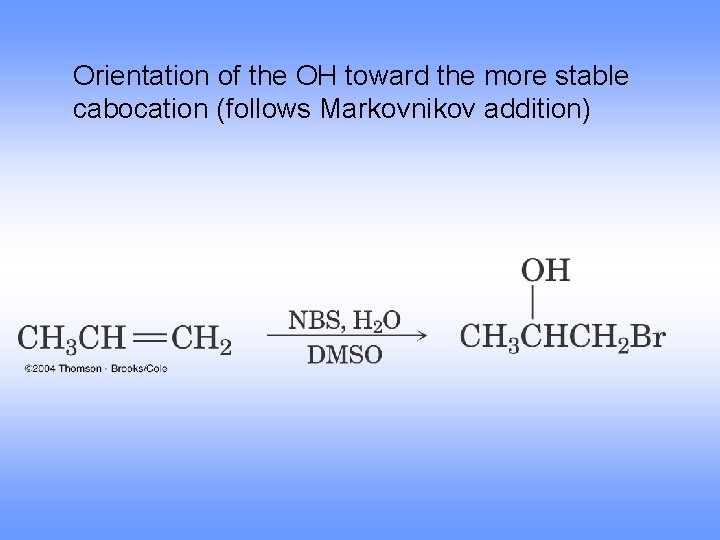
Orientation of the OH toward the more stable cabocation (follows Markovnikov addition)
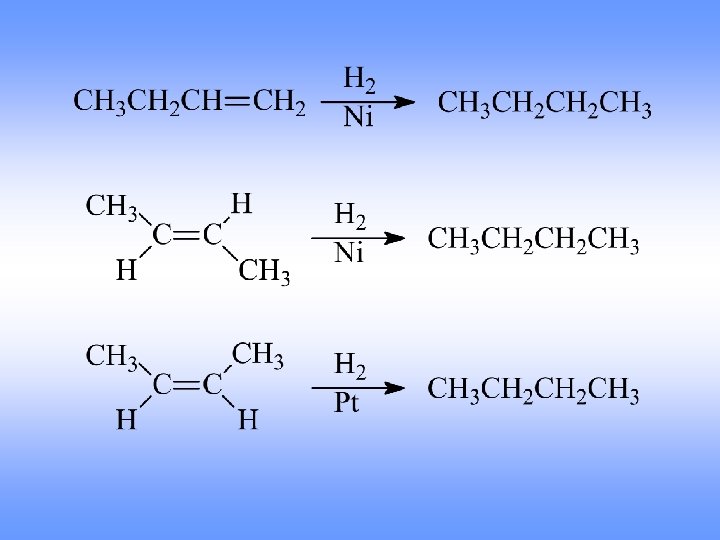
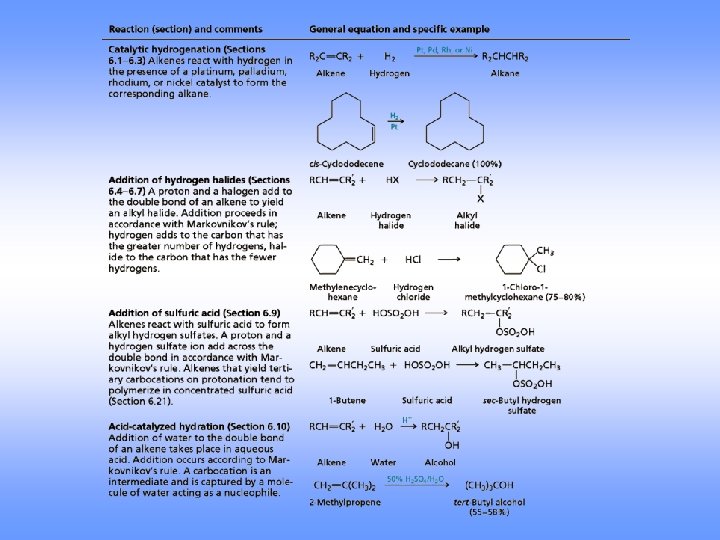
Hydrogenation Addition of Hydrogen
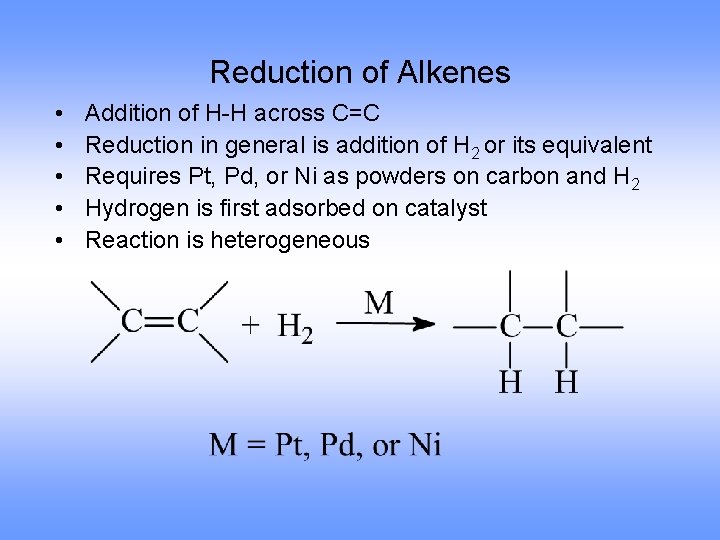
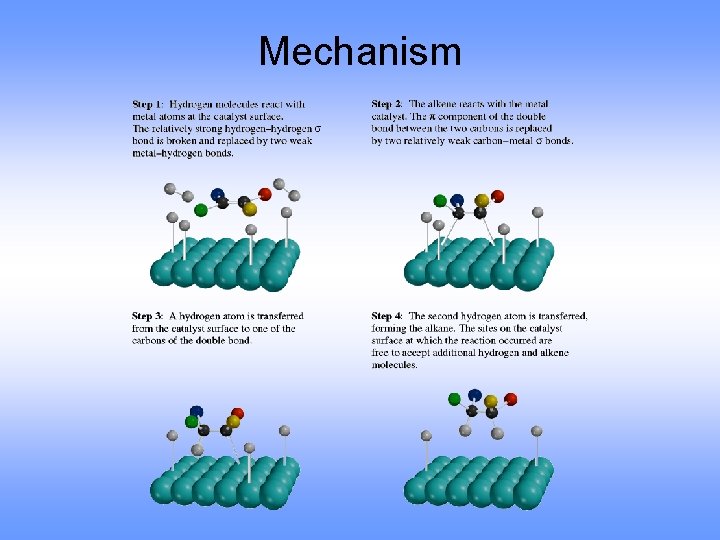
Reduction of Alkenes • • • Addition of H-H across C=C Reduction in general is addition of H 2 or its equivalent Requires Pt, Pd, or Ni as powders on carbon and H 2 Hydrogen is first adsorbed on catalyst Reaction is heterogeneous
Mechanism
Addition of Water to Alkenes • Acid-Catalyzed Hydration • Oxymercuration-Demercuration • Hydroboration-Oxydation
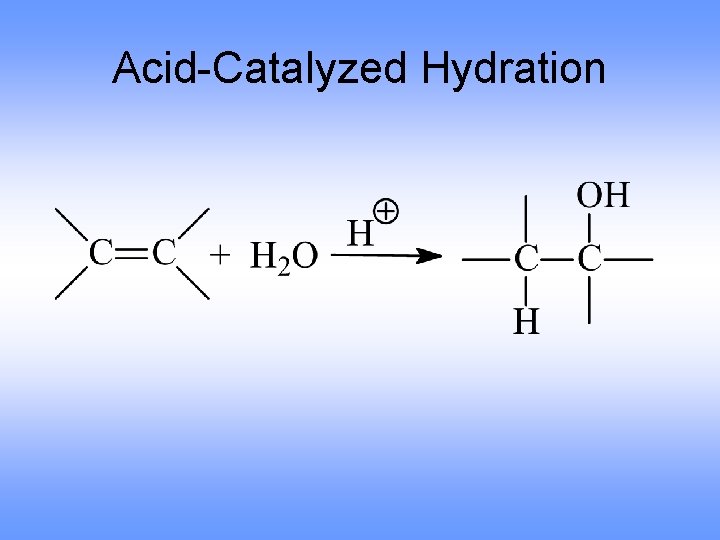
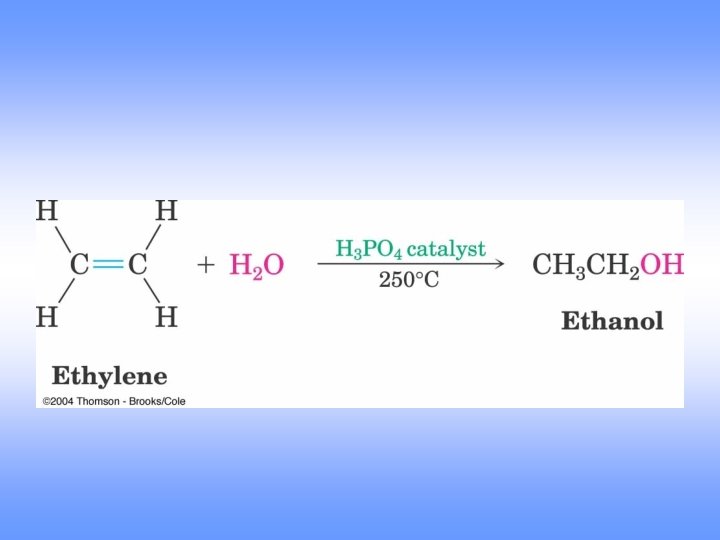
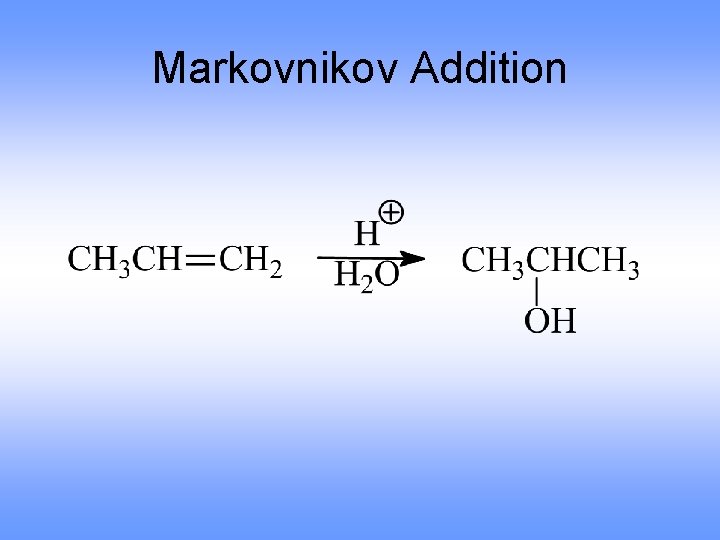
Acid-Catalyzed Hydration
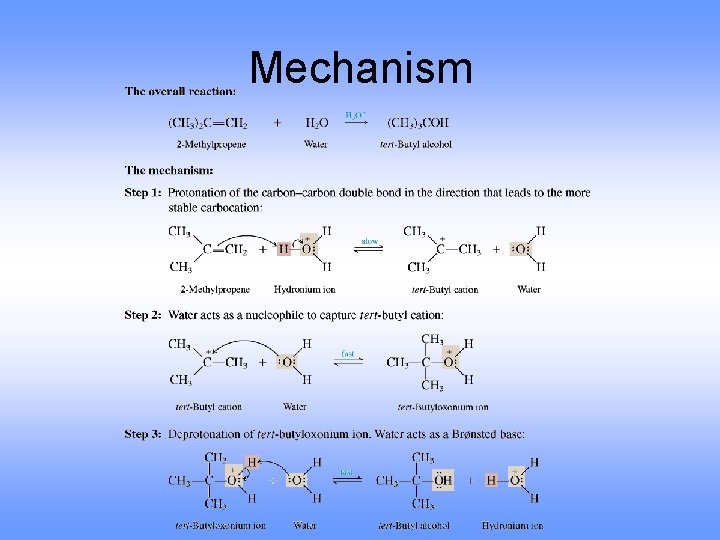
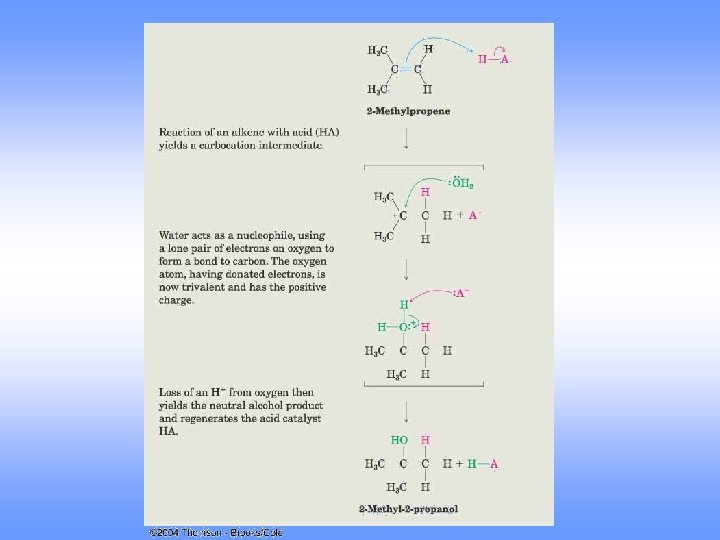
Mechanism
Mechanism
Markovnikov Addition
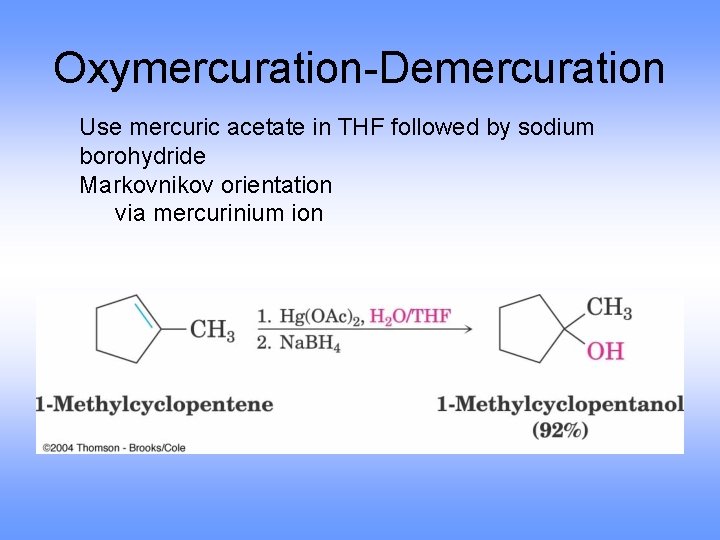
Oxymercuration-Demercuration Use mercuric acetate in THF followed by sodium borohydride Markovnikov orientation via mercurinium ion
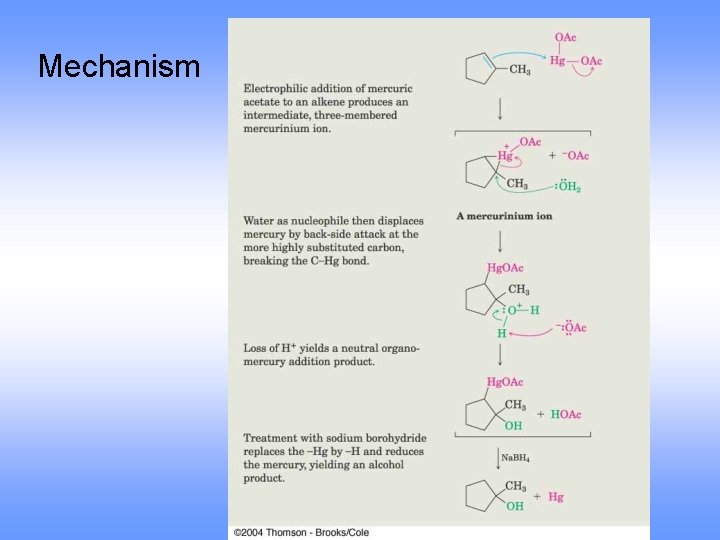
Mechanism
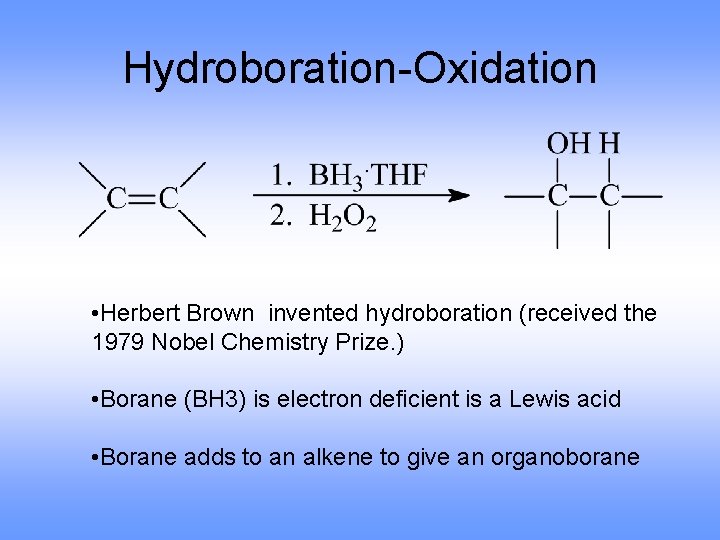
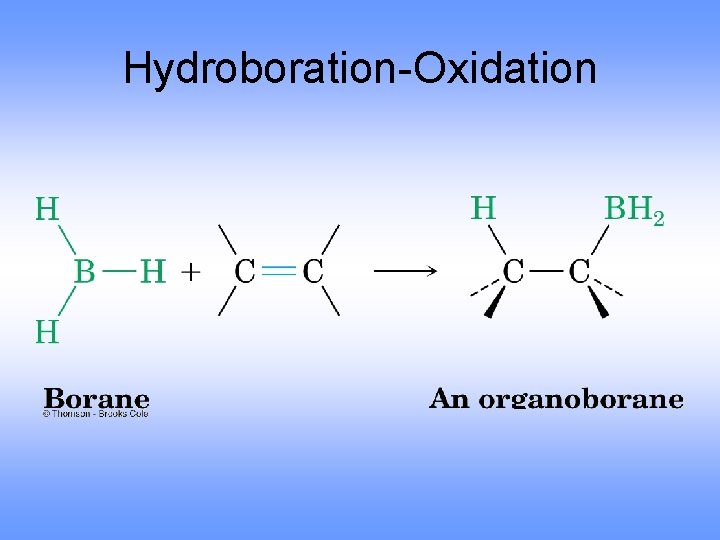
Hydroboration-Oxidation • Herbert Brown invented hydroboration (received the 1979 Nobel Chemistry Prize. ) • Borane (BH 3) is electron deficient is a Lewis acid • Borane adds to an alkene to give an organoborane
Hydroboration-Oxidation
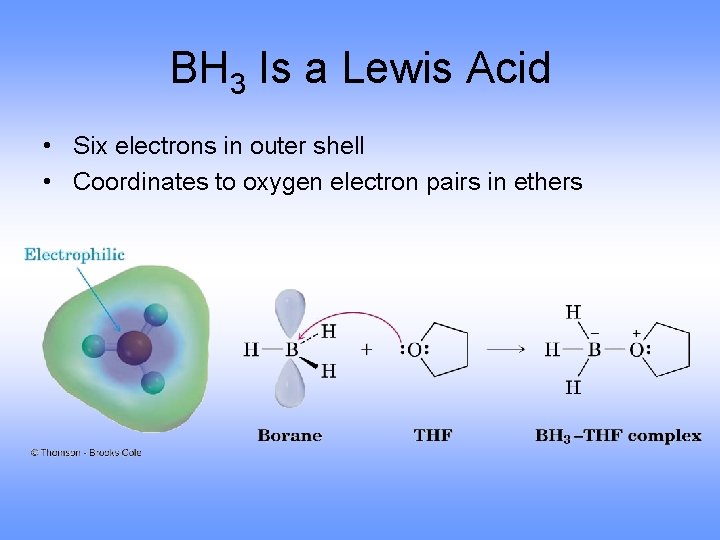
BH 3 Is a Lewis Acid • Six electrons in outer shell • Coordinates to oxygen electron pairs in ethers
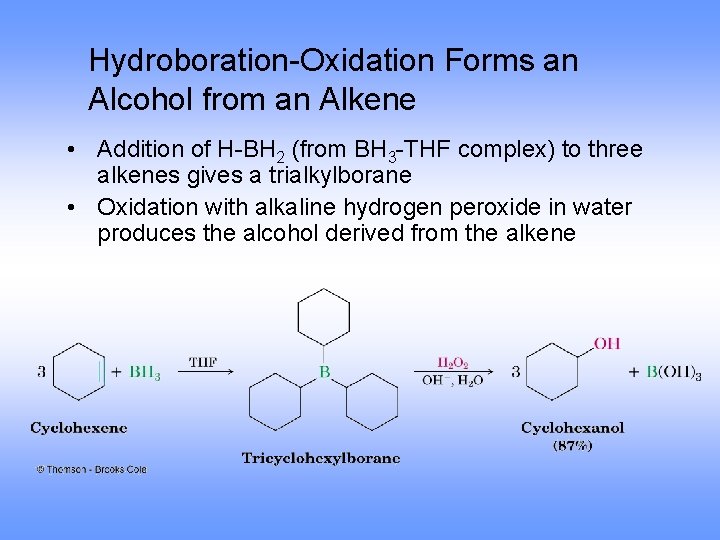
Hydroboration-Oxidation Forms an Alcohol from an Alkene • Addition of H-BH 2 (from BH 3 -THF complex) to three alkenes gives a trialkylborane • Oxidation with alkaline hydrogen peroxide in water produces the alcohol derived from the alkene
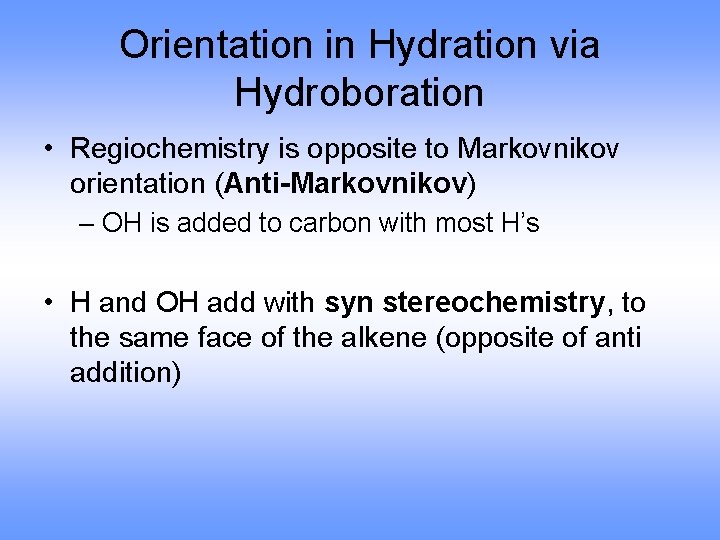
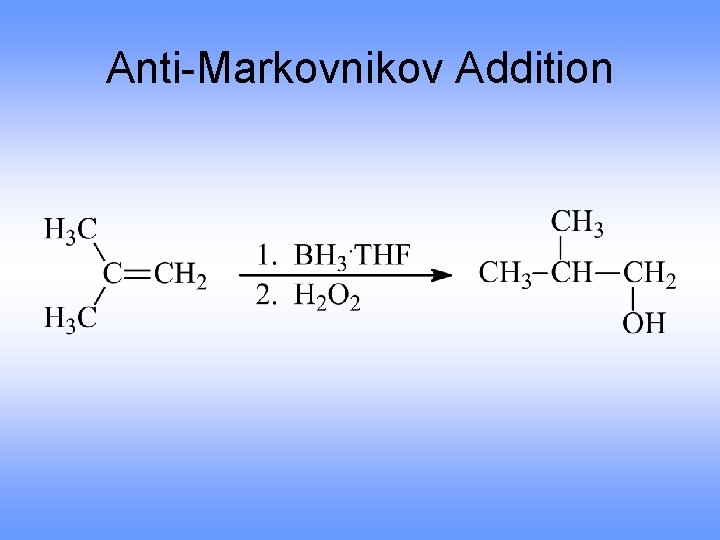
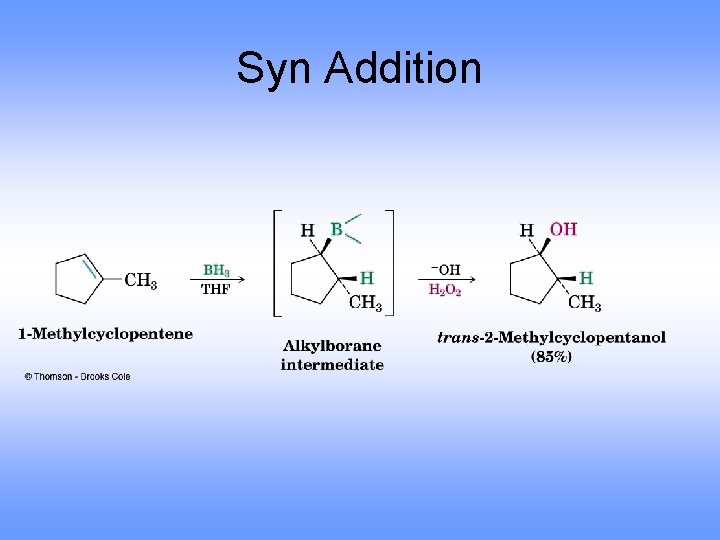
Orientation in Hydration via Hydroboration • Regiochemistry is opposite to Markovnikov orientation (Anti-Markovnikov) – OH is added to carbon with most H’s • H and OH add with syn stereochemistry, to the same face of the alkene (opposite of anti addition)
Anti-Markovnikov Addition
Syn Addition
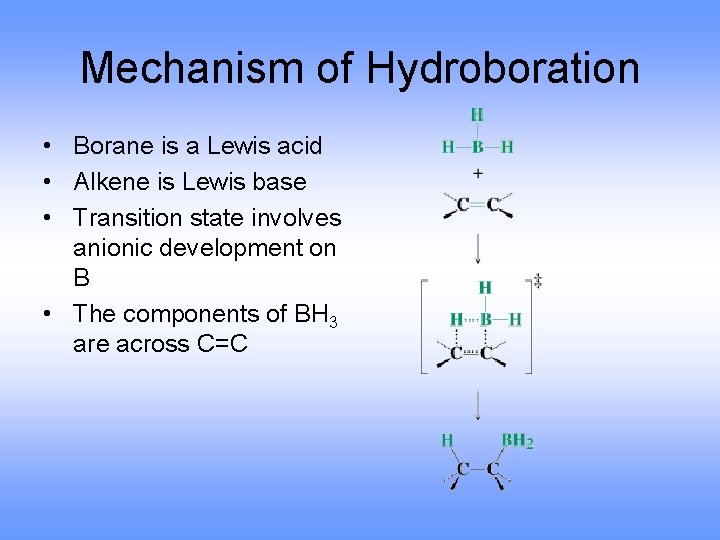
Mechanism of Hydroboration • Borane is a Lewis acid • Alkene is Lewis base • Transition state involves anionic development on B • The components of BH 3 are across C=C