
Chapter 5 Algorithms Computer Science An Overview Tenth
- Slides: 36
Chapter 5: Algorithms Computer Science: An Overview Tenth Edition by J. Glenn Brookshear Copyright © 2008 Pearson Education, Inc. Publishing as Pearson Addison-Wesley
Chapter 5: Algorithms • • • 5. 1 The Concept of an Algorithm 5. 2 Algorithm Representation 5. 3 Algorithm Discovery 5. 4 Iterative Structures 5. 5 Recursive Structures 5. 6 Efficiency and Correctness Copyright © 2008 Pearson Education, Inc. Publishing as Pearson Addison-Wesley 2
Definition of Algorithm An algorithm is an ordered set of unambiguous, executable steps that defines a terminating process. Copyright © 2008 Pearson Education, Inc. Publishing as Pearson Addison-Wesley 3
Algorithm Representation • Requires well-defined primitives • A collection of primitives constitutes a programming language. Copyright © 2008 Pearson Education, Inc. Publishing as Pearson Addison-Wesley 4
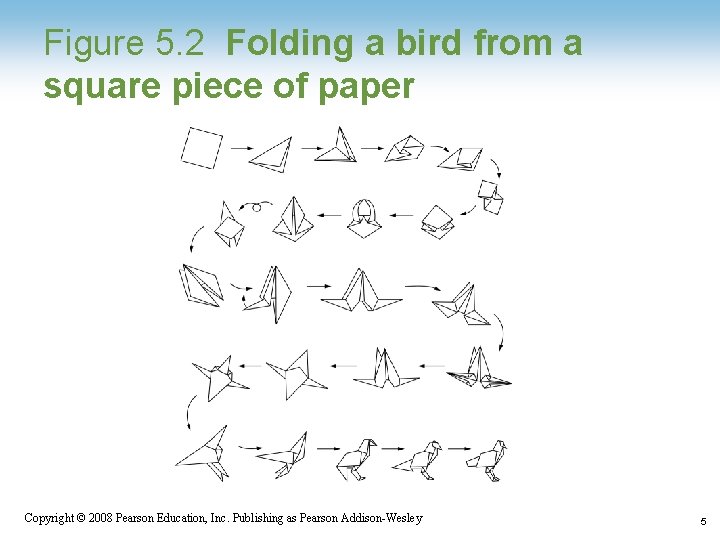
Figure 5. 2 Folding a bird from a square piece of paper Copyright © 2008 Pearson Education, Inc. Publishing as Pearson Addison-Wesley 5
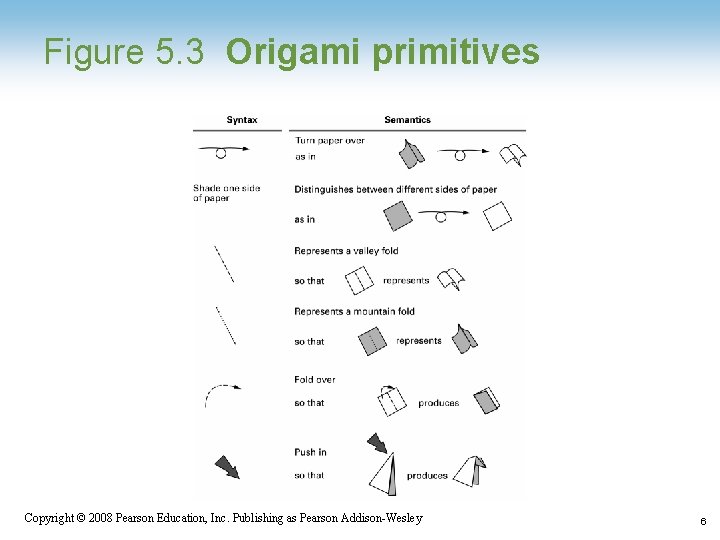
Figure 5. 3 Origami primitives Copyright © 2008 Pearson Education, Inc. Publishing as Pearson Addison-Wesley 6
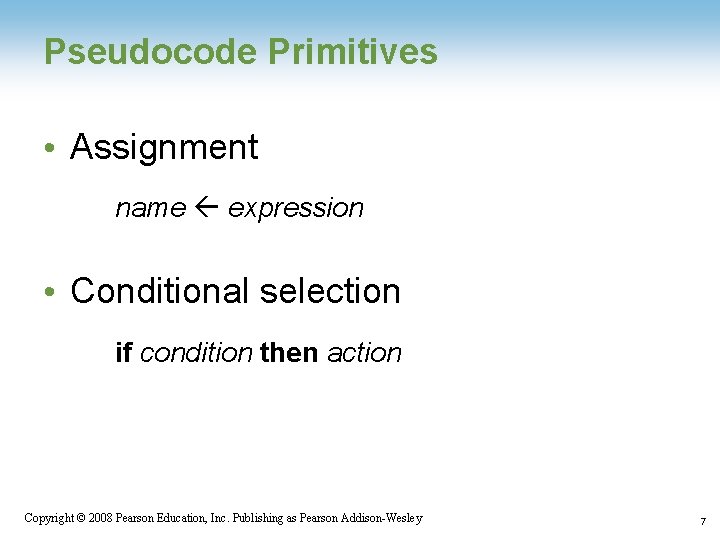
Pseudocode Primitives • Assignment name expression • Conditional selection if condition then action Copyright © 2008 Pearson Education, Inc. Publishing as Pearson Addison-Wesley 7
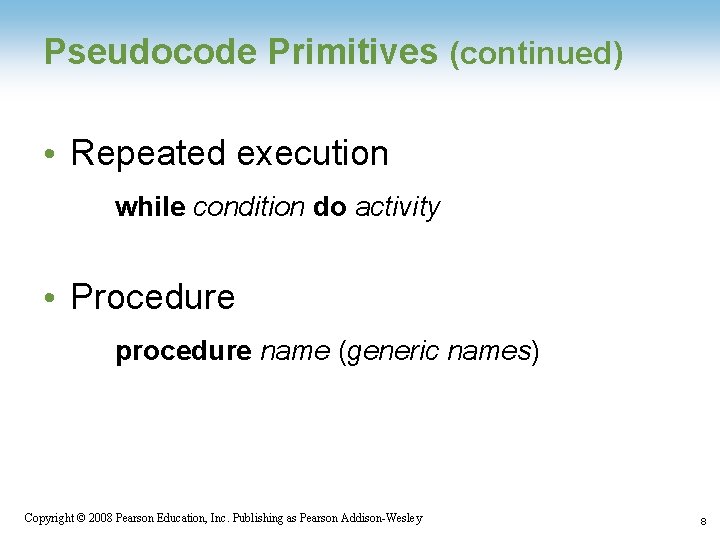
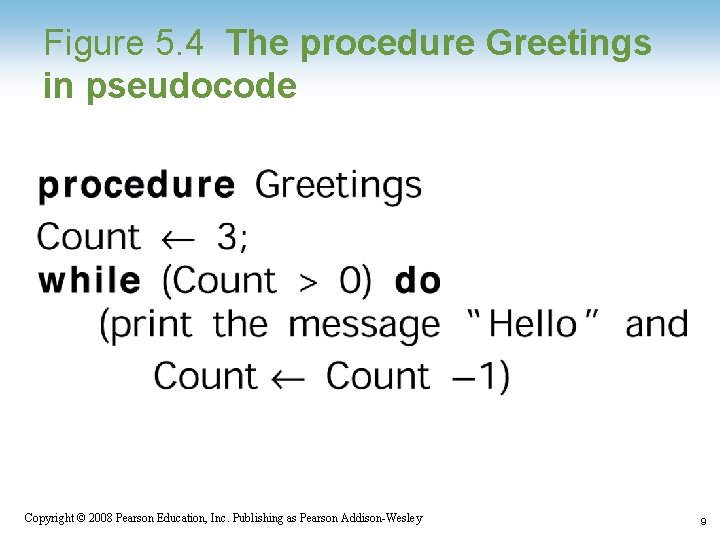
Pseudocode Primitives (continued) • Repeated execution while condition do activity • Procedure procedure name (generic names) Copyright © 2008 Pearson Education, Inc. Publishing as Pearson Addison-Wesley 8
Figure 5. 4 The procedure Greetings in pseudocode Copyright © 2008 Pearson Education, Inc. Publishing as Pearson Addison-Wesley 9
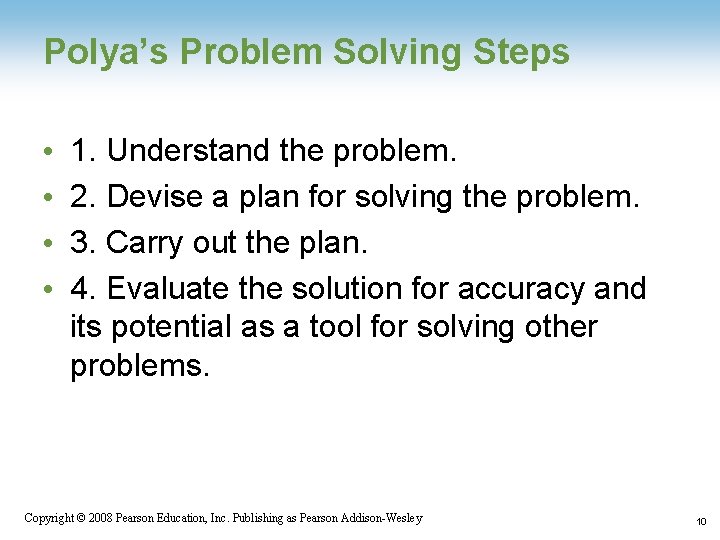
Polya’s Problem Solving Steps • • 1. Understand the problem. 2. Devise a plan for solving the problem. 3. Carry out the plan. 4. Evaluate the solution for accuracy and its potential as a tool for solving other problems. Copyright © 2008 Pearson Education, Inc. Publishing as Pearson Addison-Wesley 10
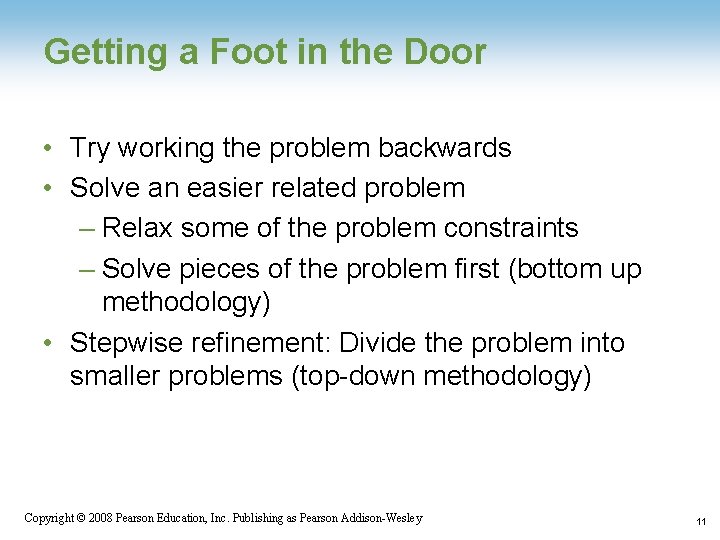
Getting a Foot in the Door • Try working the problem backwards • Solve an easier related problem – Relax some of the problem constraints – Solve pieces of the problem first (bottom up methodology) • Stepwise refinement: Divide the problem into smaller problems (top-down methodology) Copyright © 2008 Pearson Education, Inc. Publishing as Pearson Addison-Wesley 11
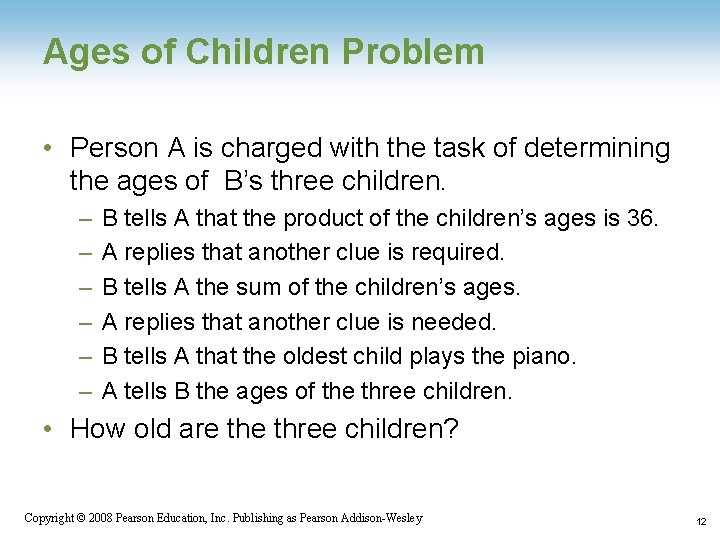
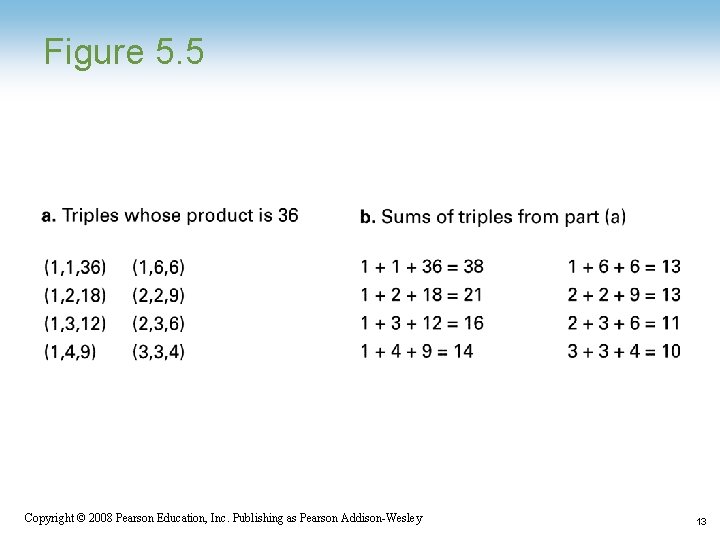
Ages of Children Problem • Person A is charged with the task of determining the ages of B’s three children. – – – B tells A that the product of the children’s ages is 36. A replies that another clue is required. B tells A the sum of the children’s ages. A replies that another clue is needed. B tells A that the oldest child plays the piano. A tells B the ages of the three children. • How old are three children? Copyright © 2008 Pearson Education, Inc. Publishing as Pearson Addison-Wesley 12
Figure 5. 5 Copyright © 2008 Pearson Education, Inc. Publishing as Pearson Addison-Wesley 13
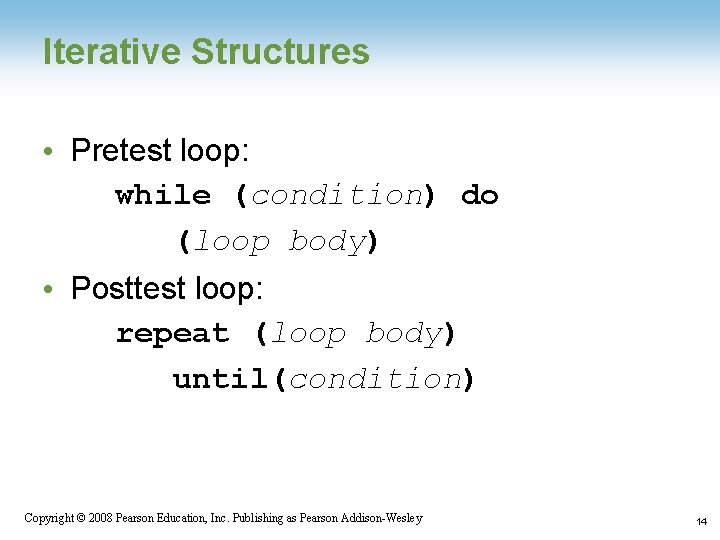
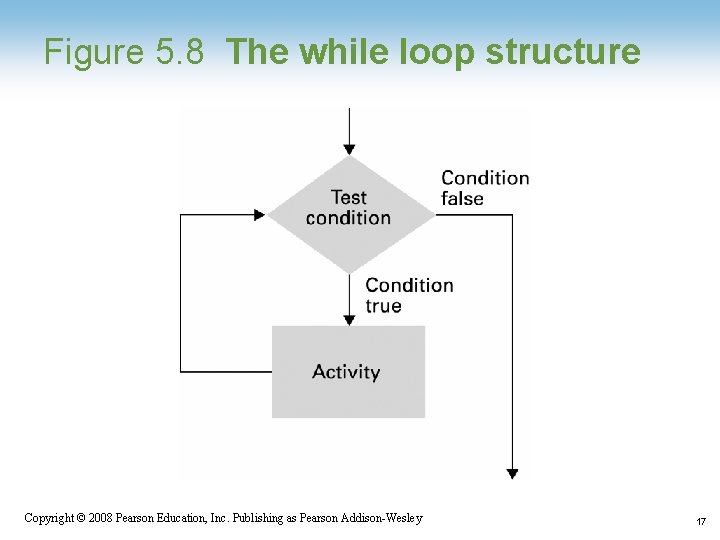
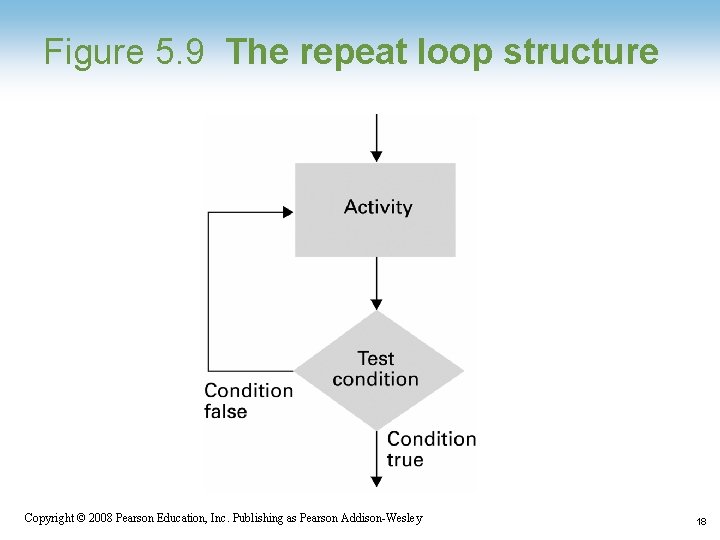
Iterative Structures • Pretest loop: while (condition) do (loop body) • Posttest loop: repeat (loop body) until(condition) Copyright © 2008 Pearson Education, Inc. Publishing as Pearson Addison-Wesley 14
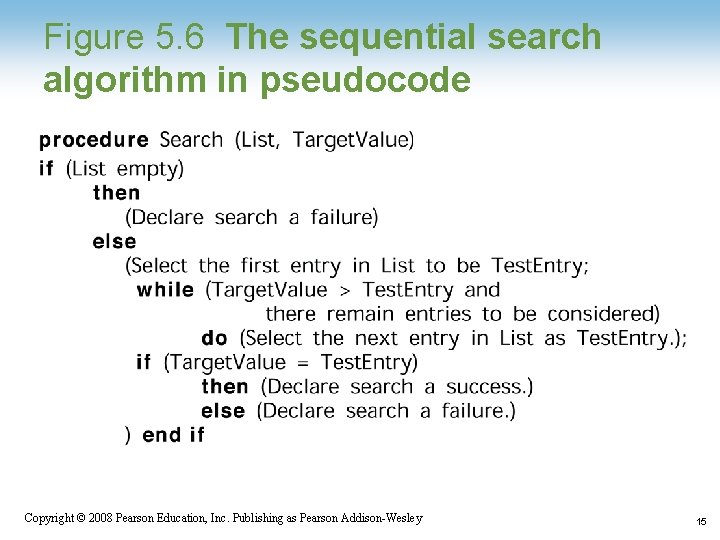
Figure 5. 6 The sequential search algorithm in pseudocode Copyright © 2008 Pearson Education, Inc. Publishing as Pearson Addison-Wesley 15
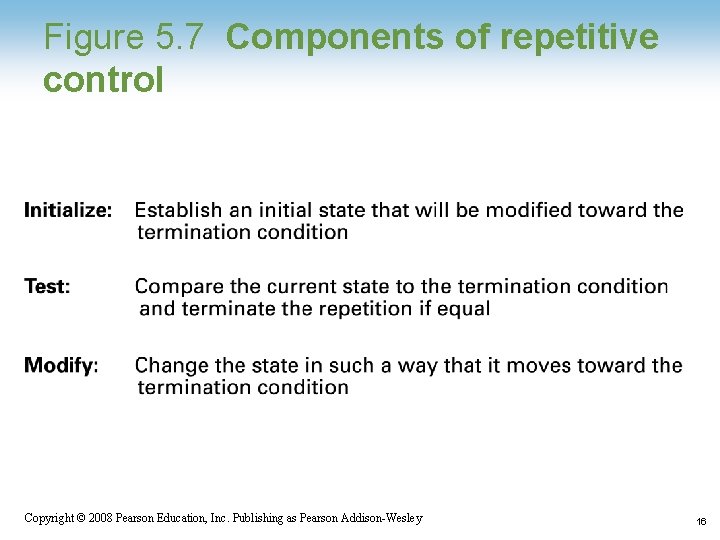
Figure 5. 7 Components of repetitive control Copyright © 2008 Pearson Education, Inc. Publishing as Pearson Addison-Wesley 16
Figure 5. 8 The while loop structure Copyright © 2008 Pearson Education, Inc. Publishing as Pearson Addison-Wesley 17
Figure 5. 9 The repeat loop structure Copyright © 2008 Pearson Education, Inc. Publishing as Pearson Addison-Wesley 18
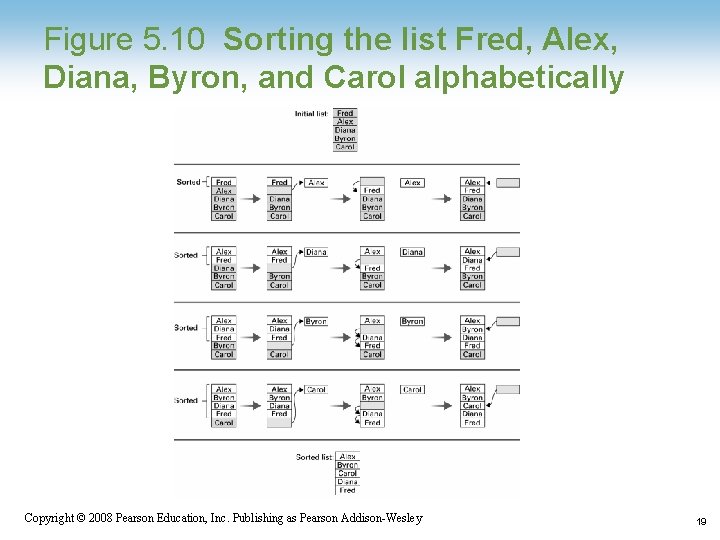
Figure 5. 10 Sorting the list Fred, Alex, Diana, Byron, and Carol alphabetically Copyright © 2008 Pearson Education, Inc. Publishing as Pearson Addison-Wesley 19
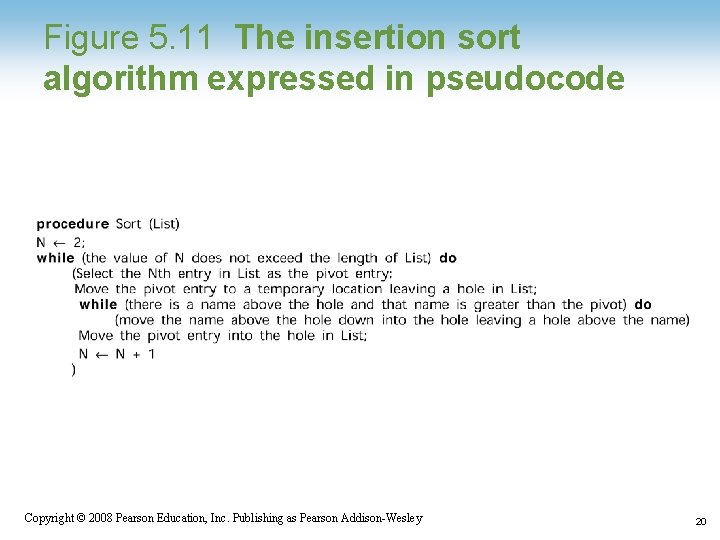
Figure 5. 11 The insertion sort algorithm expressed in pseudocode Copyright © 2008 Pearson Education, Inc. Publishing as Pearson Addison-Wesley 20
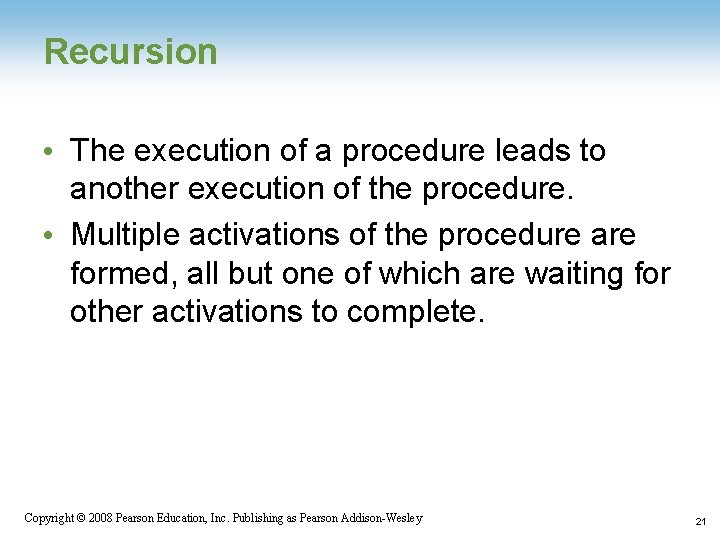
Recursion • The execution of a procedure leads to another execution of the procedure. • Multiple activations of the procedure are formed, all but one of which are waiting for other activations to complete. Copyright © 2008 Pearson Education, Inc. Publishing as Pearson Addison-Wesley 21
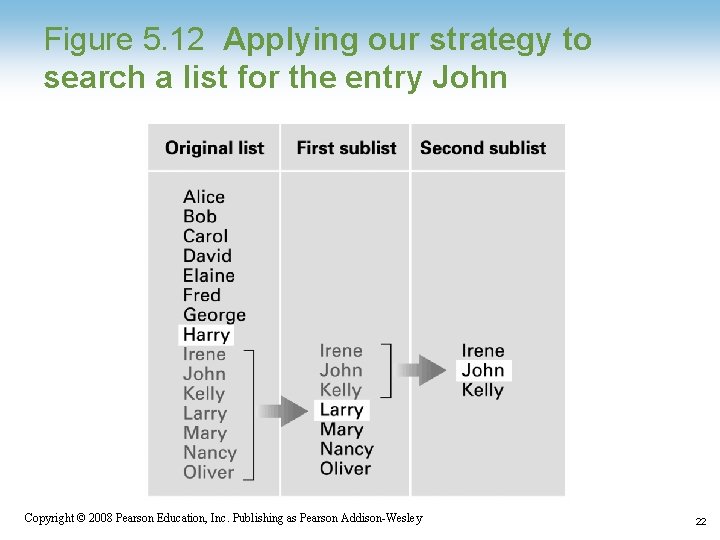
Figure 5. 12 Applying our strategy to search a list for the entry John Copyright © 2008 Pearson Education, Inc. Publishing as Pearson Addison-Wesley 22
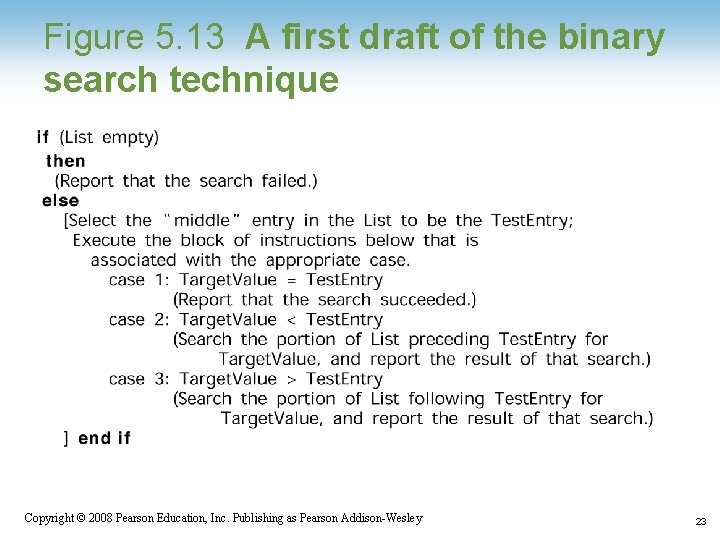
Figure 5. 13 A first draft of the binary search technique Copyright © 2008 Pearson Education, Inc. Publishing as Pearson Addison-Wesley 23
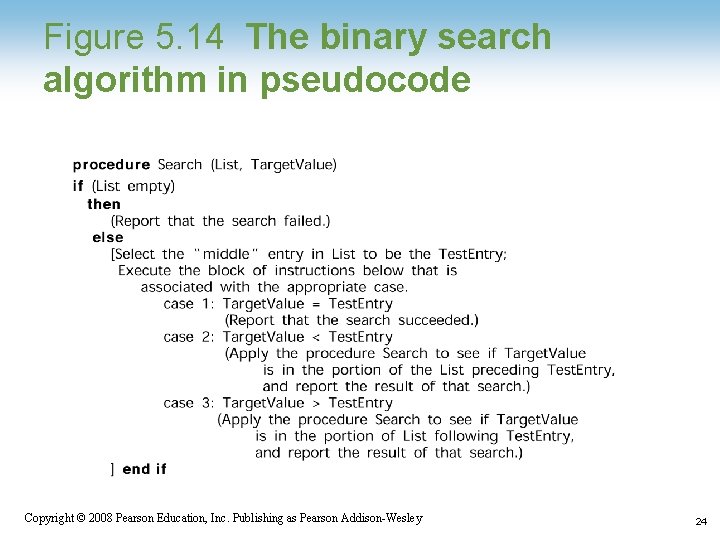
Figure 5. 14 The binary search algorithm in pseudocode Copyright © 2008 Pearson Education, Inc. Publishing as Pearson Addison-Wesley 24
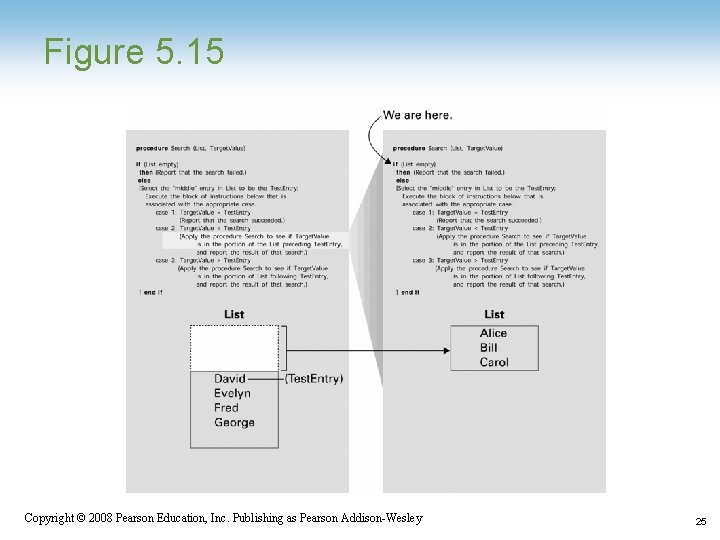
Figure 5. 15 Copyright © 2008 Pearson Education, Inc. Publishing as Pearson Addison-Wesley 25
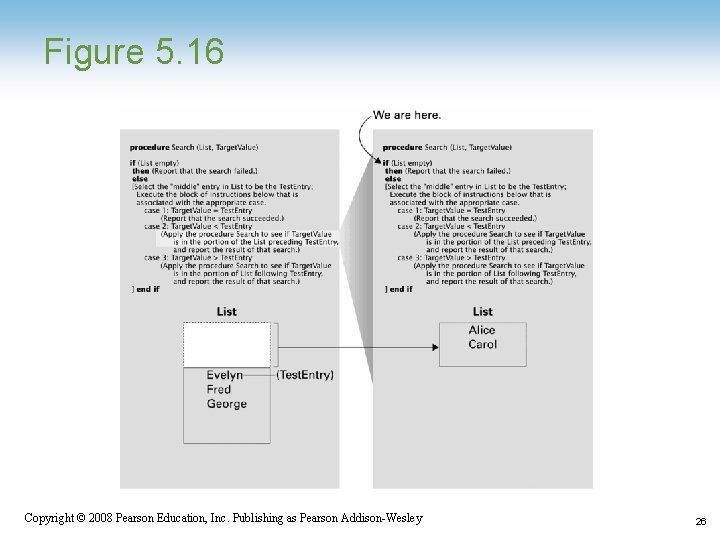
Figure 5. 16 Copyright © 2008 Pearson Education, Inc. Publishing as Pearson Addison-Wesley 26
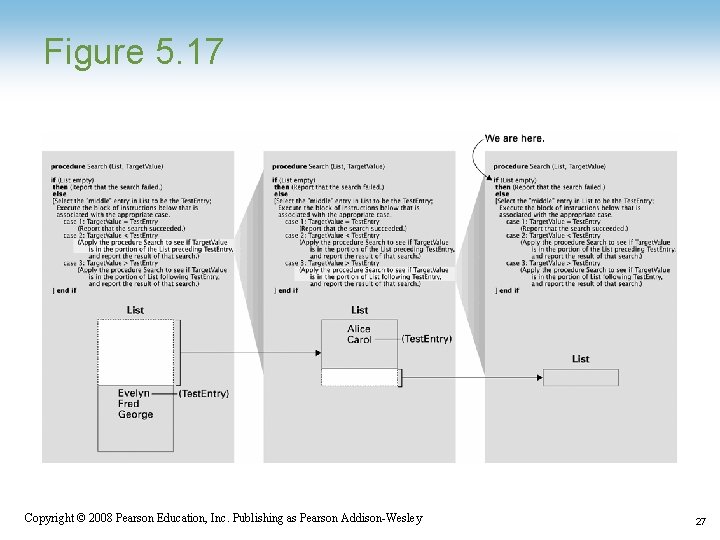
Figure 5. 17 Copyright © 2008 Pearson Education, Inc. Publishing as Pearson Addison-Wesley 27
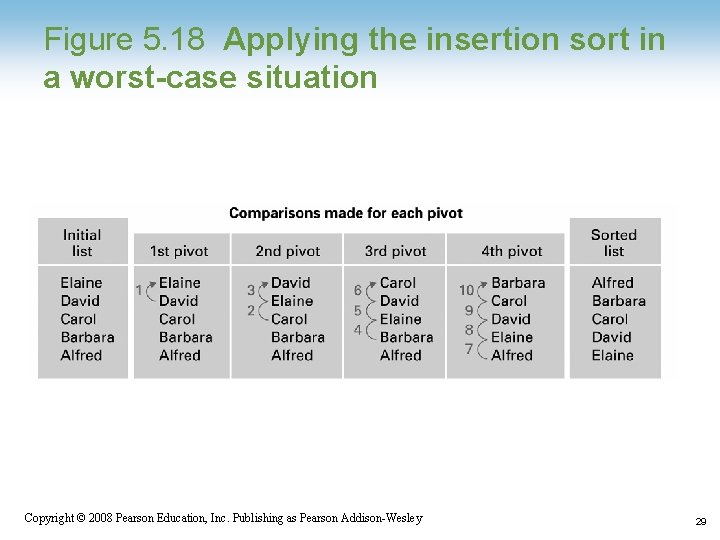
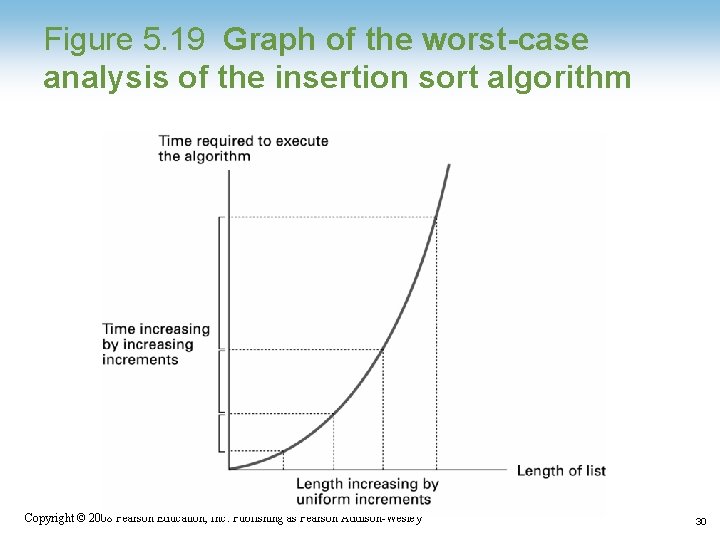
Algorithm Efficiency • Measured as number of instructions executed • Big theta notation: Used to represent efficiency classes – Example: Insertion sort is in Θ(n 2) • Best, worst, and average case analysis Copyright © 2008 Pearson Education, Inc. Publishing as Pearson Addison-Wesley 28
Figure 5. 18 Applying the insertion sort in a worst-case situation Copyright © 2008 Pearson Education, Inc. Publishing as Pearson Addison-Wesley 29
Figure 5. 19 Graph of the worst-case analysis of the insertion sort algorithm Copyright © 2008 Pearson Education, Inc. Publishing as Pearson Addison-Wesley 30
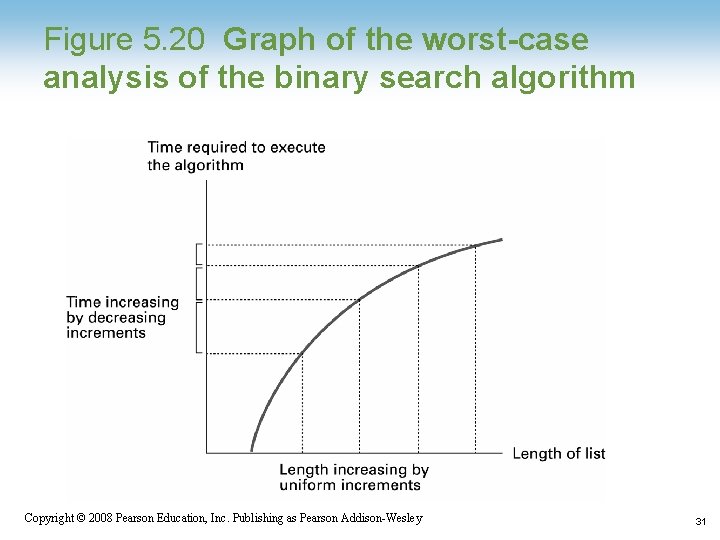
Figure 5. 20 Graph of the worst-case analysis of the binary search algorithm Copyright © 2008 Pearson Education, Inc. Publishing as Pearson Addison-Wesley 31
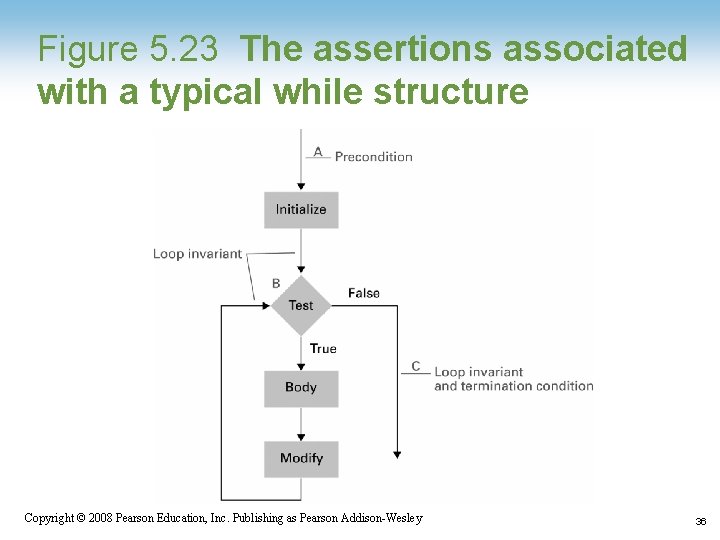
Software Verification • Proof of correctness – Assertions • Preconditions • Loop invariants • Testing Copyright © 2008 Pearson Education, Inc. Publishing as Pearson Addison-Wesley 32
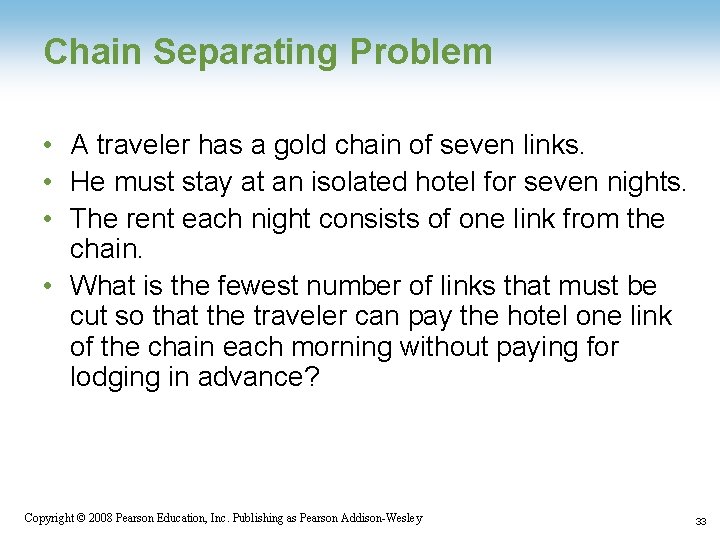
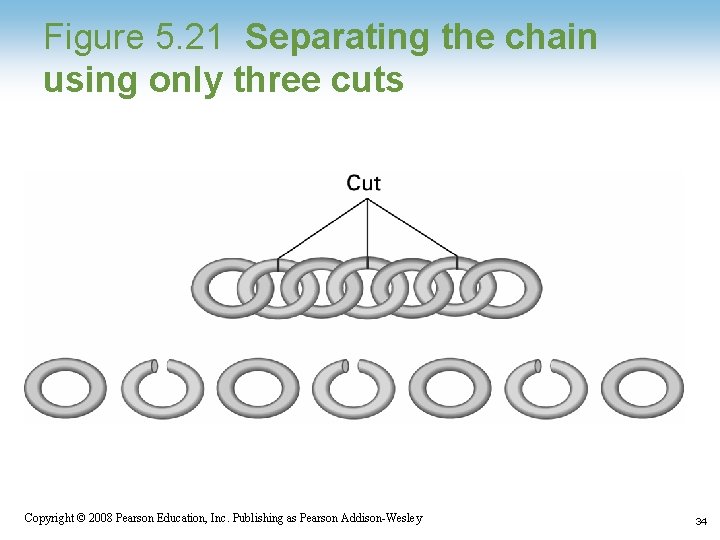
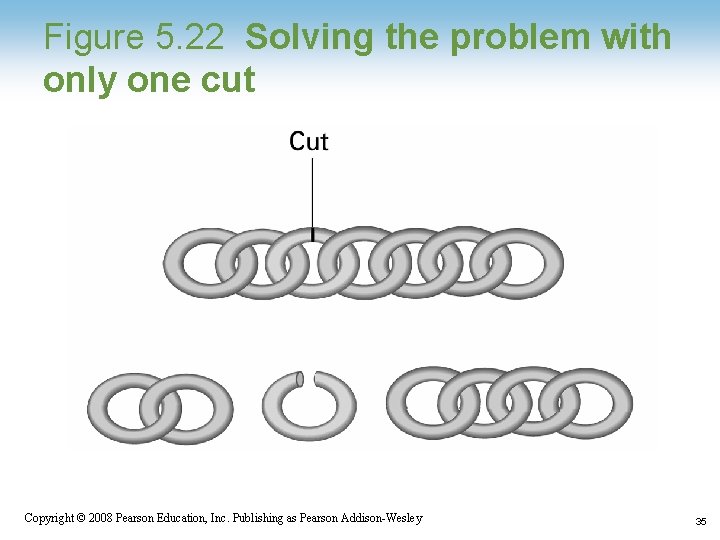
Chain Separating Problem • A traveler has a gold chain of seven links. • He must stay at an isolated hotel for seven nights. • The rent each night consists of one link from the chain. • What is the fewest number of links that must be cut so that the traveler can pay the hotel one link of the chain each morning without paying for lodging in advance? Copyright © 2008 Pearson Education, Inc. Publishing as Pearson Addison-Wesley 33
Figure 5. 21 Separating the chain using only three cuts Copyright © 2008 Pearson Education, Inc. Publishing as Pearson Addison-Wesley 34
Figure 5. 22 Solving the problem with only one cut Copyright © 2008 Pearson Education, Inc. Publishing as Pearson Addison-Wesley 35
Figure 5. 23 The assertions associated with a typical while structure Copyright © 2008 Pearson Education, Inc. Publishing as Pearson Addison-Wesley 36