
Chapter 5 Aggregate Demand the Classical Theory of

- Slides: 38
Chapter 5 Aggregate Demand the Classical Theory of the Price Level
Introduction • The classical theory of the price level is sometimes called the quantity theory of money or the classical theory of aggregate demand. 1. It works well in high-inflation countries. 2. It help us to understand how modern intertemporal equilibrium theories work. 3. It is incorporated into the neoclassical synthesis which was used to determine the economy’s long-run trend level of output. 2
The Theory of the Demand for Money • The classical theory of aggregate demand is a hybrid that adds a theory of money to the classical theory of aggregate supply. • We begin with the budget constraint of a family in a static, one-period economy. • Then we show this constraint is altered when a family engages in repeated trade through time, using money as a medium of exchange. 3
The Theory of the Demand for Money • The classical theory of the demand for money argues: people ‘demand money’ up to the point where its marginal benefit equals its marginal cost. • Money is a durable good and yields a flow of exchange services over time. 4
The Theory of the Demand for Money • The cost of holding money is the opportunity cost of forgoing consumption of some other commodity. • The marginal benefit of holding money is the additional usefulness gained by having cash on hand to facilitate the process of exchange. • The classical theorists assumed this benefit to be proportional to the volume of trade. 5
Budget Constraints and Opportunity Cost • Money imposes an opportunity cost because the decision to use money reduces the resources available for other goods. • Assumption : Money is the only asset available to households as a store of wealth. • Thus, if the household chooses not to hold money, it will be able to purchase additional commodities. 6
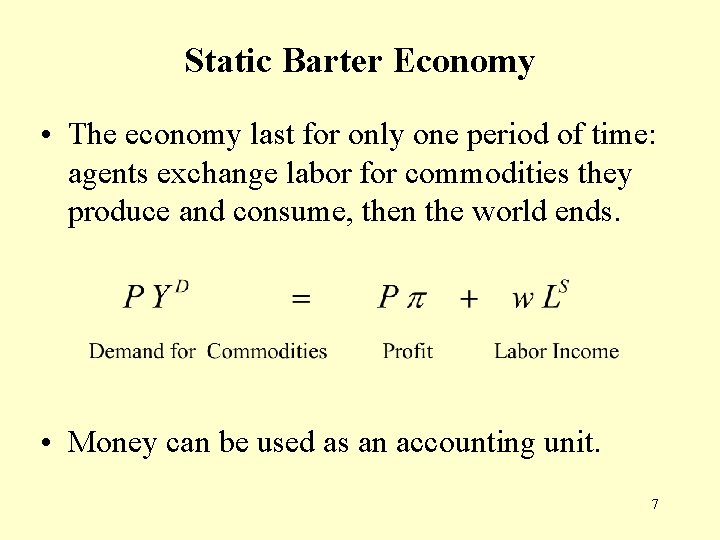
Static Barter Economy • The economy last for only one period of time: agents exchange labor for commodities they produce and consume, then the world ends. • Money can be used as an accounting unit. 7
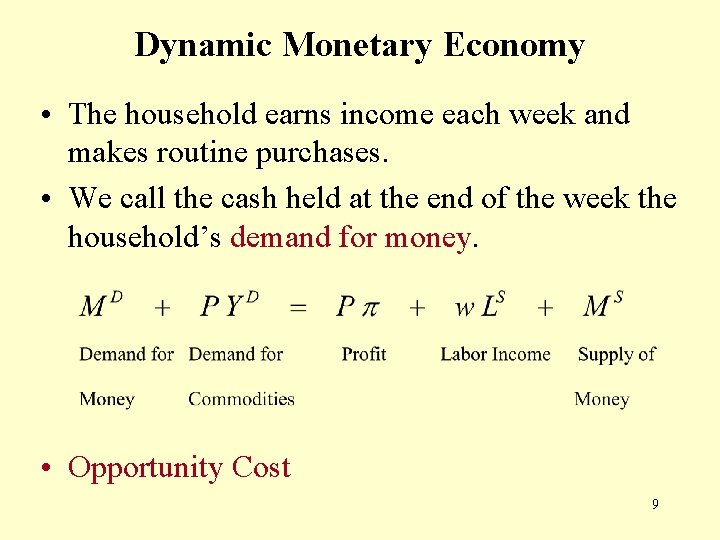
Dynamic Monetary Economy • The classical theorists argued that since the typical household does not buy commodities at the same time that it sells its labor, during an average week the household has a reserve of cash on hand to facilitate the uneven timing of purchases and sales. • Consider a household that starts the week with some cash on hand, we call this the household’s supply of money. 8
Dynamic Monetary Economy • The household earns income each week and makes routine purchases. • We call the cash held at the end of the week the household’s demand for money. • Opportunity Cost 9
The Benefit of Holding Money • To classical theorists, the benefit was the advantage that come from being more easily able to exchange commodities with other households – generally acceptable medium of exchange. 10
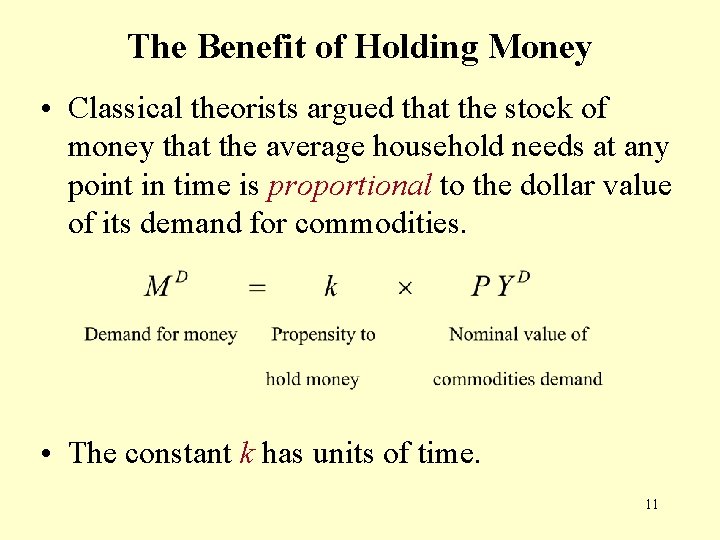
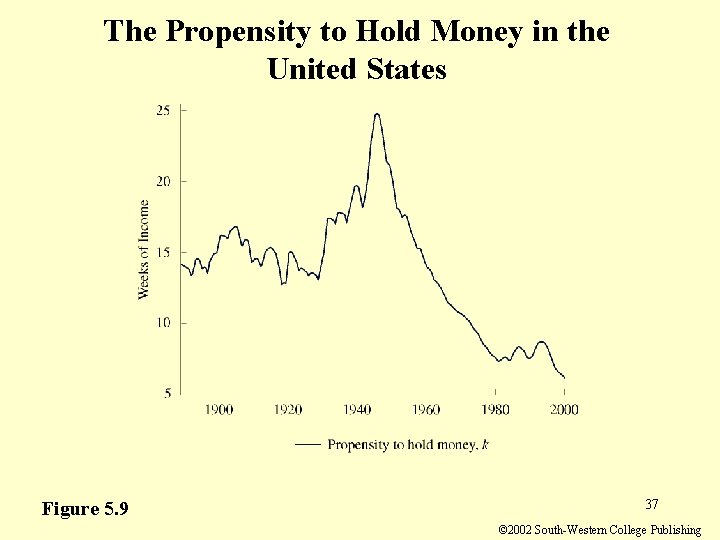
The Benefit of Holding Money • Classical theorists argued that the stock of money that the average household needs at any point in time is proportional to the dollar value of its demand for commodities. • The constant k has units of time. 11
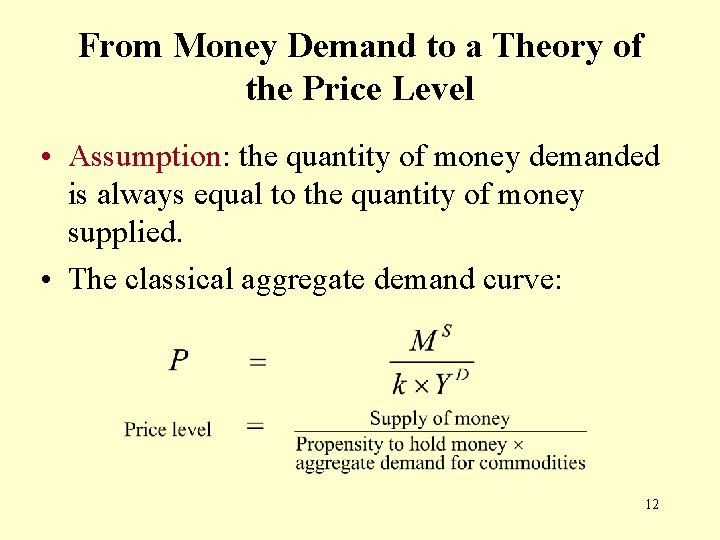
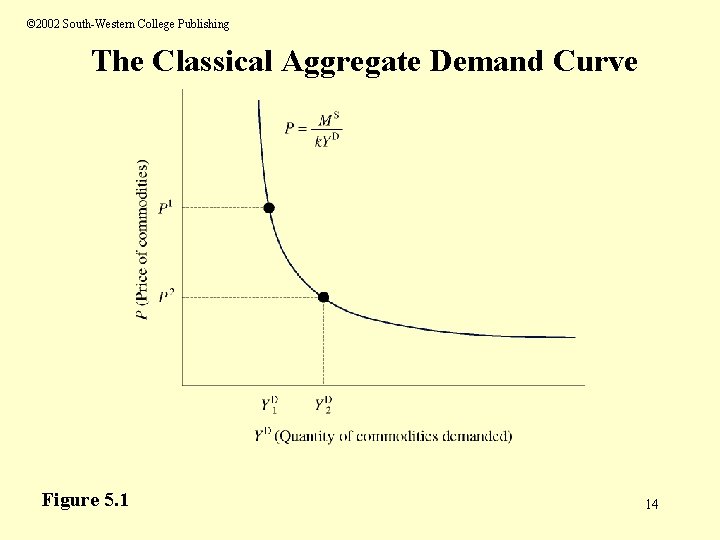
From Money Demand to a Theory of the Price Level • Assumption: the quantity of money demanded is always equal to the quantity of money supplied. • The classical aggregate demand curve: 12
From Money Demand to a Theory of the Price Level • Each point along the aggregate demand curve is associated with the same demand for money. • The aggregate demand curve slopes downward. 13
© 2002 South-Western College Publishing The Classical Aggregate Demand Curve Figure 5. 1 14
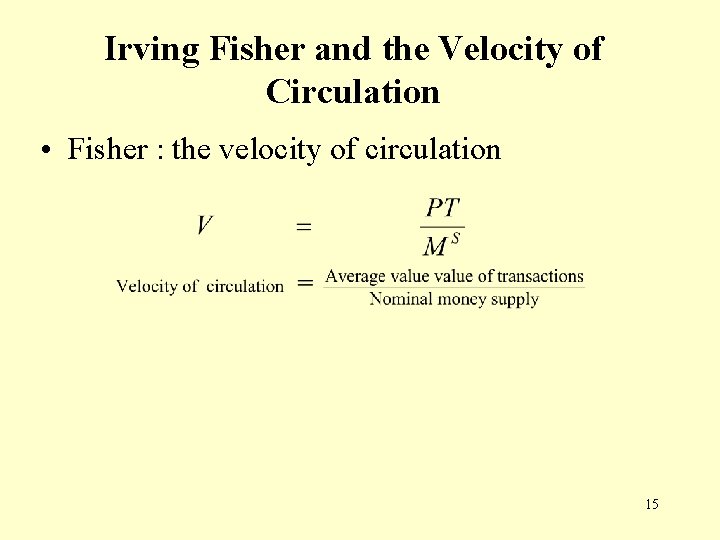
Irving Fisher and the Velocity of Circulation • Fisher : the velocity of circulation 15
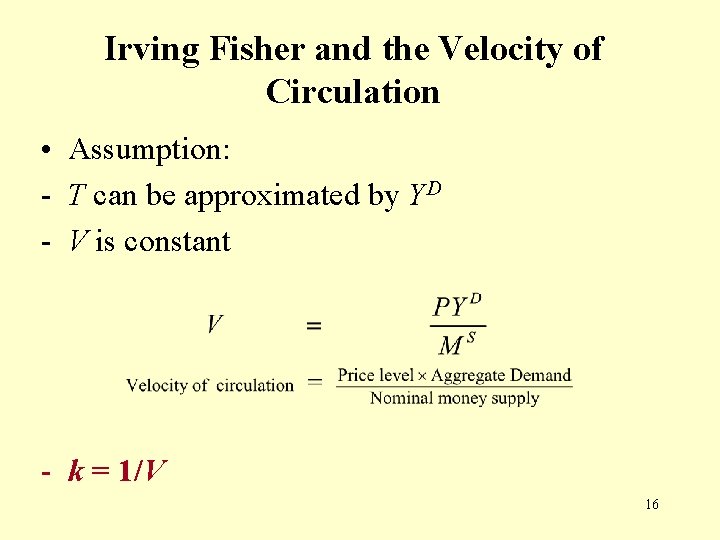
Irving Fisher and the Velocity of Circulation • Assumption: - T can be approximated by YD - V is constant - k = 1/V 16
The Classical Theory of the Price Level 17
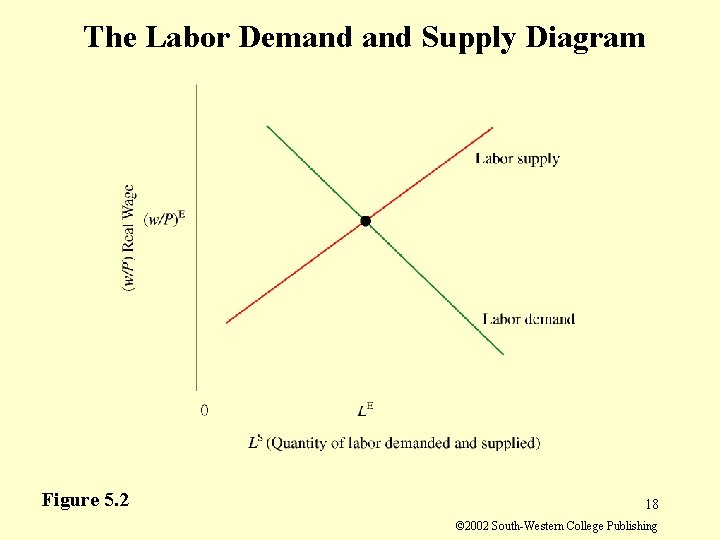
The Labor Demand Supply Diagram Figure 5. 2 18 © 2002 South-Western College Publishing
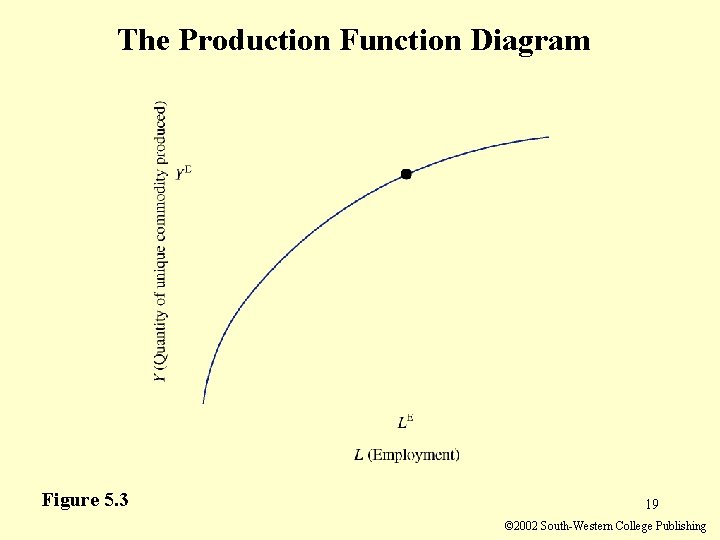
The Production Function Diagram Figure 5. 3 19 © 2002 South-Western College Publishing
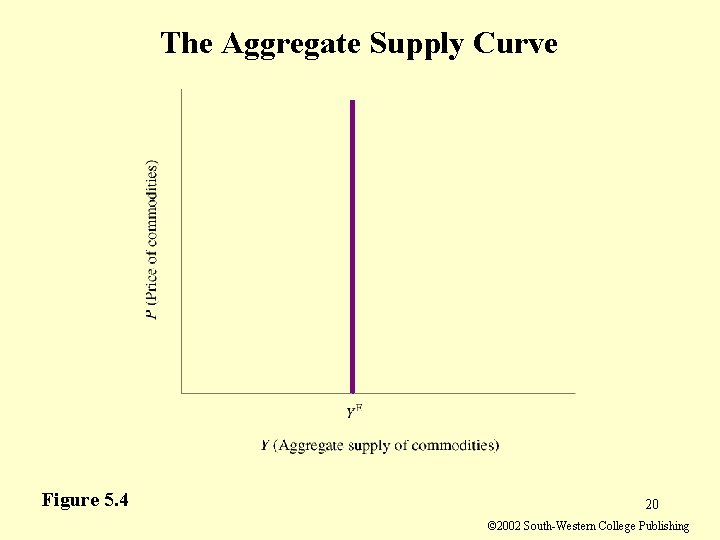
The Aggregate Supply Curve Figure 5. 4 20 © 2002 South-Western College Publishing
The Complete Classical Theory of Aggregate Demand Supply 21
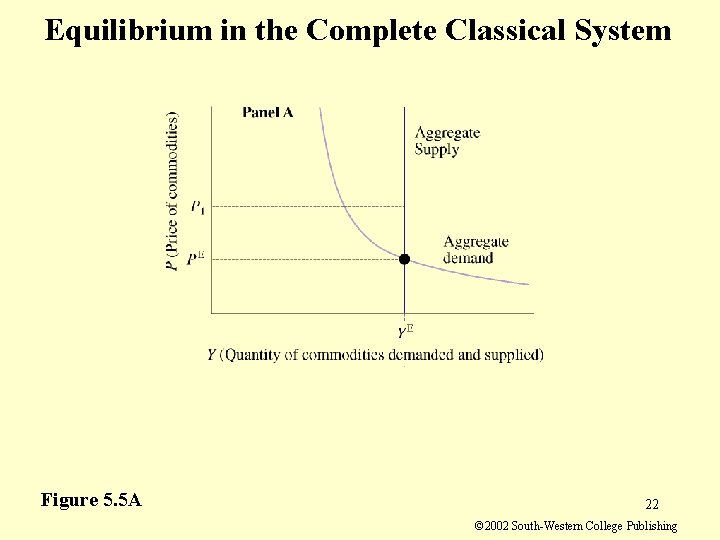
Equilibrium in the Complete Classical System Figure 5. 5 A 22 © 2002 South-Western College Publishing
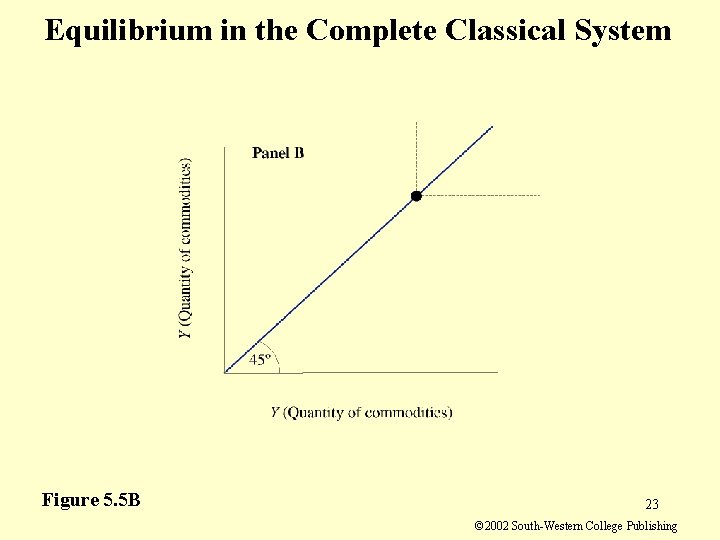
Equilibrium in the Complete Classical System Figure 5. 5 B 23 © 2002 South-Western College Publishing
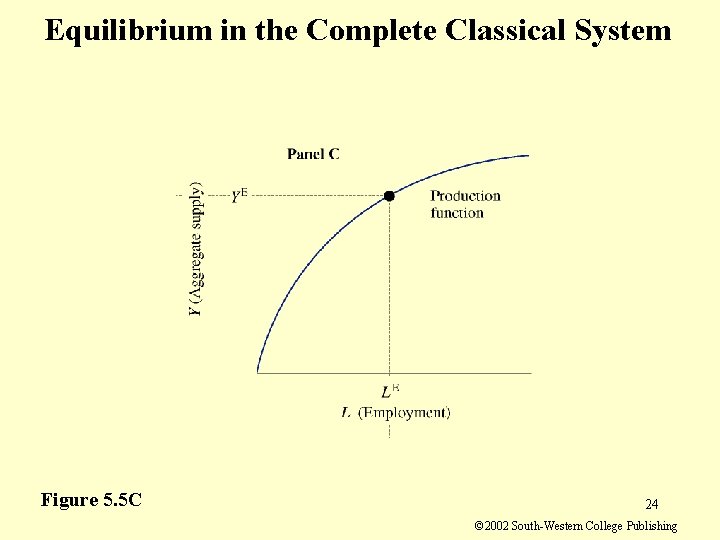
Equilibrium in the Complete Classical System Figure 5. 5 C 24 © 2002 South-Western College Publishing
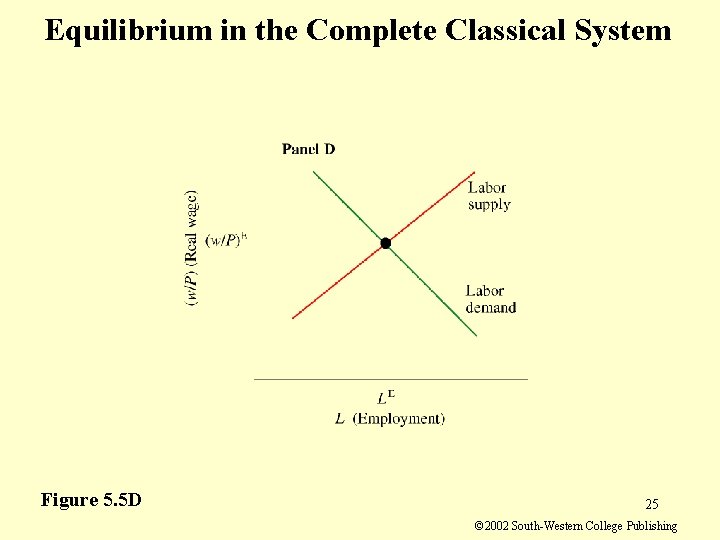
Equilibrium in the Complete Classical System Figure 5. 5 D 25 © 2002 South-Western College Publishing
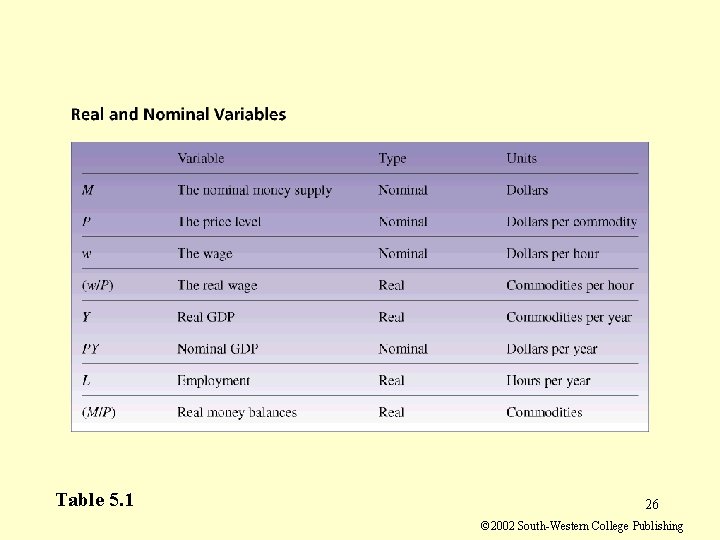
Table 5. 1 26 © 2002 South-Western College Publishing
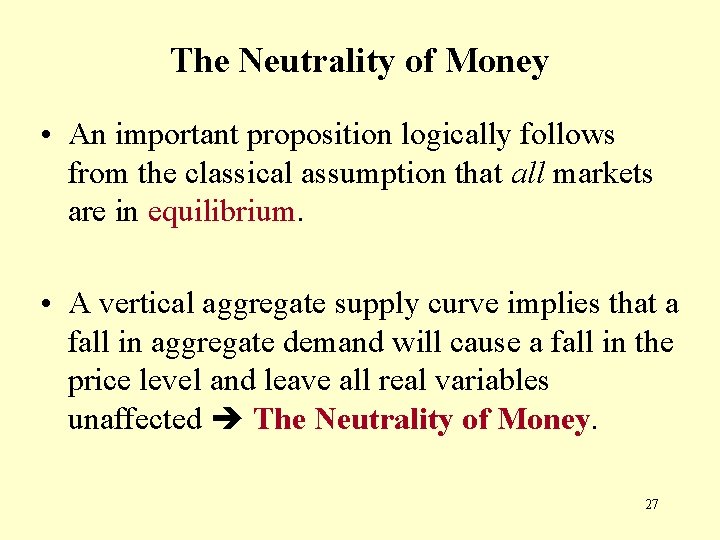
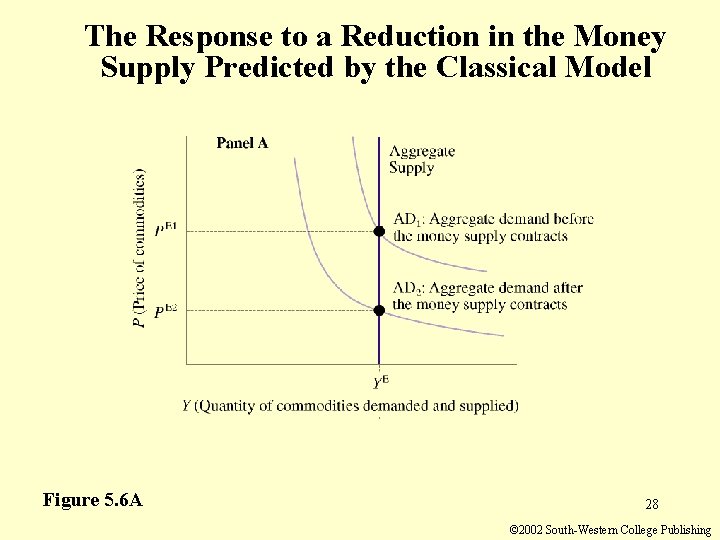
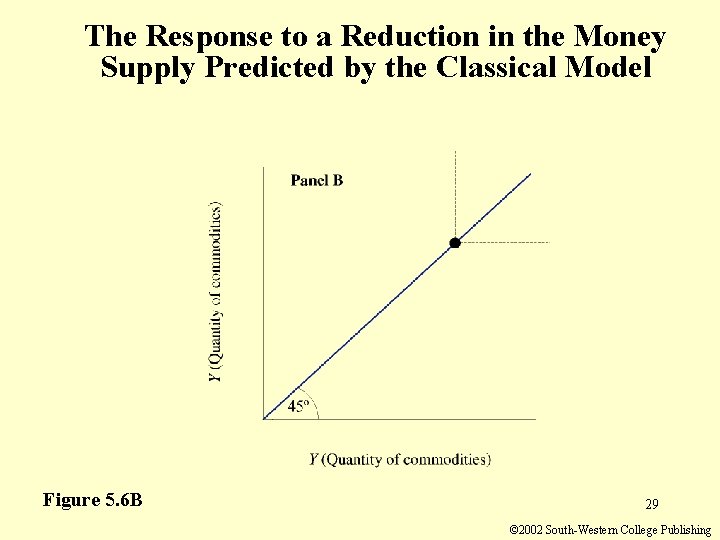
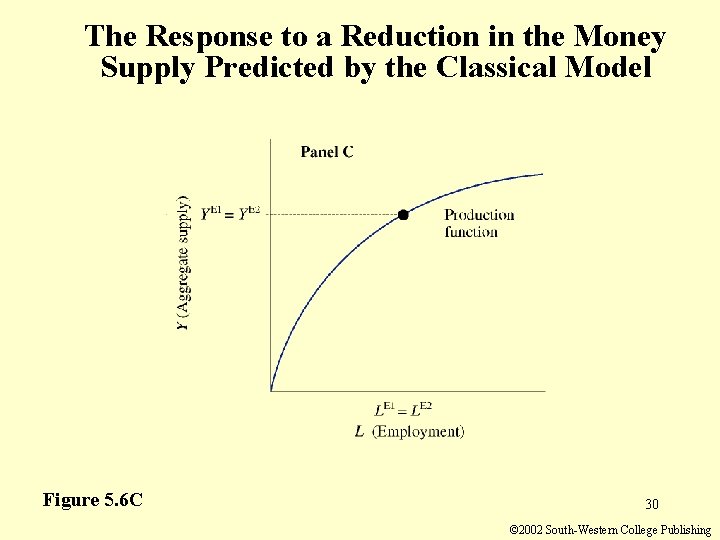
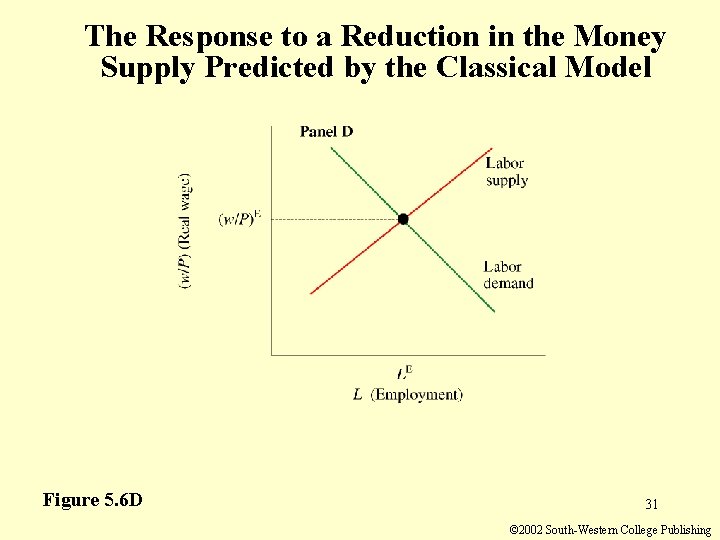
The Neutrality of Money • An important proposition logically follows from the classical assumption that all markets are in equilibrium. • A vertical aggregate supply curve implies that a fall in aggregate demand will cause a fall in the price level and leave all real variables unaffected The Neutrality of Money. 27
The Response to a Reduction in the Money Supply Predicted by the Classical Model Figure 5. 6 A 28 © 2002 South-Western College Publishing
The Response to a Reduction in the Money Supply Predicted by the Classical Model Figure 5. 6 B 29 © 2002 South-Western College Publishing
The Response to a Reduction in the Money Supply Predicted by the Classical Model Figure 5. 6 C 30 © 2002 South-Western College Publishing
The Response to a Reduction in the Money Supply Predicted by the Classical Model Figure 5. 6 D 31 © 2002 South-Western College Publishing
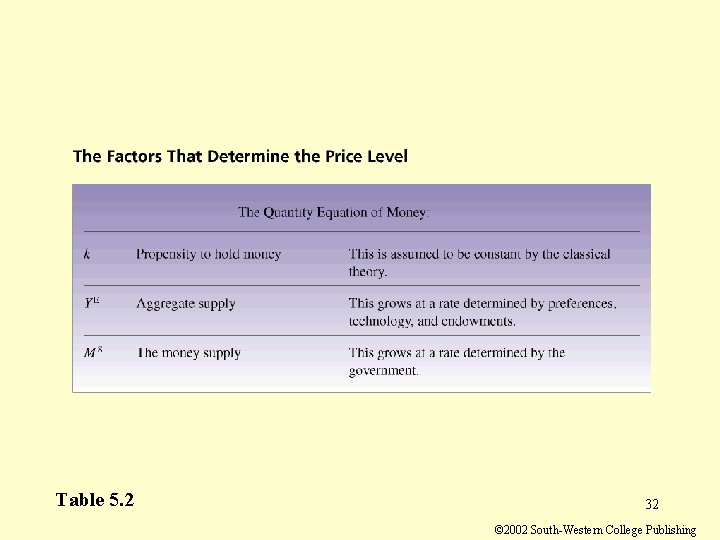
Table 5. 2 32 © 2002 South-Western College Publishing
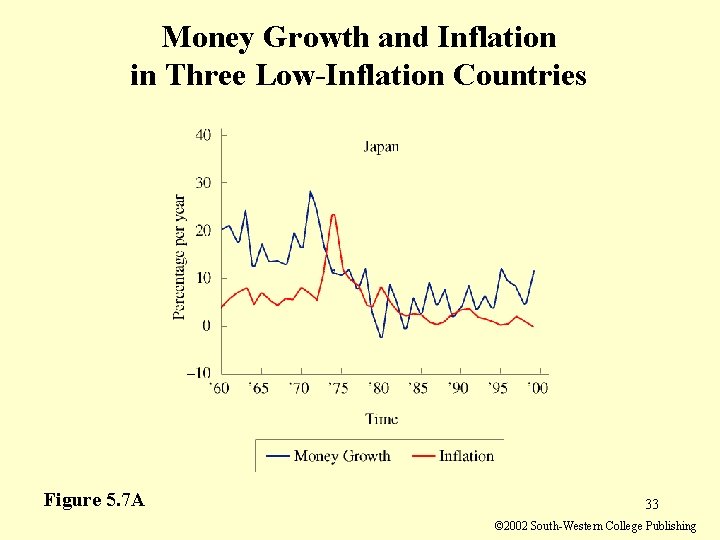
Money Growth and Inflation in Three Low-Inflation Countries Figure 5. 7 A 33 © 2002 South-Western College Publishing
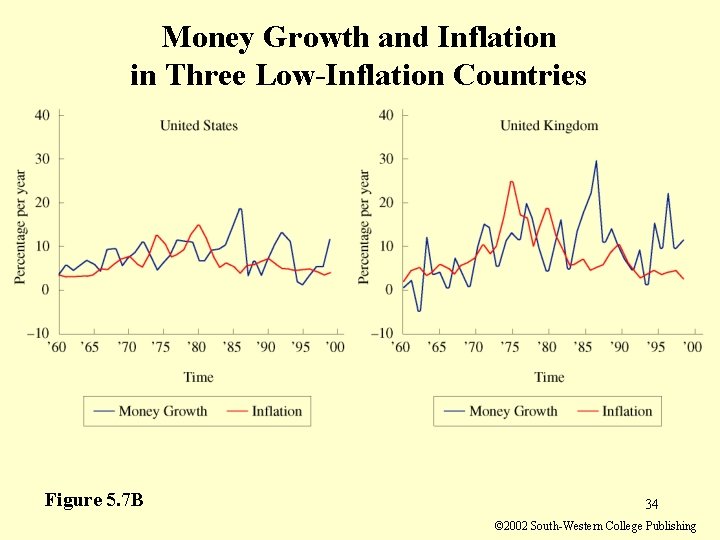
Money Growth and Inflation in Three Low-Inflation Countries Figure 5. 7 B 34 © 2002 South-Western College Publishing
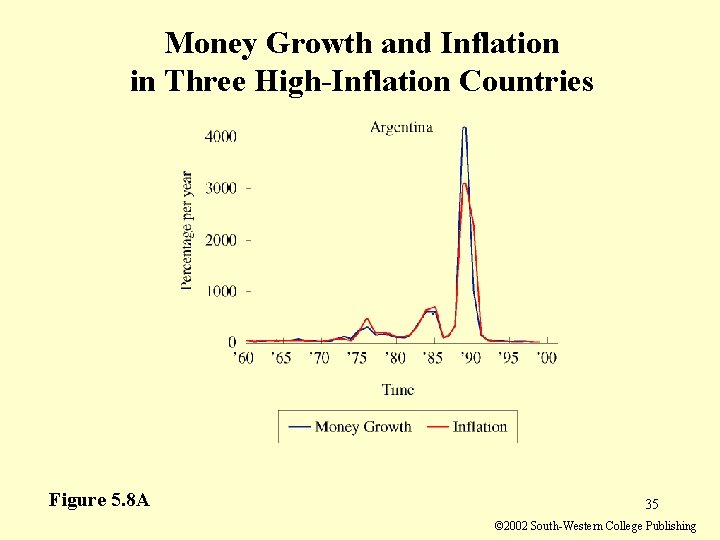
Money Growth and Inflation in Three High-Inflation Countries Figure 5. 8 A 35 © 2002 South-Western College Publishing
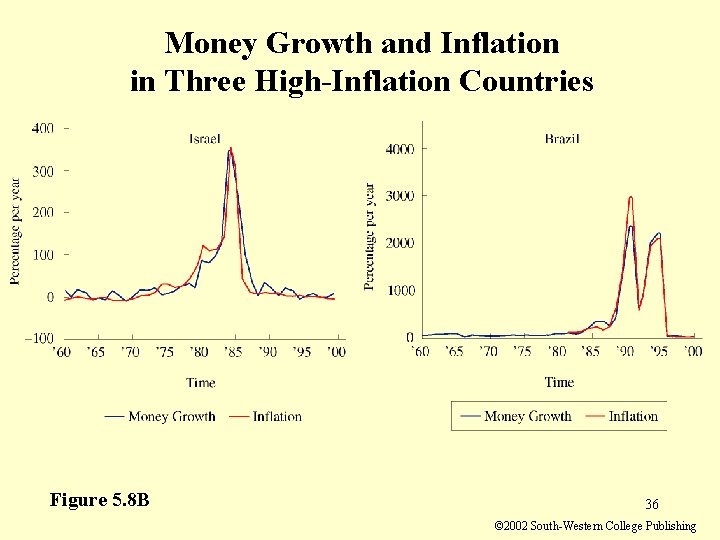
Money Growth and Inflation in Three High-Inflation Countries Figure 5. 8 B 36 © 2002 South-Western College Publishing
The Propensity to Hold Money in the United States Figure 5. 9 37 © 2002 South-Western College Publishing
END