
Chapter 47 c Blood Specimen Collection Equipment Tube

Chapter 47 c
Blood Specimen Collection • Equipment – Tube Holders and Needles • Typically made of plastic • Threaded end • Pointed end of the needle on the outside of the holder is inserted directly into the patient's vein
Blood Specimen Collection • Equipment – Tube Holders and Needles • Hollow needle • Always insert the needle with the bevel facing up. • Made in many different sizes, including different lengths and gauges
Blood Specimen Collection • Equipment – Tube Holders and Needles • Gauge or bore is the diameter of the space inside the hollow area of a needle • The smaller the gauge number, the larger the hole within.
Blood Specimen Collection • Equipment – Tube Holders and Needles • General phlebotomy typically requires 20 - to 21 -gauge needles. • Larger 18 -gauge needles are used for the collection or administration of significant quantities of blood or viscous fluids.
Blood Specimen Collection • Equipment – Tube Holders and Needles • Safety devices may be attached to needles or to holders. – Do not use two safety devices in a system. – Avoid using a part of your body part as a lever. – Use the edge of a counter to push the safety into the locking position.
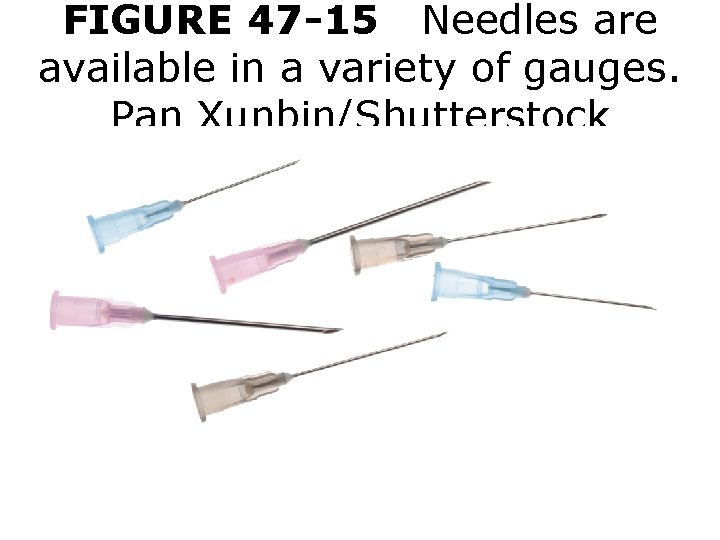
FIGURE 47 -15 Needles are available in a variety of gauges. Pan Xunbin/Shutterstock
Blood Specimen Collection • Syringes – Useful in collecting blood specimens from small or fragile veins that cannot withstand the pressure of an evacuated tube – Size depends on the amount of blood needed for all tests being performed
Blood Specimen Collection • Syringes – Drawbacks • Multiple needle insertions may be required depending on amount of blood needed • Plunger must be pulled back while the needle is inserted
Blood Specimen Collection • Syringes – Drawbacks • Transferring the blood from the syringe to the evacuated tube provides opportunities for injury or contamination • Least favorable option for venipuncture
Blood Specimen Collection • Syringes – Drawbacks • Preferred Methods – Use a safety transfer device after the needle is properly removed and discarded into a sharps container. – Place the evacuated tube in a standing rack and insert the needle into the tube without holding it.
Blood Specimen Collection • Order of the Blood Draw – Fill the tubes in the order of draw recommended by CLSI to prevent contamination.
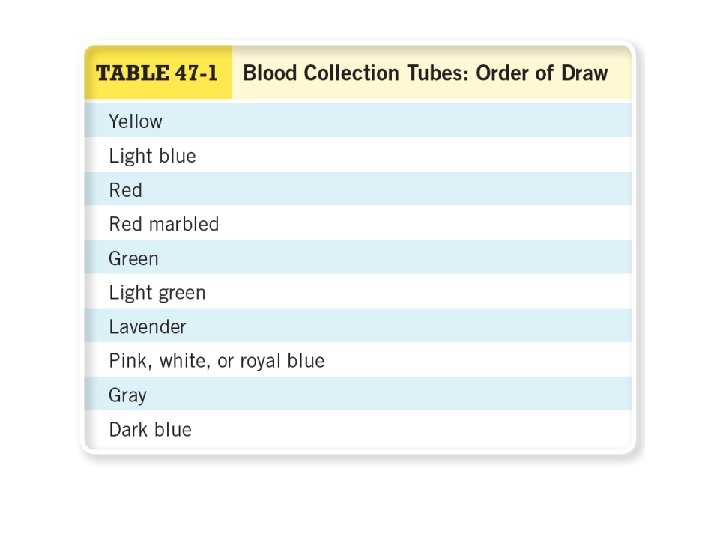
TABLE 47 -1 Blood Collection Tubes: Order of Draw
Blood Specimen Collection • Order of the Blood Draw – Many lab requisition forms state the tube color to use for each test. – If multiple tests are ordered and the same color tube is used for each, often just one tube is needed.

FIGURE 47 -16 Tube colors, additives, inversions, and laboratory uses.
Blood Specimen Collection • Order of the Blood Draw – Exact number of tests possible for one tube depends on the size of the container, the type of test, and the type of equipment being used in the lab – Some laboratories may use additional tubes.
Blood Specimen Collection • Order of the Blood Draw – Vacuum blood tubes come in 5 -, 7 -, 10 -, and 15 -m. L sizes. – Gently invert the tube 6 to 8 times so the anticoagulant and blood mix properly. – Do not shake tubes.
Blood Specimen Collection • Patient Preparation – Blood tests done in a physician's office typically require little preparation.
Blood Specimen Collection • Patient Preparation – For some tests, (e. g. , glucose tolerance), the patient should fast for 12 to 14 hours before the test. • If fasting is required, tell the patient how many hours to fast before the blood draw. • Any questions regarding fasting should be directed to the laboratory to which the specimen is being sent.
Blood Specimen Collection • Performing the Blood Draw – Proper positioning of patient and phlebotomist is very important – Set chairs at a height that is easy to access. – Blood collection equipment should be accessible, off to the side.
Blood Specimen Collection • Performing the Blood Draw – Always ask the patient about complications during previous venipunctures. – Syncope is a common concern. – Patients may be anxious.
Blood Specimen Collection • Performing the Blood Draw – Demonstrate competency. – Ensure blood specimens are drawn correctly. – Unexpected events • Fainting, nausea, excessive anger of patient, uncontrollable bleeding • Remain calm; call for assistance if necessary.
Blood Specimen Collection • Performing the Blood Draw – Request a more experienced phlebotomist when necessary. – Wear PPE.

Performing Venipuncture using the Vacutainer Method • Refer to Procedure 47 -3 in the student text for detailed instruction in this technique.
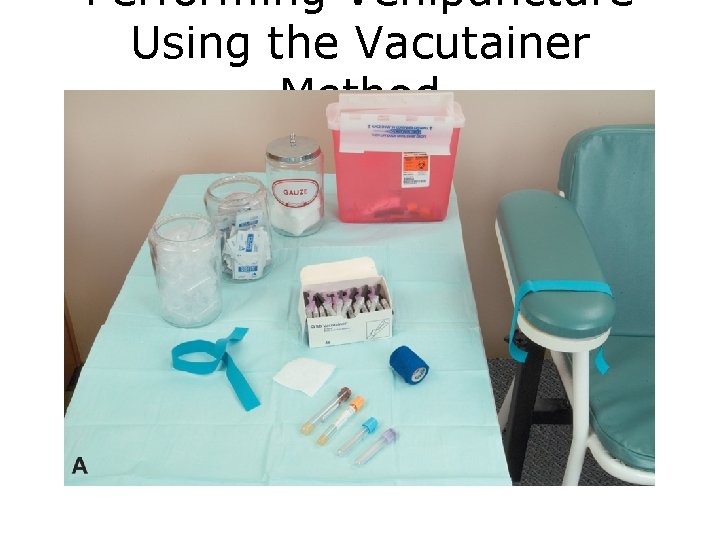
Performing Venipuncture Using the Vacutainer Method FIGURE A Venipuncture procedure.
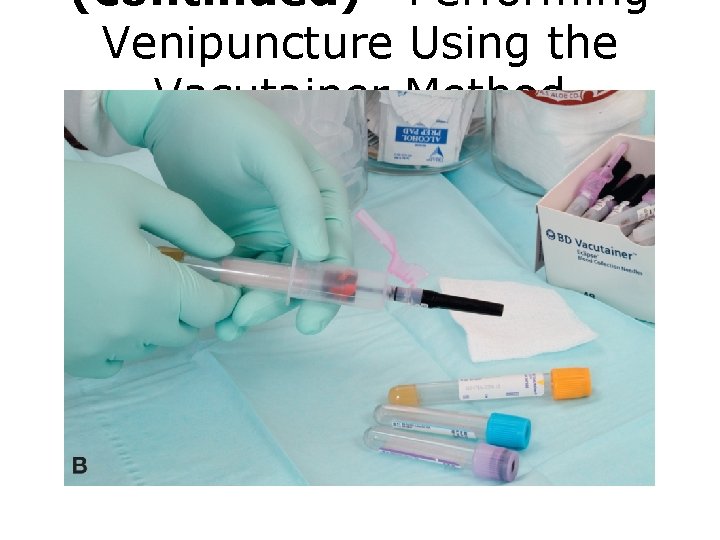
(continued) Performing Venipuncture Using the Vacutainer Method FIGURE B Venipuncture procedure.
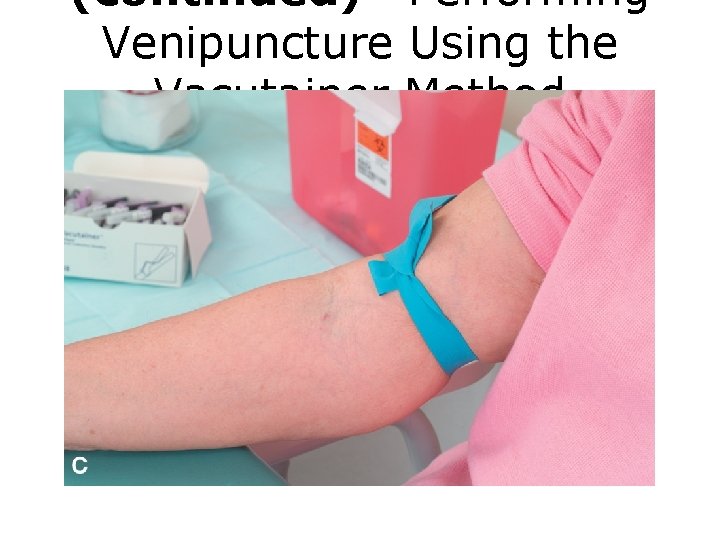
(continued) Performing Venipuncture Using the Vacutainer Method FIGURE C Venipuncture procedure.
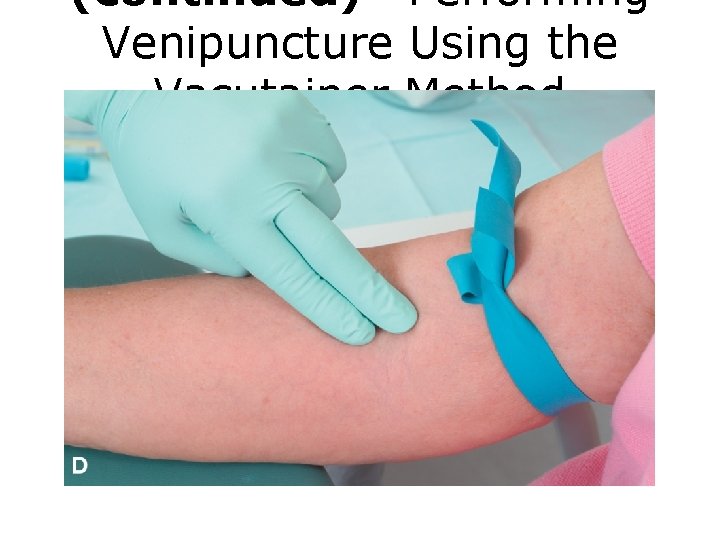
(continued) Performing Venipuncture Using the Vacutainer Method FIGURE D Venipuncture procedure.
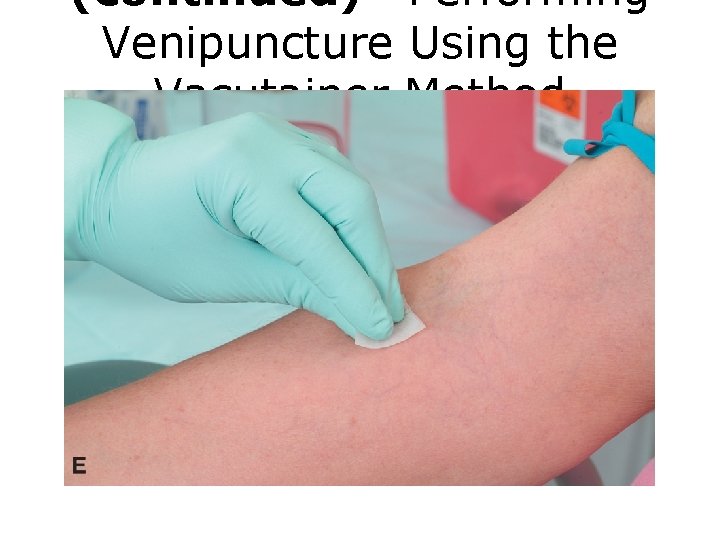
(continued) Performing Venipuncture Using the Vacutainer Method FIGURE E Venipuncture procedure.
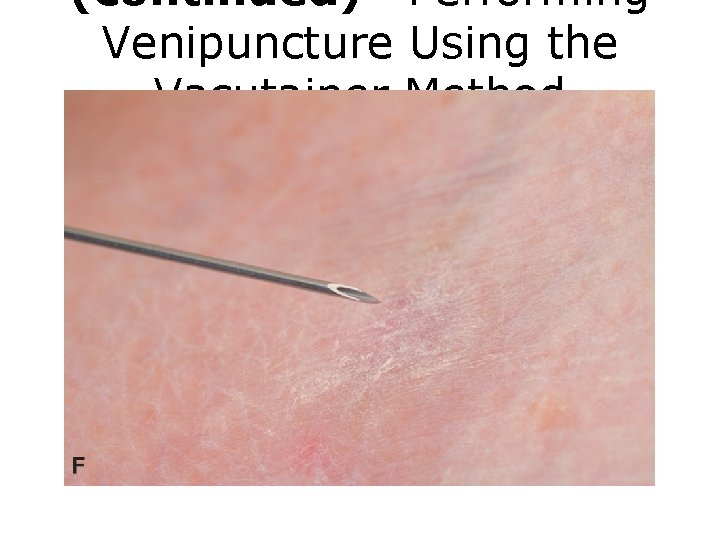
(continued) Performing Venipuncture Using the Vacutainer Method FIGURE F Venipuncture procedure.
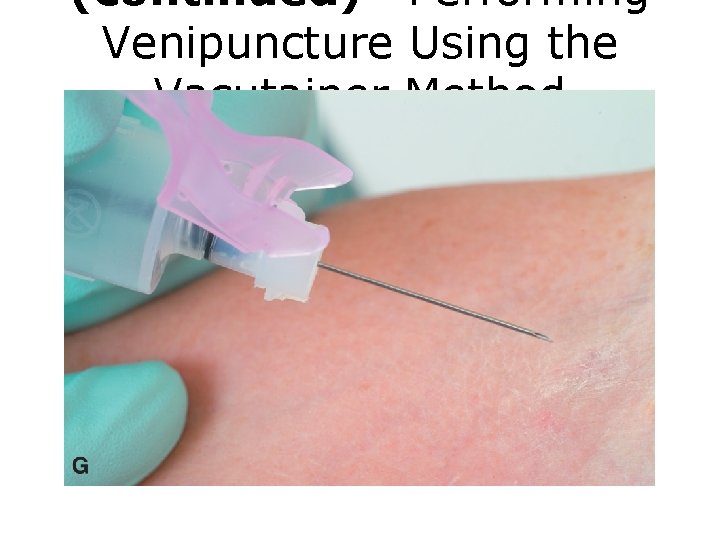
(continued) Performing Venipuncture Using the Vacutainer Method FIGURE G Venipuncture procedure.
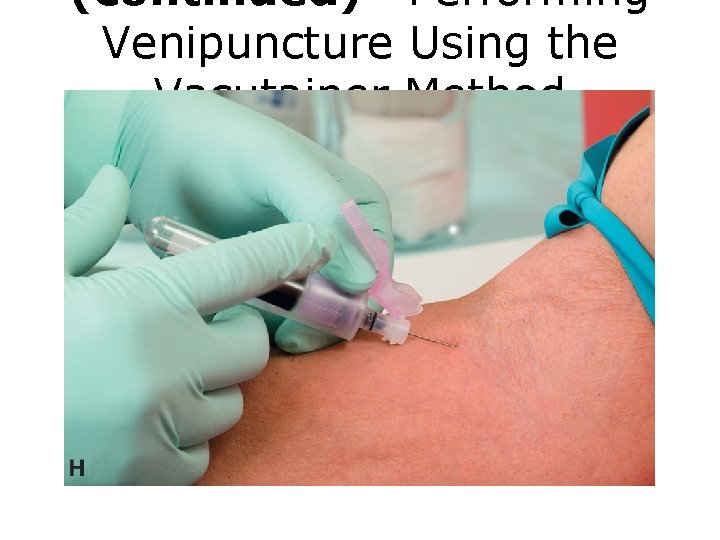
(continued) Performing Venipuncture Using the Vacutainer Method FIGURE H Venipuncture procedure.
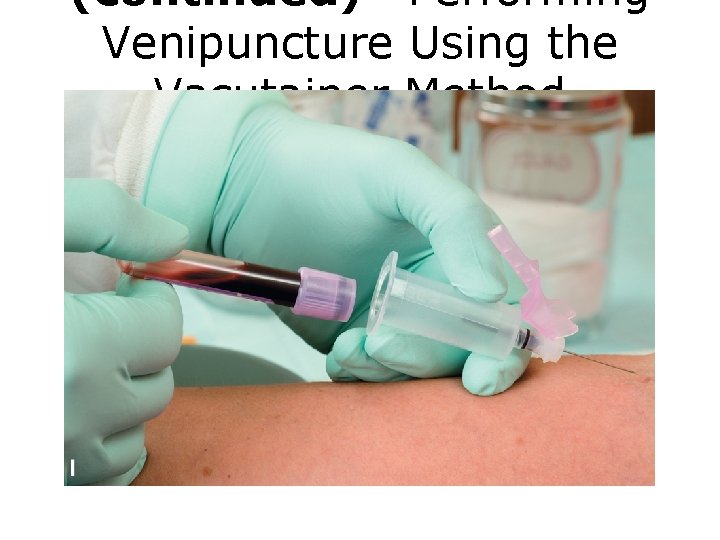
(continued) Performing Venipuncture Using the Vacutainer Method FIGURE I Venipuncture procedure.
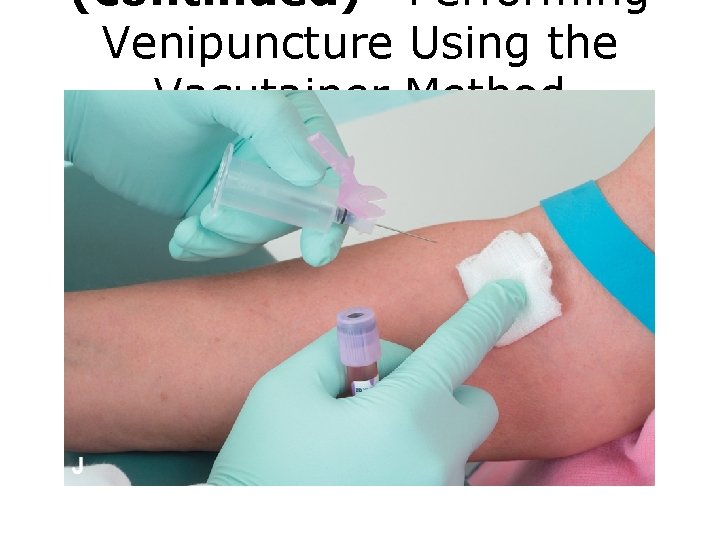
(continued) Performing Venipuncture Using the Vacutainer Method FIGURE J Venipuncture procedure.
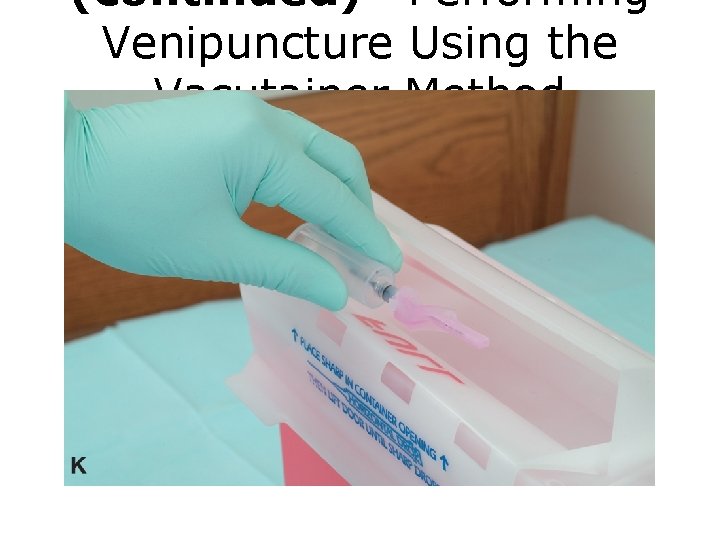
(continued) Performing Venipuncture Using the Vacutainer Method FIGURE K Venipuncture procedure.
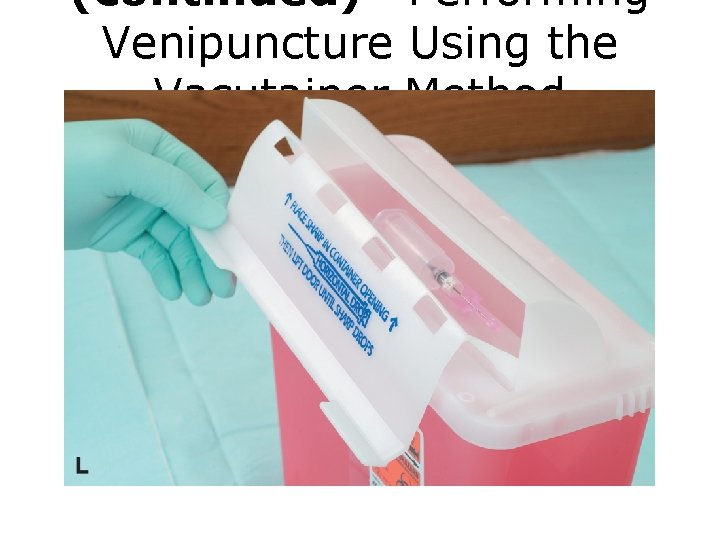
(continued) Performing Venipuncture Using the Vacutainer Method FIGURE L Venipuncture procedure.
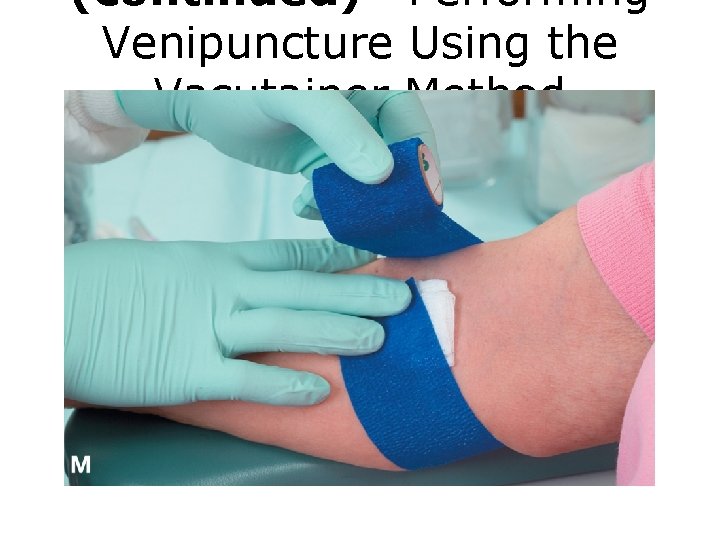
(continued) Performing Venipuncture Using the Vacutainer Method FIGURE M Venipuncture procedure.
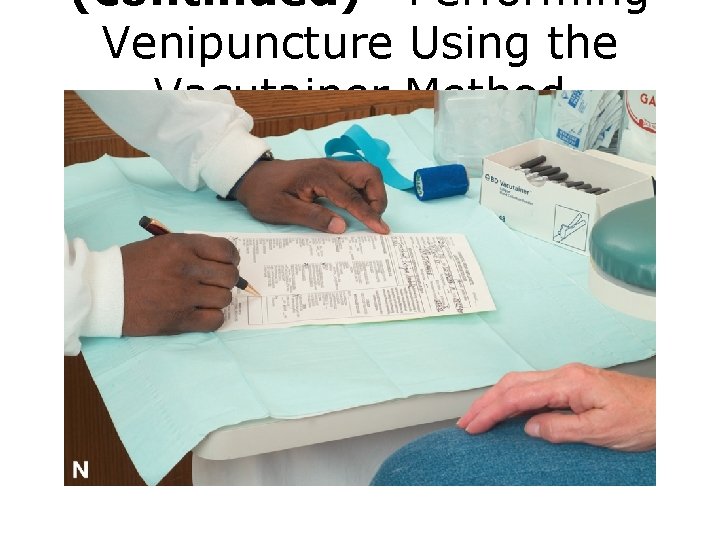
(continued) Performing Venipuncture Using the Vacutainer Method FIGURE N Venipuncture procedure.
Blood Specimen Collection • Special Challenges – Hematomas – Patient refusal – Stress – Failure to obtain blood – Specimen problems – Blood cultures
Blood Specimen Collection • Hematomas – Bruise formed by collection of blood at the puncture site – Result from a number of situations – Can be prevented by having the patient apply pressure to the insertion site for two to three minutes after removal of the needle
Blood Specimen Collection • Hematomas – Generally do not hurt, unless swelling is present – Cold compress may reduce discomfort/swelling
Blood Specimen Collection • Patient Refusal – Never attempt to collect a specimen from a patient who refuses. – Forcing compliance is considered battery and is illegal.
Blood Specimen Collection • Patient Refusal – Explain the reason for the test and its importance. – If the patient still refuses, notify the physician and document refusal in the chart.

Blood Specimen Collection • Stress – Can cause physical changes that may affect people with underlying illness – Pre-existing conditions may be exacerbated by this stress. – Diabetic patient who has been in the waiting room for a long time and hasn't eaten is at risk for insulin shock • Give patients sugar by any means necessary.
Blood Specimen Collection • Stress – If patient experiences convulsions: • Remove needle as safely as possible • Position patient on his or her side on the floor • Have a coworker notify the physician immediately. – In all emergencies, call 911 if necessary.
Blood Specimen Collection • Failure to Obtain Blood – Can occur because of failure to insert needle deep enough – Can occur when needle has been advanced too far and penetrated through both walls of the vein, or rests against wall of vein or valve within vein • Slowly back needle out until blood flows
Blood Specimen Collection • Failure to Obtain Blood – If collection tube has lost vacuum, try using a new tube – Fragile veins may collapse. – Veins may roll away; reposition the needle
Blood Specimen Collection • Specimen Problems – Wrong test used – Incorrectly labeled or illegible specimen – Hemolyzed blood – Poor specimen process or improper conditions before or during transportation
Blood Specimen Collection • Blood Cultures – Take special precautions: • Clean thoroughly with two cleansers; then with Betadine. • Allow time to dry. • Collection tubes or bottles must be twice cleaned; cover with a Betadine wipe.
Blood Specimen Collection • Blood Cultures – Take special precautions: • Cleanse a gloved finger before repalpation. • Always use a blood culture container tube first so the cleanest, purest specimen is received.
- Slides: 50