
Chapter 47 ANIMAL DEVELOPMENT I Stages of Early

- Slides: 45
Chapter 47 ANIMAL DEVELOPMENT
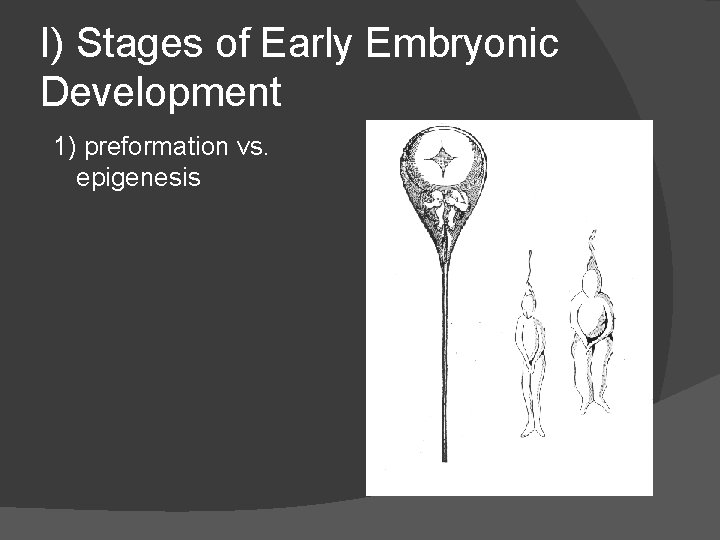
I) Stages of Early Embryonic Development 1) preformation vs. epigenesis
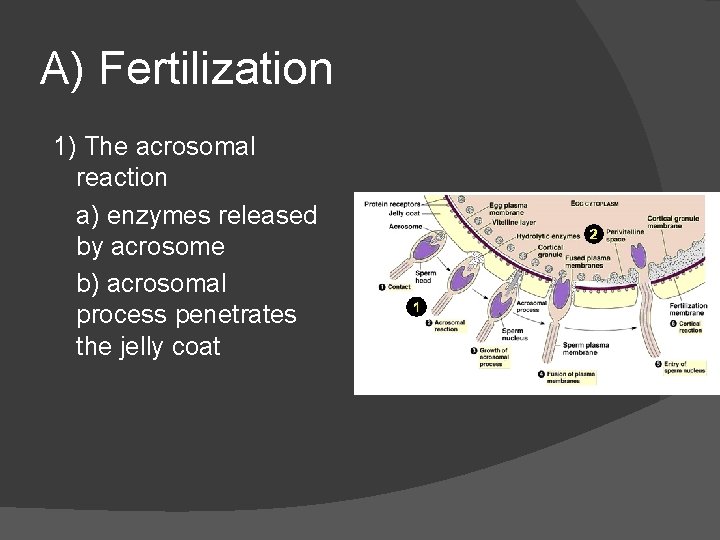
A) Fertilization 1) The acrosomal reaction a) enzymes released by acrosome b) acrosomal process penetrates the jelly coat
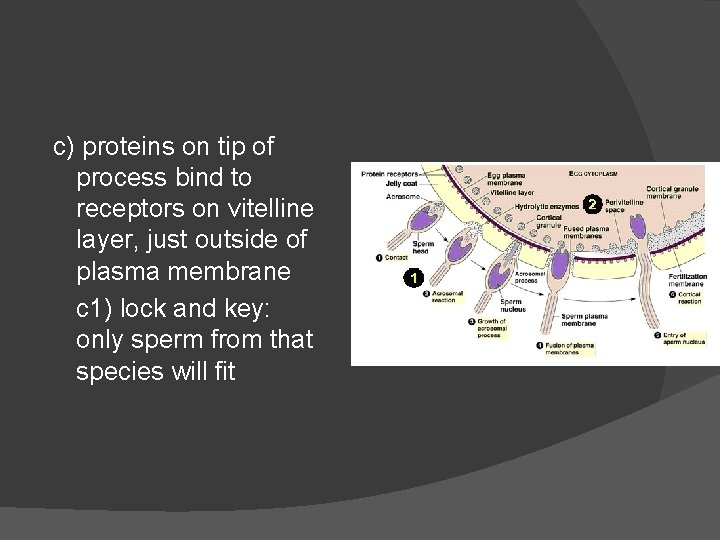
c) proteins on tip of process bind to receptors on vitelline layer, just outside of plasma membrane c 1) lock and key: only sperm from that species will fit
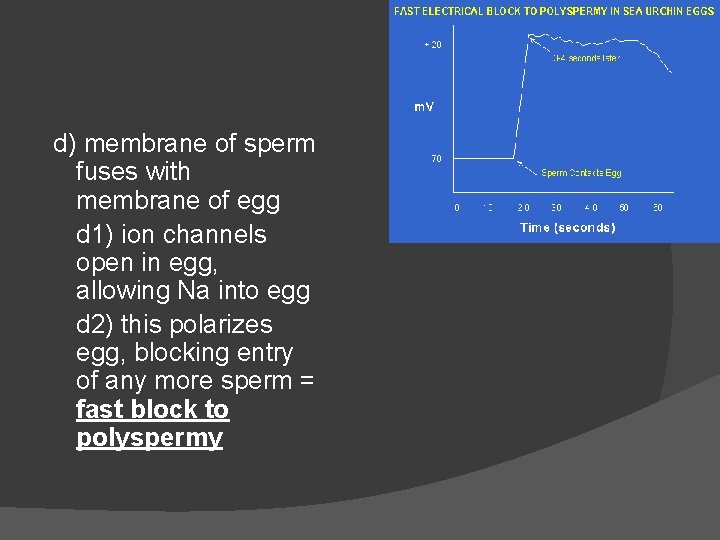
d) membrane of sperm fuses with membrane of egg d 1) ion channels open in egg, allowing Na into egg d 2) this polarizes egg, blocking entry of any more sperm = fast block to polyspermy
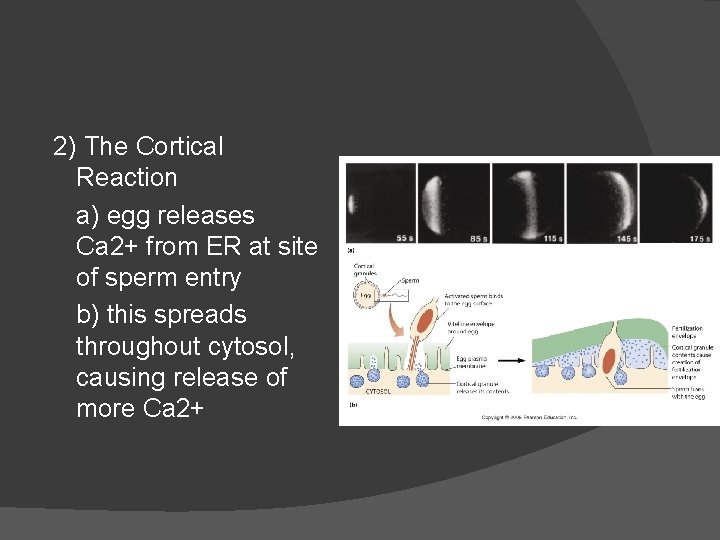
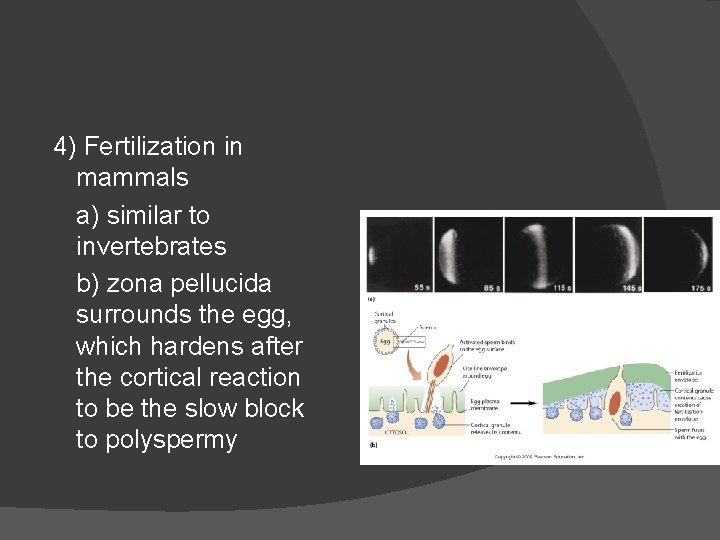
2) The Cortical Reaction a) egg releases Ca 2+ from ER at site of sperm entry b) this spreads throughout cytosol, causing release of more Ca 2+
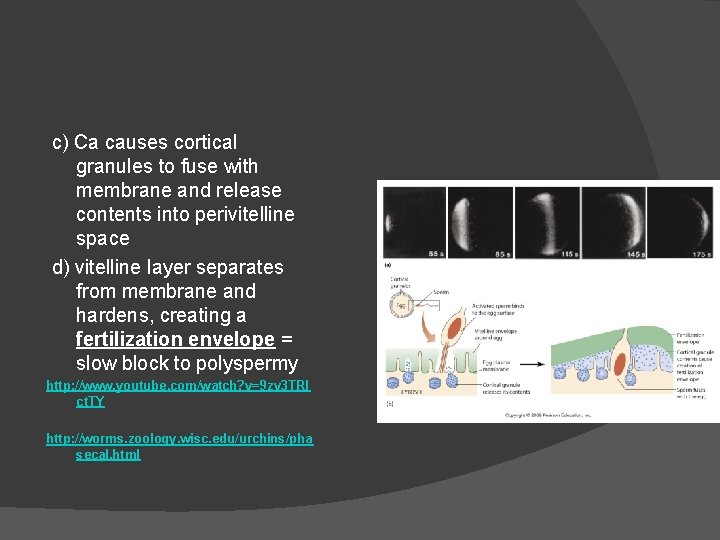
c) Ca causes cortical granules to fuse with membrane and release contents into perivitelline space d) vitelline layer separates from membrane and hardens, creating a fertilization envelope = slow block to polyspermy http: //www. youtube. com/watch? v=9 zv 3 TRl ct. TY http: //worms. zoology. wisc. edu/urchins/pha secal. html
3) Activation of the egg a) transport of H+ out raises p. H, allowing an increase in metabolism and protein synthesis a 1) some protein synthesis occurs even without nucleus, so m. RNA was stockpiled in egg
a 2) activation can be artificial and without nucleus, showing that molecules involved in activation were also present in cytoplasm
4) Fertilization in mammals a) similar to invertebrates b) zona pellucida surrounds the egg, which hardens after the cortical reaction to be the slow block to polyspermy
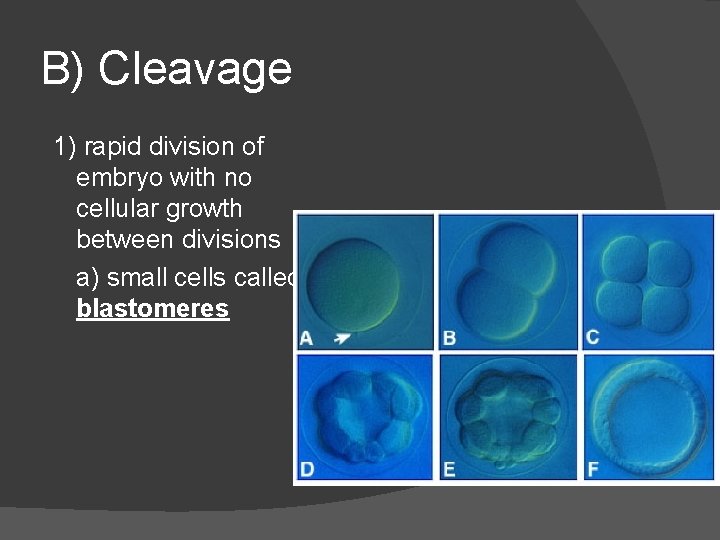
B) Cleavage 1) rapid division of embryo with no cellular growth between divisions a) small cells called blastomeres
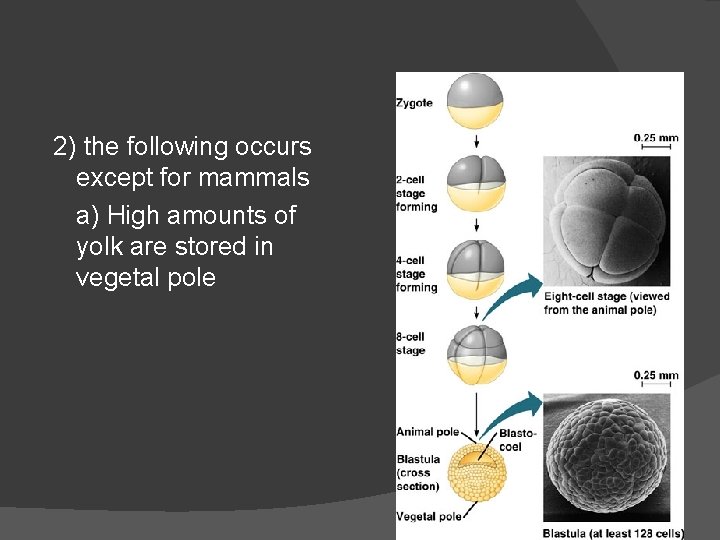
2) the following occurs except for mammals a) High amounts of yolk are stored in vegetal pole
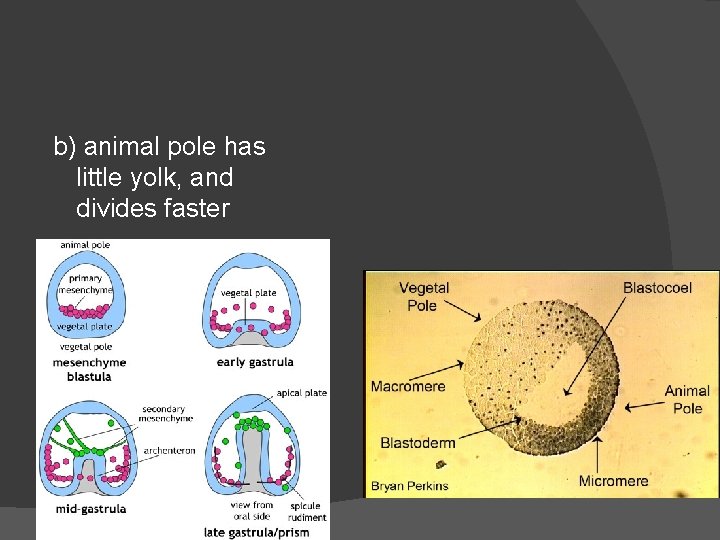
b) animal pole has little yolk, and divides faster
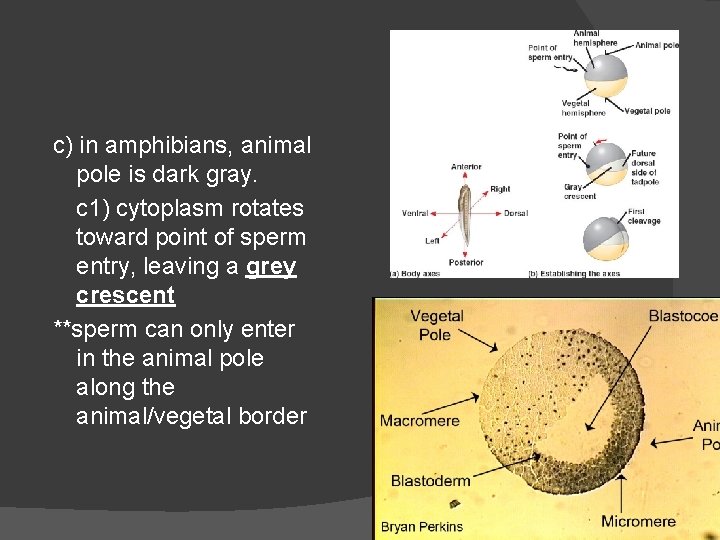
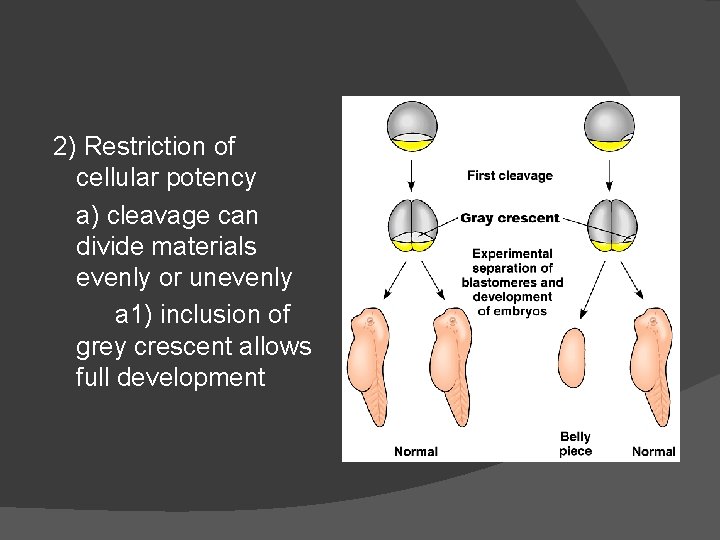
c) in amphibians, animal pole is dark gray. c 1) cytoplasm rotates toward point of sperm entry, leaving a grey crescent **sperm can only enter in the animal pole along the animal/vegetal border
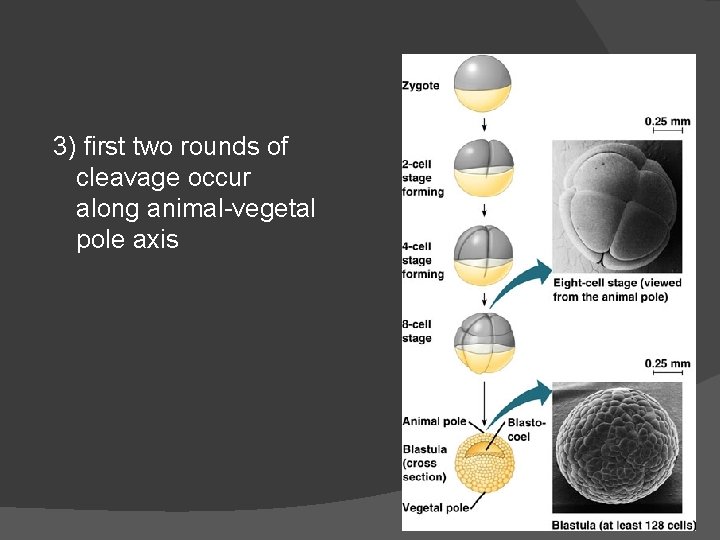
3) first two rounds of cleavage occur along animal-vegetal pole axis
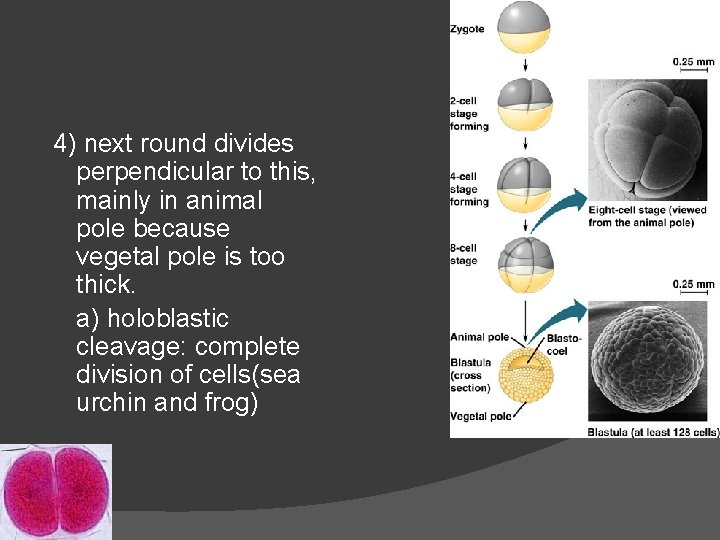
4) next round divides perpendicular to this, mainly in animal pole because vegetal pole is too thick. a) holoblastic cleavage: complete division of cells(sea urchin and frog)
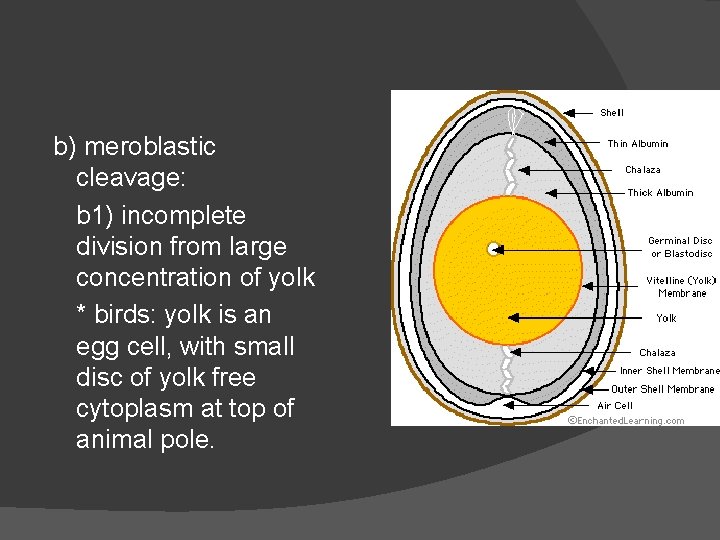
b) meroblastic cleavage: b 1) incomplete division from large concentration of yolk * birds: yolk is an egg cell, with small disc of yolk free cytoplasm at top of animal pole.
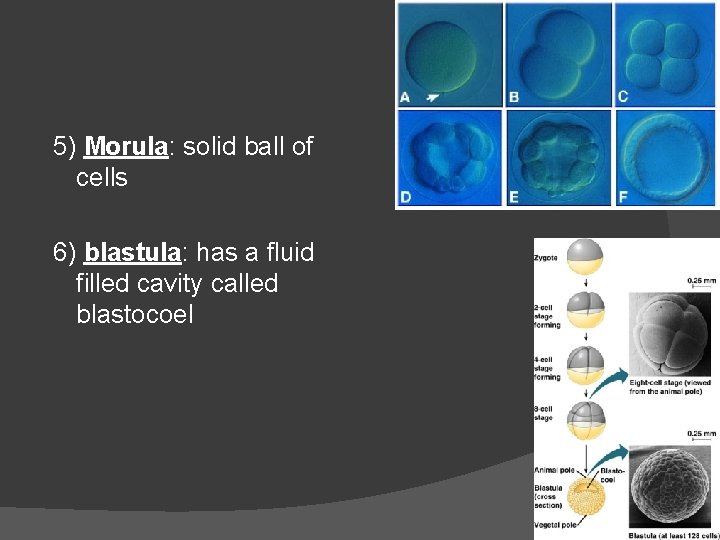
5) Morula: solid ball of cells 6) blastula: has a fluid filled cavity called blastocoel
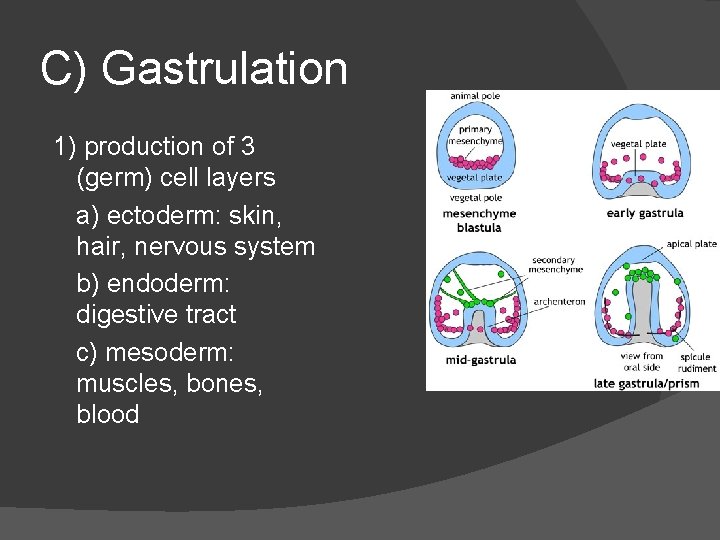
C) Gastrulation 1) production of 3 (germ) cell layers a) ectoderm: skin, hair, nervous system b) endoderm: digestive tract c) mesoderm: muscles, bones, blood
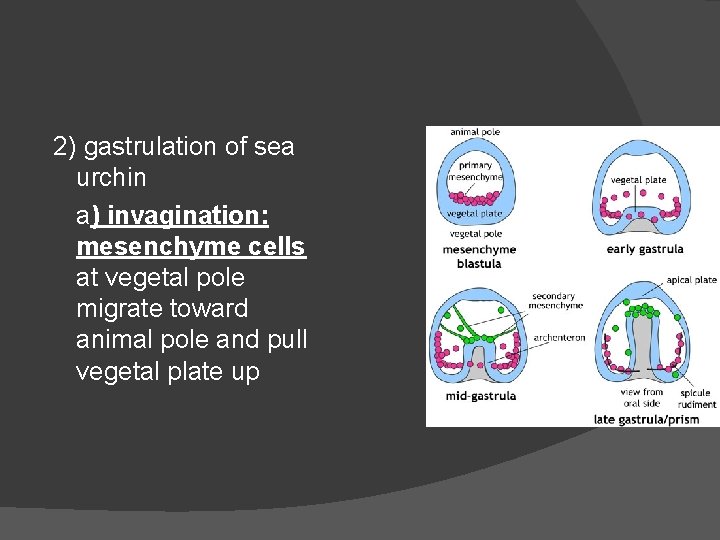
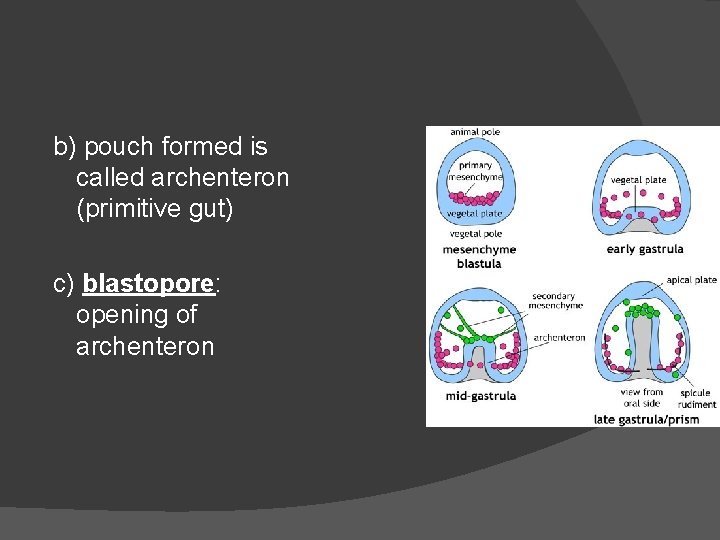
2) gastrulation of sea urchin a) invagination: mesenchyme cells at vegetal pole migrate toward animal pole and pull vegetal plate up
b) pouch formed is called archenteron (primitive gut) c) blastopore: opening of archenteron
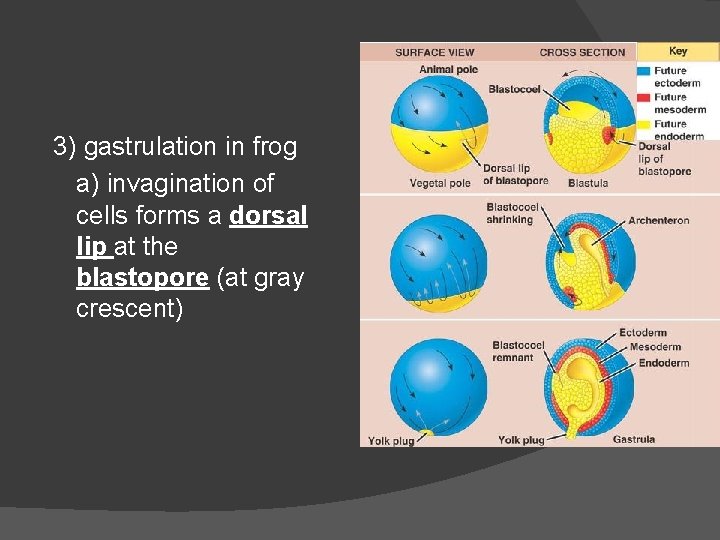
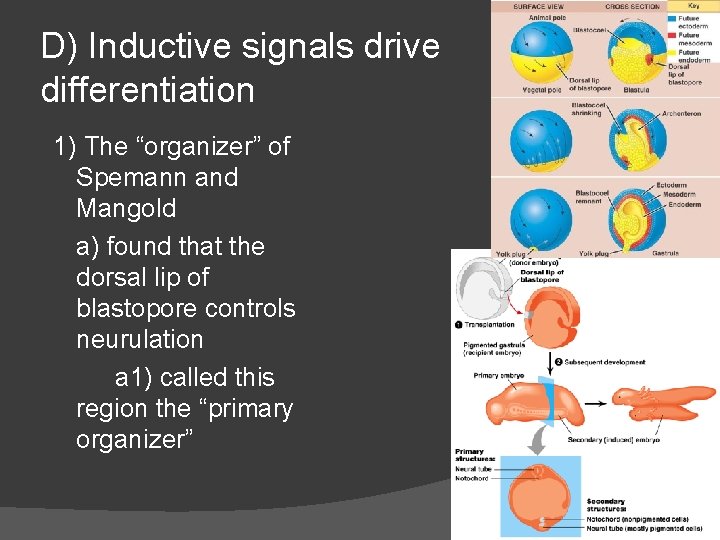
3) gastrulation in frog a) invagination of cells forms a dorsal lip at the blastopore (at gray crescent)
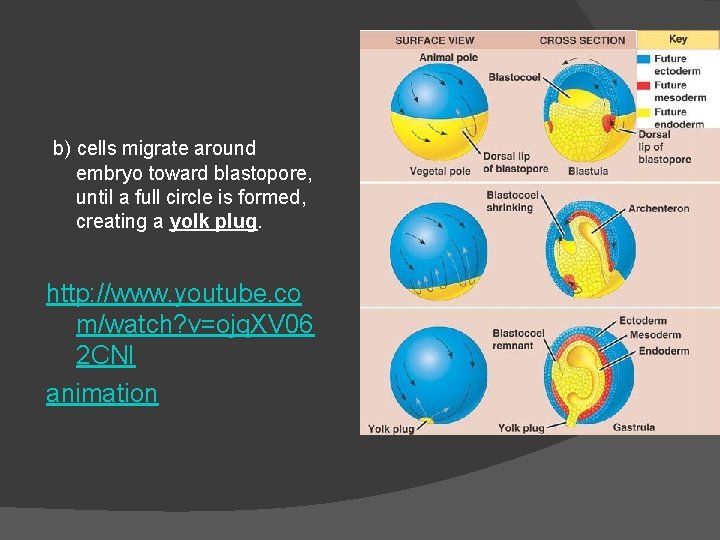
b) cells migrate around embryo toward blastopore, until a full circle is formed, creating a yolk plug. http: //www. youtube. co m/watch? v=ojq. XV 06 2 CNI animation
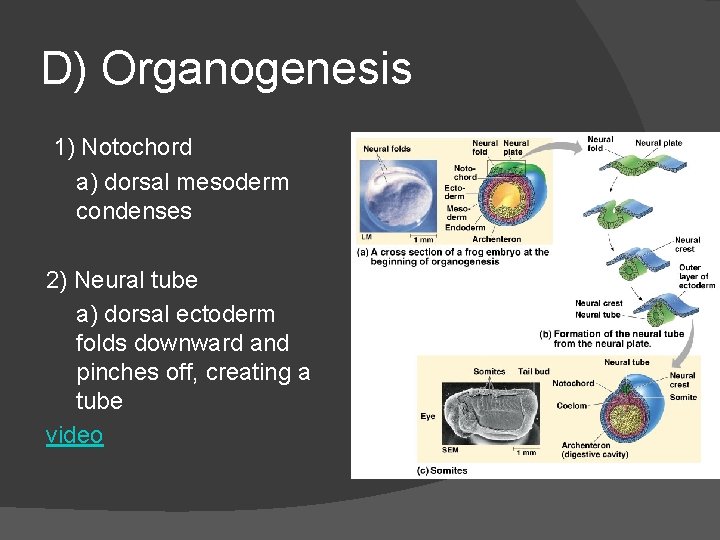
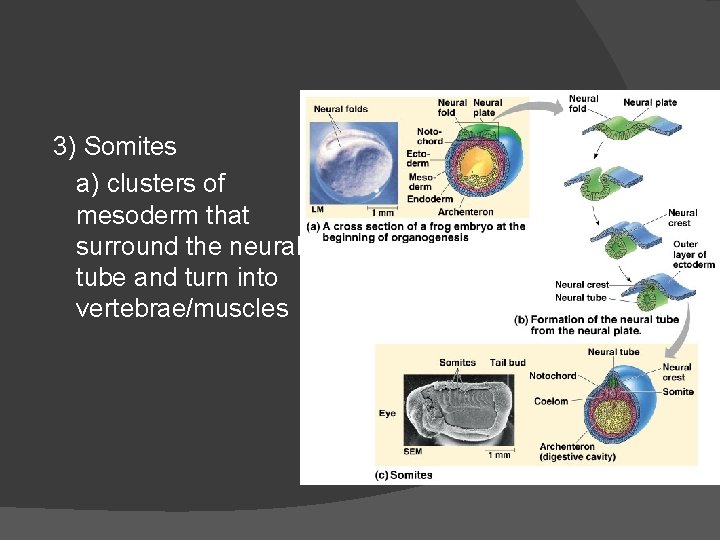
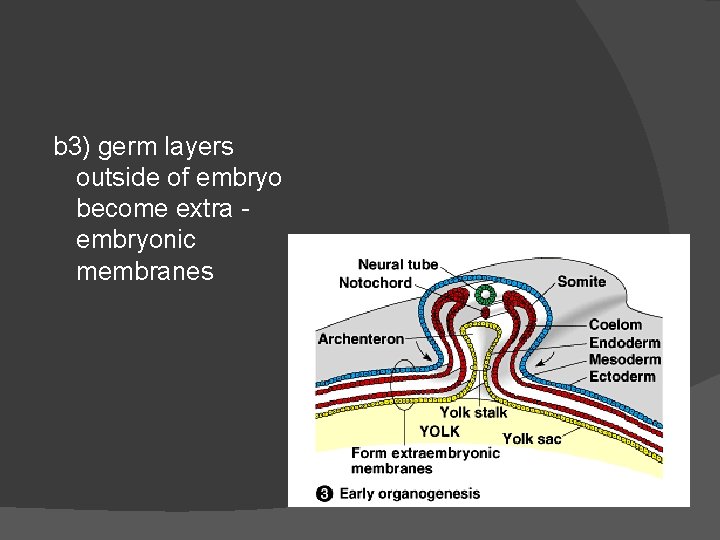
D) Organogenesis 1) Notochord a) dorsal mesoderm condenses 2) Neural tube a) dorsal ectoderm folds downward and pinches off, creating a tube video
3) Somites a) clusters of mesoderm that surround the neural tube and turn into vertebrae/muscles
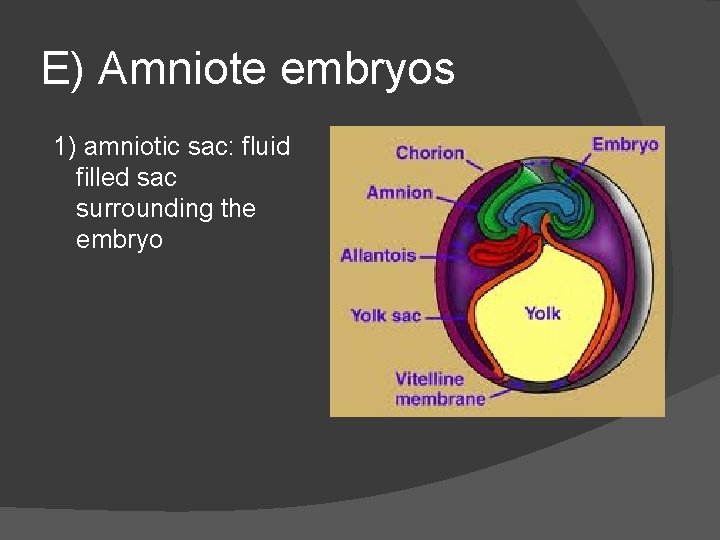
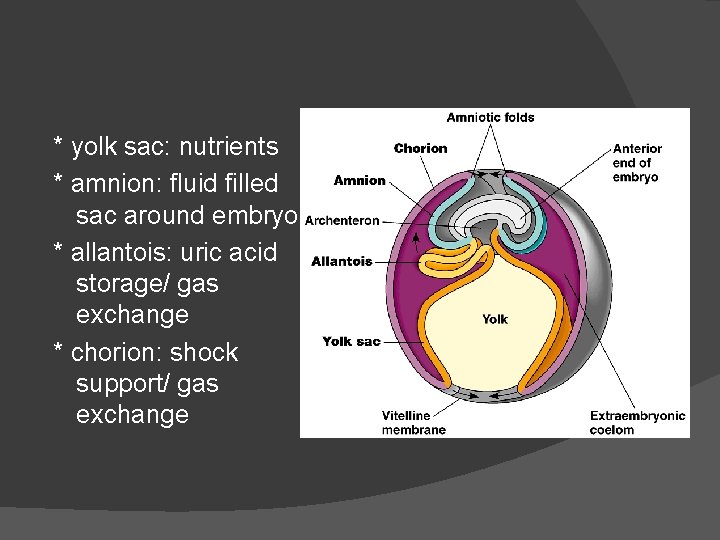
E) Amniote embryos 1) amniotic sac: fluid filled sac surrounding the embryo
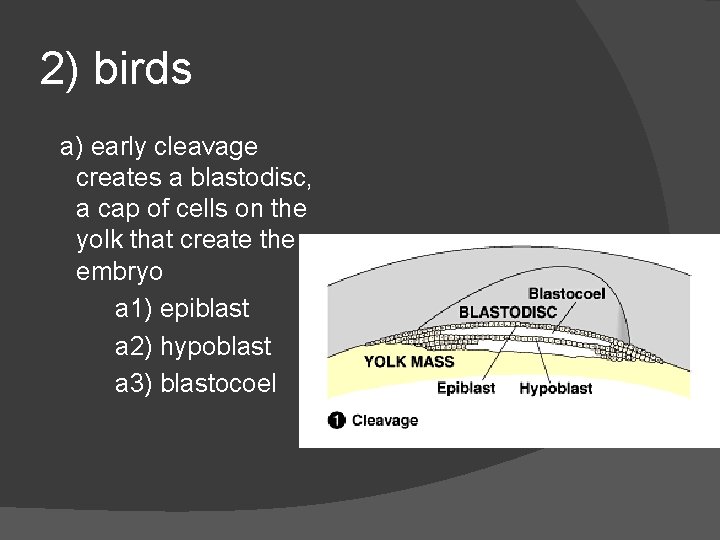
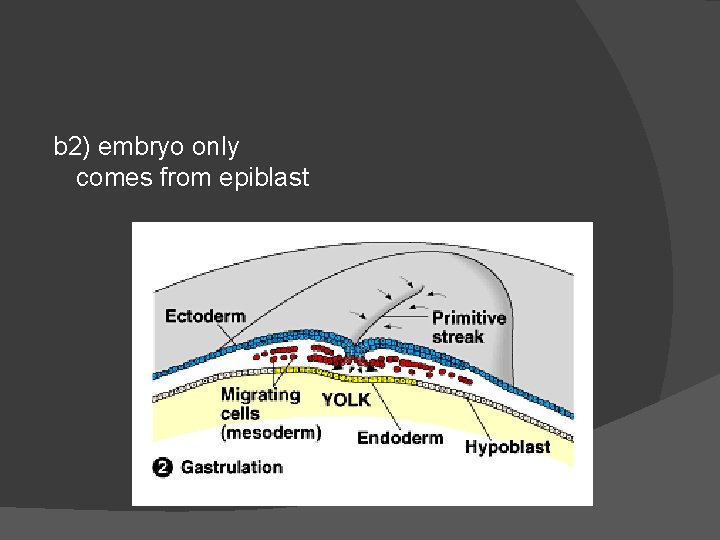
2) birds a) early cleavage creates a blastodisc, a cap of cells on the yolk that create the embryo a 1) epiblast a 2) hypoblast a 3) blastocoel
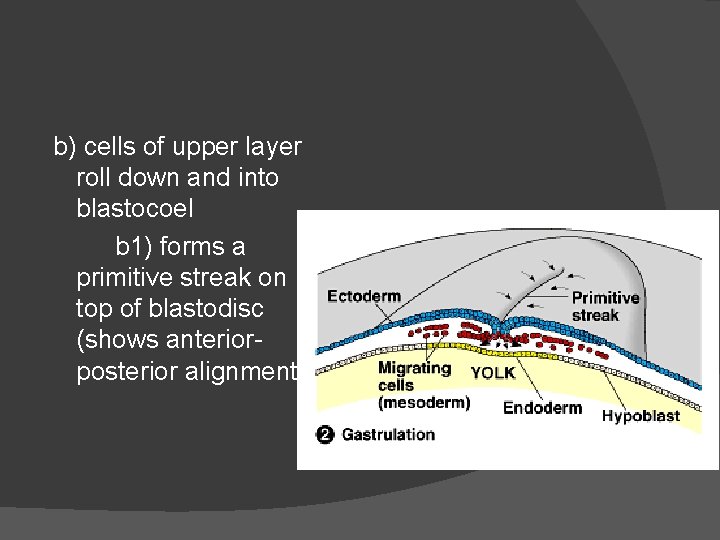
b) cells of upper layer roll down and into blastocoel b 1) forms a primitive streak on top of blastodisc (shows anteriorposterior alignment)
b 2) embryo only comes from epiblast
b 3) germ layers outside of embryo become extra embryonic membranes
* yolk sac: nutrients * amnion: fluid filled sac around embryo * allantois: uric acid storage/ gas exchange * chorion: shock support/ gas exchange
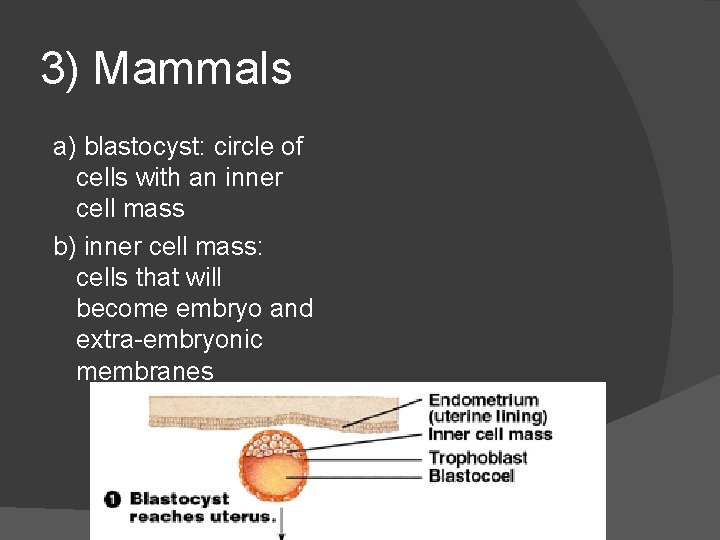
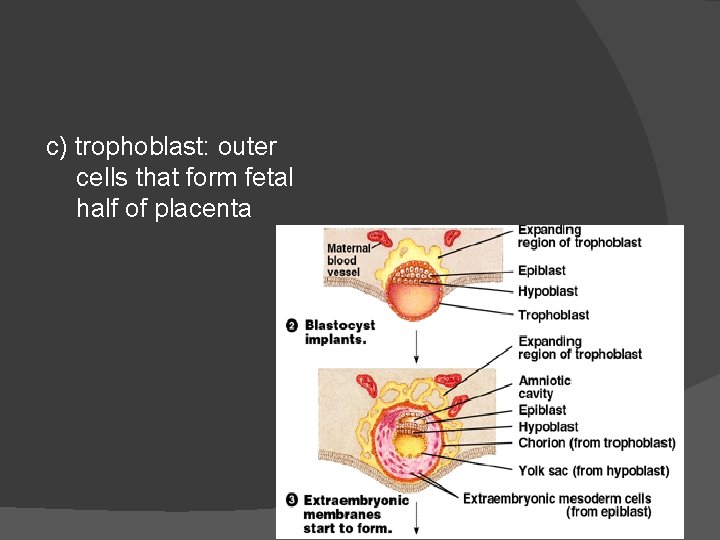
3) Mammals a) blastocyst: circle of cells with an inner cell mass b) inner cell mass: cells that will become embryo and extra-embryonic membranes
c) trophoblast: outer cells that form fetal half of placenta
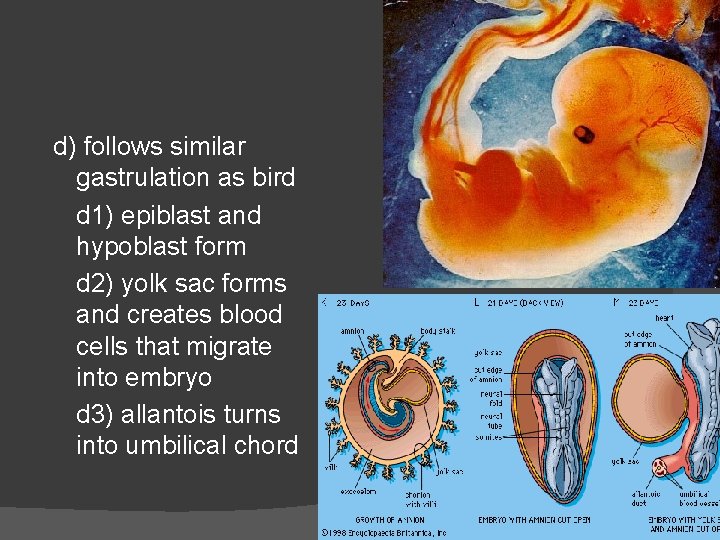
d) follows similar gastrulation as bird d 1) epiblast and hypoblast form d 2) yolk sac forms and creates blood cells that migrate into embryo d 3) allantois turns into umbilical chord
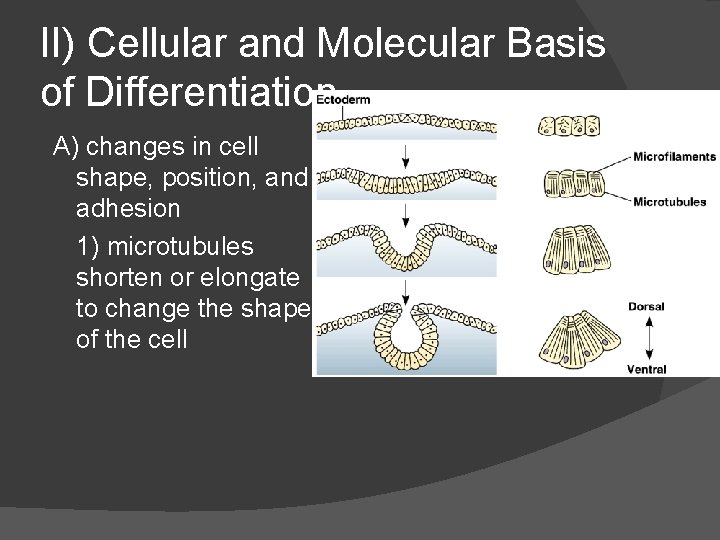
II) Cellular and Molecular Basis of Differentiation A) changes in cell shape, position, and adhesion 1) microtubules shorten or elongate to change the shape of the cell
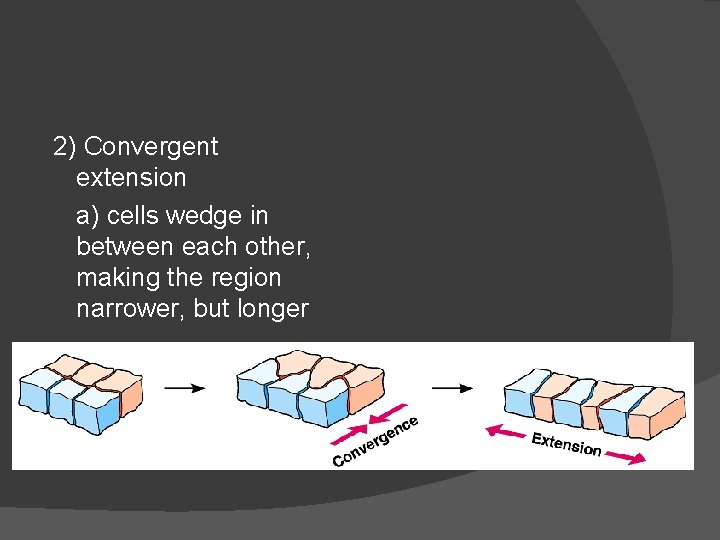
2) Convergent extension a) cells wedge in between each other, making the region narrower, but longer
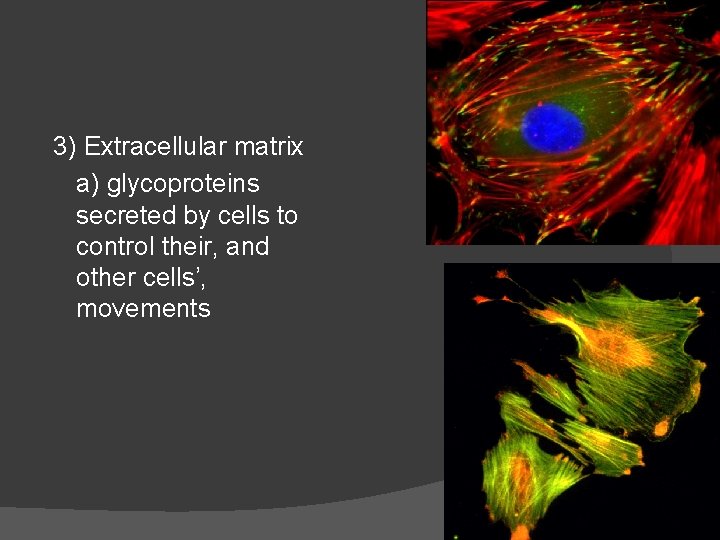
3) Extracellular matrix a) glycoproteins secreted by cells to control their, and other cells’, movements
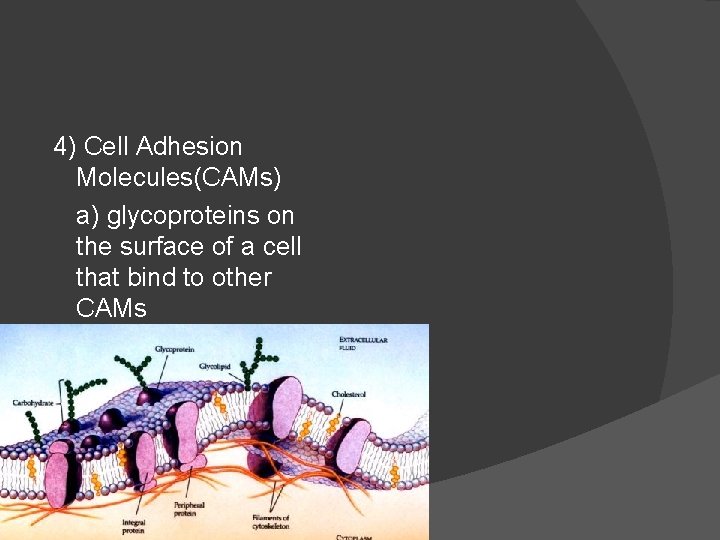
4) Cell Adhesion Molecules(CAMs) a) glycoproteins on the surface of a cell that bind to other CAMs
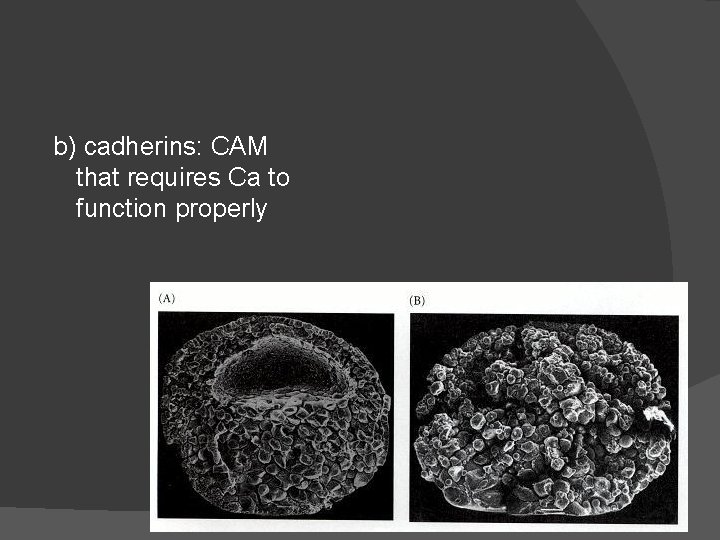
b) cadherins: CAM that requires Ca to function properly
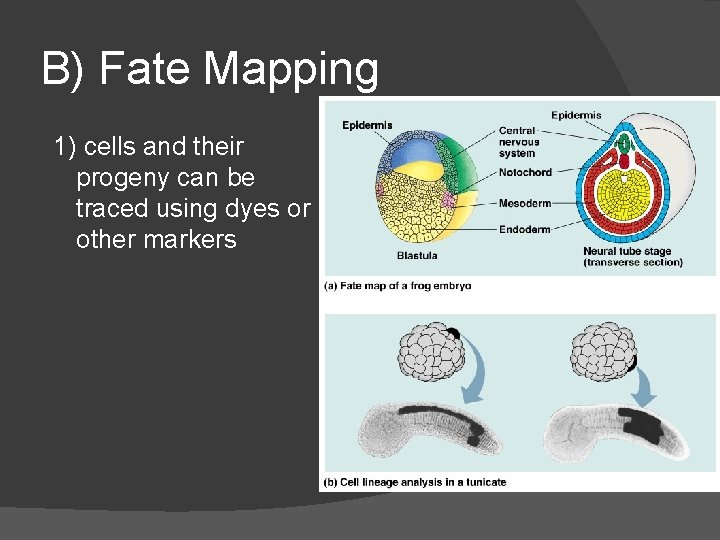
B) Fate Mapping 1) cells and their progeny can be traced using dyes or other markers
C) Cytoplasmic Determinants 1) Polarity and body plan a) bilaterally symmetrical organisms have: a 1) anteriorposterior axis a 2) dorsal-ventral axis a 3) left and right sides
b) established by positioning of materials in the egg
2) Restriction of cellular potency a) cleavage can divide materials evenly or unevenly a 1) inclusion of grey crescent allows full development
D) Inductive signals drive differentiation 1) The “organizer” of Spemann and Mangold a) found that the dorsal lip of blastopore controls neurulation a 1) called this region the “primary organizer”