
Chapter 45 Suspension Systems Frames Body Over Frame
Chapter 45 Suspension Systems
Frames • Body Over Frame – The body and all major parts are bolted to the frame – Design is used on many pickups and SUVs • Unitized Body – Tends to be more tightly structured – Is designed to transmit impact energy throughout the vehicle
Springs • • Carry vehicle weight. Absorb road shock forces. Maintain correct ride height. The amount the compress under load is called spring rate. • Spring compression is called jounce. • Spring extension is called rebound.
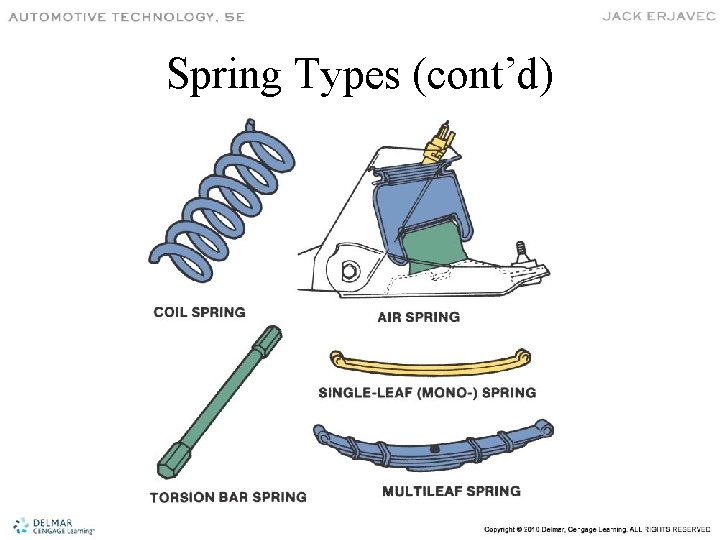
Spring Types (cont’d)
Shock Absorbers • Dampen spring movement. • The faster a shock moves, the more resistance it has to movement. • Typically has more resistance to extension than compression. • Gas charged shocks are effective at limiting fluid foaming.

Gas-Filled Shock
Shock Absorber Ratio • Valves may provide different resistance for jounce and rebound. • A 50/50 shock is equal for jounce and rebound. • Damping rates depend on piston and orifice sizes as well as the closing force of the valves.
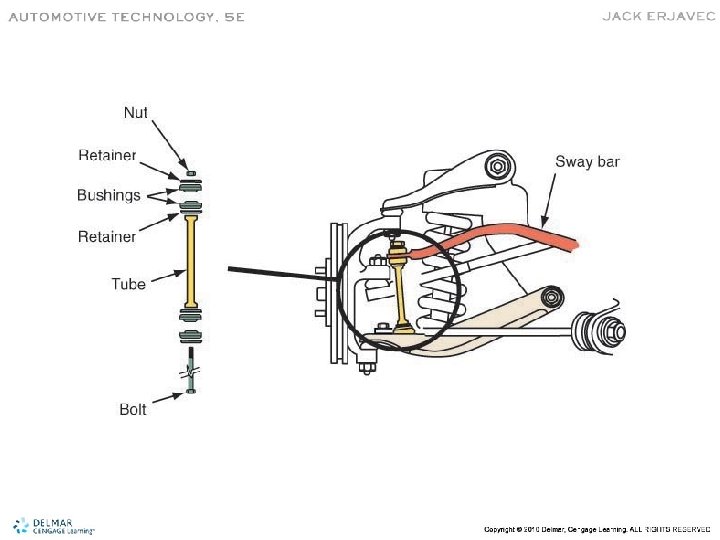
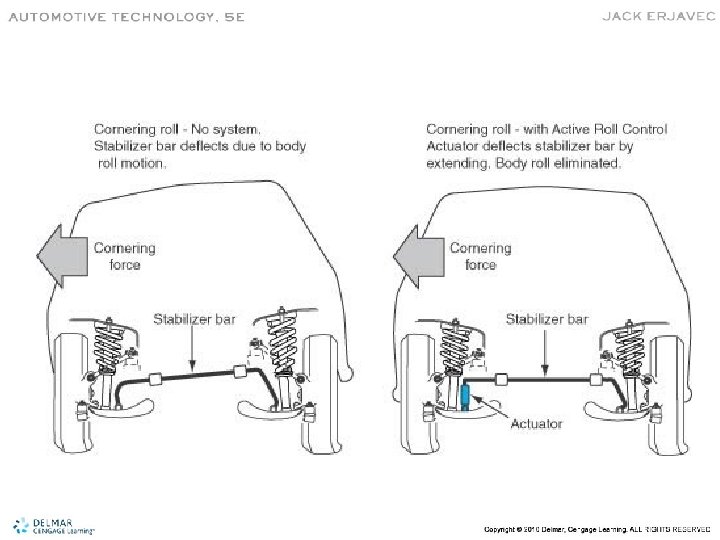
Stabilizer Bars • • • Also called a sway bar or antisway bar. Reduces body roll or lean. Typically a one-piece U-shaped steel bar. Held to the control arms or strut with links. Used on the front and rear suspensions.
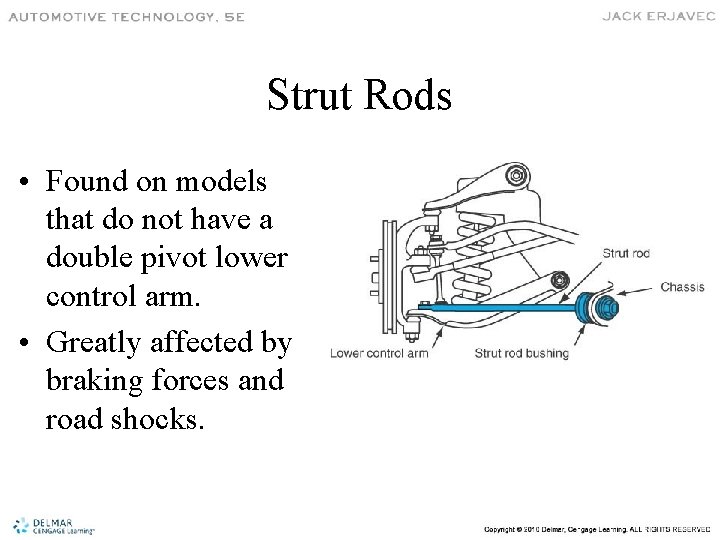
Strut Rods • Found on models that do not have a double pivot lower control arm. • Greatly affected by braking forces and road shocks.
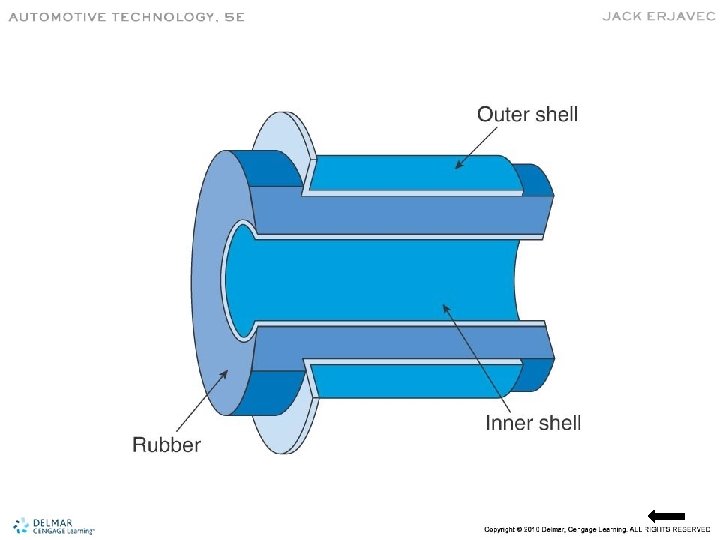
Bushings • Used on stabilizer bars, controls arms, radius arms, and strut rods. • Good for pivots, minimizing lubrication points, and allow for slight misalignments. • Allow movement between components. • Bushing movement produces heat. • Worn bushings allow suspension movement.
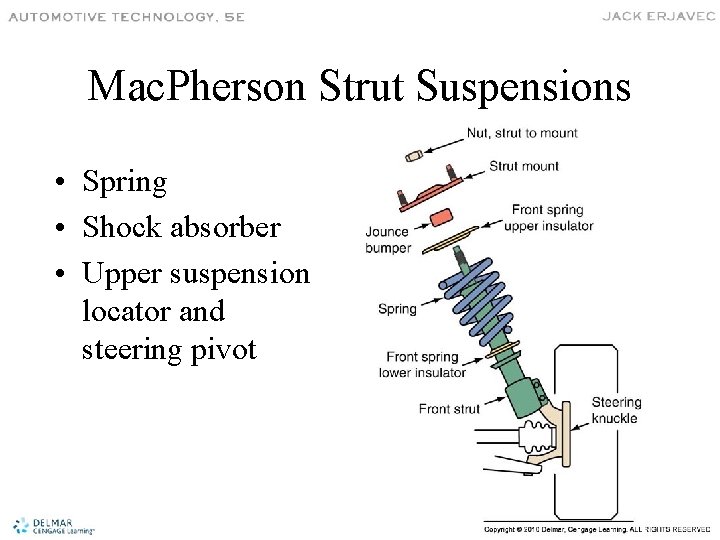
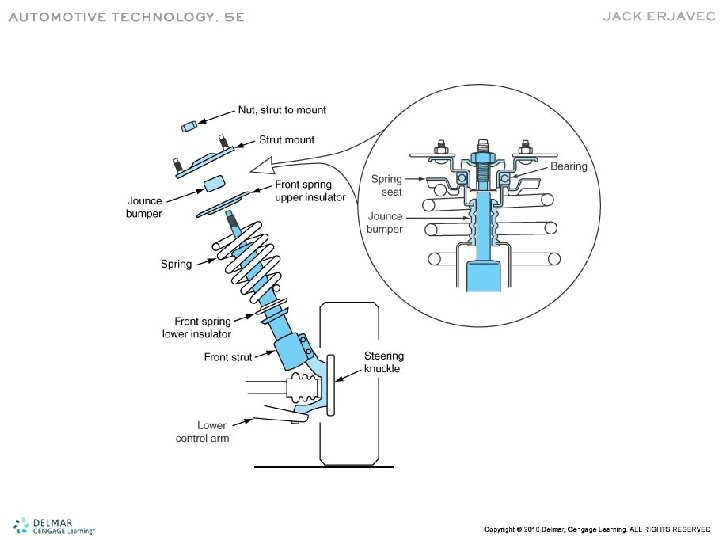
Mac. Pherson Strut Suspensions • Spring • Shock absorber • Upper suspension locator and steering pivot
Strut Mounts • • Dampen vibrations Secures the strut in position Includes a bearing or bushing Worn mounts can cause noise, poor handling, and damage to the strut • Often replaced with the strut
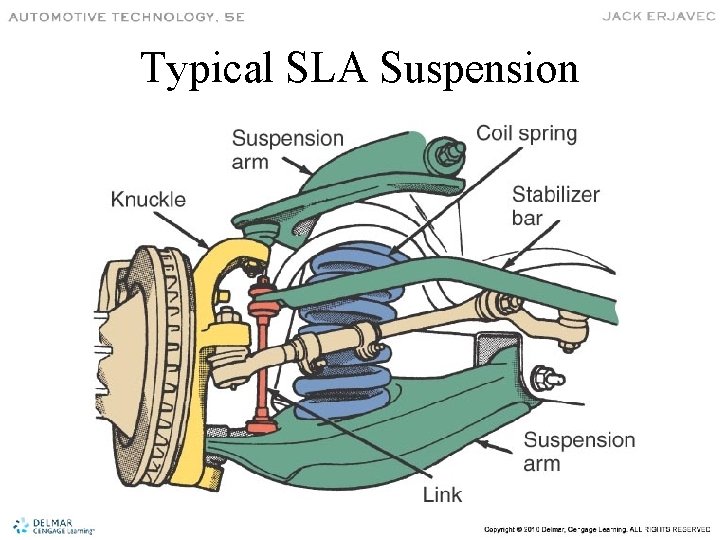
Typical SLA Suspension
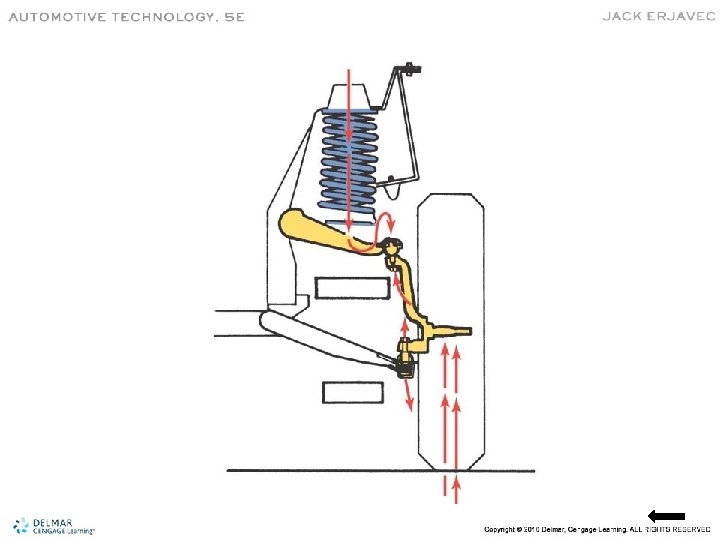
Short-Long Arm Suspension • Each wheel is connected independently to the frame. • The upper arm pivots in a shorter arc. • The top of the wheel moves slightly but tire’s contact with the road remains constant.
SLA Suspension Components • Wheel spindle and steering knuckle • Upper and lower control arms: – Can be wishbone or double pivot • Ball joints • Shock absorber • Spring
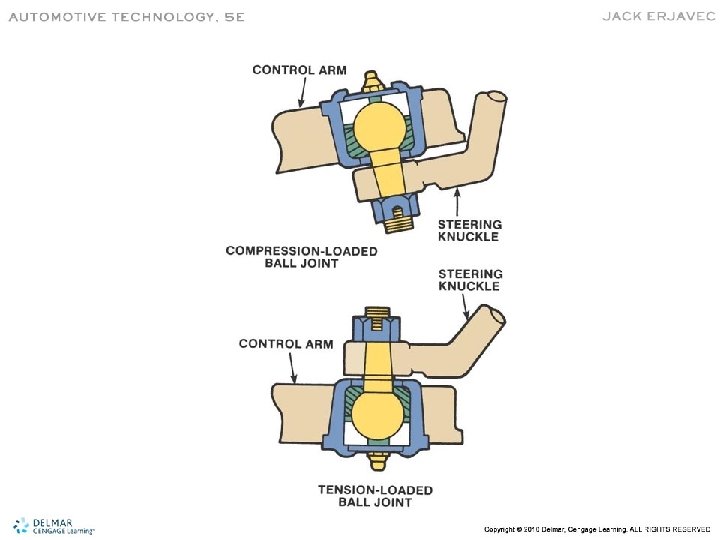
Ball Joints • Connects the steering knuckle to the control arms. • Are either load carrying or are followers: – Load carrying joints support the vehicle’s weight – Following or friction joints a steering pivot
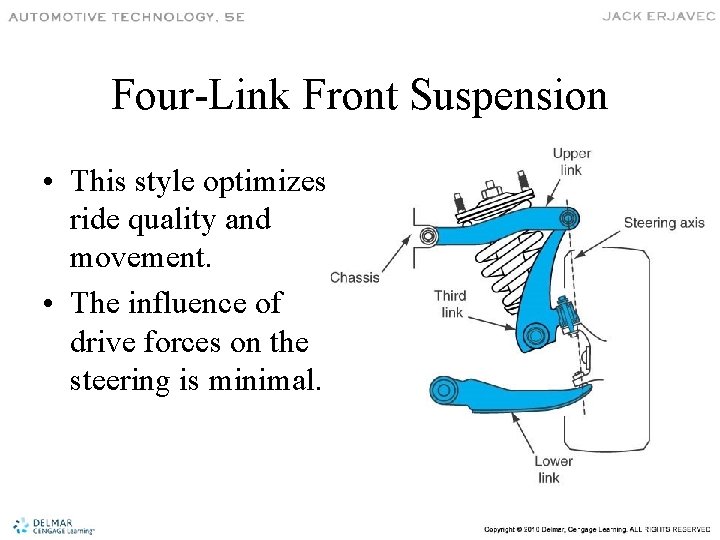
Four-Link Front Suspension • This style optimizes ride quality and movement. • The influence of drive forces on the steering is minimal.
Shock/Strut Bounce Test • Push the bumper down two or three times. • The vehicle should oscillate about one and a half times then settle. • Excessive bounce indicates the shocks are worn and need replaced. • Listen for noises while testing.
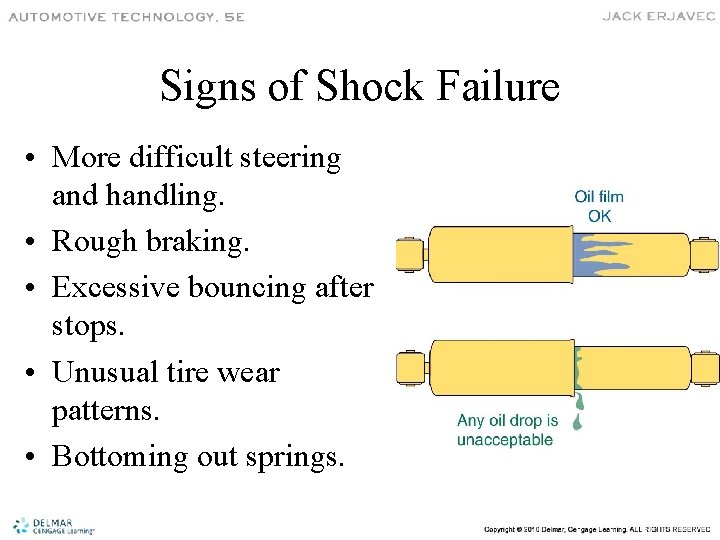
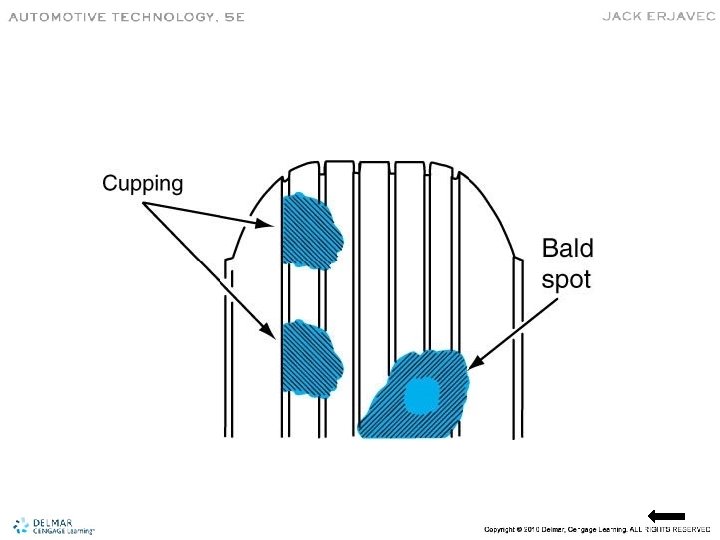
Signs of Shock Failure • More difficult steering and handling. • Rough braking. • Excessive bouncing after stops. • Unusual tire wear patterns. • Bottoming out springs.
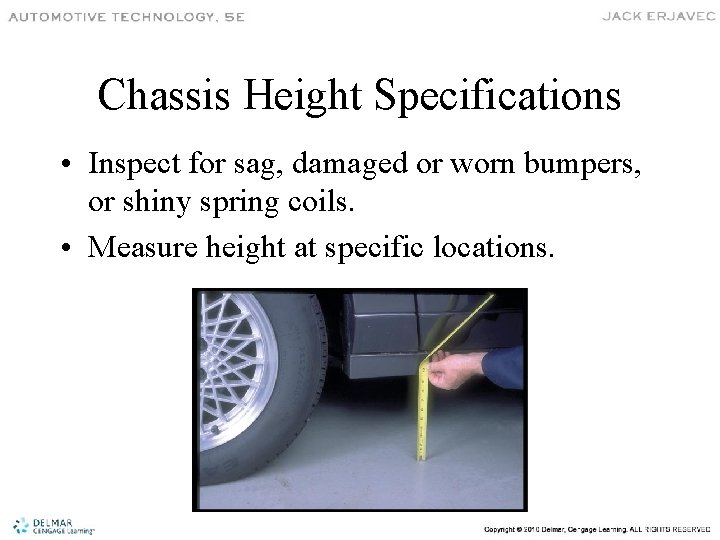
Chassis Height Specifications • Inspect for sag, damaged or worn bumpers, or shiny spring coils. • Measure height at specific locations.
Front-Suspension Component Servicing • Coil Springs – Require no adjustment – Weak springs sag and affect ride height – Can break from overloading – To replace, support the lower control arm and attach a spring compressor to safely handle the spring
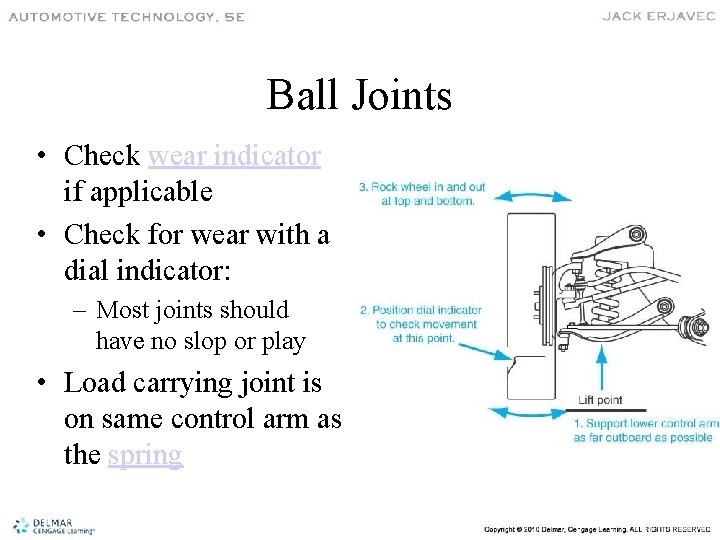
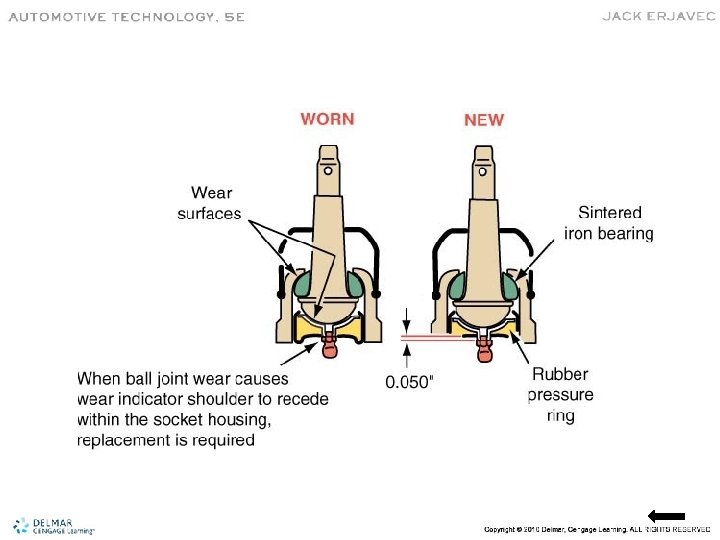
Ball Joints • Check wear indicator if applicable • Check for wear with a dial indicator: – Most joints should have no slop or play • Load carrying joint is on same control arm as the spring
Shock Absorbers • Will gradually wear and change vehicle stability, handling, and rideability. • Common problems are: – Excessive bouncing after stops or bumps – Tire tread cupping – Springs are bottoming out – Worn, loose, or damaged bushings
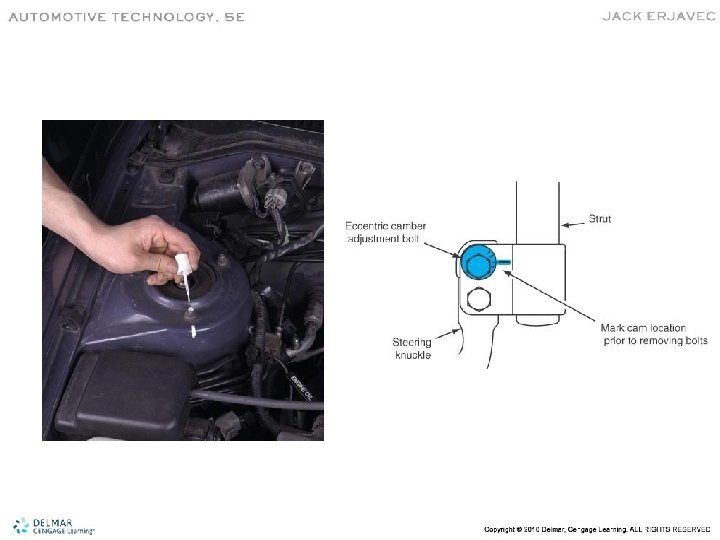
Mac. Pherson Strut Suspension • The strut receives a large amount of vertical and horizontal force. • Check closely for leaks, bent shaft, and poor damping. • Mark upper pivot and eccentric cam before removing the strut. • During replacement, check the strut pivot bearing.
Rear-Suspension Systems • Three basic types: – Live axle – Semi-independent – Independent • There are various types within the three basic types.
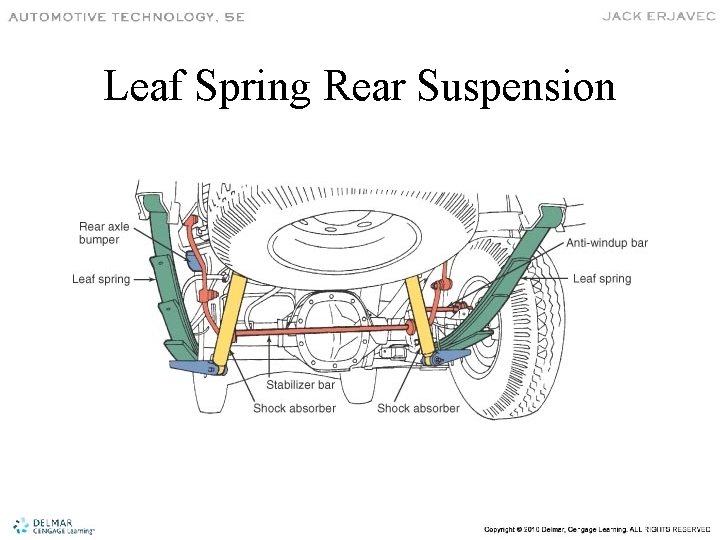
Leaf Spring Rear Suspension
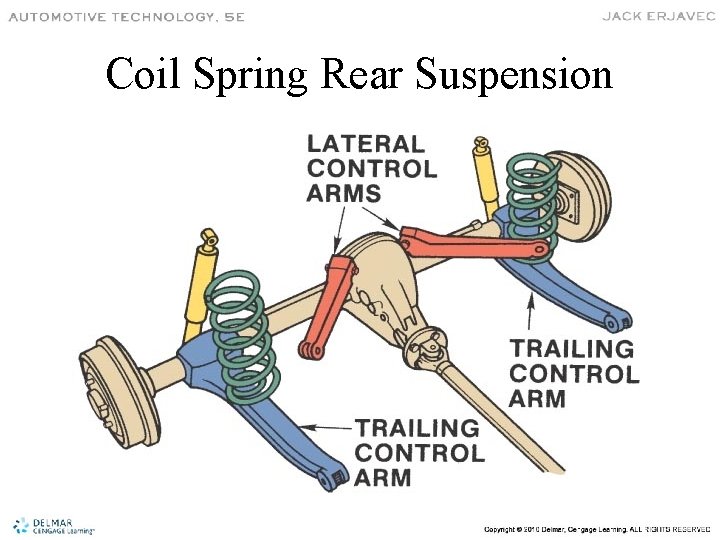
Coil Spring Rear Suspension
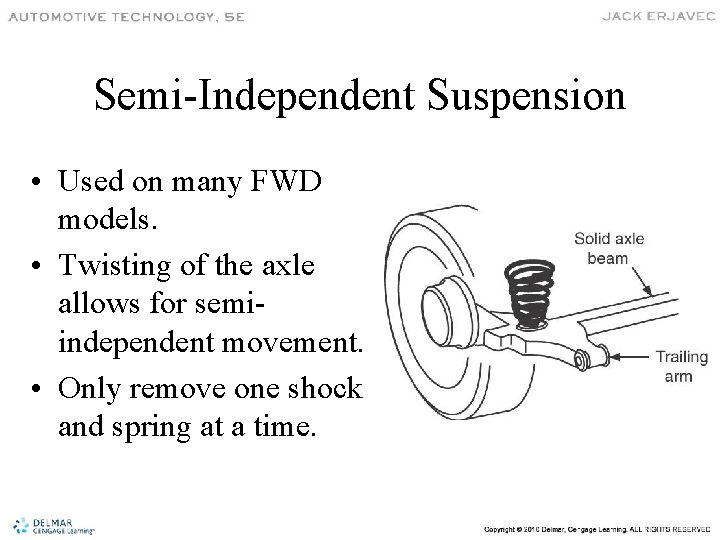
Semi-Independent Suspension • Used on many FWD models. • Twisting of the axle allows for semiindependent movement. • Only remove one shock and spring at a time.
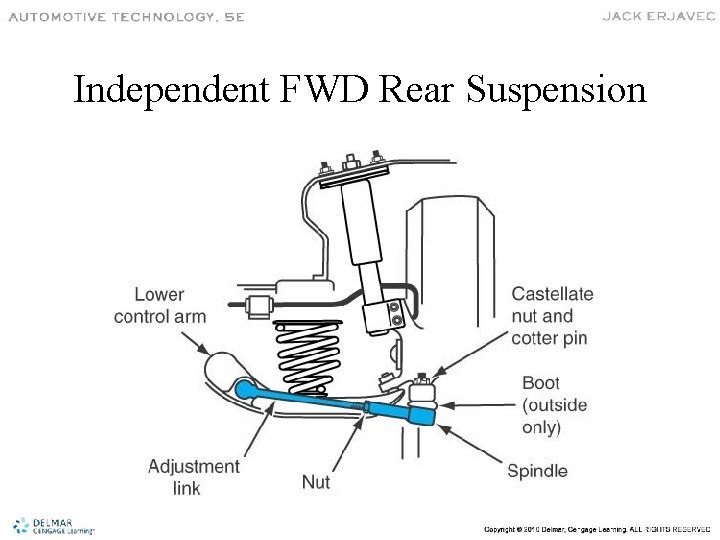
Independent FWD Rear Suspension
Electronically Controlled Suspensions • Adaptive Suspensions – Use electronic shocks or variable air springs – Sensors monitor vehicle height, speed, steering angle, braking force, damping status, and throttle position – Some systems are automatic while others allow drivers to select modes – Reduces body roll but does not eliminate it
Types of Electronic Suspensions • Adaptive Systems – Typically use electronic shocks with variable valving. • Load-leveling Systems – Use air shocks in the rear to compensate for vehicle load. • Fully Active Systems – Use hydraulic actuators as both spring and shock absorber.
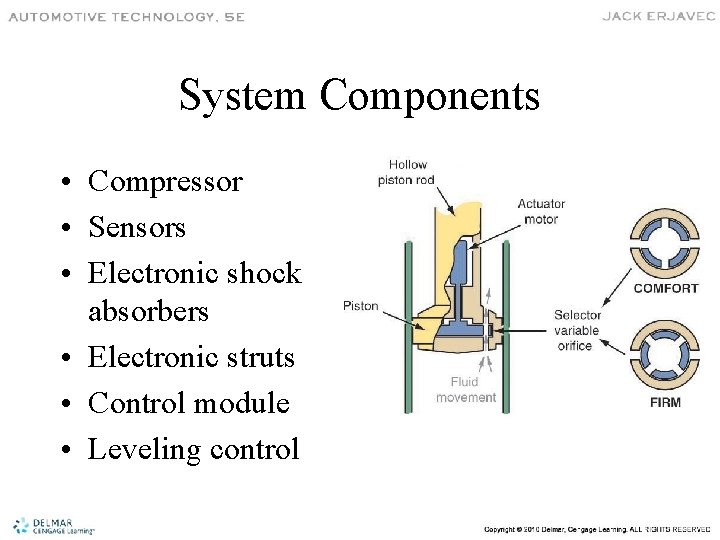
System Components • Compressor • Sensors • Electronic shock absorbers • Electronic struts • Control module • Leveling control
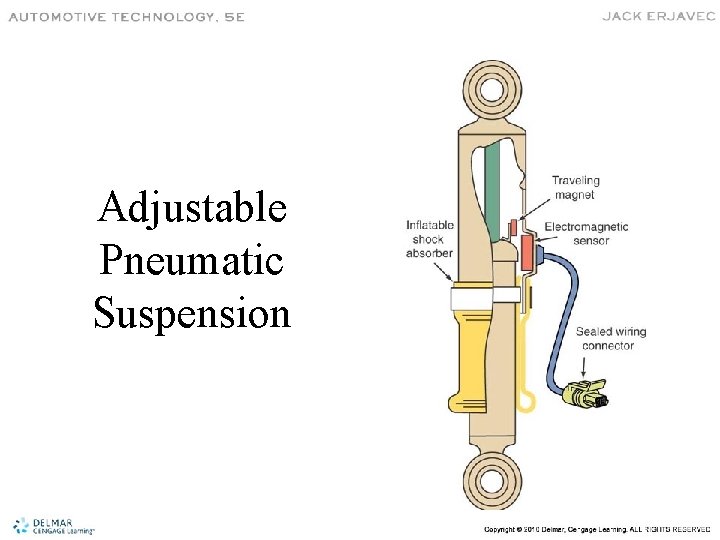
Adjustable Pneumatic Suspension
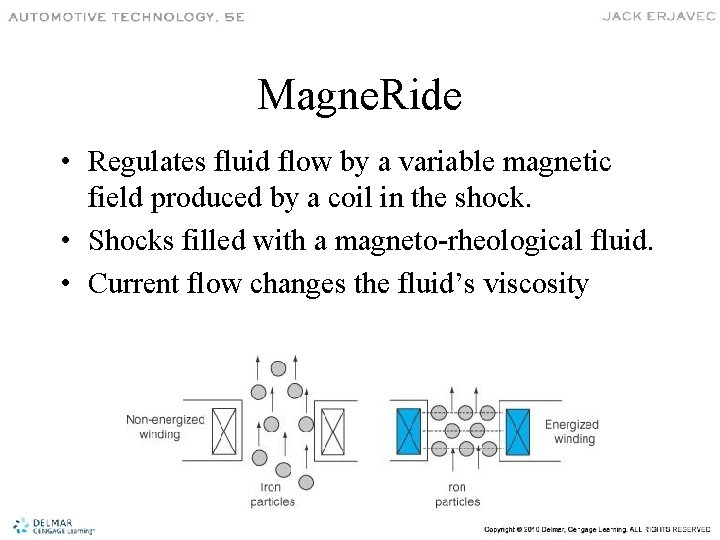
Magne. Ride • Regulates fluid flow by a variable magnetic field produced by a coil in the shock. • Shocks filled with a magneto-rheological fluid. • Current flow changes the fluid’s viscosity
Active Suspensions • Refers to those controlled by double-acting hydraulic cylinders call actuators. • Each acts as a variable spring and shock. • Hydraulic pressure varies to adapt to changing road conditions. • The computer monitors actuator position and load, steering angle, body roll, and lateral acceleration.
- Slides: 44