
Chapter 45 Population Ecology Population Ecology Certain ecological









- Slides: 57
Chapter 45: Population Ecology
Population Ecology Certain ecological principles govern the growth and sustainability of all populations--including human populations
Population • A group of individuals of the same species occupying a given area • Can be described by demographics – Vital statistics such as size, density, distribution, and age structure
Human Population Growth • Population now exceeds 6 billion • Rates of increase vary among countries • Average annual increase is 1. 26 percent • Population continues to increase exponentially
Limits to Growth • A population’s growth depends on the resources of its environment • Deer introduced to Angel Island – Population outstripped resources
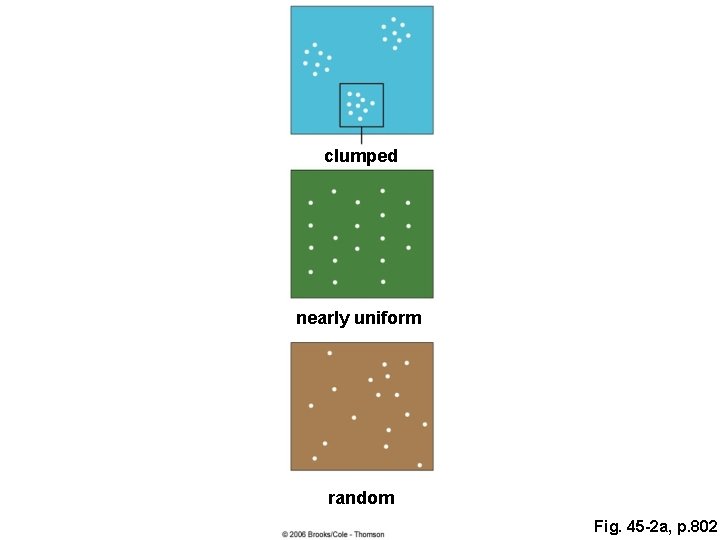
clumped nearly uniform random Fig. 45 -2 a, p. 802
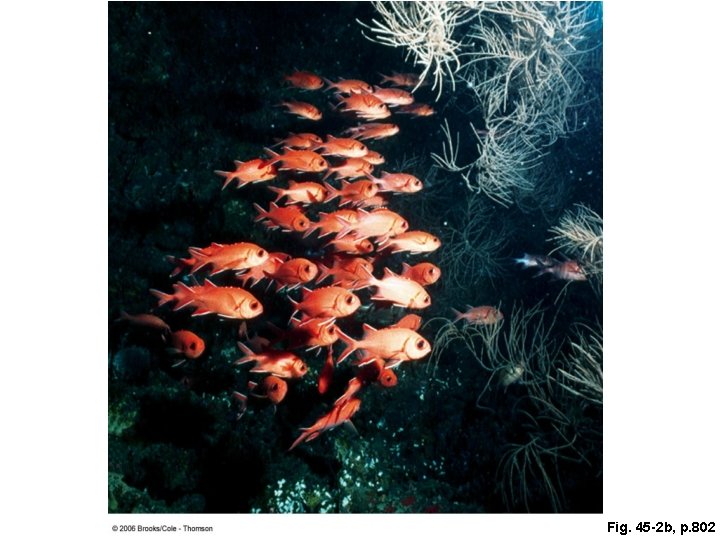
Fig. 45 -2 b, p. 802
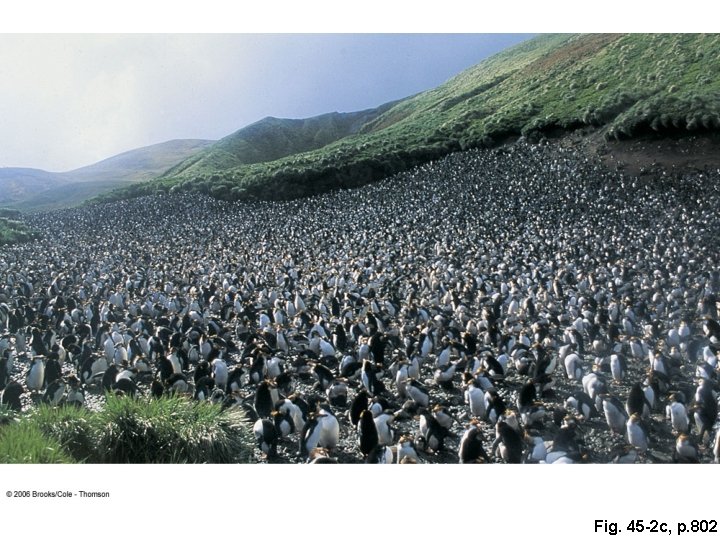
Fig. 45 -2 c, p. 802
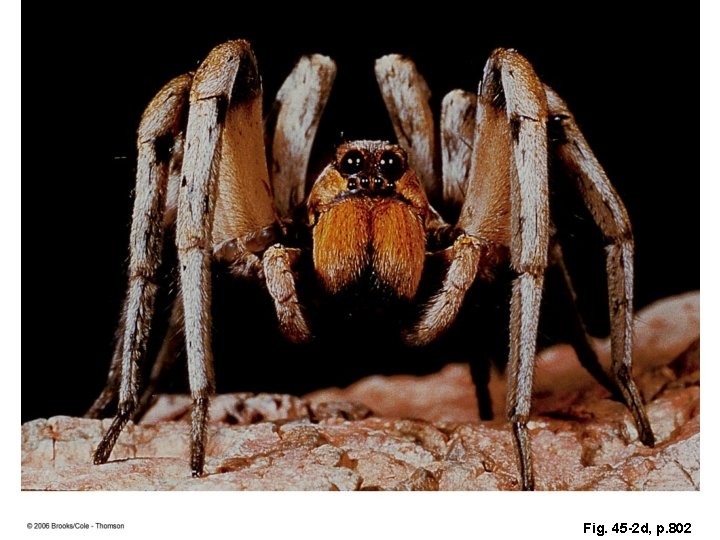
Fig. 45 -2 d, p. 802
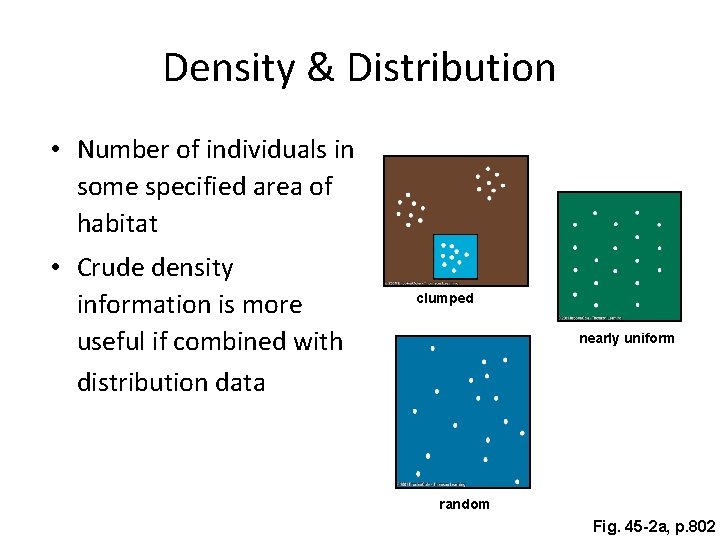
Density & Distribution • Number of individuals in some specified area of habitat • Crude density information is more useful if combined with distribution data clumped nearly uniform random Fig. 45 -2 a, p. 802
Determining Population Size • Direct counts are most accurate but seldom feasible • Can sample an area, then extrapolate • Capture-recapture method is used for mobile species
Capture-Recapture Method • Capture, mark, and release individuals • Return later and capture second sample • Count the number of marked individuals and use this to estimate total population
Assumptions in Capture-Recapture • Marking has no effect on mortality • Marking has no effect on likelihood to being captured • There is no immigration or emigration between sampling times
Changes in Population Size • Immigration adds individuals • Emigration subtracts individuals • Births add individuals • Deaths subtract individuals
Zero Population Growth • Interval in which number of births is balanced by number of deaths • Assume no change as a result of migration • Population size remains stable
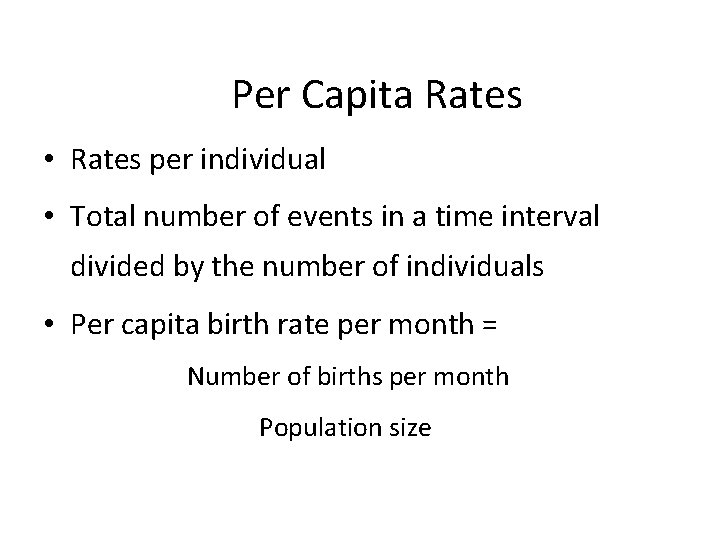
Per Capita Rates • Rates per individual • Total number of events in a time interval divided by the number of individuals • Per capita birth rate per month = Number of births per month Population size
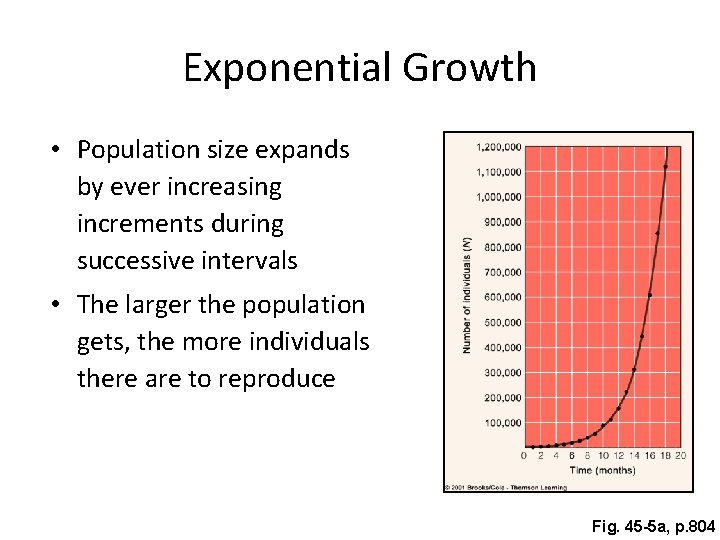
Exponential Growth • Population size expands by ever increasing increments during successive intervals • The larger the population gets, the more individuals there are to reproduce Fig. 45 -5 a, p. 804
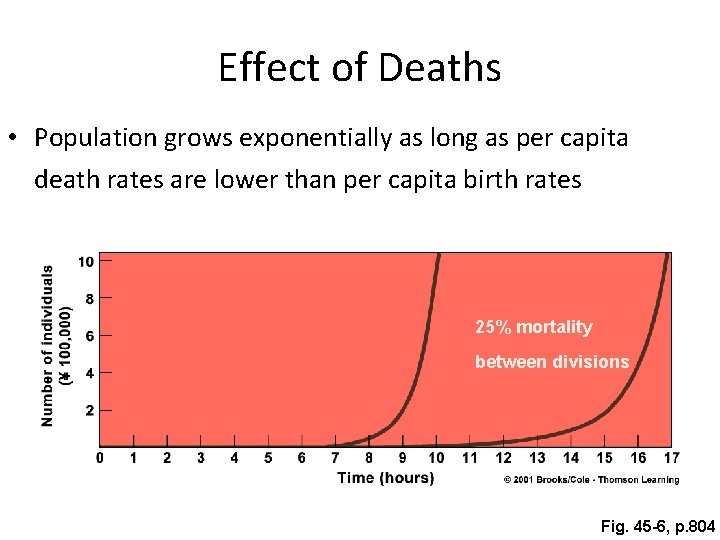
Effect of Deaths • Population grows exponentially as long as per capita death rates are lower than per capita birth rates 25% mortality between divisions Fig. 45 -6, p. 804
Biotic Potential • Maximum rate of increase per individual under ideal conditions • Varies between species • In nature, biotic potential is rarely reached
Limiting Factors • Any essential resource that is in short supply • All limiting factors acting on a population dictate sustainable population size
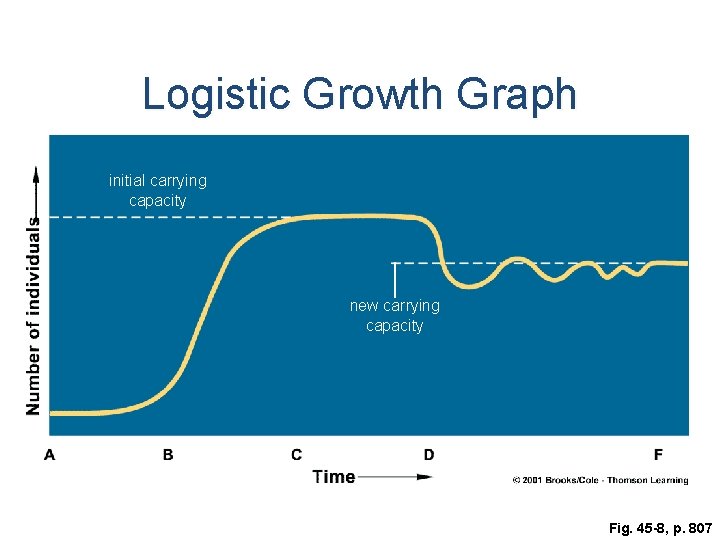
Carrying Capacity (K) • Maximum number of individuals that can be sustained in a particular habitat • Logistic growth occurs when population size is limited by carrying capacity
Logistic Growth • As size of the population increases, rate of reproduction decreases • When the population reaches carrying capacity, population growth ceases
Logistic Growth Graph initial carrying capacity new carrying capacity Fig. 45 -8, p. 807
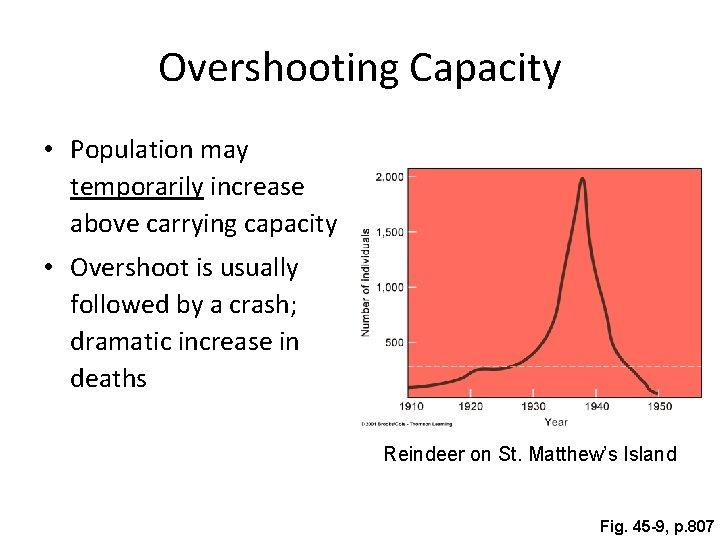
Overshooting Capacity • Population may temporarily increase above carrying capacity • Overshoot is usually followed by a crash; dramatic increase in deaths Reindeer on St. Matthew’s Island Fig. 45 -9, p. 807
Density-Dependent Controls • Logistic growth equation deals with density -dependent controls • Limiting factors become more intense as population size increases • Disease, competition, parasites, toxic effects of waste products
Density-Independent Controls • Factors unaffected by population density • Natural disasters or climate changes affect large and small populations alike
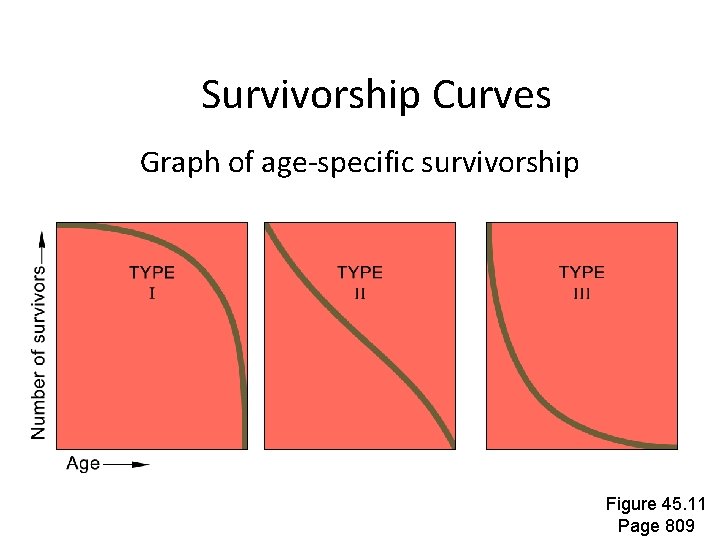
Life History Patterns • Patterns of timing of reproduction and survivorship • Vary among species • Summarized in survivorship curves and life tables
Life Table • Tracks age-specific patterns • Population is divided into age categories • Birth rates and mortality risks are calculated for each age category
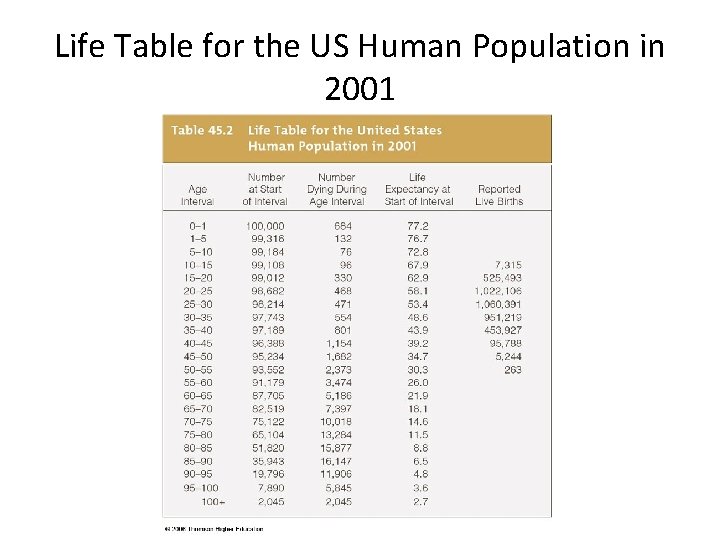
Life Table for the US Human Population in 2001
Survivorship Curves Graph of age-specific survivorship Figure 45. 11 Page 809
Fig. 45 -11 a, p. 809
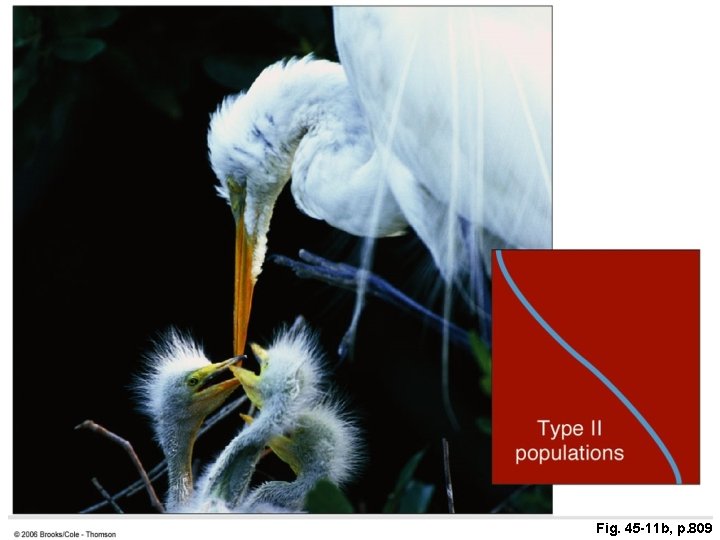
Fig. 45 -11 b, p. 809
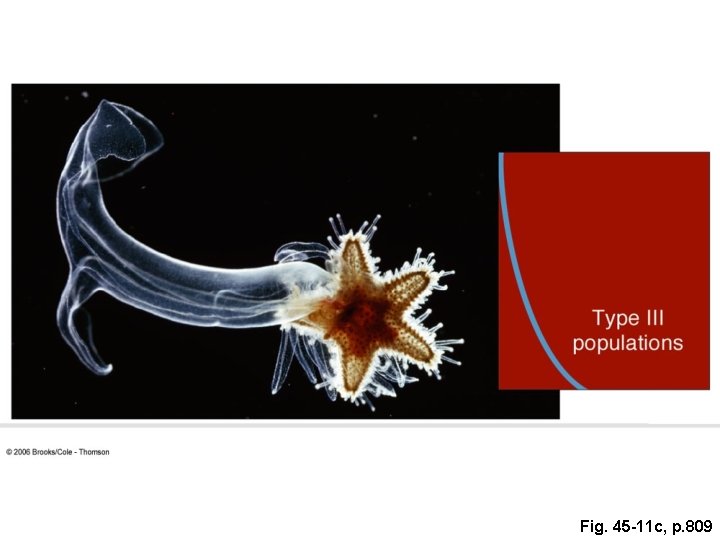
Fig. 45 -11 c, p. 809
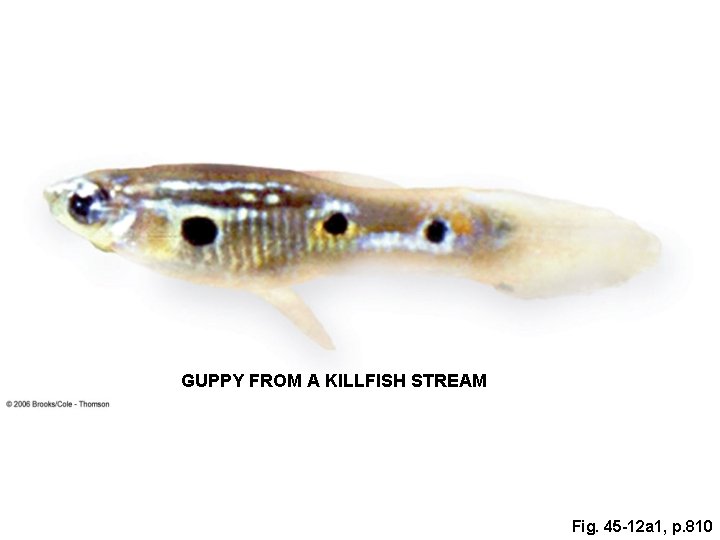
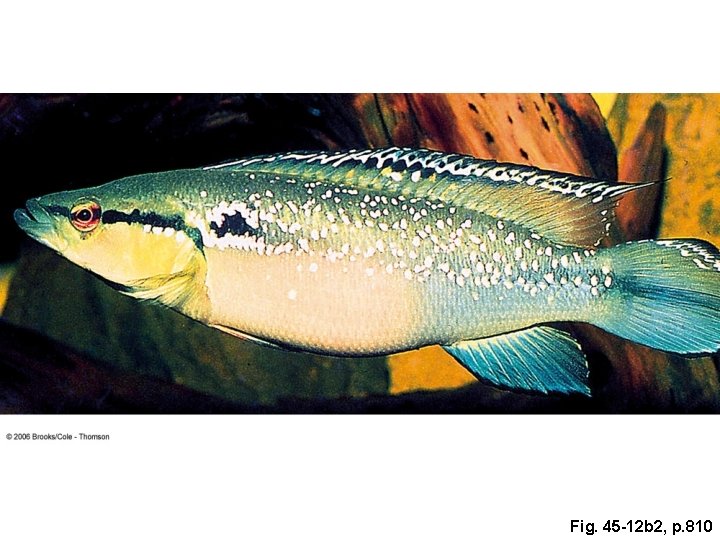
Predation and Life History • Guppy populations vary in life history characteristics and morphology • Differences have genetic basis • Variation seems to be result of directional selection by predators
GUPPY FROM A KILLFISH STREAM Fig. 45 -12 a 1, p. 810
Fig. 45 -12 a 2, p. 810
GUPPY FROM A PIKE-CICHLID STREAM Fig. 45 -12 b 1, p. 810
Fig. 45 -12 b 2, p. 810
Fig. 45 -12 c, p. 810
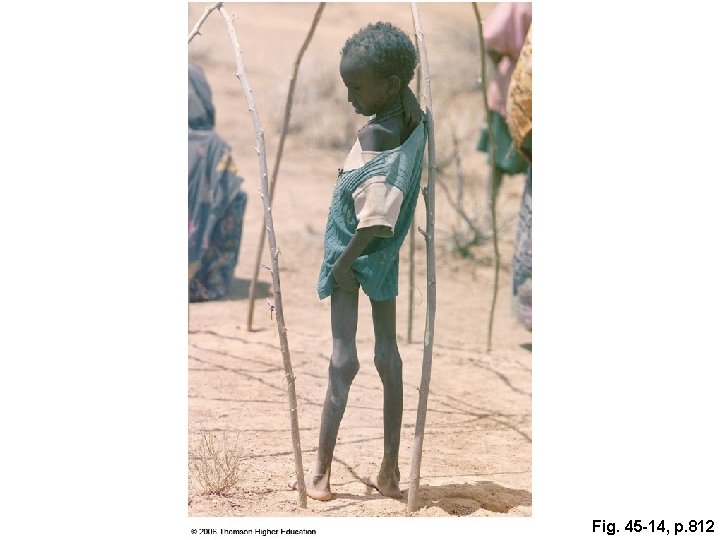
Human Population Problems • Over 6 billion people alive • About 2 billion live in poverty • Most resources are consumed by the relatively few people in developed countries
Fig. 45 -14, p. 812
Side-Stepping Controls • Expanded into new habitats • Agriculture increased carrying capacity; use of fossil fuels aided increase • Hygiene and medicine lessened effects of density-dependent controls
Estimated size by 10, 000 years ago 5 million By 1804 1 billion By 1927 2 billion By 1960 3 billion By 1974 4 billion By 1987 5 billion By 1999 6 billion Projected for 2050 8. 9 billion domestication of plants, animals 9000 B. C. (about agriculturally based 11, 000 years ago) urban societies beginning of industrial, scientific revolutions Fig. 45 -15, p. 813
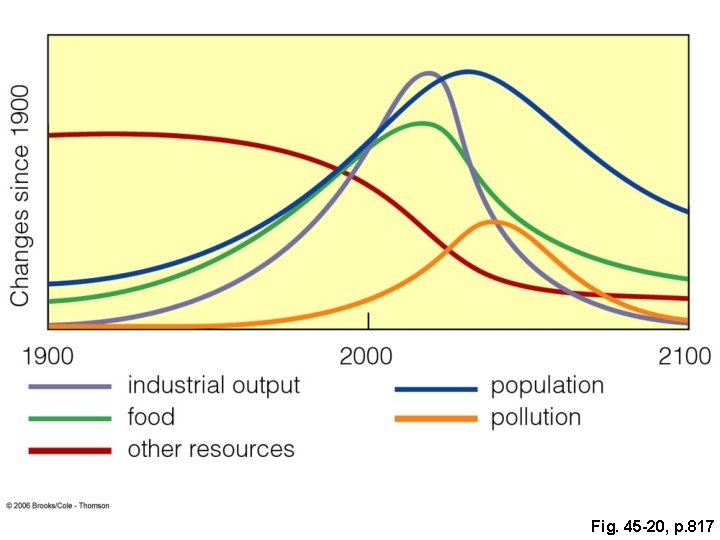
Future Growth • Exponential growth cannot continue forever • Breakthroughs in technology may further increase carrying capacity • Eventually, density-dependent factors will slow growth
Fig. 45 -20, p. 817
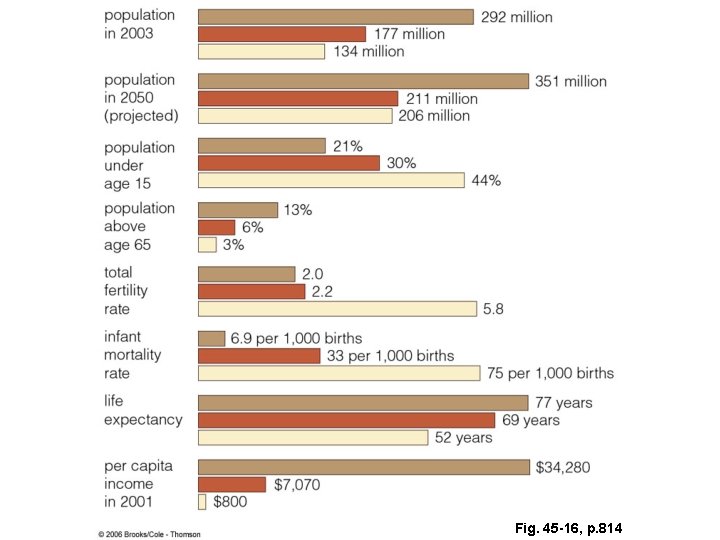
Fertility Rates • Worldwide, average annual rate of increase is 1. 26% • Total fertility rate (TFR) is average number of children born to a woman • Highest in developing countries, lowest in developed countries
Population Age Structure • Divide population into age categories • Population’s reproductive base includes members of the reproductive and prereproductive age categories
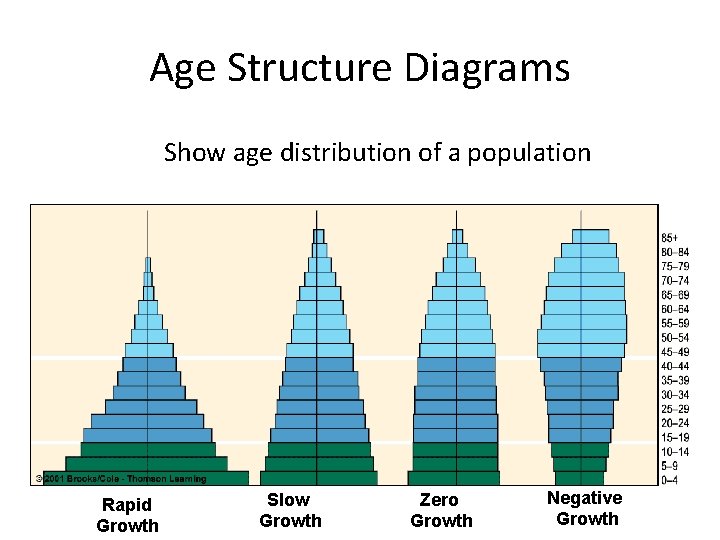
Age Structure Diagrams Show age distribution of a population Rapid Growth Slow Growth Zero Growth Negative Growth
Fig. 45 -17 b, p. 815
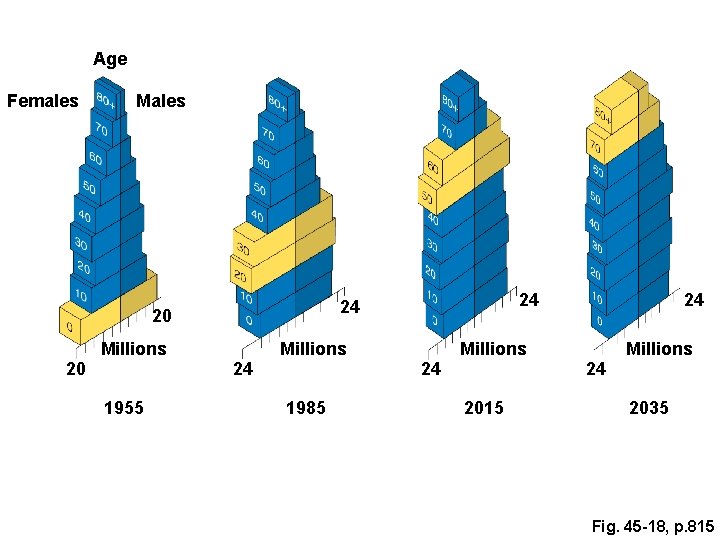
Population Momentum • Lowering fertility rates cannot immediately slow population growth rate • Why? There already many future parents alive • If every couple had just two children, population would still keep growing for another 60 years
Age Females Males 20 Millions 24 1955 Millions 24 1985 24 24 24 Millions 24 2015 2035 Fig. 45 -18, p. 815
Effects of Economic Development • Total fertility rates (TFRs) are highest in developing countries, lowest in developed countries • When individuals are economically secure, they are under less pressure to have large families
Fig. 45 -16, p. 814
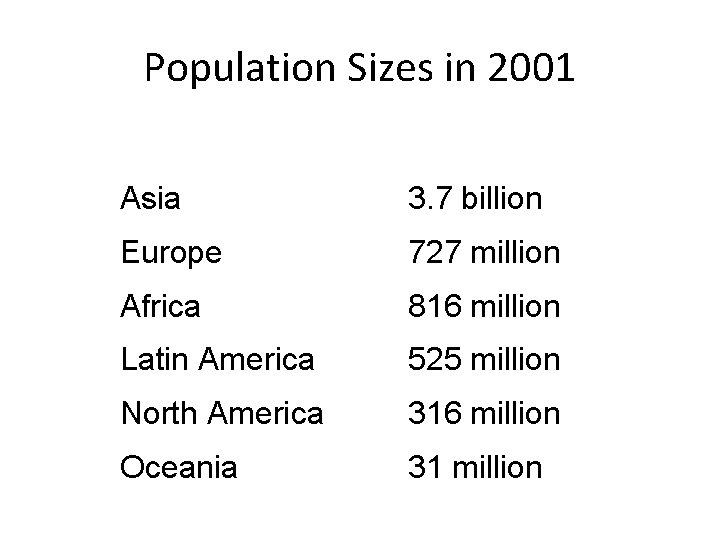
Population Sizes in 2001 Asia 3. 7 billion Europe 727 million Africa 816 million Latin America 525 million North America 316 million Oceania 31 million
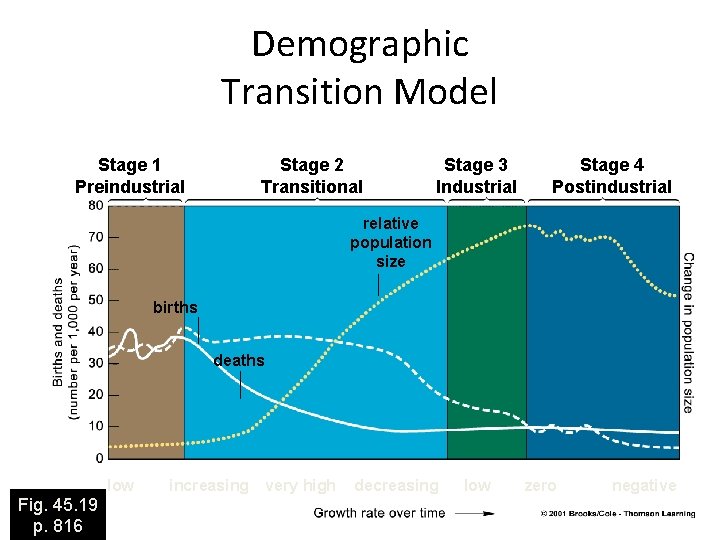
Demographic Transition Model • Based on historical data from western Europe • Postulates that as countries become industrialized, first death rates drop, then birth rates drop
Demographic Transition Model Stage 1 Preindustrial Stage 2 Transitional Stage 3 Industrial Stage 4 Postindustrial relative population size births deaths low Fig. 45. 19 p. 816 increasing very high decreasing low zero negative
Resource Consumption • United States has 4. 7 percent of the world’s population • Americans have a disproportionately large effect on the world’s resources • Per capita, Americans consume more resources and create more pollution than citizens of less developed nations