
Chapter 45 Hormones and the Endocrine System 1
- Slides: 22
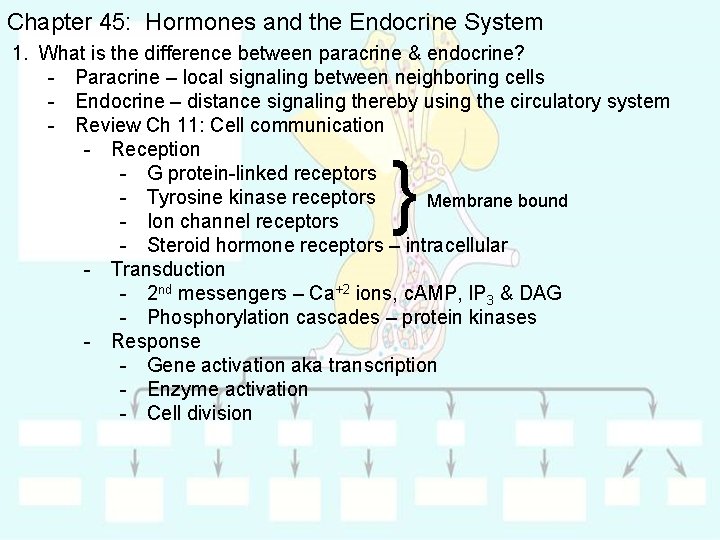
Chapter 45: Hormones and the Endocrine System 1. What is the difference between paracrine & endocrine? - Paracrine – local signaling between neighboring cells - Endocrine – distance signaling thereby using the circulatory system - Review Ch 11: Cell communication - Reception - G protein-linked receptors - Tyrosine kinase receptors Membrane bound - Ion channel receptors - Steroid hormone receptors – intracellular - Transduction - 2 nd messengers – Ca+2 ions, c. AMP, IP 3 & DAG - Phosphorylation cascades – protein kinases - Response - Gene activation aka transcription - Enzyme activation - Cell division }
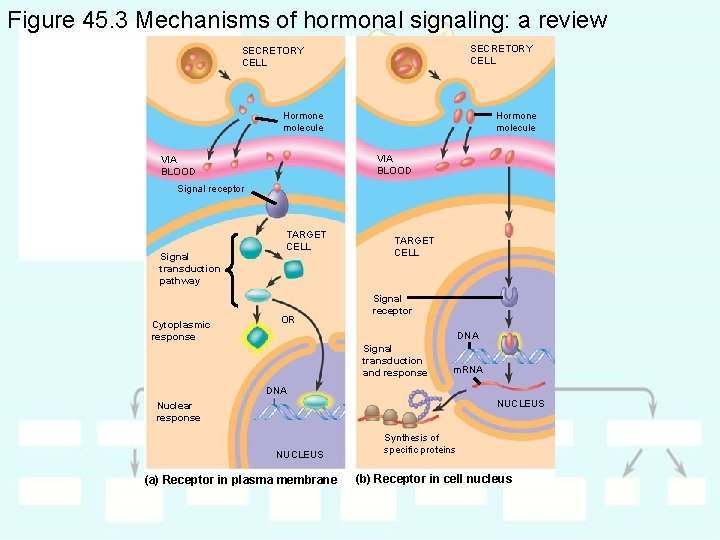
Figure 45. 3 Mechanisms of hormonal signaling: a review SECRETORY CELL Hormone molecule VIA BLOOD Signal receptor Signal transduction pathway Cytoplasmic response TARGET CELL OR TARGET CELL Signal receptor DNA Signal transduction and response m. RNA DNA NUCLEUS Nuclear response NUCLEUS (a) Receptor in plasma membrane Synthesis of specific proteins (b) Receptor in cell nucleus
Chapter 45: Hormones and the Endocrine System 1. What is the difference between paracrine & endocrine? 2. What are the 3 general types of signaling pathways? - Simple endocrine - Simple neurohormone - Simple neuroendocrine
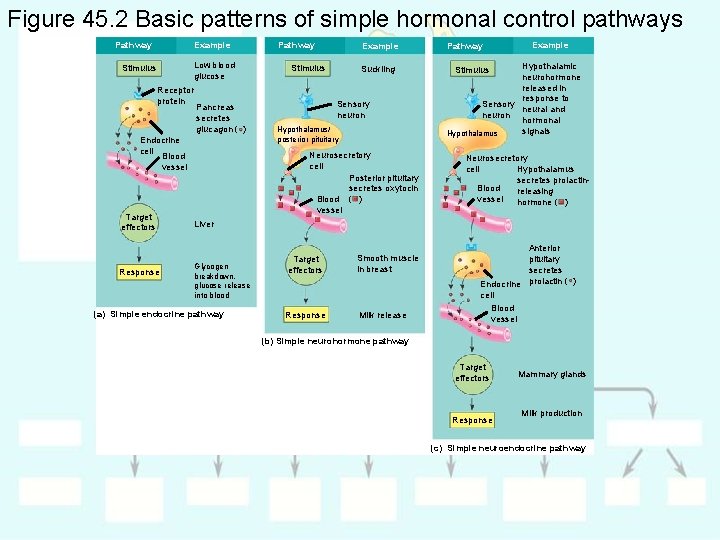
Figure 45. 2 Basic patterns of simple hormonal control pathways Pathway Example Low blood glucose Stimulus Receptor protein Pancreas secretes glucagon ( ) Endocrine cell Blood vessel Target effectors Response Pathway Stimulus Example Pathway Suckling Hypothalamic neurohormone released in response to Sensory neural and neuron hormonal signals Hypothalamus Sensory neuron Hypothalamus/ posterior pituitary Neurosecretory cell Posterior pituitary secretes oxytocin Blood ( ) vessel Stimulus Neurosecretory cell Hypothalamus secretes prolactin. Blood releasing vessel hormone ( ) Liver Glycogen breakdown, glucose release into blood (a) Simple endocrine pathway Target effectors Response Smooth muscle in breast Milk release Anterior pituitary secretes Endocrine prolactin ( ) cell Blood vessel (b) Simple neurohormone pathway Target effectors Response Mammary glands Milk production (c) Simple neuroendocrine pathway
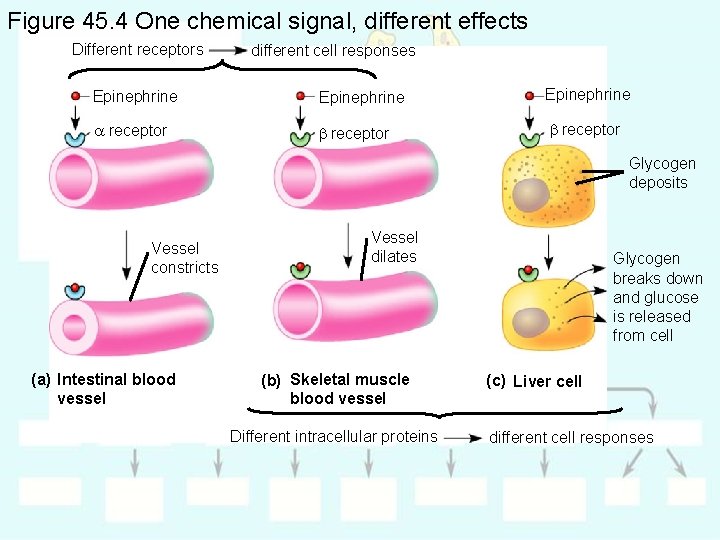
Chapter 45: Hormones and the Endocrine System 1. What is the difference between paracrine & endocrine? 2. What are the 3 general types of signaling pathways? 3. How can 1 ligand cause different effects? - Different receptor types on different cells - Different intracellular signal molecules (relay proteins)
Figure 45. 4 One chemical signal, different effects Different receptors different cell responses Epinephrine a receptor b receptor Glycogen deposits Vessel constricts (a) Intestinal blood vessel Vessel dilates (b) Skeletal muscle blood vessel Different intracellular proteins Glycogen breaks down and glucose is released from cell (c) Liver cell different cell responses
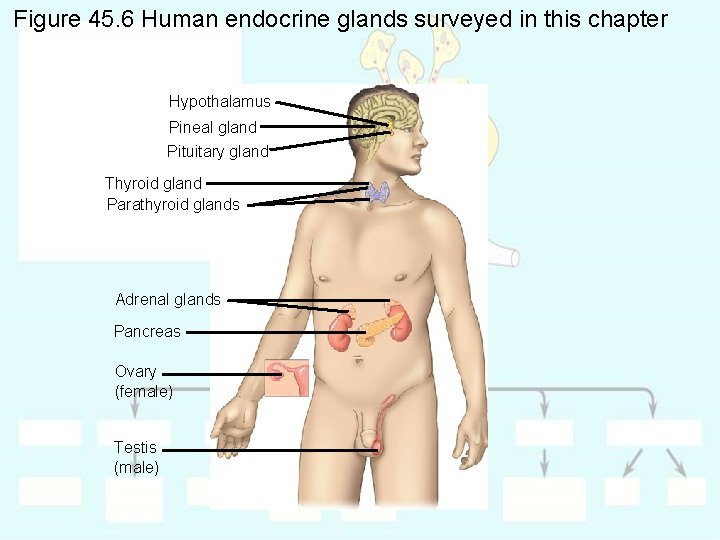
Figure 45. 6 Human endocrine glands surveyed in this chapter Hypothalamus Pineal gland Pituitary gland Thyroid gland Parathyroid glands Adrenal glands Pancreas Ovary (female) Testis (male)
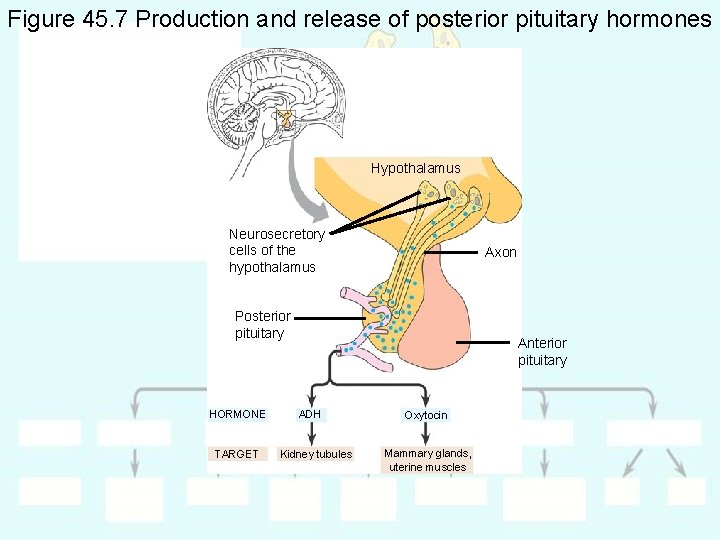
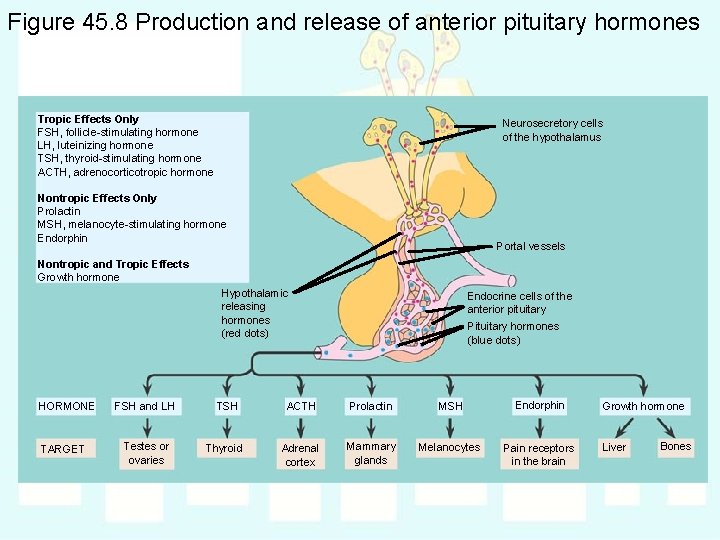
Chapter 45: Hormones and the Endocrine System 1. 2. 3. 4. 5. What is the difference between paracrine & endocrine? What are the 3 general types of signaling pathways? How can 1 ligand cause different effects? What are some common endocrine glands? How does the hypothalamus control the anterior & posterior pituitary differently? - posterior – directly via neurohormones - anterior – indirectly via releasing hormones (tropic hormones) tropic hormones = hormones that influence other glands to release other hormones
Figure 45. 7 Production and release of posterior pituitary hormones Hypothalamus Neurosecretory cells of the hypothalamus Axon Posterior pituitary HORMONE TARGET Anterior pituitary ADH Kidney tubules Oxytocin Mammary glands, uterine muscles
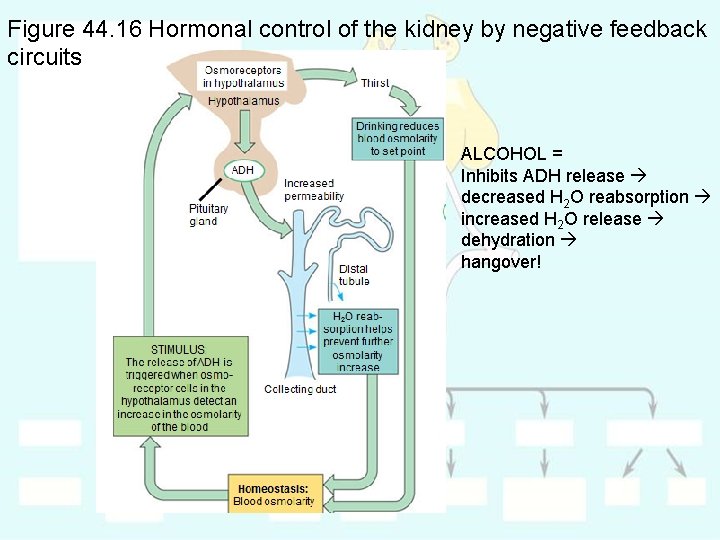
Figure 44. 16 Hormonal control of the kidney by negative feedback circuits ALCOHOL = Inhibits ADH release decreased H 2 O reabsorption increased H 2 O release dehydration hangover!
Figure 45. 8 Production and release of anterior pituitary hormones Tropic Effects Only FSH, follicle-stimulating hormone LH, luteinizing hormone TSH, thyroid-stimulating hormone ACTH, adrenocorticotropic hormone Neurosecretory cells of the hypothalamus Nontropic Effects Only Prolactin MSH, melanocyte-stimulating hormone Endorphin Portal vessels Nontropic and Tropic Effects Growth hormone Hypothalamic releasing hormones (red dots) HORMONE TARGET Endocrine cells of the anterior pituitary Pituitary hormones (blue dots) FSH and LH TSH ACTH Prolactin MSH Endorphin Testes or ovaries Thyroid Adrenal cortex Mammary glands Melanocytes Pain receptors in the brain Growth hormone Liver Bones
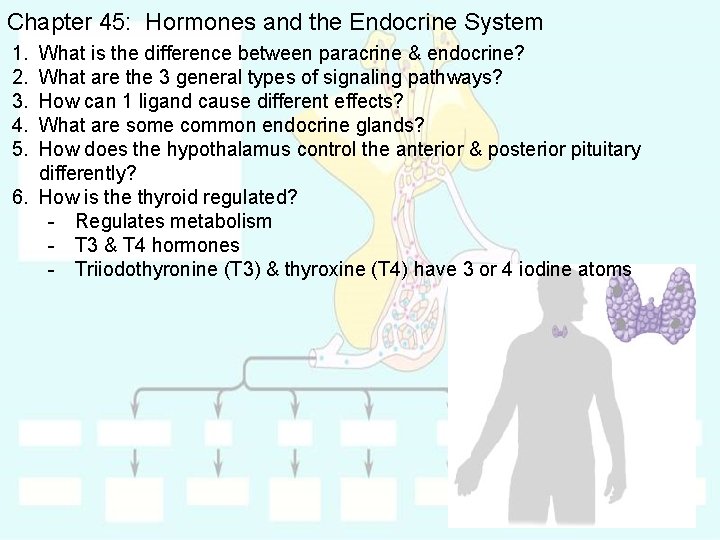
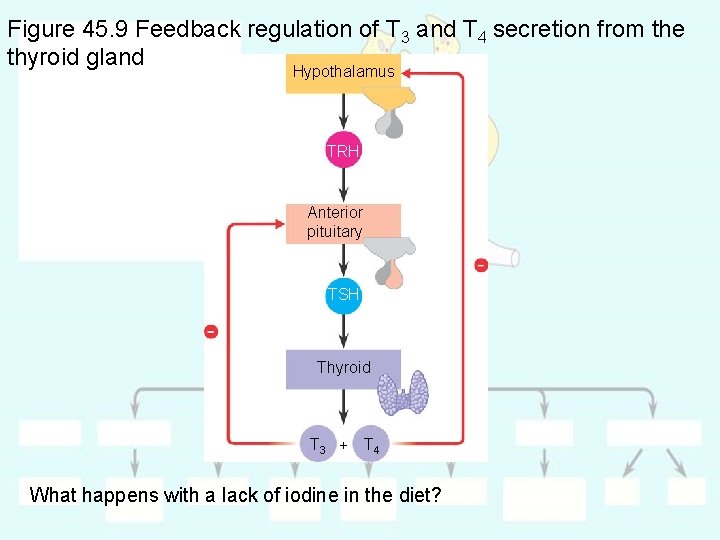
Chapter 45: Hormones and the Endocrine System 1. 2. 3. 4. 5. What is the difference between paracrine & endocrine? What are the 3 general types of signaling pathways? How can 1 ligand cause different effects? What are some common endocrine glands? How does the hypothalamus control the anterior & posterior pituitary differently? 6. How is the thyroid regulated? - Regulates metabolism - T 3 & T 4 hormones - Triiodothyronine (T 3) & thyroxine (T 4) have 3 or 4 iodine atoms
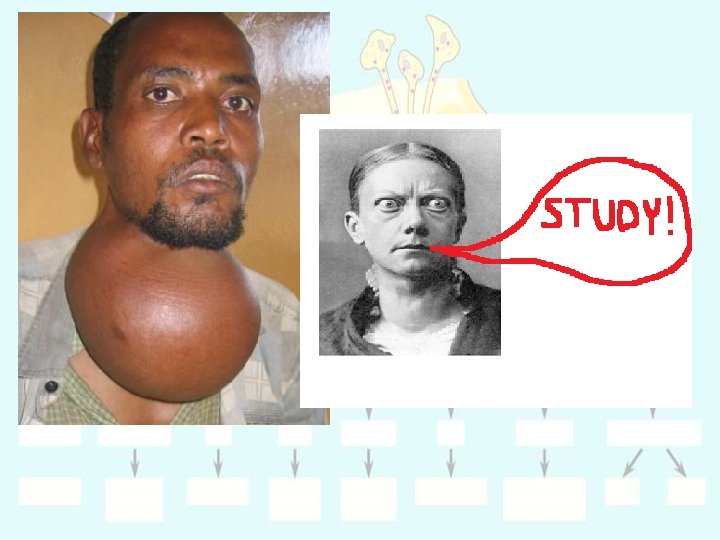
Figure 45. 9 Feedback regulation of T 3 and T 4 secretion from the thyroid gland Hypothalamus TRH Anterior pituitary TSH Thyroid T 3 + T 4 What happens with a lack of iodine in the diet?
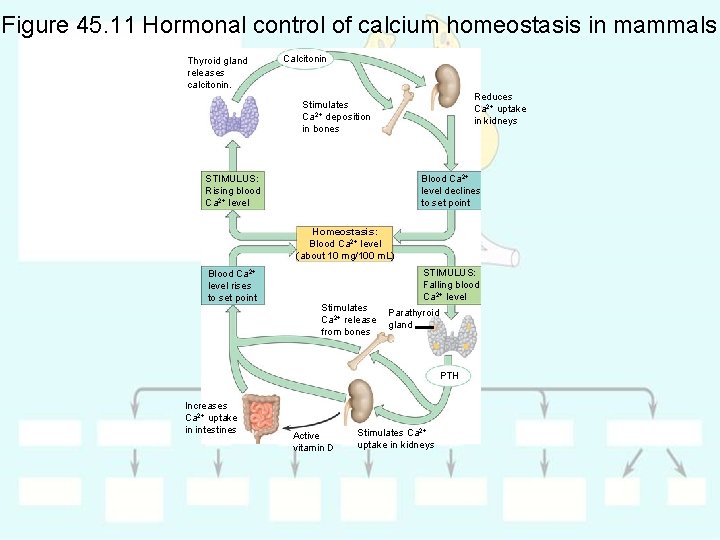
Chapter 45: Hormones and the Endocrine System 1. 2. 3. 4. 5. What is the difference between paracrine & endocrine? What are the 3 general types of signaling pathways? How can 1 ligand cause different effects? What are some common endocrine glands? How does the hypothalamus control the anterior & posterior pituitary differently? 6. How is the thyroid regulated? 7. How is homeostasis of blood calcium achieved? - Thyroid & parathyroid glands
Figure 45. 11 Hormonal control of calcium homeostasis in mammals Thyroid gland releases calcitonin. Calcitonin Reduces Ca 2+ uptake in kidneys Stimulates Ca 2+ deposition in bones Blood Ca 2+ level declines to set point STIMULUS: Rising blood Ca 2+ level Homeostasis: Blood Ca 2+ level (about 10 mg/100 m. L) Blood Ca 2+ level rises to set point STIMULUS: Falling blood Ca 2+ level Stimulates Ca 2+ release from bones Parathyroid gland PTH Increases Ca 2+ uptake in intestines Active vitamin D Stimulates Ca 2+ uptake in kidneys
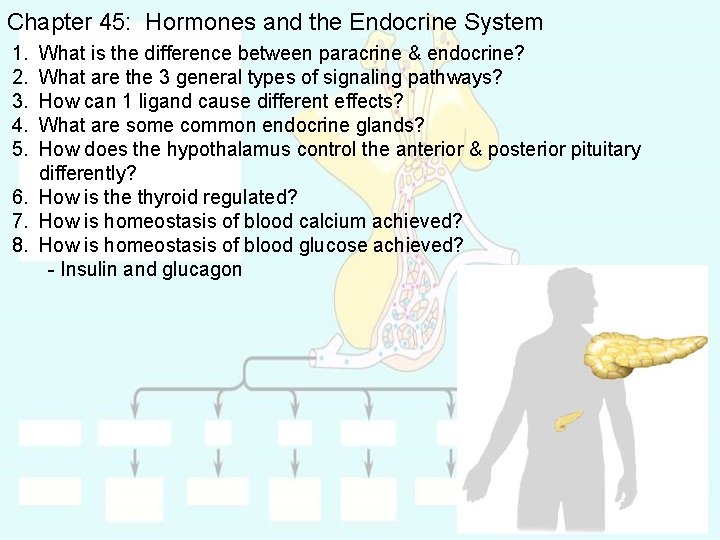
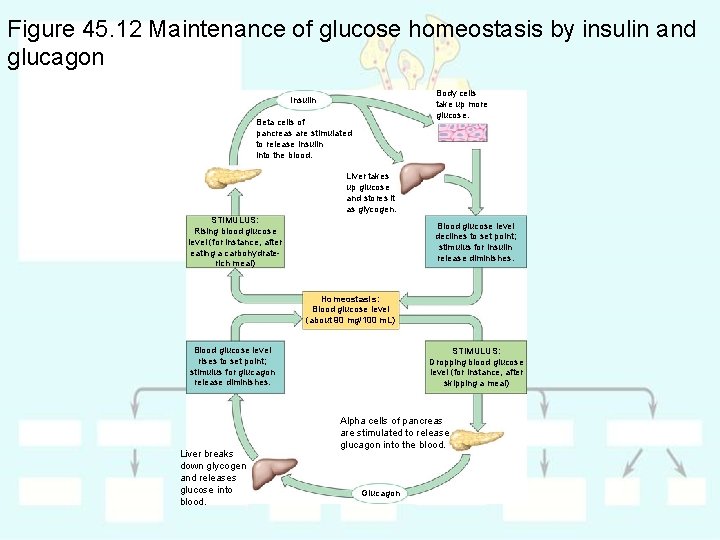
Chapter 45: Hormones and the Endocrine System 1. 2. 3. 4. 5. What is the difference between paracrine & endocrine? What are the 3 general types of signaling pathways? How can 1 ligand cause different effects? What are some common endocrine glands? How does the hypothalamus control the anterior & posterior pituitary differently? 6. How is the thyroid regulated? 7. How is homeostasis of blood calcium achieved? 8. How is homeostasis of blood glucose achieved? - Insulin and glucagon
Figure 45. 12 Maintenance of glucose homeostasis by insulin and glucagon Body cells take up more glucose. Insulin Beta cells of pancreas are stimulated to release insulin into the blood. Liver takes up glucose and stores it as glycogen. STIMULUS: Rising blood glucose level (for instance, after eating a carbohydraterich meal) Blood glucose level declines to set point; stimulus for insulin release diminishes. Homeostasis: Blood glucose level (about 90 mg/100 m. L) Blood glucose level rises to set point; stimulus for glucagon release diminishes. Liver breaks down glycogen and releases glucose into blood. STIMULUS: Dropping blood glucose level (for instance, after skipping a meal) Alpha cells of pancreas are stimulated to release glucagon into the blood. Glucagon
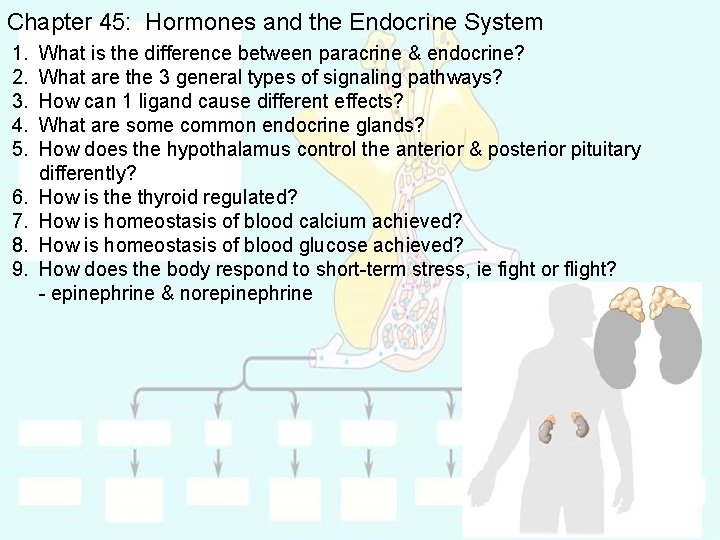
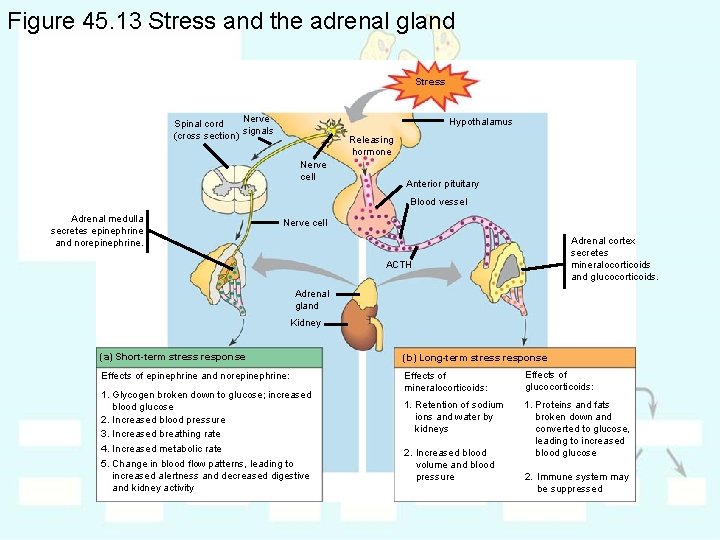
Chapter 45: Hormones and the Endocrine System 1. 2. 3. 4. 5. 6. 7. 8. 9. What is the difference between paracrine & endocrine? What are the 3 general types of signaling pathways? How can 1 ligand cause different effects? What are some common endocrine glands? How does the hypothalamus control the anterior & posterior pituitary differently? How is the thyroid regulated? How is homeostasis of blood calcium achieved? How is homeostasis of blood glucose achieved? How does the body respond to short-term stress, ie fight or flight? - epinephrine & norepinephrine
Figure 45. 13 Stress and the adrenal gland Stress Nerve Spinal cord signals (cross section) Hypothalamus Releasing hormone Nerve cell Anterior pituitary Blood vessel Adrenal medulla secretes epinephrine and norepinephrine. Nerve cell Adrenal cortex secretes mineralocorticoids and glucocorticoids. ACTH Adrenal gland Kidney (a) Short-term stress response (b) Long-term stress response Effects of epinephrine and norepinephrine: Effects of mineralocorticoids: Effects of glucocorticoids: 1. Retention of sodium ions and water by kidneys 1. Proteins and fats broken down and converted to glucose, leading to increased blood glucose 1. Glycogen broken down to glucose; increased blood glucose 2. Increased blood pressure 3. Increased breathing rate 4. Increased metabolic rate 5. Change in blood flow patterns, leading to increased alertness and decreased digestive and kidney activity 2. Increased blood volume and blood pressure 2. Immune system may be suppressed
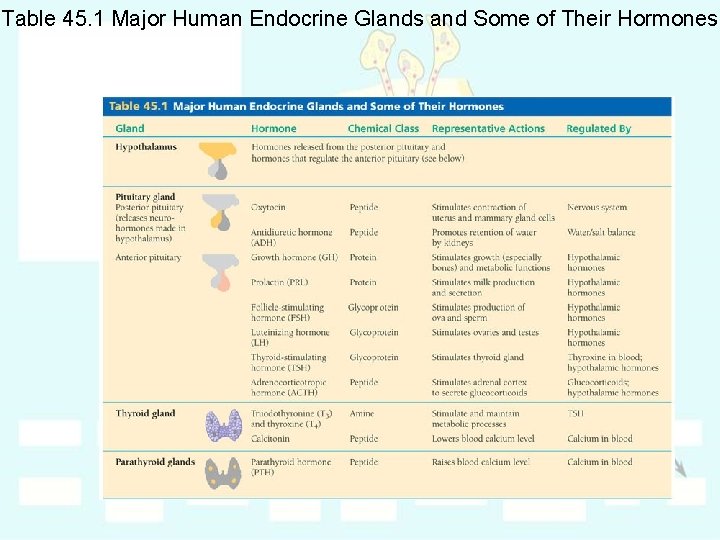
Table 45. 1 Major Human Endocrine Glands and Some of Their Hormones
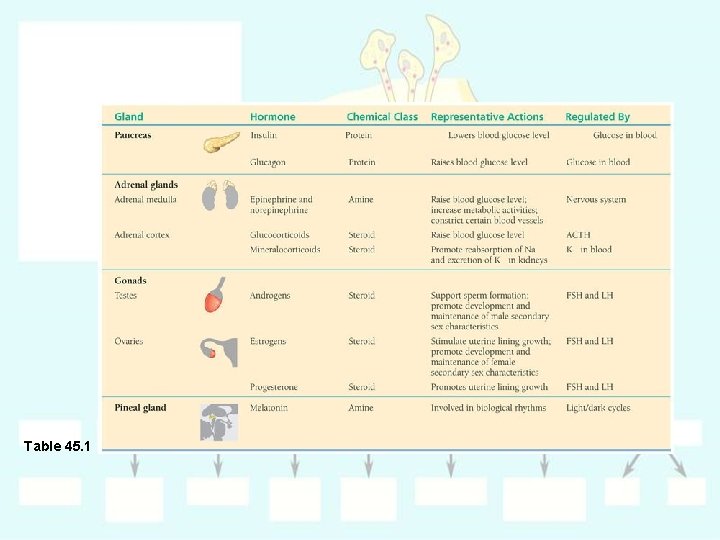
Table 45. 1