
Chapter 44 Maintaining a Constant Internal Environment Homeostasis
- Slides: 31
Chapter 44: Maintaining a Constant Internal Environment (Homeostasis)
Body Temperature n Enzymes: Rxn rates inc. 2 -3 times with each 100 C temp. inc. (until denatured) n Each species has an optimal temp. range for metabolic rxns to be efficient n Thermoregulation Organisms maintain their body temp within optimal range (various methods)
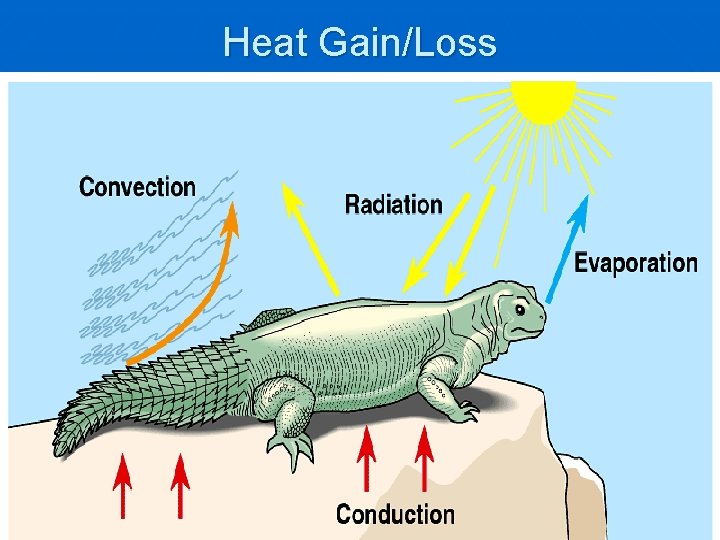
Heat Gain/Loss
Heat Gain/Loss (HIGH to LOW) Conduction = molecule to molecule (ie: hot concrete and feet in summer) n Convection = heat transfer b/t object and H 2 O or air moving across it n Radiation = electromagnetic waves transferred as heat (ie: suns rays) n Evaporative Cooling = lowers temp by releasing H 2 O as vapor (ie: sweating) n
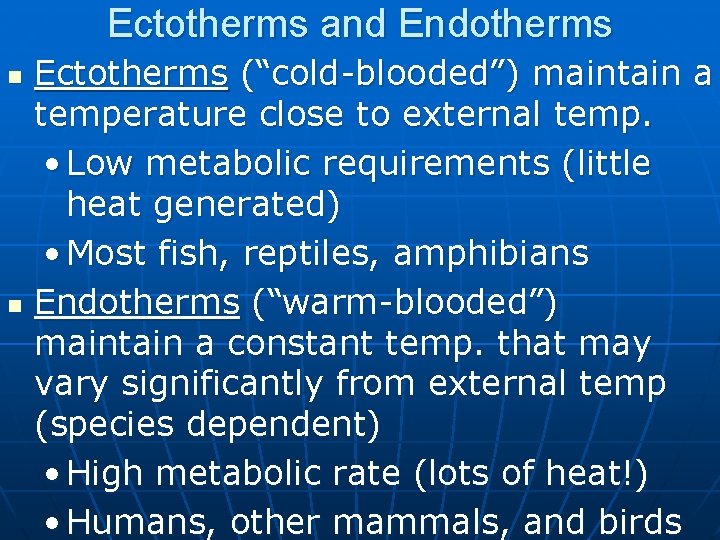
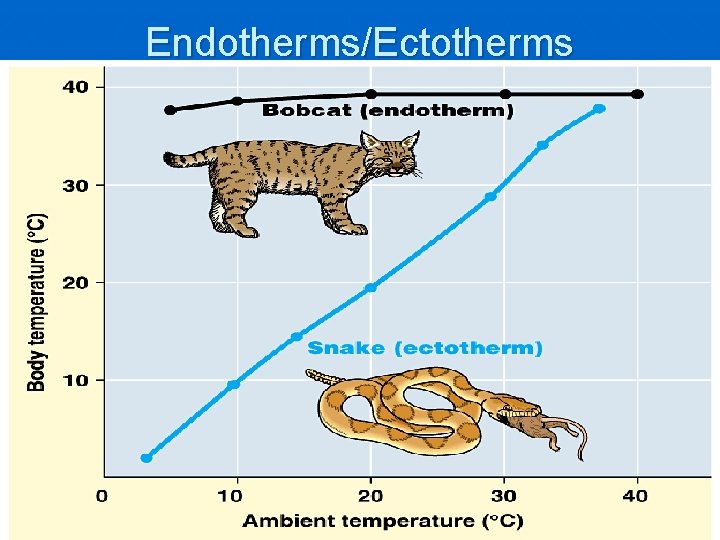
Ectotherms and Endotherms n n Ectotherms (“cold-blooded”) maintain a temperature close to external temp. • Low metabolic requirements (little heat generated) • Most fish, reptiles, amphibians Endotherms (“warm-blooded”) maintain a constant temp. that may vary significantly from external temp (species dependent) • High metabolic rate (lots of heat!) • Humans, other mammals, and birds
Endotherms/Ectotherms
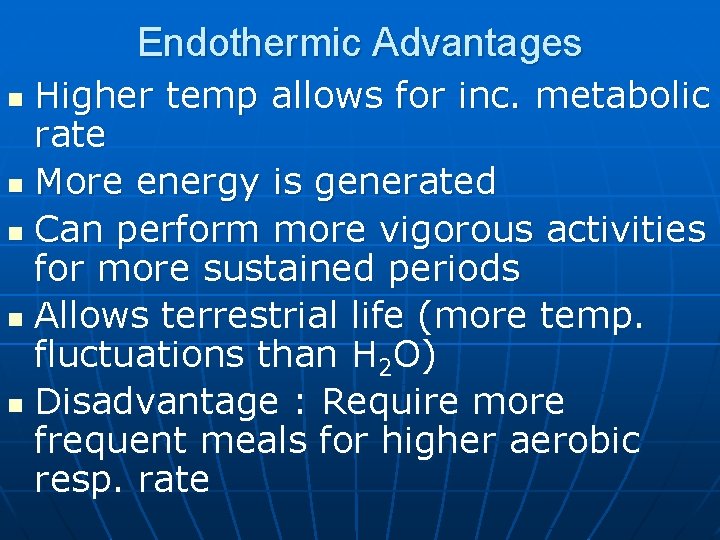
Endothermic Advantages Higher temp allows for inc. metabolic rate n More energy is generated n Can perform more vigorous activities for more sustained periods n Allows terrestrial life (more temp. fluctuations than H 2 O) n Disadvantage : Require more frequent meals for higher aerobic resp. rate n
Vasodilation and Vasoconstriction n Vasodilation Blood vessels dilate (expand) in order to release more heat n Vasoconstriction Blood vessels constrict in order to limit heat loss in the cold
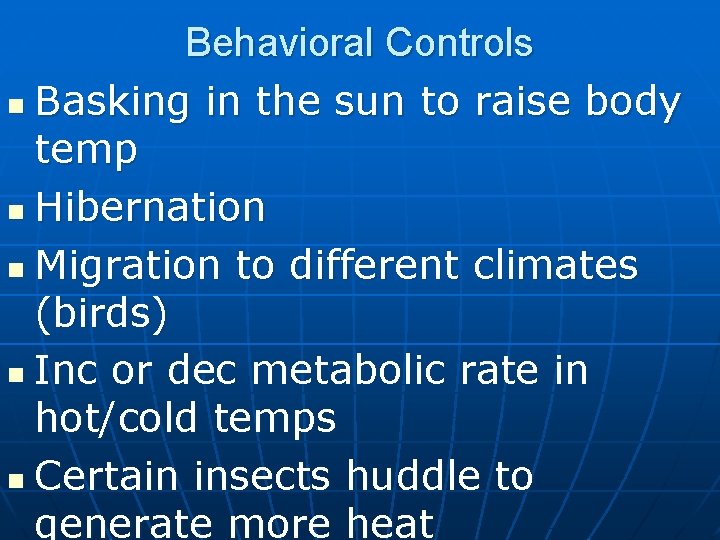
Behavioral Controls n Basking in the sun to raise body temp n Hibernation n Migration to different climates (birds) n Inc or dec metabolic rate in hot/cold temps n Certain insects huddle to generate more heat
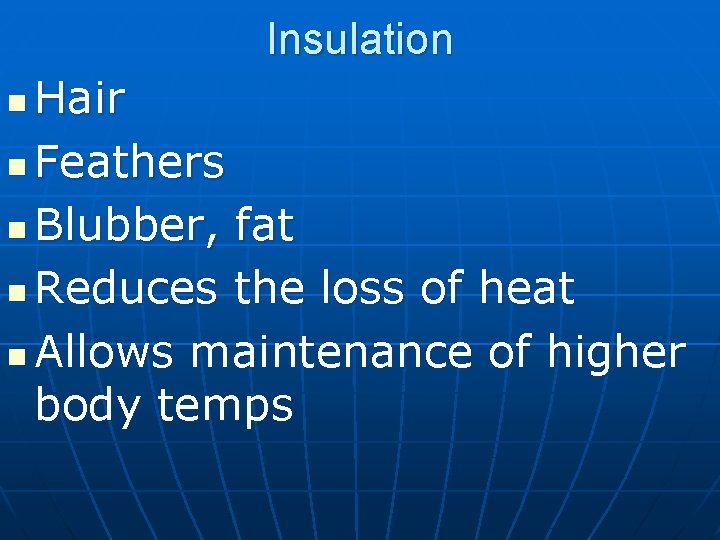
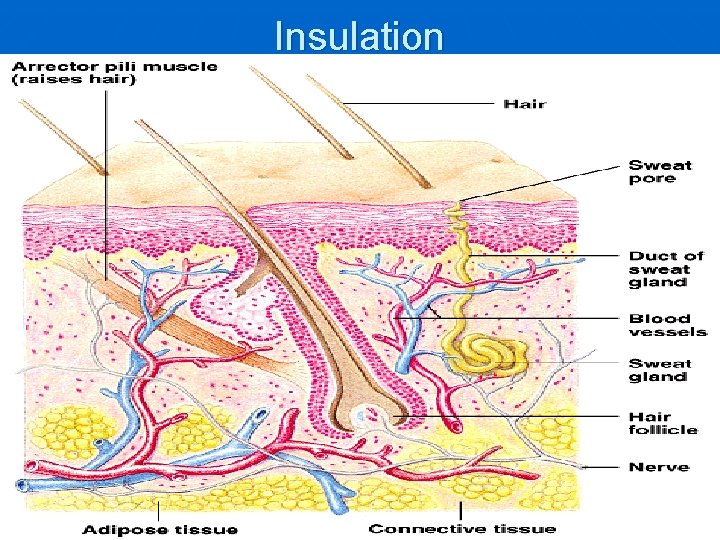
Insulation Hair n Feathers n Blubber, fat n Reduces the loss of heat n Allows maintenance of higher body temps n
Insulation
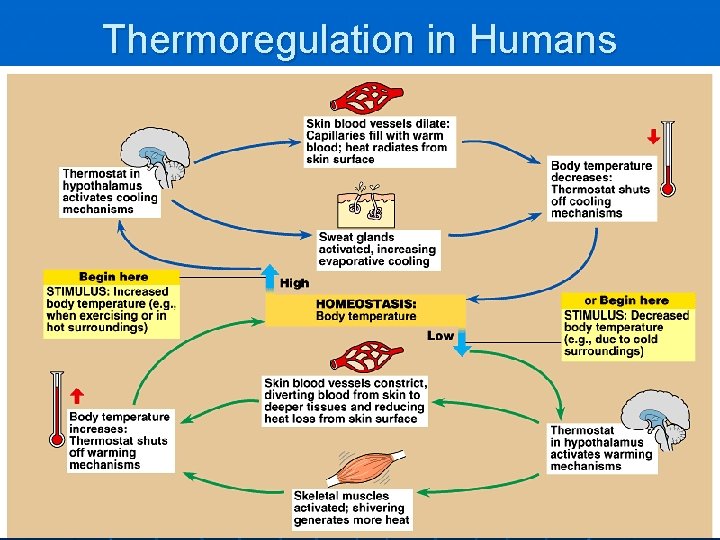
Thermoregulation in Humans
Thermoregulation in Humans n Heat receptors in skin n n Receptors send hot/cold signal to hypothalamus (brain) Hypothalamus regulates vasodilation and vasoconstriction
Extreme Hot/Cold Environments n n Cryoprotectants Certain organisms (some frog eggs, arctic fish) have a biologically produced antifreeze Heat shock proteins Produced in response to heat. Bind to enzymes and other proteins to inhibit denaturization
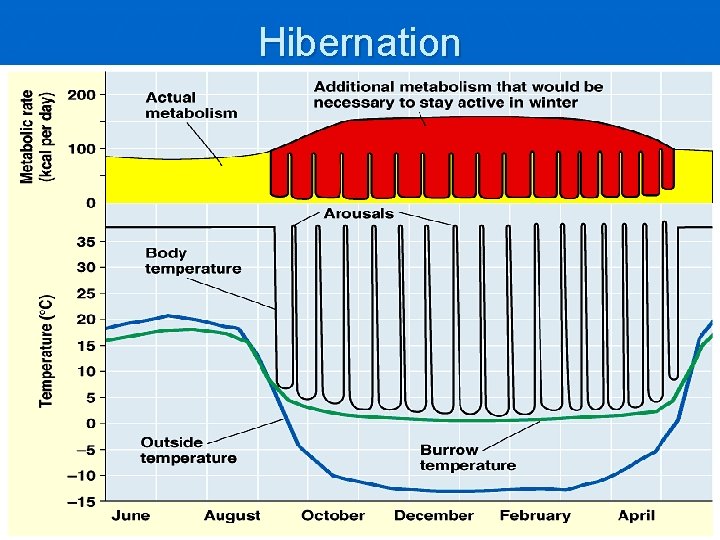
Hibernation Bears, squirrels go into a deep sleep during winter in order to avoid harsh conditions n Very low energy demands n Very low metabolic rate n
Hibernation
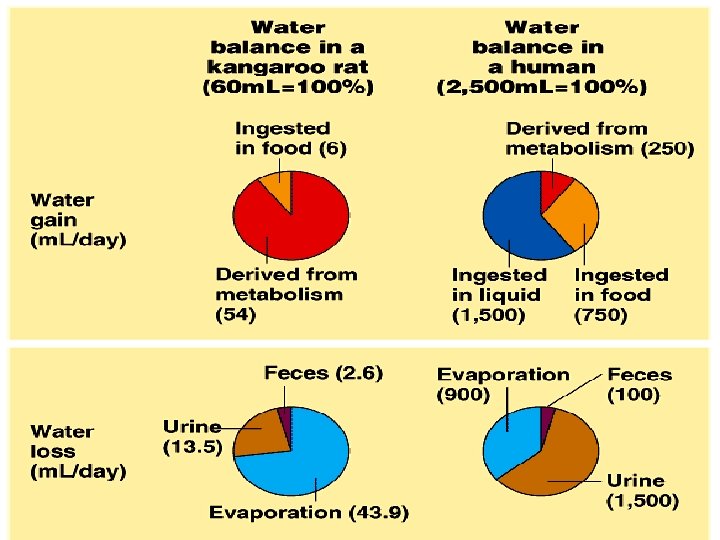
Osmoregulation (Water Balance) n Organisms must balance their water and solute concentrations n Water uptake and loss must remain essentially equal n Cells could swell or shrivel n Water flows from high water potential (low [solute]) to low water potential (high [solute])
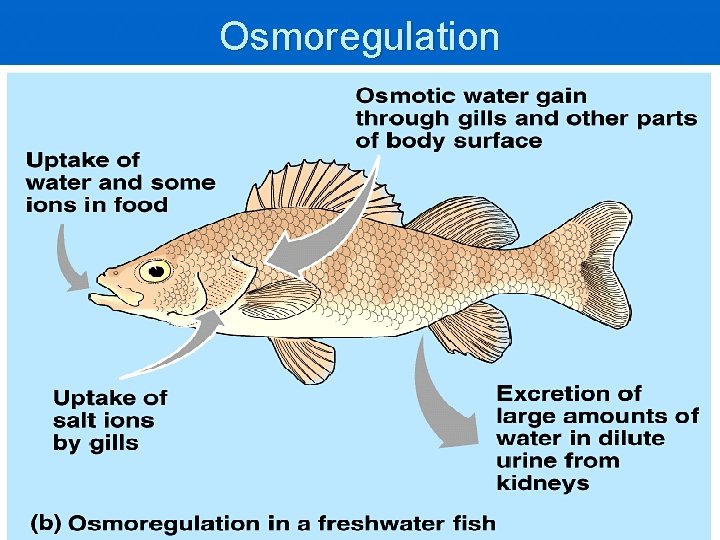
Osmoregulators/Osmoconformors Osmoregulators maintain a constant solute concentration different from that of ext. environment • Freshwater, terrestrial, some marine • Costs energy (active transport) n Osmoconformers maintain solute concentration equal to that of surroundings • Many marine invertebrates n
Osmoregulation
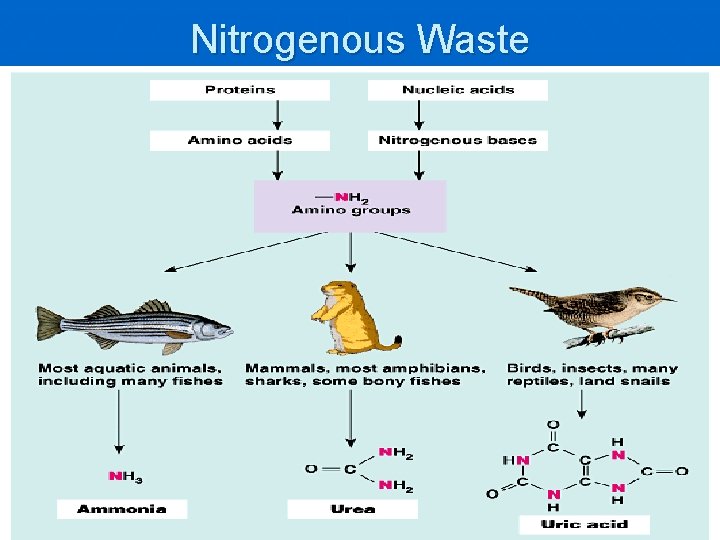
Waste Disposal n n Elimination of toxic materials is needed to maintain homeostasis Nitrogenous wastes are very toxic to living cells • Urea Many terrestrial organisms, lowest toxicity, high energy requirement (humans) • Uric Acid Birds, insects reptiles, least water lost • Ammonia Fish, aquatic organisms, most toxic
Nitrogenous Waste
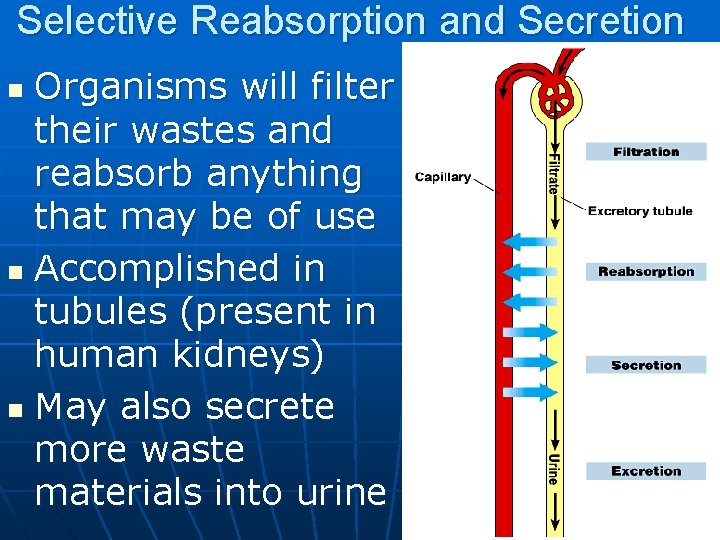
Selective Reabsorption and Secretion Organisms will filter their wastes and reabsorb anything that may be of use n Accomplished in tubules (present in human kidneys) n May also secrete more waste materials into urine n
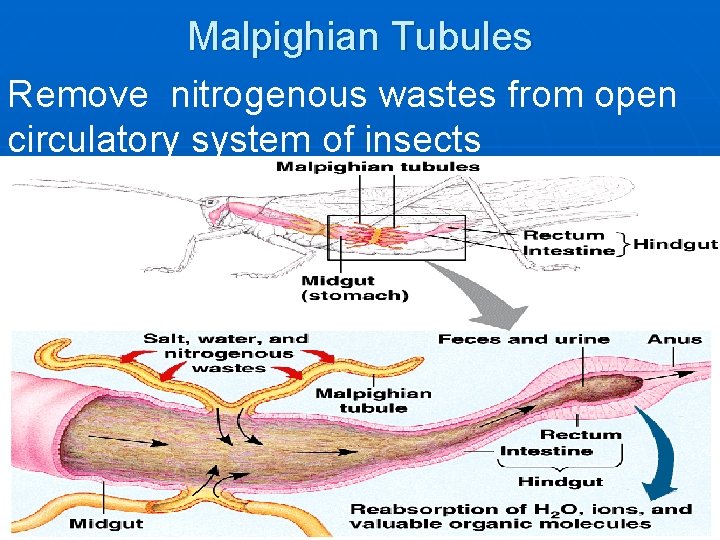
Malpighian Tubules Remove nitrogenous wastes from open circulatory system of insects
Vertebrate Urinary System Kidneys • Function in osmoregulation and reabsorption • Contain a network of tubules n Renal Artery Blood to kidney n Renal Vein Blood from kidney n Ureter Carries urine to bladder n Bladder Stores urine n Urethra Tube that exits the body n
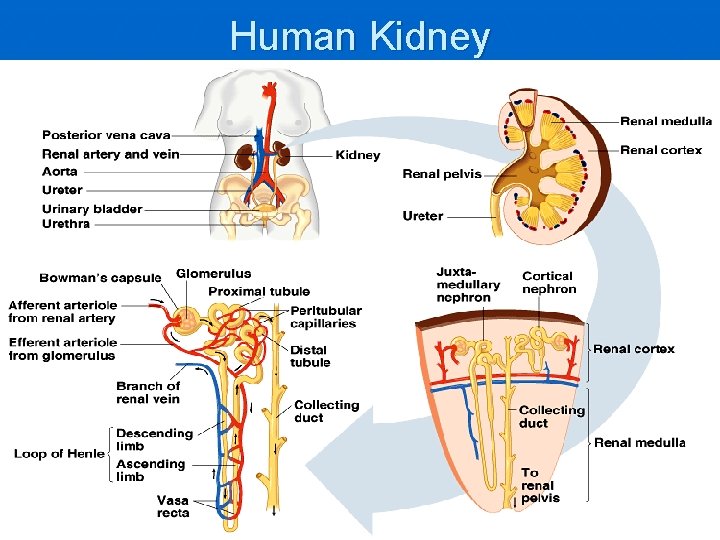
Vertebrate Kidneys Two regions • Renal cortex and renal medulla n Contains millions of nephrons • Microscopic tubules n Glomerulus Network of capillaries serving each nephron with a blood supply n Bowman’s Capsule End of tubule that surrounds the glomerulus n
Human Kidney
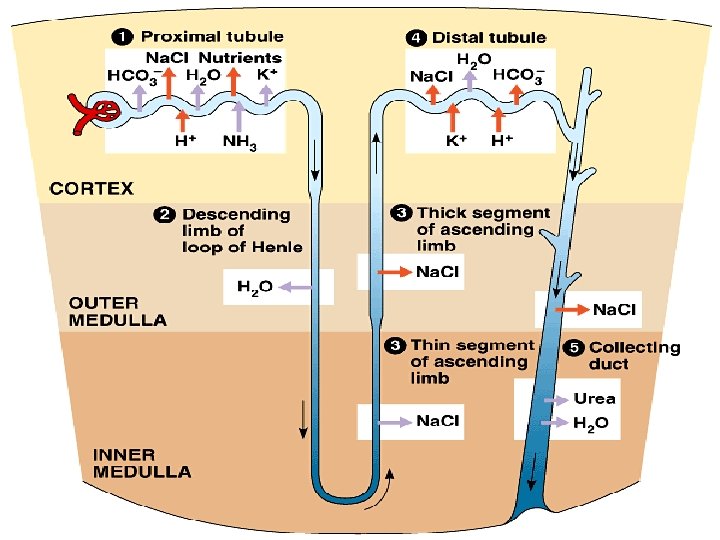
Kidneys nephron and collecting duct are lined by a transport epithelium n process filtrate to form urine n reabsorb solutes and water • sugar, vitamins, and other organic nutrients from the initial filtrate and about 99% of the water n reduce 180 L of initial filtrate to about 1. 5 L of urine to be voided n
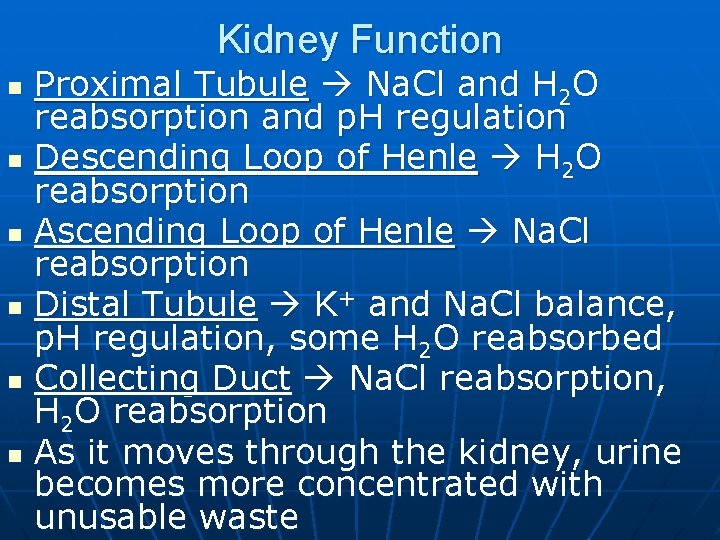
Kidney Function n n n Proximal Tubule Na. Cl and H 2 O reabsorption and p. H regulation Descending Loop of Henle H 2 O reabsorption Ascending Loop of Henle Na. Cl reabsorption Distal Tubule K+ and Na. Cl balance, p. H regulation, some H 2 O reabsorbed Collecting Duct Na. Cl reabsorption, H 2 O reabsorption As it moves through the kidney, urine becomes more concentrated with unusable waste
Kidneys n n Kidneys give terrestrial vertebrates the ability to regulate their osmotic balance Without kidneys, life on land would not be possible