
Chapter 43 44 Behavioral and Population Ecology Behavior
Chapter 43 -44 Behavioral and Population Ecology
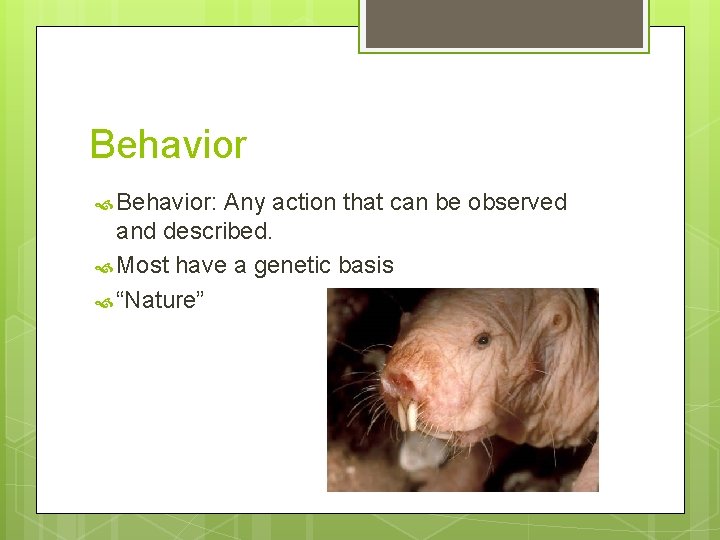
Behavior Behavior: Any action that can be observed and described. Most have a genetic basis “Nature”
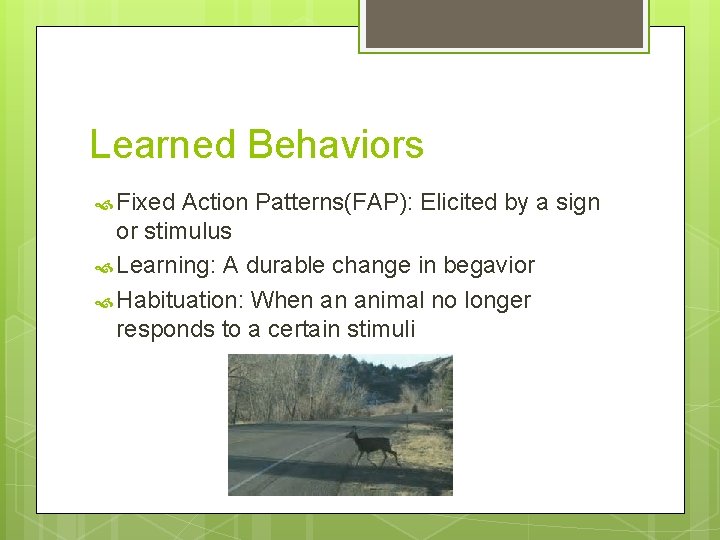
Learned Behaviors Fixed Action Patterns(FAP): Elicited by a sign or stimulus Learning: A durable change in begavior Habituation: When an animal no longer responds to a certain stimuli
Associative Learning Associative Learning: A change in behavior that involves an association between two events. Classical Conditioning: The paired presentation of two different types of stimuli at the same time causing the animal to form an association between them.
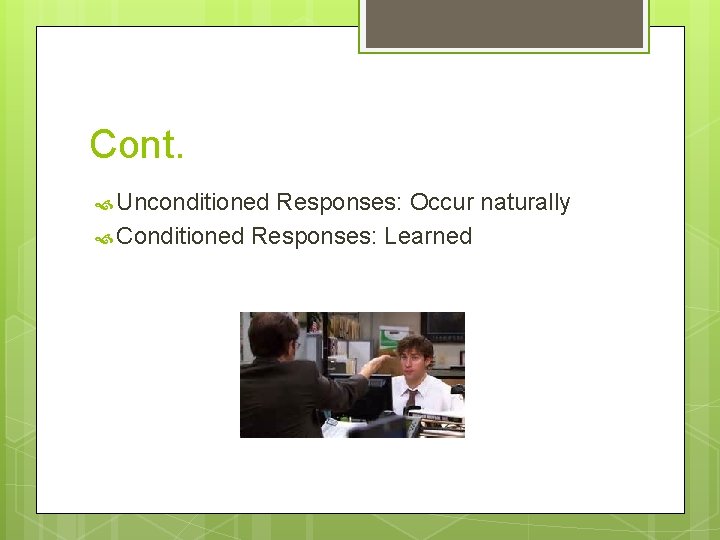
Cont. Unconditioned Responses: Occur naturally Conditioned Responses: Learned

Orientation and Migratory Behavior Migration: The long-distance travel from one location to another. Orientation: The ability to travel in a particular direction Navigation: The ability to change direction
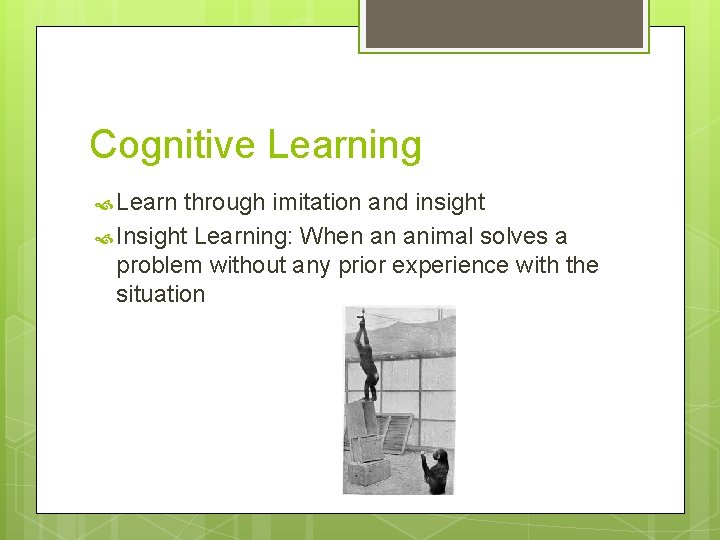
Cognitive Learning Learn through imitation and insight Insight Learning: When an animal solves a problem without any prior experience with the situation
Communicative Behavior Communication: An action by the sender that may influence the behavior of the sender Chemical Communication: Effective both day and night Pheromone: Send chemical signals in low concentration that are passed between members of the same species
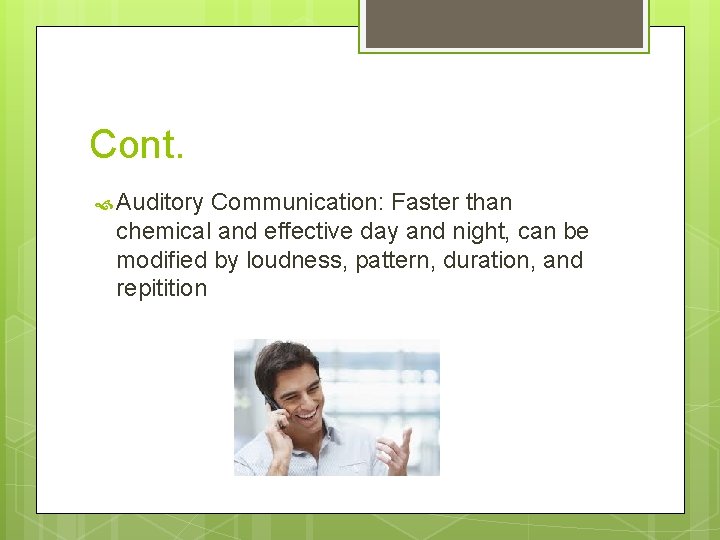
Cont. Auditory Communication: Faster than chemical and effective day and night, can be modified by loudness, pattern, duration, and repitition
Visual Communication Mostly used during day Defense and courtship displays are always exaggerated and performed the same way for clarity of meaning Allows animals to signal intentions without auditory or chemical signals
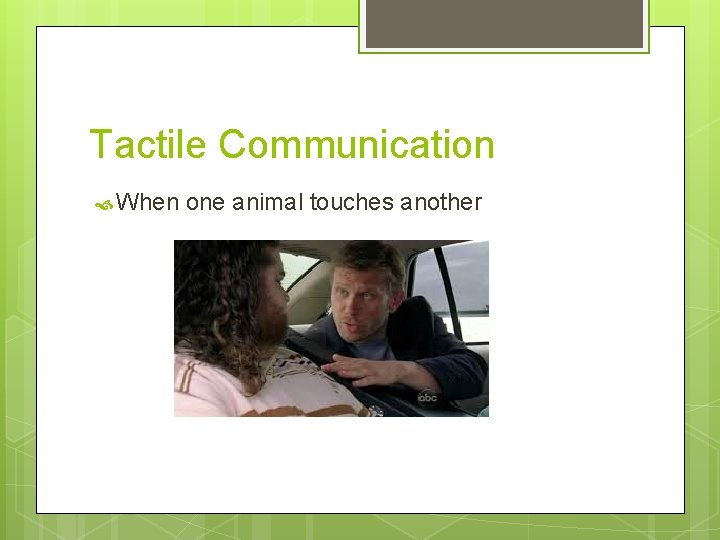
Tactile Communication When one animal touches another
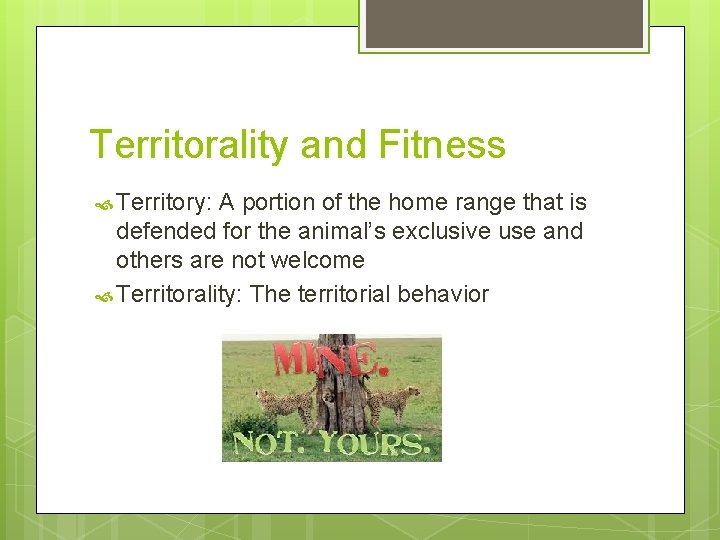
Territorality and Fitness Territory: A portion of the home range that is defended for the animal’s exclusive use and others are not welcome Territorality: The territorial behavior
Sexual Selection A form of natural selection that favors features that increase an animal’s chance of mating Forces competition
Altruism vs. Self Interest Altruism: Decrease lifetime reproductive success of the altruist while benefiting that of another member Kin Selection: Adaptation to environment due to reproductive success of relatives Inclusive Fitness: Reproductive success fo self and relatives Direct selection: Personal success
Population Ecology Population: All of the members of the same species that inhabit a particular area Community: Multiple populations in the same area Ecosystem: Abiotic and biotic factors Biosphere: All of the communities of earth Habitat: The place where an organism lives
Demographics of Populations Demography: The study of a population Population Density: The number of individuals per unit area Population Distribution: The pattern of dispersal of individuals across an area of interest Limiting Factors: Determine where an organism lives
Population Growth (births – deaths)=r Cohort: All the members of a population born at the same time Mortality rate = (# dying)/(# of surviving cohort) Survivorship: The probability of newborn individuals of a cohort surviving to particular ages
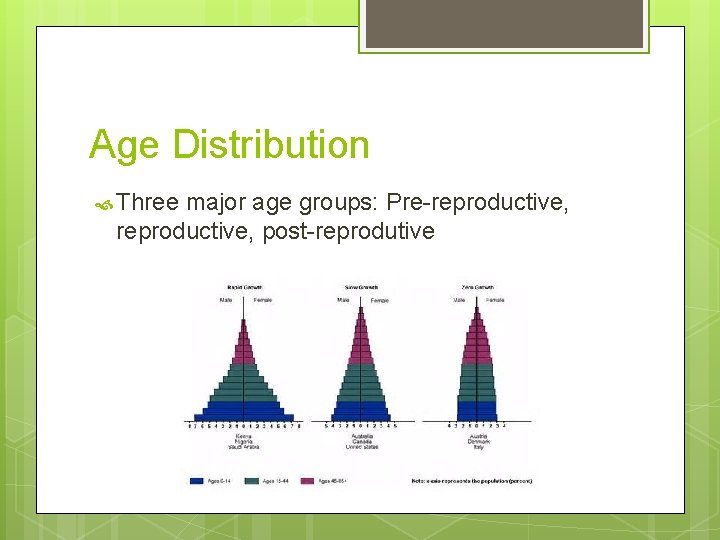
Age Distribution Three major age groups: Pre-reproductive, post-reprodutive
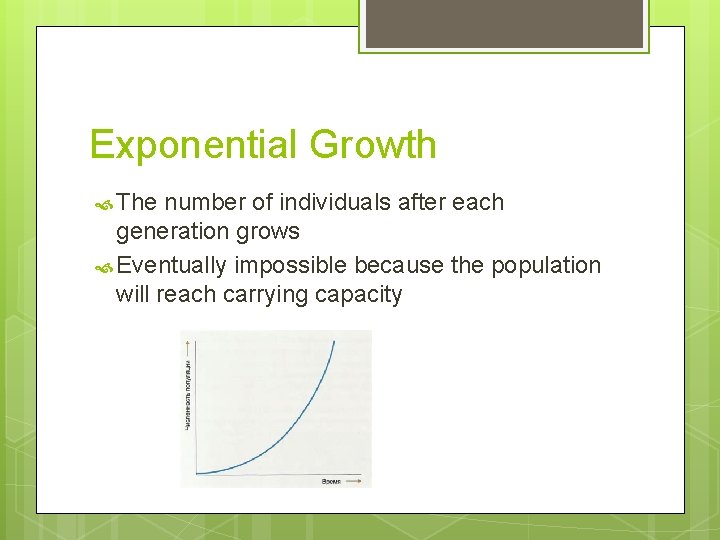
Exponential Growth The number of individuals after each generation grows Eventually impossible because the population will reach carrying capacity
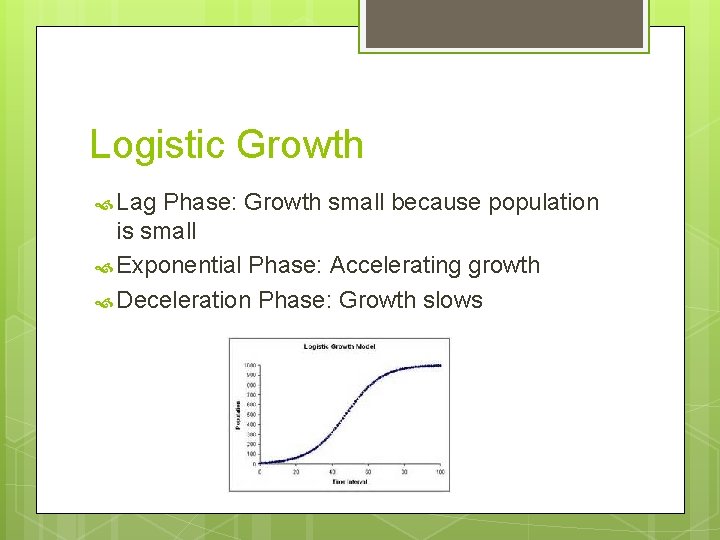
Logistic Growth Lag Phase: Growth small because population is small Exponential Phase: Accelerating growth Deceleration Phase: Growth slows
Regulation of Population Size Carrying Capacity: The max number of individuals an environment can support Density Independent Factors: Does not kill a larger percentage of a larger population Density Dependent Factors: Kill larger percentage of a denser population
- Slides: 21