
Chapter 40 Physiology Homeostasis and Temperature Regulation CHAPTER
- Slides: 51
Chapter 40: Physiology, Homeostasis, and Temperature Regulation CHAPTER 40 Physiology, Homeostasis, and Temperature Regulation
Chapter 40: Physiology, Homeostasis, and Temperature Regulation Homeostasis: Maintaining the Internal Environment Tissues, Organs, and Organ Systems Physiological Regulation and Homeostasis
Chapter 40: Physiology, Homeostasis, and Temperature Regulation Temperature and Life Maintaining Optimal Body Temperature Thermoregulation in Endotherms The Vertebrate Thermostat
Chapter 40: Physiology, Homeostasis, and Temperature Regulation Homeostasis: Maintaining the Internal Environment • Single-celled organisms and some small, simple multicellular animals meet their needs by direct exchange between their cells and an aqueous environment. • Larger, more complex animals must do so by maintaining a constant internal environment. 4
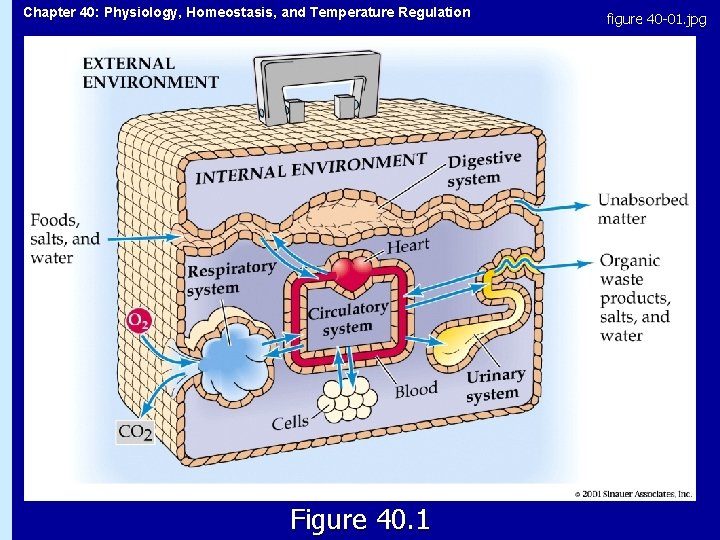
Chapter 40: Physiology, Homeostasis, and Temperature Regulation Homeostasis: Maintaining the Internal Environment • The internal environment consists of the extracellular fluids. • Organs and organ systems have specialized functions to keep certain aspects of the internal environment in a constant state. Review Figure 40. 1 5
Chapter 40: Physiology, Homeostasis, and Temperature Regulation Figure 40. 1 figure 40 -01. jpg
Chapter 40: Physiology, Homeostasis, and Temperature Regulation Homeostasis: Maintaining the Internal Environment • Homeostasis is the maintenance of constancy in the internal environment • It depends on the ability to control and regulate organ and organ system function. 7
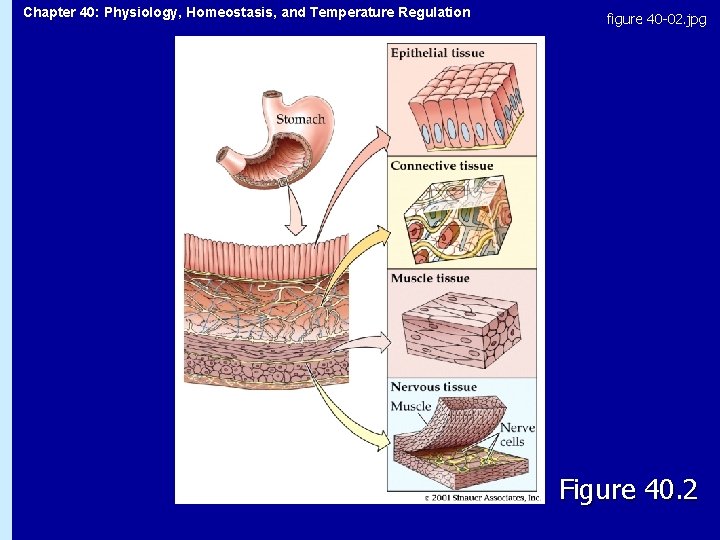
Chapter 40: Physiology, Homeostasis, and Temperature Regulation Tissues, Organs and Organ Systems • Cells with a similar structure and function make up a tissue. • There are four general types: Epithelial u Connective u Muscle u Nervous. Review Figure 40. 2 u 8
Chapter 40: Physiology, Homeostasis, and Temperature Regulation figure 40 -02. jpg Figure 40. 2
Chapter 40: Physiology, Homeostasis, and Temperature Regulation Tissues, Organs, and Organ Systems • Epithelial tissues are sheets of tightly connected cells that cover body surfaces and line hollow organs. 10
Chapter 40: Physiology, Homeostasis, and Temperature Regulation Tissues, Organs, and Organ Systems • Connective tissues support and reinforce other tissues. • They generally consist of dispersed cells in an extracellular matrix. 11
Chapter 40: Physiology, Homeostasis, and Temperature Regulation Tissues, Organs, and Organ Systems • Muscle tissues contract. • There are three types: Skeletal u Cardiac u Smooth. u 12
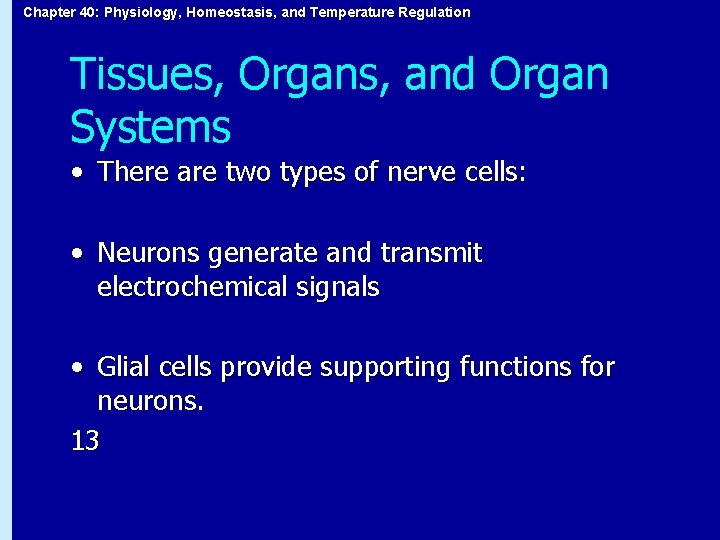
Chapter 40: Physiology, Homeostasis, and Temperature Regulation Tissues, Organs, and Organ Systems • There are two types of nerve cells: • Neurons generate and transmit electrochemical signals • Glial cells provide supporting functions for neurons. 13
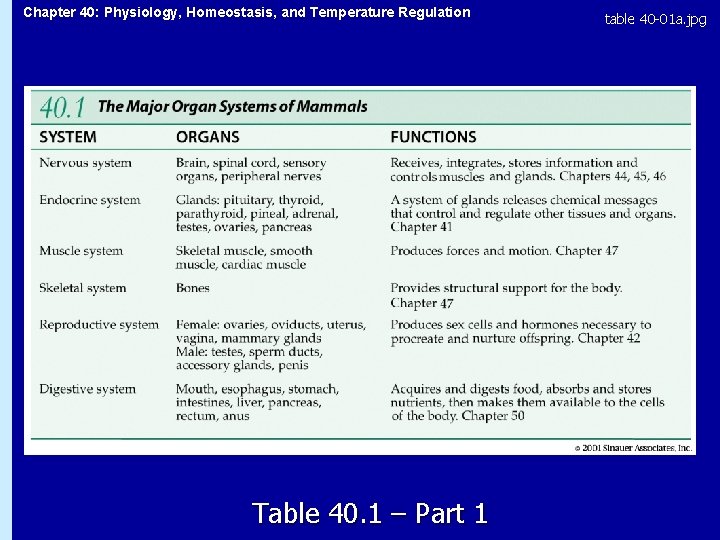
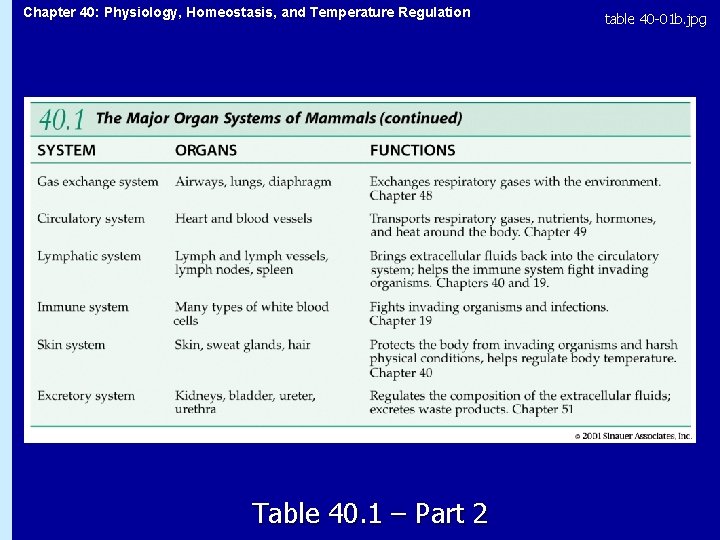
Chapter 40: Physiology, Homeostasis, and Temperature Regulation Tissues, Organs, and Organ Systems • Organs consist of multiple tissue types, and organs make up organ systems. Review Table 40. 1 14
Chapter 40: Physiology, Homeostasis, and Temperature Regulation Table 40. 1 – Part 1 table 40 -01 a. jpg
Chapter 40: Physiology, Homeostasis, and Temperature Regulation Table 40. 1 – Part 2 table 40 -01 b. jpg
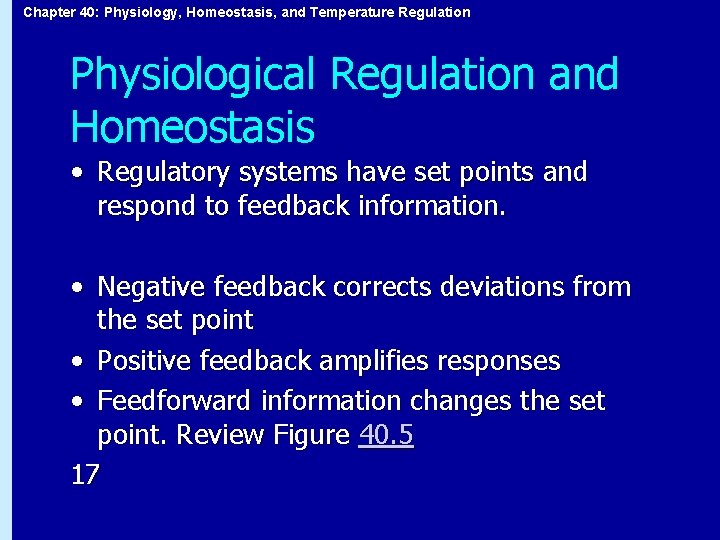
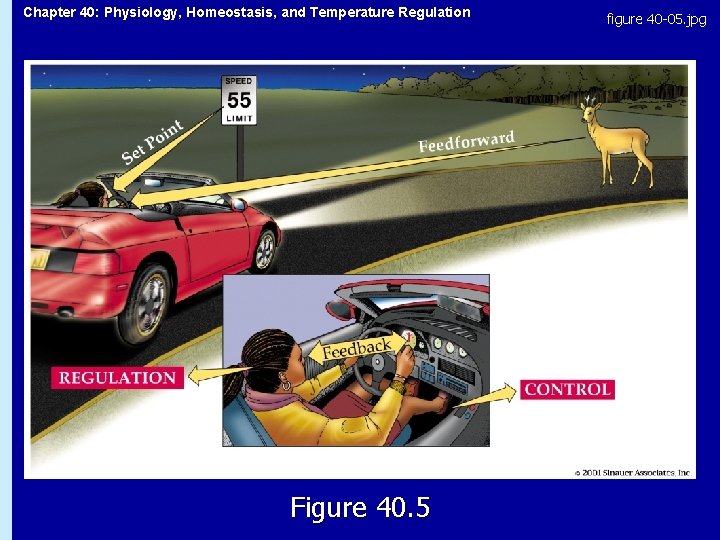
Chapter 40: Physiology, Homeostasis, and Temperature Regulation Physiological Regulation and Homeostasis • Regulatory systems have set points and respond to feedback information. • Negative feedback corrects deviations from the set point • Positive feedback amplifies responses • Feedforward information changes the set point. Review Figure 40. 5 17
Chapter 40: Physiology, Homeostasis, and Temperature Regulation Figure 40. 5 figure 40 -05. jpg
Chapter 40: Physiology, Homeostasis, and Temperature Regulation Temperature and Life • Living systems require a range of temperatures between the freezing point of water and the temperatures that denature proteins. 19
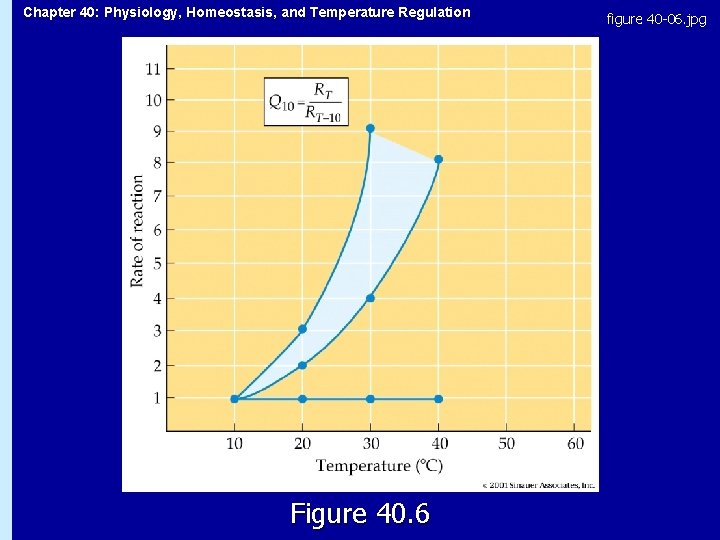
Chapter 40: Physiology, Homeostasis, and Temperature Regulation Temperature and Life • Most biological processes and reactions are temperature-sensitive. • Q 10 is a measure of temperature sensitivity. Review Figure 40. 6 20
Chapter 40: Physiology, Homeostasis, and Temperature Regulation Figure 40. 6 figure 40 -06. jpg
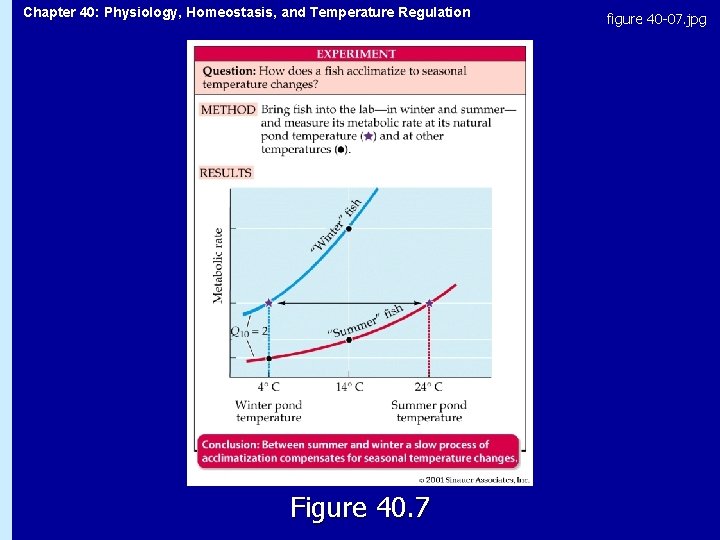
Chapter 40: Physiology, Homeostasis, and Temperature Regulation Temperature and Life • Animals that cannot avoid seasonal changes in body temperature have biochemical adaptations to compensate. • These enable animals to acclimatize to seasonal changes. Review Figure 40. 7 22
Chapter 40: Physiology, Homeostasis, and Temperature Regulation Figure 40. 7 figure 40 -07. jpg
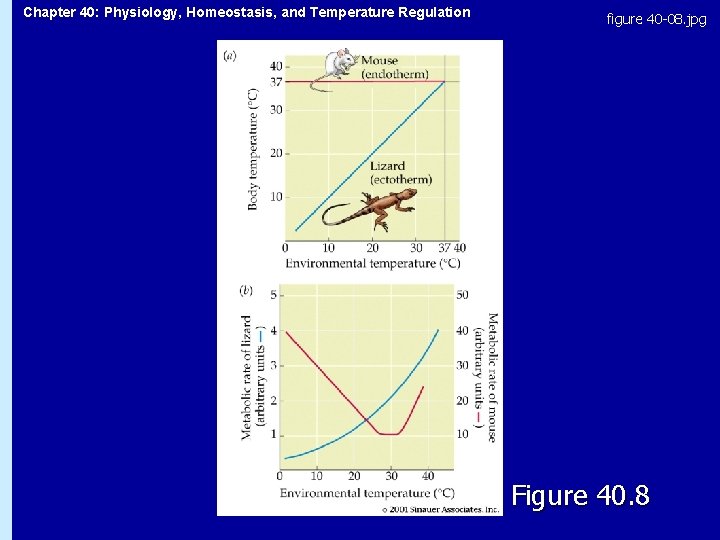
Chapter 40: Physiology, Homeostasis, and Temperature Regulation Maintaining Optimal Body Temperature • Homeotherms maintain a fairly constant body temperature most of the time; poikilotherms do not. • Endotherms produce metabolic heat; ectotherms depend mostly on environmental sources of heat. Review Figure 40. 8 24
Chapter 40: Physiology, Homeostasis, and Temperature Regulation figure 40 -08. jpg Figure 40. 8
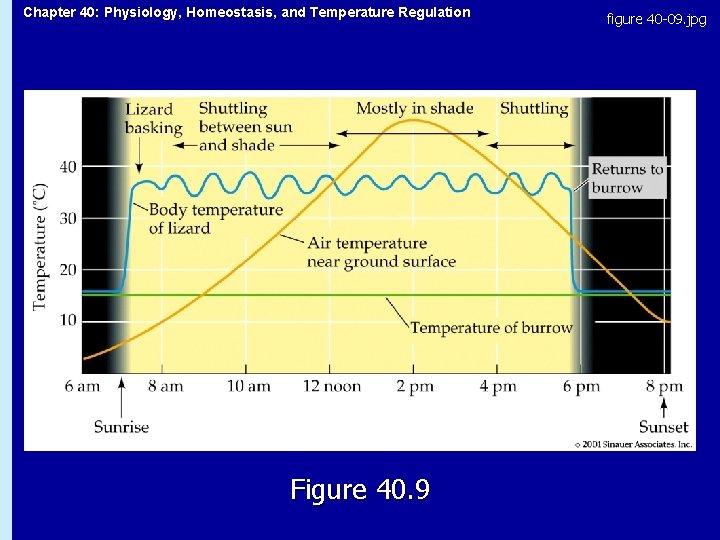
Chapter 40: Physiology, Homeostasis, and Temperature Regulation Maintaining Optimal Body Temperature • Ectotherms and endotherms can regulate body temperature through behavior. Review Figure 40. 9 26
Chapter 40: Physiology, Homeostasis, and Temperature Regulation Figure 40. 9 figure 40 -09. jpg
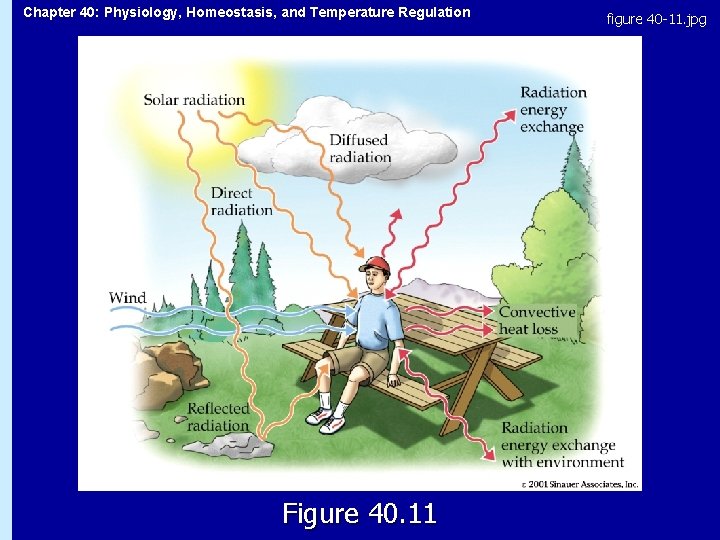
Chapter 40: Physiology, Homeostasis, and Temperature Regulation Maintaining Optimal Body Temperature • Heat exchange between a body and the environment is via: radiation u conduction u convection u Evaporation Review Figure 40. 11 u 28
Chapter 40: Physiology, Homeostasis, and Temperature Regulation Figure 40. 11 figure 40 -11. jpg
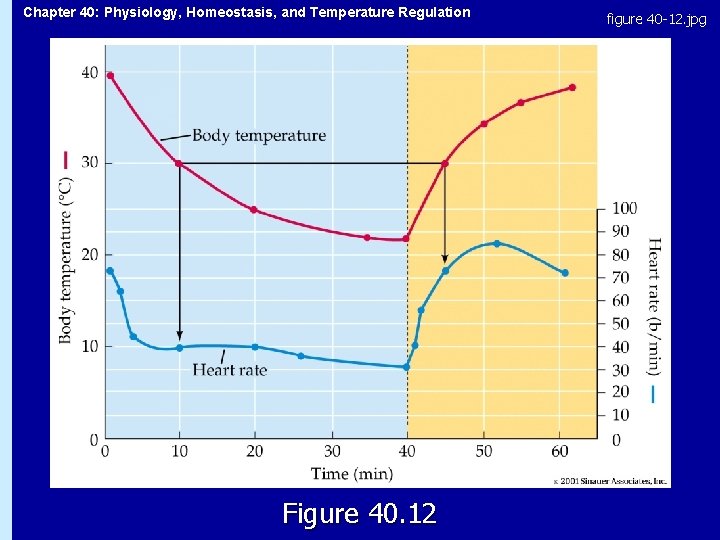
Chapter 40: Physiology, Homeostasis, and Temperature Regulation Maintaining Optimal Body Temperature • Ectotherms and endotherms can control heat exchange with the environment by altering blood flow to the skin. Review Figure 40. 12 30
Chapter 40: Physiology, Homeostasis, and Temperature Regulation Figure 40. 12 figure 40 -12. jpg
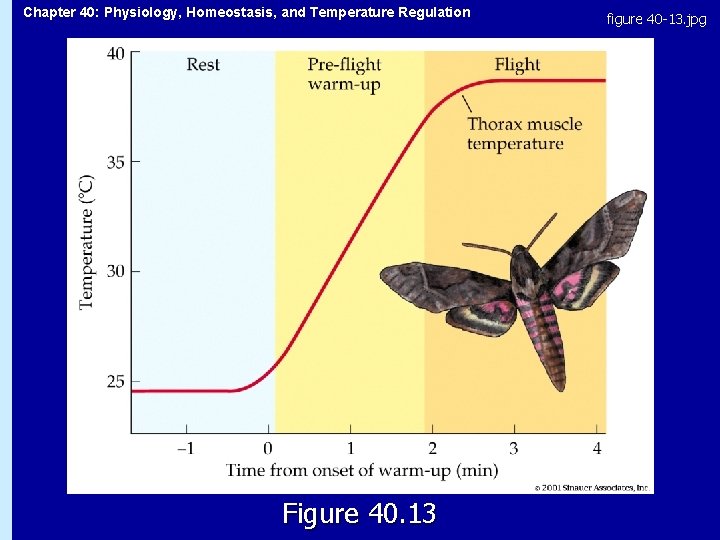
Chapter 40: Physiology, Homeostasis, and Temperature Regulation Maintaining Optimal Body Temperature • Some ectotherms can produce metabolic heat to raise their body temperatures. Review Figure 40. 13 32
Chapter 40: Physiology, Homeostasis, and Temperature Regulation Figure 40. 13 figure 40 -13. jpg
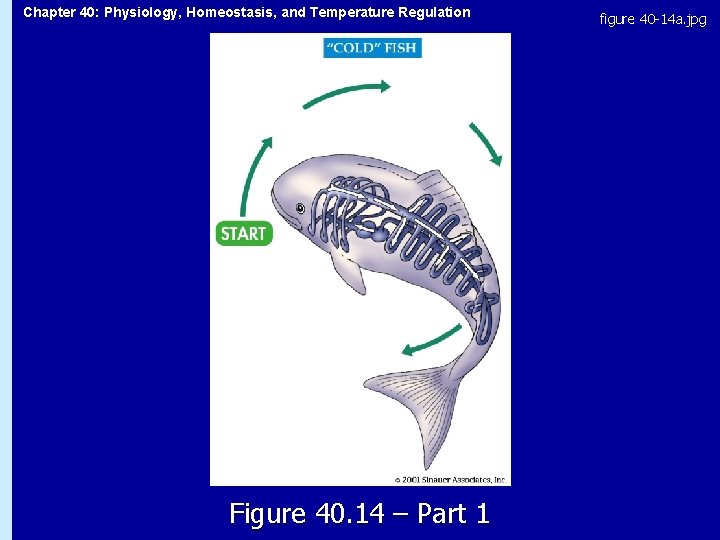
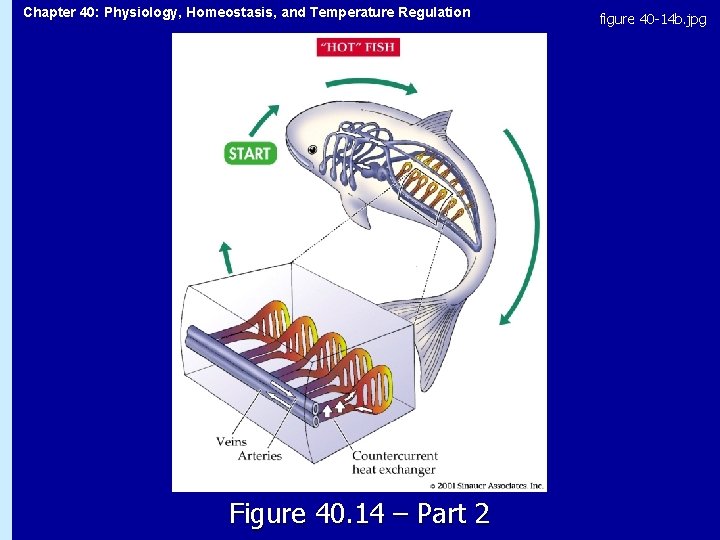
Chapter 40: Physiology, Homeostasis, and Temperature Regulation Maintaining Optimal Body Temperature • Some fish have circulatory systems that function as countercurrent heat exchangers to conserve heat produced by muscle metabolism. Review Figure 40. 14 34
Chapter 40: Physiology, Homeostasis, and Temperature Regulation Figure 40. 14 – Part 1 figure 40 -14 a. jpg
Chapter 40: Physiology, Homeostasis, and Temperature Regulation Figure 40. 14 – Part 2 figure 40 -14 b. jpg
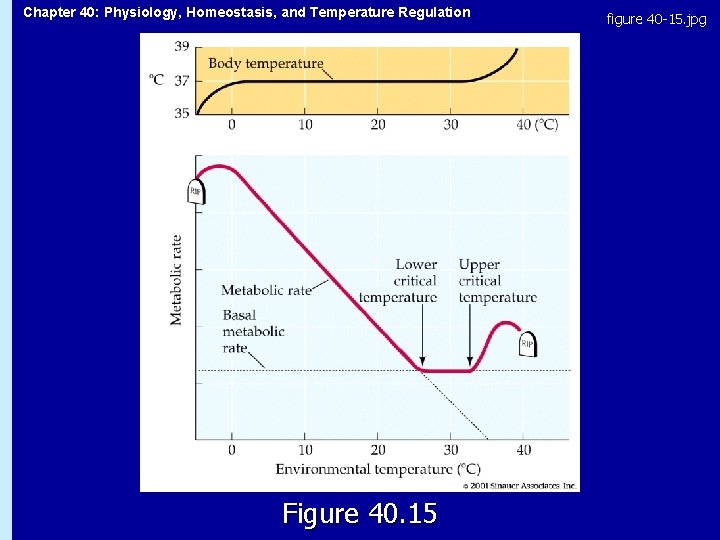
Chapter 40: Physiology, Homeostasis, and Temperature Regulation Thermoregulation in Endotherms • Endotherms have high basal metabolic rates. • Over a range of environmental temperatures, thermoneutral zone, their resting metabolic rates remain at basal levels. Review Figure 40. 15 37
Chapter 40: Physiology, Homeostasis, and Temperature Regulation Figure 40. 15 figure 40 -15. jpg
Chapter 40: Physiology, Homeostasis, and Temperature Regulation Thermoregulation in Endotherms • When environmental temperature falls below a lower critical temperature, endotherms maintain their body temperatures through shivering and nonshivering metabolic heat production. 39
Chapter 40: Physiology, Homeostasis, and Temperature Regulation Thermoregulation in Endotherms • When environmental temperature rises above an upper critical temperature, metabolic rate increases as a consequence of evaporative water loss. 40
Chapter 40: Physiology, Homeostasis, and Temperature Regulation Thermoregulation in Endotherms • Endotherms in cold climates have adaptations that minimize heat loss: a reduced surface area-to-volume ratio u increased insulation. u 41
Chapter 40: Physiology, Homeostasis, and Temperature Regulation Thermoregulation in Endotherms • Endotherms may dissipate excess heat generated by exercise or the environment via evaporation. • However, water loss can be dangerous to endotherms in dry environments. 42
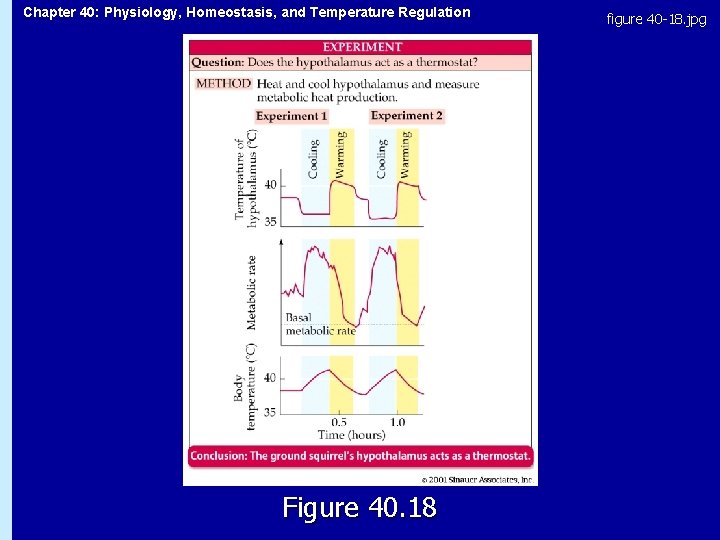
Chapter 40: Physiology, Homeostasis, and Temperature Regulation The Vertebrate Thermostat • The vertebrate thermostat is in the hypothalamus. • It has set points for activating thermoregulatory responses. • Hypothalamic temperature provides negative feedback information. 43
Chapter 40: Physiology, Homeostasis, and Temperature Regulation The Vertebrate Thermostat • Cooling the hypothalamus induces blood vessel constriction and increased metabolic heat production • Heating it induces blood vessel dilation and active evaporative water loss. • Thermoregulatory behaviors are induced by changes in hypothalamic temperature. Review Figure 40. 18 44
Chapter 40: Physiology, Homeostasis, and Temperature Regulation Figure 40. 18 figure 40 -18. jpg
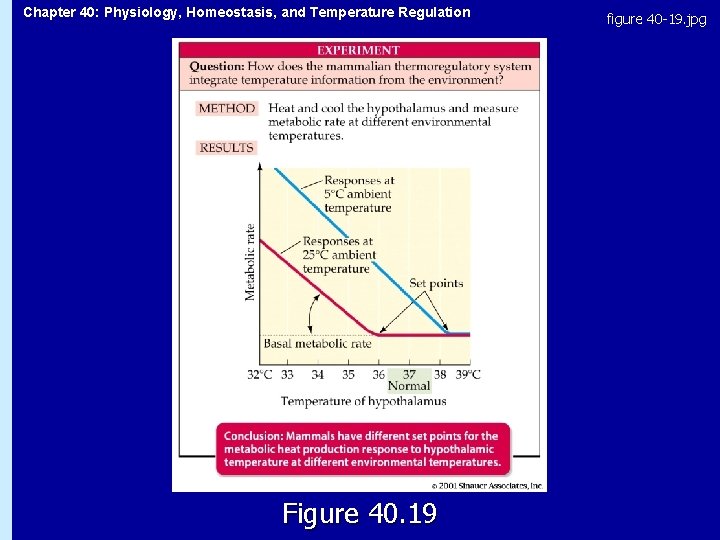
Chapter 40: Physiology, Homeostasis, and Temperature Regulation The Vertebrate Thermostat • Changes in set point reflect the integration of information that is relevant to the regulation of body temperature. Review Figure 40. 19 46
Chapter 40: Physiology, Homeostasis, and Temperature Regulation Figure 40. 19 figure 40 -19. jpg
Chapter 40: Physiology, Homeostasis, and Temperature Regulation The Vertebrate Thermostat • Fever, which results from a rise in set point, helps the body fight infections. 48
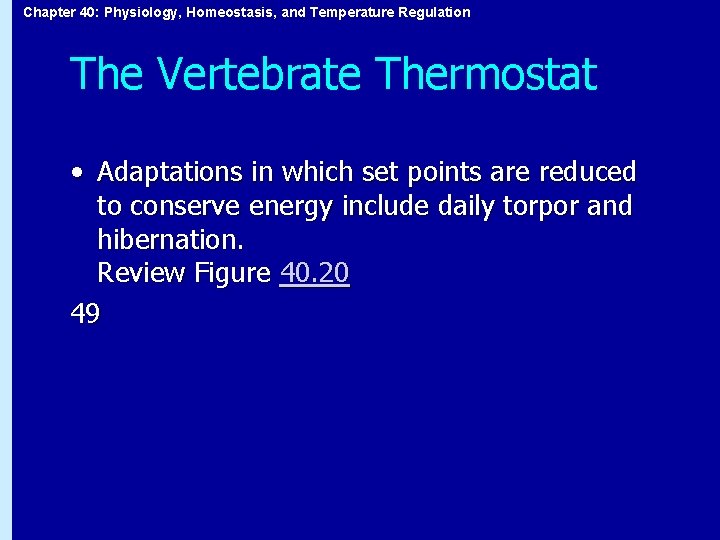
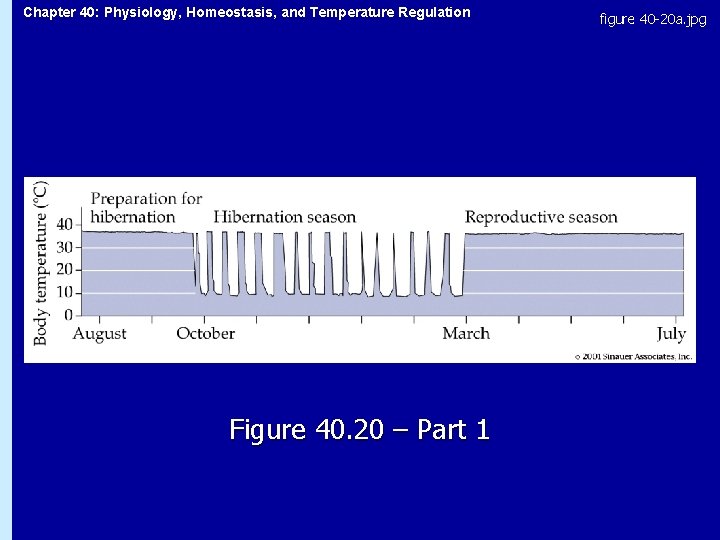
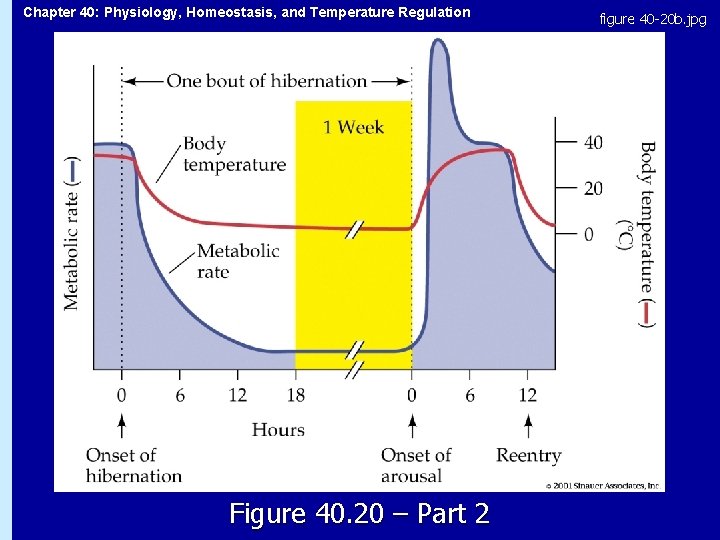
Chapter 40: Physiology, Homeostasis, and Temperature Regulation The Vertebrate Thermostat • Adaptations in which set points are reduced to conserve energy include daily torpor and hibernation. Review Figure 40. 20 49
Chapter 40: Physiology, Homeostasis, and Temperature Regulation Figure 40. 20 – Part 1 figure 40 -20 a. jpg
Chapter 40: Physiology, Homeostasis, and Temperature Regulation Figure 40. 20 – Part 2 figure 40 -20 b. jpg