
Chapter 40 Homeostasis Animal Form and Function Animals

- Slides: 23
Chapter 40 Homeostasis
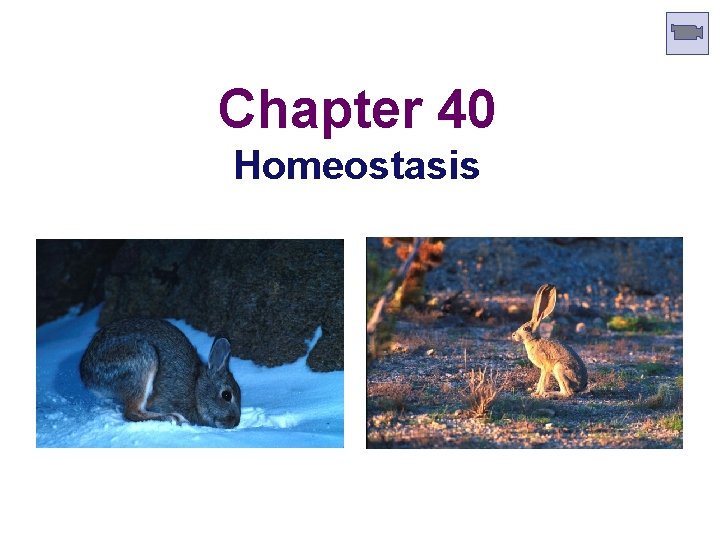
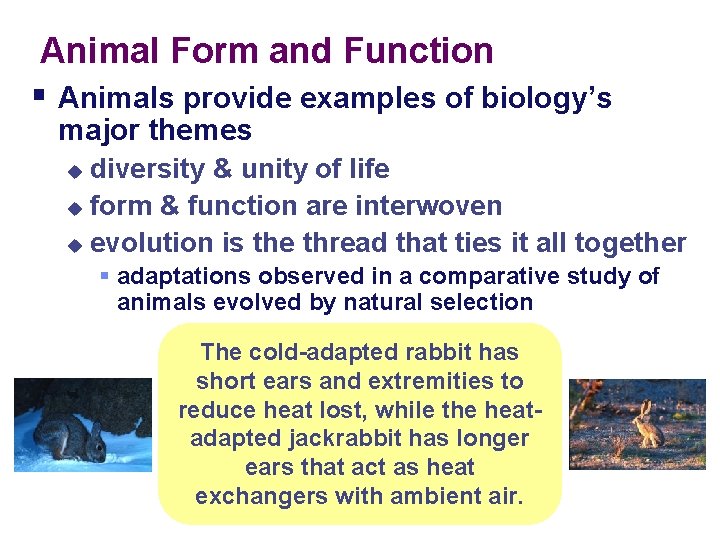
Animal Form and Function § Animals provide examples of biology’s major themes diversity & unity of life u form & function are interwoven u evolution is the thread that ties it all together u § adaptations observed in a comparative study of animals evolved by natural selection The cold-adapted rabbit has short ears and extremities to reduce heat lost, while the heatadapted jackrabbit has longer ears that act as heat exchangers with ambient air.
Big Idea #2 Biological systems utilize free energy and molecular building blocks to grow, to reproduce, and to maintain dynamic homeostasis.
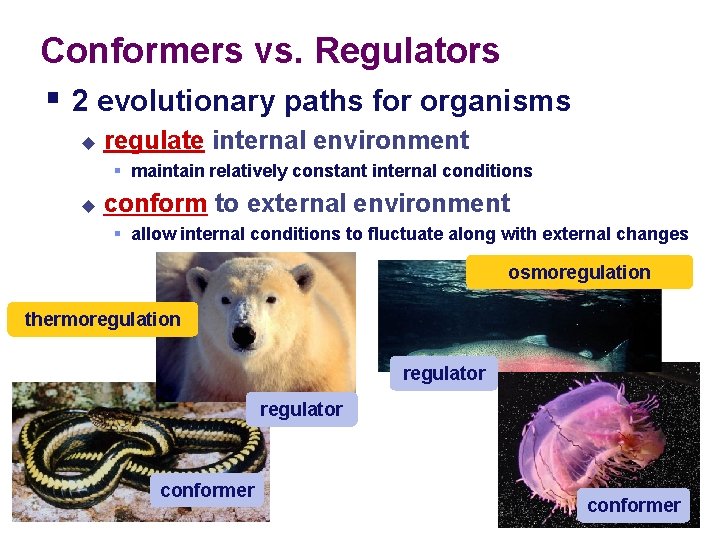
Conformers vs. Regulators § 2 evolutionary paths for organisms u regulate internal environment § maintain relatively constant internal conditions u conform to external environment § allow internal conditions to fluctuate along with external changes osmoregulation thermoregulation regulator conformer
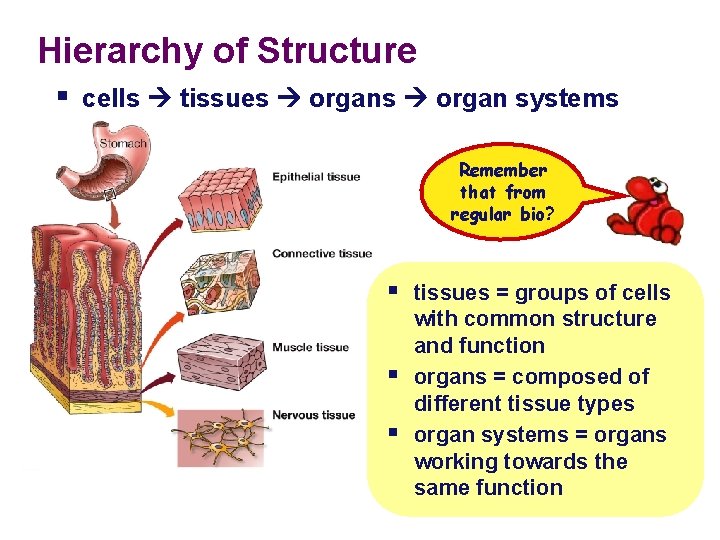
Hierarchy of Structure § cells tissues organ systems Remember that from regular bio? § tissues = groups of cells § § with common structure and function organs = composed of different tissue types organ systems = organs working towards the same function
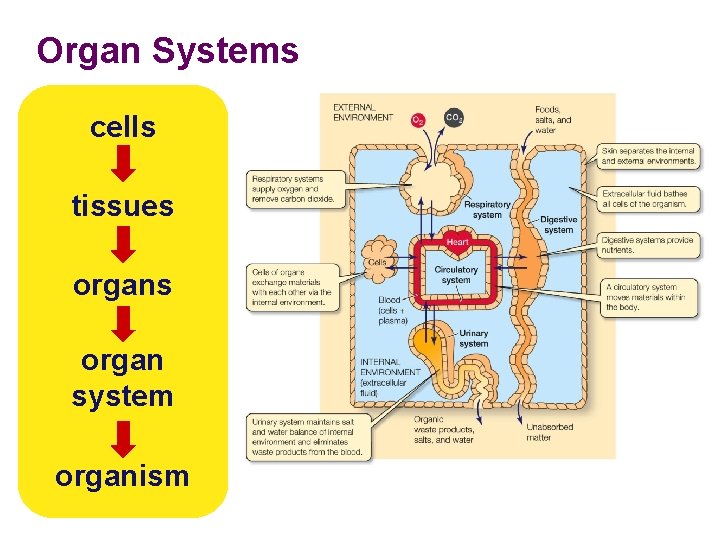
Organ Systems cells tissues organ system organism
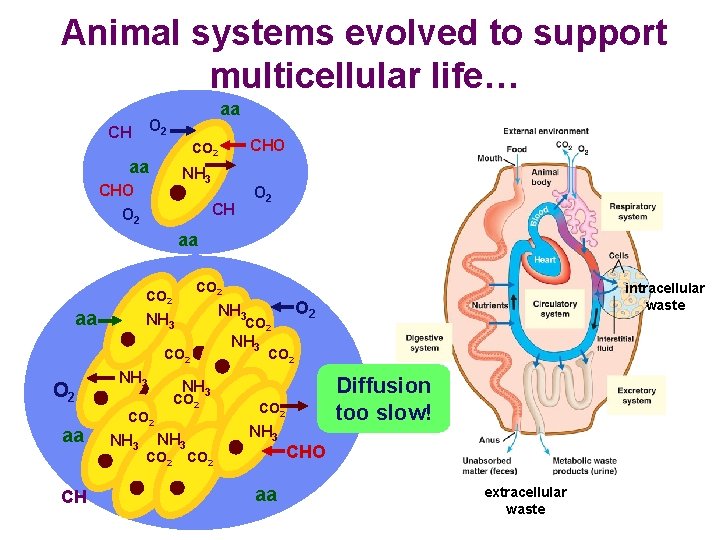
Animal systems evolved to support multicellular life… aa O 2 CH CHO CO 2 aa NH 3 CHO O 2 CH aa CO 2 O 2 aa CH NH 3 CO 2 Diffusion too slow! NH 3 CO 2 NH 3 NH 3 CO 2 intracellular waste CO 2 NH 3 CO 2 aa CHO extracellular waste
Homeostasis § Keeping the balance u animal body needs to coordinate many systems all at once § § § § u temperature blood sugar levels energy production water balance & intracellular waste disposal nutrients ion balance cell growth maintaining a “steady state” condition
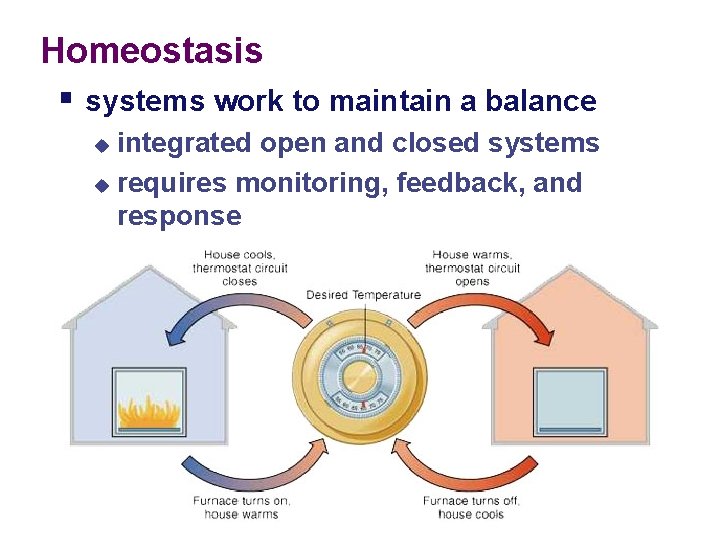
Homeostasis § systems work to maintain a balance integrated open and closed systems u requires monitoring, feedback, and response u
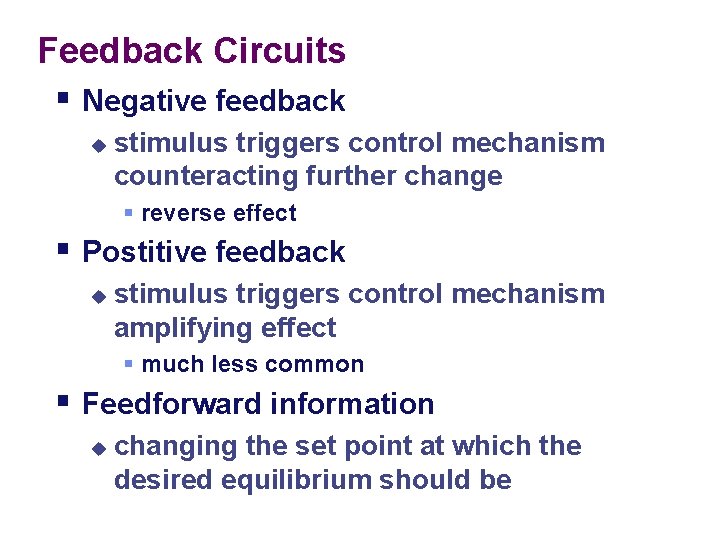
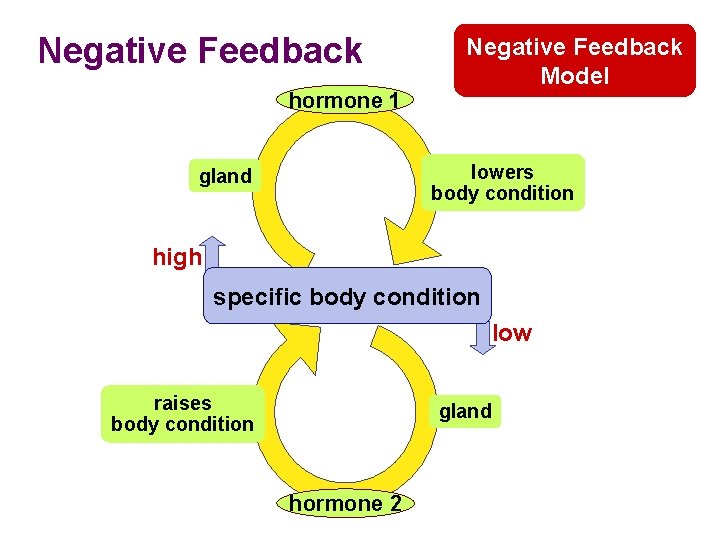
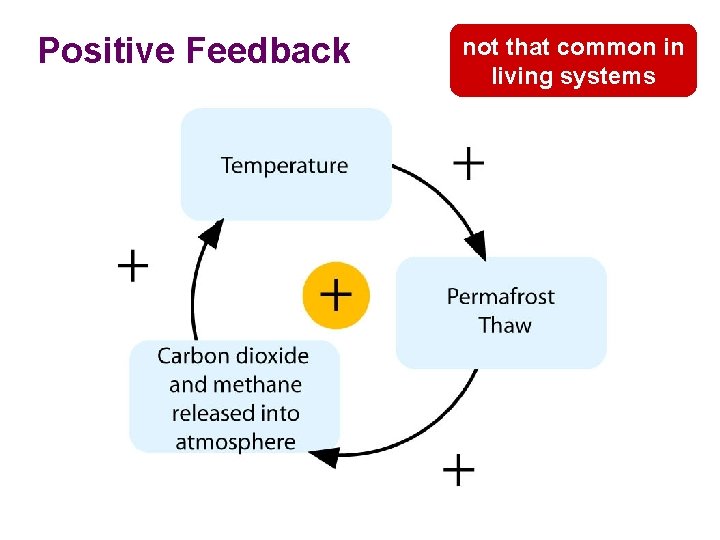
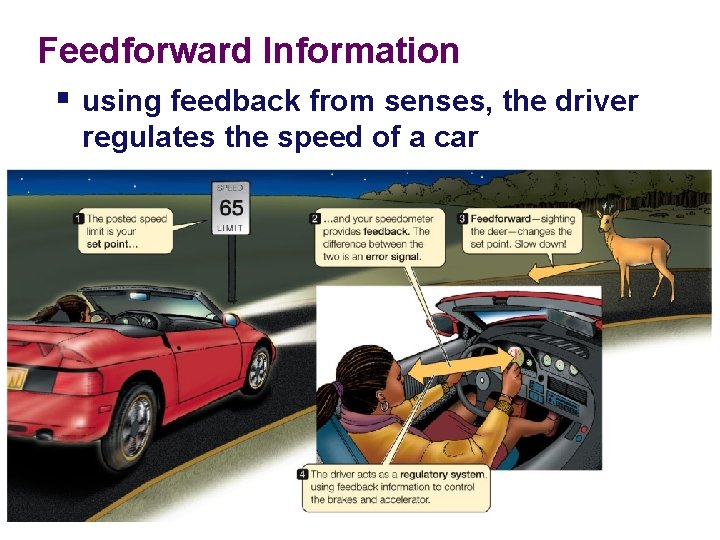
Feedback Circuits § Negative feedback u stimulus triggers control mechanism counteracting further change § reverse effect § Postitive feedback u stimulus triggers control mechanism amplifying effect § much less common § Feedforward information u changing the set point at which the desired equilibrium should be
Negative Feedback hormone 1 Negative Feedback Model lowers body condition gland high specific body condition low raises body condition gland hormone 2
Positive Feedback not that common in living systems
Feedforward Information § using feedback from senses, the driver regulates the speed of a car
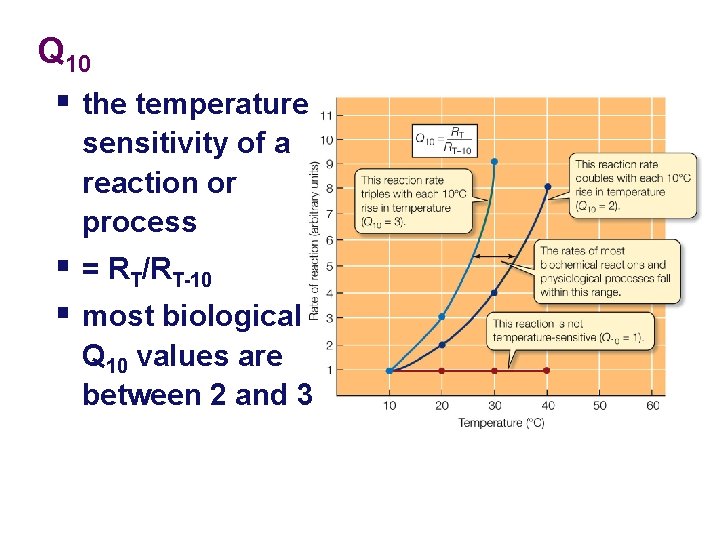
Q 10 § the temperature sensitivity of a reaction or process § = RT/RT-10 § most biological Q 10 values are between 2 and 3
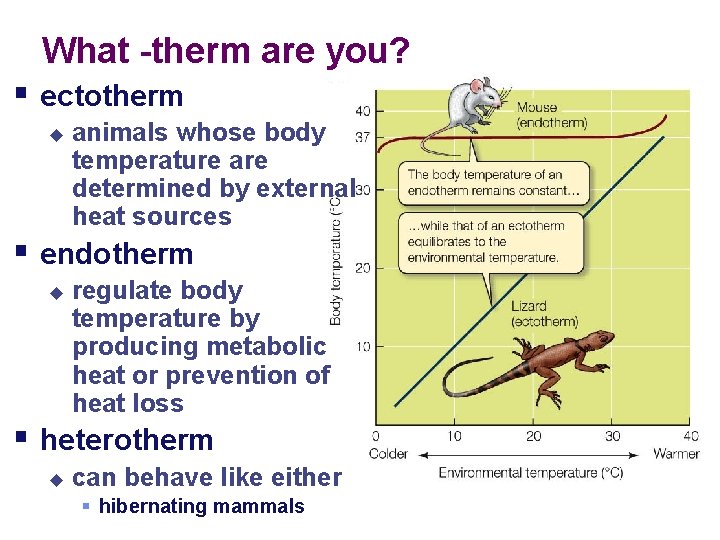
What -therm are you? § ectotherm u animals whose body temperature are determined by external heat sources § endotherm u regulate body temperature by producing metabolic heat or prevention of heat loss § heterotherm u can behave like either § hibernating mammals
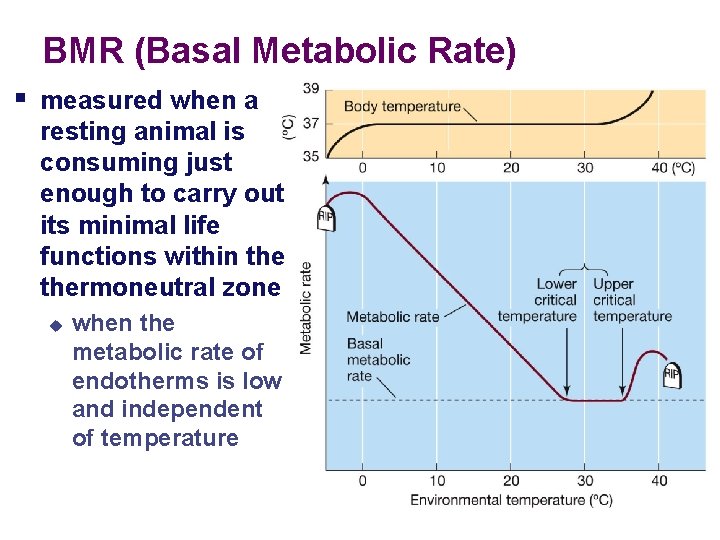
BMR (Basal Metabolic Rate) § measured when a resting animal is consuming just enough to carry out its minimal life functions within thermoneutral zone u when the metabolic rate of endotherms is low and independent of temperature
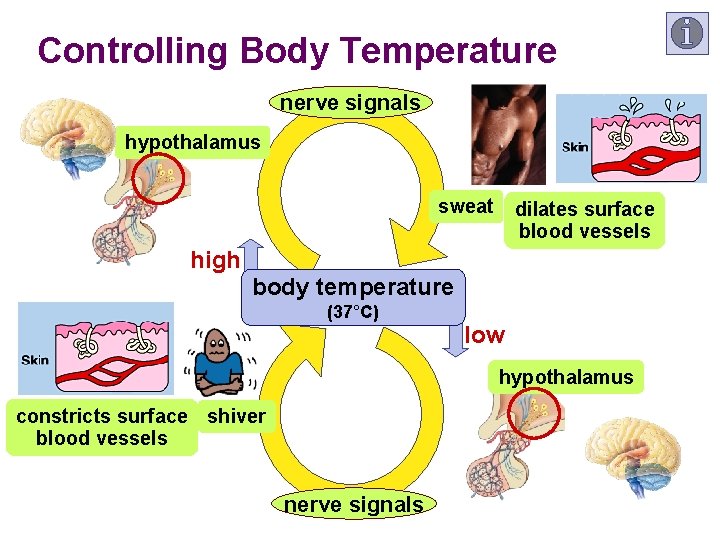
Controlling Body Temperature nerve signals hypothalamus sweat dilates surface blood vessels high body temperature (37°C) low hypothalamus constricts surface shiver blood vessels nerve signals
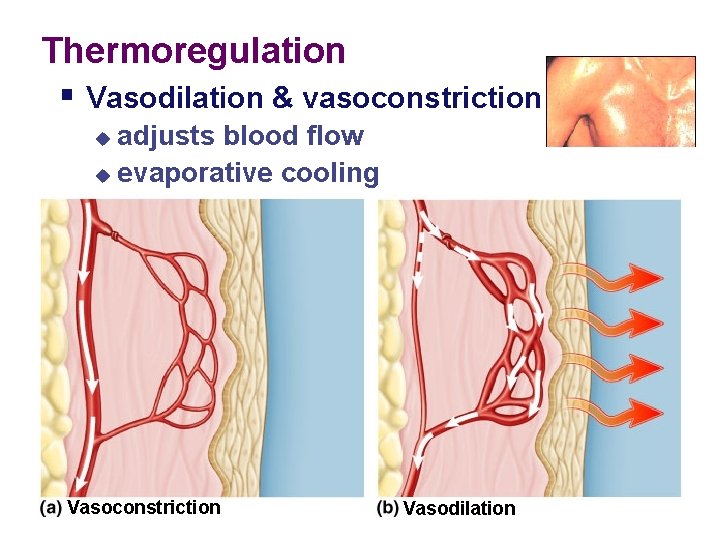
Thermoregulation § Vasodilation & vasoconstriction adjusts blood flow u evaporative cooling u Vasoconstriction Vasodilation
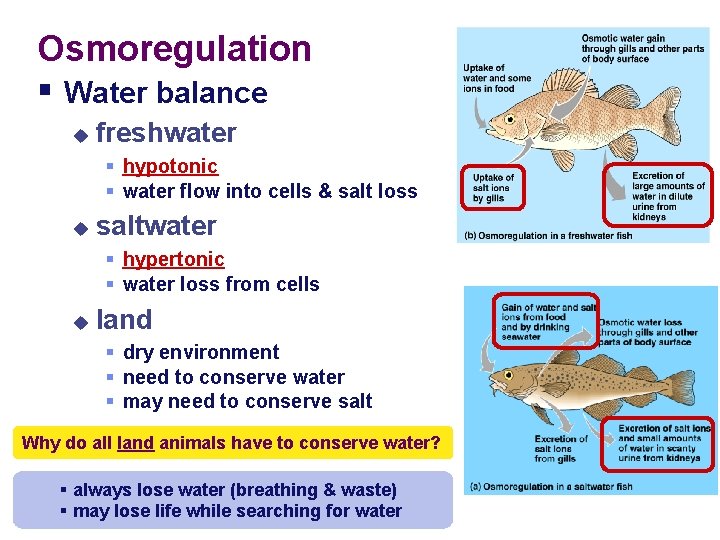
Osmoregulation § Water balance u freshwater § hypotonic § water flow into cells & salt loss u saltwater § hypertonic § water loss from cells u land § dry environment § need to conserve water § may need to conserve salt Why do all land animals have to conserve water? § always lose water (breathing & waste) § may lose life while searching for water
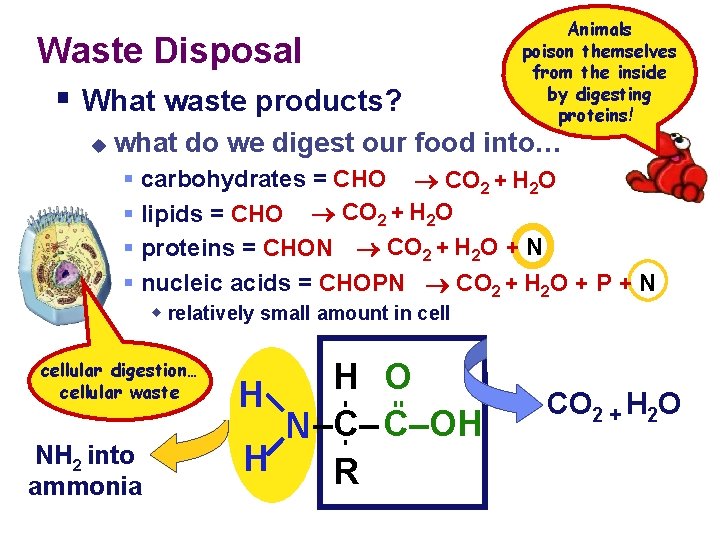
Waste Disposal § What waste products? u Animals poison themselves from the inside by digesting proteins! what do we digest our food into… § § carbohydrates = CHO CO 2 + H 2 O lipids = CHO CO 2 + H 2 O proteins = CHON CO 2 + H 2 O + N nucleic acids = CHOPN CO 2 + H 2 O + P + N w relatively small amount in cellular digestion… cellular waste NH 2 into ammonia H| O || H N –C– C–OH | H R CO 2 + H 2 O
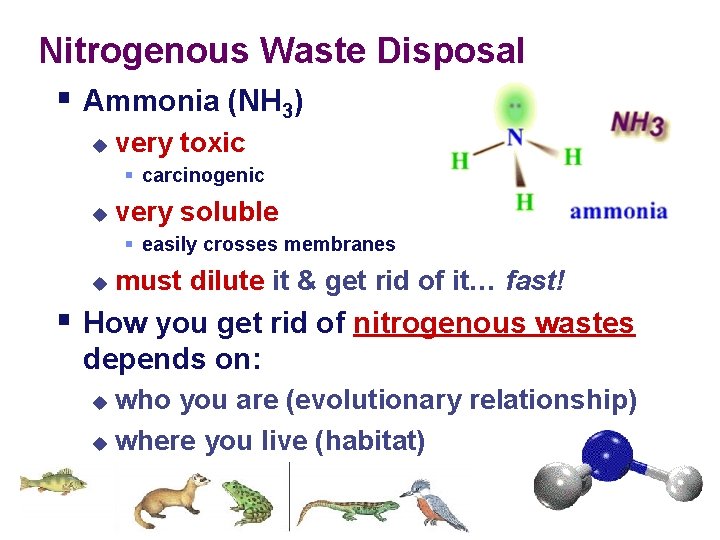
Nitrogenous Waste Disposal § Ammonia (NH 3) u very toxic § carcinogenic u very soluble § easily crosses membranes u must dilute it & get rid of it… fast! § How you get rid of nitrogenous wastes depends on: who you are (evolutionary relationship) u where you live (habitat) u
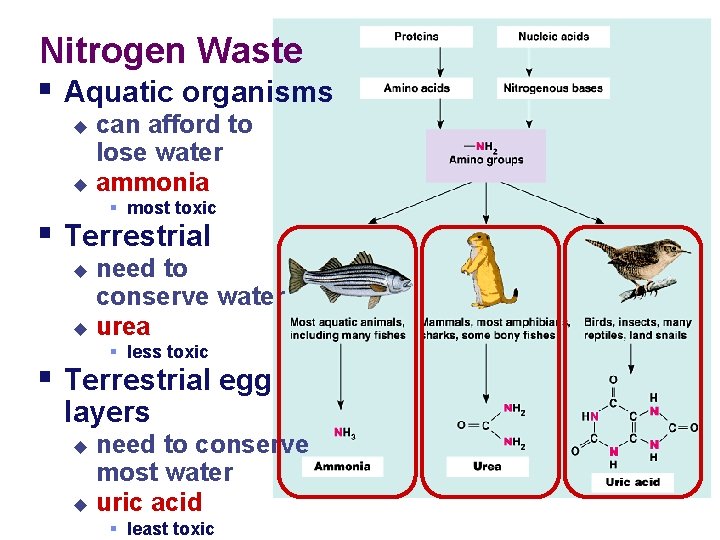
Nitrogen Waste § Aquatic organisms can afford to lose water u ammonia u § most toxic § Terrestrial need to conserve water u urea u § less toxic § Terrestrial egg layers need to conserve most water u uric acid u § least toxic
Any Questions?