
Chapter 40 Fighting the Cold War at Home
- Slides: 17
Chapter 40 – Fighting the Cold War at Home How did Anxieties raised by the Cold War affect life in the United States?
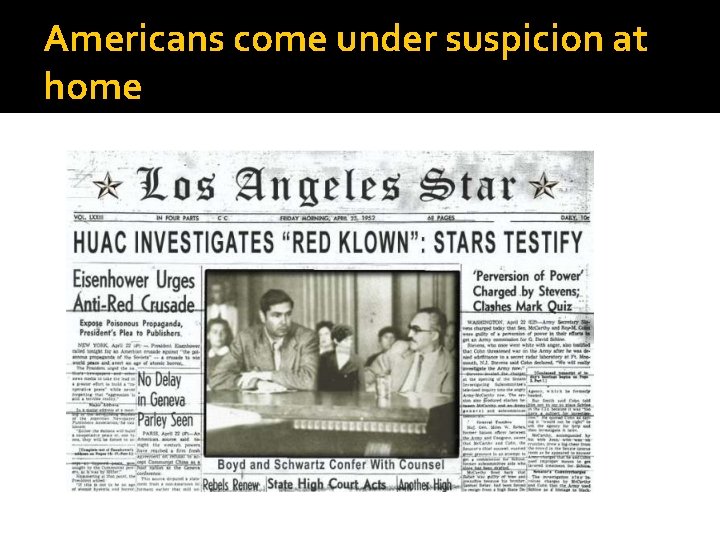
Americans come under suspicion at home
Communist Sympathizers �People who believed in Communism but did not join the party Ø Some, feeling communism might destroy wealth and prosperity, accused people of being disloyal and subversive (overthrow gov’t) Ø Loyalty Oath and background ensued causing hundreds to lose their jobs
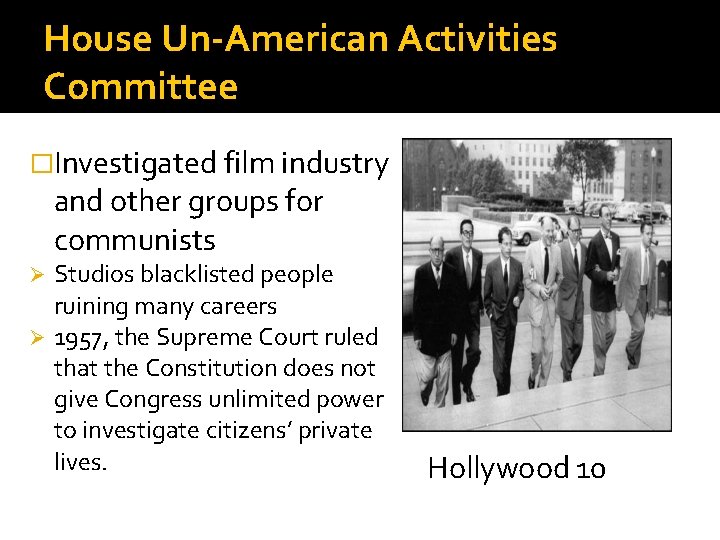
House Un-American Activities Committee �Investigated film industry and other groups for communists Studios blacklisted people ruining many careers Ø 1957, the Supreme Court ruled that the Constitution does not give Congress unlimited power to investigate citizens’ private lives. Ø Hollywood 10
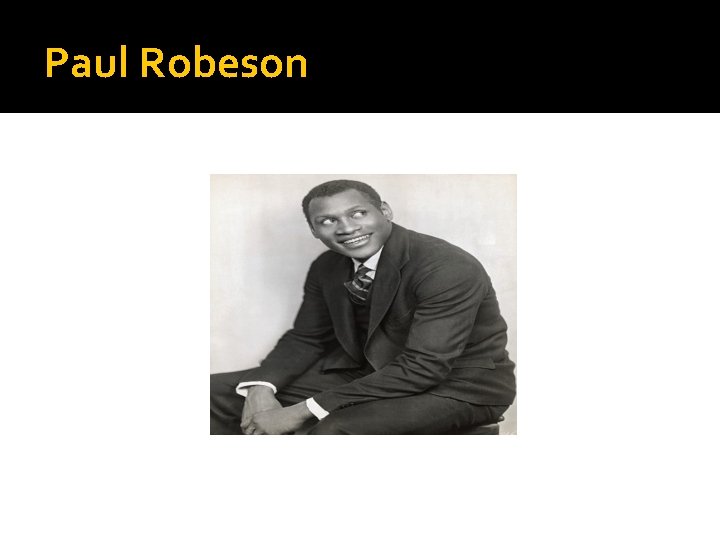
Paul Robeson
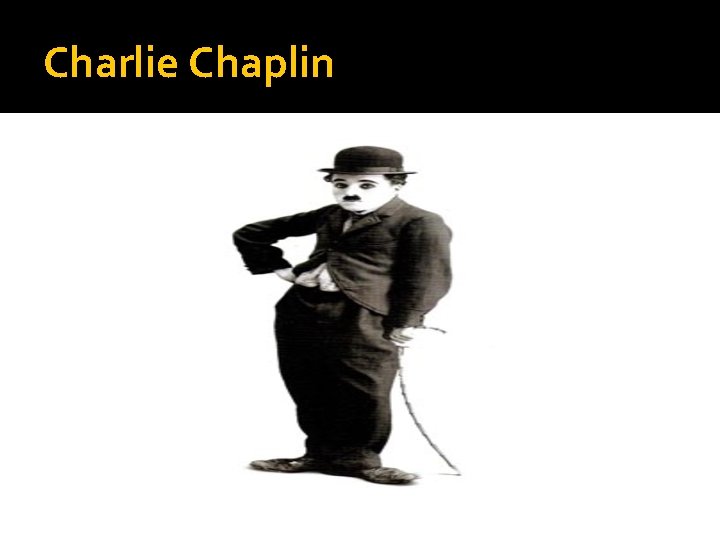
Charlie Chaplin
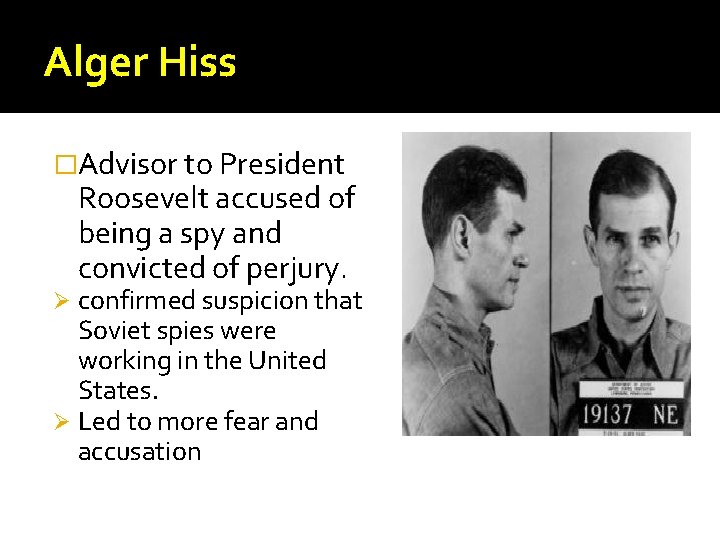
Alger Hiss �Advisor to President Roosevelt accused of being a spy and convicted of perjury. confirmed suspicion that Soviet spies were working in the United States. Ø Led to more fear and accusation Ø
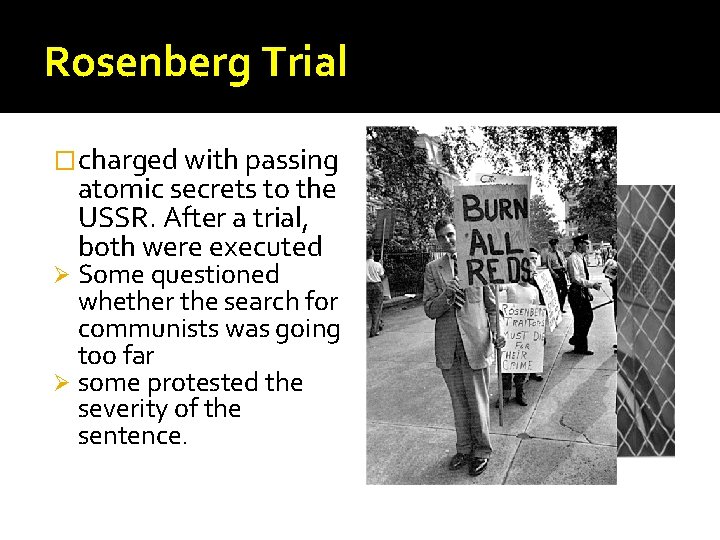
Rosenberg Trial �charged with passing atomic secrets to the USSR. After a trial, both were executed Some questioned whether the search for communists was going too far Ø some protested the severity of the sentence. Ø
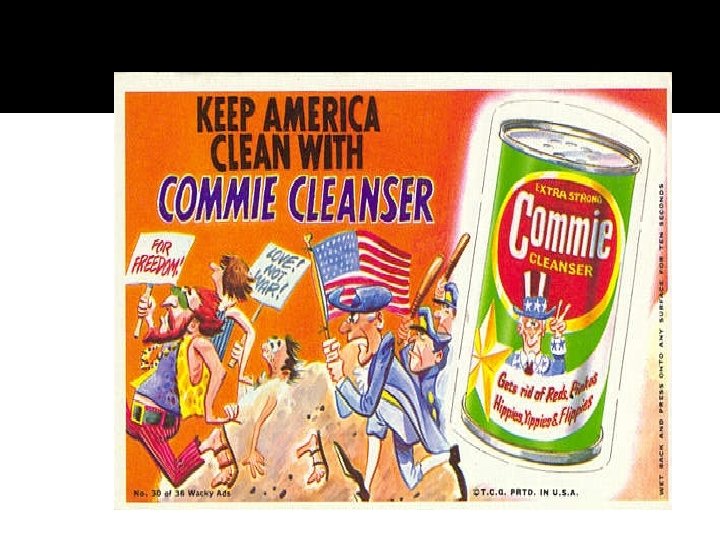
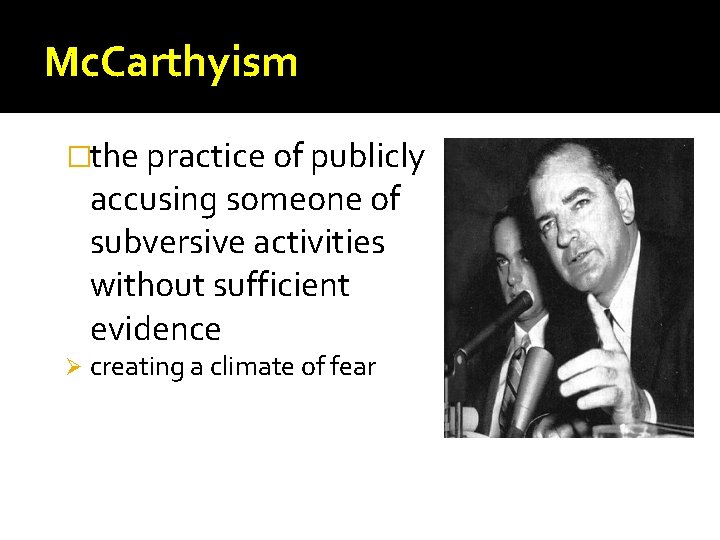
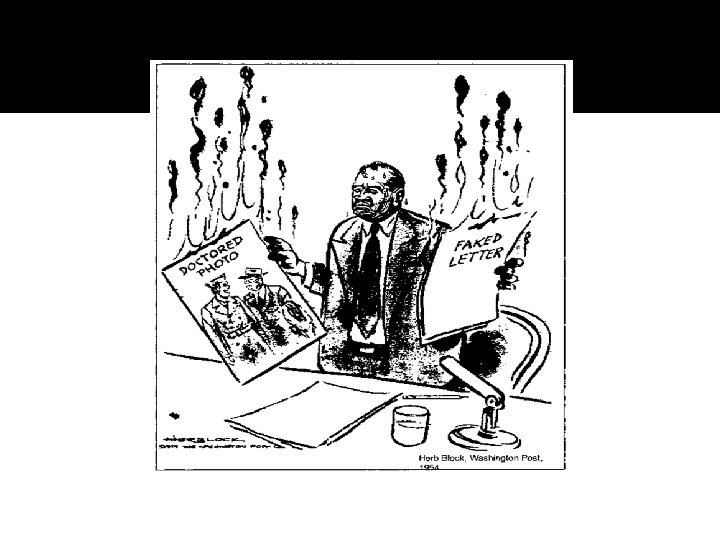
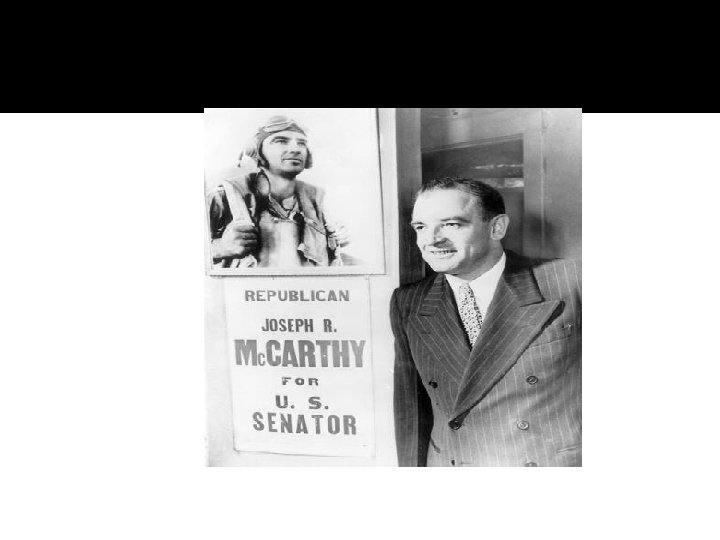
Mc. Carthyism �the practice of publicly accusing someone of subversive activities without sufficient evidence Ø creating a climate of fear
�On a scale from 1 to 10, how concerned do you think Americans should have been about the possibility of communist subversion and the presence of Soviet spies in the United States during the Cold War? �Do you think the United States had the right to complete background checks and require loyalty oaths of government employees? Why or why not? �Were the actions of the House Un-Americans Activities Committee appropriate? Why or why not? �Does the government ever have the right to limit or even take away some of our freedoms in order to keep us safe ?
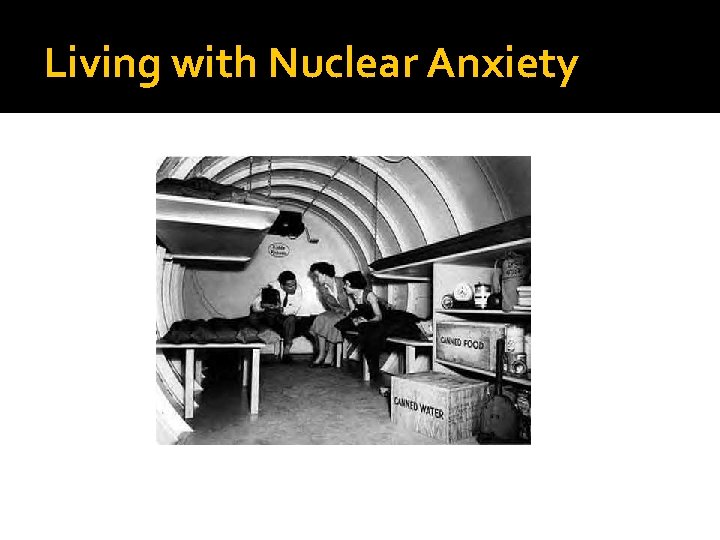
Living with Nuclear Anxiety
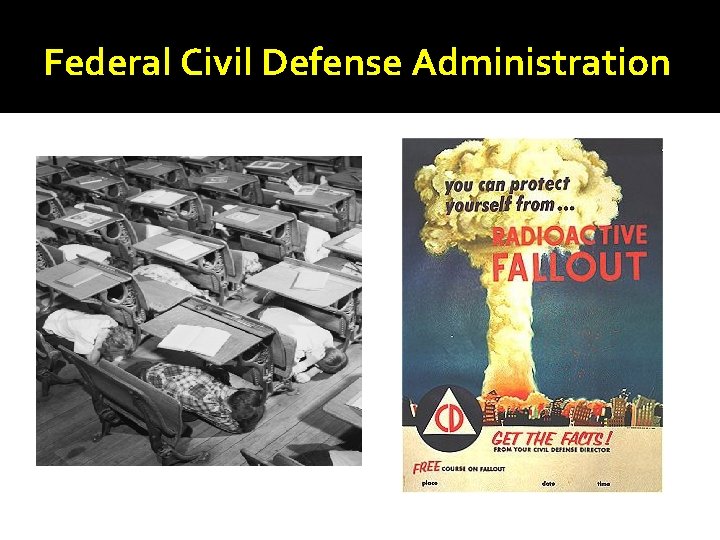
�How might 1950 s fifth graders have felt during a duck-and-cover lesson? �In what ways could such a lesson make you feel safer against the threat of a nuclear attack? What anxieties might have remained? �After learning to duck and cover, how might you have tried to change how you lived your life? �Why do you think the government would want to teach such a lesson to children?
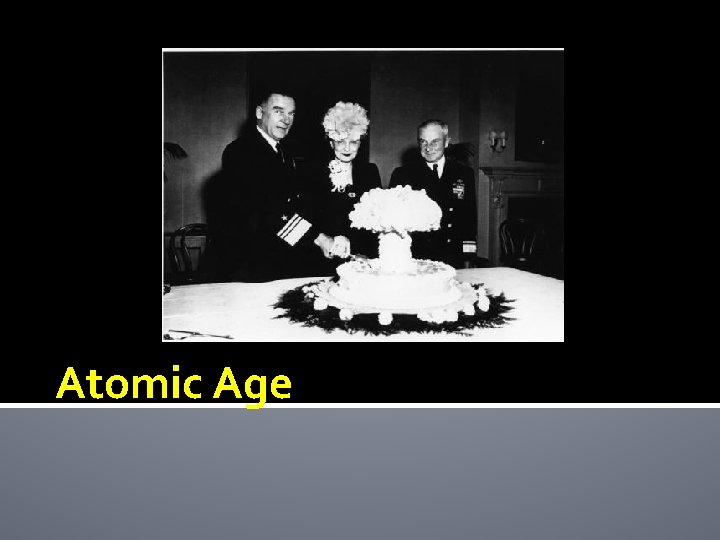
Atomic Age
Federal Civil Defense Administration