
Chapter 40 An Introduction to Animal Structure and
- Slides: 8
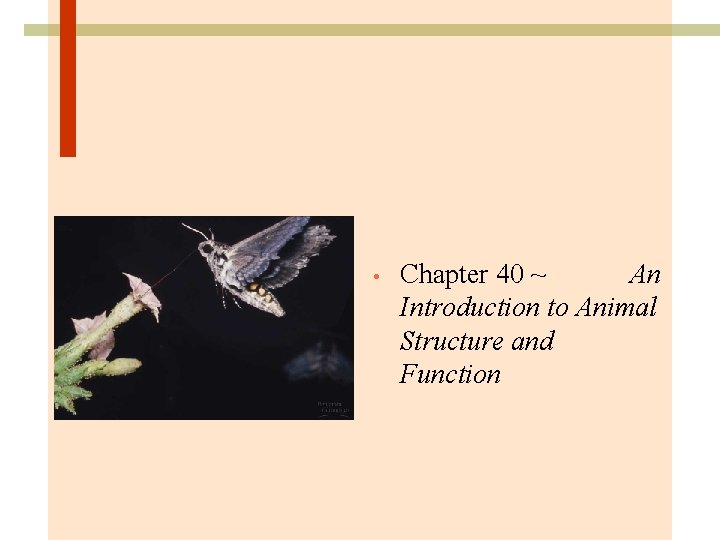
• Chapter 40 ~ An Introduction to Animal Structure and Function
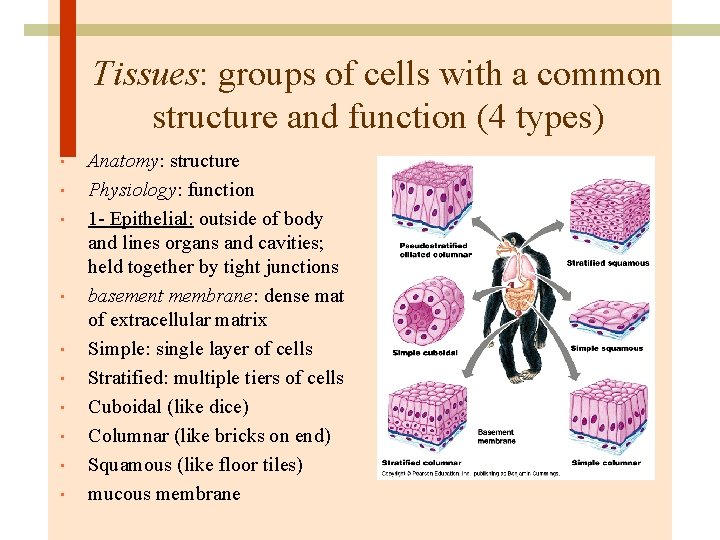
Tissues: groups of cells with a common structure and function (4 types) • • • Anatomy: structure Physiology: function 1 - Epithelial: outside of body and lines organs and cavities; held together by tight junctions basement membrane: dense mat of extracellular matrix Simple: single layer of cells Stratified: multiple tiers of cells Cuboidal (like dice) Columnar (like bricks on end) Squamous (like floor tiles) mucous membrane
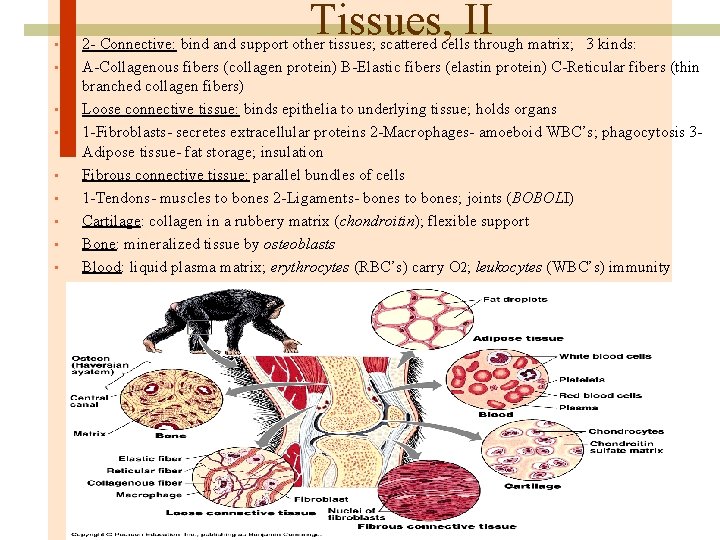
• • • Tissues, II 2 - Connective: bind and support other tissues; scattered cells through matrix; 3 kinds: A-Collagenous fibers (collagen protein) B-Elastic fibers (elastin protein) C-Reticular fibers (thin branched collagen fibers) Loose connective tissue: binds epithelia to underlying tissue; holds organs 1 -Fibroblasts- secretes extracellular proteins 2 -Macrophages- amoeboid WBC’s; phagocytosis 3 Adipose tissue- fat storage; insulation Fibrous connective tissue: parallel bundles of cells 1 -Tendons- muscles to bones 2 -Ligaments- bones to bones; joints (BOBOLI) Cartilage: collagen in a rubbery matrix (chondroitin); flexible support Bone: mineralized tissue by osteoblasts Blood: liquid plasma matrix; erythrocytes (RBC’s) carry O 2; leukocytes (WBC’s) immunity
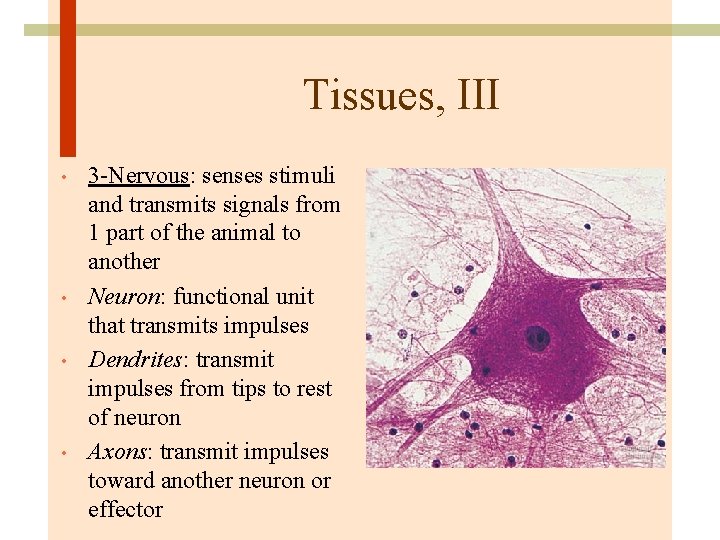
Tissues, III • • 3 -Nervous: senses stimuli and transmits signals from 1 part of the animal to another Neuron: functional unit that transmits impulses Dendrites: transmit impulses from tips to rest of neuron Axons: transmit impulses toward another neuron or effector
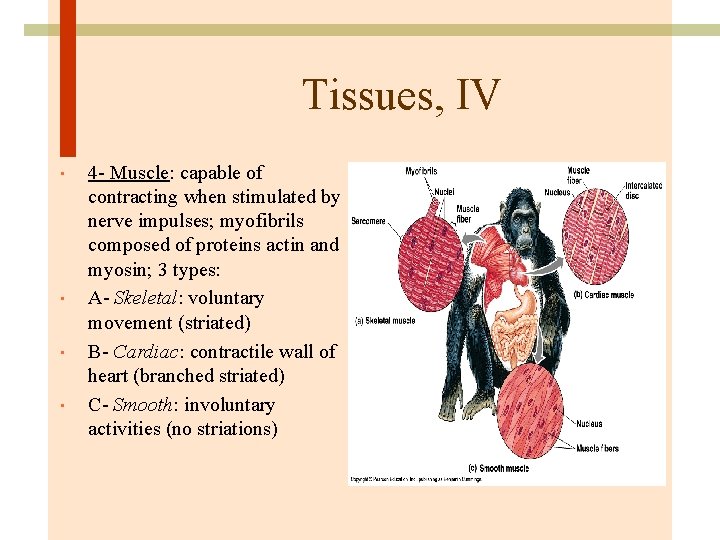
Tissues, IV • • 4 - Muscle: capable of contracting when stimulated by nerve impulses; myofibrils composed of proteins actin and myosin; 3 types: A- Skeletal: voluntary movement (striated) B- Cardiac: contractile wall of heart (branched striated) C- Smooth: involuntary activities (no striations)
Organ systems • • • Organ: organization of tissues Mesentaries: suspension of organs (connective tissue) Thoracic cavity (lungs and heart) Abdominal cavity (intestines) Diaphragm (respiration) Organ systems…. . . • • • Digestive-food processing Circulatory-internal distribution Respiratory-gas exchange Immune/Lymphatic-defense Excretory-waste disposal; osmoregulation Endocrine-coordination of body activities Reproductive-reproduction Nervous-detection of stimuli Integumentary-protection Skeletal-support; protection Muscular-movement; locomotion
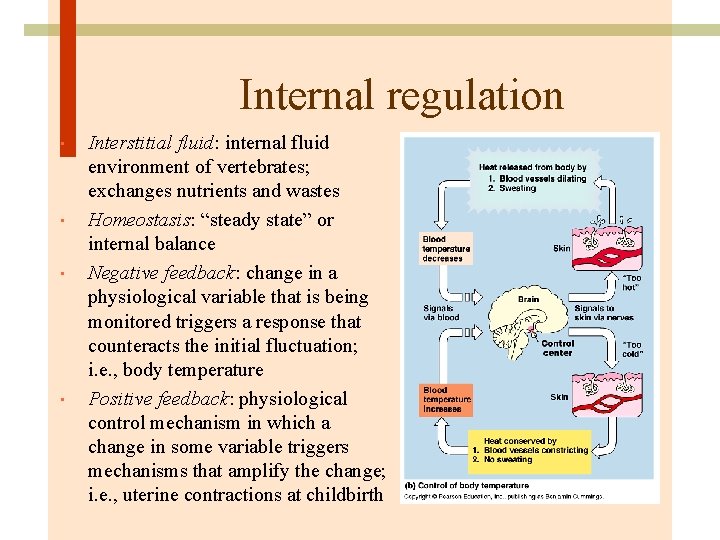
Internal regulation • • Interstitial fluid: internal fluid environment of vertebrates; exchanges nutrients and wastes Homeostasis: “steady state” or internal balance Negative feedback: change in a physiological variable that is being monitored triggers a response that counteracts the initial fluctuation; i. e. , body temperature Positive feedback: physiological control mechanism in which a change in some variable triggers mechanisms that amplify the change; i. e. , uterine contractions at childbirth
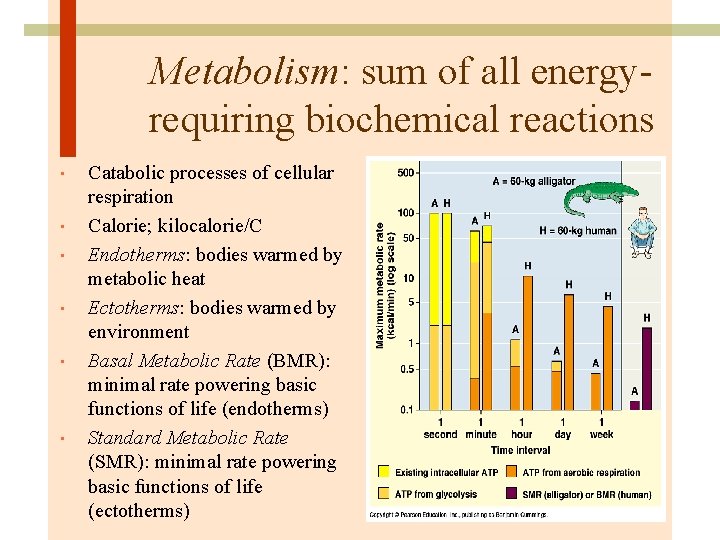
Metabolism: sum of all energyrequiring biochemical reactions • • • Catabolic processes of cellular respiration Calorie; kilocalorie/C Endotherms: bodies warmed by metabolic heat Ectotherms: bodies warmed by environment Basal Metabolic Rate (BMR): minimal rate powering basic functions of life (endotherms) Standard Metabolic Rate (SMR): minimal rate powering basic functions of life (ectotherms)