
Chapter 4 Why Do Interest Rate Change How



- Slides: 29
Chapter 4 Why Do Interest Rate Change (How the overall level of nominal interest rates is determined and which factors influence their behavior)
Learning Objectives • Identify the factors that affect the demand for assets. • Draw the demand supply curves for the bond market and identify the equilibrium interest rate. • List and describe the factors that affect the equilibrium interest rate in the bond market. Describe the connection between the bond market and the money market through the liquidity preference framework. • List and describe the factors that affect the money market and the equilibrium interest rate. • Identify and illustrate the effects on the interest rate of changes in money growth over time.
Determinants of Asset Demand (1 of 2) • Economic agents hold a variety of different assets. What are the primary assets you hold? • An asset is anything that can be owned and has value.
Determinants of Asset Demand (2 of 2) • Wealth: the total resources owned by the individual, including all assets • Expected Return: the return expected over the next period on one asset relative to alternative assets • Risk: the degree of uncertainty associated with the return on one asset relative to alternative assets • Liquidity: the ease and speed with which an asset can be turned into cash relative to alternative assets • Note: For further explanation study page 65 -67
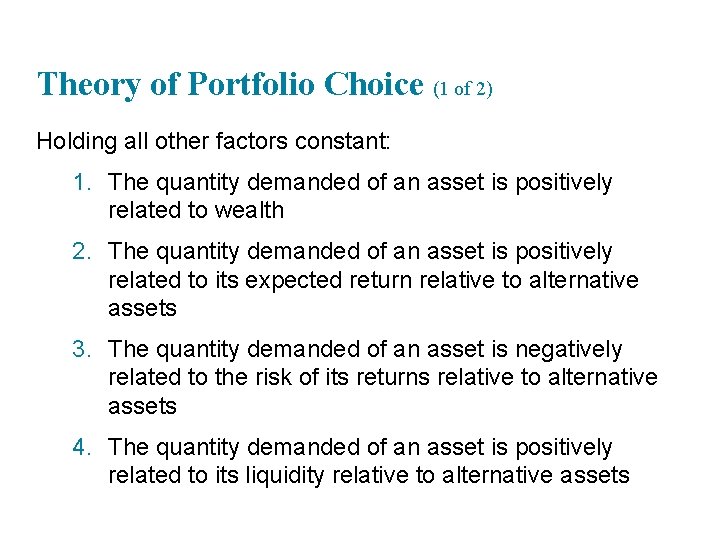
Theory of Portfolio Choice (1 of 2) Holding all other factors constant: 1. The quantity demanded of an asset is positively related to wealth 2. The quantity demanded of an asset is positively related to its expected return relative to alternative assets 3. The quantity demanded of an asset is negatively related to the risk of its returns relative to alternative assets 4. The quantity demanded of an asset is positively related to its liquidity relative to alternative assets
Theory of Portfolio Choice (2 of 2) Summary Table 1 Response of the Quantity of an Asset Demanded to Changes in Wealth, Expected Returns, Risk, and Liquidity Variable Change in Variable Wealth ↑ Change in Quantity Demanded ↑ Expected return relative to other assets ↑ ↑ Risk relative to other assets ↑ ↓ Liquidity relative to other assets ↑ ↑ Note: Only increases in the variables are shown. The effects of decreases in the variables on the quantity demanded would be the opposite of those indicated in the rightmost column.
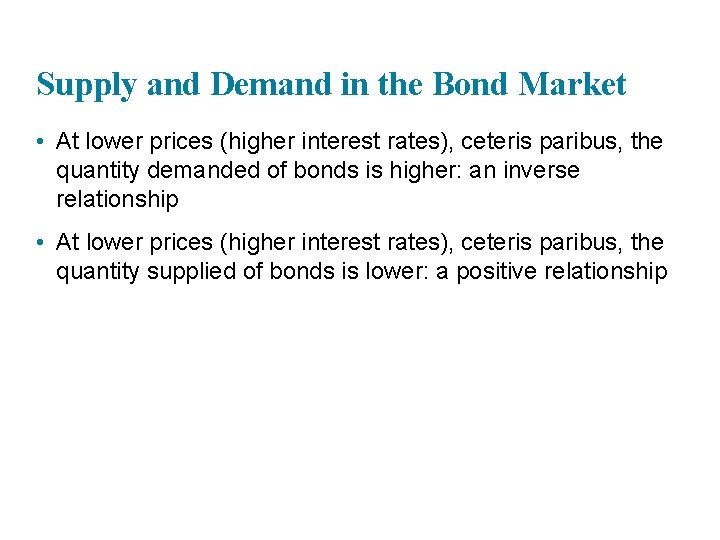
Supply and Demand in the Bond Market • At lower prices (higher interest rates), ceteris paribus, the quantity demanded of bonds is higher: an inverse relationship • At lower prices (higher interest rates), ceteris paribus, the quantity supplied of bonds is lower: a positive relationship
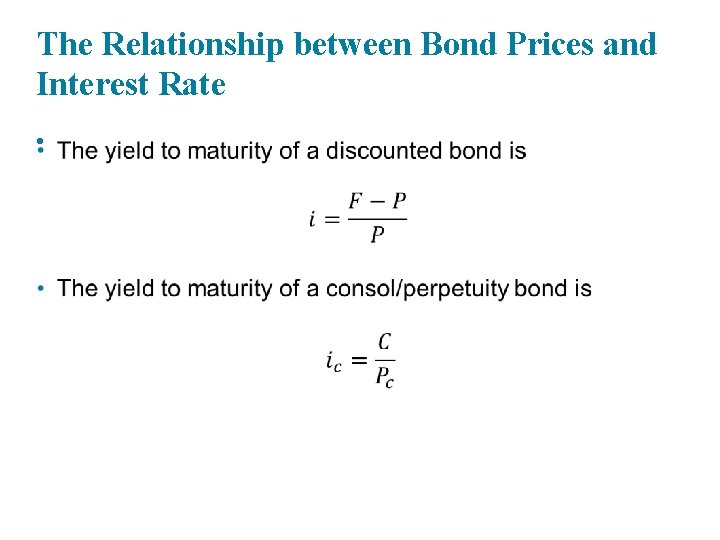
The Relationship between Bond Prices and Interest Rate •
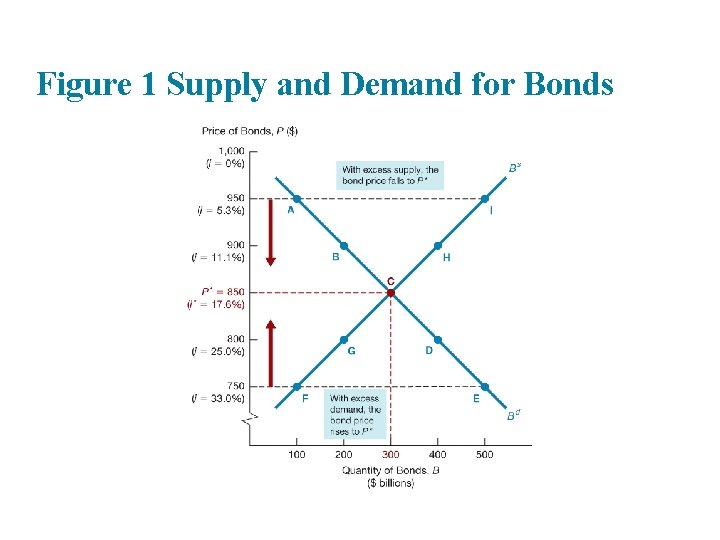
Figure 1 Supply and Demand for Bonds
Market Equilibrium • Occurs when the amount that people are willing to buy (demand) equals the amount that people are willing to sell (supply) at a given price. • Bd = Bs defines the equilibrium (or market clearing) price and interest rate. • When Bd > Bs , there is excess demand, price will rise and interest rate will fall. • When Bd < Bs , there is excess supply, price will fall and interest rate will rise.
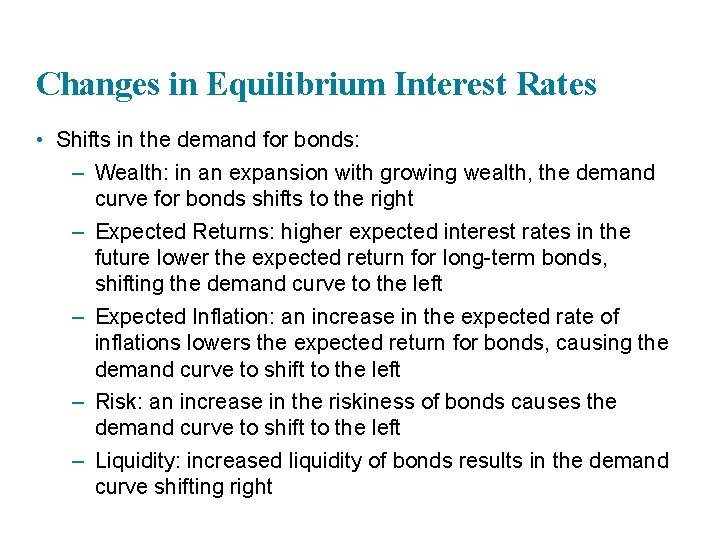
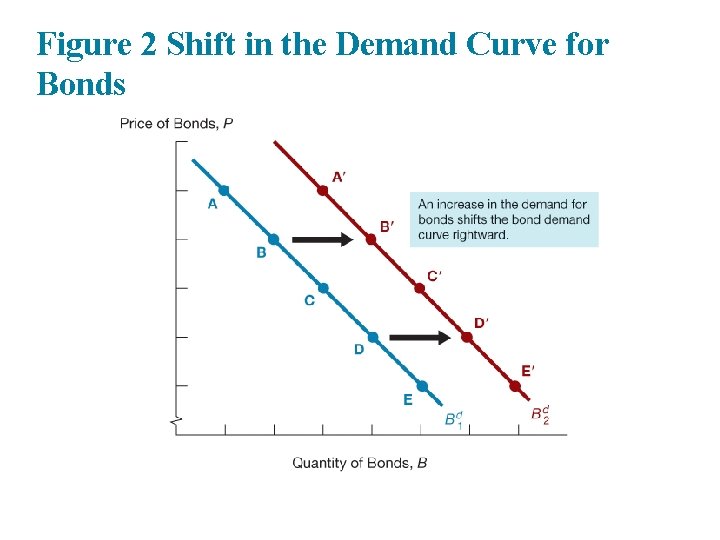
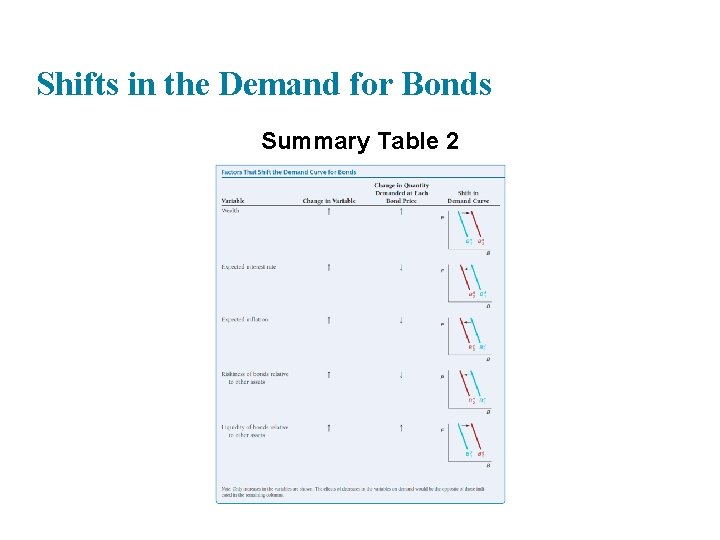
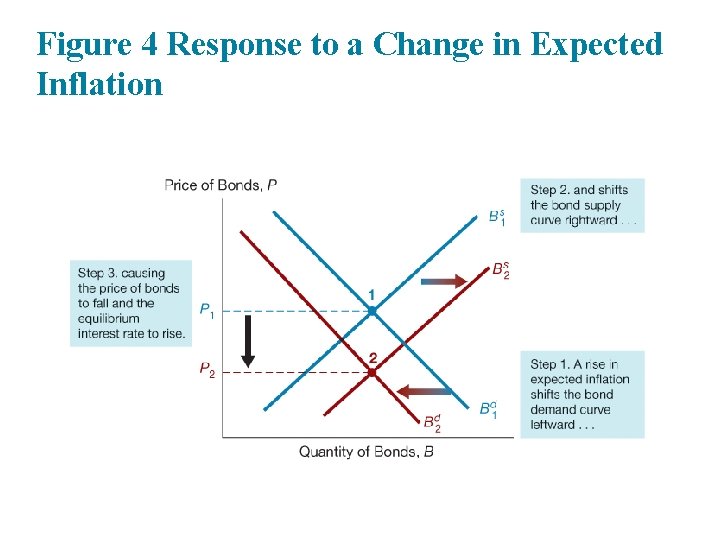
Changes in Equilibrium Interest Rates • Shifts in the demand for bonds: – Wealth: in an expansion with growing wealth, the demand curve for bonds shifts to the right – Expected Returns: higher expected interest rates in the future lower the expected return for long-term bonds, shifting the demand curve to the left – Expected Inflation: an increase in the expected rate of inflations lowers the expected return for bonds, causing the demand curve to shift to the left – Risk: an increase in the riskiness of bonds causes the demand curve to shift to the left – Liquidity: increased liquidity of bonds results in the demand curve shifting right
Figure 2 Shift in the Demand Curve for Bonds
Shifts in the Demand for Bonds Summary Table 2
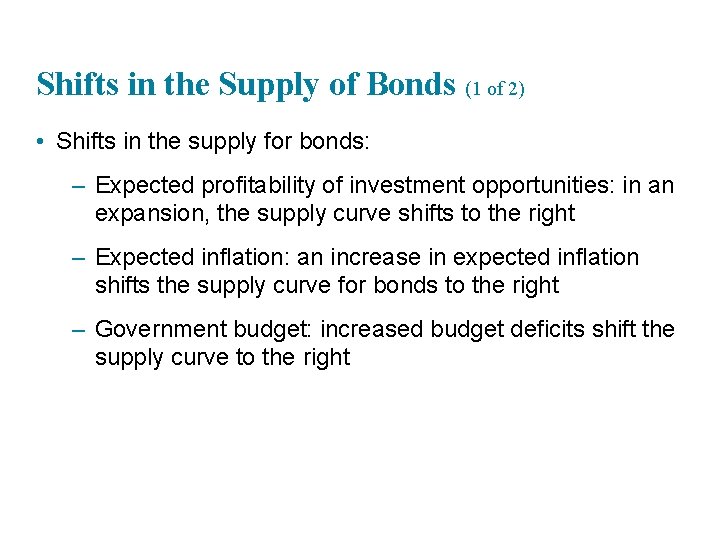
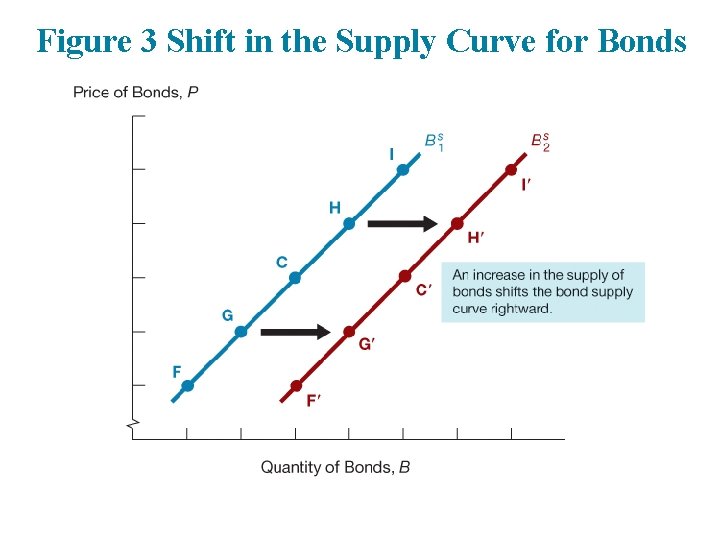
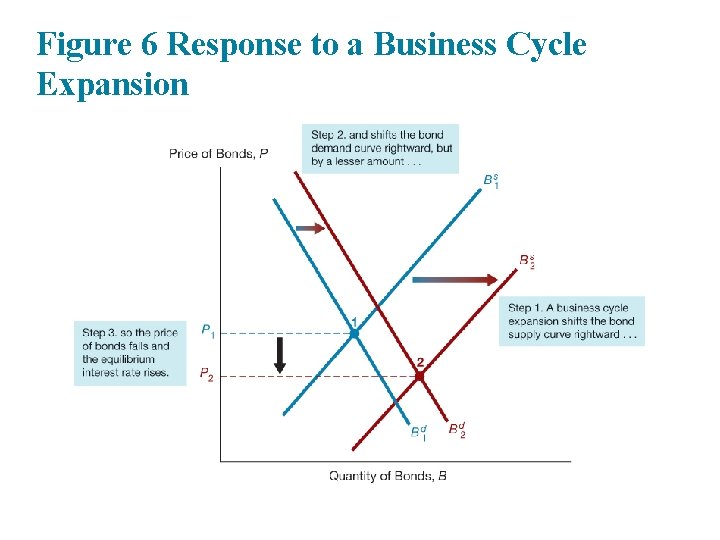
Shifts in the Supply of Bonds (1 of 2) • Shifts in the supply for bonds: – Expected profitability of investment opportunities: in an expansion, the supply curve shifts to the right – Expected inflation: an increase in expected inflation shifts the supply curve for bonds to the right – Government budget: increased budget deficits shift the supply curve to the right
Shifts in the Supply of Bonds (2 of 2) Summary Table 3
Figure 3 Shift in the Supply Curve for Bonds
Figure 4 Response to a Change in Expected Inflation
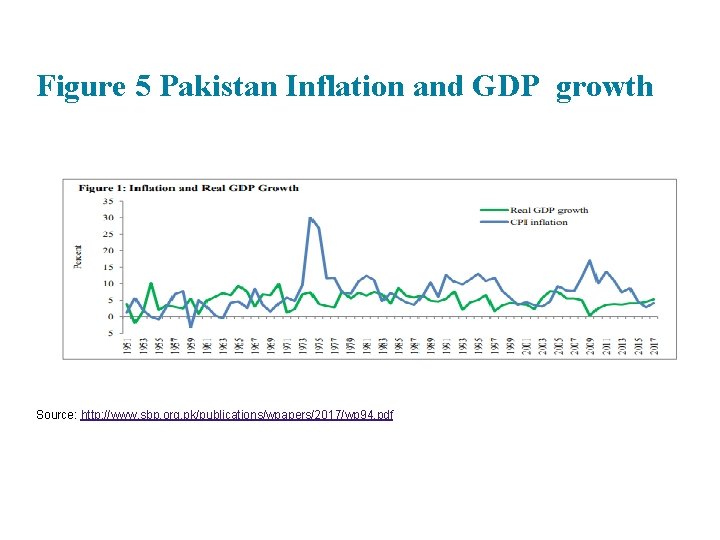
Figure 5 Pakistan Inflation and GDP growth Source: http: //www. sbp. org. pk/publications/wpapers/2017/wp 94. pdf
Figure 6 Response to a Business Cycle Expansion
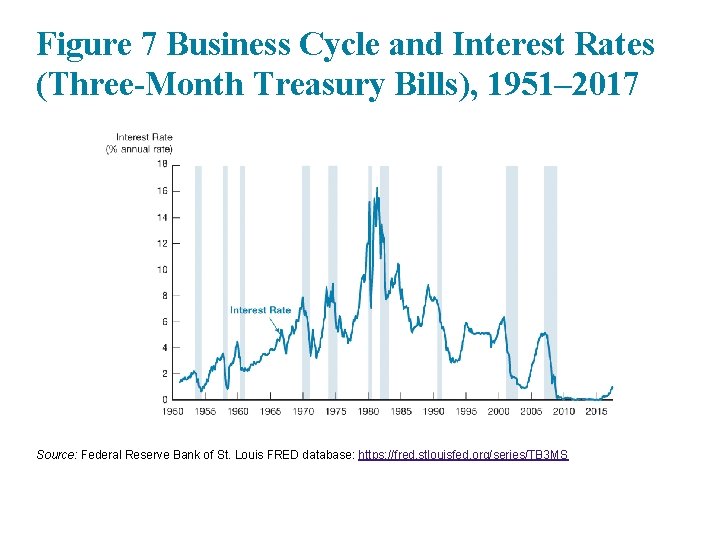
Figure 7 Business Cycle and Interest Rates (Three-Month Treasury Bills), 1951– 2017 Source: Federal Reserve Bank of St. Louis FRED database: https: //fred. stlouisfed. org/series/TB 3 MS
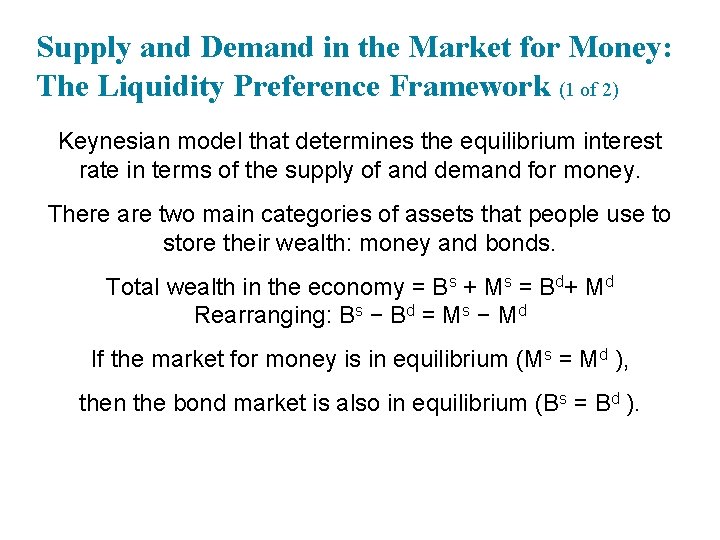
Supply and Demand in the Market for Money: The Liquidity Preference Framework (1 of 2) Keynesian model that determines the equilibrium interest rate in terms of the supply of and demand for money. There are two main categories of assets that people use to store their wealth: money and bonds. Total wealth in the economy = Bs + Ms = Bd+ Md Rearranging: Bs − Bd = Ms − Md If the market for money is in equilibrium (Ms = Md ), then the bond market is also in equilibrium (Bs = Bd ).
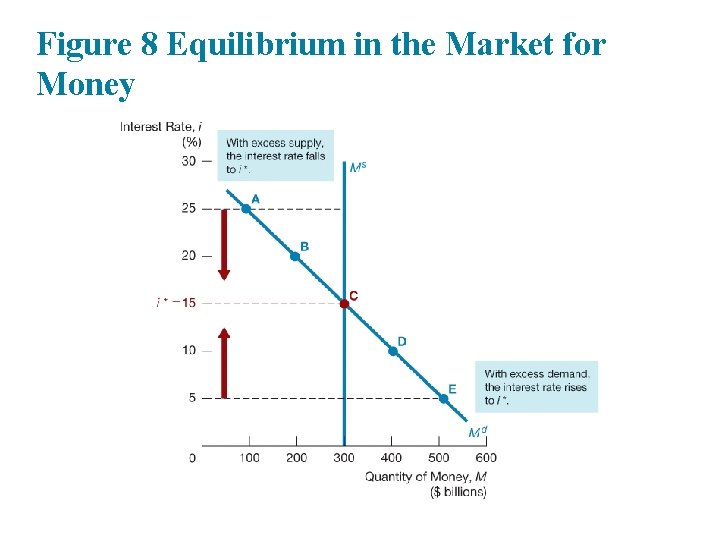
Figure 8 Equilibrium in the Market for Money
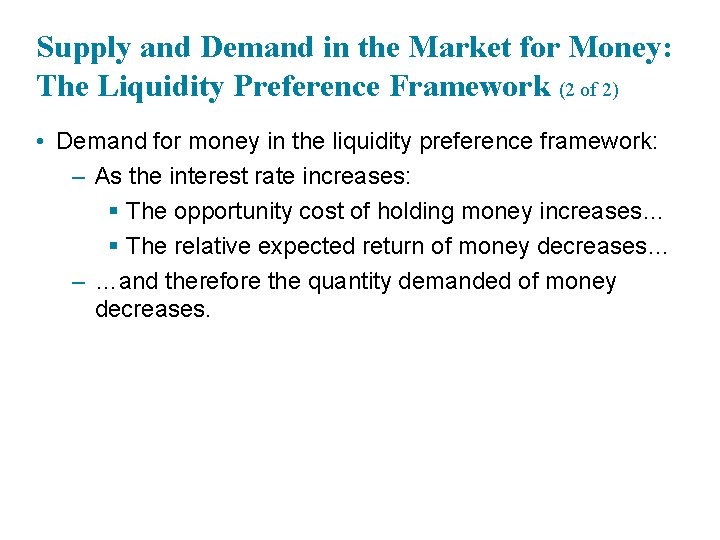
Supply and Demand in the Market for Money: The Liquidity Preference Framework (2 of 2) • Demand for money in the liquidity preference framework: – As the interest rate increases: § The opportunity cost of holding money increases… § The relative expected return of money decreases… – …and therefore the quantity demanded of money decreases.
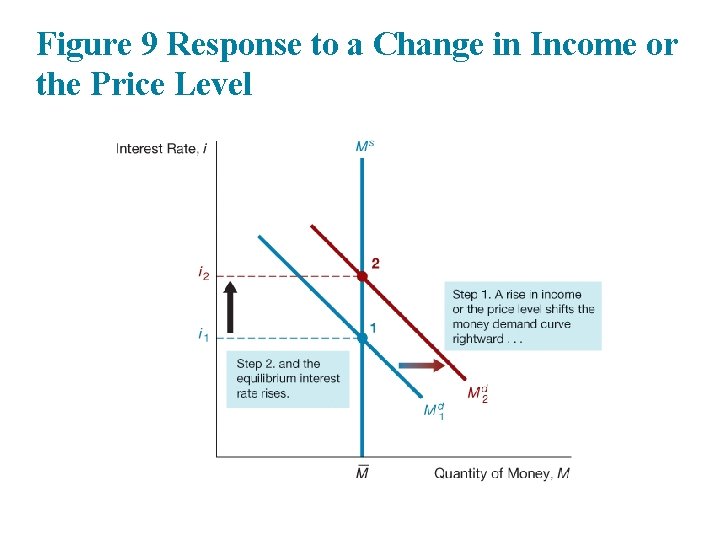
Changes in Equilibrium Interest Rates in the Liquidity Preference Framework (1 of 3) • Shifts in the demand for money: – Income Effect: a higher level of income causes the demand for money at each interest rate to increase and the demand curve to shift to the right § The rises in income cause wealth to increase § People need to carry out more transactions – Price-Level Effect: a rise in the price level causes the demand for money at each interest rate to increase and the demand curve to shift to the right § People care about their money of holding in real terms
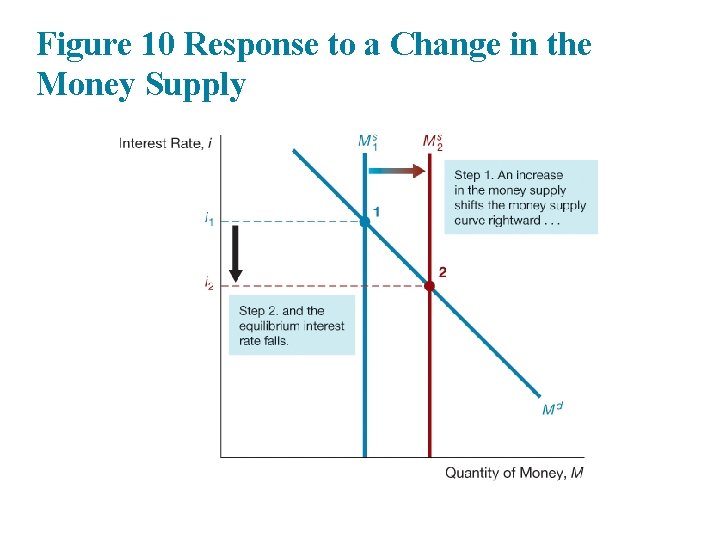
Changes in Equilibrium Interest Rates in the Liquidity Preference Framework (2 of 3) • Shifts in the supply of money: – Assume that the supply of money is controlled by the central bank. – An increase in the money supply engineered by the Federal Reserve will shift the supply curve for money to the right.
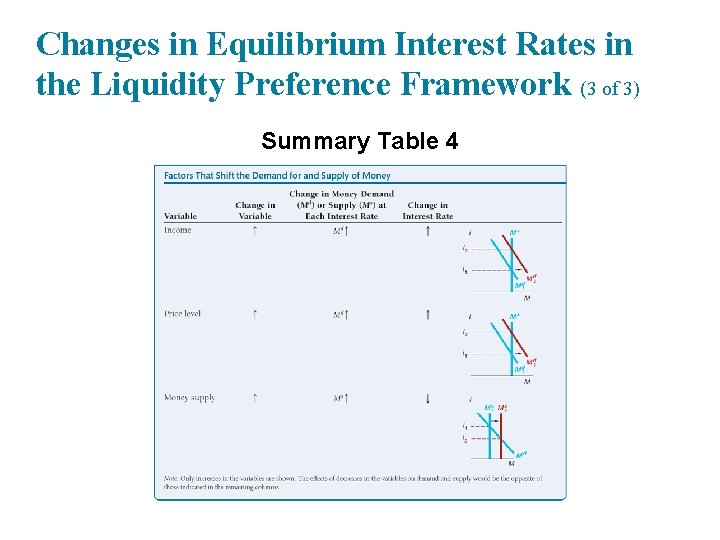
Changes in Equilibrium Interest Rates in the Liquidity Preference Framework (3 of 3) Summary Table 4
Figure 9 Response to a Change in Income or the Price Level
Figure 10 Response to a Change in the Money Supply
Money and Interest Rates • A one time increase in the money supply will cause prices to rise to a permanently higher level by the end of the year. The interest rate will rise via the increased prices. • Price-level effect remains even after prices have stopped rising. • A rising price level will raise interest rates because people will expect inflation to be higher over the course of the year. When the price level stops rising, expectations of inflation will return to zero. • Expected-inflation effect persists only as long as the price level continues to rise.