
Chapter 4 Weathering and Erosion TOPIC 6 River
- Slides: 21
Chapter 4: Weathering and Erosion TOPIC 6 : River Deposits ; Flooding
Deposition • The amount and size of a river’s load depends on discharge, which in turn depends on speed. • When a river slows down, it loses it’s ability to carry some of it’s load. • Some of the load gets deposited where the river loses speed. Heaviest load (bedload) is the first to get deposited.
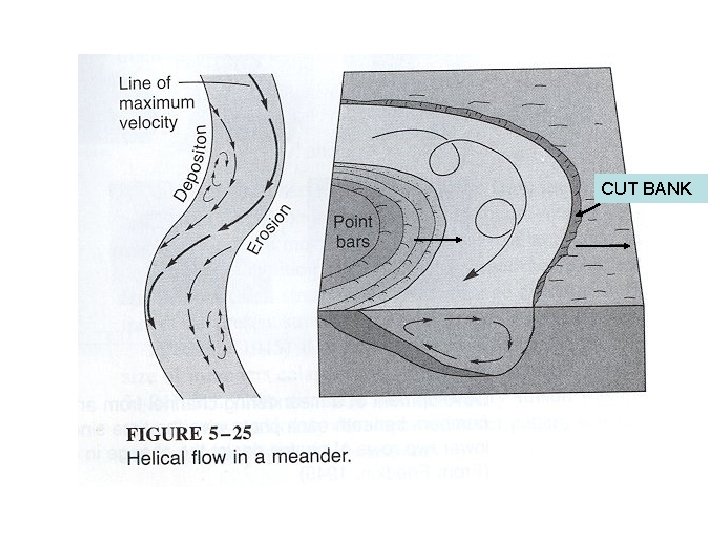
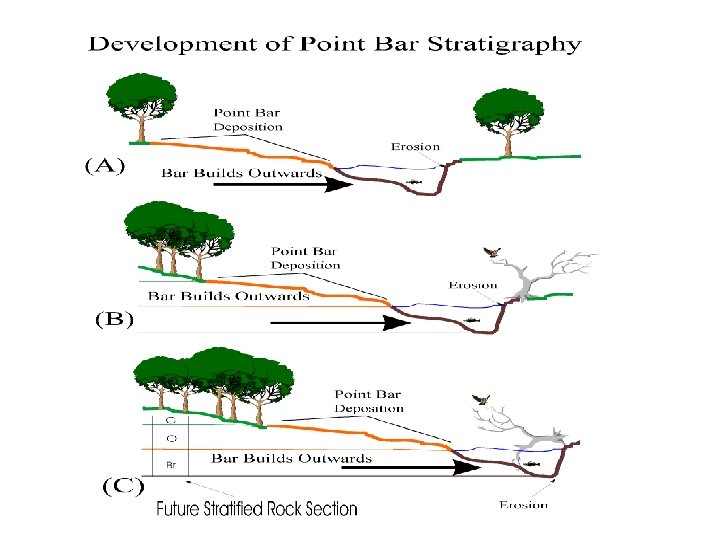
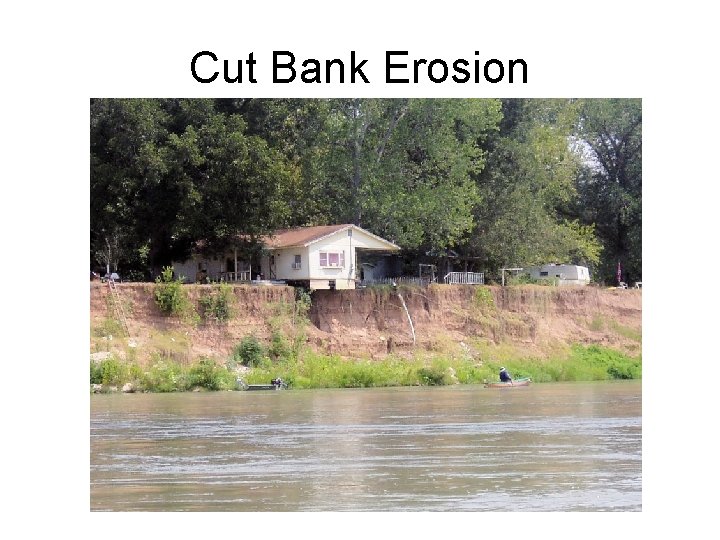
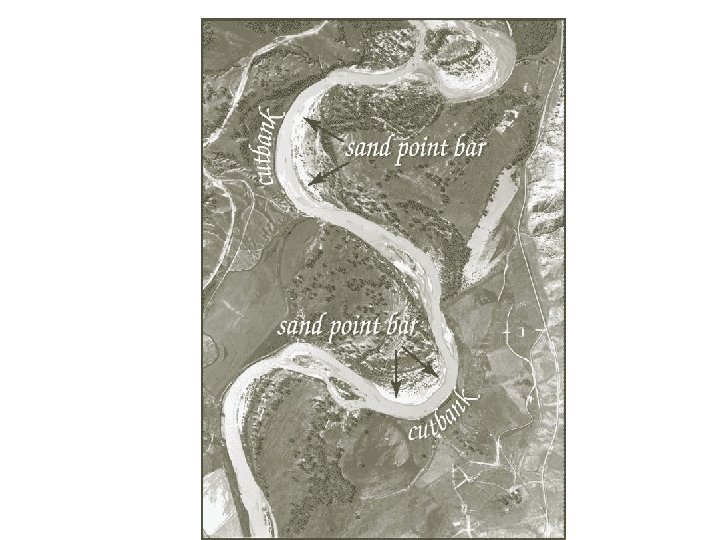
Deposition locations • The inside bank of meanders (looping bends) – In sharp turns, water on the inside of the turn slows down while it speeds up on the outside bank. (inside = deposition ; outside = erosion) • Near and at the mouth of a river – As rivers approach their base level (elevation of what they are flowing into) they lose most of their gradient and speed.
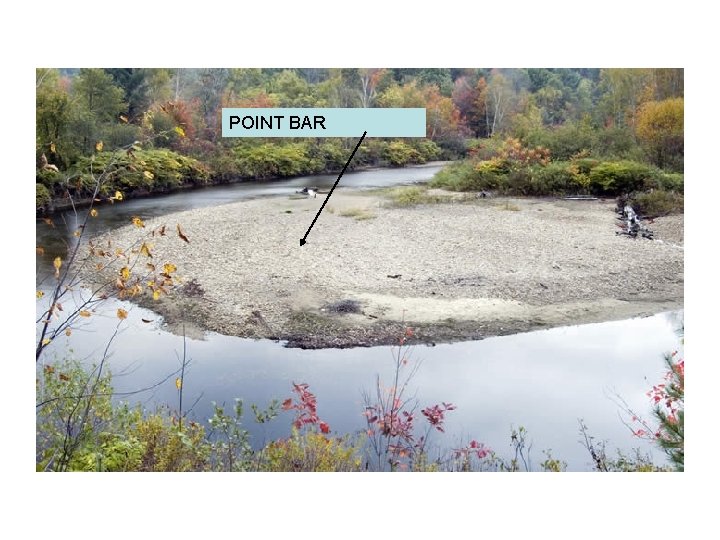
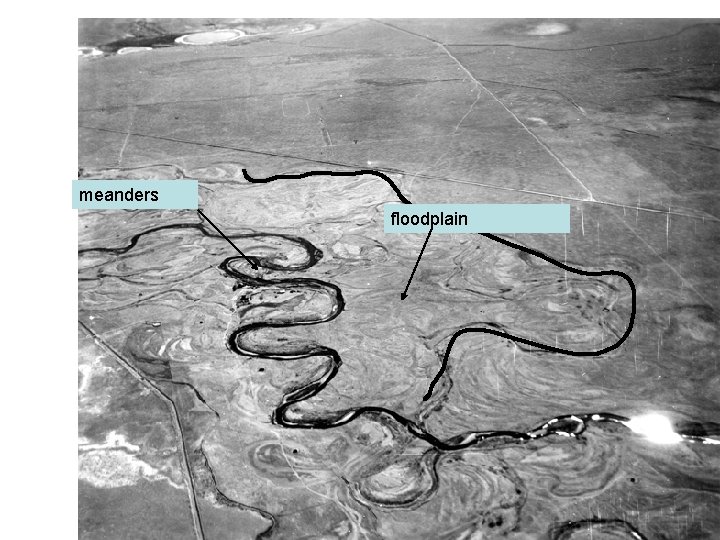
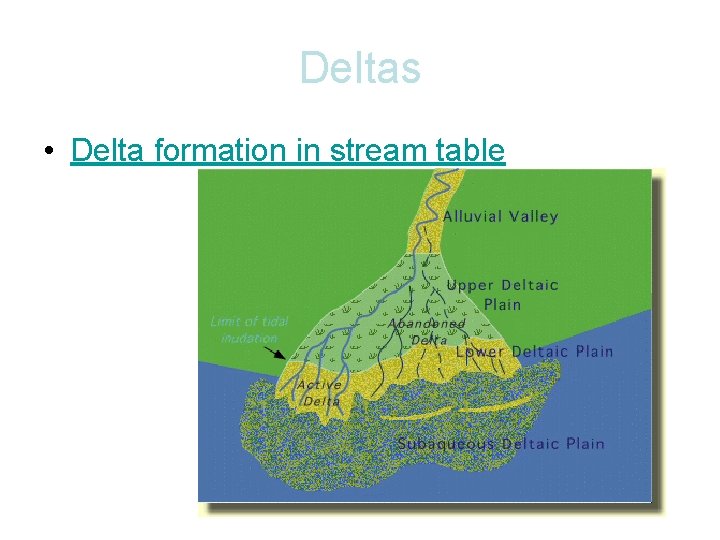
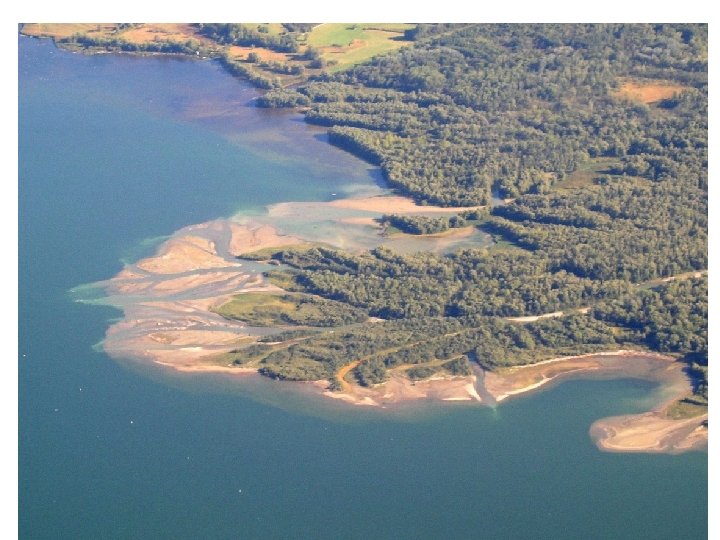
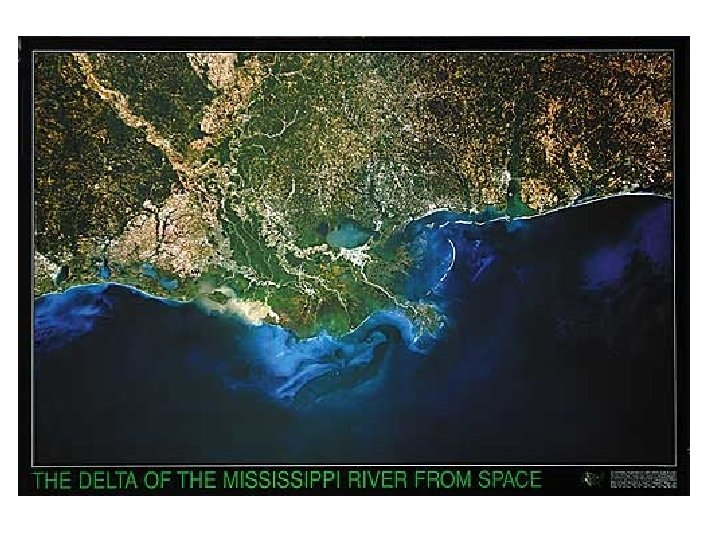
Depositional Features of Rivers • POINT BARS and FLOODPLAINS – Form along the inside bank of meanders – Point bars = rocks, gravel, sand – Floodplains = soil (sand, silt, clay) • Flat areas of fertile soil that form along the banks of a river and are covered by water during flood stage. • DELTAS and ALLUVIAL FANS – Fan-shaped land formed at the mouth of a river from deposits of fertile sediment.
CUT BANK
POINT BAR
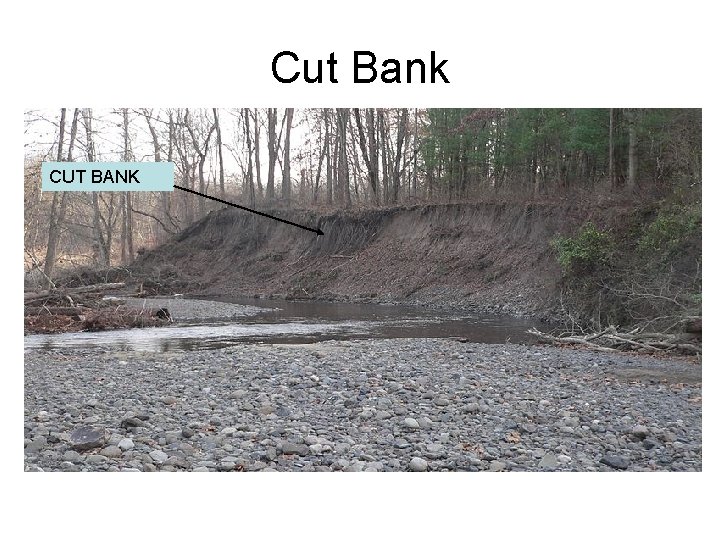
Cut Bank CUT BANK
Cut Bank Erosion
meanders floodplain
Formation of Point Bars and Floodplains • http: //csdms. colorado. edu/wiki/Movie: Floo dplain_Evolution • Stream table meandering
Deltas • Delta formation in stream table
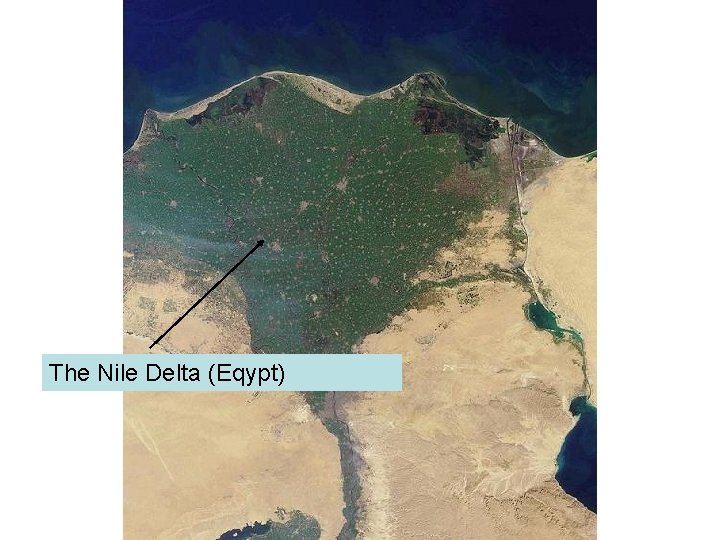
The Nile Delta (Eqypt)
Benefits and dangers of rivers • In addition to providing fresh water, river deposits produce very fertile farmland. • Floodplains and deltas are among the most fertile areas for farming. • Floodplains and deltas are prone to flooding when rivers overflow their banks (known as “flood stage”). Crops and structures built on these may be destroyed during floods.
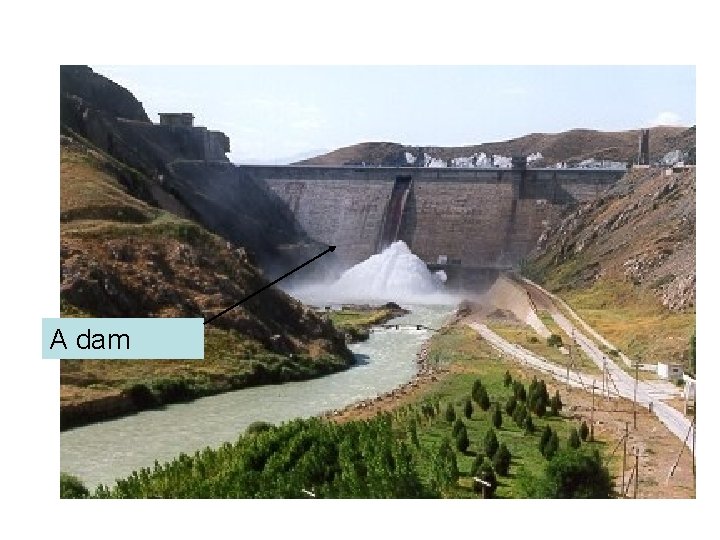
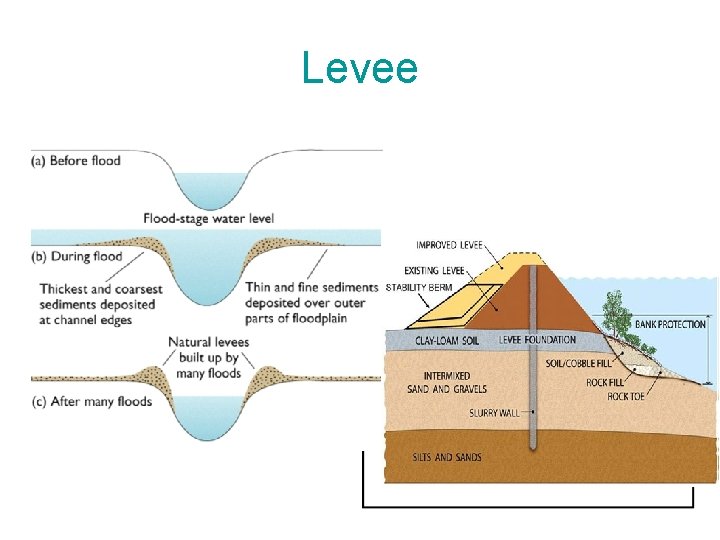
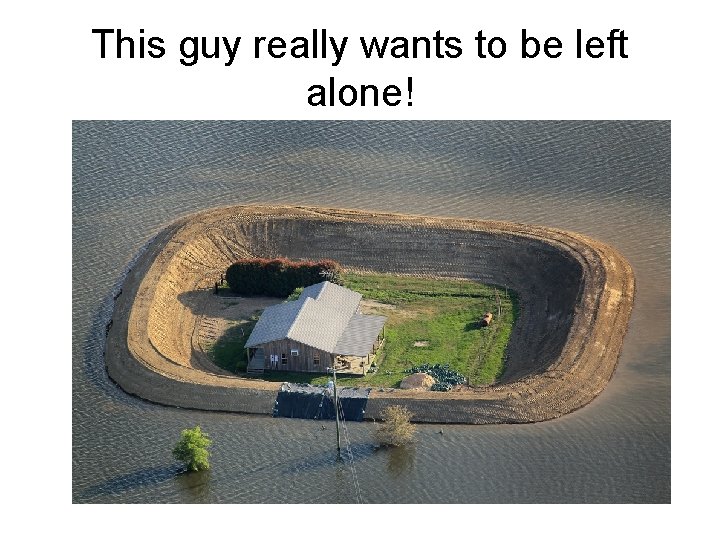
Controlling the river • The risk of flooding can be controlled by the construction of: – Dams – a barrier that redirects the flow of water to another area; controls how much water flows through the channel. • Dams can also use the energy of a river to produce mechanical or electrical energy. – Levees – a barrier built along the banks of a river to prevent overflow during flood stage.
Taming the River- Dams A dam
Levee
This guy really wants to be left alone!