
Chapter 4 Understanding the Global Context of Business

Chapter 4 Understanding the Global Context of Business What is the most popular Campbell’s Soup flavor in Hong Kong? Day 2 Power. Point Presentation by Charlie Cook Copyright © 2005 Prentice Hall, Inc. All rights reserved.

Business 30: Global Management • • • Survey of international business issues Trade, economics, cultures, politics Management strategies Also: Busi 36, International Marketing Also: Busi 38, Multiculturalism in Corporate America Copyright © 2005 Prentice Hall, Inc. All rights reserved. 2

Key Topics • The rise of global business • Major world marketplaces and U. S. trading partners • Influences on international business • International business management • The impact of differences among nations Copyright © 2005 Prentice Hall, Inc. All rights reserved. 3
Globalization Is Gaining Speed • The world used to be a disconnected collection of independent economic systems. • The world is becoming one interdependent economy. • Let’s take a look at the signs of change. Copyright © 2005 Prentice Hall, Inc. All rights reserved. 4
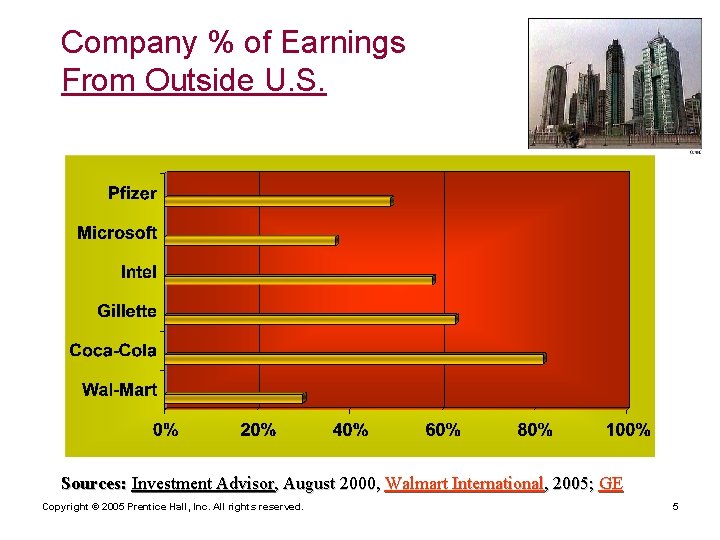
Company % of Earnings From Outside U. S. Sources: Investment Advisor, August 2000, Walmart International, 2005; GE Copyright © 2005 Prentice Hall, Inc. All rights reserved. 5
Why do companies bother with international business? • General rule: Take the profit growth opportunity that provides the greatest return for the least amount of inputs. Ø Would you bother if you couldn’t make money? • Historical paths to going global Ø We outgrew this market, now what? Ø How can we outsell our competitors? • Shortcutting the old path Ø Technology, information, and that general rule again v Exporting to China anyone? Copyright © 2005 Prentice Hall, Inc. All rights reserved. 6
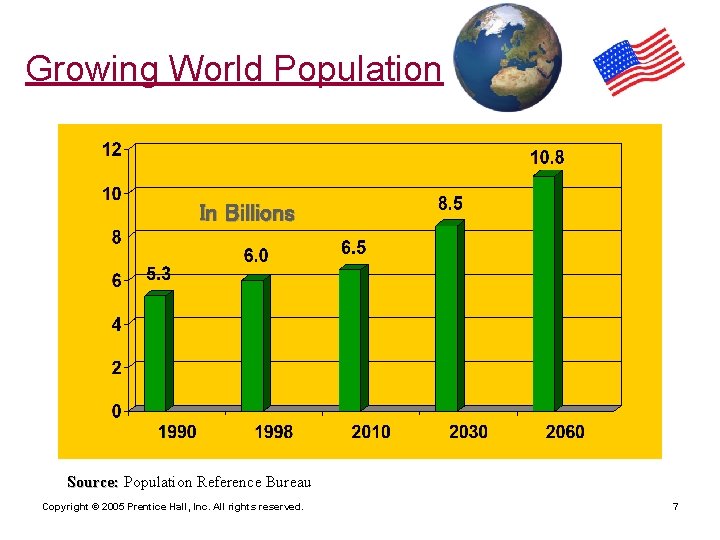
Growing World Population In Billions Source: Population Reference Bureau Copyright © 2005 Prentice Hall, Inc. All rights reserved. 7
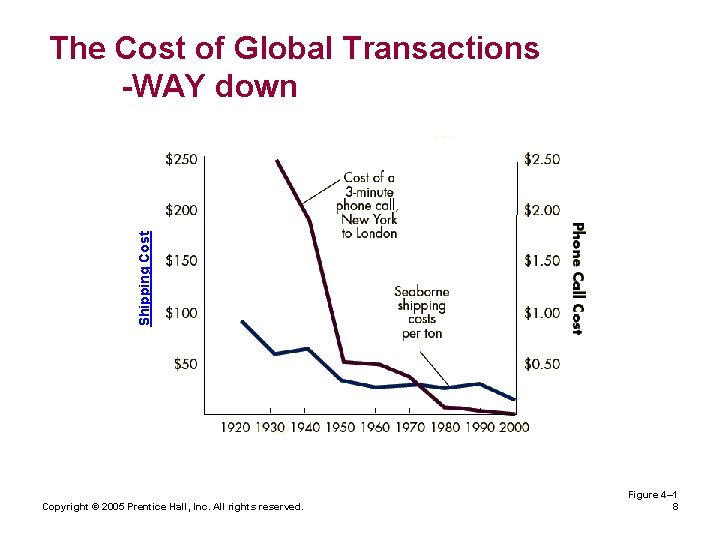
Shipping Cost The Cost of Global Transactions -WAY down Copyright © 2005 Prentice Hall, Inc. All rights reserved. Figure 4– 1 8
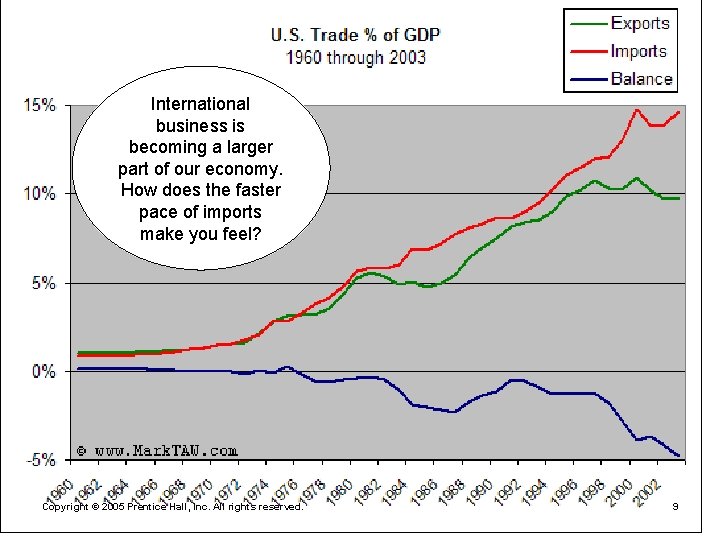
International business is becoming a larger part of our economy. How does the faster pace of imports make you feel? Copyright © 2005 Prentice Hall, Inc. All rights reserved. 9
Key Topics • The rise of global business • Major world marketplaces and U. S. trading partners • Influences on international business • International business management • The impact of differences among nations Copyright © 2005 Prentice Hall, Inc. All rights reserved. 10
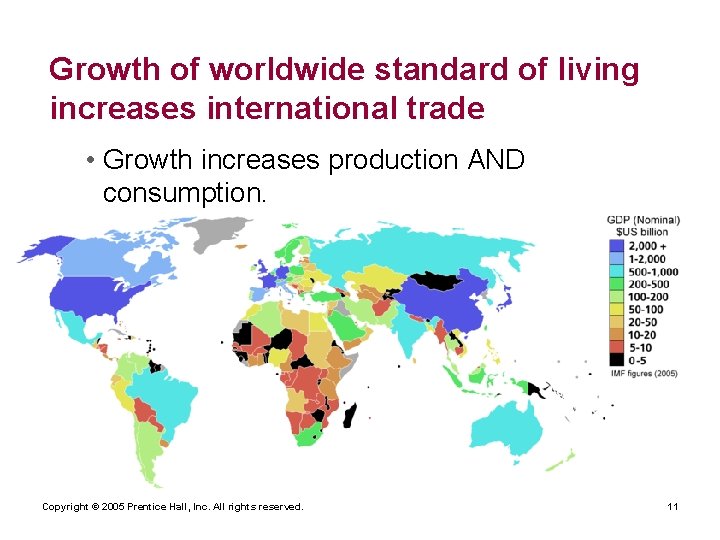
Growth of worldwide standard of living increases international trade • Growth increases production AND consumption. Copyright © 2005 Prentice Hall, Inc. All rights reserved. 11
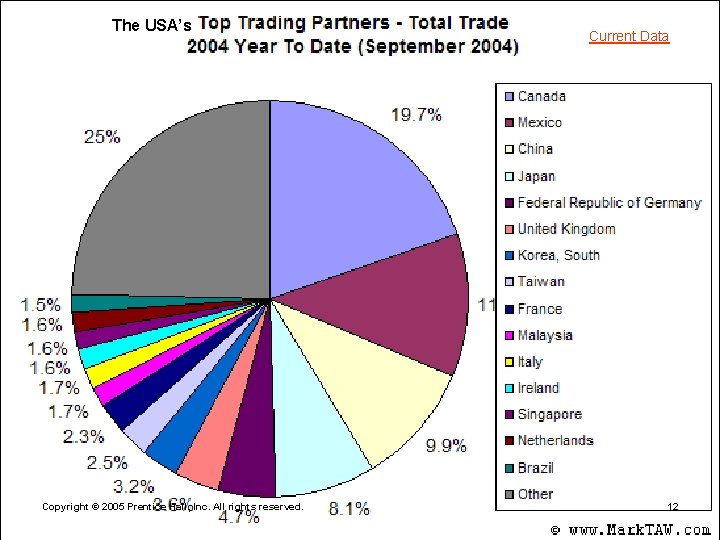
The USA’s Copyright © 2005 Prentice Hall, Inc. All rights reserved. Current Data 12
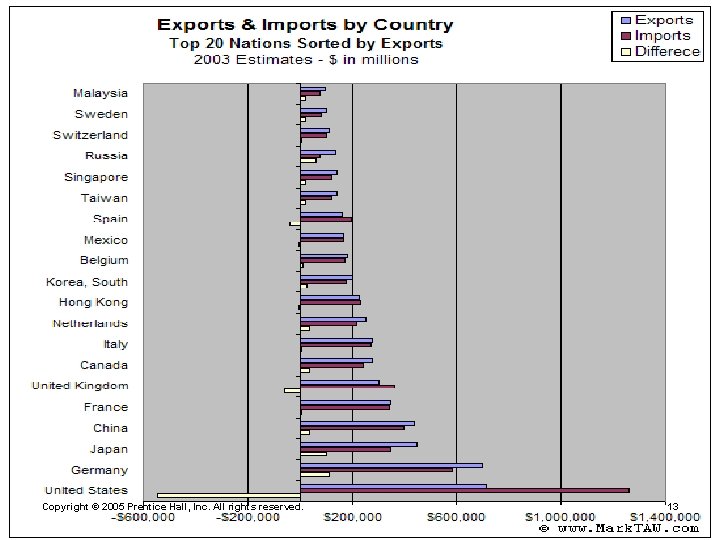
Copyright © 2005 Prentice Hall, Inc. All rights reserved. 13
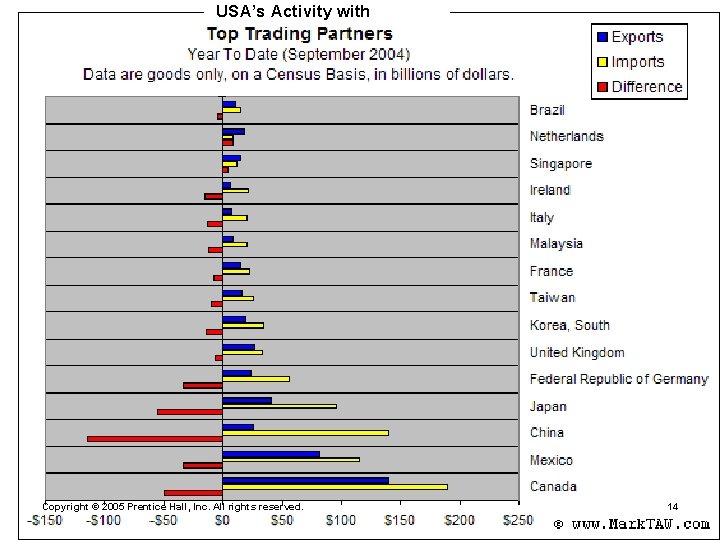
USA’s Activity with Copyright © 2005 Prentice Hall, Inc. All rights reserved. 14
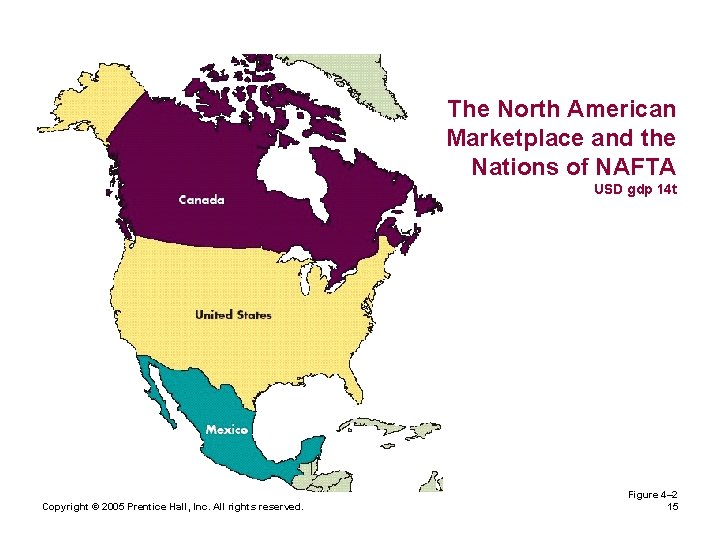
The North American Marketplace and the Nations of NAFTA USD gdp 14 t Copyright © 2005 Prentice Hall, Inc. All rights reserved. Figure 4– 2 15
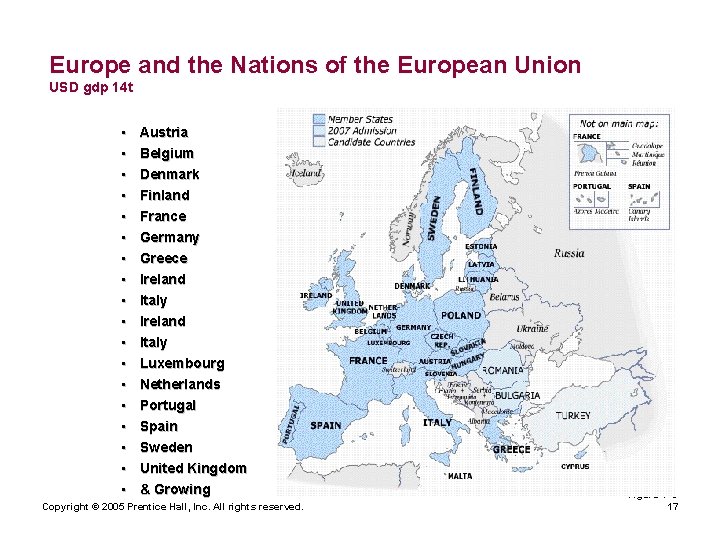
Europe and the Nations of the European Union USD gdp 14 t • • • • • Austria Belgium Denmark Finland France Germany Greece Ireland Italy Luxembourg Netherlands Portugal Spain Sweden United Kingdom & Growing Copyright © 2005 Prentice Hall, Inc. All rights reserved. Figure 4– 3 17
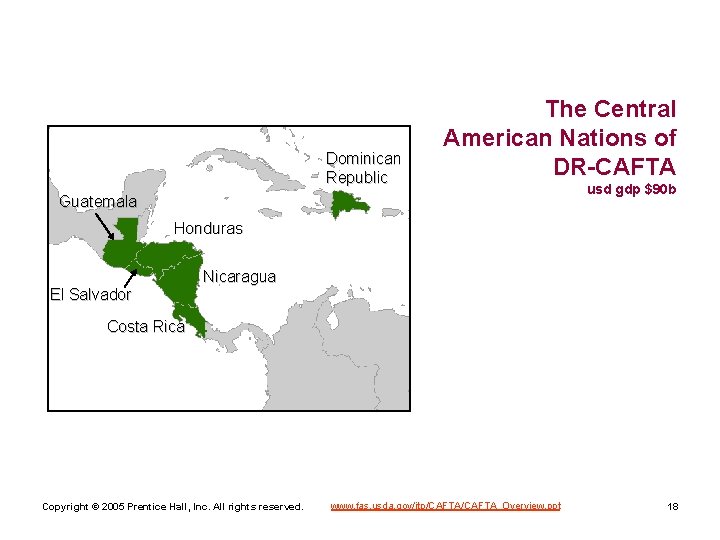
Dominican Republic The Central American Nations of DR-CAFTA Guatemala usd gdp $90 b Honduras El Salvador Nicaragua Costa Rica Copyright © 2005 Prentice Hall, Inc. All rights reserved. www. fas. usda. gov/itp/CAFTA_Overview. ppt 18
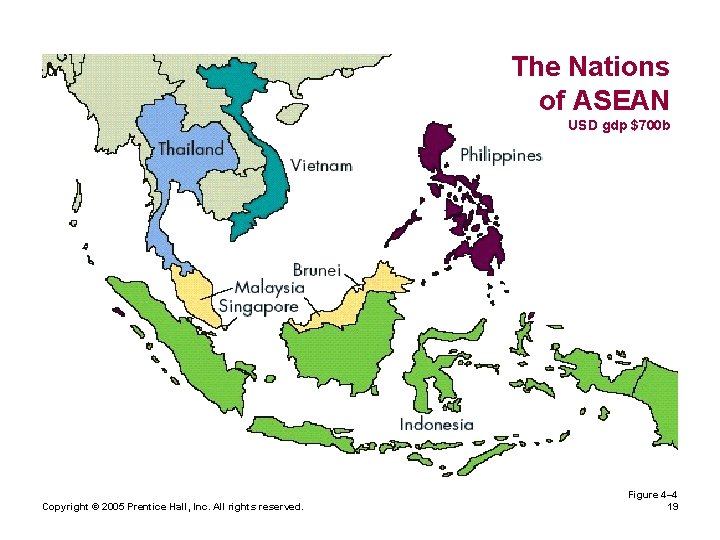
The Nations of ASEAN USD gdp $700 b Copyright © 2005 Prentice Hall, Inc. All rights reserved. Figure 4– 4 19
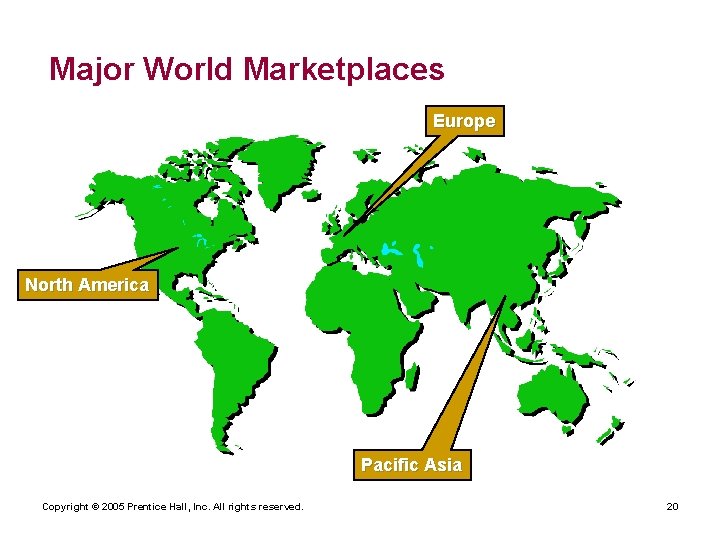
Major World Marketplaces Europe North America Pacific Asia Copyright © 2005 Prentice Hall, Inc. All rights reserved. 20
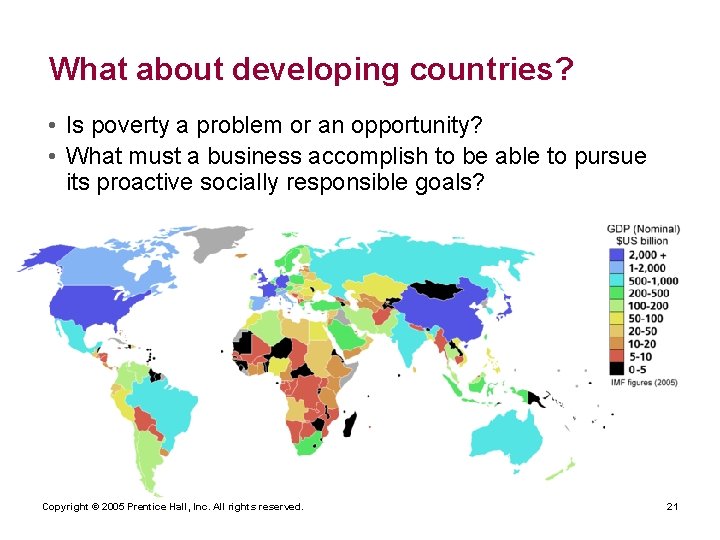
What about developing countries? • Is poverty a problem or an opportunity? • What must a business accomplish to be able to pursue its proactive socially responsible goals? Copyright © 2005 Prentice Hall, Inc. All rights reserved. 21
Key Topics • The rise of global business • Major world marketplaces and U. S. trading partners • Influences on international business • International business management • The impact of differences among nations Copyright © 2005 Prentice Hall, Inc. All rights reserved. 24
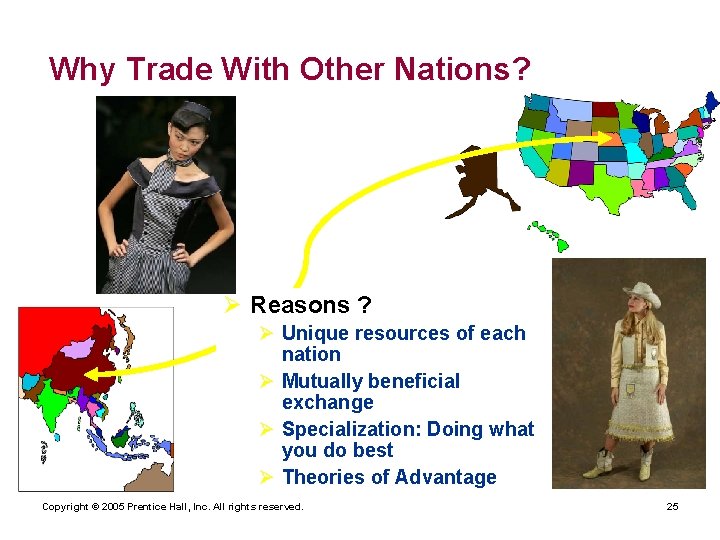
Why Trade With Other Nations? Ø Reasons ? Ø Unique resources of each nation Ø Mutually beneficial exchange Ø Specialization: Doing what you do best Ø Theories of Advantage Copyright © 2005 Prentice Hall, Inc. All rights reserved. 25
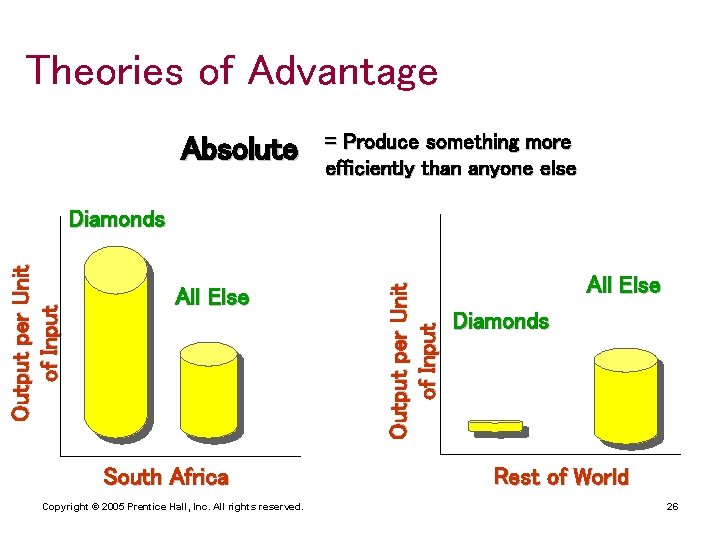
Theories of Advantage Absolute = Produce something more efficiently than anyone else All Else South Africa Copyright © 2005 Prentice Hall, Inc. All rights reserved. Output per Unit of Input Diamonds All Else Diamonds Rest of World 26
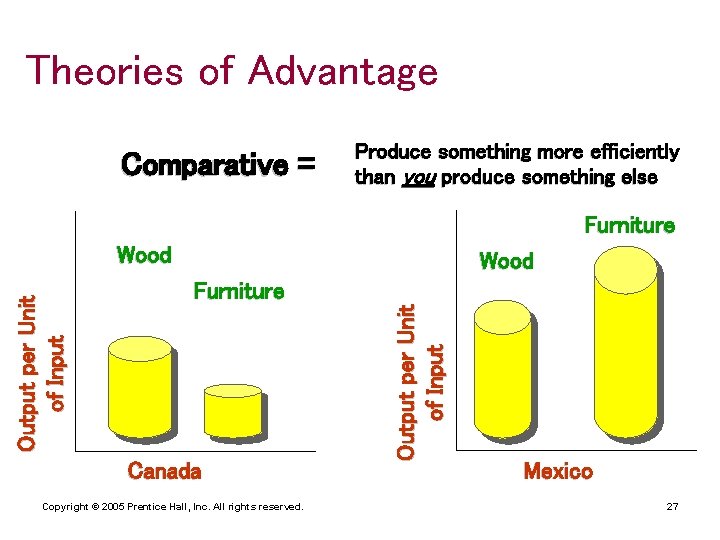
Theories of Advantage Comparative = Produce something more efficiently than you produce something else Furniture Wood Furniture Canada Copyright © 2005 Prentice Hall, Inc. All rights reserved. Output per Unit of Input Wood Mexico 27
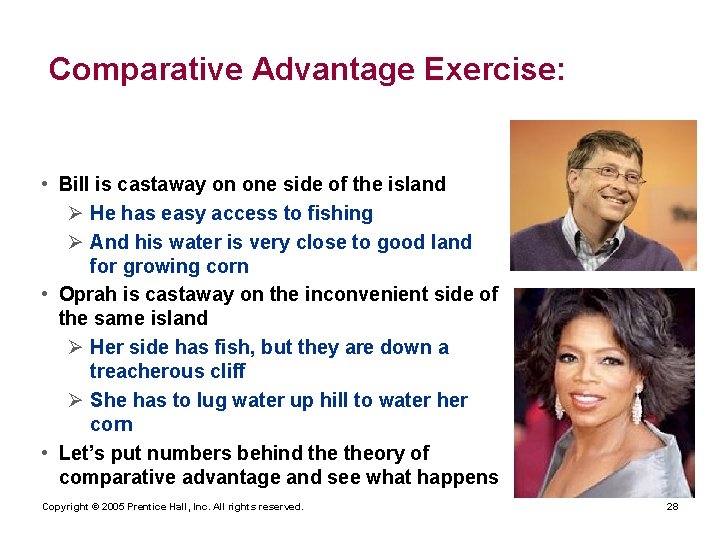
Comparative Advantage Exercise: • Bill is castaway on one side of the island Ø He has easy access to fishing Ø And his water is very close to good land for growing corn • Oprah is castaway on the inconvenient side of the same island Ø Her side has fish, but they are down a treacherous cliff Ø She has to lug water up hill to water her corn • Let’s put numbers behind theory of comparative advantage and see what happens Copyright © 2005 Prentice Hall, Inc. All rights reserved. 28
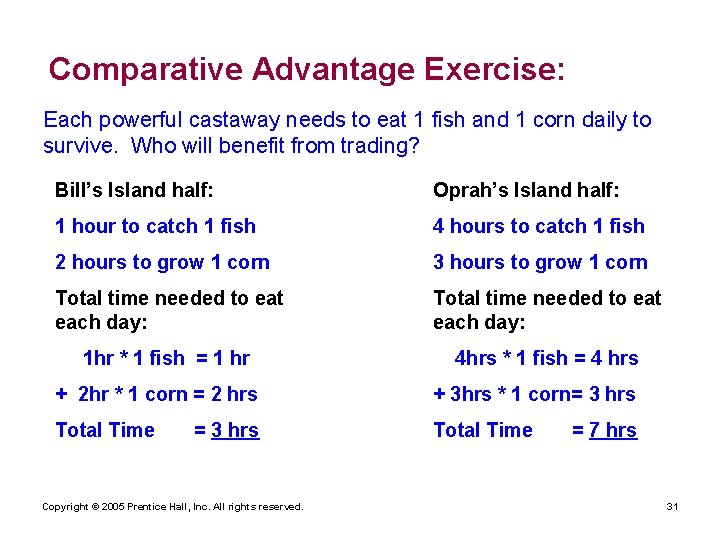
Comparative Advantage Exercise: Each powerful castaway needs to eat 1 fish and 1 corn daily to survive. Who will benefit from trading? Bill’s Island half: Oprah’s Island half: 1 hour to catch 1 fish 4 hours to catch 1 fish 2 hours to grow 1 corn 3 hours to grow 1 corn Total time needed to eat each day: 1 hr * 1 fish = 1 hr 4 hrs * 1 fish = 4 hrs + 2 hr * 1 corn = 2 hrs + 3 hrs * 1 corn= 3 hrs Total Time = 3 hrs Copyright © 2005 Prentice Hall, Inc. All rights reserved. = 7 hrs 31
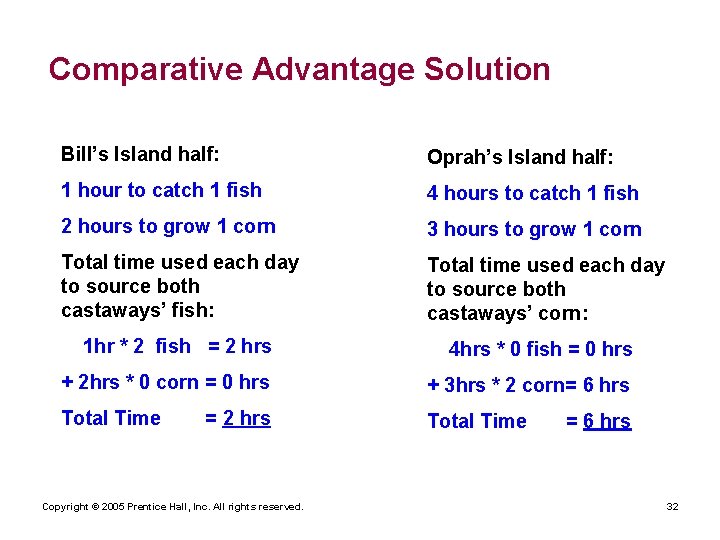
Comparative Advantage Solution Bill’s Island half: Oprah’s Island half: 1 hour to catch 1 fish 4 hours to catch 1 fish 2 hours to grow 1 corn 3 hours to grow 1 corn Total time used each day to source both castaways’ fish: Total time used each day to source both castaways’ corn: 1 hr * 2 fish = 2 hrs 4 hrs * 0 fish = 0 hrs + 2 hrs * 0 corn = 0 hrs + 3 hrs * 2 corn= 6 hrs Total Time = 2 hrs Copyright © 2005 Prentice Hall, Inc. All rights reserved. = 6 hrs 32
Trade Justification and Issues • Trade can increase the standard of living in both nations. Ø What’s different about our global trading activity? • Issues: Ø Changing a way of life / culture / history Ø Dealing with the obsolete factors of production Ø Overuse of the specialty resources Ø Lost skills outside of the specialty (dependency) Ø Vulnerability to exchange rates & other economic forces Copyright © 2005 Prentice Hall, Inc. All rights reserved. 33
Import/Export Balances • Balance of Trade Ø Trade Deficits Ø Trade Surpluses • Balance of Payments Ø Trade dollars + other flows of money like: investment, purchases of currency, etc. Copyright © 2005 Prentice Hall, Inc. All rights reserved. 36
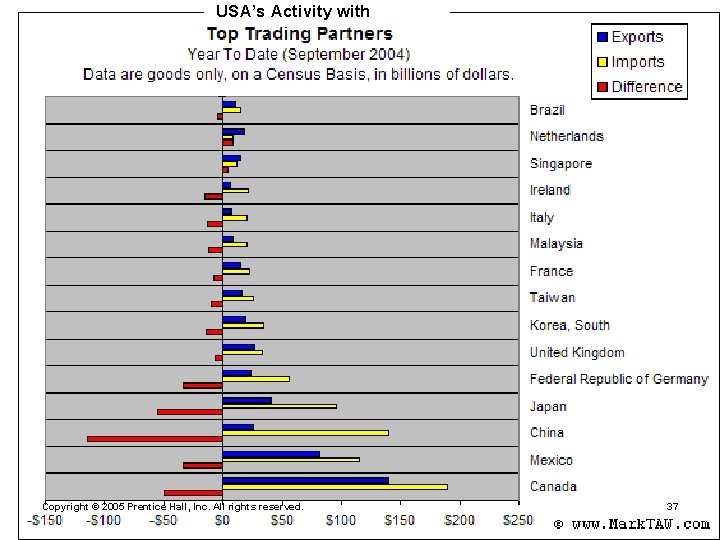
USA’s Activity with Copyright © 2005 Prentice Hall, Inc. All rights reserved. 37
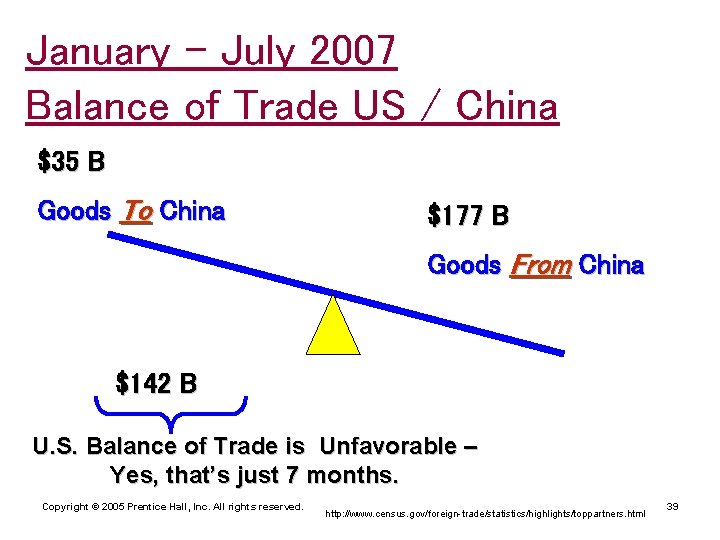
January – July 2007 Balance of Trade US / China $35 B Goods To China $177 B Goods From China $142 B U. S. Balance of Trade is Unfavorable – Yes, that’s just 7 months. Copyright © 2005 Prentice Hall, Inc. All rights reserved. http: //www. census. gov/foreign-trade/statistics/highlights/toppartners. html 39
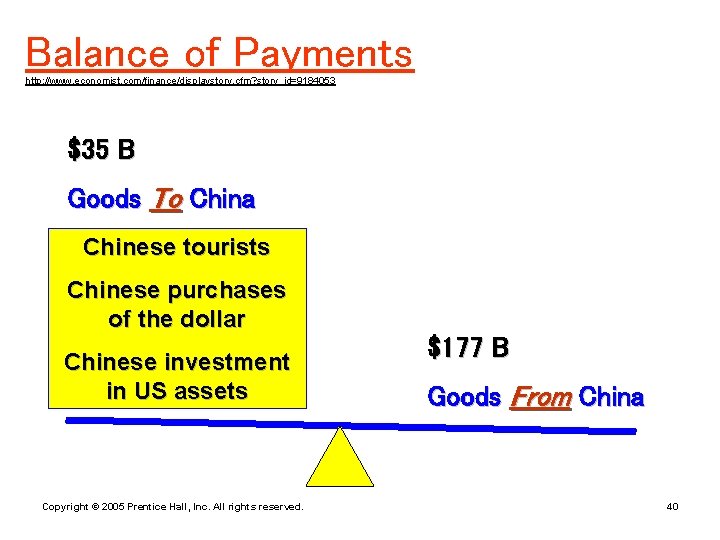
Balance of Payments http: //www. economist. com/finance/displaystory. cfm? story_id=9184053 $35 B Goods To China Chinese tourists Chinese purchases of the dollar Chinese investment in US assets Copyright © 2005 Prentice Hall, Inc. All rights reserved. $177 B Goods From China 40
Economics and the US trade deficit • We say “Spend”! Other countries save. Ø How is that expected to change? On BOTH sides? • Interest rates, investment attractiveness Ø As long as the US offers high interest rates and attractive growth for investors, is there really an issue? • The exchange rate Ø What is it? Ø What happens as it changes? Copyright © 2005 Prentice Hall, Inc. All rights reserved. 41
Exchange Rates Impact on Global Trade • When an economy’s currency is strong: Ø Foreign products are cheaper here Ø Domestic companies may move production to cheaper sites in foreign countries Ø Our exports are expensive elsewhere • Implications for trade and current account: Ø Foreign goods are affordable to us Ø USA exports are more expensive elsewhere Ø Dollar denominated investments are attractive • Exchange rate calculator Ø www. moneycentral. msn. com Copyright © 2005 Prentice Hall, Inc. All rights reserved. 42
Key Topics • The rise of global business • Major world marketplaces and U. S. trading partners • Influences on international business • International business management • The impact of differences among nations Copyright © 2005 Prentice Hall, Inc. All rights reserved. 45
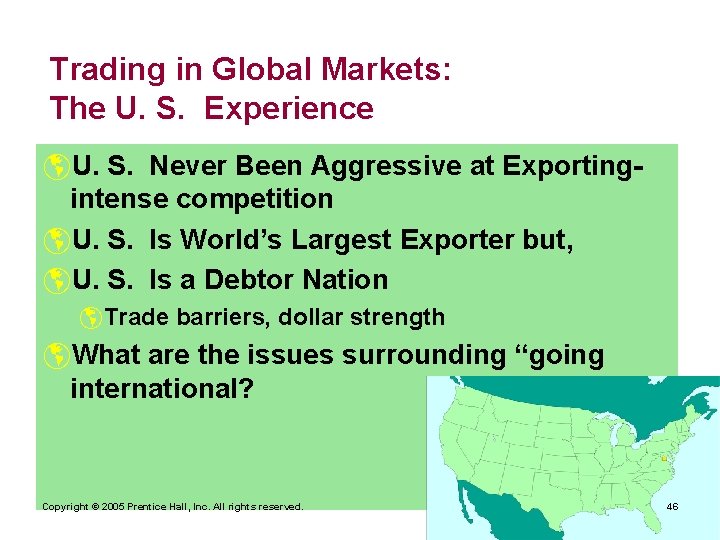
Trading in Global Markets: The U. S. Experience þU. S. Never Been Aggressive at Exportingintense competition þU. S. Is World’s Largest Exporter but, þU. S. Is a Debtor Nation þTrade barriers, dollar strength þWhat are the issues surrounding “going international? Copyright © 2005 Prentice Hall, Inc. All rights reserved. 46
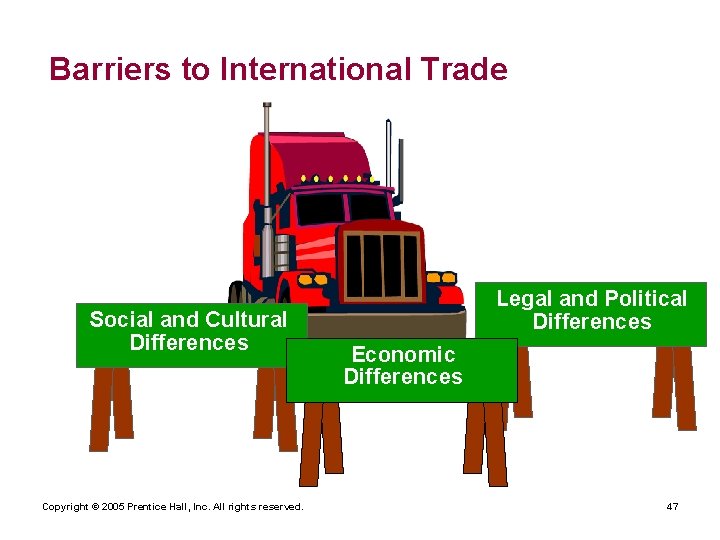
Barriers to International Trade Social and Cultural Differences Copyright © 2005 Prentice Hall, Inc. All rights reserved. Legal and Political Differences Economic Differences 47
Social & Cultural Differences þ Language þ Religion þ Values & Attitudes þ Islamic Swimwear þAesthetics þSo much more…. . Copyright © 2005 Prentice Hall, Inc. All rights reserved. 51
Did You Know? s. In Turkey it’s rude to cross your arms while you are facing someone. s. In the Arab world the left hand is considered unclean; don’t eat with it! s. The Chinese associate gifts such as straw sandals, clocks and handkerchiefs with funerals. s. White: The color of purity & marriage in western color. White: the color of death in eastern cultures s. Red: Roxanne…… here. In India: the color of purity used in wedding gowns Copyright © 2005 Prentice Hall, Inc. All rights reserved. 52
Famous Blunders r“Come alive, You’re in the Pepsi Generation. ” r Chinese translation: r “Pepsi brings your ancestors back from the dead. ” r“Chevy Nova” r Spanish translation: r “Chevy doesn’t go. ” r“Finger-lickin’ good” r Japanese translation: r “Bite your fingers off. ” Copyright © 2005 Prentice Hall, Inc. All rights reserved. 53
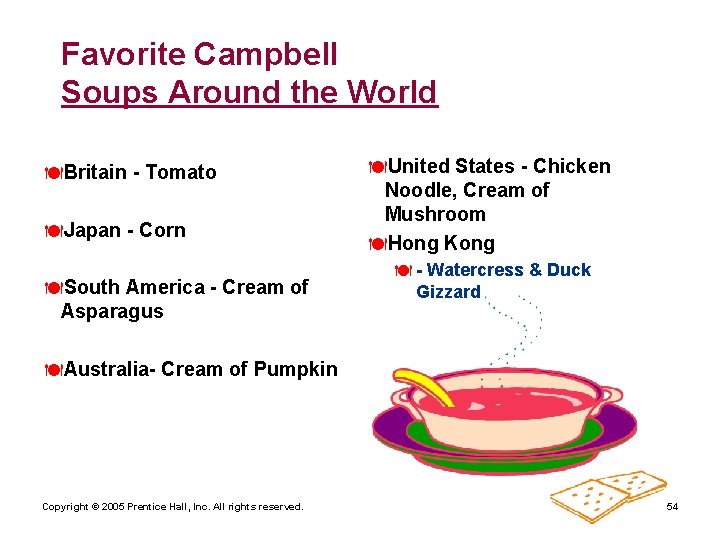
Favorite Campbell Soups Around the World äBritain - Tomato äJapan - Corn äSouth America - Cream of Asparagus äUnited States - Chicken Noodle, Cream of Mushroom äHong Kong ä - Watercress & Duck Gizzard äAustralia- Cream of Pumpkin Copyright © 2005 Prentice Hall, Inc. All rights reserved. 54
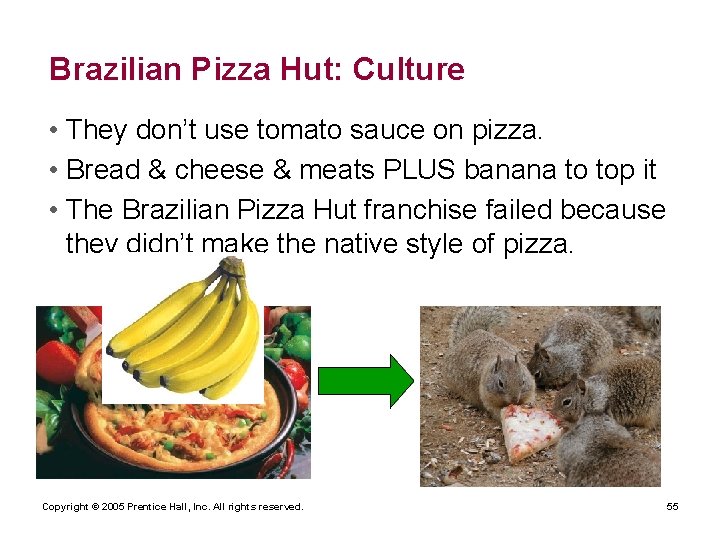
Brazilian Pizza Hut: Culture • They don’t use tomato sauce on pizza. • Bread & cheese & meats PLUS banana to top it • The Brazilian Pizza Hut franchise failed because they didn’t make the native style of pizza. Copyright © 2005 Prentice Hall, Inc. All rights reserved. 55
Legal & Political Differences: • Protectionism: Protecting domestic business against foreign competition Ø Short term benefits Ø long term/overuse consequences • Protectionist Tools: Ø Quotas Ø Tariffs Ø Subsidies Ø Local content laws Ø Embargo Ø Fixed exchange rates • Exporting auto parts to China Ø All that and more. Copyright © 2005 Prentice Hall, Inc. All rights reserved. 56
Foreign Legal Standards þForeign Corrupt Practices Act of 1978 - U. S. businesses MUST follow U. S. law in conducting business globally þBribes to secure contracts are illegal. þBribes to expedite/access services are legal. Copyright © 2005 Prentice Hall, Inc. All rights reserved. 58
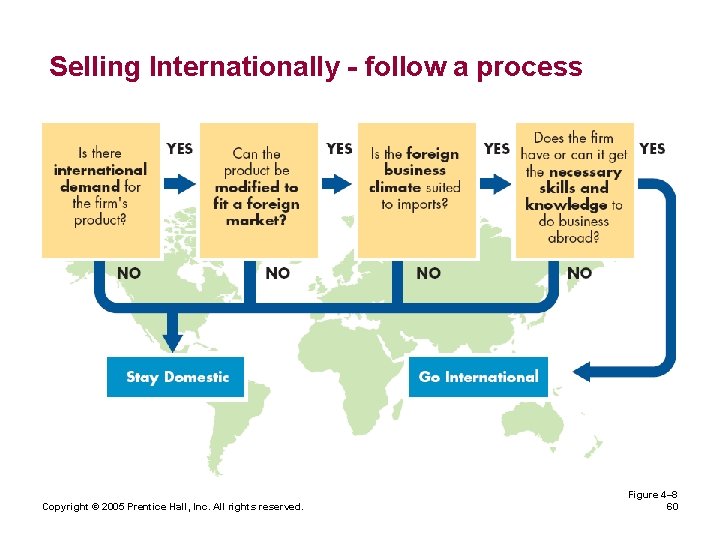
Selling Internationally - follow a process Copyright © 2005 Prentice Hall, Inc. All rights reserved. Figure 4– 8 60
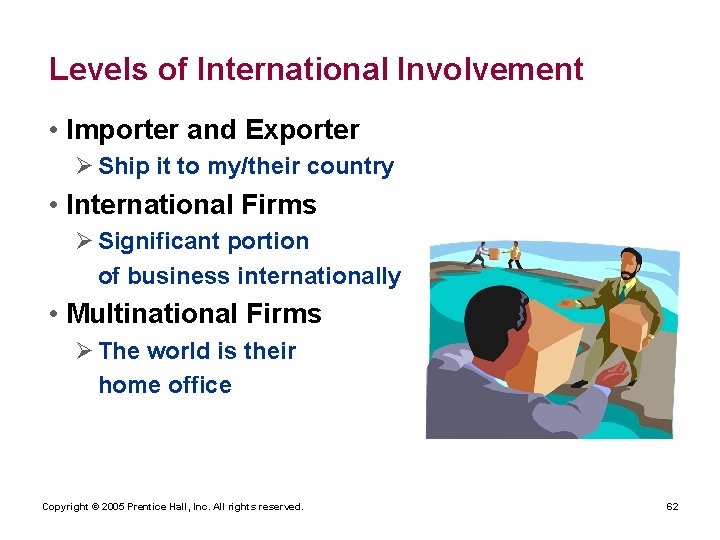
Levels of International Involvement • Importer and Exporter Ø Ship it to my/their country • International Firms Ø Significant portion of business internationally • Multinational Firms Ø The world is their home office Copyright © 2005 Prentice Hall, Inc. All rights reserved. 62
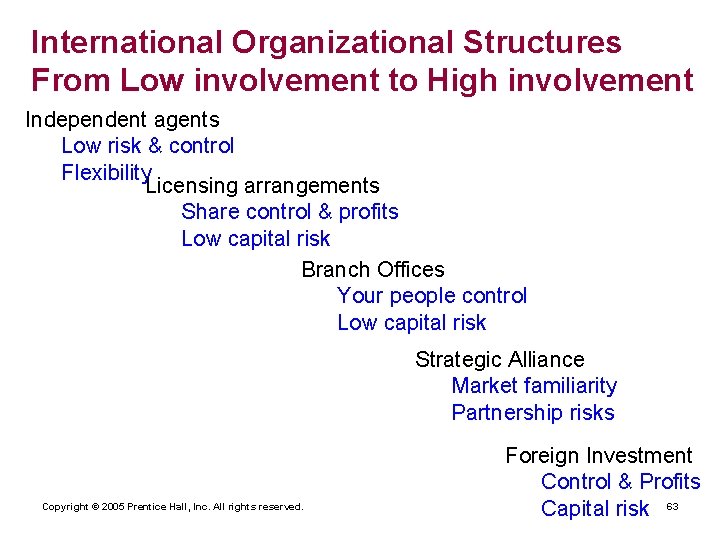
International Organizational Structures From Low involvement to High involvement Independent agents Low risk & control Flexibility Licensing arrangements Share control & profits Low capital risk Branch Offices Your people control Low capital risk Strategic Alliance Market familiarity Partnership risks Copyright © 2005 Prentice Hall, Inc. All rights reserved. Foreign Investment Control & Profits Capital risk 63
Chapter Review • Discuss the rise of international business, describe the major world marketplaces. • Explain how comparative advantage, import-export balances, exchange rates, and foreign competition shape international business strategies. • Discuss what factors influence whether a company should engage in international business. • Identify different levels of international involvement and international organizational structure. • Describe key barriers to international trade. Copyright © 2005 Prentice Hall, Inc. All rights reserved. 66
Test Tips: • Vocabulary Ø Know the vocabulary used in the slide shows. Ø Be able to apply the vocabulary to situations v There will be less “recite the definition” and more recognize the concept and be able to apply it. Ø Example: If a supply shortage exists for a new video game in a freemarket economy, the: A) market price of the video game will rise. B) market price of the video game will fall. C) government must increase its production of video games. D) government must establish a rationing system to make sure that the video games are fairly distributed. Copyright © 2005 Prentice Hall, Inc. All rights reserved. 67
Test Tips: ØHomework questions v Answers for these were discussed in the course of each lecture. Find clarity on them by reviewing the slides, book, and / or doing other research on your own. • Text: Ø Some topics that were not covered in class may be pulled directly out of the book. This is the bonus that a diligent studier deserves. • Cases and in-class activities. Ø Excerpts will be on the exam. Copyright © 2005 Prentice Hall, Inc. All rights reserved. 68
Test Tips: ØTest Format: v Multiple choice – Memorize sure, but know the meaning and be able to use it. – About 30 questions at about 3 points apiece. – 882 E Scan. Tron is the form. I’ll have extras if you can’t get one. I am asked to sell them for 25 cents. v Essay – Your choice of 1 of 3 topics. – Worth at least one full grade – To be written in proper English, with proper grammar, with very little space allowed so as to require you to get to the point quickly without restating the question nor restating the same points several times. Copyright © 2005 Prentice Hall, Inc. All rights reserved. 69
- Slides: 51