
Chapter 4 Transmission Media Guided Transmission Media Unshielded

- Slides: 10
Chapter 4. Transmission Media • Guided Transmission Media – Unshielded and Shielded Twisted pair – Coaxial cable – Optical Fiber • Wireless Media – Terrestrial Microwave – Satellite Microwave – Broadcast Radio – Infrared 1
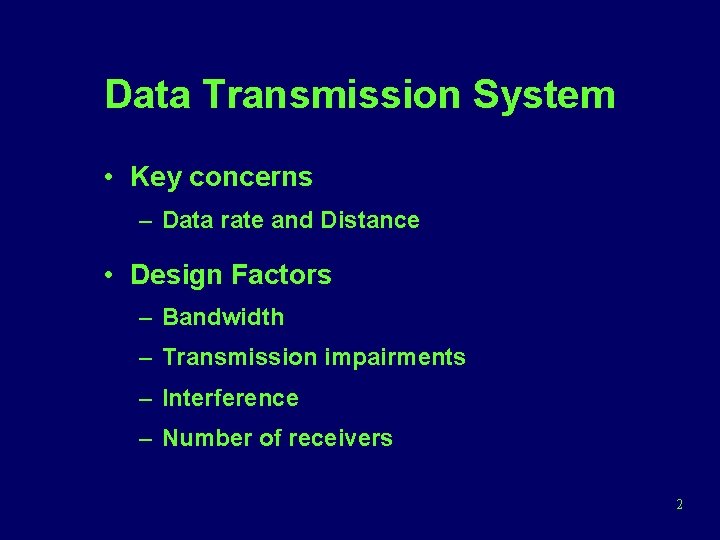
Data Transmission System • Key concerns – Data rate and Distance • Design Factors – Bandwidth – Transmission impairments – Interference – Number of receivers 2
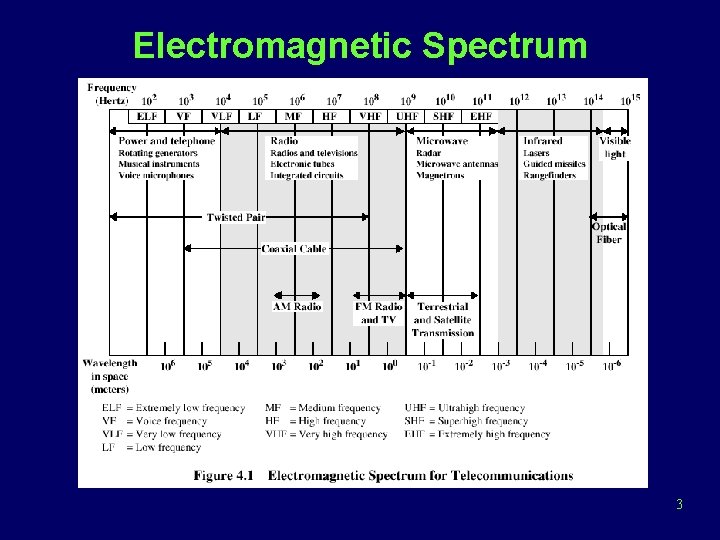
Electromagnetic Spectrum 3
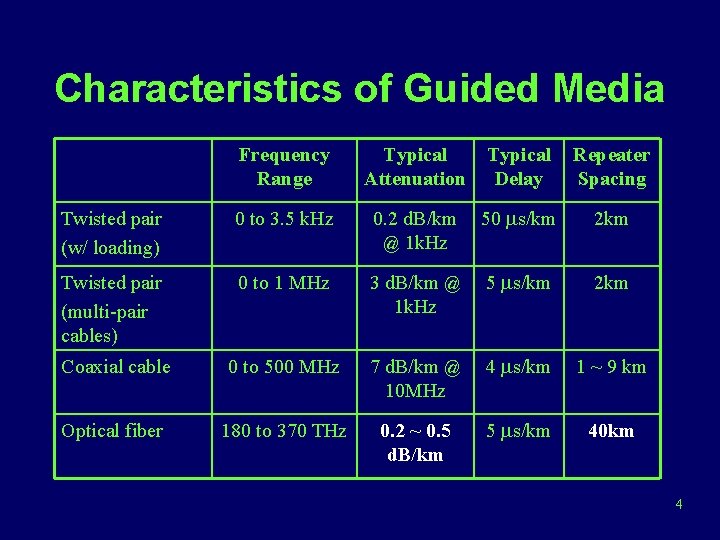
Characteristics of Guided Media Frequency Range Typical Attenuation Typical Delay Repeater Spacing Twisted pair (w/ loading) 0 to 3. 5 k. Hz 0. 2 d. B/km @ 1 k. Hz 50 ms/km 2 km Twisted pair (multi-pair cables) 0 to 1 MHz 3 d. B/km @ 1 k. Hz 5 ms/km 2 km Coaxial cable 0 to 500 MHz 7 d. B/km @ 10 MHz 4 ms/km 1 ~ 9 km Optical fiber 180 to 370 THz 0. 2 ~ 0. 5 d. B/km 5 ms/km 40 km 4
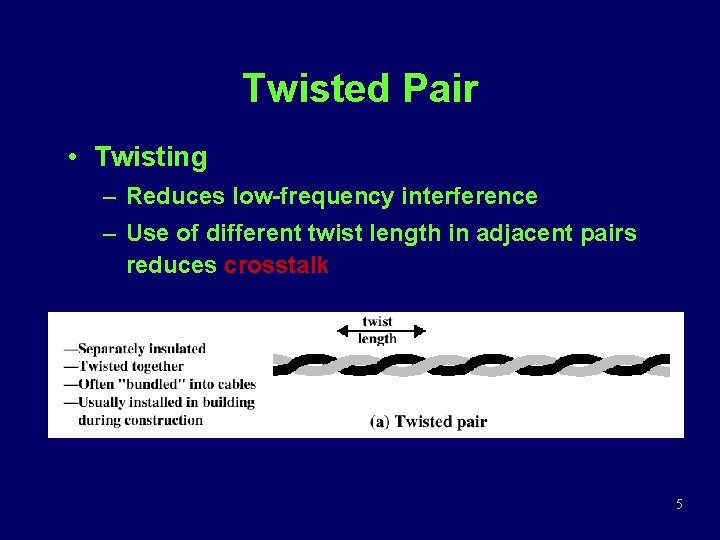
Twisted Pair • Twisting – Reduces low-frequency interference – Use of different twist length in adjacent pairs reduces crosstalk 5
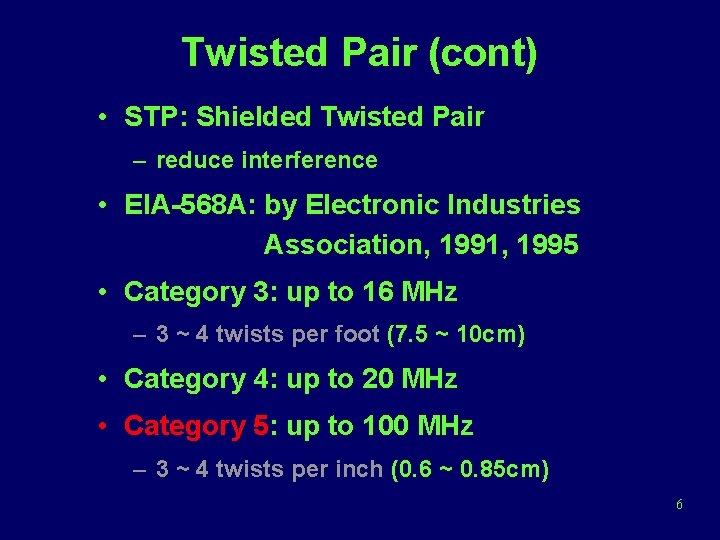
Twisted Pair (cont) • STP: Shielded Twisted Pair – reduce interference • EIA-568 A: by Electronic Industries Association, 1991, 1995 • Category 3: up to 16 MHz – 3 ~ 4 twists per foot (7. 5 ~ 10 cm) • Category 4: up to 20 MHz • Category 5: up to 100 MHz – 3 ~ 4 twists per inch (0. 6 ~ 0. 85 cm) 6
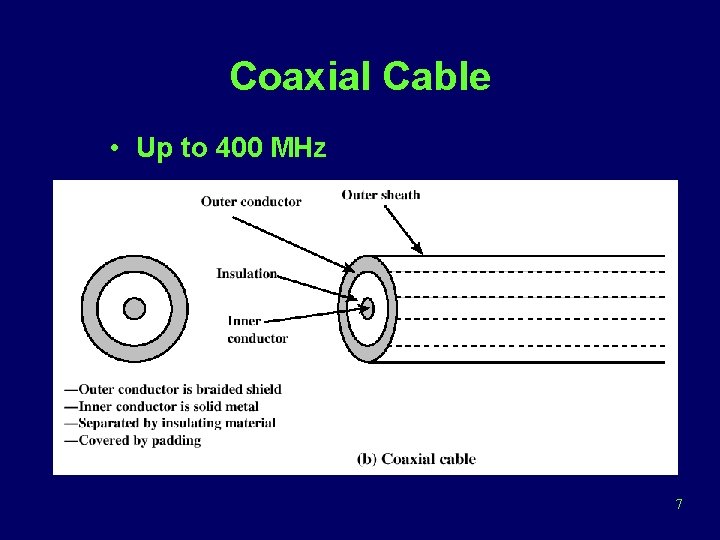
Coaxial Cable • Up to 400 MHz Outer conductor 7
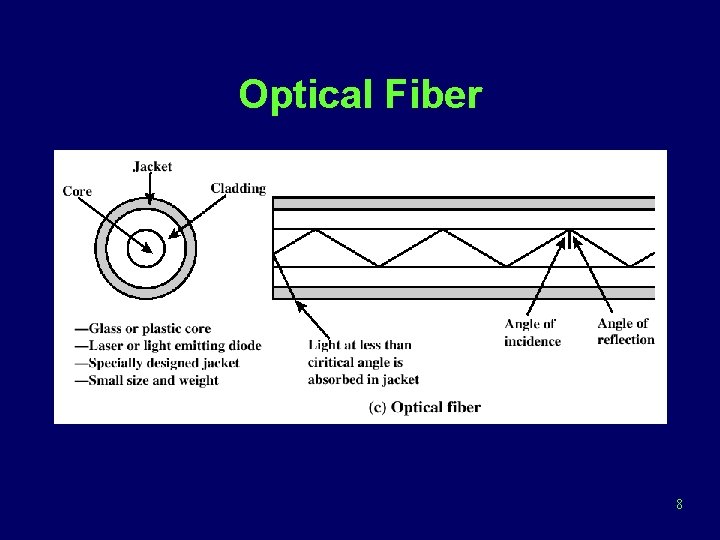
Optical Fiber 8
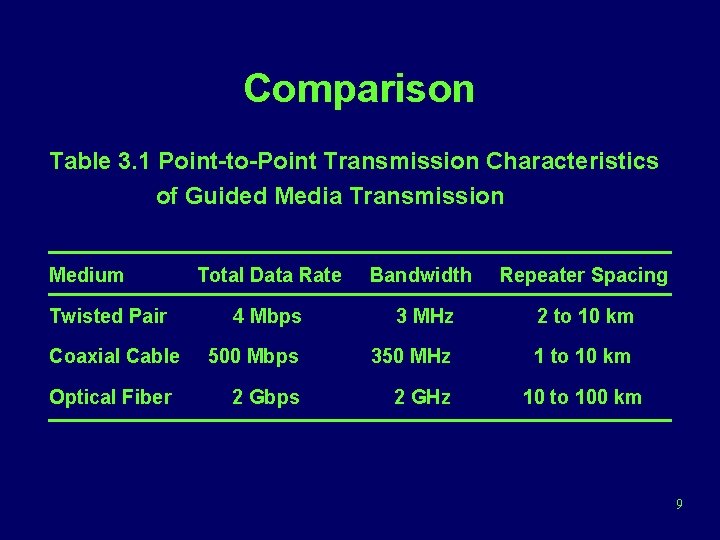
Comparison Table 3. 1 Point-to-Point Transmission Characteristics of Guided Media Transmission Medium Twisted Pair Coaxial Cable Optical Fiber Total Data Rate Bandwidth Repeater Spacing 4 Mbps 3 MHz 2 to 10 km 500 Mbps 350 MHz 1 to 10 km 2 Gbps 2 GHz 10 to 100 km 9
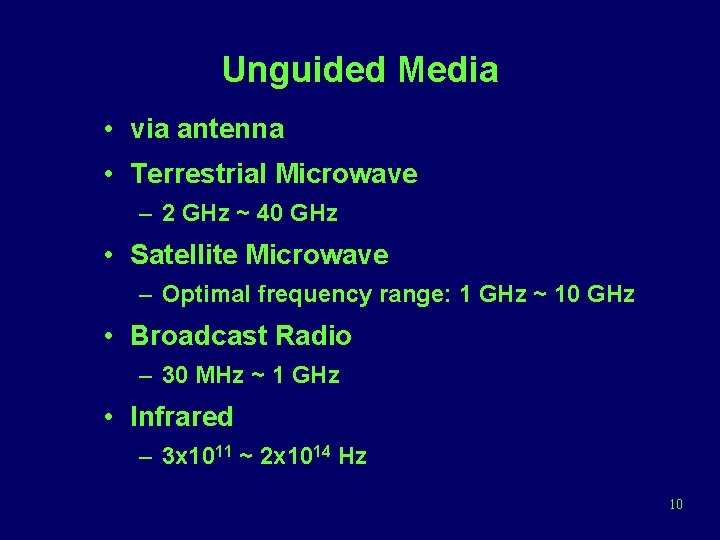
Unguided Media • via antenna • Terrestrial Microwave – 2 GHz ~ 40 GHz • Satellite Microwave – Optimal frequency range: 1 GHz ~ 10 GHz • Broadcast Radio – 30 MHz ~ 1 GHz • Infrared – 3 x 10¹¹ ~ 2 x 10¹⁴ Hz 10