
Chapter 4 Tissues Organization of Tissues Types There

- Slides: 97
Chapter 4 Tissues
Organization of Tissues Types There are four major tissue types: 1. Epithelium 2. Connective 3. Muscle 4. Nervous
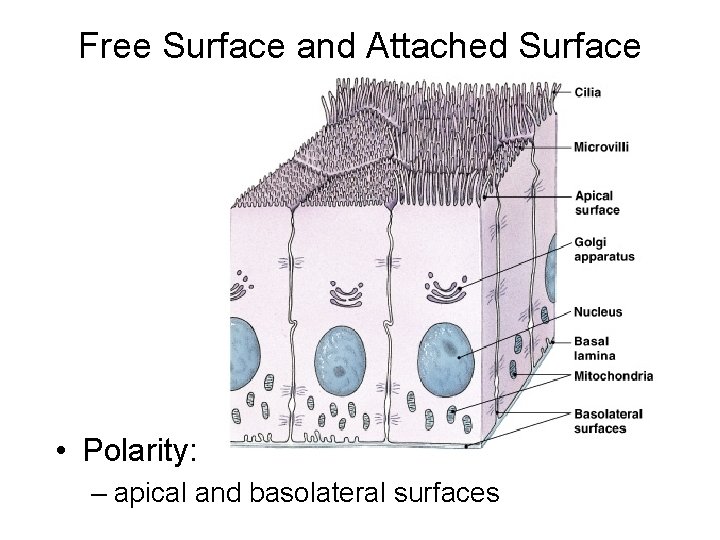
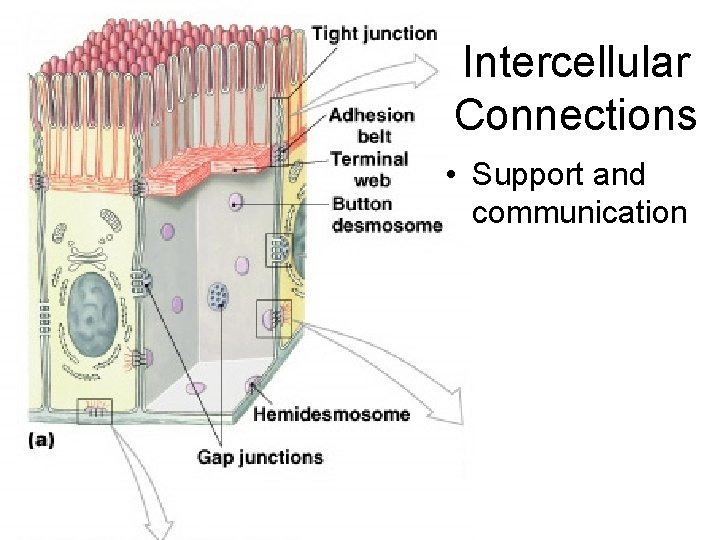
Characteristics of Epithelial tissue • High cellularity - lots of densely packed cells with … • Specialized intercellular contacts - such as tight junctions, desmosomes and gap junctions. • Basement membranes & other c. t. support - anchors to connective tissue. • Polarity - it has an apical side and a basal side (a free edge and a fixed edge). • Avascular - no blood supply. Receive oxygen and nutrients by diffusion • Highly mitotic - cells readily regenerate.
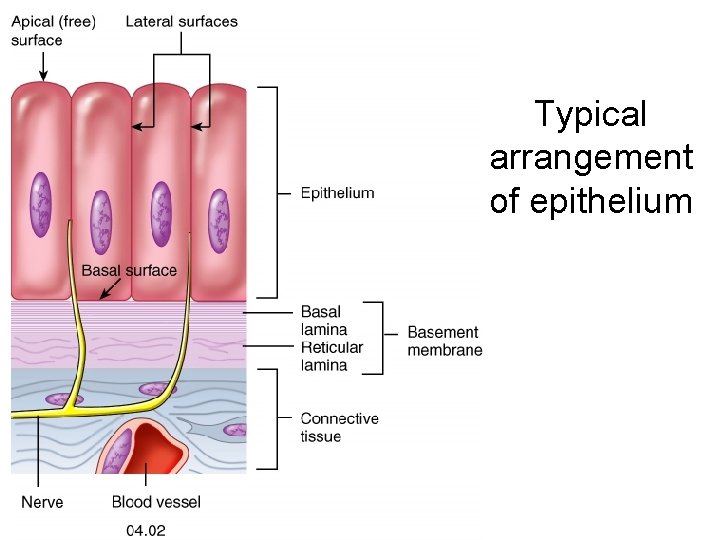
Free Surface and Attached Surface • Polarity: – apical and basolateral surfaces
Intercellular Connections • Support and communication
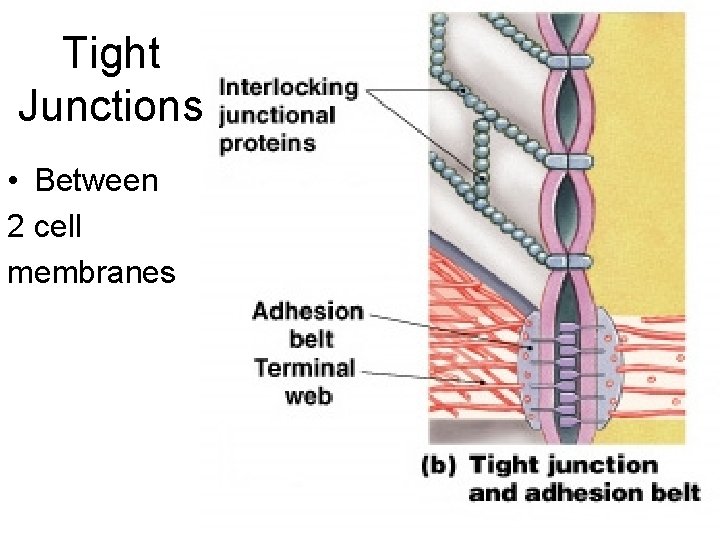
Tight Junctions • Between 2 cell membranes
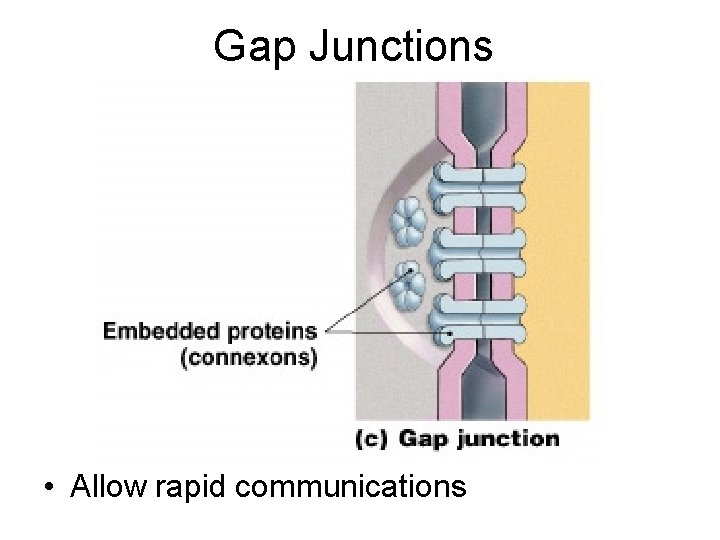
Gap Junctions • Allow rapid communications
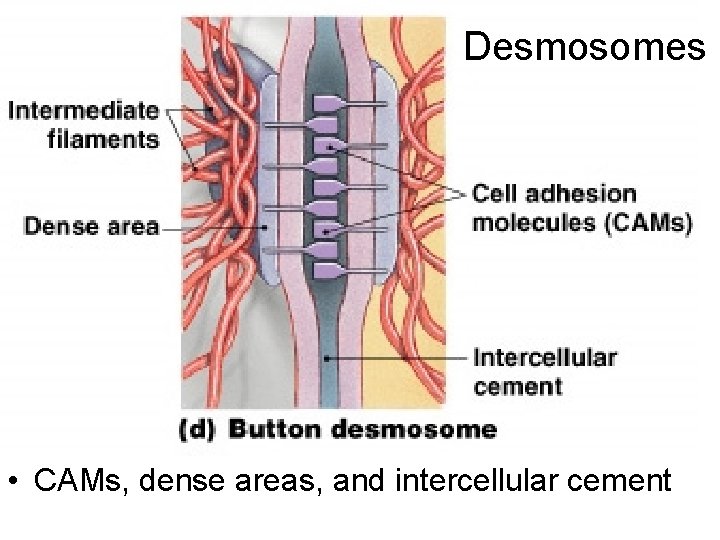
Desmosomes • CAMs, dense areas, and intercellular cement
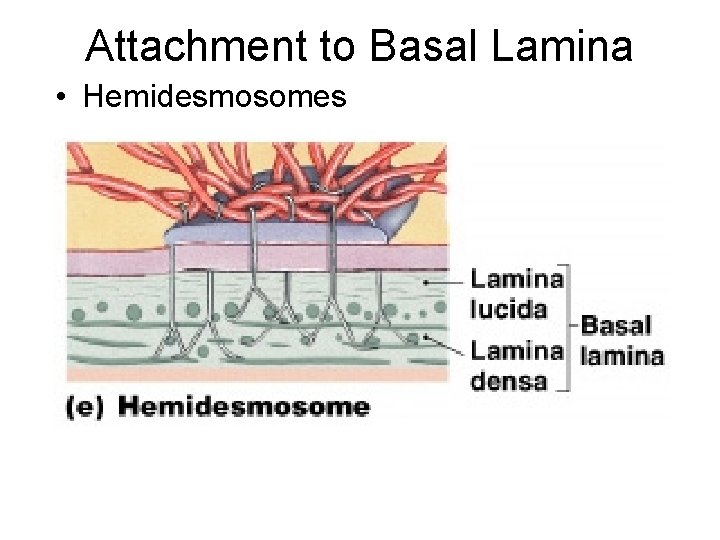
Attachment to Basal Lamina • Hemidesmosomes
Typical arrangement of epithelium
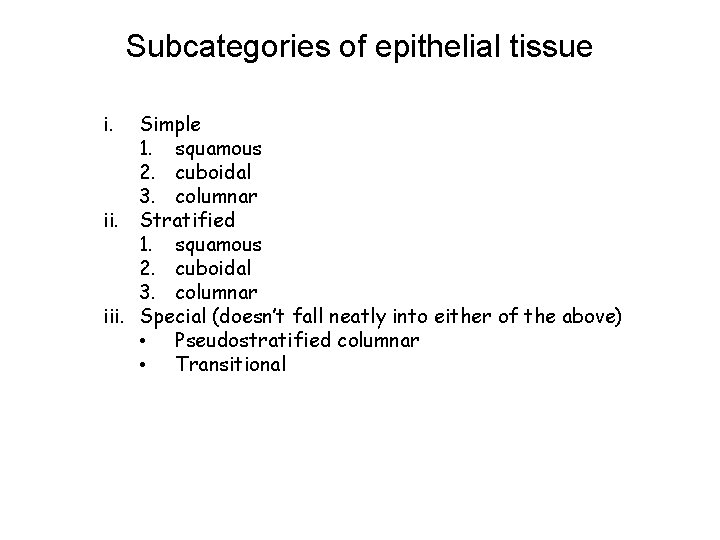
Subcategories of epithelial tissue i. Simple 1. squamous 2. cuboidal 3. columnar ii. Stratified 1. squamous 2. cuboidal 3. columnar iii. Special (doesn’t fall neatly into either of the above) • Pseudostratified columnar • Transitional
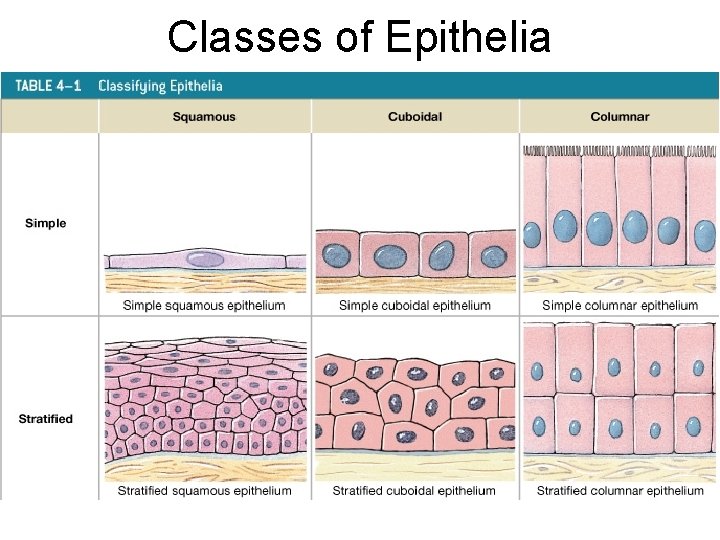
Classes of Epithelia
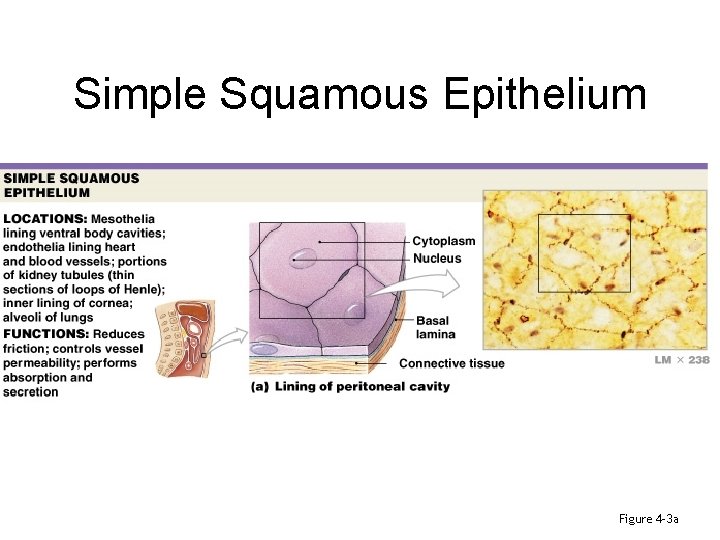
Simple Squamous Epithelium Figure 4– 3 a
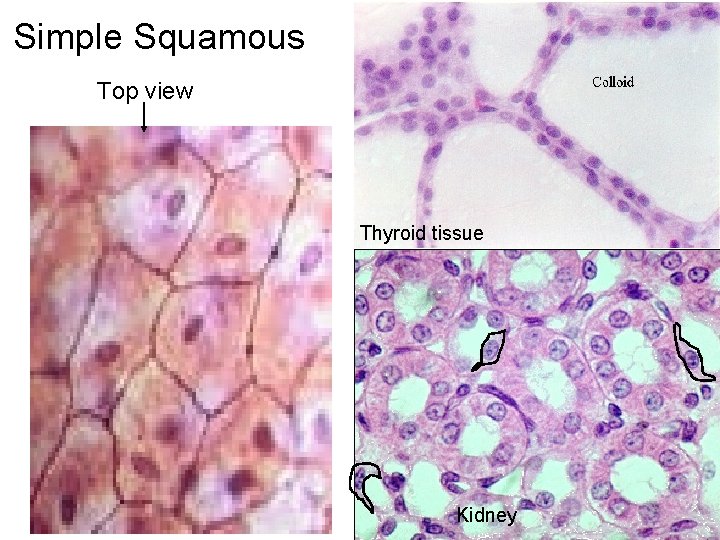
Simple Squamous Top view Thyroid tissue Kidney
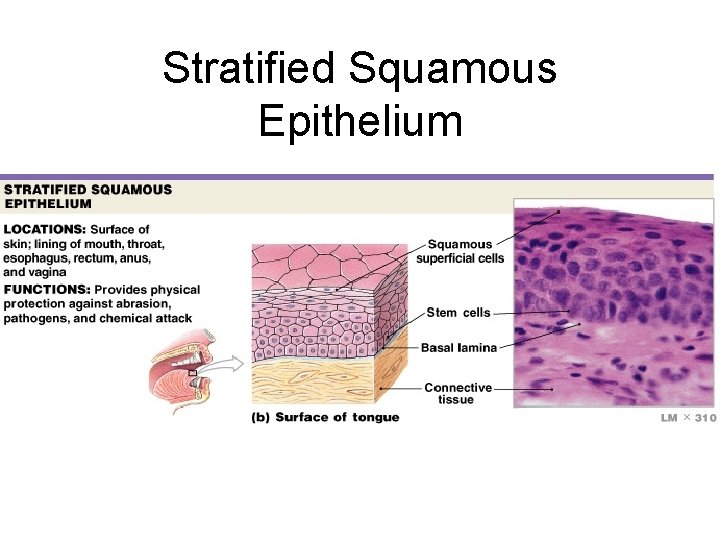
Stratified Squamous Epithelium
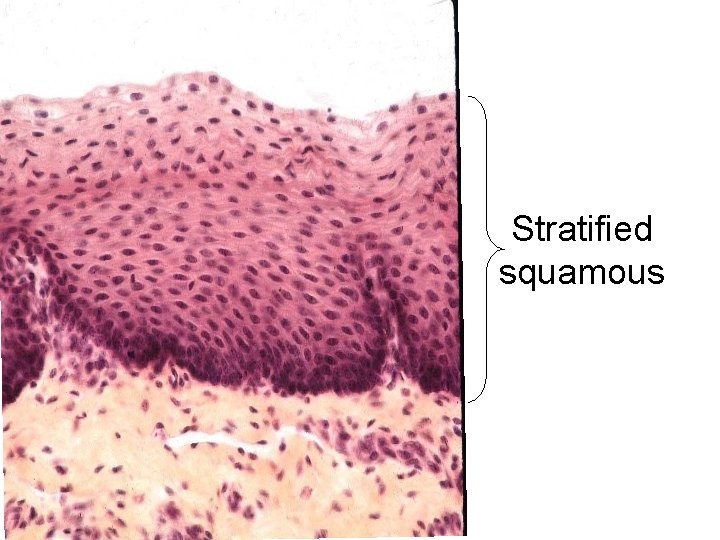
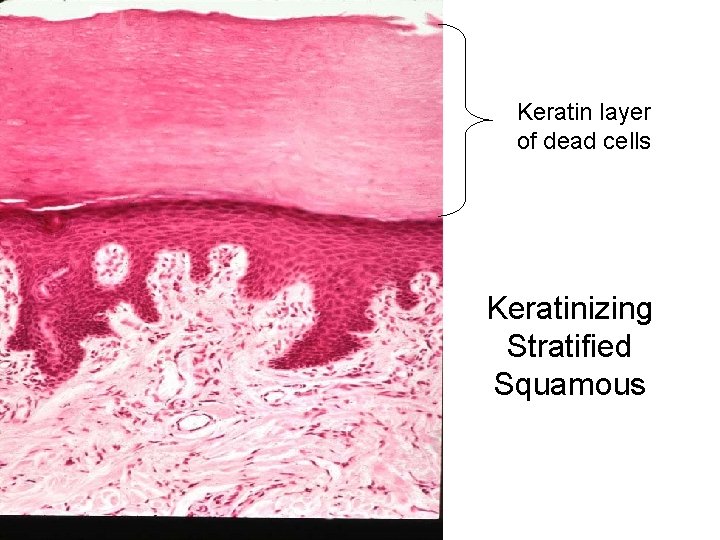
Stratified squamous
Keratin layer of dead cells Keratinizing Stratified Squamous
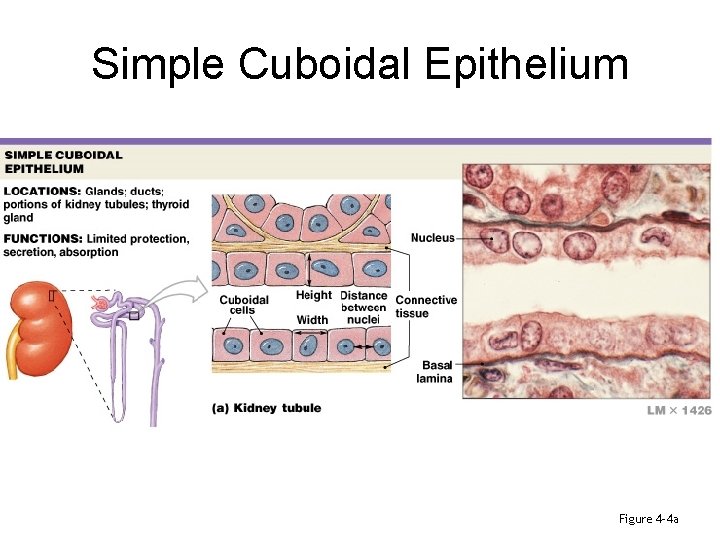
Simple Cuboidal Epithelium Figure 4– 4 a
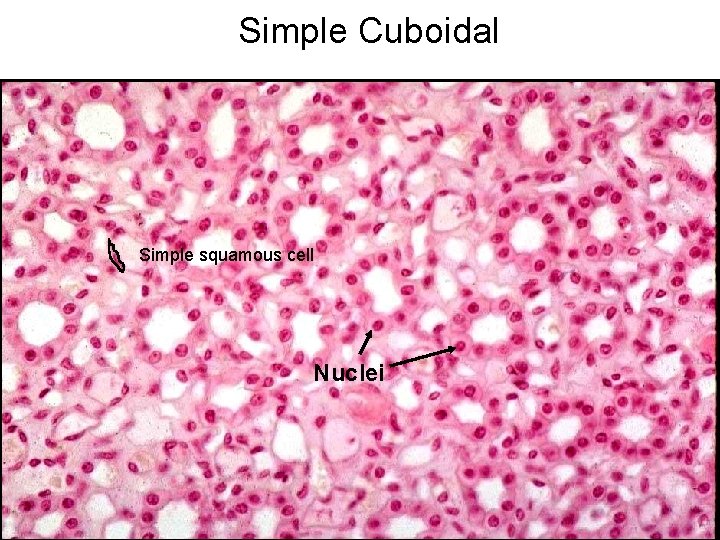
Simple Cuboidal Simple squamous cell Nuclei
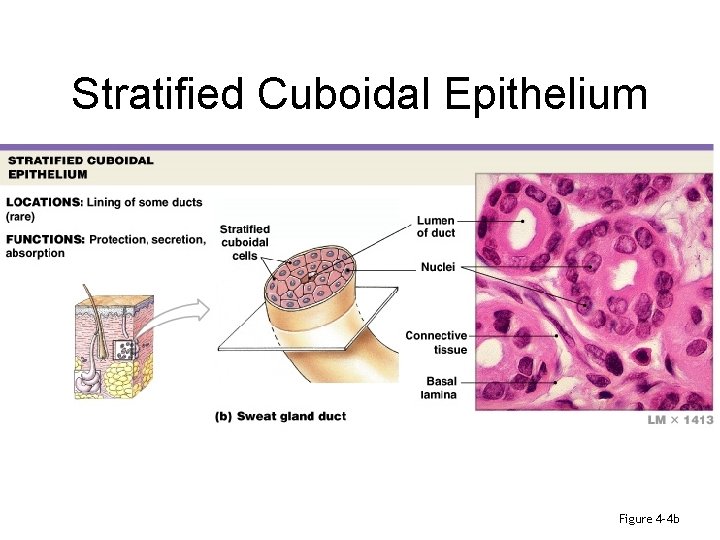
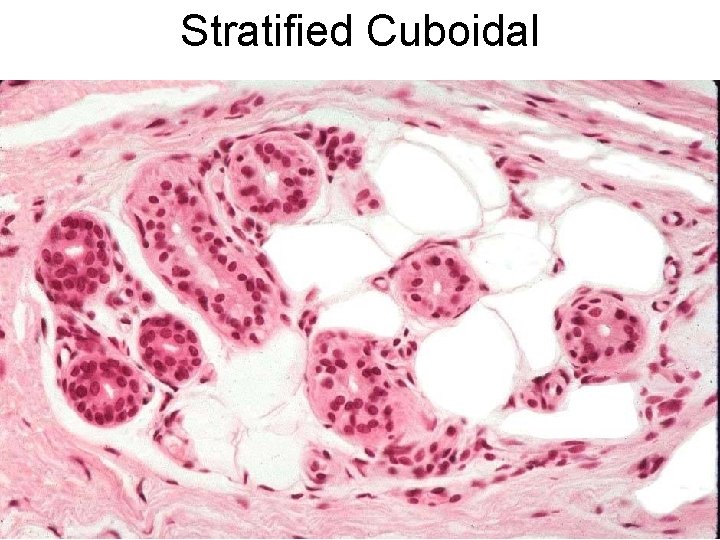
Stratified Cuboidal Epithelium Figure 4– 4 b
Stratified Cuboidal
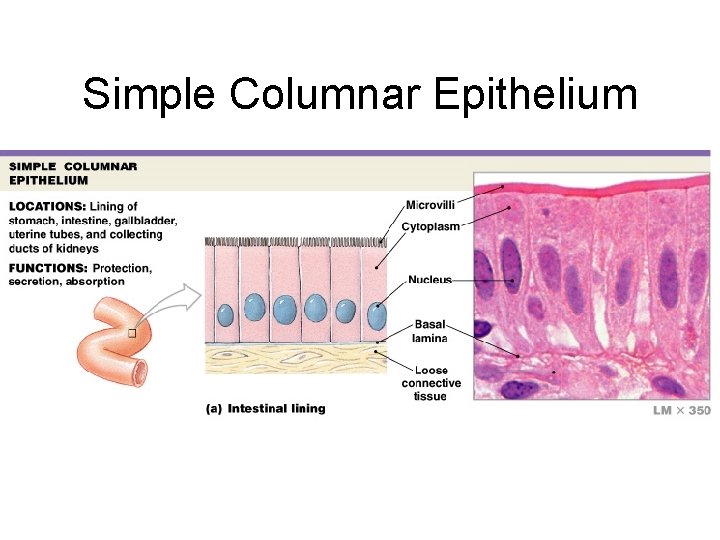
Simple Columnar Epithelium
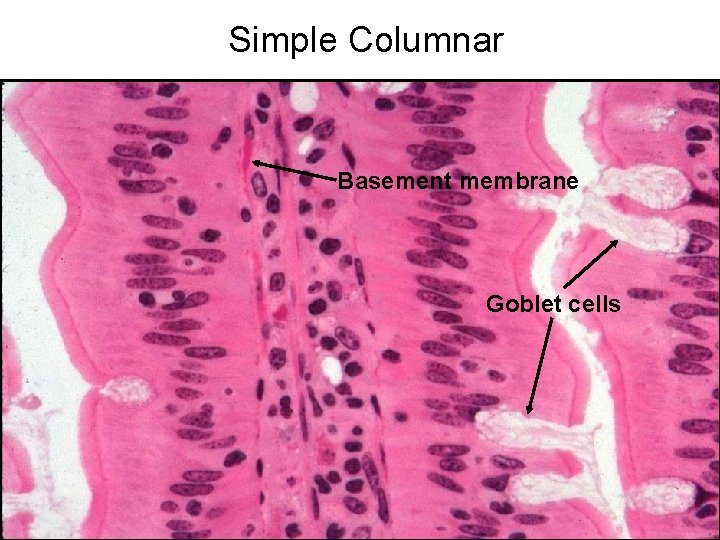
Simple Columnar Basement membrane Goblet cells
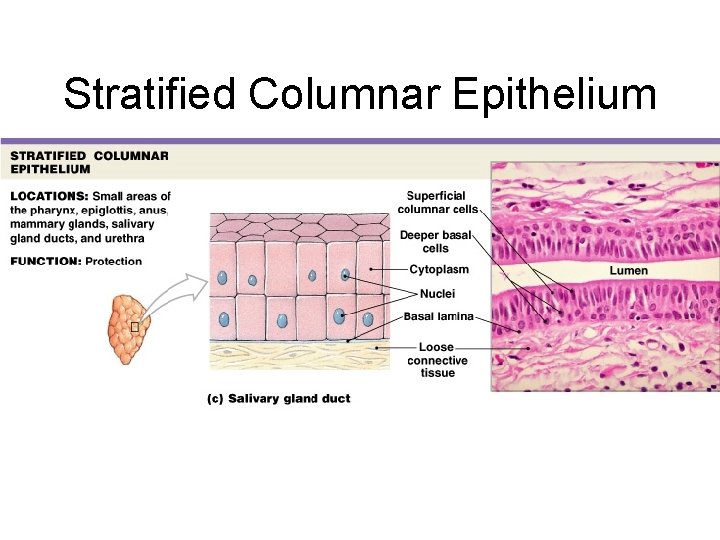
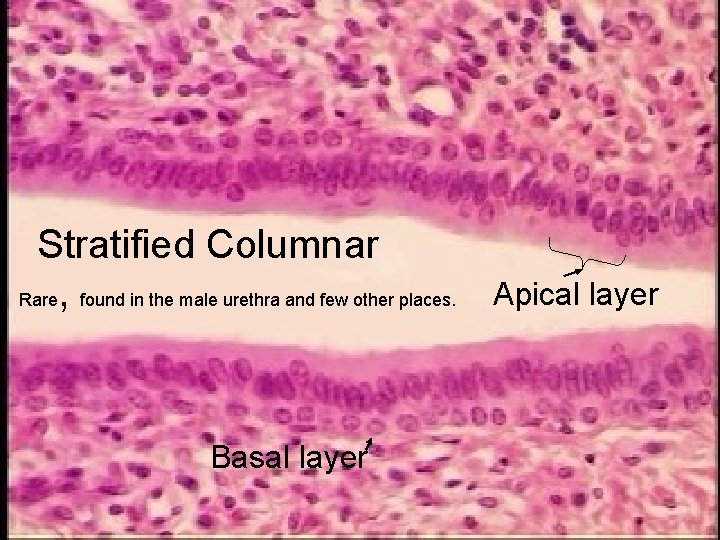
Stratified Columnar Epithelium
Stratified Columnar Rare, found in the male urethra and few other places. Basal layer Apical layer
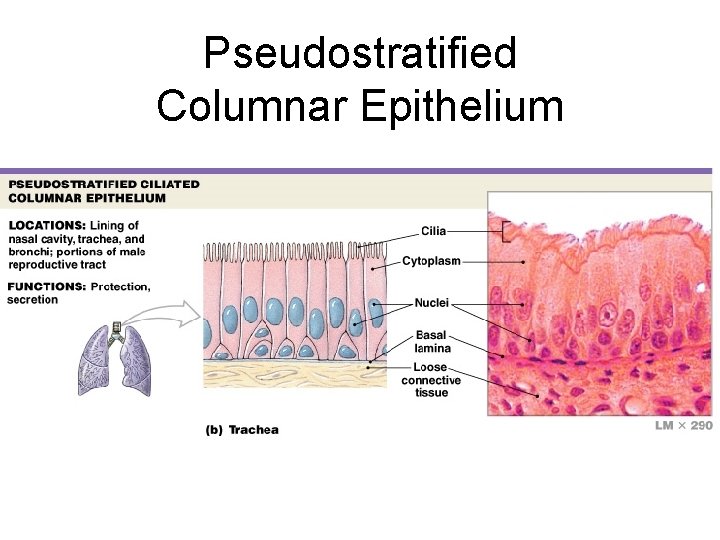
Pseudostratified Columnar Epithelium
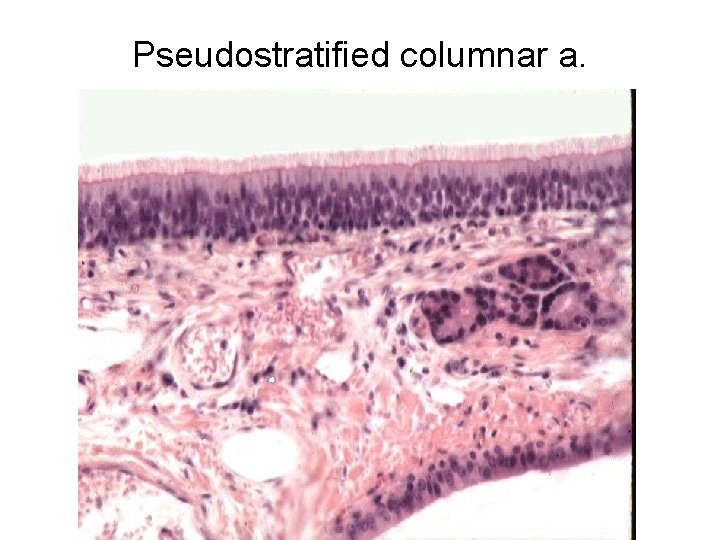
Pseudostratified columnar a.
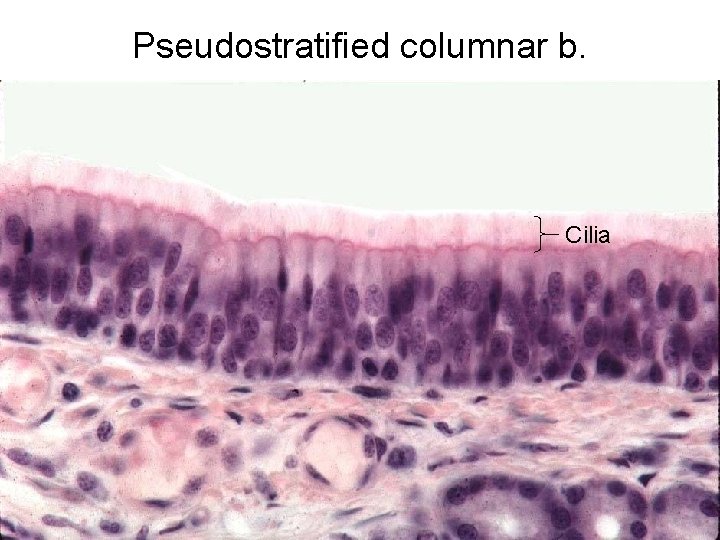
Pseudostratified columnar b. Cilia
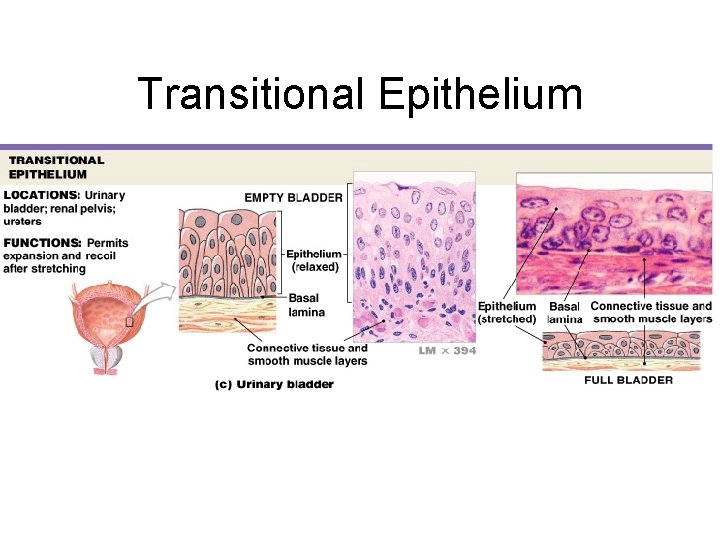
Transitional Epithelium
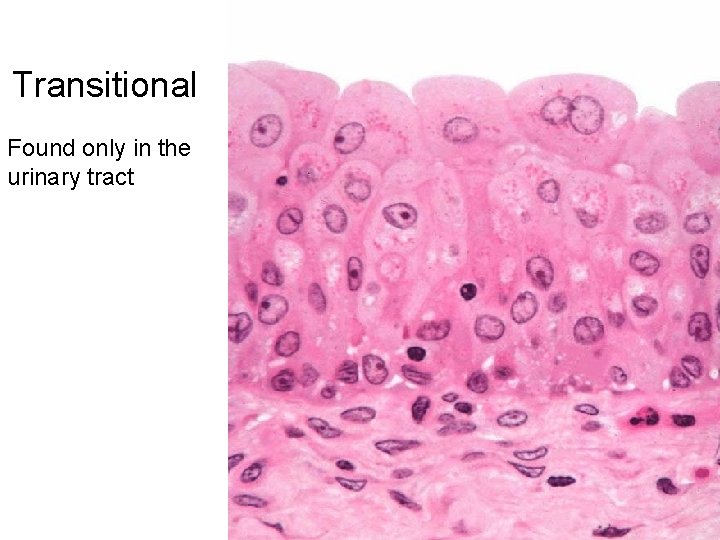
Transitional Found only in the urinary tract
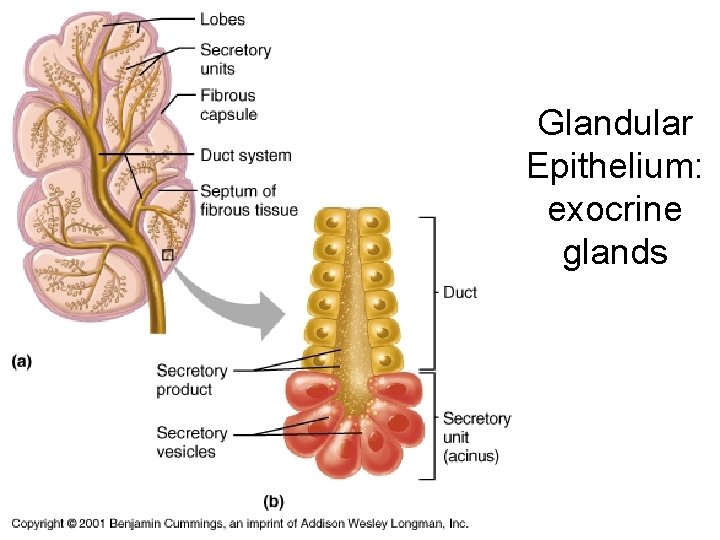
Glandular Epithelium: exocrine glands
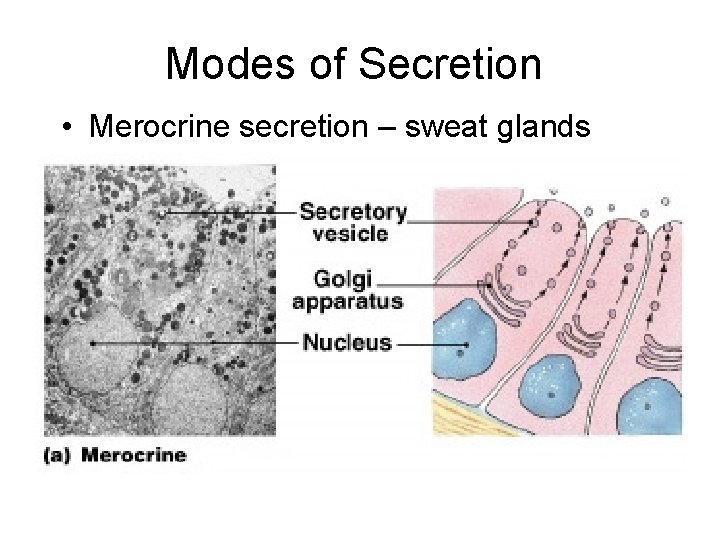
Modes of Secretion • Merocrine secretion – sweat glands
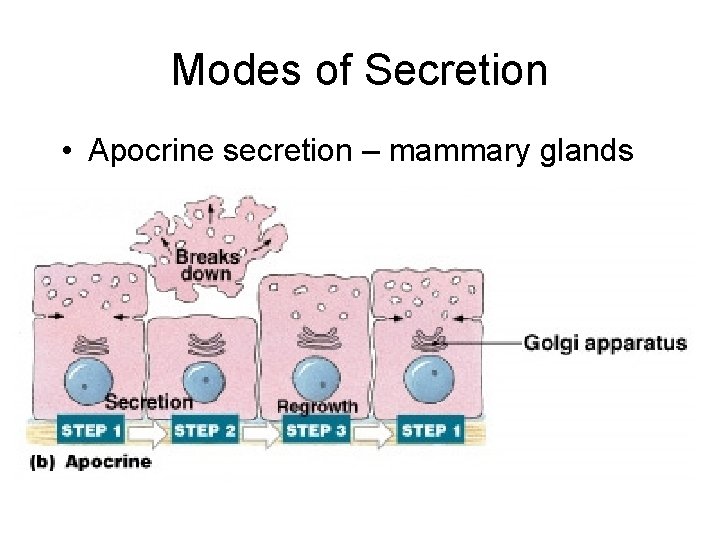
Modes of Secretion • Apocrine secretion – mammary glands
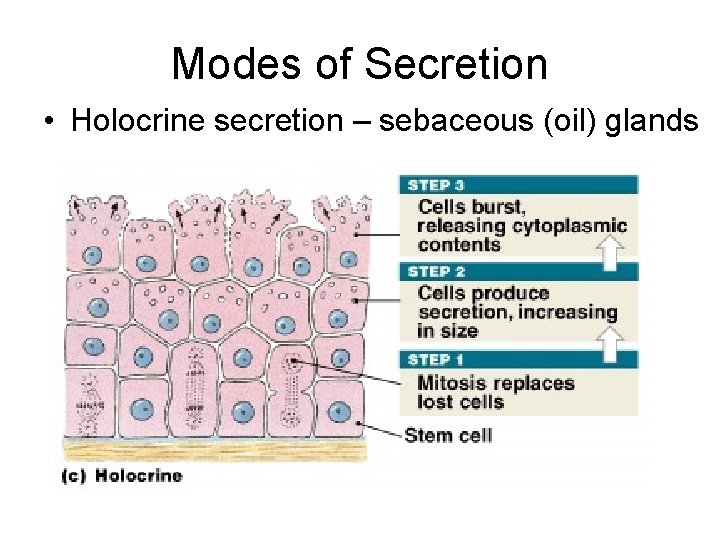
Modes of Secretion • Holocrine secretion – sebaceous (oil) glands
Types of Secretions • Serous glands: – watery secretions • Mucous glands: – secrete mucins • Mixed exocrine glands: – both serous and mucous
Unicellular Glands • Goblet cells are the only unicellular exocrine glands: – scattered among epithelia – e. g. , in intestinal lining
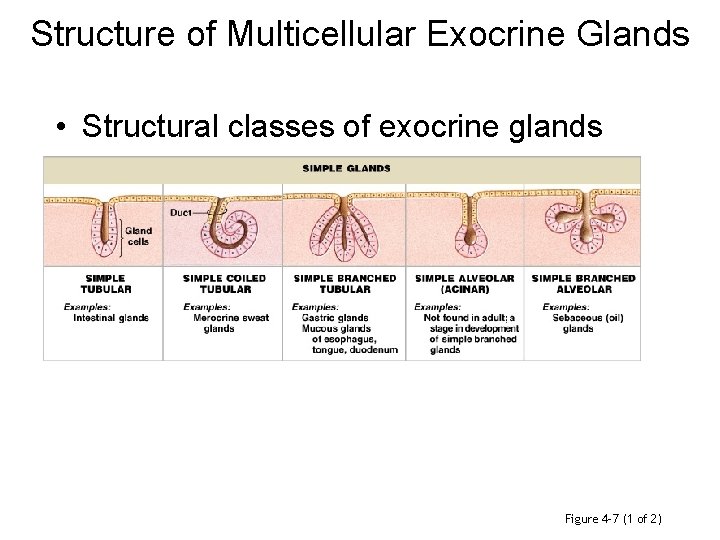
Structure of Multicellular Exocrine Glands • Structural classes of exocrine glands Figure 4– 7 (1 of 2)
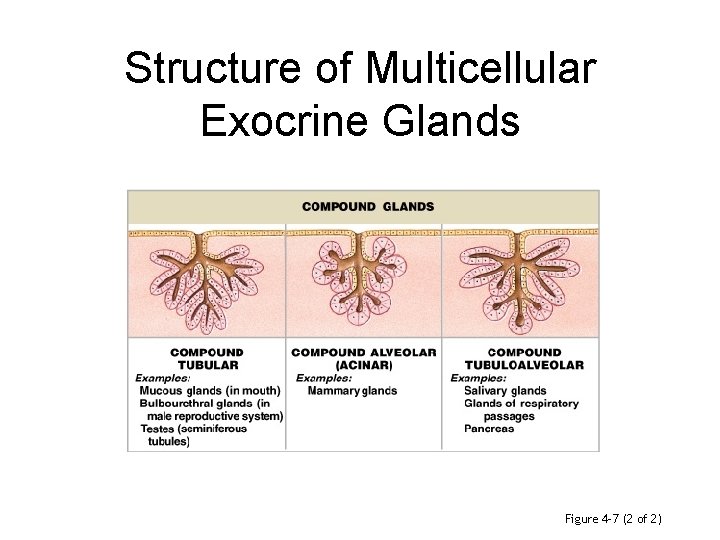
Structure of Multicellular Exocrine Glands Figure 4– 7 (2 of 2)
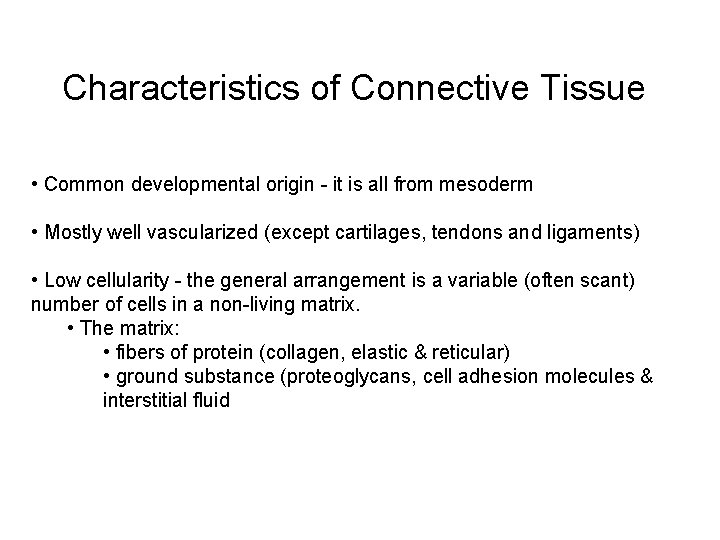
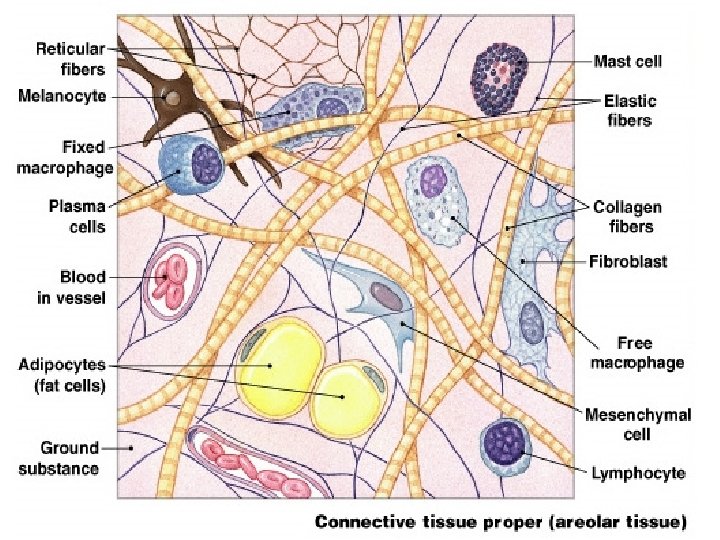
Characteristics of Connective Tissue • Common developmental origin - it is all from mesoderm • Mostly well vascularized (except cartilages, tendons and ligaments) • Low cellularity - the general arrangement is a variable (often scant) number of cells in a non-living matrix. • The matrix: • fibers of protein (collagen, elastic & reticular) • ground substance (proteoglycans, cell adhesion molecules & interstitial fluid
Connective tissue
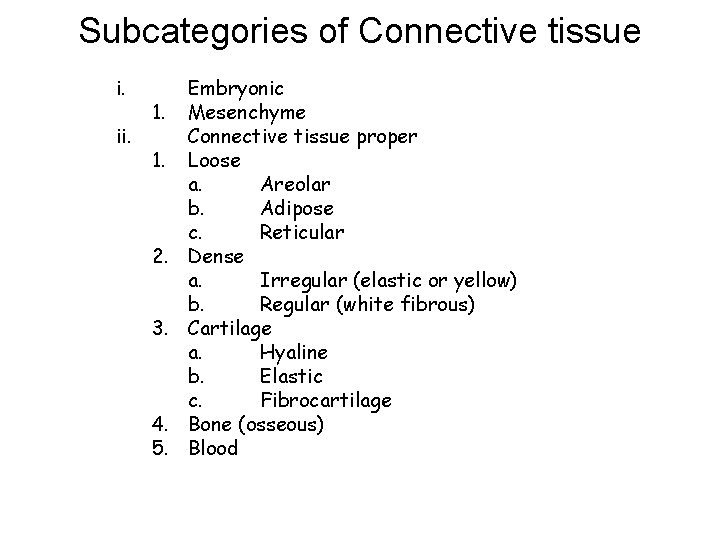
Subcategories of Connective tissue i. ii. 1. 1. 2. 3. 4. 5. Embryonic Mesenchyme Connective tissue proper Loose a. Areolar b. Adipose c. Reticular Dense a. Irregular (elastic or yellow) b. Regular (white fibrous) Cartilage a. Hyaline b. Elastic c. Fibrocartilage Bone (osseous) Blood
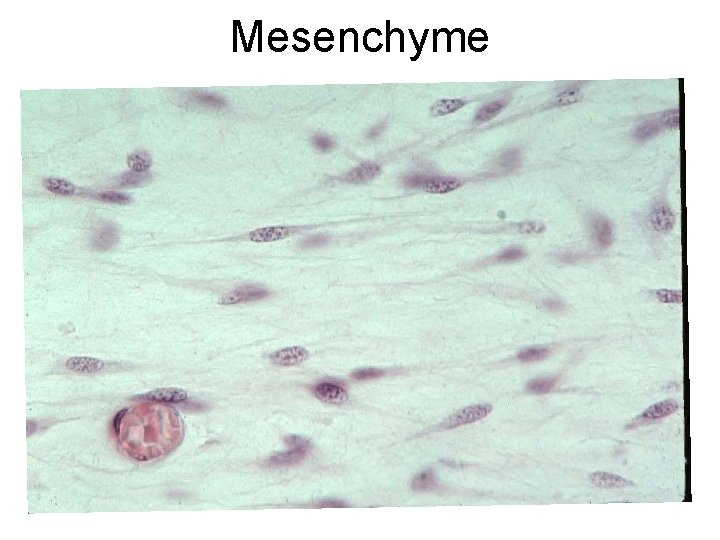
Mesenchyme
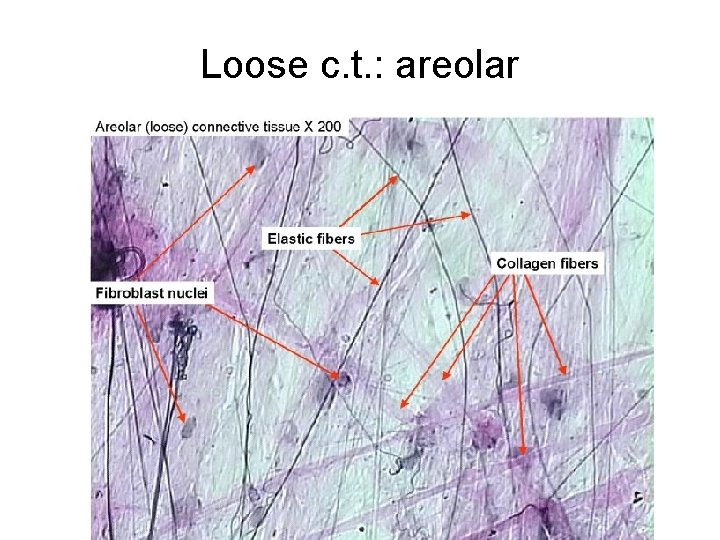
Loose c. t. : areolar
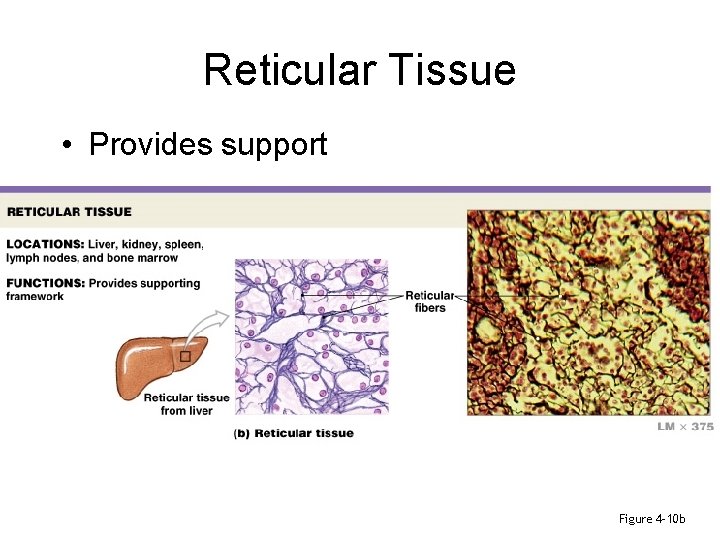
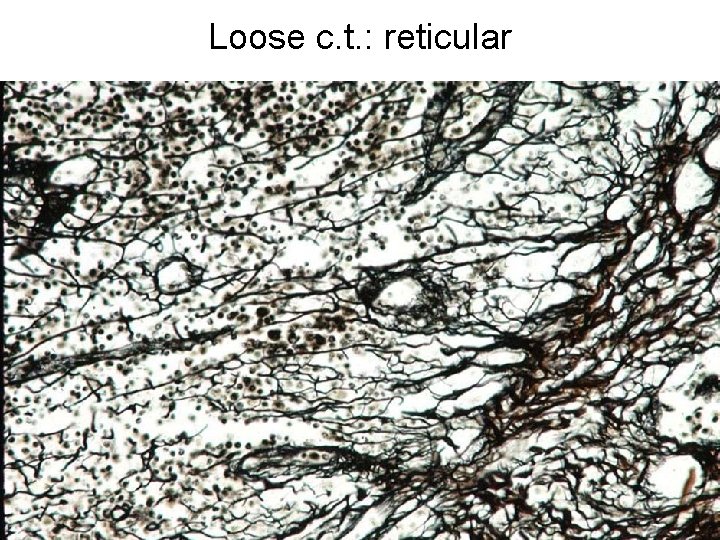
Reticular Tissue • Provides support Figure 4– 10 b
Loose c. t. : reticular
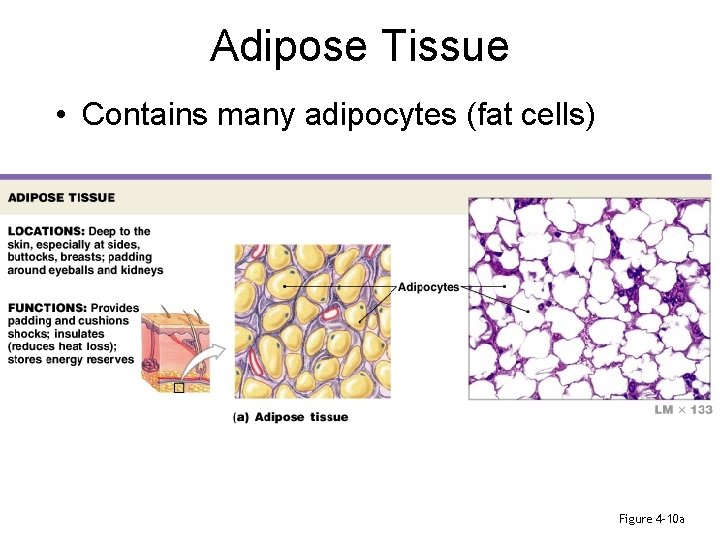
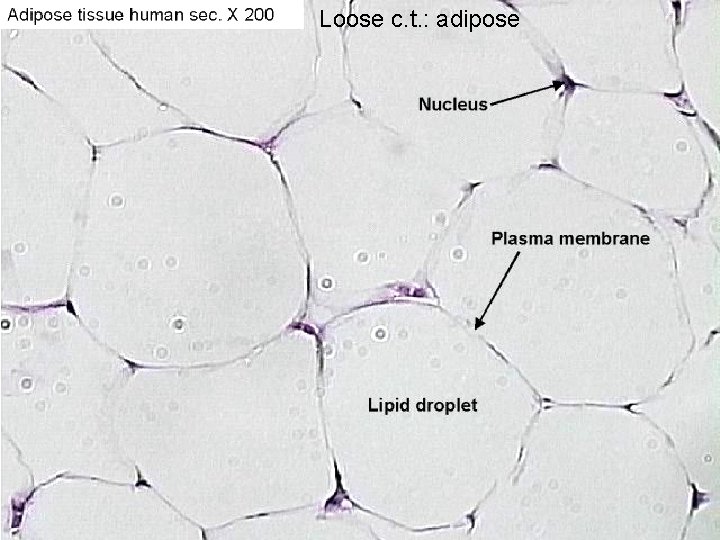
Adipose Tissue • Contains many adipocytes (fat cells) Figure 4– 10 a
Loose c. t. : adipose
Types of Adipose Tissue • White fat: – most common – stores fat – absorbs shocks – slows heat loss (insulation)
Types of Adipose Tissue • Brown fat: – more vascularized – adipocytes have many mitochondria – breaks down fat – produces heat
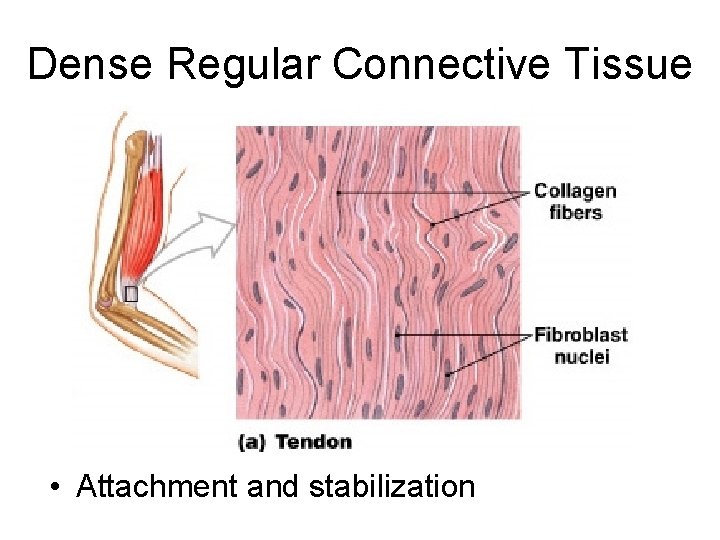
Dense Regular Connective Tissue • Attachment and stabilization
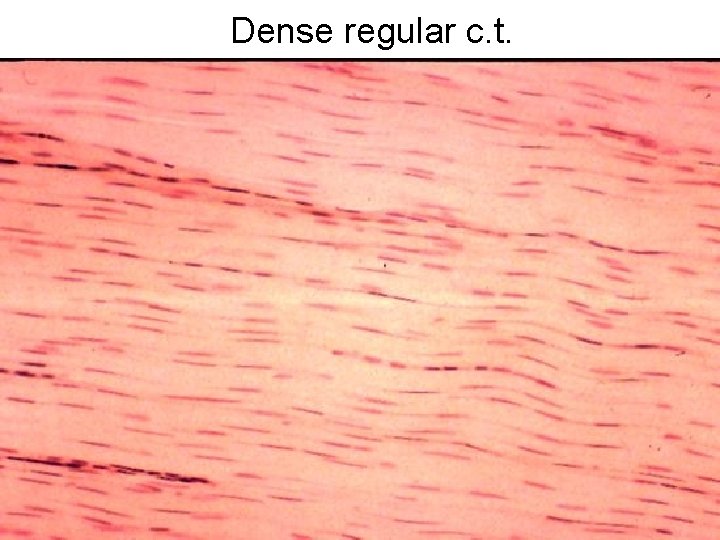
Dense regular c. t.
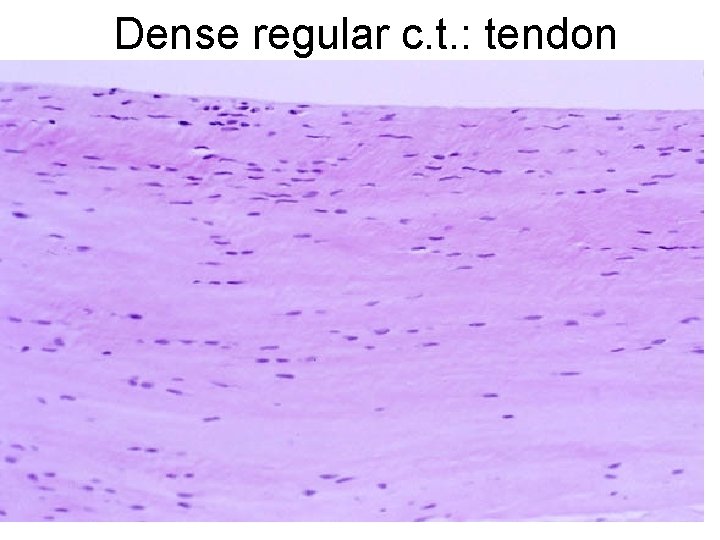
Dense regular c. t. : tendon
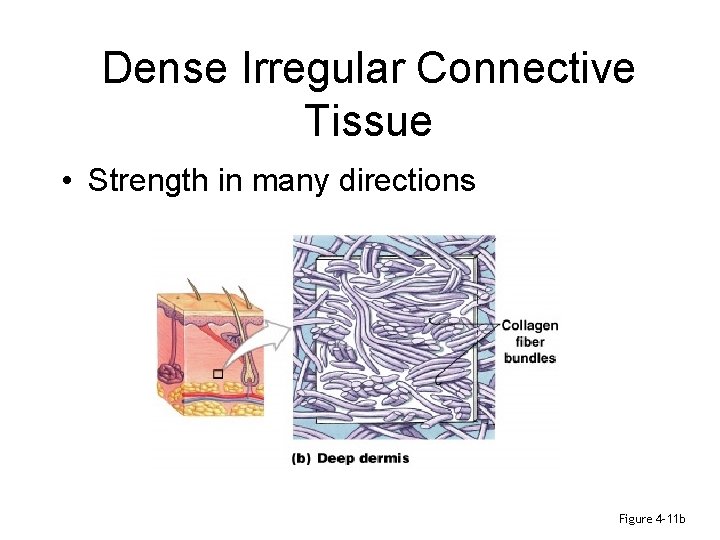
Dense Irregular Connective Tissue • Strength in many directions Figure 4– 11 b
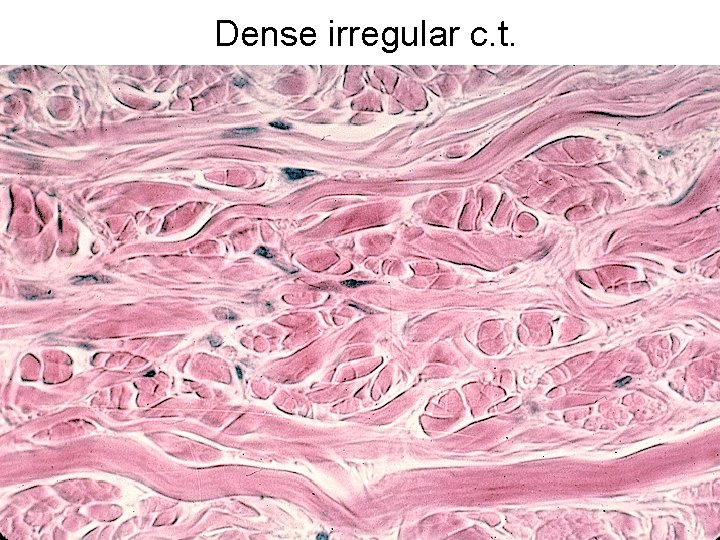
Dense irregular c. t.
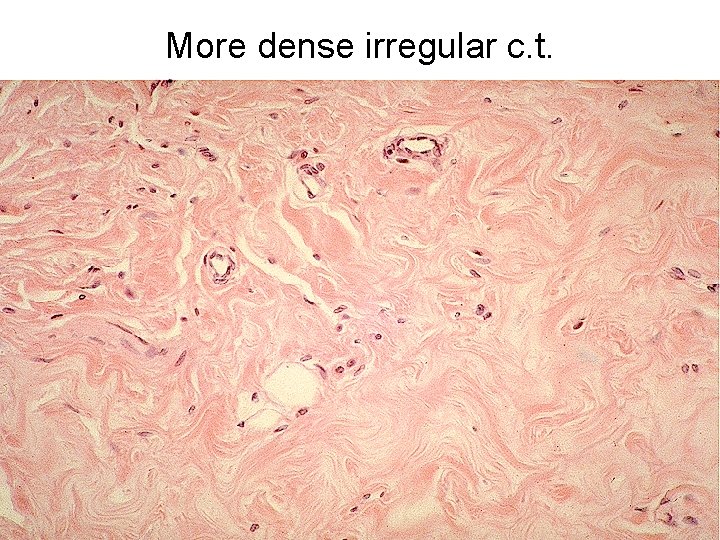
More dense irregular c. t.
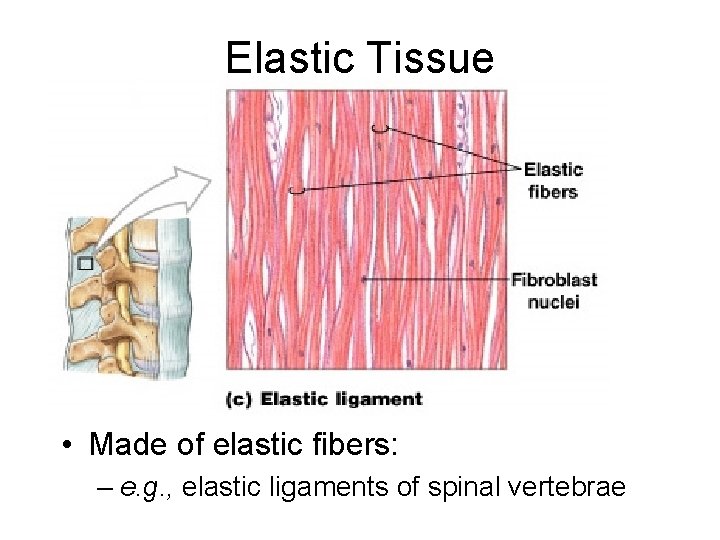
Elastic Tissue • Made of elastic fibers: – e. g. , elastic ligaments of spinal vertebrae
Cartilage Matrix • Proteoglycans derived from chondroitin sulfates • Ground substance proteins • Cells (chondrocytes) surrounded by lacunae (chambers)
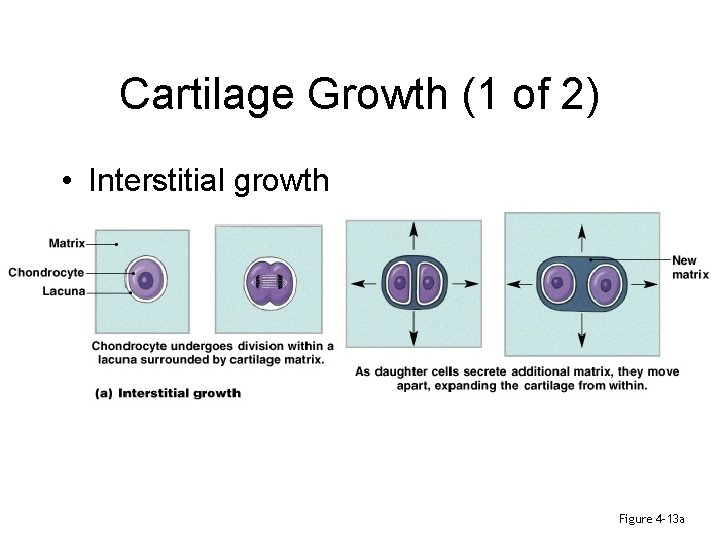
Cartilage Growth (1 of 2) • Interstitial growth Figure 4– 13 a
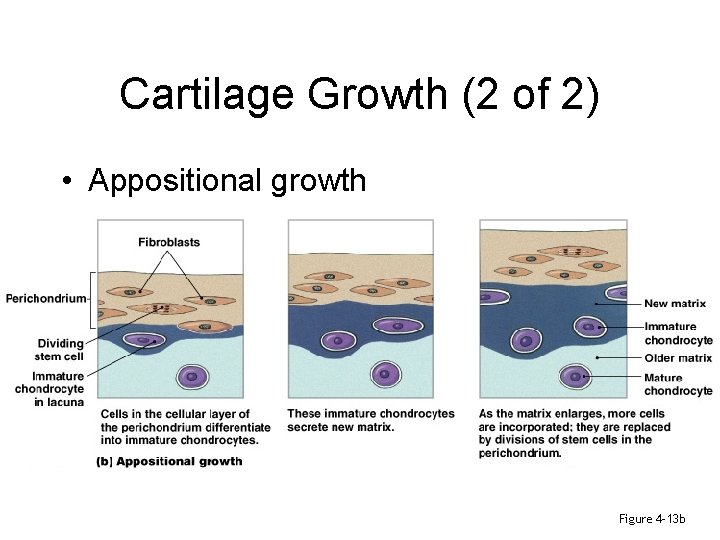
Cartilage Growth (2 of 2) • Appositional growth Figure 4– 13 b
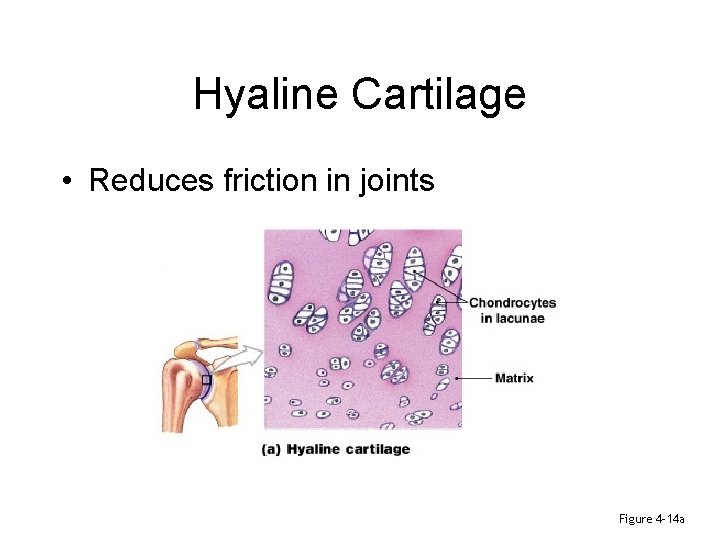
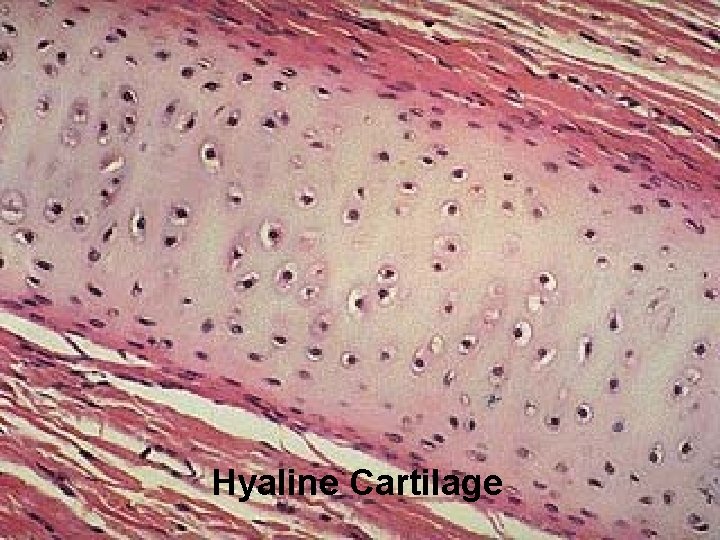
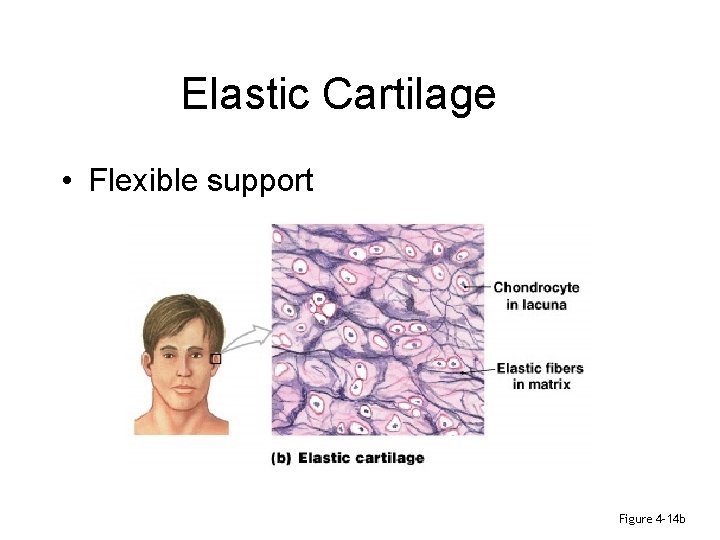
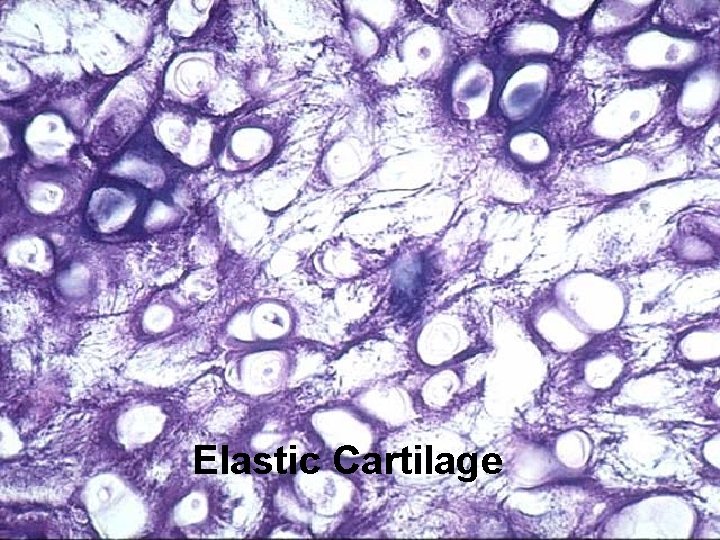
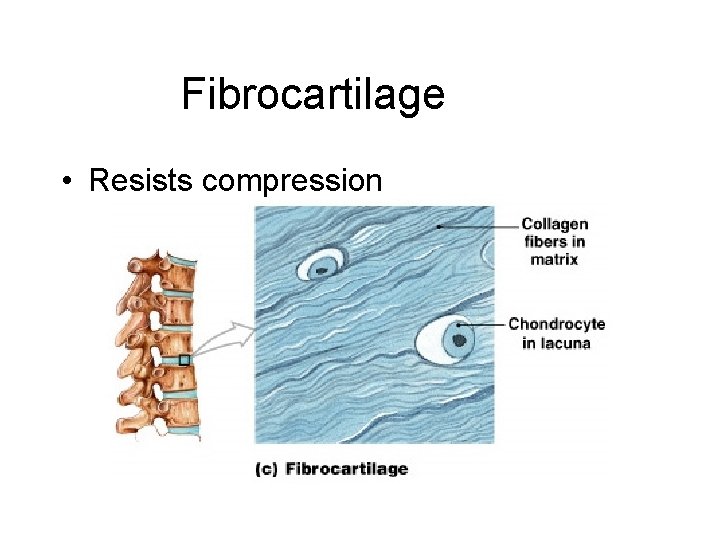
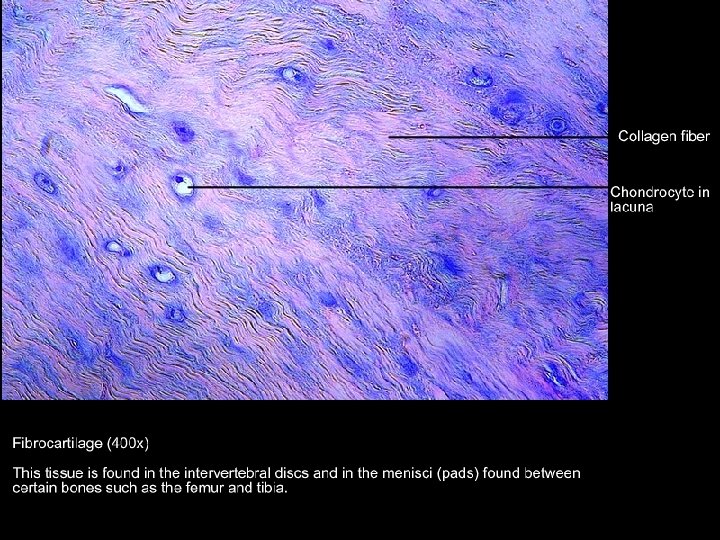
Types of Cartilage • Hyaline cartilage: – translucent matrix – no prominent fibers • Elastic cartilage: – tightly packed elastic fibers • Fibrocartilage: – very dense collagen fibers
Hyaline Cartilage • Reduces friction in joints Figure 4– 14 a
Hyaline Cartilage
Elastic Cartilage • Flexible support Figure 4– 14 b
Elastic Cartilage
Fibrocartilage • Resists compression
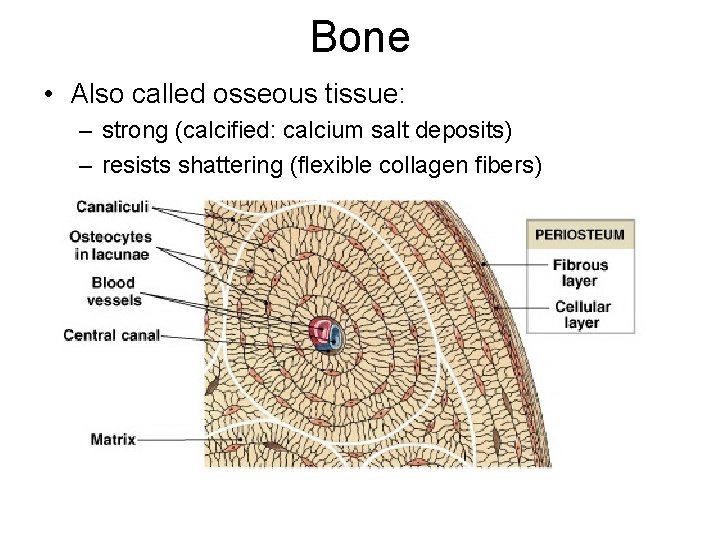
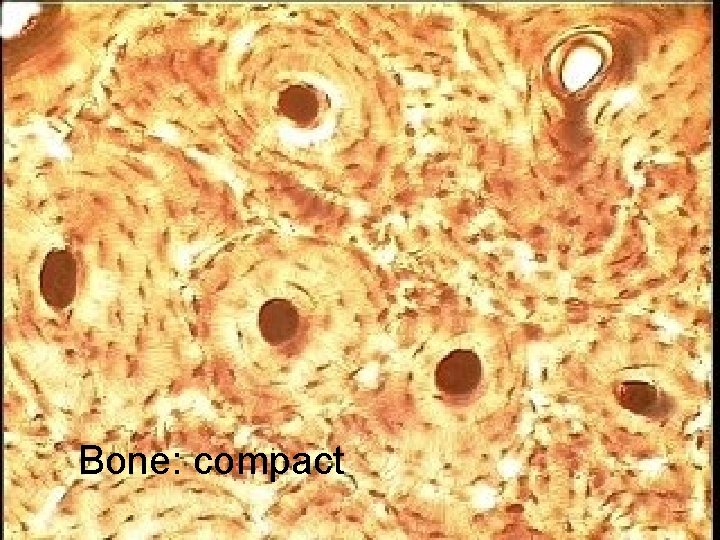
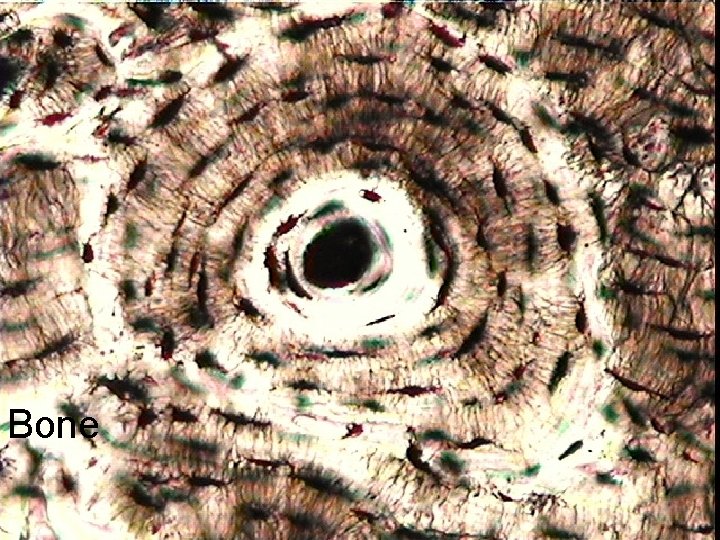
Bone • Also called osseous tissue: – strong (calcified: calcium salt deposits) – resists shattering (flexible collagen fibers)
Bone: compact
Bone
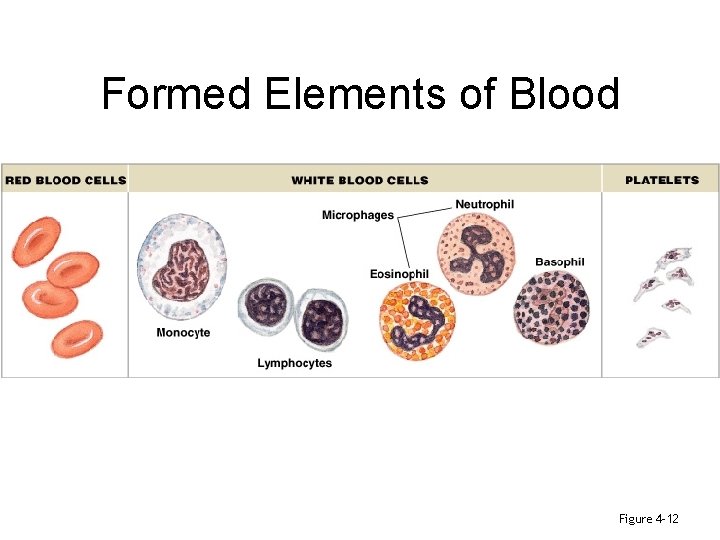
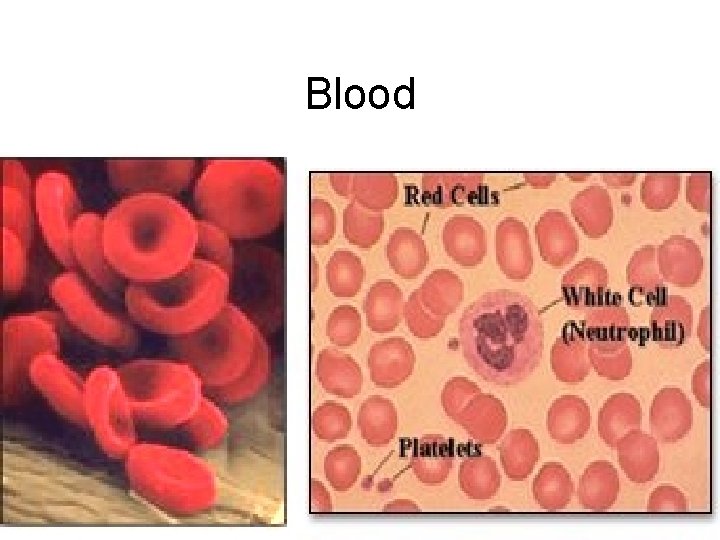
Fluid Connective Tissues • Fluid connective tissues: – blood and lymph – watery matrix of dissolved proteins – carry specific cell types (formed elements)
Formed Elements of Blood Figure 4– 12
Blood
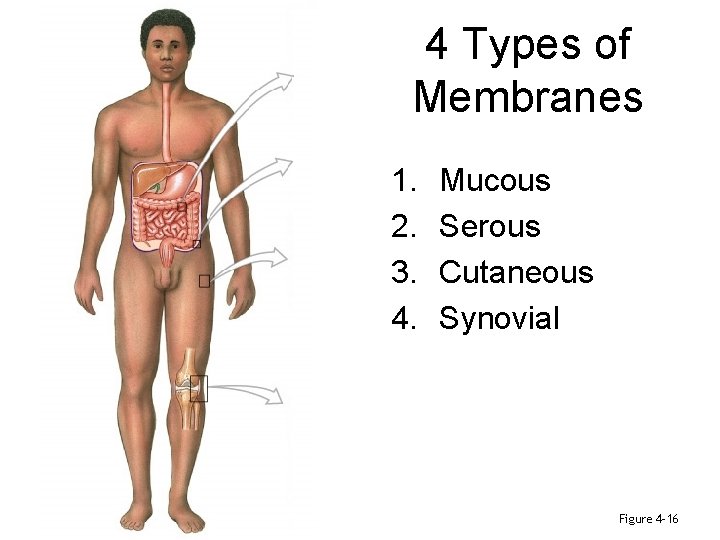
4 Types of Membranes 1. 2. 3. 4. Mucous Serous Cutaneous Synovial Figure 4– 16
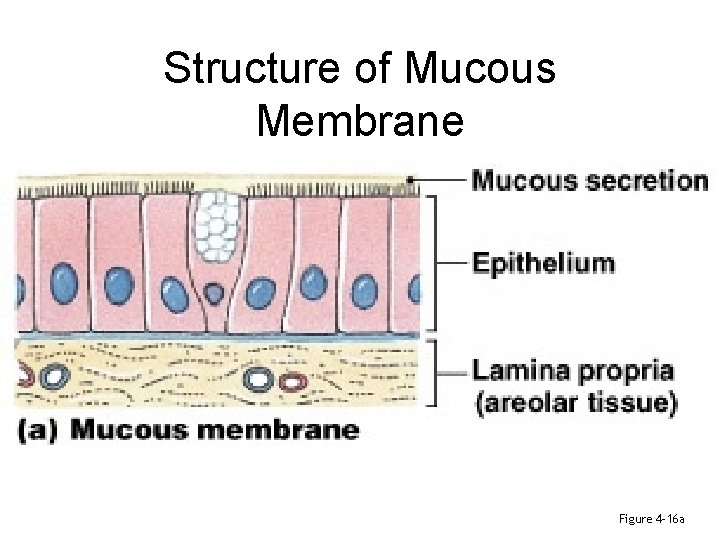
Mucous Membrane • Mucous membranes (mucosae): – line passageways that have external connections – also in digestive, respiratory, urinary, and reproductive tracts
Structure of Mucous Membrane Figure 4– 16 a
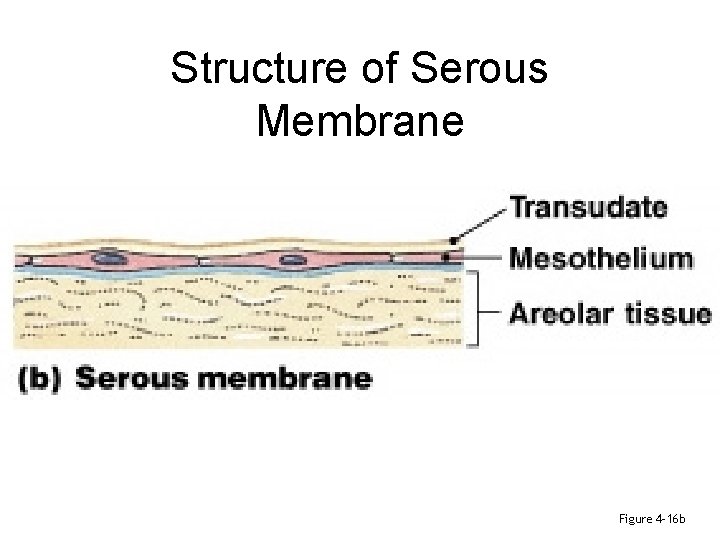
Serous Membranes • Line cavities not open to the outside • Are thin but strong • Have fluid transudate to reduce friction
Structure of Serous Membrane Figure 4– 16 b
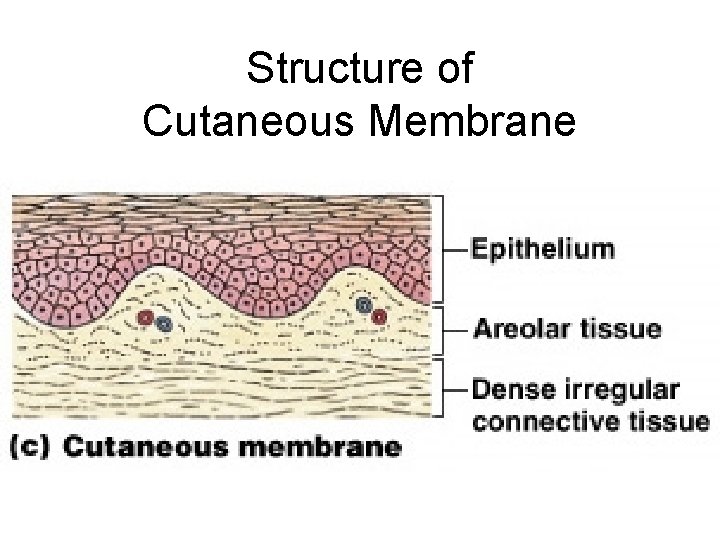
Structure of Cutaneous Membrane
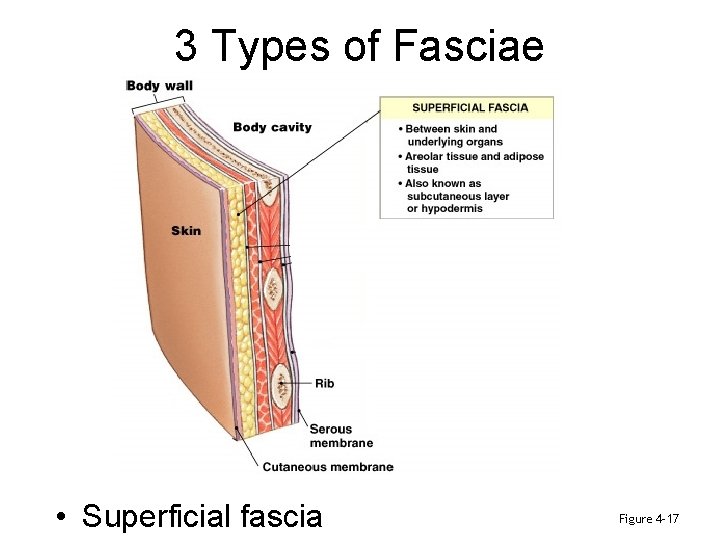
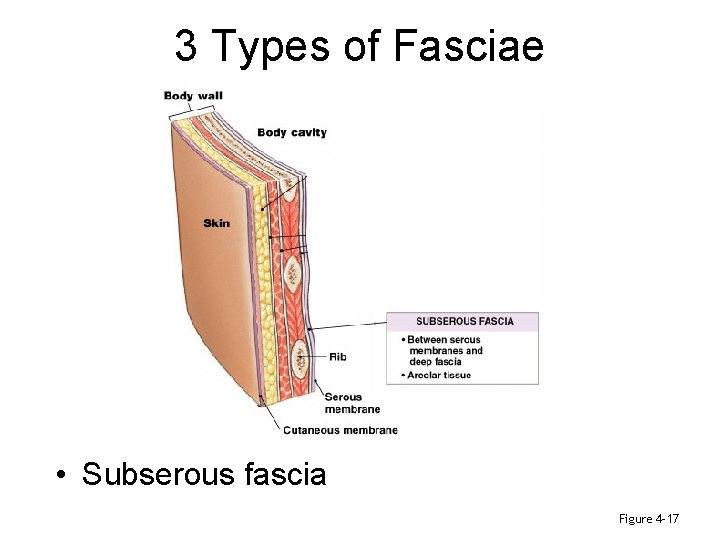
3 Types of Fasciae • Superficial fascia Figure 4– 17
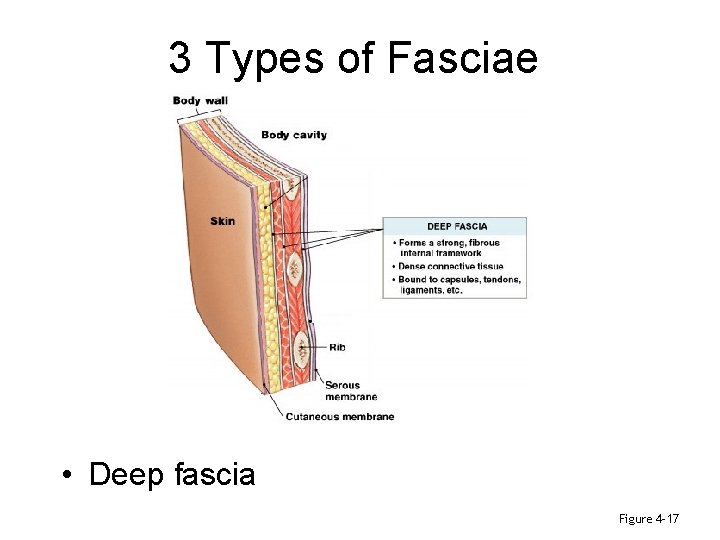
3 Types of Fasciae • Deep fascia Figure 4– 17
3 Types of Fasciae • Subserous fascia Figure 4– 17
Muscle tissue • It contracts (shortens with force). • It is irritable (responsive). • There are three types 1. Skeletal 2. Smooth 3. Cardiac
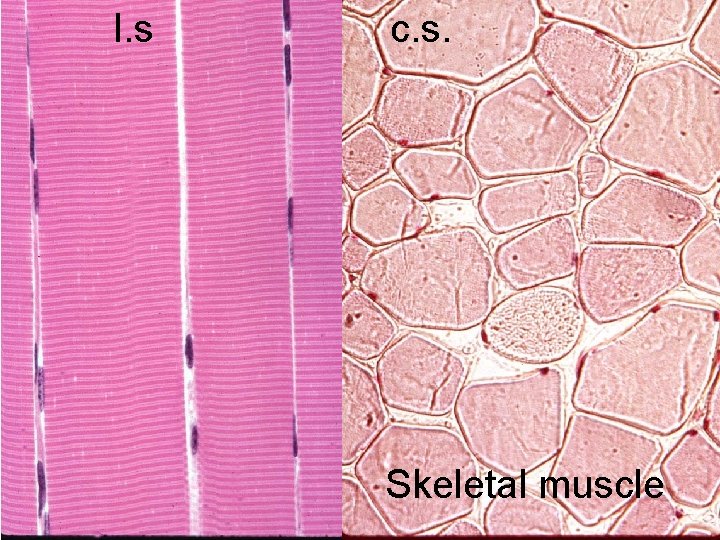
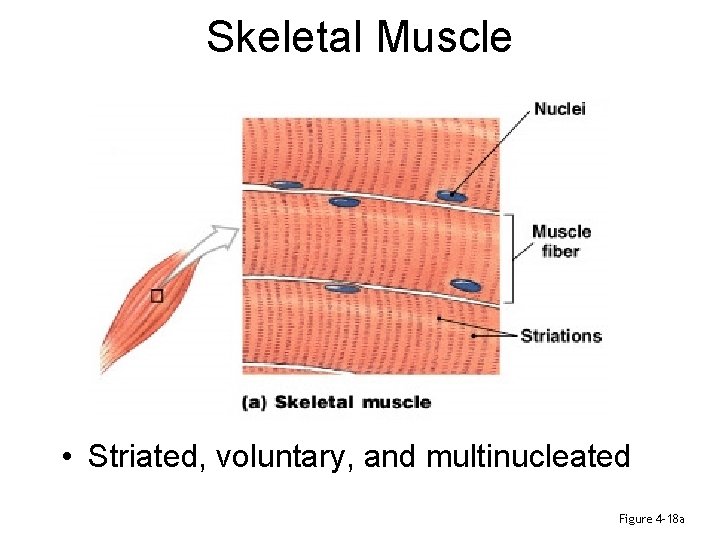
Skeletal Muscle • • • Most abundant Striated Multinucleate with peripheral nuclei Long, parallel fibers Voluntary
l. s c. s. Skeletal Muscle Skeletal muscle
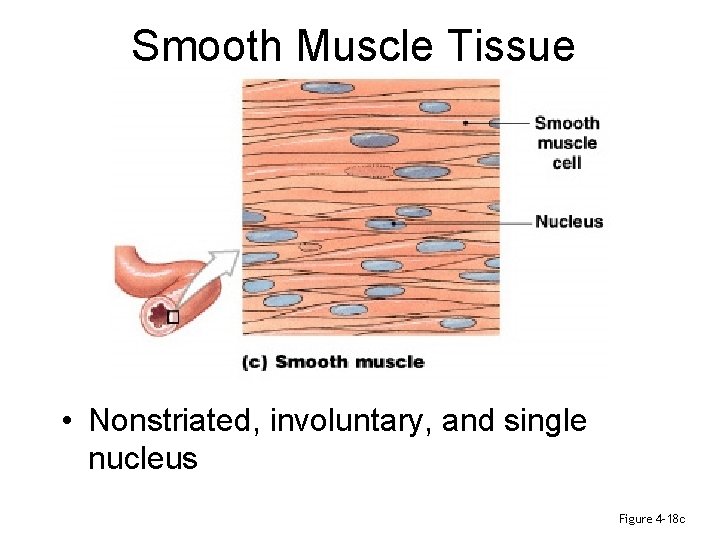
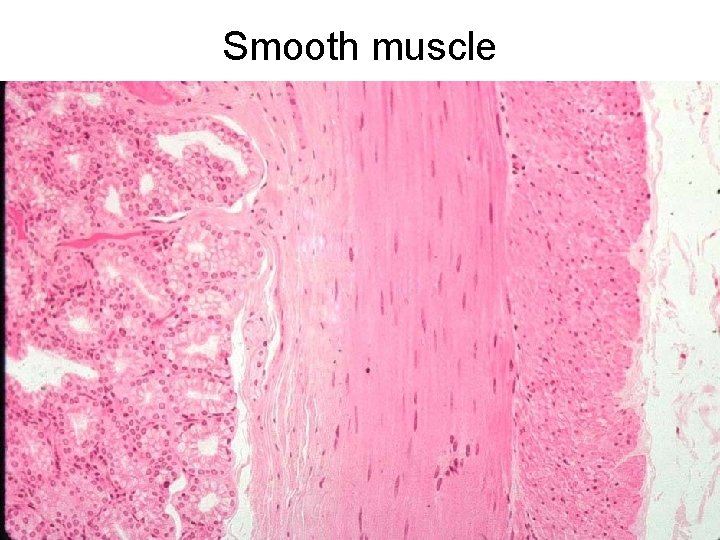
Smooth Muscle • • • Involuntary Not striated (hence the name “smooth”) Uninucleate Small, spindle-shaped fibers Found lining the walls of hollow organs
Skeletal Muscle • Striated, voluntary, and multinucleated Figure 4– 18 a
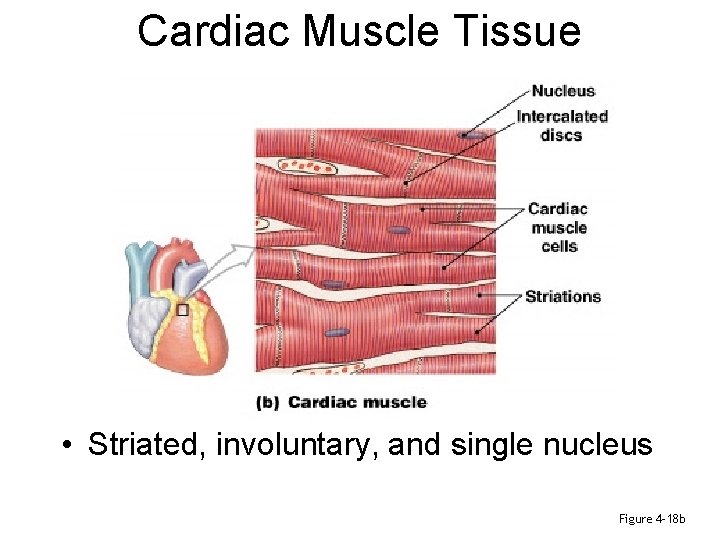
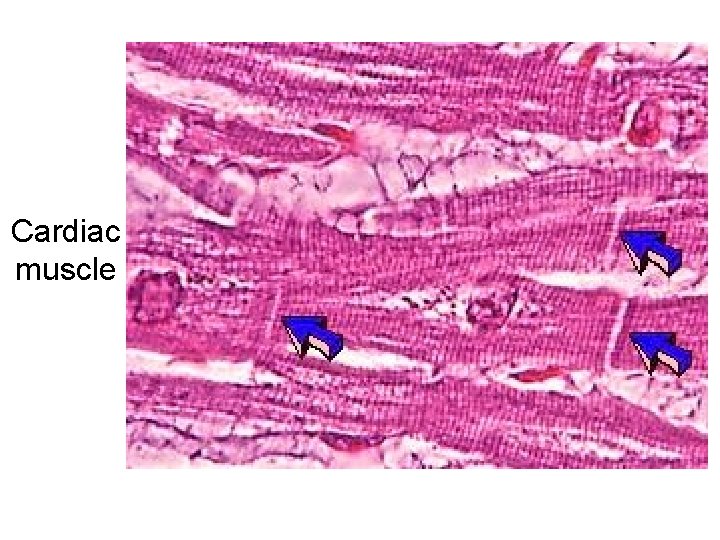
Cardiac Muscle • • • Striated Uninucleate (occasionally binucleate) Short, fat, branched fibers Intercalated discs Involuntary Found in the heart
Cardiac Muscle Tissue • Striated, involuntary, and single nucleus Figure 4– 18 b
Cardiac muscle
Smooth Muscle Tissue • Nonstriated, involuntary, and single nucleus Figure 4– 18 c
Smooth muscle
Neural Tissue • Also called nervous or nerve tissue: – specialized for conducting electrical impulses – rapidly senses internal or external environment – process information and controls responses
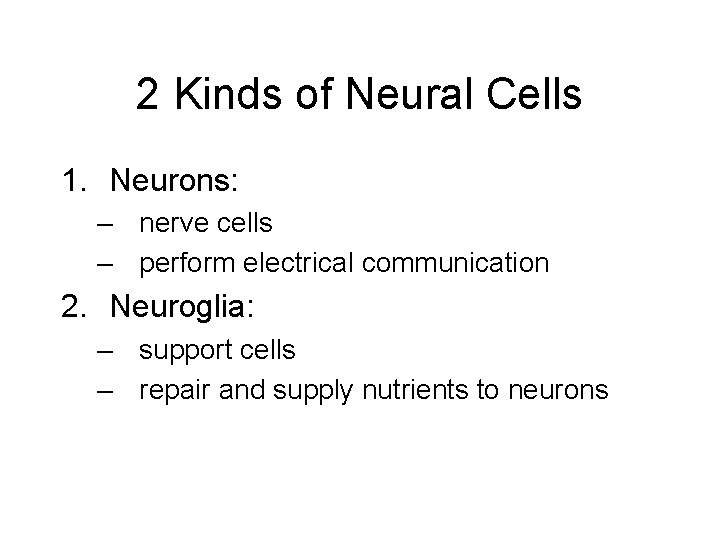
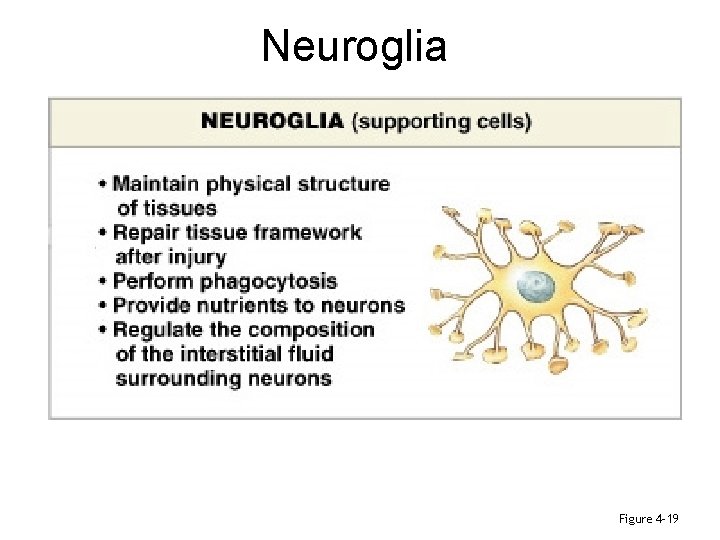
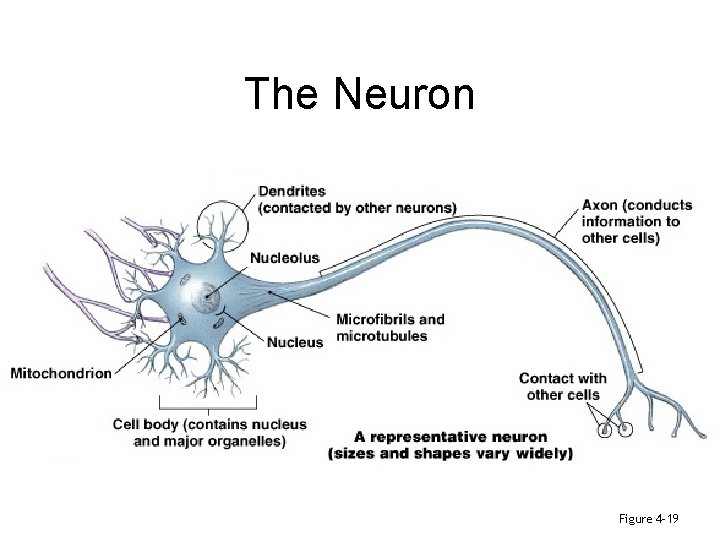
2 Kinds of Neural Cells 1. Neurons: – nerve cells – perform electrical communication 2. Neuroglia: – support cells – repair and supply nutrients to neurons
Neuroglia Figure 4– 19
The Neuron Figure 4– 19
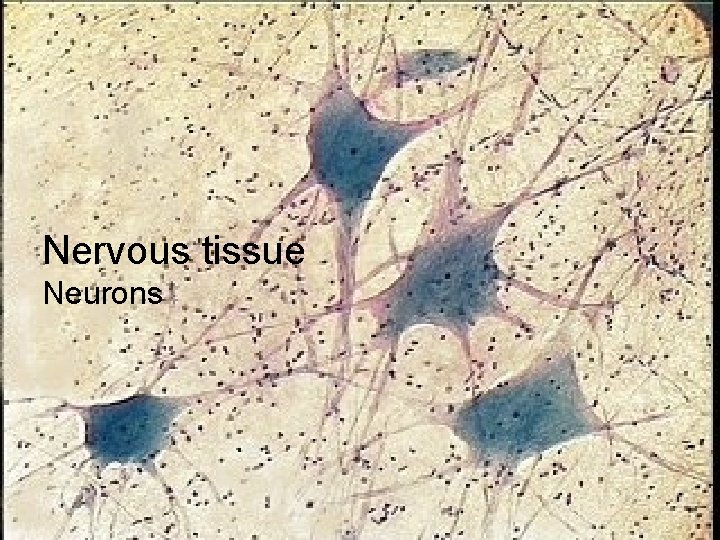
Nervous tissue Neurons
That’s it!