
Chapter 4 Theory of Aggregate Supply The Production


- Slides: 18
Chapter 4 Theory of Aggregate Supply
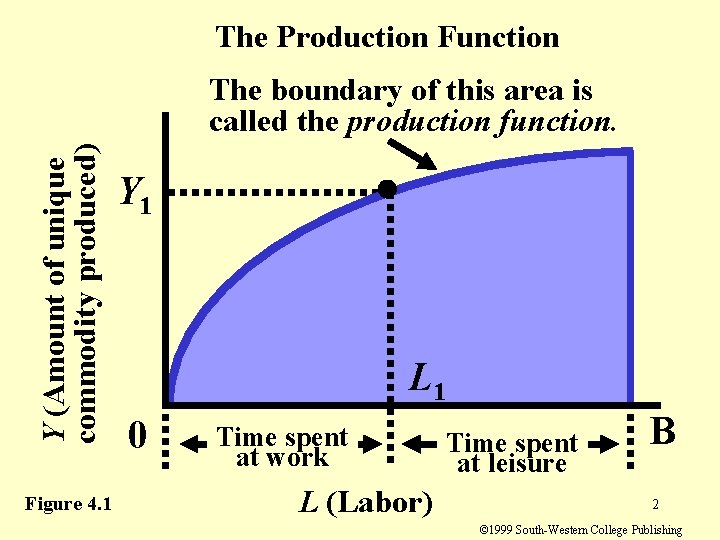
The Production Function Y (Amount of unique commodity produced) The boundary of this area is called the production function. Figure 4. 1 Y 1 L 1 0 Time spent at work L (Labor) Time spent at leisure B 2 © 1999 South-Western College Publishing
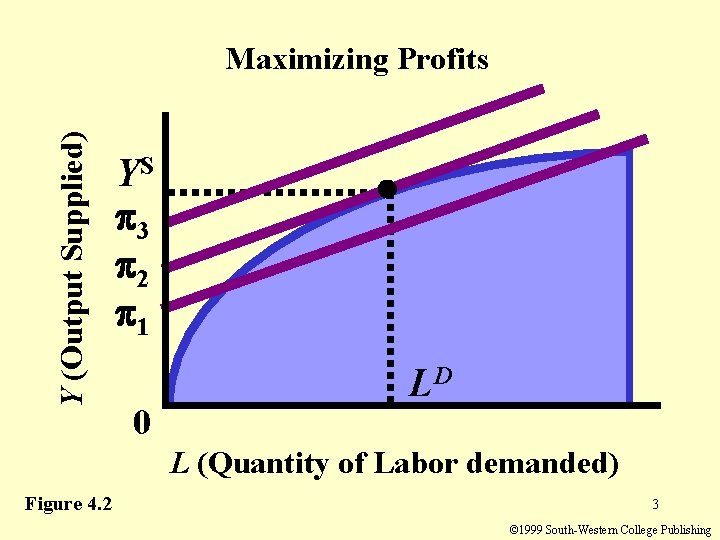
Y (Output Supplied) Maximizing Profits YS 3 2 1 0 LD L (Quantity of Labor demanded) Figure 4. 2 3 © 1999 South-Western College Publishing
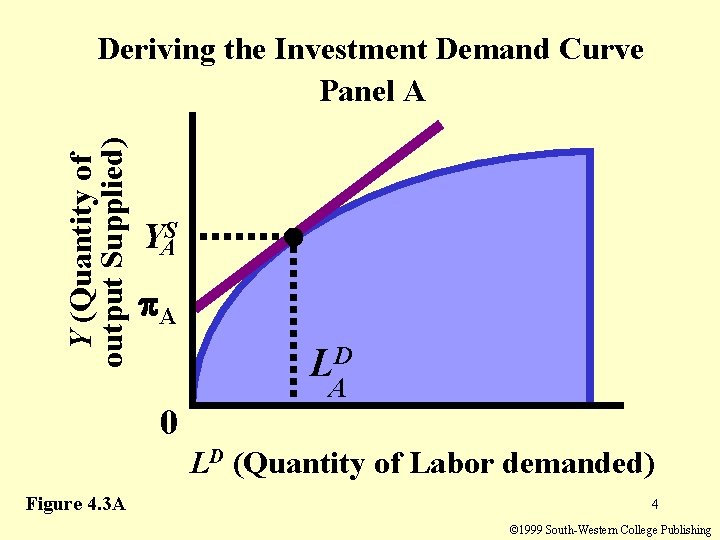
Y (Quantity of output Supplied) Deriving the Investment Demand Curve Panel A YAS A LD 0 A LD (Quantity of Labor demanded) Figure 4. 3 A 4 © 1999 South-Western College Publishing
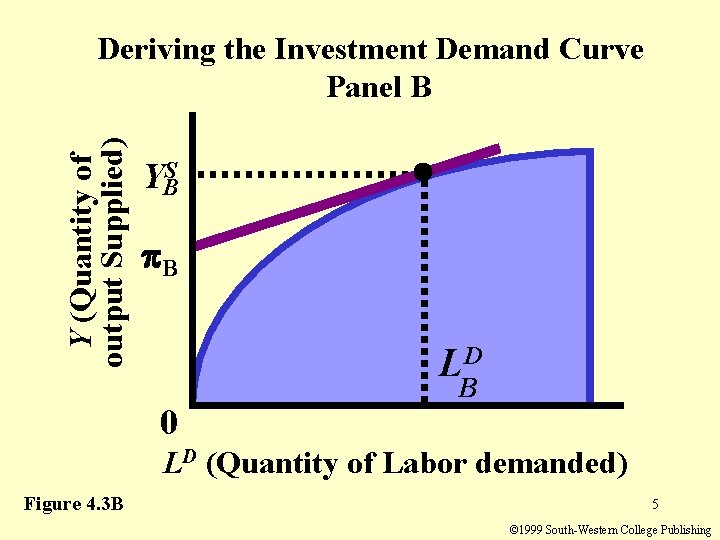
Y (Quantity of output Supplied) Deriving the Investment Demand Curve Panel B YBS B LD 0 B LD (Quantity of Labor demanded) Figure 4. 3 B 5 © 1999 South-Western College Publishing
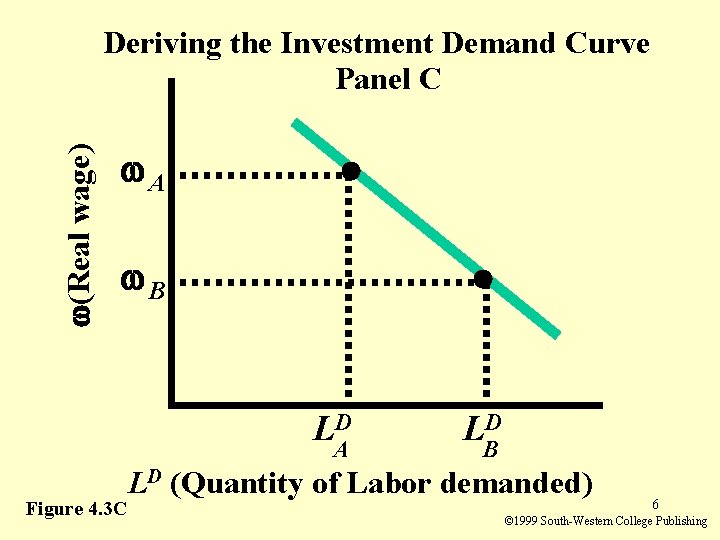
(Real wage) Deriving the Investment Demand Curve Panel C A B LAD Figure 4. 3 C LBD LD (Quantity of Labor demanded) 6 © 1999 South-Western College Publishing
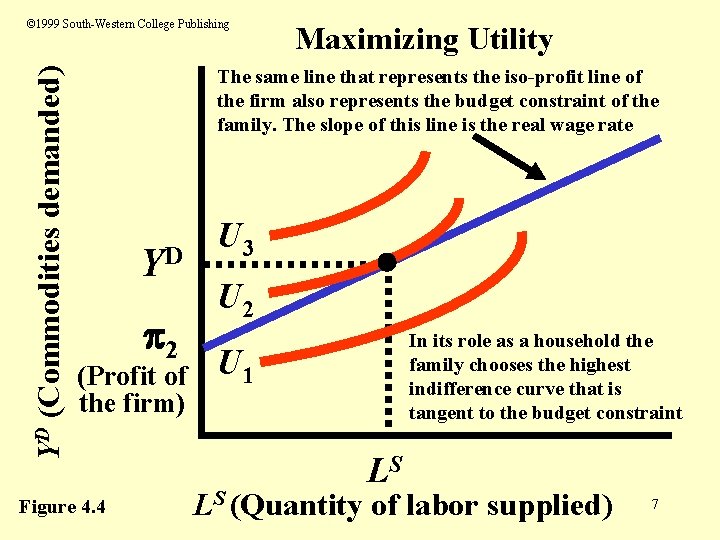
YD (Commodities demanded) © 1999 South-Western College Publishing Maximizing Utility The same line that represents the iso-profit line of the firm also represents the budget constraint of the family. The slope of this line is the real wage rate YD 2 (Profit of the firm) Figure 4. 4 U 3 U 2 In its role as a household the family chooses the highest indifference curve that is tangent to the budget constraint U 1 LS LS (Quantity of labor supplied) 7
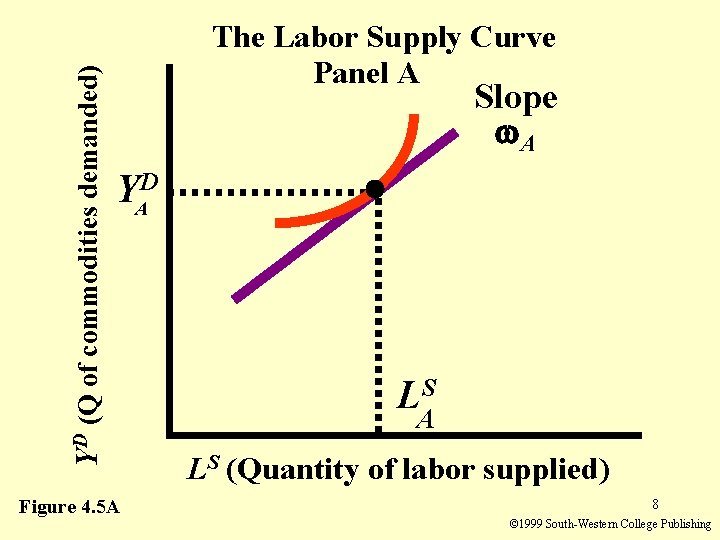
YD (Q of commodities demanded) The Labor Supply Curve Panel A Slope A YAD Figure 4. 5 A LS (Quantity of labor supplied) 8 © 1999 South-Western College Publishing
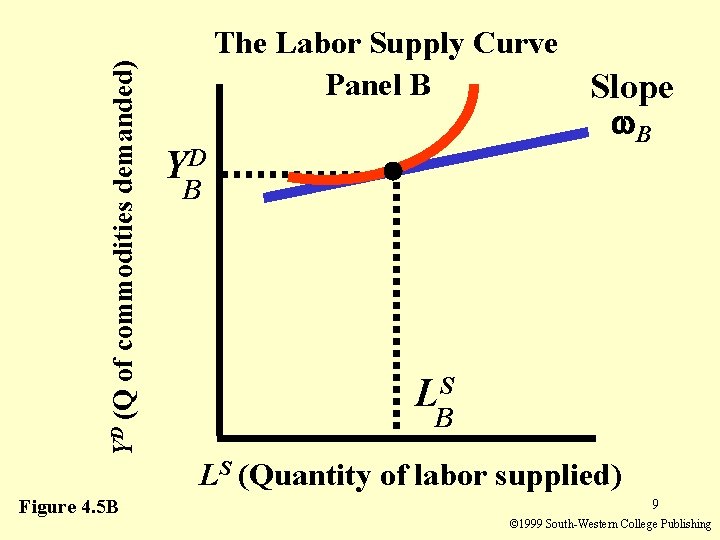
YD (Q of commodities demanded) Figure 4. 5 B The Labor Supply Curve Panel B Slope B YD B LS (Quantity of labor supplied) 9 © 1999 South-Western College Publishing
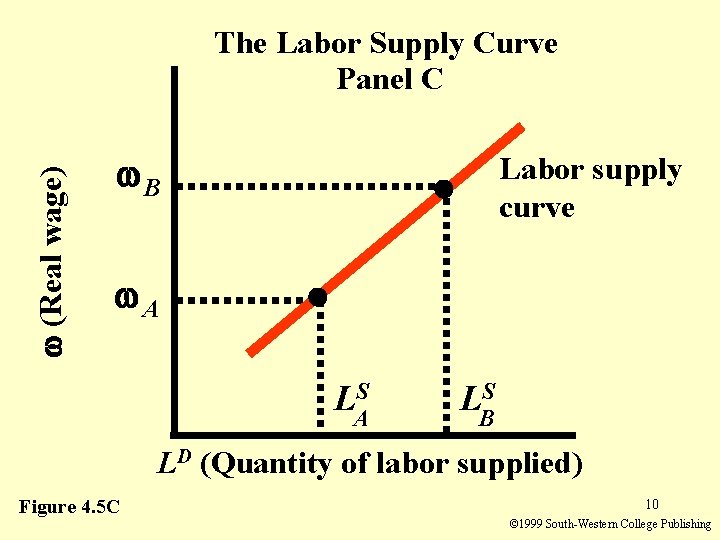
(Real wage) The Labor Supply Curve Panel C B Labor supply curve A LAS LBS LD (Quantity of labor supplied) Figure 4. 5 C 10 © 1999 South-Western College Publishing
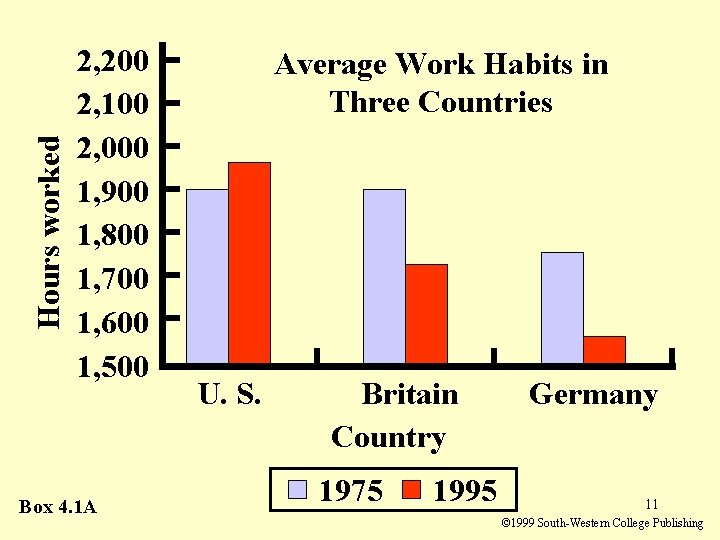
Hours worked 2, 200 2, 100 2, 000 1, 900 1, 800 1, 700 1, 600 1, 500 Box 4. 1 A Average Work Habits in Three Countries U. S. Britain Country 1975 1995 Germany 11 © 1999 South-Western College Publishing
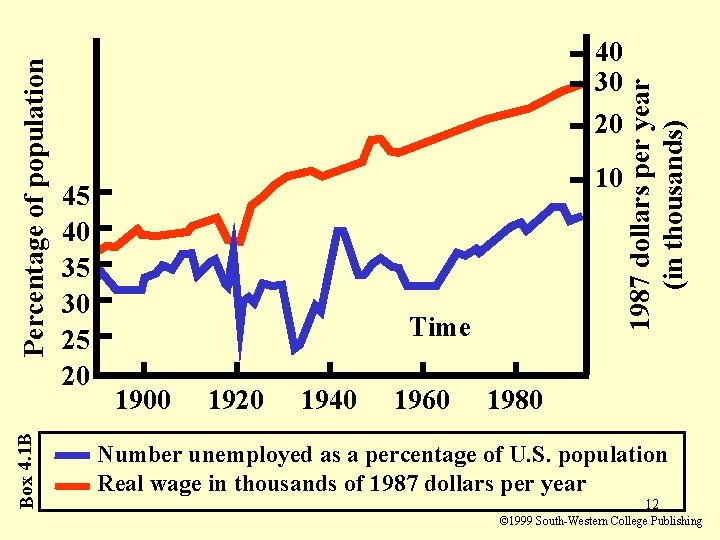
45 40 35 30 25 20 10 Time 1900 1920 1940 1960 1987 dollars per year (in thousands) Percentage of population Box 4. 1 B 40 30 20 1980 Number unemployed as a percentage of U. S. population Real wage in thousands of 1987 dollars per year 12 © 1999 South-Western College Publishing
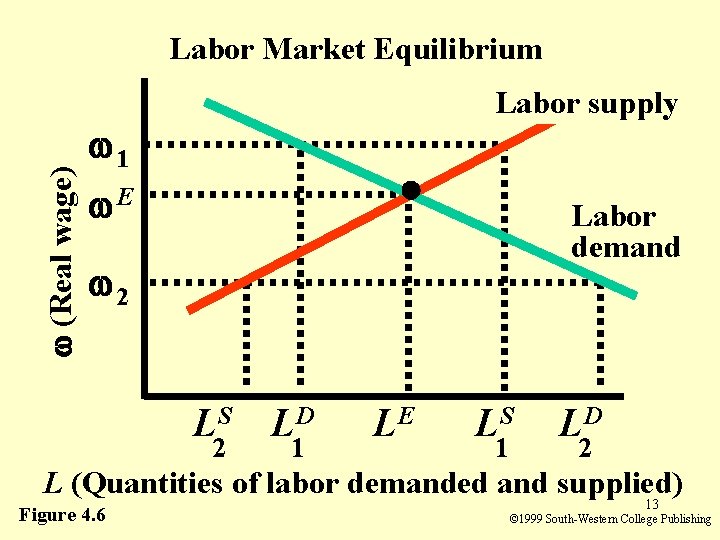
(Real wage) Labor Market Equilibrium Labor supply 1 E Labor demand 2 LS LD 2 1 LE LS 1 LD 2 L (Quantities of labor demanded and supplied) Figure 4. 6 13 © 1999 South-Western College Publishing
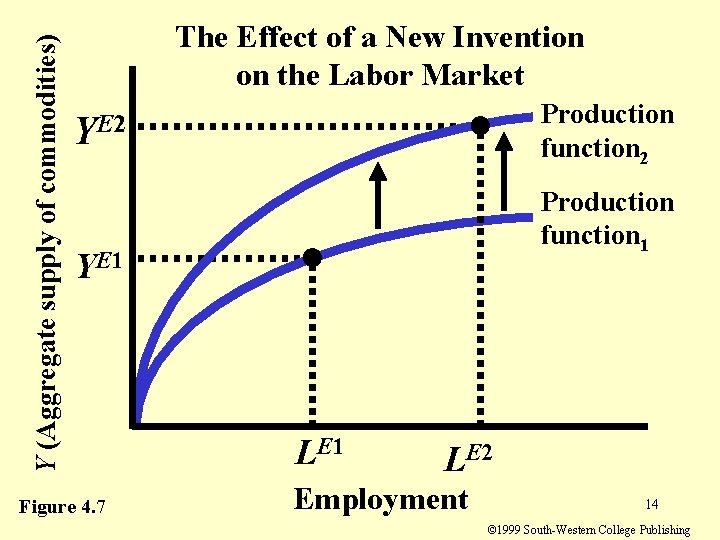
Y (Aggregate supply of commodities) The Effect of a New Invention on the Labor Market Production function 2 YE 2 Production function 1 YE 1 Figure 4. 7 LE 1 LE 2 Employment 14 © 1999 South-Western College Publishing
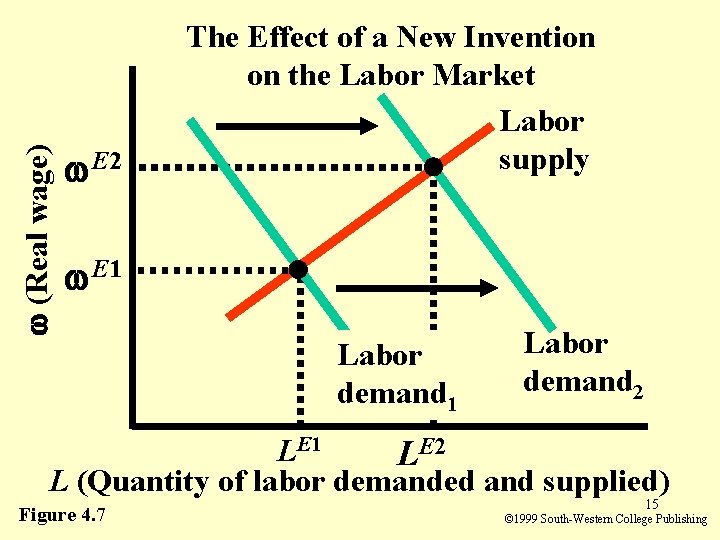
(Real wage) E 2 The Effect of a New Invention on the Labor Market Labor supply E 1 Labor demand 2 LE 1 LE 2 L (Quantity of labor demanded and supplied) Figure 4. 7 15 © 1999 South-Western College Publishing
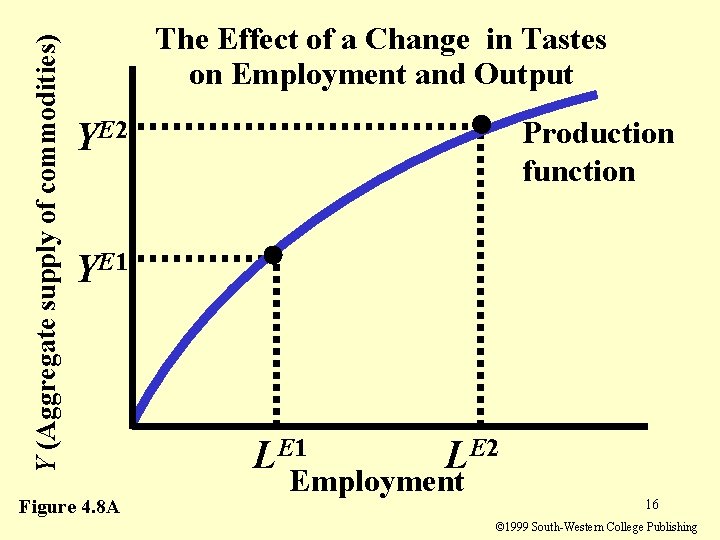
Y (Aggregate supply of commodities) The Effect of a Change in Tastes on Employment and Output Production function YE 2 YE 1 Figure 4. 8 A LE 1 LE 2 Employment 16 © 1999 South-Western College Publishing
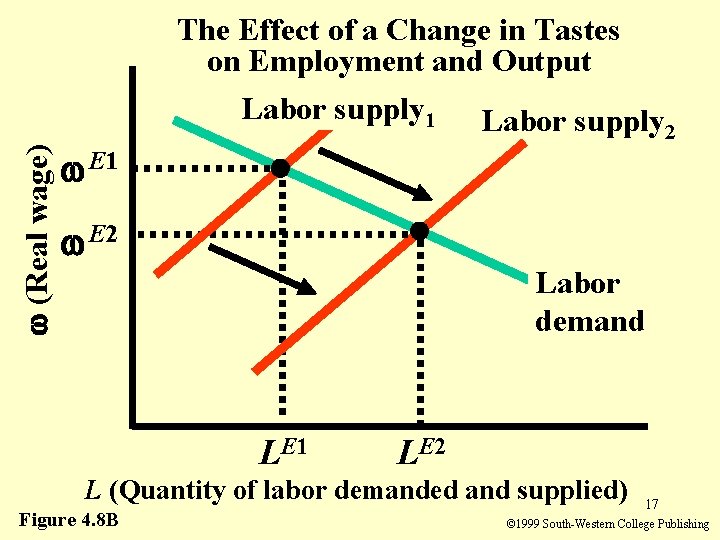
(Real wage) The Effect of a Change in Tastes on Employment and Output Labor supply 1 Labor supply E 1 2 E 2 Labor demand LE 1 LE 2 L (Quantity of labor demanded and supplied) Figure 4. 8 B 17 © 1999 South-Western College Publishing
END