
Chapter 4 The Medium Access Control Sublayer The
Chapter 4 The Medium Access Control Sublayer
The Channel Allocation Problem Static Channel Allocation in LANs and MANs • Dynamic Channel Allocation in LANs and MANs •
Dynamic Channel Allocation in LANs and MANs 1. Station 2. Single Model. Channel Assumption. 3. Collision Assumption. 4. (a) Continuous Time. (b) Slotted Time. 5. (a) Carrier Sense. (b) No Carrier Sense.
Multiple Access Protocols ALOHA • Carrier Sense Multiple Access Protocols • Collision-Free Protocols • Limited-Contention Protocols • Wavelength Division Multiple Access Protocols • Wireless LAN Protocols •
A historical look - Aloha � Norm Abramson, 1970 (University of Hawaii) � One central host / several secondary hosts � Separate uplink and downlink channels � Collision possible on uplink � It inspired Bob Metcalfe to create CSMA/CD
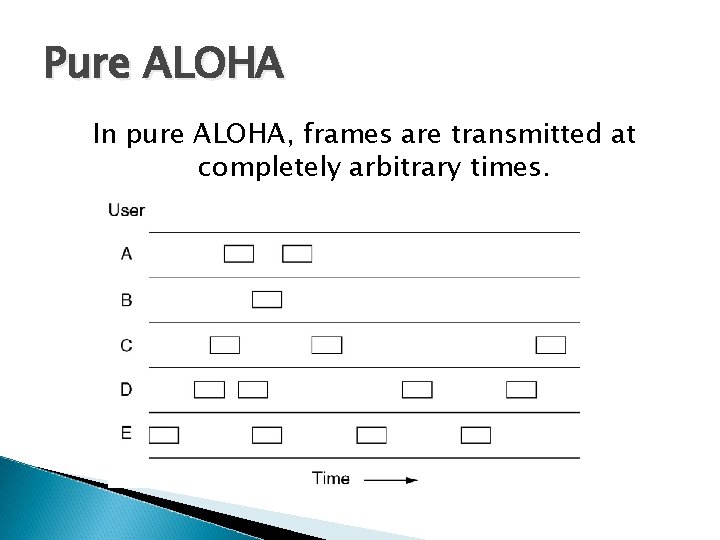
Pure ALOHA In pure ALOHA, frames are transmitted at completely arbitrary times.
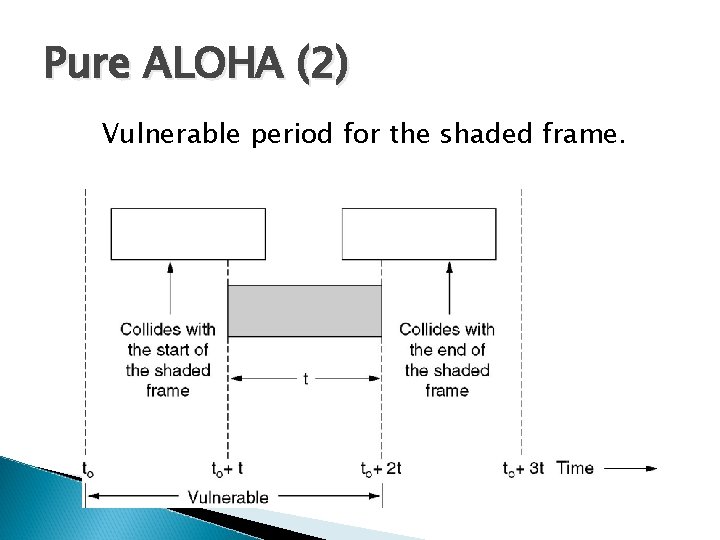
Pure ALOHA (2) Vulnerable period for the shaded frame.
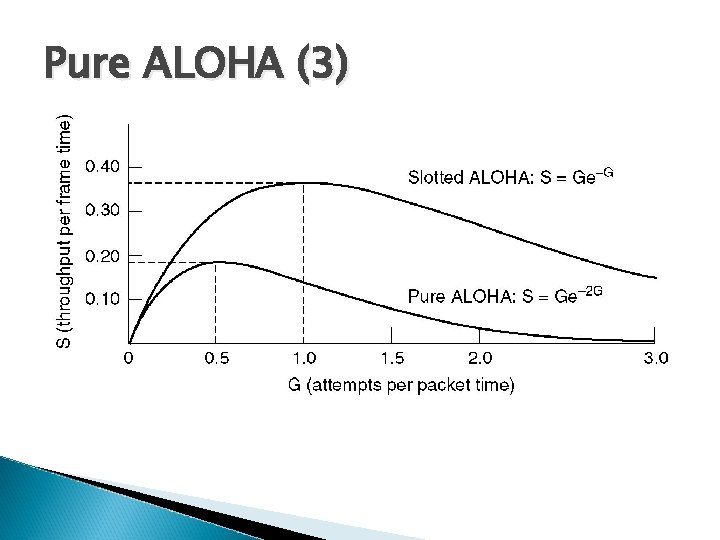
Pure ALOHA (3) Throughput versus offered traffic for ALOHA systems.
Carrier Sense Multiple Access �A collection of related protocols � Carrier sense: you can hear when somebody else transmits � Collision detection: you can detect if there was a collision ◦ Requires two radios!!! You must listen while you send!
Persistent CSMA � 1 -persistent CSMA � p-persistent CSMA ◦ When the sender (station) is ready to transmit data, it checks if the physical medium is busy. If so, it senses the medium continually until it becomes idle, and then it transmits a piece of data (a frame). In case of a collision, the sender waits for a random period of time and attempts to transmit again. ◦ When the sender is ready to send data, it checks continually if the medium is busy. If the medium becomes idle, the sender transmits a frame with a probability p. If the station chooses not to transmit (the probability of this event is 1 -p), the sender waits until the next available time slot and transmits again with the same probability p. This process repeats until the frame is sent or some other sender stops transmitting. In the latter case the sender monitors the channel, and when idle, transmits with a probability p, and so on.
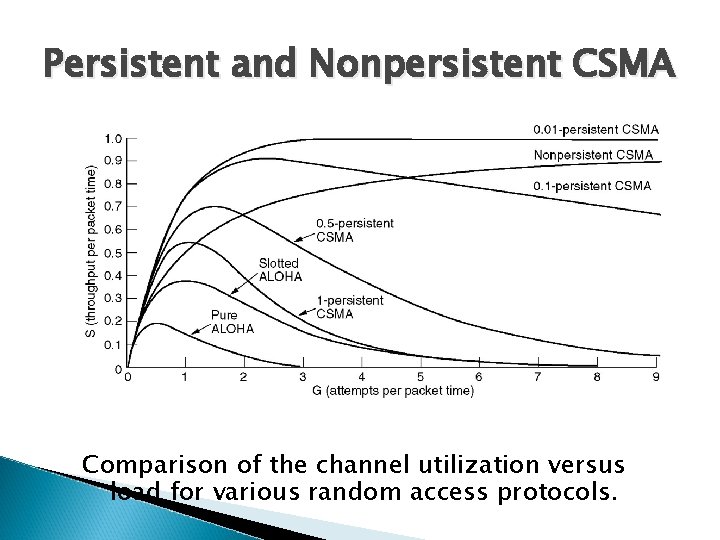
Persistent and Nonpersistent CSMA Comparison of the channel utilization versus load for various random access protocols.
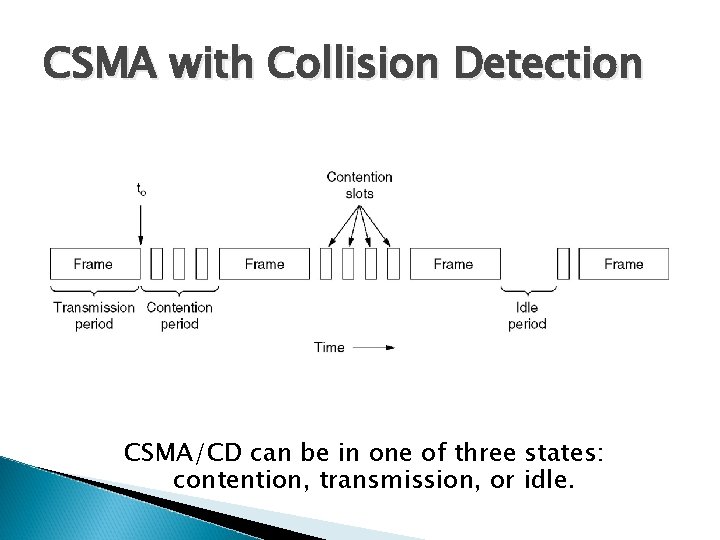
CSMA with Collision Detection CSMA/CD can be in one of three states: contention, transmission, or idle.
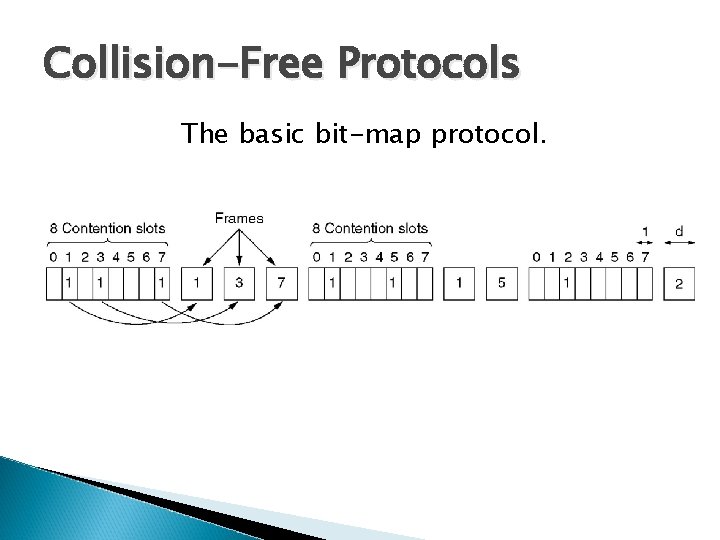
Collision-Free Protocols The basic bit-map protocol.
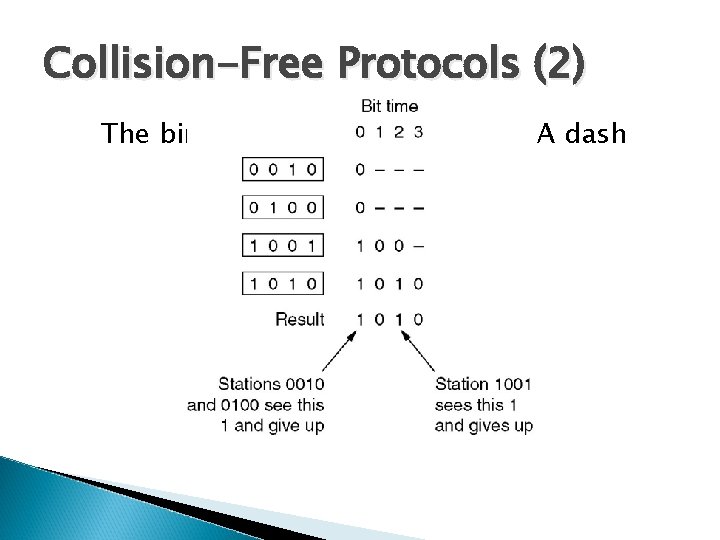
Collision-Free Protocols (2) The binary countdown protocol. A dash indicates silence.
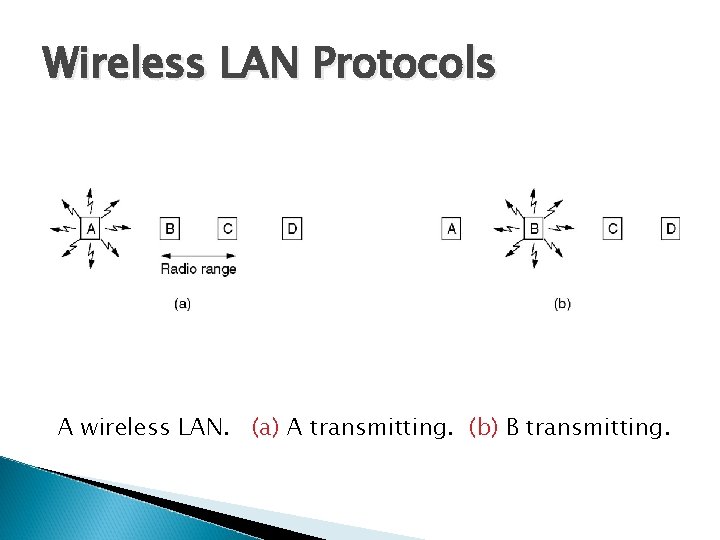
Wireless LAN Protocols A wireless LAN. (a) A transmitting. (b) B transmitting.
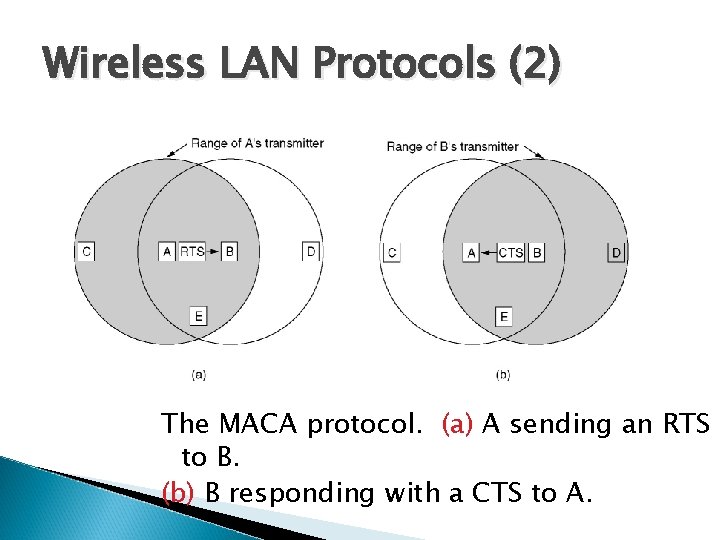
Wireless LAN Protocols (2) The MACA protocol. (a) A sending an RTS to B. (b) B responding with a CTS to A.
Ethernet Cabling • Manchester Encoding • The Ethernet MAC Sublayer Protocol • The Binary Exponential Backoff Algorithm • Ethernet Performance • Switched Ethernet • Fast Ethernet • Gigabit Ethernet • IEEE 802. 2: Logical Link Control • Retrospective on Ethernet •
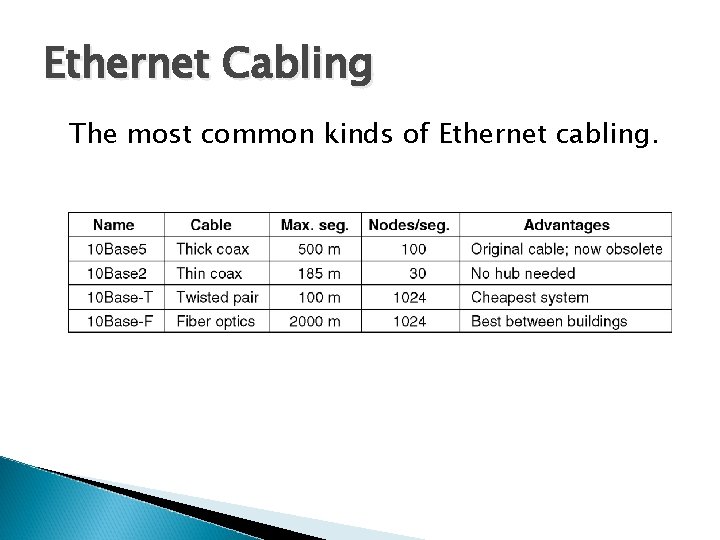
Ethernet Cabling The most common kinds of Ethernet cabling.
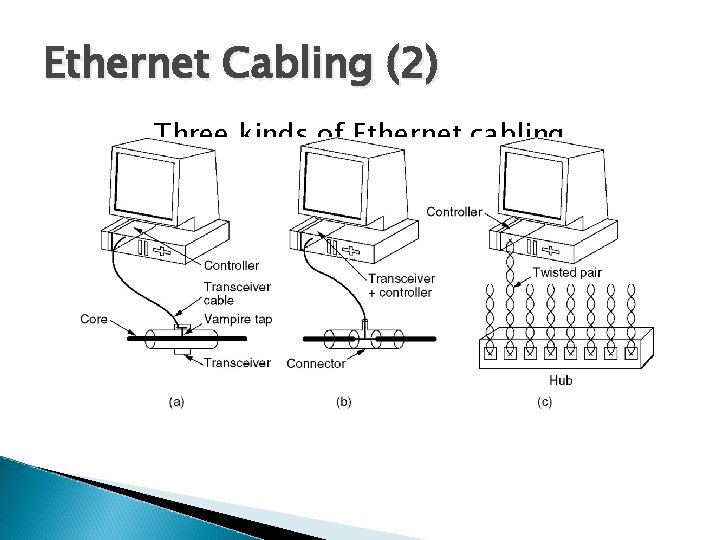
Ethernet Cabling (2) Three kinds of Ethernet cabling. (a) 10 Base 5, (b) 10 Base 2, (c) 10 Base-T.
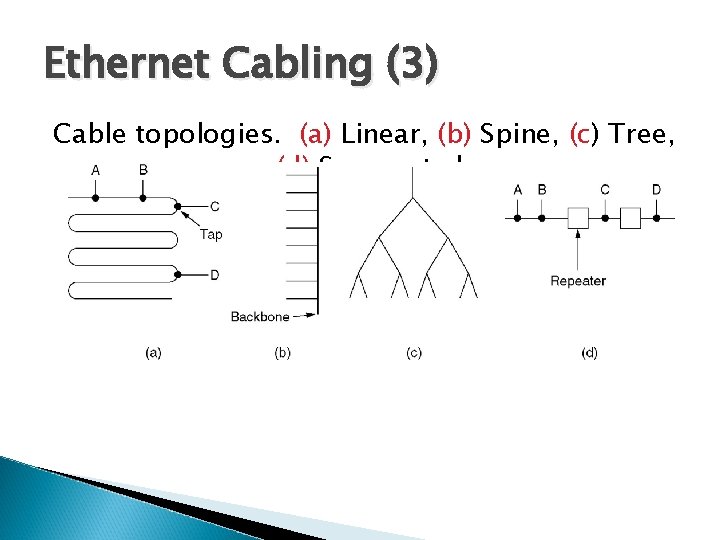
Ethernet Cabling (3) Cable topologies. (a) Linear, (b) Spine, (c) Tree, (d) Segmented.
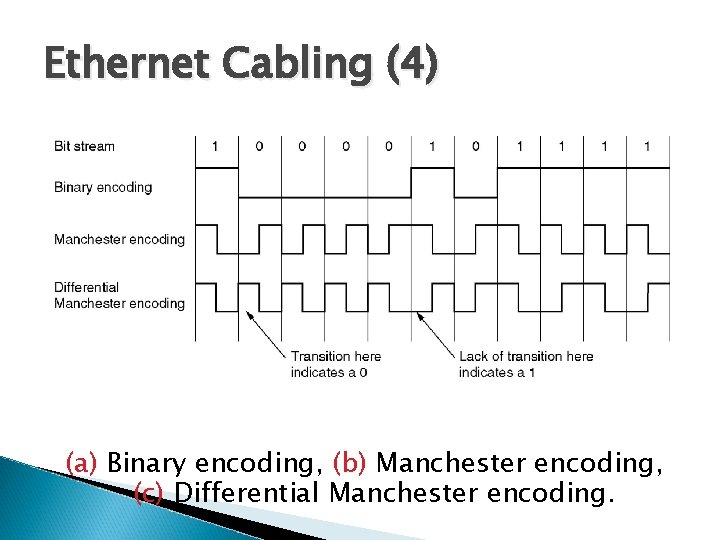
Ethernet Cabling (4) (a) Binary encoding, (b) Manchester encoding, (c) Differential Manchester encoding.
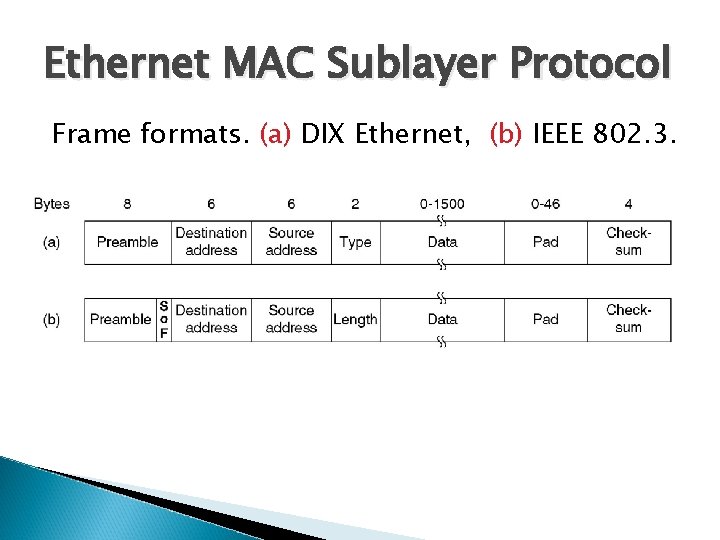
Ethernet MAC Sublayer Protocol Frame formats. (a) DIX Ethernet, (b) IEEE 802. 3.
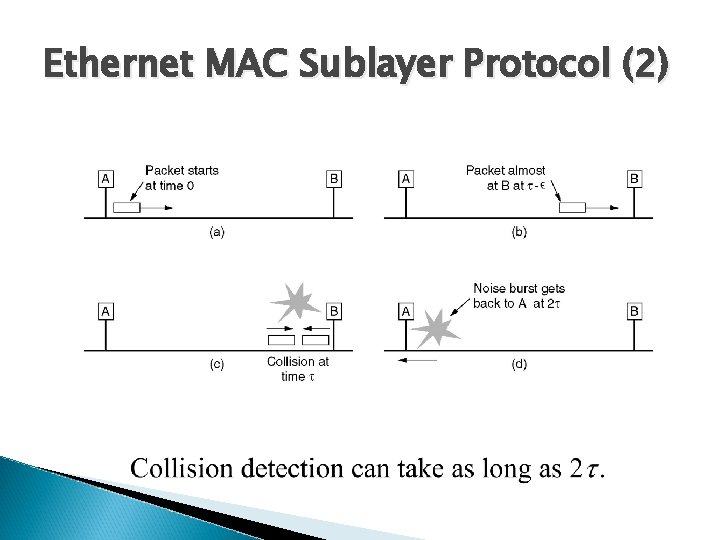
Ethernet MAC Sublayer Protocol (2)
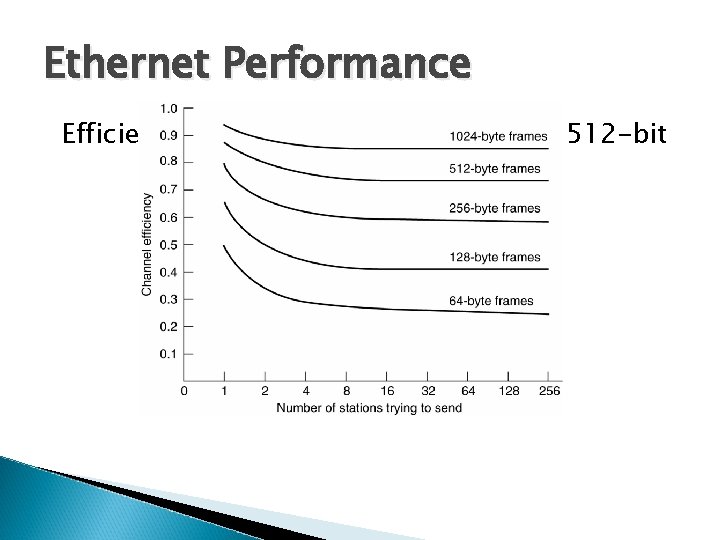
Ethernet Performance Efficiency of Ethernet at 10 Mbps with 512 -bit slot times.
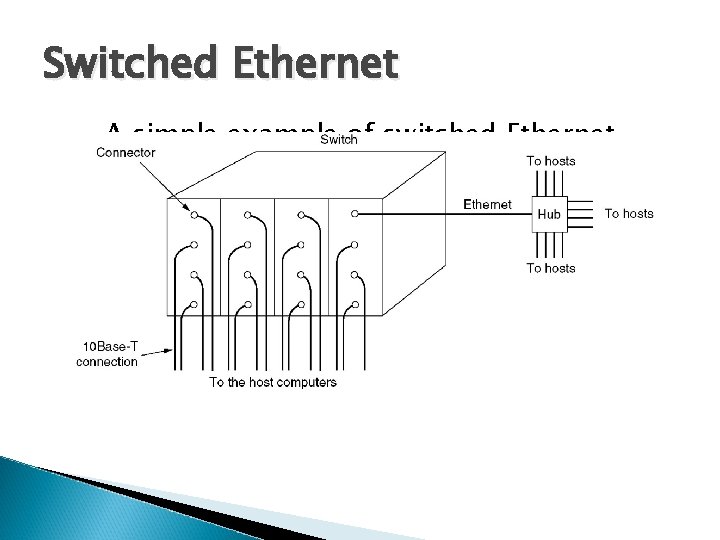
Switched Ethernet A simple example of switched Ethernet.
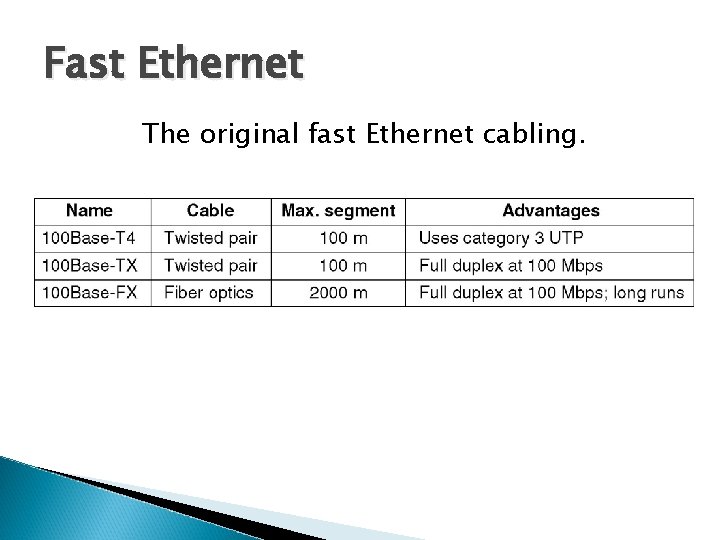
Fast Ethernet The original fast Ethernet cabling.
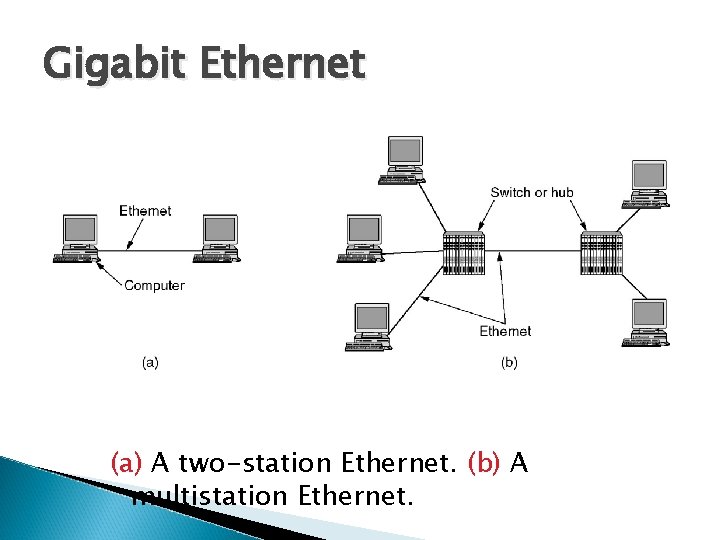
Gigabit Ethernet (a) A two-station Ethernet. (b) A multistation Ethernet.
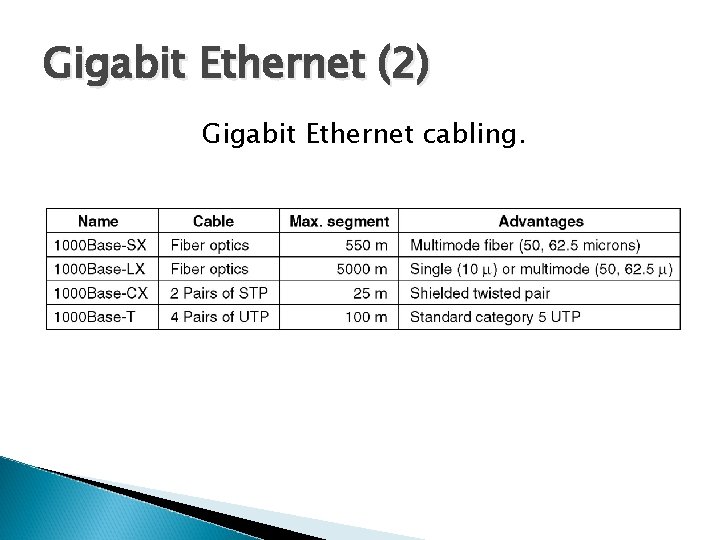
Gigabit Ethernet (2) Gigabit Ethernet cabling.
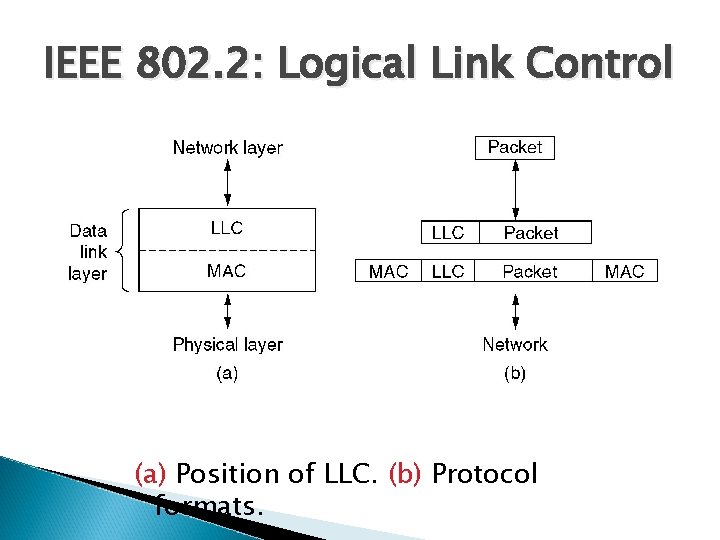
IEEE 802. 2: Logical Link Control (a) Position of LLC. (b) Protocol formats.
Wireless LANs • The 802. 11 • Services Protocol Stack Physical Layer MAC Sublayer Protocol Frame Structure
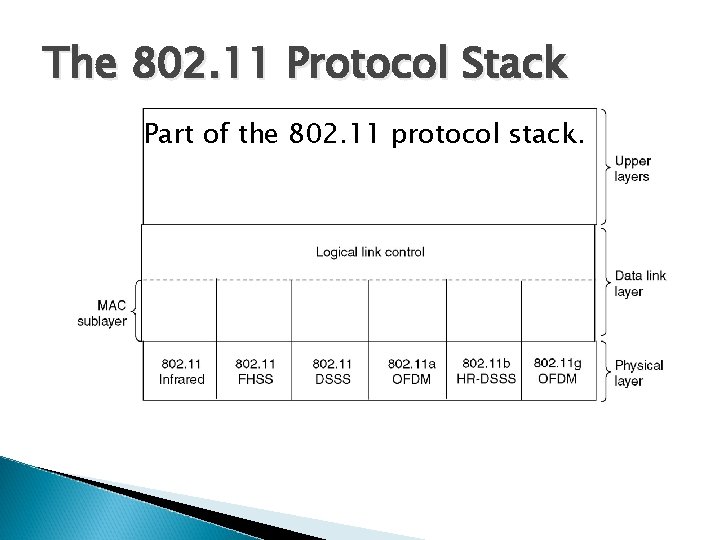
The 802. 11 Protocol Stack Part of the 802. 11 protocol stack.
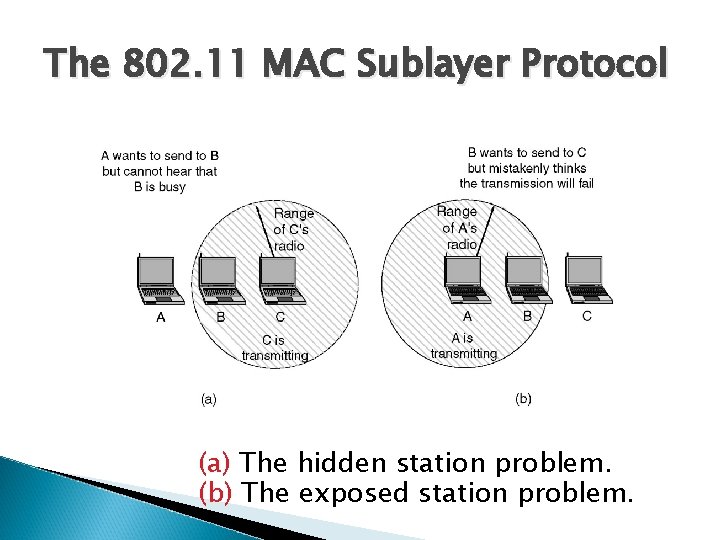
The 802. 11 MAC Sublayer Protocol (a) The hidden station problem. (b) The exposed station problem.
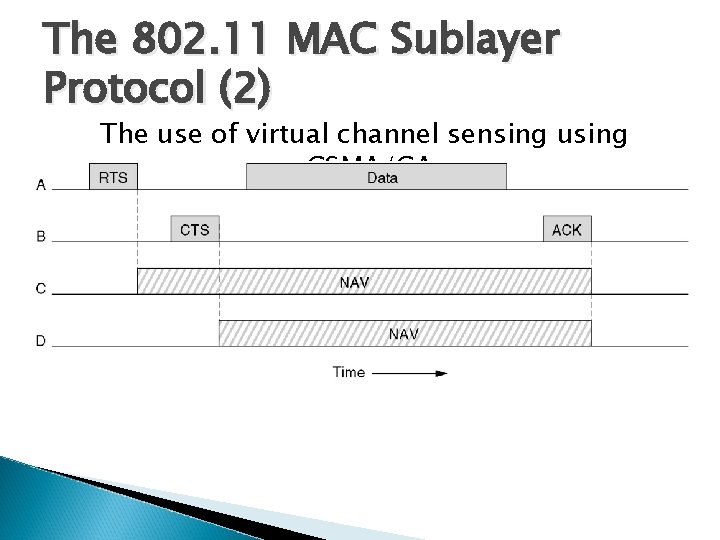
The 802. 11 MAC Sublayer Protocol (2) The use of virtual channel sensing using CSMA/CA.
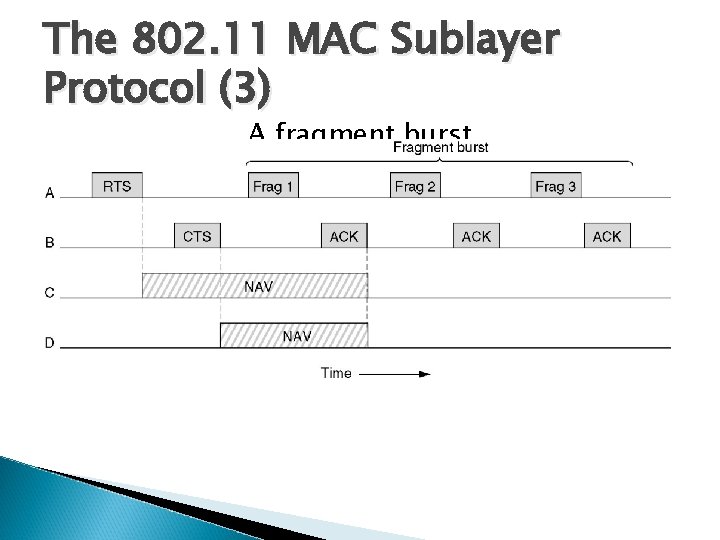
The 802. 11 MAC Sublayer Protocol (3) A fragment burst.
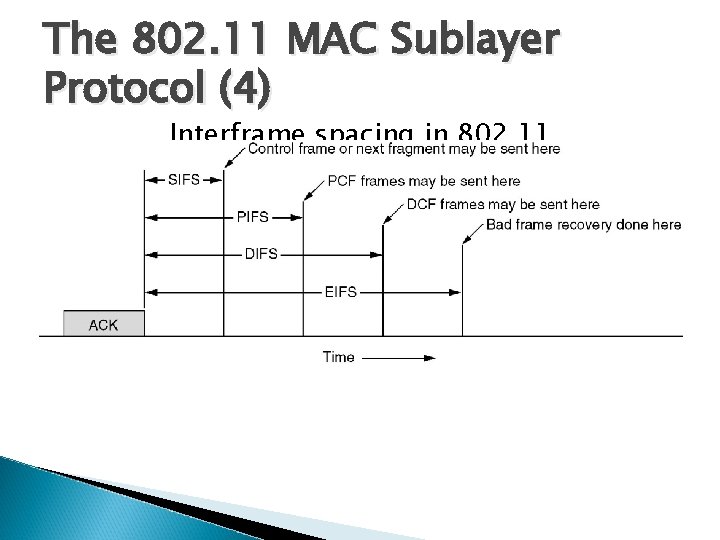
The 802. 11 MAC Sublayer Protocol (4) Interframe spacing in 802. 11.
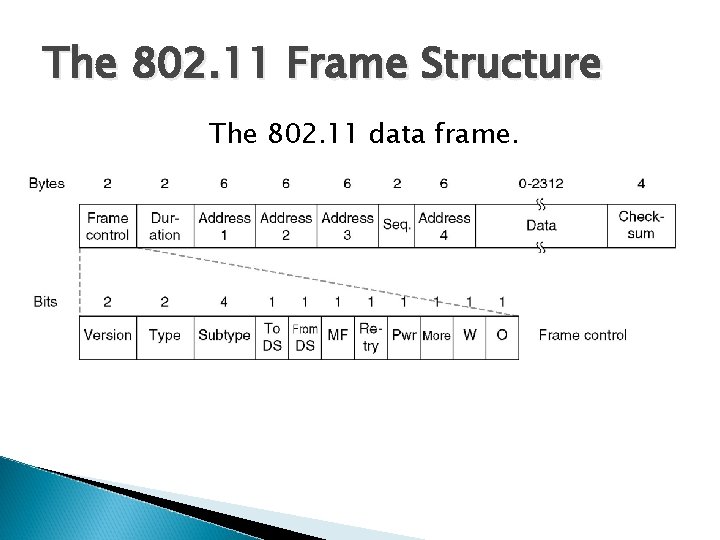
The 802. 11 Frame Structure The 802. 11 data frame.
802. 11 Services Distribution Services • Association • Disassociation • Reassociation • Distribution • Integration
802. 11 Services Intracell Services • Authentication • Deauthentication • Privacy • Data Delivery
Broadband Wireless • Comparison • The 802. 16 of 802. 11 and 802. 16 Protocol Stack Physical Layer MAC Sublayer Protocol Frame Structure
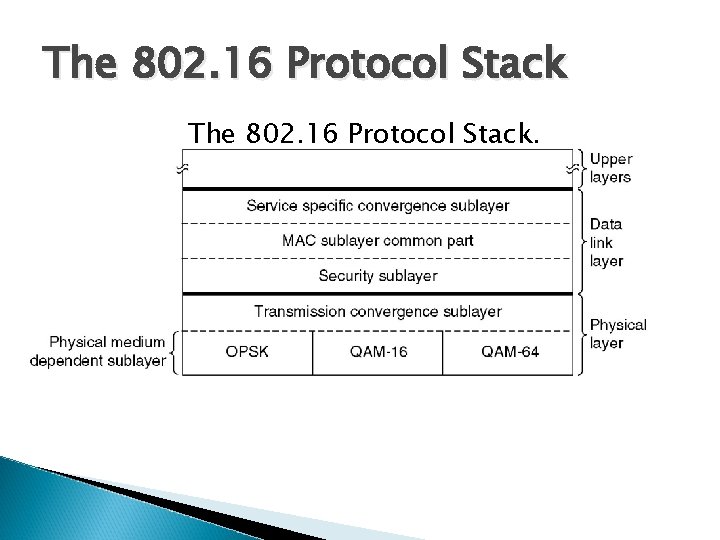
The 802. 16 Protocol Stack.
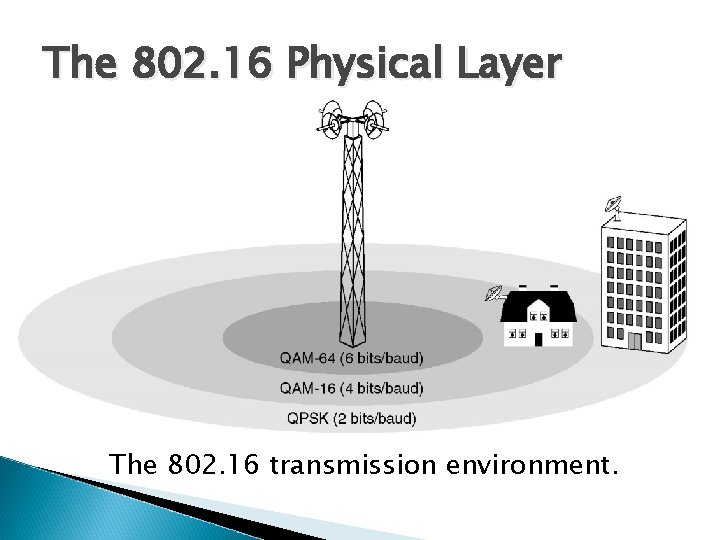
The 802. 16 Physical Layer The 802. 16 transmission environment.
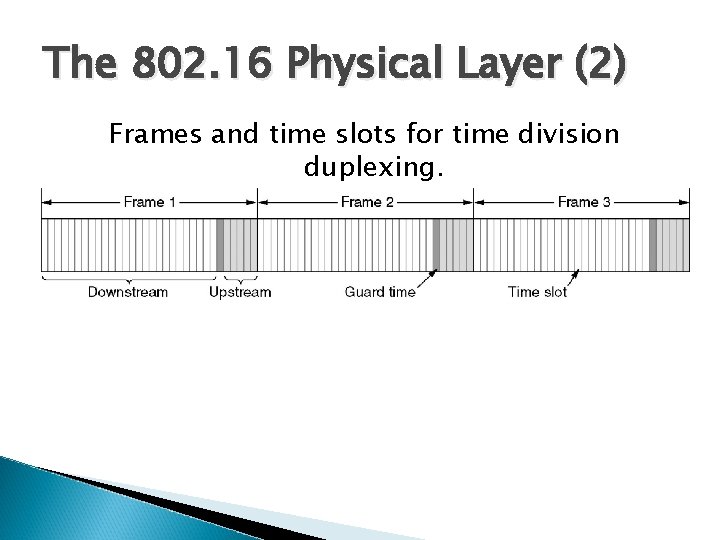
The 802. 16 Physical Layer (2) Frames and time slots for time division duplexing.
The 802. 16 MAC Sublayer Protocol Service Classes • Constant bit rate service • Real-time variable bit rate service • Non-real-time variable bit rate service • Best efforts service
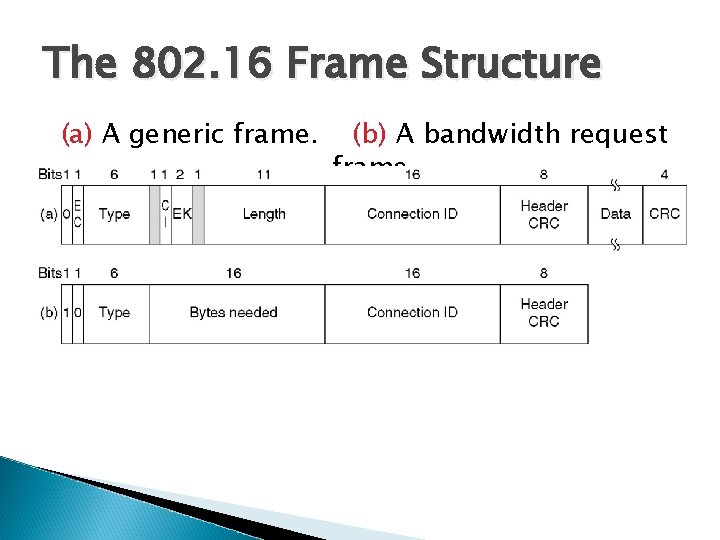
The 802. 16 Frame Structure (a) A generic frame. (b) A bandwidth request frame.
Bluetooth • Bluetooth Architecture • Bluetooth Applications • The Bluetooth Protocol Stack • The Bluetooth Radio Layer • The Bluetooth Baseband Layer • The Bluetooth L 2 CAP Layer • The Bluetooth Frame Structure
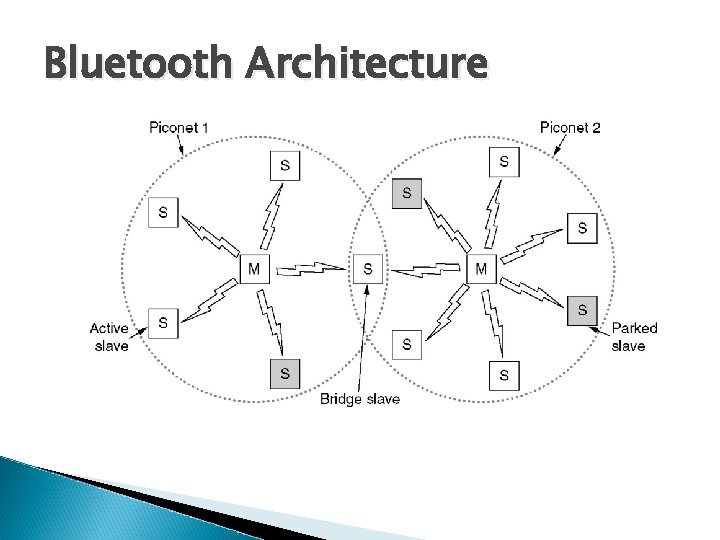
Bluetooth Architecture Two piconets can be connected to form a scatternet.
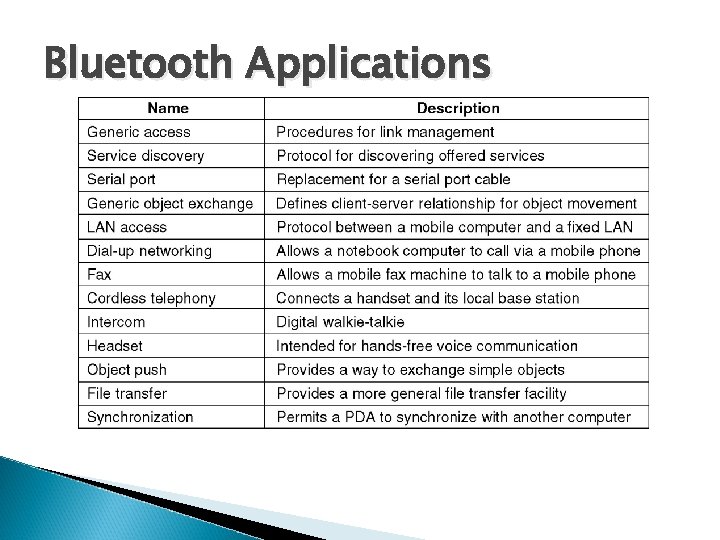
Bluetooth Applications The Bluetooth profiles.
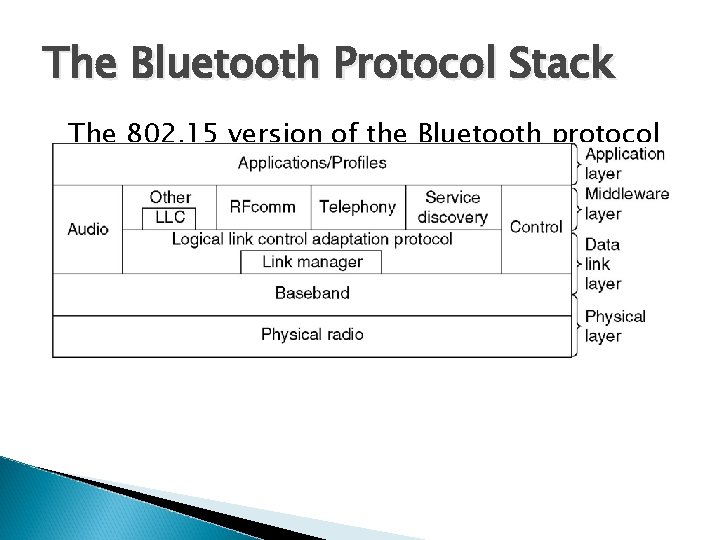
The Bluetooth Protocol Stack The 802. 15 version of the Bluetooth protocol architecture.
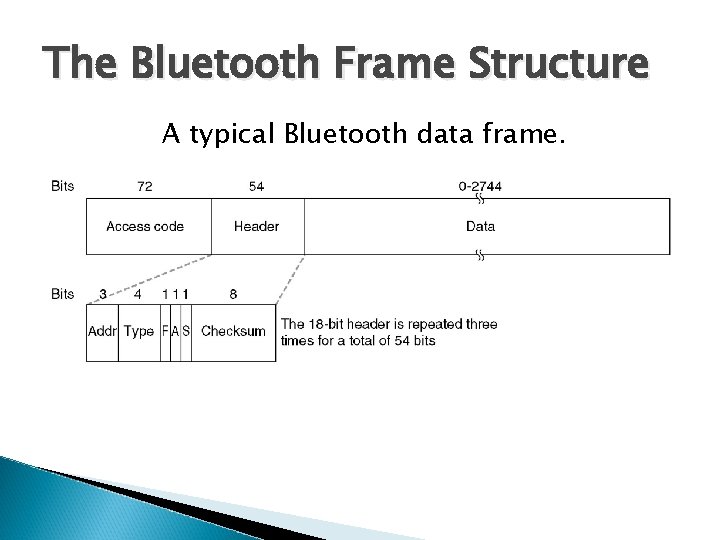
The Bluetooth Frame Structure A typical Bluetooth data frame.
Data Link Layer Switching Bridges from 802. x to 802. y • Local Internetworking • Spanning Tree Bridges • Remote Bridges • Repeaters, Hubs, Bridges, Switches, Routers, Gateways • Virtual LANs •
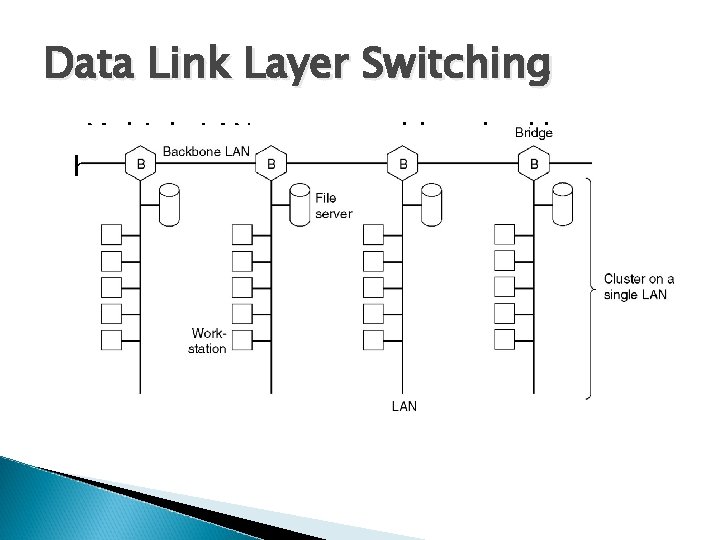
Data Link Layer Switching Multiple LANs connected by a backbone to handle a total load higher than the capacity of a single LAN.
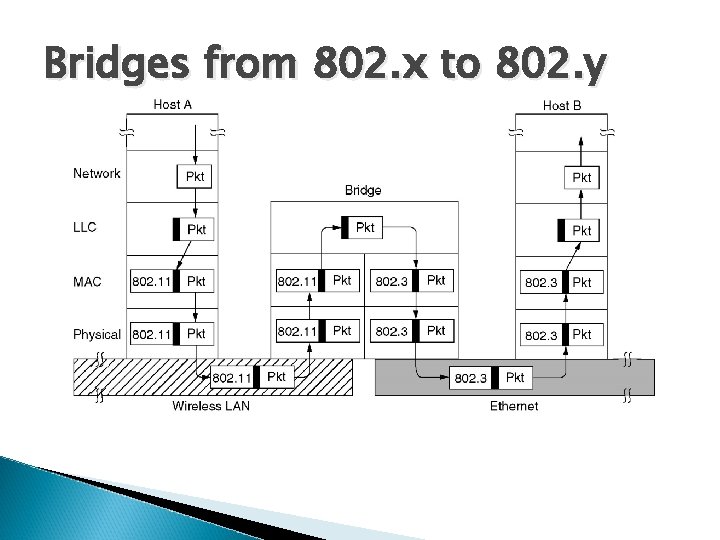
Bridges from 802. x to 802. y Operation of a LAN bridge from 802. 11 to 802. 3.
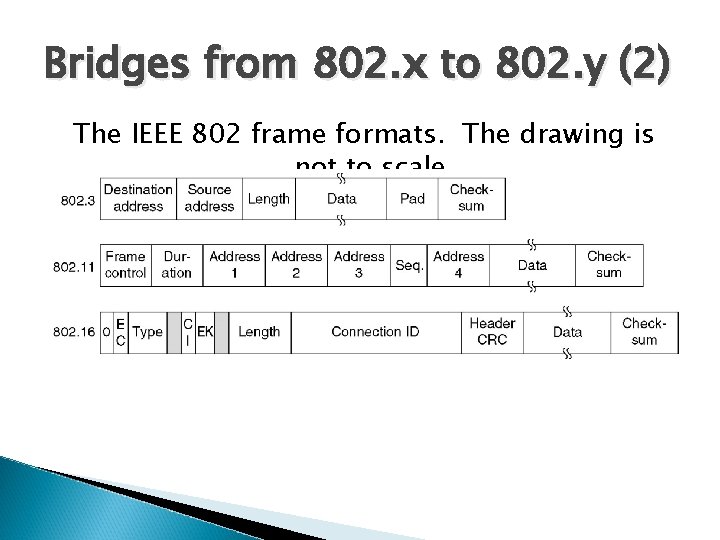
Bridges from 802. x to 802. y (2) The IEEE 802 frame formats. The drawing is not to scale.
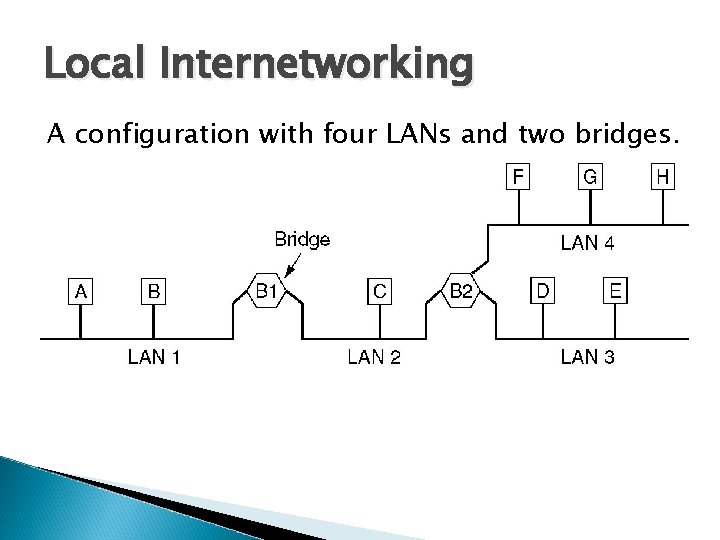
Local Internetworking A configuration with four LANs and two bridges.
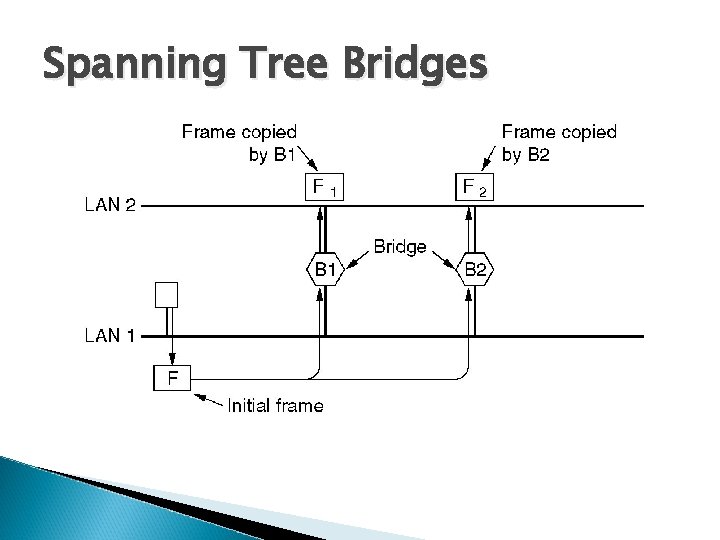
Spanning Tree Bridges Two parallel transparent bridges.
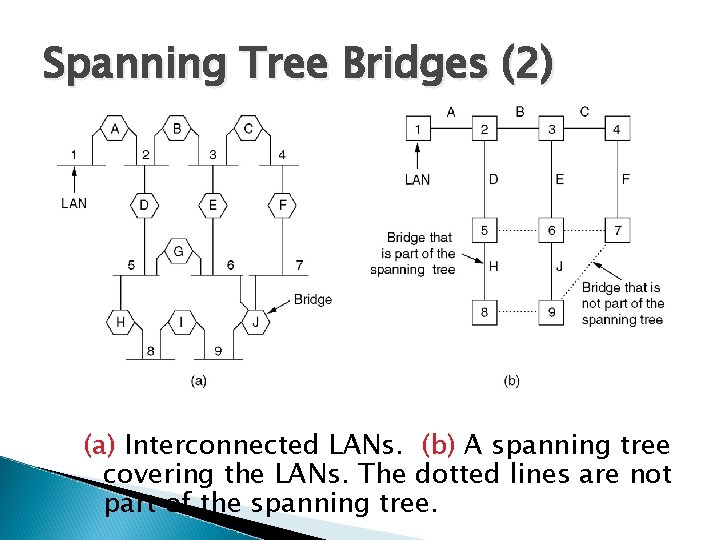
Spanning Tree Bridges (2) (a) Interconnected LANs. (b) A spanning tree covering the LANs. The dotted lines are not part of the spanning tree.
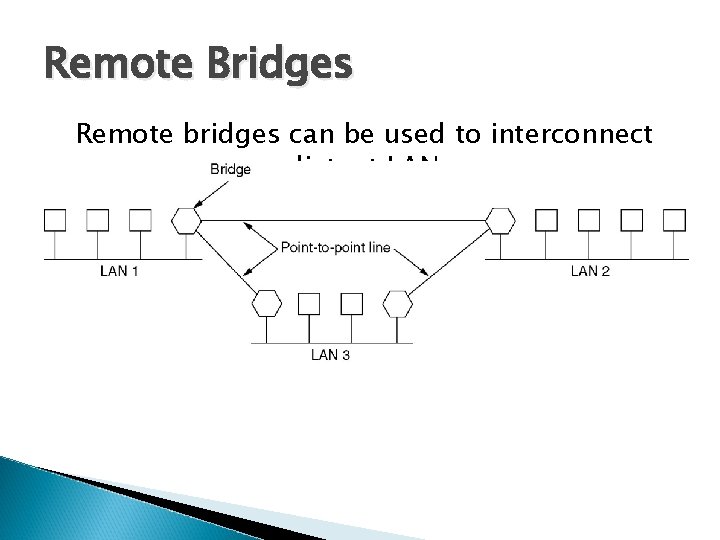
Remote Bridges Remote bridges can be used to interconnect distant LANs.
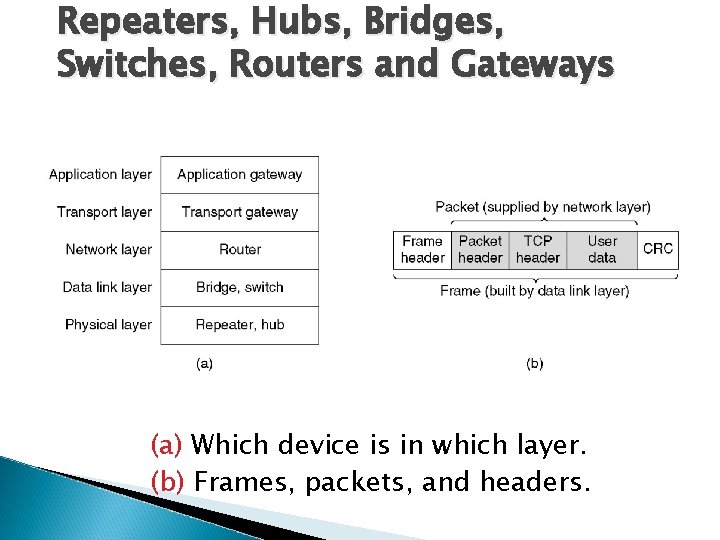
Repeaters, Hubs, Bridges, Switches, Routers and Gateways (a) Which device is in which layer. (b) Frames, packets, and headers.
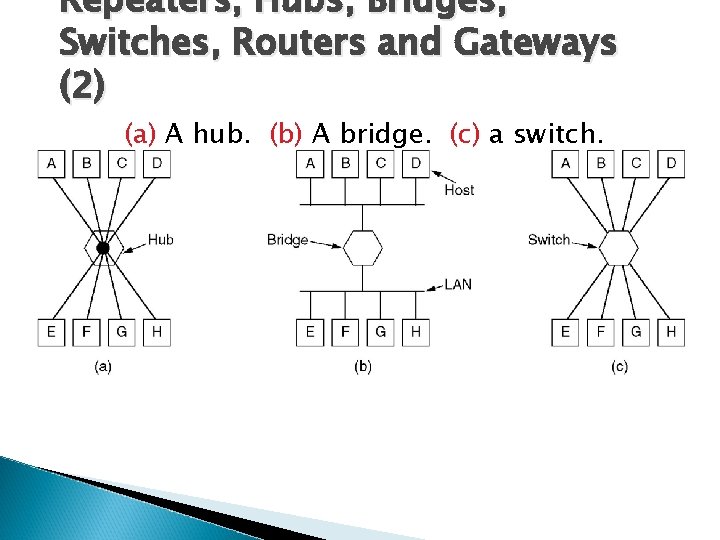
Repeaters, Hubs, Bridges, Switches, Routers and Gateways (2) (a) A hub. (b) A bridge. (c) a switch.
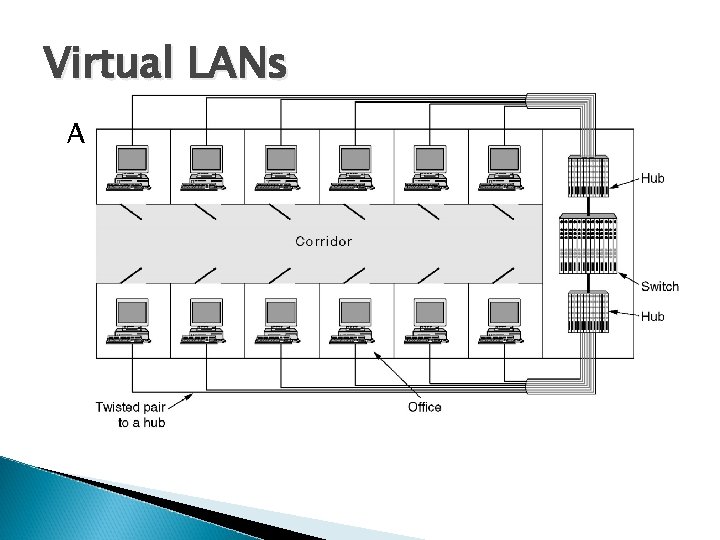
Virtual LANs A building with centralized wiring using hubs and a switch.
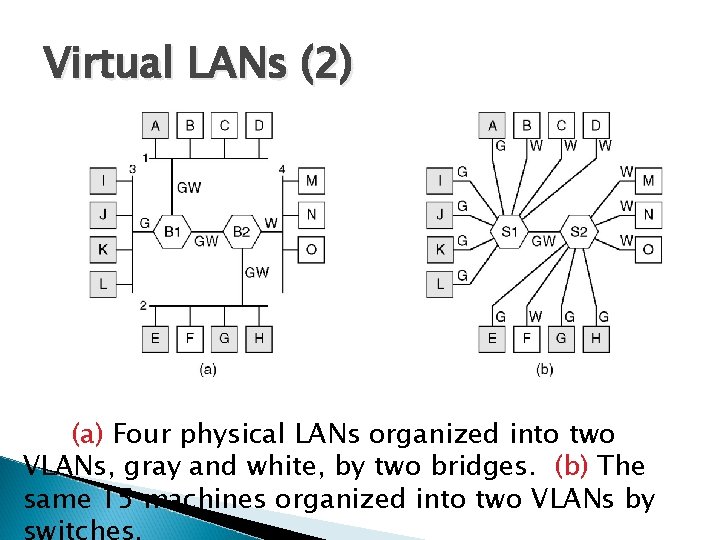
Virtual LANs (2) (a) Four physical LANs organized into two VLANs, gray and white, by two bridges. (b) The same 15 machines organized into two VLANs by
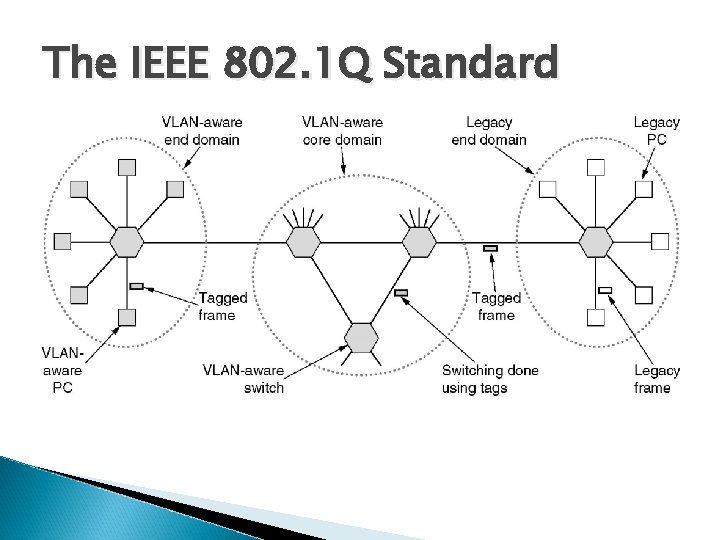
The IEEE 802. 1 Q Standard Transition from legacy Ethernet to VLAN-aware Ethernet. The shaded symbols are VLAN aware. The empty ones are not.
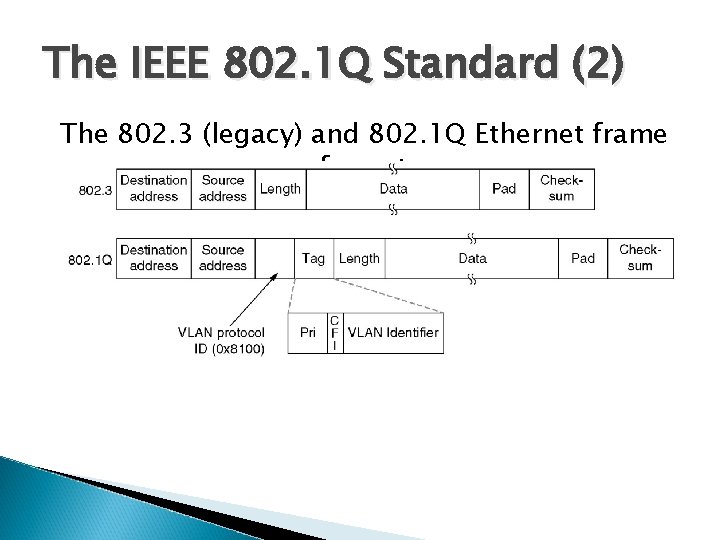
The IEEE 802. 1 Q Standard (2) The 802. 3 (legacy) and 802. 1 Q Ethernet frame formats.
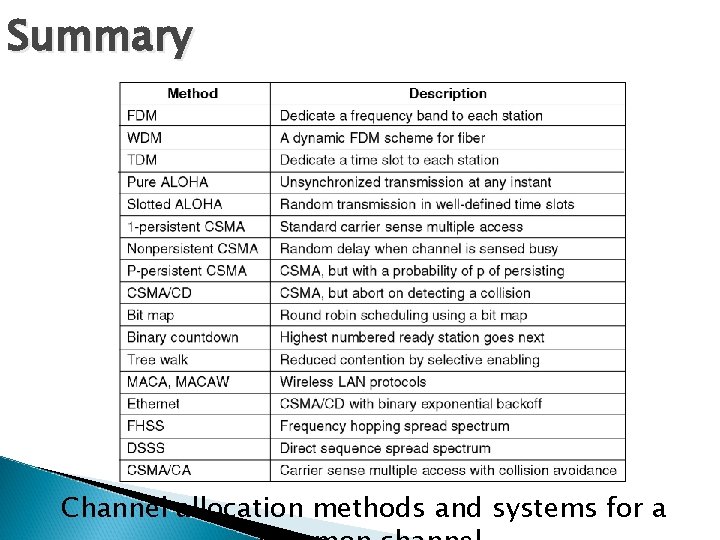
Summary Channel allocation methods and systems for a
- Slides: 64