
Chapter 4 The Internal Assessment Strategic Management Concepts

- Slides: 26
Chapter 4 The Internal Assessment Strategic Management: Concepts & Cases 11 th Edition Fred David Ch 4 -1
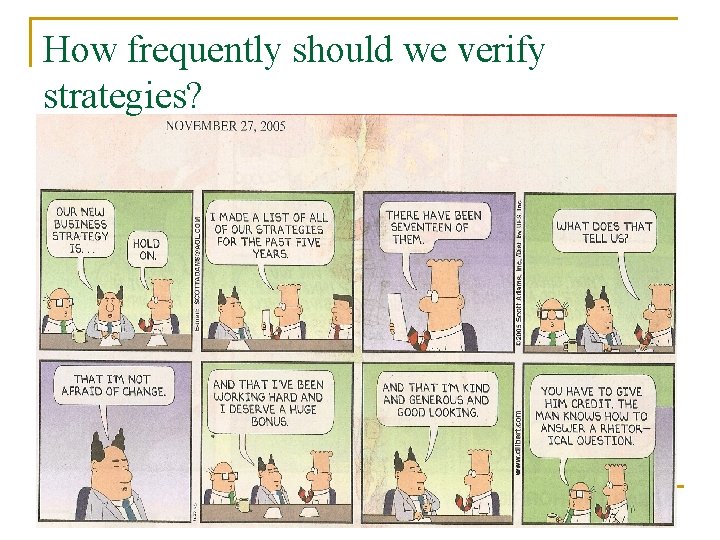
How frequently should we verify strategies? Ch 4 -2
Nature of an Internal Audit Basis for Objectives & Strategies n n n Internal strengths/weaknesses External opportunities/threats Clear statement of mission Ch 4 -3
Internal Audit Parallels process of external audit • Information from: • Management • Marketing • Finance/accounting • Production/operations • Research & Development • Management Information Systems Ch 4 -4
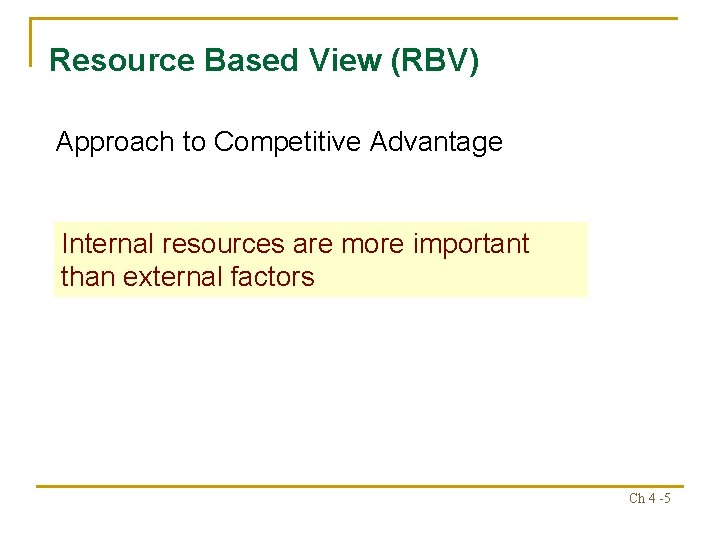
Resource Based View (RBV) Approach to Competitive Advantage Internal resources are more important than external factors Ch 4 -5
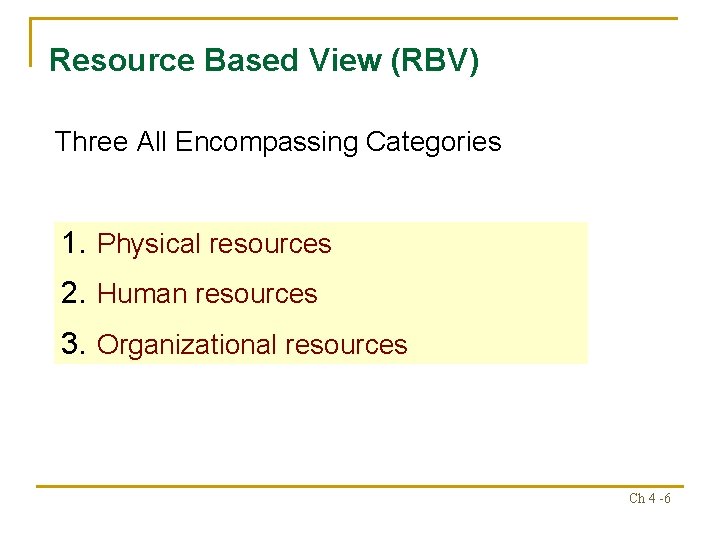
Resource Based View (RBV) Three All Encompassing Categories 1. Physical resources 2. Human resources 3. Organizational resources Ch 4 -6
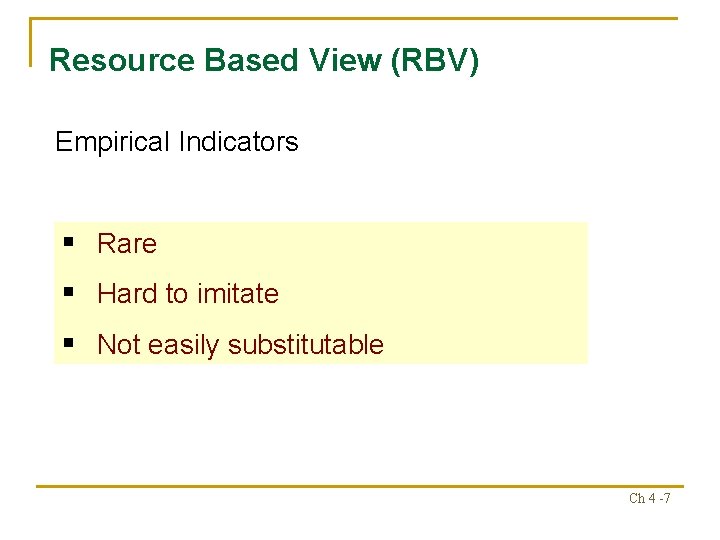
Resource Based View (RBV) Empirical Indicators § Rare § Hard to imitate § Not easily substitutable Ch 4 -7
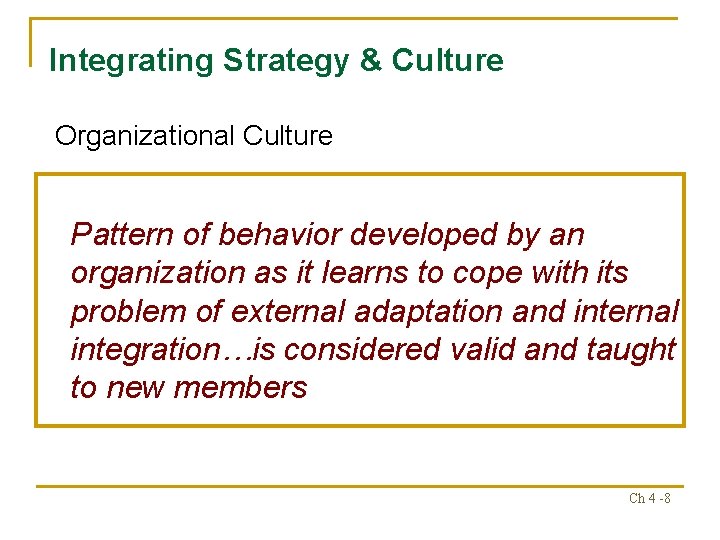
Integrating Strategy & Culture Organizational Culture Pattern of behavior developed by an organization as it learns to cope with its problem of external adaptation and internal integration…is considered valid and taught to new members Ch 4 -8
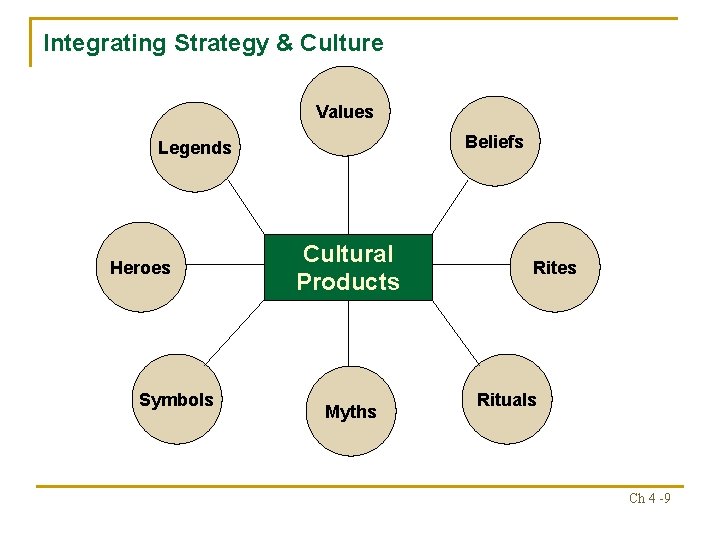
Integrating Strategy & Culture Values Beliefs Legends Heroes Symbols Cultural Products Myths Rites Rituals Ch 4 -9
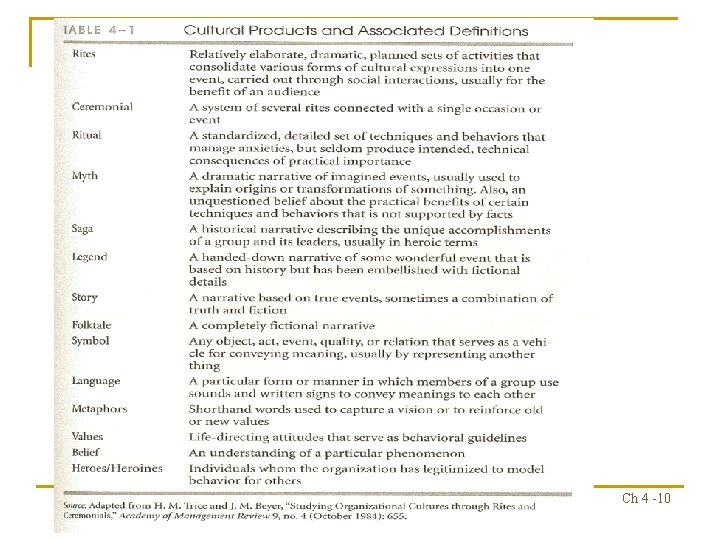
Ch 4 -10
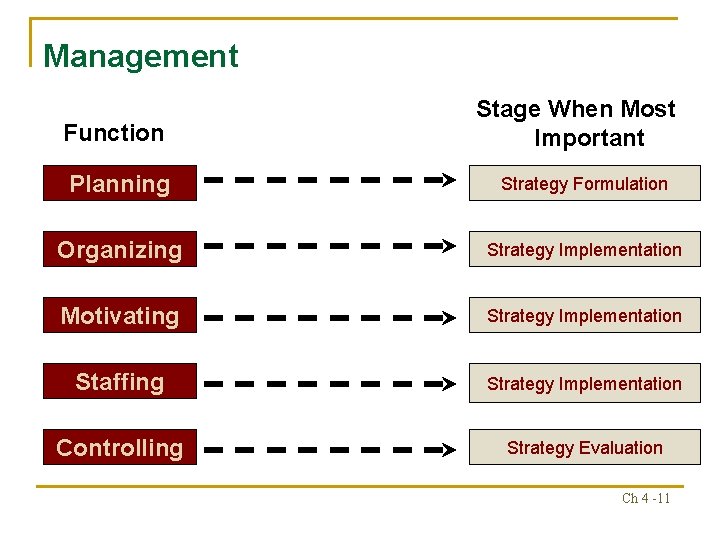
Management Function Stage When Most Important Planning Strategy Formulation Organizing Strategy Implementation Motivating Strategy Implementation Staffing Strategy Implementation Controlling Strategy Evaluation Ch 4 -11
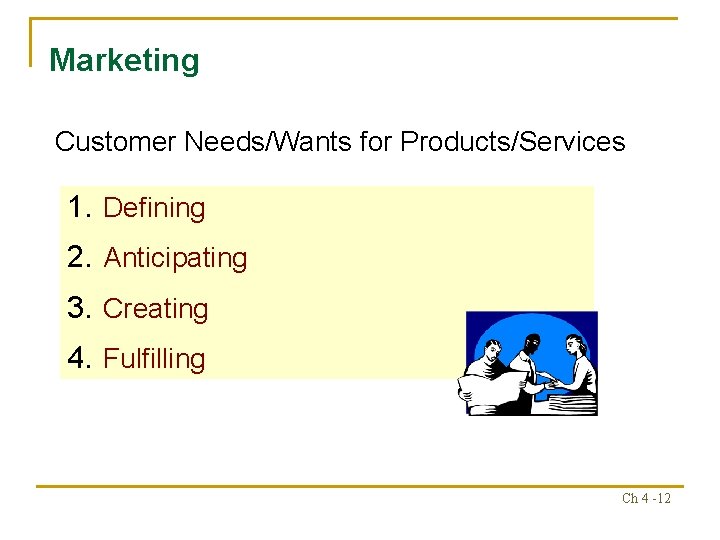
Marketing Customer Needs/Wants for Products/Services 1. Defining 2. Anticipating 3. Creating 4. Fulfilling Ch 4 -12
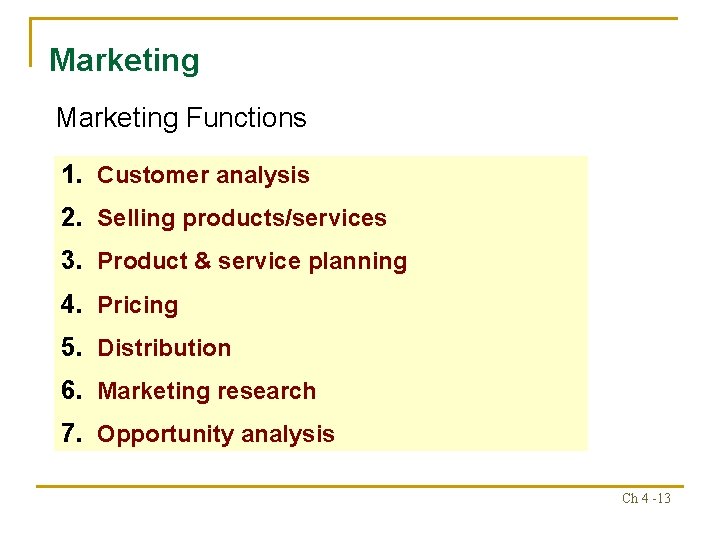
Marketing Functions 1. Customer analysis 2. Selling products/services 3. Product & service planning 4. Pricing 5. Distribution 6. Marketing research 7. Opportunity analysis Ch 4 -13
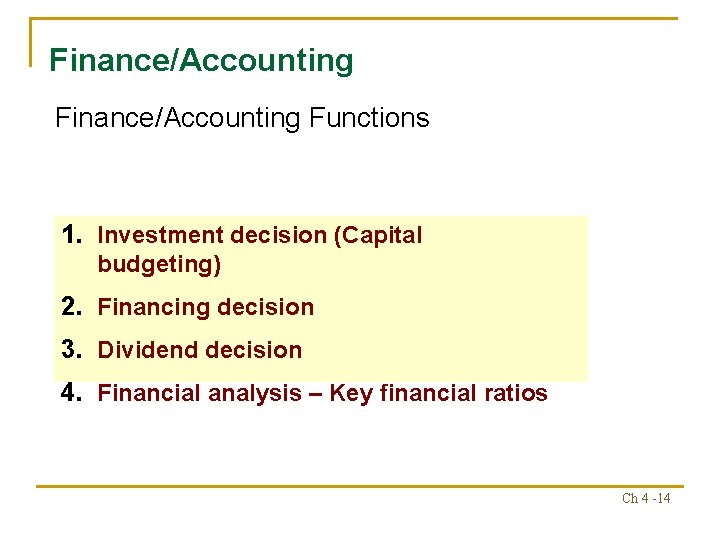
Finance/Accounting Functions 1. Investment decision (Capital budgeting) 2. Financing decision 3. Dividend decision 4. Financial analysis – Key financial ratios Ch 4 -14
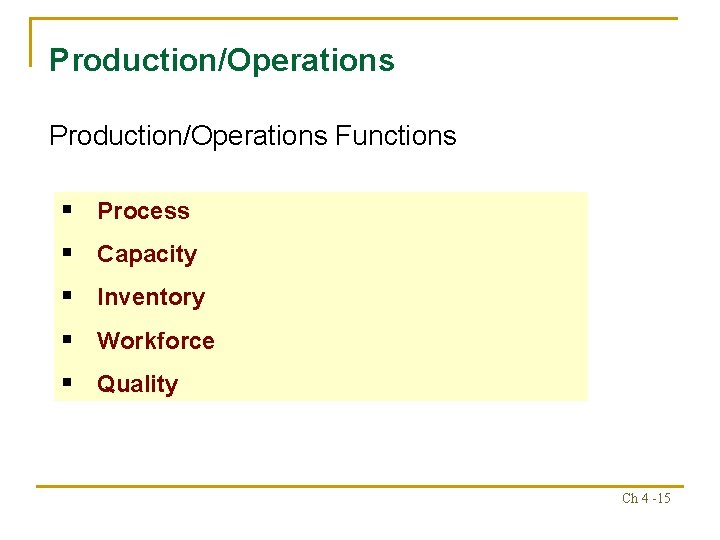
Production/Operations Functions § Process § Capacity § Inventory § Workforce § Quality Ch 4 -15
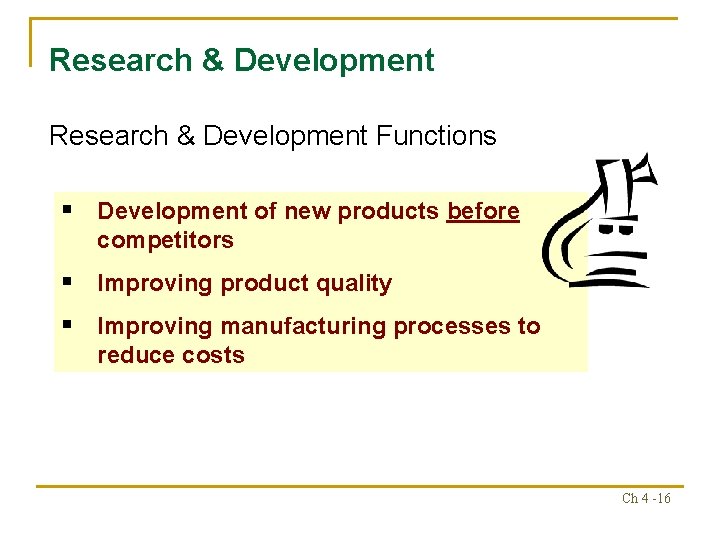
Research & Development Functions § Development of new products before competitors § Improving product quality § Improving manufacturing processes to reduce costs Ch 4 -16
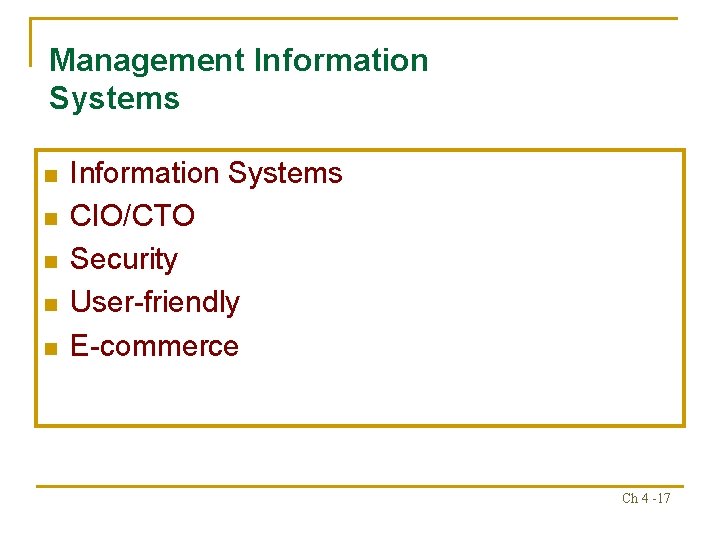
Management Information Systems n n n Information Systems CIO/CTO Security User-friendly E-commerce Ch 4 -17
Ch 4 -18
Ch 4 -19
Managerial Questions Checklist n n n n n Does the firm use strategic-management concepts? Are company objectives and goals measurable and well communicated? Do managers at all hierarchical levels plan effectively? Do managers delegate authority well? Is the organization’s structure appropriate? Are job descriptions and specifications clear? Is employee morale high? Are employee turnover and absenteeism low? Are organizational reward and control mechanisms effective? Ch 4 -20
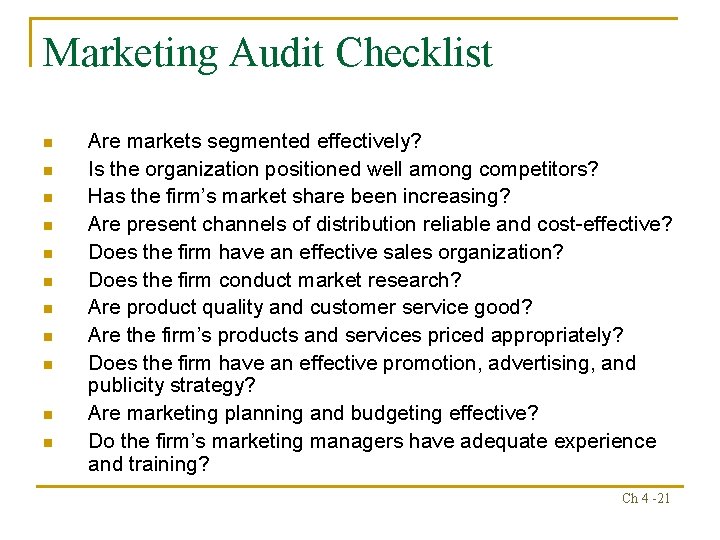
Marketing Audit Checklist n n n Are markets segmented effectively? Is the organization positioned well among competitors? Has the firm’s market share been increasing? Are present channels of distribution reliable and cost-effective? Does the firm have an effective sales organization? Does the firm conduct market research? Are product quality and customer service good? Are the firm’s products and services priced appropriately? Does the firm have an effective promotion, advertising, and publicity strategy? Are marketing planning and budgeting effective? Do the firm’s marketing managers have adequate experience and training? Ch 4 -21
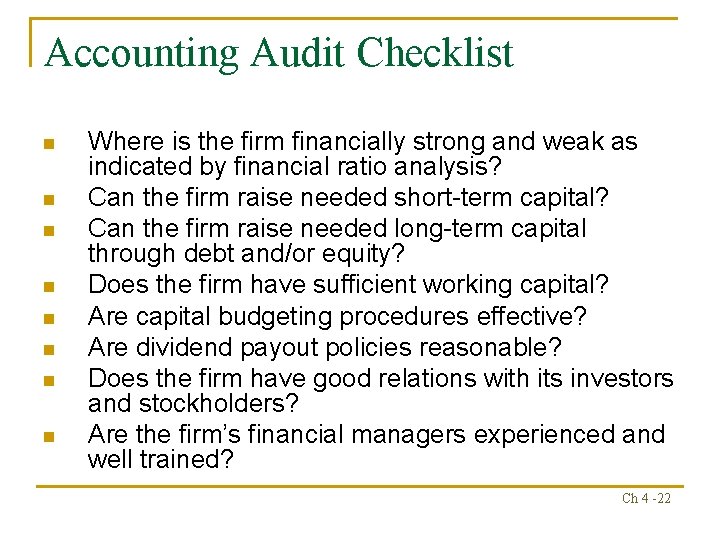
Accounting Audit Checklist n n n n Where is the firm financially strong and weak as indicated by financial ratio analysis? Can the firm raise needed short-term capital? Can the firm raise needed long-term capital through debt and/or equity? Does the firm have sufficient working capital? Are capital budgeting procedures effective? Are dividend payout policies reasonable? Does the firm have good relations with its investors and stockholders? Are the firm’s financial managers experienced and well trained? Ch 4 -22
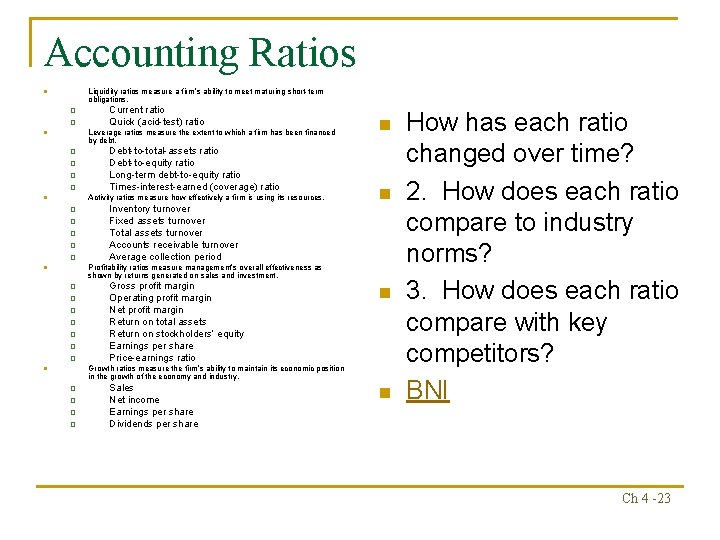
Accounting Ratios Liquidity ratios measure a firm’s ability to meet maturing short-term obligations. n q q Current ratio Quick (acid-test) ratio Leverage ratios measure the extent to which a firm has been financed by debt. n q q Debt-to-total-assets ratio Debt-to-equity ratio Long-term debt-to-equity ratio Times-interest-earned (coverage) ratio Activity ratios measure how effectively a firm is using its resources. n q q q Inventory turnover Fixed assets turnover Total assets turnover Accounts receivable turnover Average collection period n n Profitability ratios measure management’s overall effectiveness as shown by returns generated on sales and investment. n q q q q Gross profit margin Operating profit margin Net profit margin Return on total assets Return on stockholders’ equity Earnings per share Price-earnings ratio n Growth ratios measure the firm’s ability to maintain its economic position in the growth of the economy and industry. n q q Sales Net income Earnings per share Dividends per share n How has each ratio changed over time? 2. How does each ratio compare to industry norms? 3. How does each ratio compare with key competitors? BNI Ch 4 -23
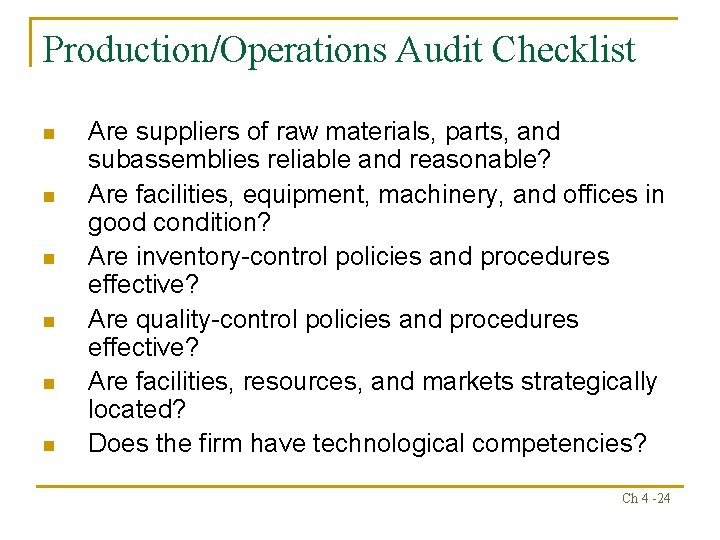
Production/Operations Audit Checklist n n n Are suppliers of raw materials, parts, and subassemblies reliable and reasonable? Are facilities, equipment, machinery, and offices in good condition? Are inventory-control policies and procedures effective? Are quality-control policies and procedures effective? Are facilities, resources, and markets strategically located? Does the firm have technological competencies? Ch 4 -24
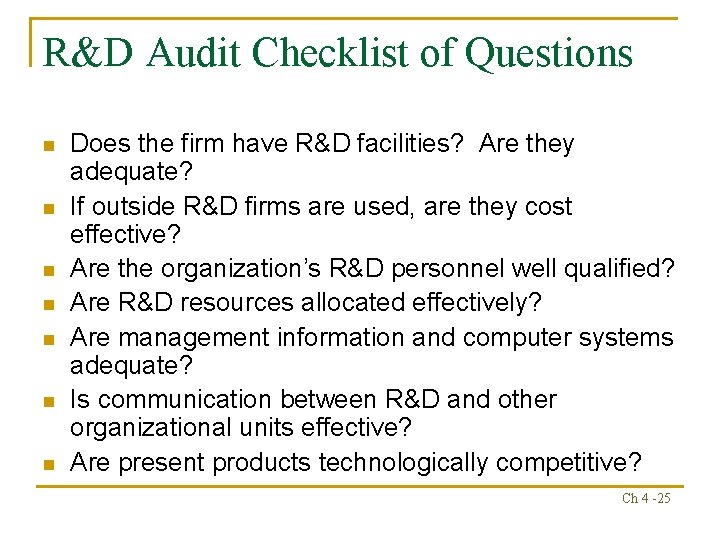
R&D Audit Checklist of Questions n n n n Does the firm have R&D facilities? Are they adequate? If outside R&D firms are used, are they cost effective? Are the organization’s R&D personnel well qualified? Are R&D resources allocated effectively? Are management information and computer systems adequate? Is communication between R&D and other organizational units effective? Are present products technologically competitive? Ch 4 -25
Information Systems Audit Checklist n n n n n Do all managers in the firm use the information system to make decisions? Is there a chief information officer or director of information systems position in the firm? Are data in the information system updated regularly? Do managers from all functional areas of the firm contribute input to the information system? Are there effective passwords for entry into the firm’s information system? Are strategists of the firm familiar with the information systems of rival firms? Is the information system user friendly? Do all users of the information system understand the competitive advantages that information can provide firms? Are computer training workshops provided for users of the information system? Is the firm’s information system continually being improved in content and user-friendliness? Ch 4 -26