
Chapter 4 The Hellenistic World Timeline The Rise

- Slides: 24
Chapter 4 The Hellenistic World
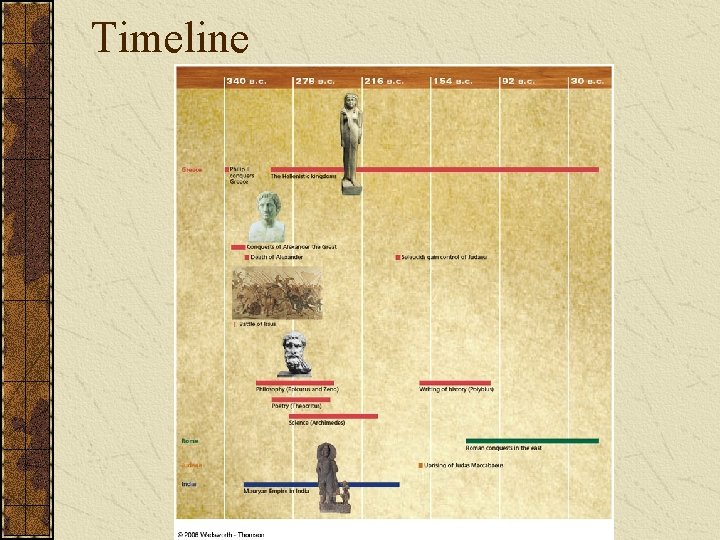
Timeline
The Rise of Macedonia and the Conquests of Alexander Macedonia Philip II (359 – 336 B. C. ) Athenian Reaction to Philip Battle of Chaeronea (338 B. C. ) Corinthian League
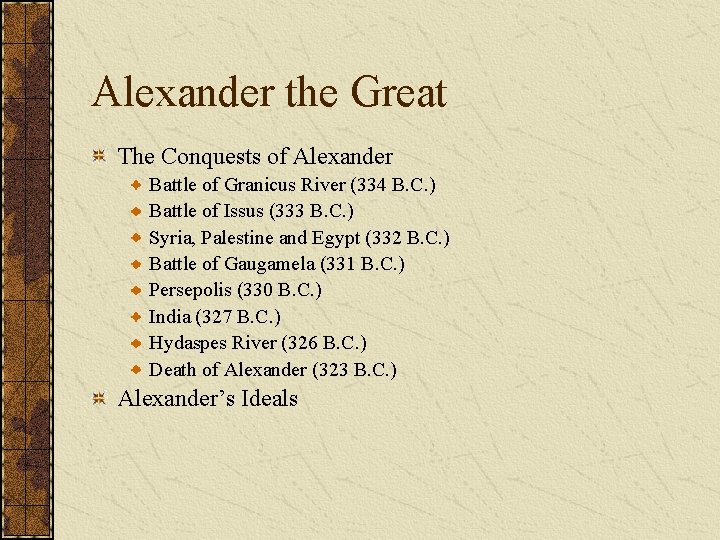
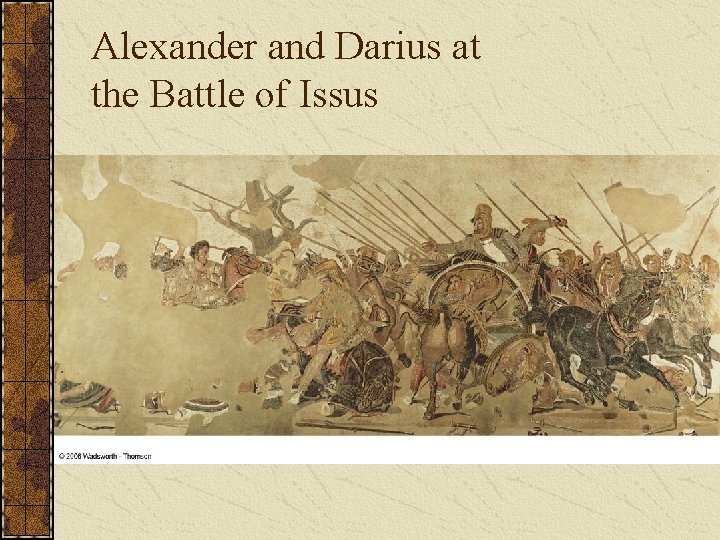
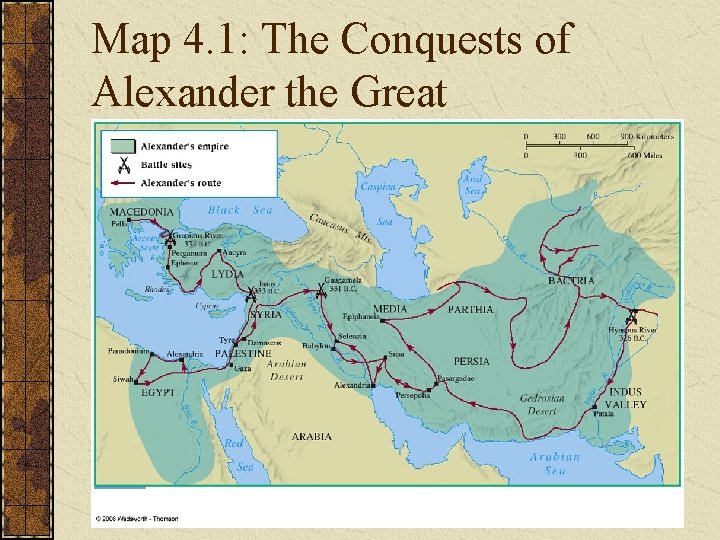
Alexander the Great The Conquests of Alexander Battle of Granicus River (334 B. C. ) Battle of Issus (333 B. C. ) Syria, Palestine and Egypt (332 B. C. ) Battle of Gaugamela (331 B. C. ) Persepolis (330 B. C. ) India (327 B. C. ) Hydaspes River (326 B. C. ) Death of Alexander (323 B. C. ) Alexander’s Ideals
Alexander and Darius at the Battle of Issus
Alexander’s Legacy Rise of military monarchies Spread of Greek culture, art, and language Greek cities and settlers
Map 4. 1: The Conquests of Alexander the Great
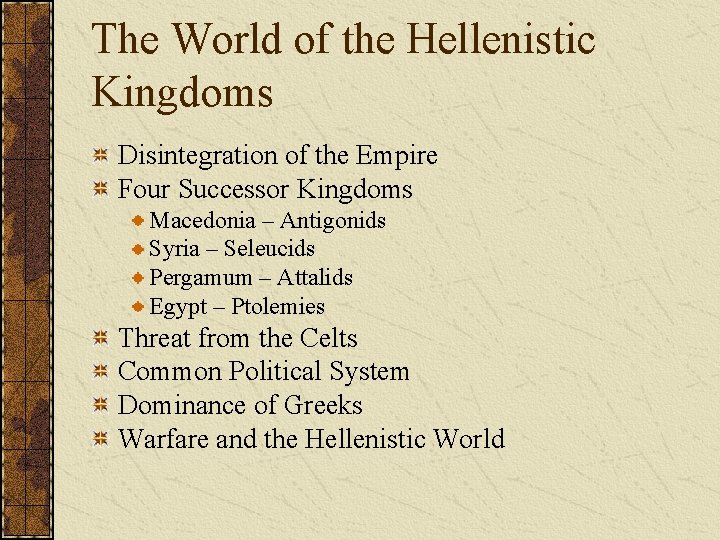
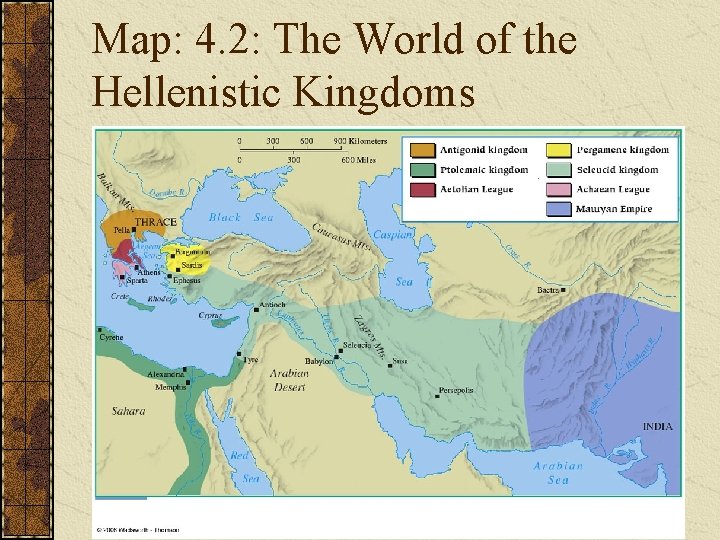
The World of the Hellenistic Kingdoms Disintegration of the Empire Four Successor Kingdoms Macedonia – Antigonids Syria – Seleucids Pergamum – Attalids Egypt – Ptolemies Threat from the Celts Common Political System Dominance of Greeks Warfare and the Hellenistic World
Map: 4. 2: The World of the Hellenistic Kingdoms
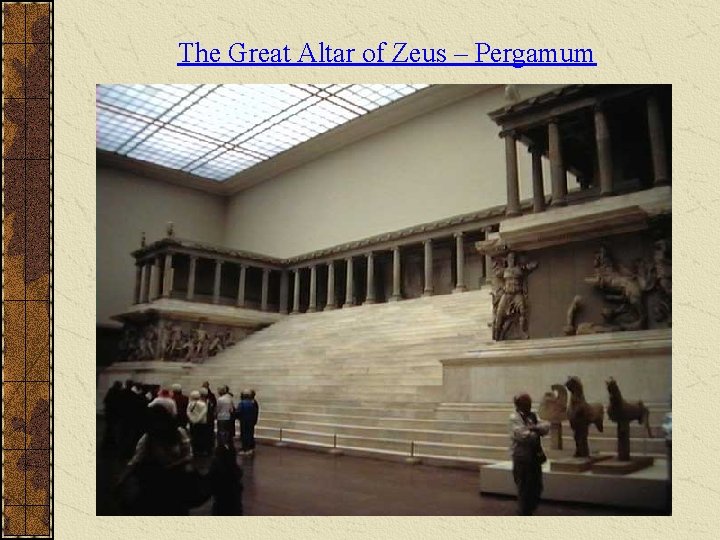
The Great Altar of Zeus – Pergamum
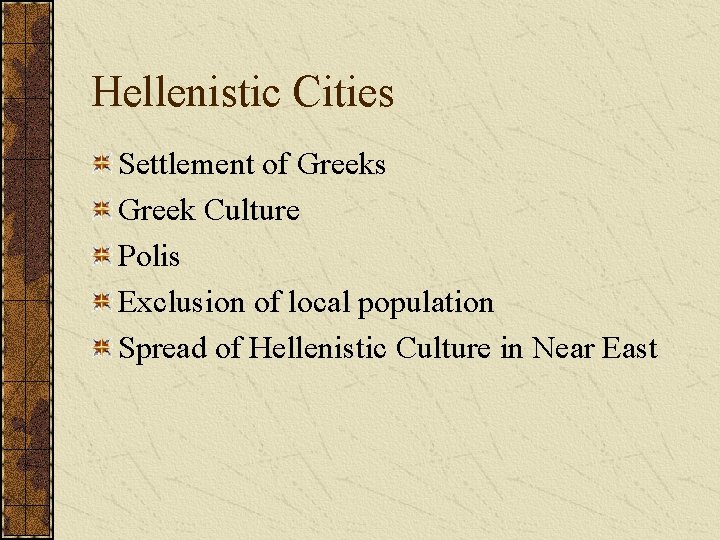
Hellenistic Cities Settlement of Greeks Greek Culture Polis Exclusion of local population Spread of Hellenistic Culture in Near East
Economic Trends Agriculture Shift of Manufacturing Centers to the East Commercial Expansion Trade
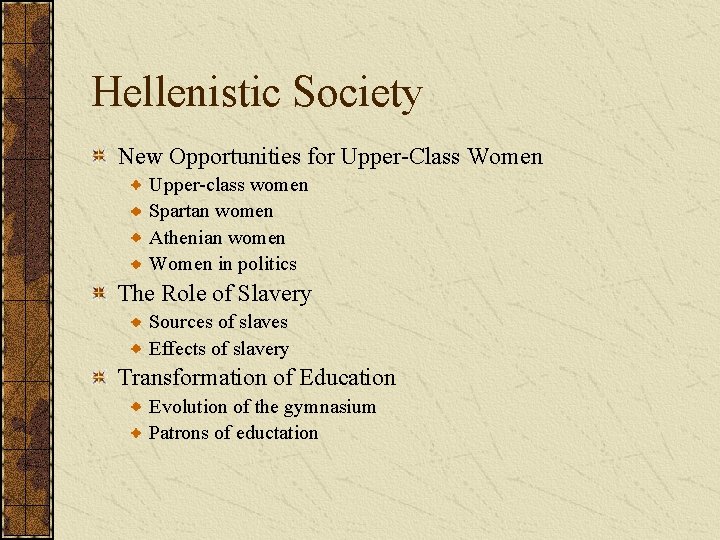
Hellenistic Society New Opportunities for Upper-Class Women Upper-class women Spartan women Athenian women Women in politics The Role of Slavery Sources of slaves Effects of slavery Transformation of Education Evolution of the gymnasium Patrons of eductation
New Directions in Literature Theocritus (c. 315 – 250 B. C. ) Menander (c. 342 -291 B. C. ) New comedy Polybius (c. 203 -c. 120 B. C. ) History
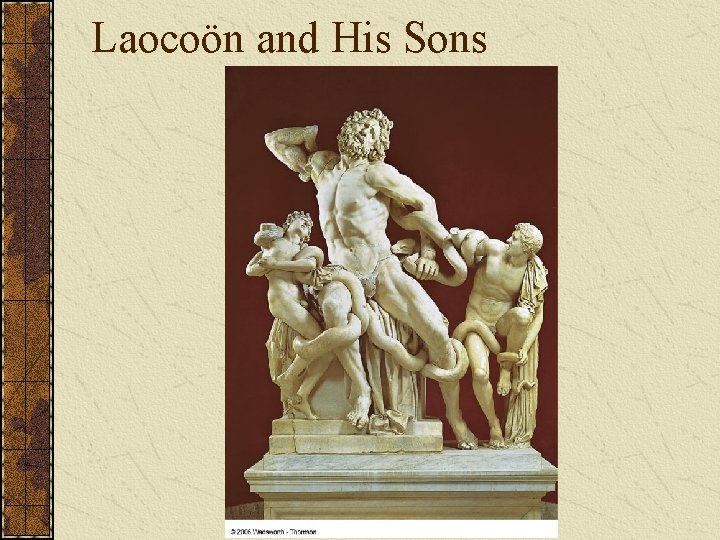
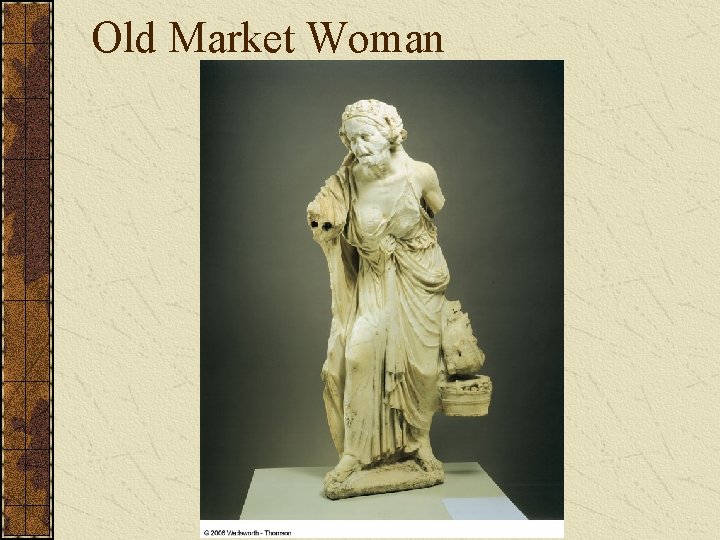
Hellenistic Art Patronage Sculpture Emotional and realistic art Emphasis on the female nude
Laocoön and His Sons
Old Market Woman
A Golden Age of Science Astronomy Geometry Euclid (c. 300 B. C. ) Archimedes of Syracuse (287 -212 B. C. ) Medicine
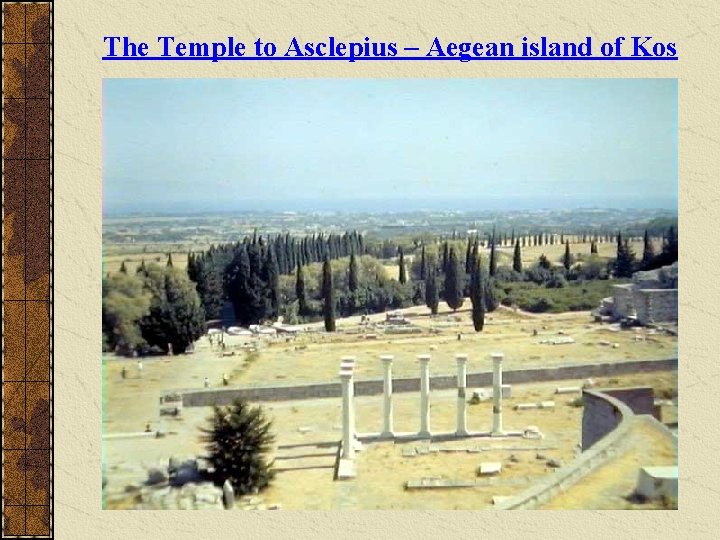
The Temple to Asclepius – Aegean island of Kos
Philosophy: New Schools of Thought Epicurus (341 – 270 B. C. ) Doctrine of pleasure Stoicism Zeno (335 – 263 B. C. ) Public service – politics Appeal
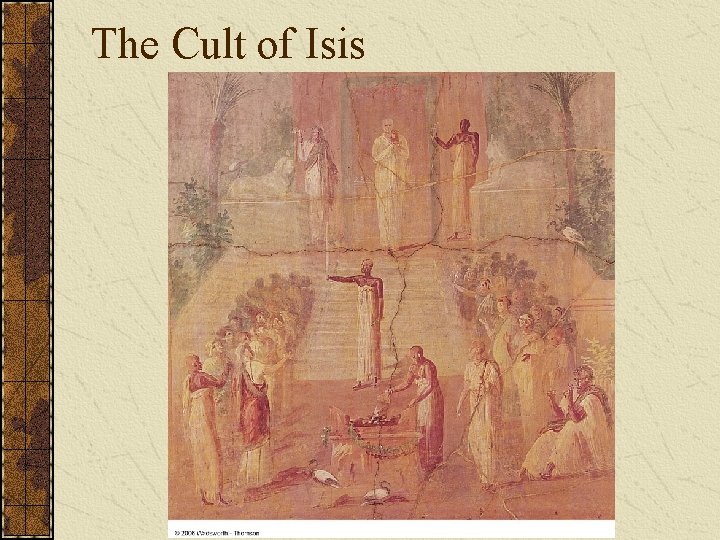
Religion in the Hellenistic World Decline of Civic Cults Mystery Religions Cult of Isis The Jews in the Hellenistic World Judaea • Judah Maccabaeus (164 B. C. ) Jews outside of Judaea
The Cult of Isis
Discussion Questions Why was Alexander so successful in building his empire? What do you think Alexander would have done had he lived longer? What impact, if any, did Hellenistic culture have outside of Europe? How did women fare in the Hellenistic world? Why? What were the main goals of Greek philosophy in the third and second century B. C. ? How did these goals differ from philosophy during the classical period? What do mystery cults tell us about Greek tolerance toward other cultures?
Web Links Ancient Greek Sites on the World Wide Web Internet Ancient History Sourcebook: Greece Cultural Map of Hellas Alexander the Great of Macedon Diotima: Women in the Ancient World The Archimedes Homepage The Internet Encyclopedia of Philosophy: Greek Philosophy