
CHAPTER 4 THE FIRST TWO YEARS PSYCHOSOCIAL DEVELOPMENT
- Slides: 19
CHAPTER 4 THE FIRST TWO YEARS: PSYCHOSOCIAL DEVELOPMENT
THE FIRST TWO YEARS: PSYCHOSOCIAL DEVELOPMENT �The interaction of infants’ emotions and their social context is dynamic �This interplay is seen in a tiny baby smile at an engaging face or a toddler flop to the floor, kicking and screaming
EMOTIONAL DEVELOPMENT IN INFANCY �Specific Emotions �Fully formed fear in response to some person, thing, or situation emerges at about 9 months �Stranger Wariness �Infant no longer smiles at any friendly faces, and cries if an unfamiliar person moves to close, too quickly �Separation Anxiety �Expressed in tears, dismay, or anger when a familiar caregiver leaves
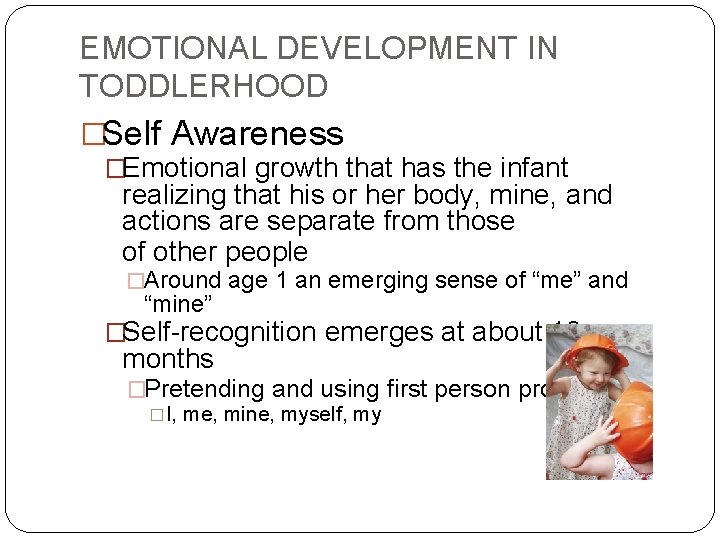
EMOTIONAL DEVELOPMENT IN TODDLERHOOD �Self Awareness �Emotional growth that has the infant realizing that his or her body, mine, and actions are separate from those of other people �Around age 1 an emerging sense of “me” and “mine” �Self-recognition emerges at about 18 months �Pretending and using first person pronouns � I, me, mine, myself, my
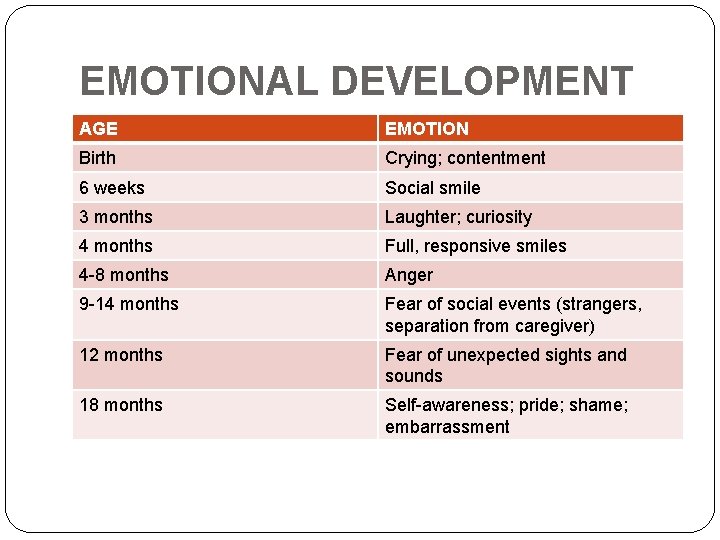
EMOTIONAL DEVELOPMENT AGE EMOTION Birth Crying; contentment 6 weeks Social smile 3 months Laughter; curiosity 4 months Full, responsive smiles 4 -8 months Anger 9 -14 months Fear of social events (strangers, separation from caregiver) 12 months Fear of unexpected sights and sounds 18 months Self-awareness; pride; shame; embarrassment
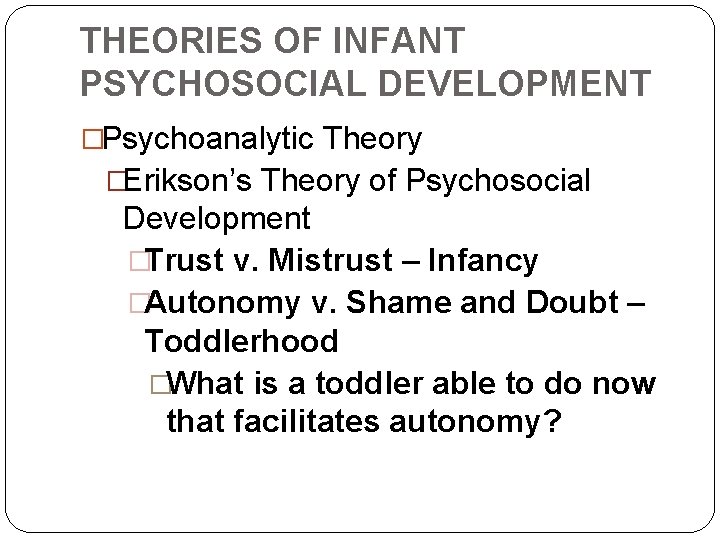
THEORIES OF INFANT PSYCHOSOCIAL DEVELOPMENT �Psychoanalytic Theory �Erikson’s Theory of Psychosocial Development �Trust v. Mistrust – Infancy �Autonomy v. Shame and Doubt – Toddlerhood �What is a toddler able to do now that facilitates autonomy?
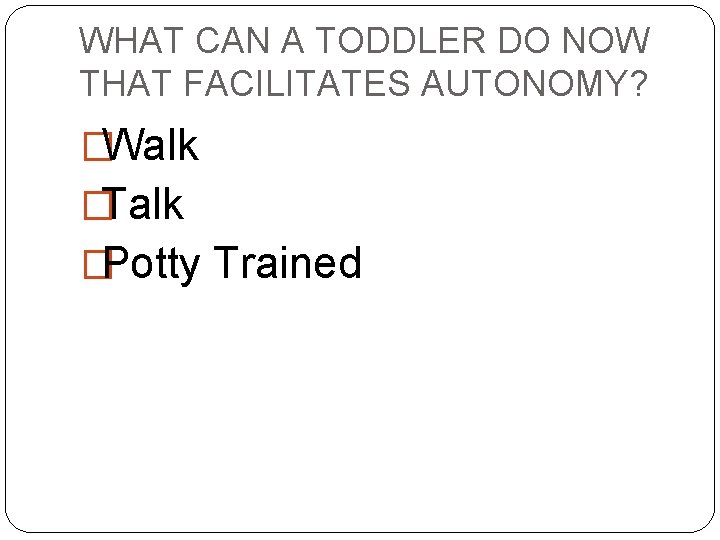
WHAT CAN A TODDLER DO NOW THAT FACILITATES AUTONOMY? �Walk �Talk �Potty Trained
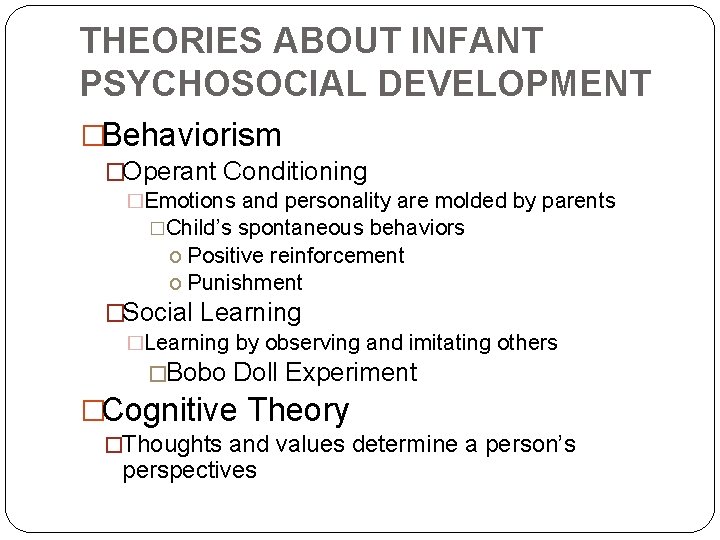
THEORIES ABOUT INFANT PSYCHOSOCIAL DEVELOPMENT �Behaviorism �Operant Conditioning �Emotions and personality are molded by parents �Child’s spontaneous behaviors o Positive reinforcement o Punishment �Social Learning �Learning by observing and imitating others �Bobo Doll Experiment �Cognitive Theory �Thoughts and values determine a person’s perspectives
THEORIES ABOUT INFANT PSYCHOSOCIAL DEVELOPMENT �Epigenetic Theory �Every human characteristic is strongly influenced by each person’s unique genotype… inborn predispositions �Temperament �Inborn differences between one person and another in emotions, activity, and selfcontrol �Temperament is epigenetic, originating in genes but affected by child-rearing practices
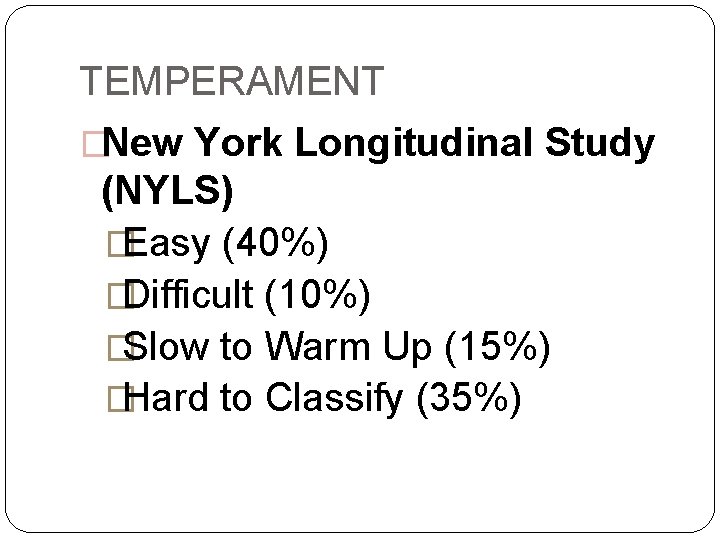
TEMPERAMENT �New York Longitudinal Study (NYLS) �Easy (40%) �Difficult (10%) �Slow to Warm Up (15%) �Hard to Classify (35%)
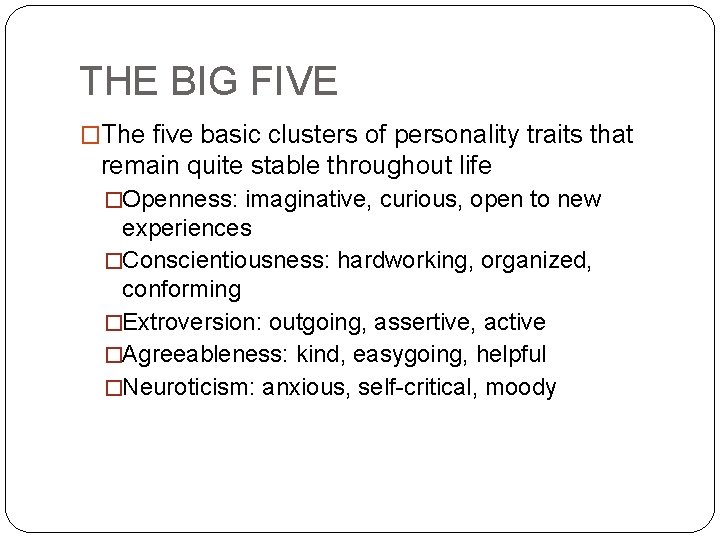
THE BIG FIVE �The five basic clusters of personality traits that remain quite stable throughout life �Openness: imaginative, curious, open to new experiences �Conscientiousness: hardworking, organized, conforming �Extroversion: outgoing, assertive, active �Agreeableness: kind, easygoing, helpful �Neuroticism: anxious, self-critical, moody
THEORIES ABOUT INFANT PSYCHOSOCIAL DEVELOPMENT �Sociocultural Theory �Cultural Context �“…human development occurs in a cultural context. ” �sociocultural theorists argue culture: �has a substantial influence on infants �has a major impact on infant-caregiver relationships, thus the development of the infant �Cultural values serve to encourage or discourage emotions or temperamental traits
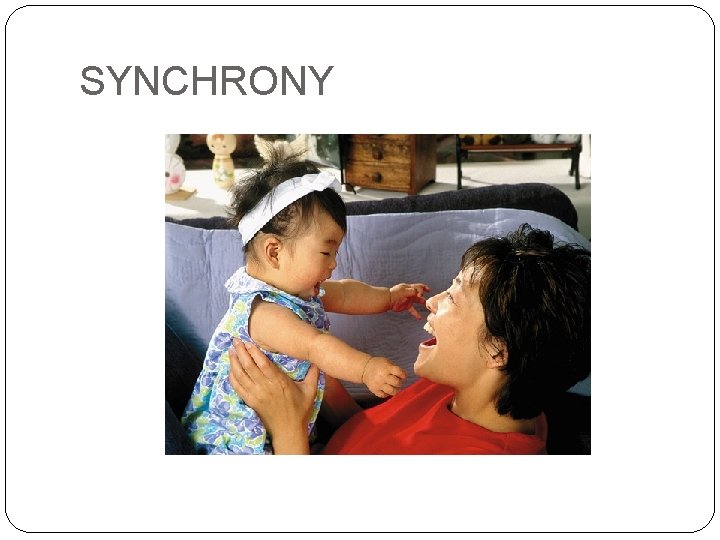
THE DEVELOPMENT OF SOCIAL BONDS �Healthy Human Development Depends on Social Connections �Synchrony – a coordinated, rapid, and smooth exchange of responses between caregiver and infant �Babies learn �How to have a conversation �Emotions �Synchrony is experience-expectant �How to encourage synchrony with baby
SYNCHRONY
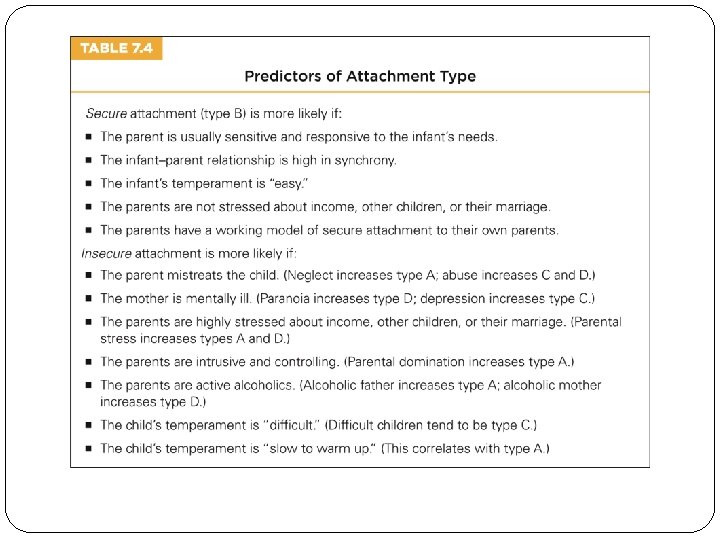
THE DEVELOPMENT OF SOCIAL BONDS �Attachment �A lasting bond that one person has with another �Proximity-Seeking Behavior �Contact-Maintaining Behavior �The Strange Situation (Ainsworth) �Secure Attachment �Insecure Attachment
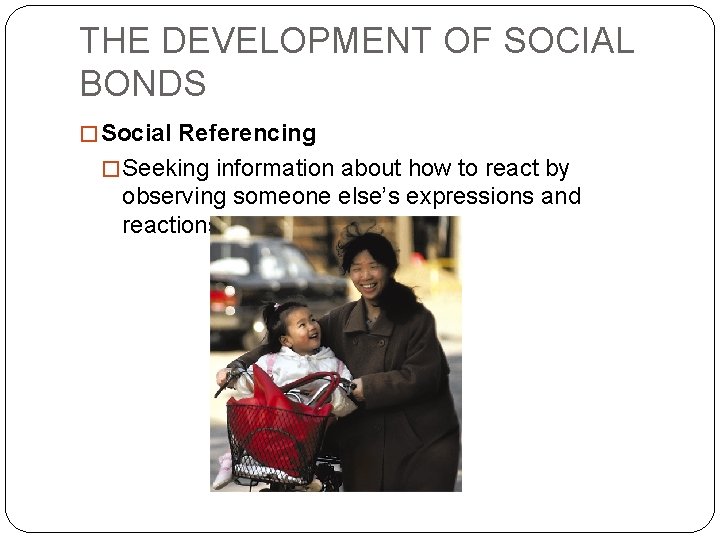
THE DEVELOPMENT OF SOCIAL BONDS � Social Referencing � Seeking information about how to react by observing someone else’s expressions and reactions
INFANT DAY CARE �High-Quality Day Care �Adequate Attention to Each Infant �Encouragement of Language and Sensorimotor Development �Attention to Health and Safety �Well-Trained and Professional Caregivers �Low-Turnover �Warm and Responsive Caregivers