
Chapter 4 The External Environment Nokia 1998 World



- Slides: 37
Chapter 4 The External Environment
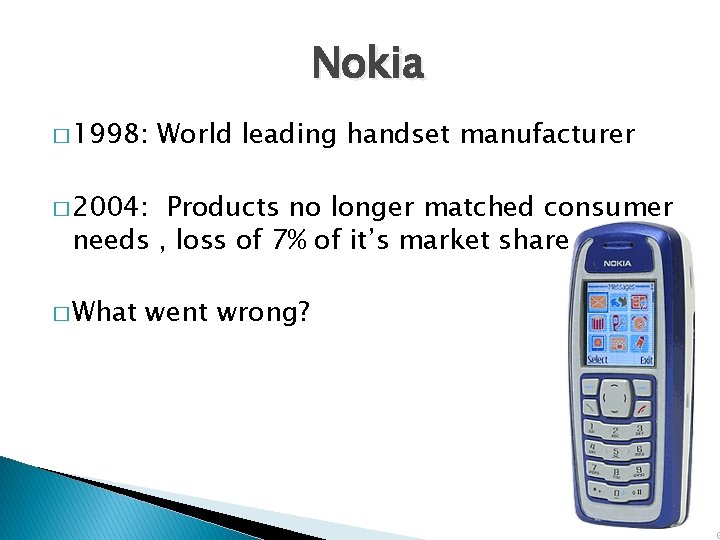
Nokia � 1998: World leading handset manufacturer � 2004: Products no longer matched consumer needs , loss of 7% of it’s market share � What went wrong?
Problems � New phones too bulky and expensive � Candy bar style � Slow to respond to changing customer preferences � In the end…. . � Had to change their target market –waiting to see if their strategy will work. .
� Organizational Environment- All elements that exist outside the boundary of the organization that have potential to affect all or part of the organization � Green Environment- Nature centered organization. Common amongst organizations that are responsible for much of the damage to the natural environment
Domain: The companies niche � Who they serve and how they serve them � External sectors with which the organization will interact with
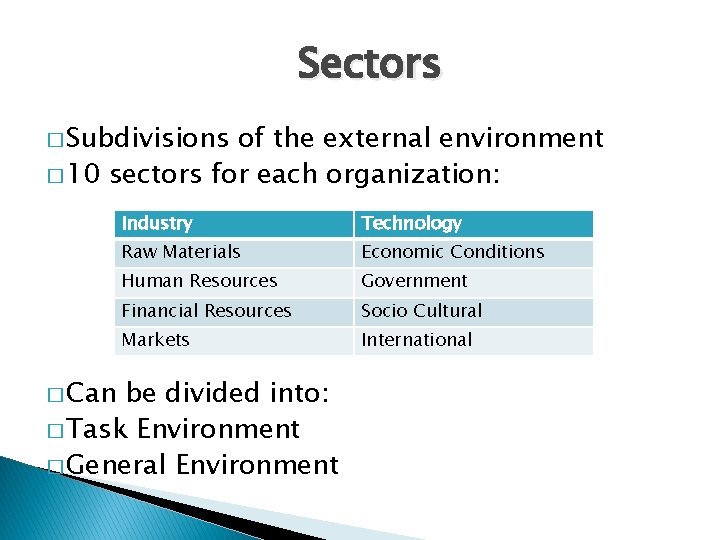
Sectors � Subdivisions of the external environment � 10 sectors for each organization: � Can Industry Technology Raw Materials Economic Conditions Human Resources Government Financial Resources Socio Cultural Markets International be divided into: � Task Environment � General Environment
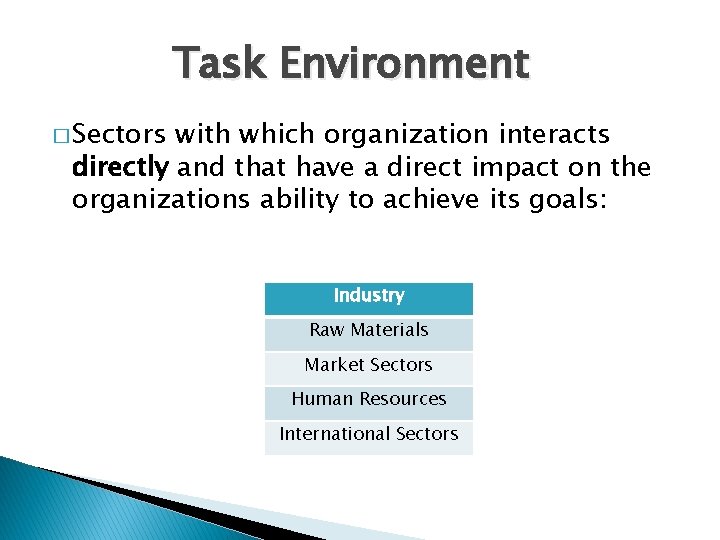
Task Environment � Sectors with which organization interacts directly and that have a direct impact on the organizations ability to achieve its goals: Industry Raw Materials Market Sectors Human Resources International Sectors
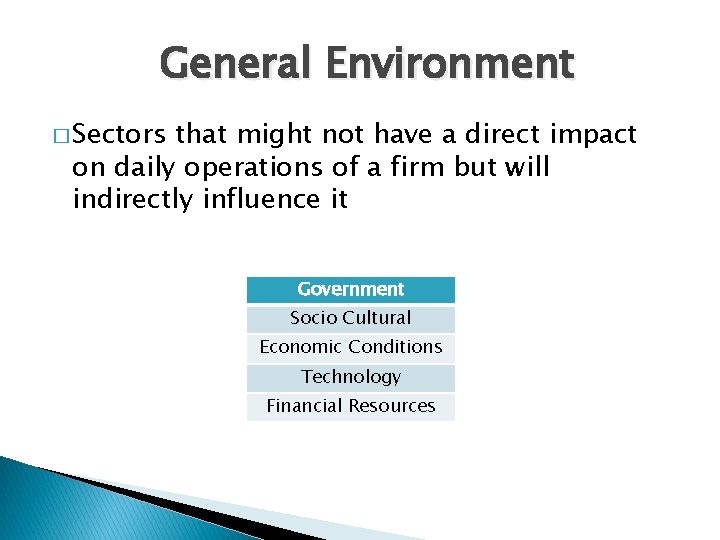
General Environment � Sectors that might not have a direct impact on daily operations of a firm but will indirectly influence it Government Socio Cultural Economic Conditions Technology Financial Resources
International Context � Domestic sectors can be affected by international events! � How?
The environment's influence on organizations: � 1) The need for information about the environment � 2) The need for resources from the environment � Scarce material and financial resources- need to ensure their availability !
� Uncertainty- Not having sufficient information about environmental factors which results in a difficult time predicting changes * What does this cause? *
Simple-Complex Dimension � Concern’s with environmental complexity � Heterogeneity or number and dissimilarities of external elements relevant to the organization’s operations. � The more external factors that regularly influence the organization + increased number of competitors = Greater Complexity
Stable-Unstable Dimension � Does the environmental domain remain the same over a period of months/years � Are changes predictable? � Stable Vs Unstable
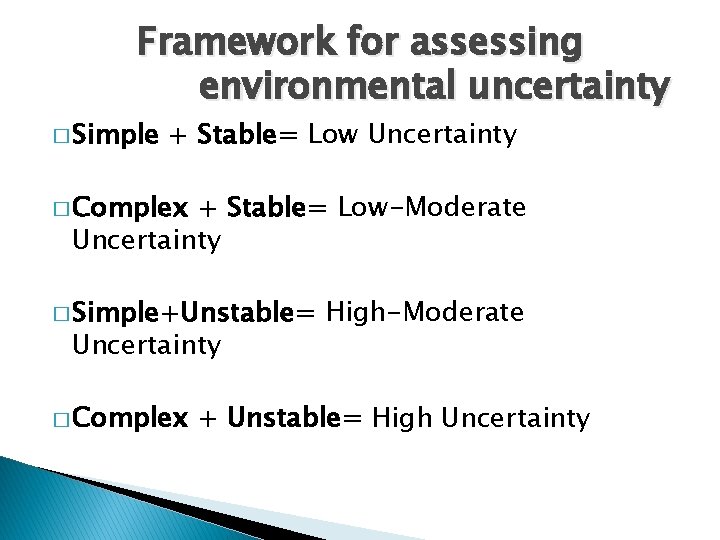
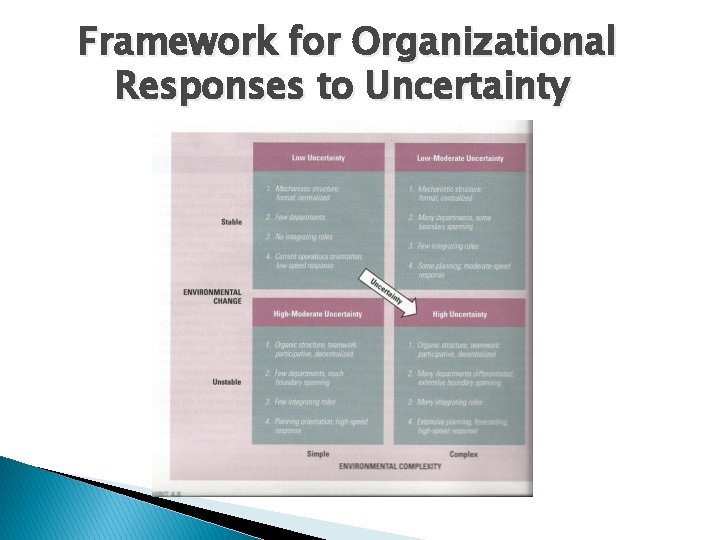
Framework for assessing environmental uncertainty � Simple + Stable= Low Uncertainty � Complex + Stable= Low-Moderate Uncertainty � Simple+Unstable= Uncertainty � Complex High-Moderate + Unstable= High Uncertainty
Positions and Departments �^ in complexity and uncertainty in external environment increases means a ^ in # of positions and departments Ø^ internal complexity Ø Each sector in external environment requires an employee/department to deal with it
Buffering roles � Absorb uncertainty from environment � Surround technical core � Exchange resources/materials between environment and org. � New approach!
Boundary Spanning � Detect changes in environment and bring info to org. � Send info. into environment that presents org. in favourable light � New Approach = Business Intelligence � High-tech analysis of data to spot patterns and relationships
Business Intelligence � Competitive intelligence: systematic way to collect/analyze info about rivals and use it to make better decisions
Differentiation and Integration Ø Differences in cognitive and emotional orientations. Ø Results in difference in formal structure among these departments.
Differentiation and Integration Ø Paul Lawrence, Jay Lorsch Ø Each dept evolved towards different orientation. Ø Ø Structured to deal with specialized parts of external environment. R&D informal structure, long-term orientation, task-oriented employees and marketing was at opposite end of spectrum.
Differentiation and Integration Outcome of high differentiation: � Coordination among departments becomes more difficult. Integration: � Collaboration among departments. Who : Ø Project managers, liaison personnel etc.
Differentiation and Integration When environment is highly uncertain: � Frequent changes � Require more information � Processing to achieve coordination � Integrators become more necessary When environment is simple and stable: Ø Few managers assigned to integration roles Lawrence/Lorsch concluded: � Organizations perform better when differentiation/integration matches level of uncertainty in environment
Organic/Mechanistic Management Burns/Stalker: Ø Observed 20 industrial firms in England Ø External environment is related to internal management structure Ø Mechanistic management structure: Ø Stable external environment Ø Rules, procedures, clear hierarchy of authority � Communication is vertical
Organic/Mechanistic Management Organic Management : Ø Rapidly changing environment Ø Free flowing and adaptive Ø Hierarchy of authority not clear Ø Communication is horizontal � Organic process Enhances organizations ability to quickly respond to changes
Planning, Forecasting and Responsiveness Uncertain environment: � Planning/forecasting become more important � Planning softens impact of external shifts
Framework for Organizational Responses to Uncertainty
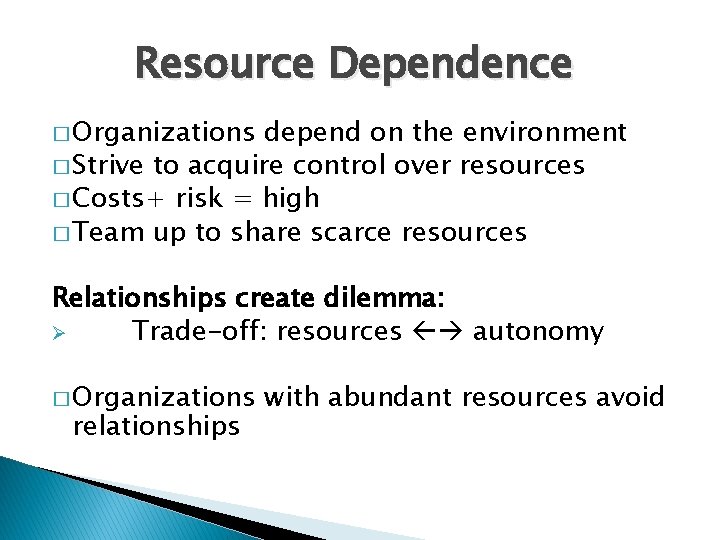
Resource Dependence � Organizations depend on the environment � Strive to acquire control over resources � Costs+ risk = high � Team up to share scarce resources Relationships create dilemma: Ø Trade-off: resources autonomy � Organizations relationships with abundant resources avoid
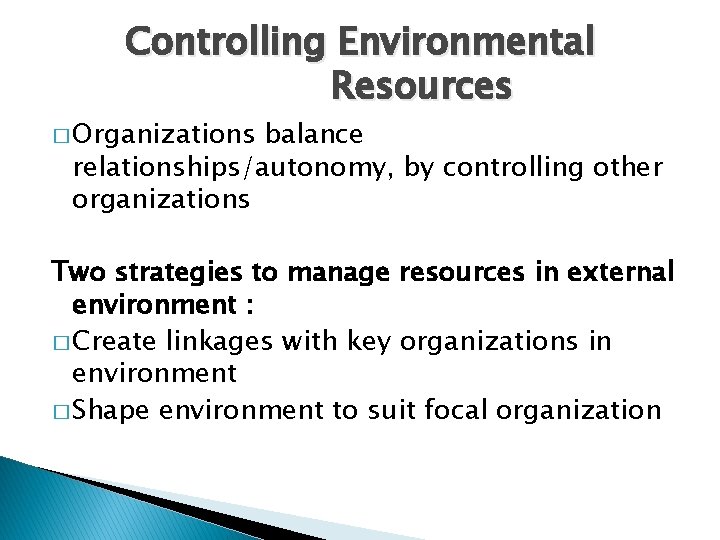
Controlling Environmental Resources � Organizations balance relationships/autonomy, by controlling other organizations Two strategies to manage resources in external environment : � Create linkages with key organizations in environment � Shape environment to suit focal organization
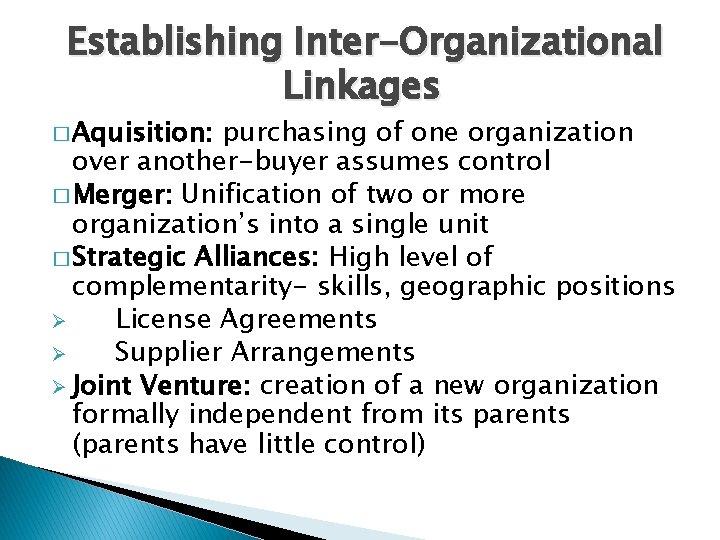
Establishing Inter-Organizational Linkages � Aquisition: purchasing of one organization over another-buyer assumes control � Merger: Unification of two or more organization’s into a single unit � Strategic Alliances: High level of complementarity- skills, geographic positions Ø License Agreements Ø Supplier Arrangements Ø Joint Venture: creation of a new organization formally independent from its parents (parents have little control)
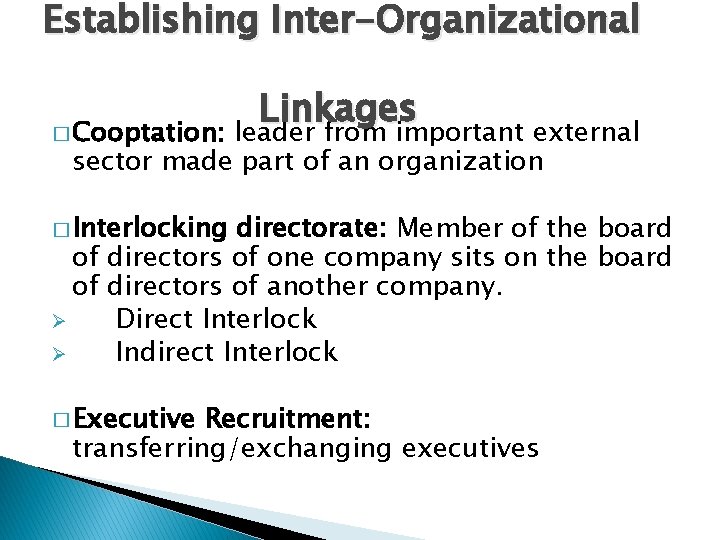
Establishing Inter-Organizational � Cooptation: Linkages leader from important external sector made part of an organization � Interlocking directorate: Member of the board of directors of one company sits on the board of directors of another company. Ø Direct Interlock Ø Indirect Interlock � Executive Recruitment: transferring/exchanging executives
Advertising and Public Relations Advertising: Traditional way of establishing relationships � Large amounts of time and money � Influence taste of consumers � Very important in highly competitive industries � Public relations: Stories aimed at public opinion
Controlling Environmental Domain Four traditional techniques: 1) Change of domain - Acquisition and divestment 2) Political Activity, Regulation - Influence legislation and regulation 3) Trade Associations - Organizations influence environment jointly 4) Illegitimate Activities - Conditions cause managers to take part in unlawful/unethical activities
Controlling Environmental Domain Companies experiencing low demand, shortages, strikes: � More likely to take part in illegal activities � Attempt to deal with resource scarcity
Knowledge to take home: � Complexity in the environment has a big impact on organizations � Decisions are made based on the external environment � Stable-unstable dimensions � Resource and simple-complex dependence
� An organizations departments are created to deal with uncertainties. � Departments � When buffer uncertainty. resources are scarce, organizations can establish linkages.
Organization’s Vs Environment � Cross functional communication � Find the Right Fit between Internal Structure and the External Environment � As complexity ^ more positions have ^ complexity! � Avoid selective hearing/wishful thinking