
Chapter 4 The Enhanced ER Model and Business
Chapter 4: The Enhanced ER Model and Business Rules Modern Database Management 7 th Edition Jeffrey A. Hoffer, Mary B. Prescott, Fred R. Mc. Fadden © 2005 by Prentice Hall 1
Objectives n n n n Definition of terms Use of supertype/subtype relationships Use of generalization and specialization techniques Specification of completeness and disjointness constraings Develop supertype/subtype hierarchies for common business situations Develop entity clusters Name categories of business rules Define operational constraints graphically and in English Chapter 4 © 2005 by Prentice Hall 2
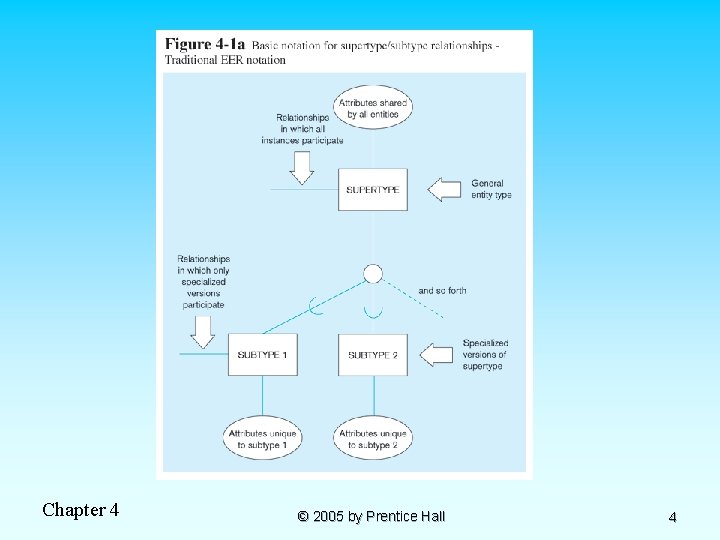
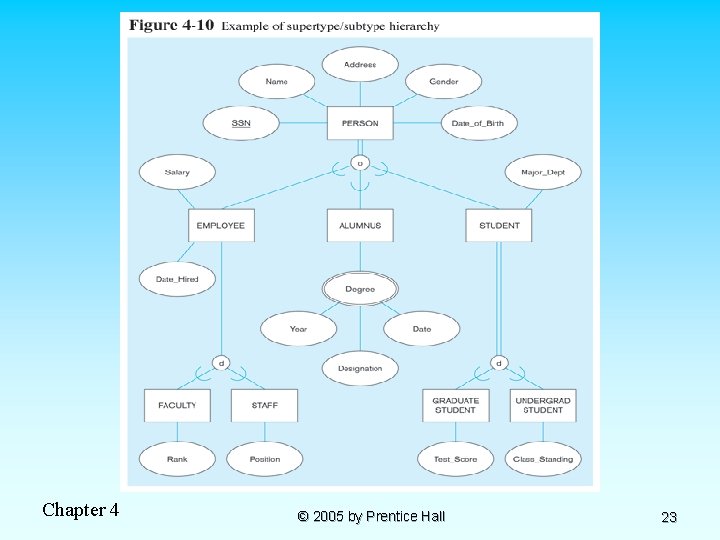
Supertypes and Subtypes n Subtype: A subgrouping of the entities in an entity n Supertype: An generic entity type that has a n Attribute Inheritance: type which has attributes that are distinct from those in other subgroupings relationship with one or more subtypes n n Subtype entities inherit values of all attributes of the supertype An instance of a subtype is also an instance of the supertype Chapter 4 © 2005 by Prentice Hall 3
Chapter 4 © 2005 by Prentice Hall 4
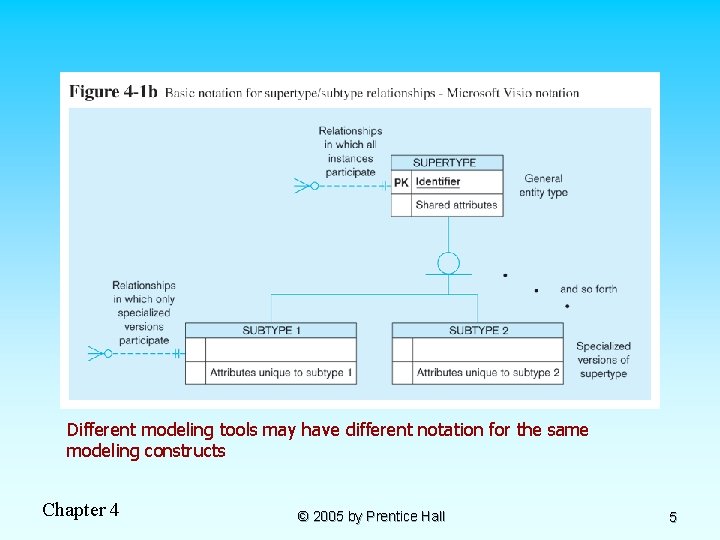
Different modeling tools may have different notation for the same modeling constructs Chapter 4 © 2005 by Prentice Hall 5
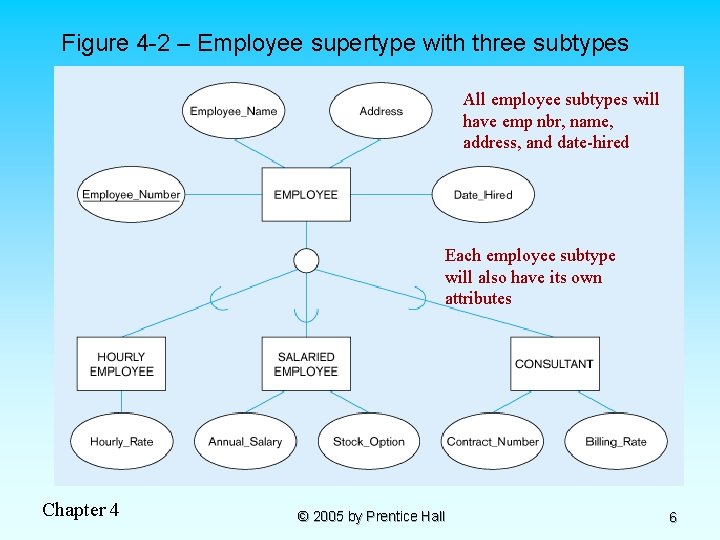
Figure 4 -2 – Employee supertype with three subtypes All employee subtypes will have emp nbr, name, address, and date-hired Each employee subtype will also have its own attributes Chapter 4 © 2005 by Prentice Hall 6
Relationships and Subtypes n n Relationships at the supertype level indicate that all subtypes will participate in the relationship The instances of a subtype may participate in a relationship unique to that subtype. In this situation, the relationship is shown at the subtype level Chapter 4 © 2005 by Prentice Hall 7
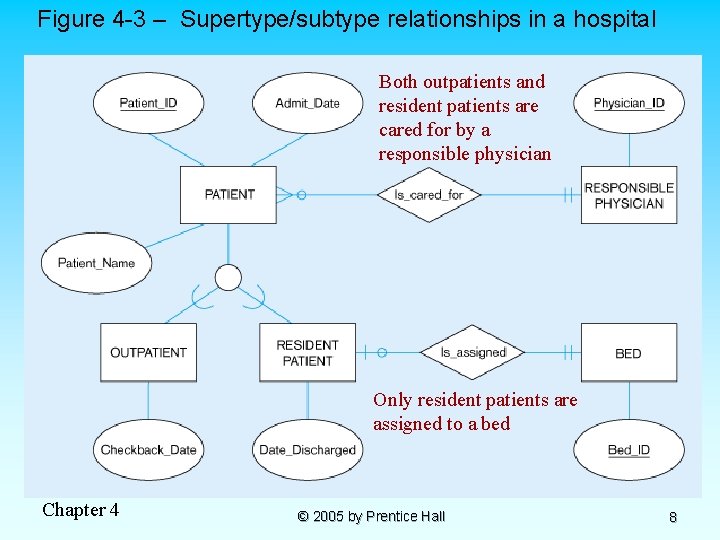
Figure 4 -3 – Supertype/subtype relationships in a hospital Both outpatients and resident patients are cared for by a responsible physician Only resident patients are assigned to a bed Chapter 4 © 2005 by Prentice Hall 8
Generalization and Specialization n Generalization: The process of defining a more general entity type from a set of more specialized entity types. BOTTOM-UP n Specialization: The process of defining one or more subtypes of the supertype, and forming supertype/subtype relationships. TOP-DOWN Chapter 4 © 2005 by Prentice Hall 9
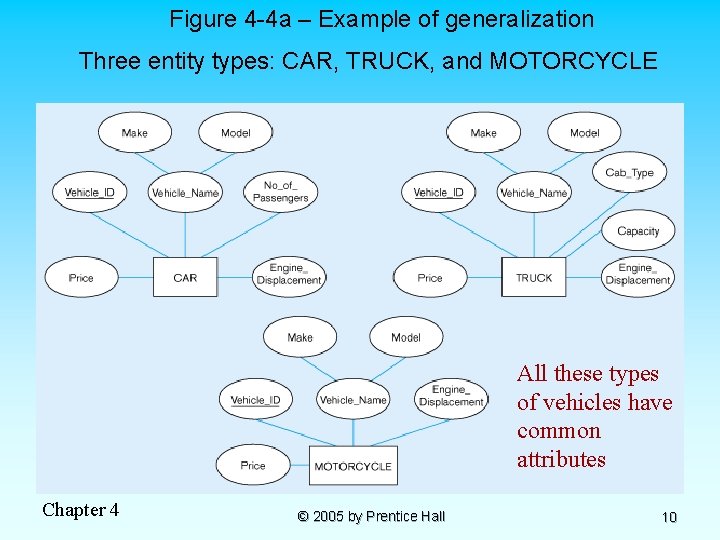
Figure 4 -4 a – Example of generalization Three entity types: CAR, TRUCK, and MOTORCYCLE All these types of vehicles have common attributes Chapter 4 © 2005 by Prentice Hall 10
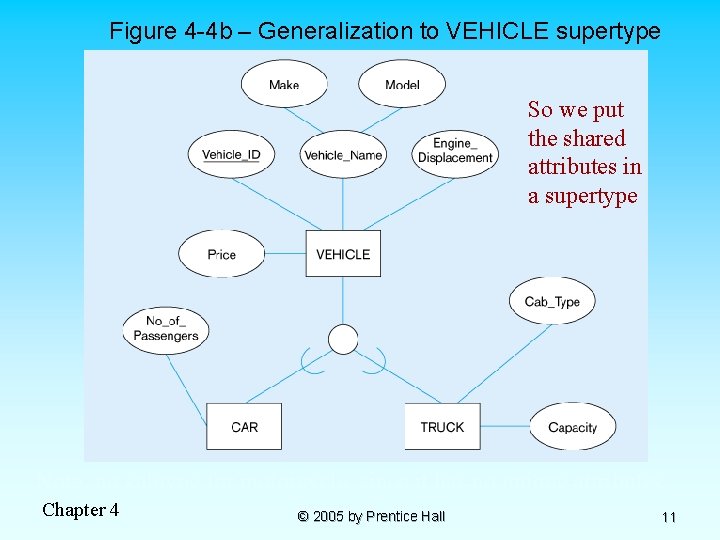
Figure 4 -4 b – Generalization to VEHICLE supertype So we put the shared attributes in a supertype Note: no subtype for motorcycle, since it has no unique attributes Chapter 4 © 2005 by Prentice Hall 11
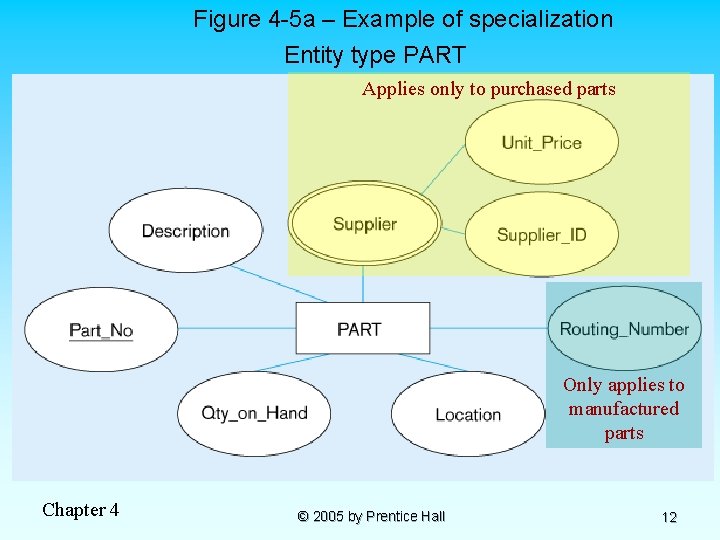
Figure 4 -5 a – Example of specialization Entity type PART Applies only to purchased parts Only applies to manufactured parts Chapter 4 © 2005 by Prentice Hall 12
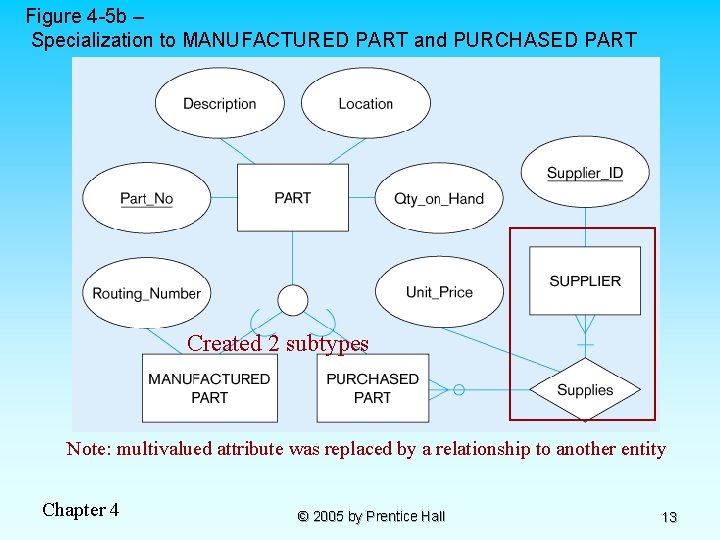
Figure 4 -5 b – Specialization to MANUFACTURED PART and PURCHASED PART Created 2 subtypes Note: multivalued attribute was replaced by a relationship to another entity Chapter 4 © 2005 by Prentice Hall 13
Constraints in Supertype/ Completeness Constraint n Completeness Constraints: Whether an instance of a supertype must also be a member of at least one subtype n Total Specialization Rule: Yes (double line) n Partial Specialization Rule: No (single line) Chapter 4 © 2005 by Prentice Hall 14

Figure 4 -6 a – Examples of completeness constraints Total specialization rule A patient must be either an outpatient or a resident patient Chapter 4 © 2005 by Prentice Hall 15
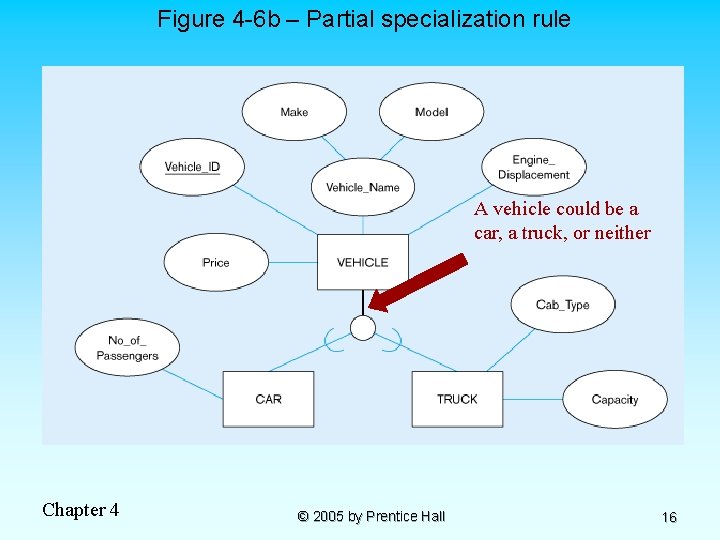
Figure 4 -6 b – Partial specialization rule A vehicle could be a car, a truck, or neither Chapter 4 © 2005 by Prentice Hall 16
Constraints in Supertype/ Disjointness constraint n Disjointness Constraints: Whether an instance of a supertype may simultaneously be a member of two (or more) subtypes Disjoint Rule: An instance of the supertype can be only ONE of the subtypes n Overlap Rule: An instance of the supertype could be more than one of the subtypes n Chapter 4 © 2005 by Prentice Hall 17
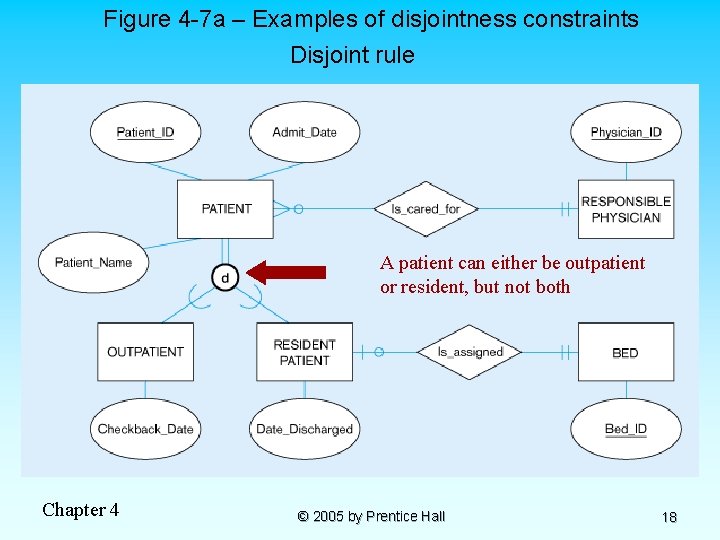
Figure 4 -7 a – Examples of disjointness constraints Disjoint rule A patient can either be outpatient or resident, but not both Chapter 4 © 2005 by Prentice Hall 18
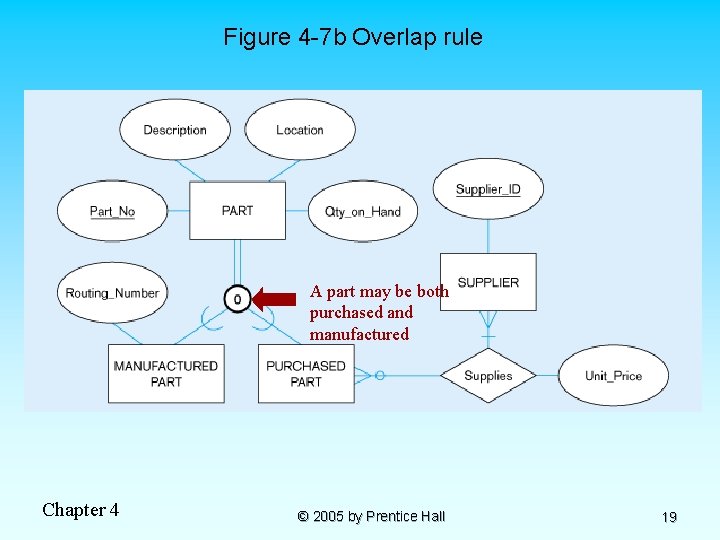
Figure 4 -7 b Overlap rule A part may be both purchased and manufactured Chapter 4 © 2005 by Prentice Hall 19
Constraints in Supertype/ Subtype Discriminators n Subtype Discriminator: An attribute of the supertype whose values determine the target subtype(s) n n Disjoint – a simple attribute with alternative values to indicate the possible subtypes Overlapping – a composite attribute whose subparts pertain to different subtypes. Each subpart contains a boolean value to indicate whether or not the instance belongs to the associated subtype Chapter 4 © 2005 by Prentice Hall 20
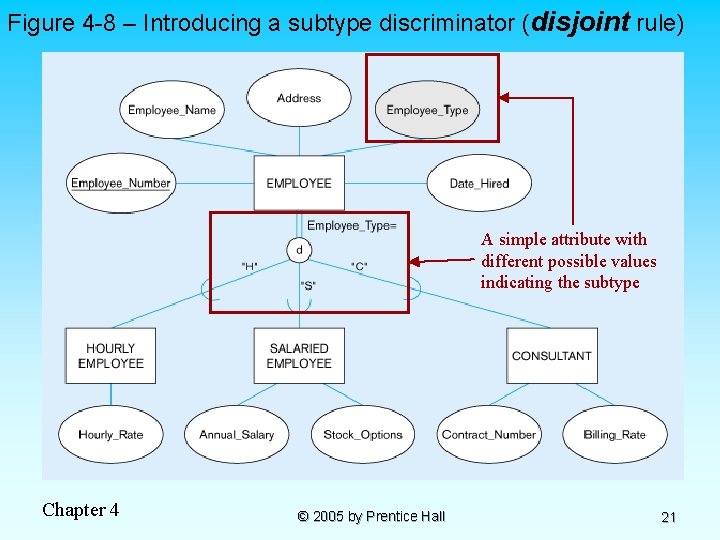
Figure 4 -8 – Introducing a subtype discriminator (disjoint rule) A simple attribute with different possible values indicating the subtype Chapter 4 © 2005 by Prentice Hall 21
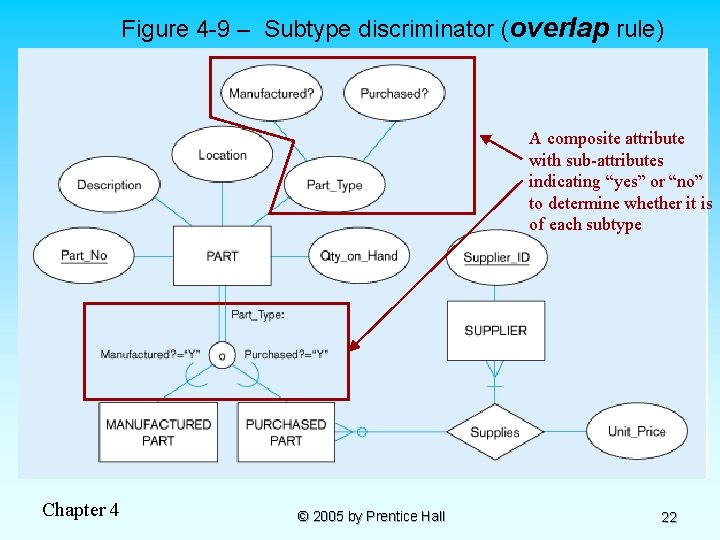
Figure 4 -9 – Subtype discriminator (overlap rule) A composite attribute with sub-attributes indicating “yes” or “no” to determine whether it is of each subtype Chapter 4 © 2005 by Prentice Hall 22
Chapter 4 © 2005 by Prentice Hall 23
Entity Clusters n n n EER diagrams are difficult to read when there are too many entities and relationships Solution: group entities and relationships into entity clusters Entity cluster: set of one or more entity types and associated relationships grouped into a single abstract entity type Chapter 4 © 2005 by Prentice Hall 24
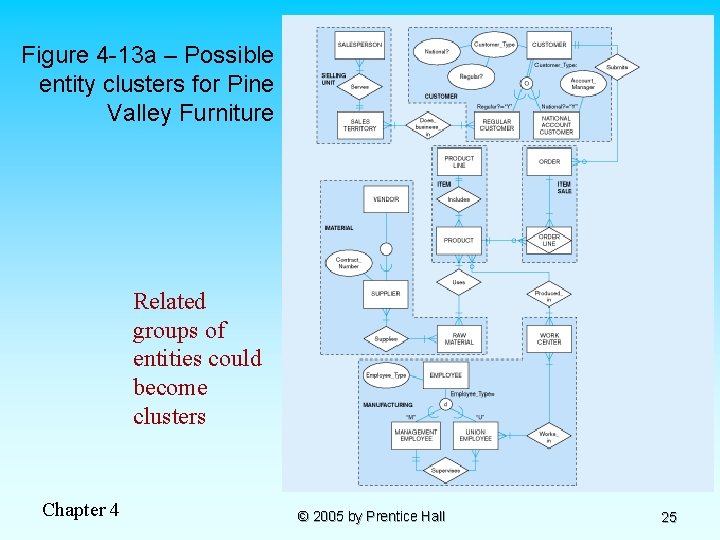
Figure 4 -13 a – Possible entity clusters for Pine Valley Furniture Related groups of entities could become clusters Chapter 4 © 2005 by Prentice Hall 25
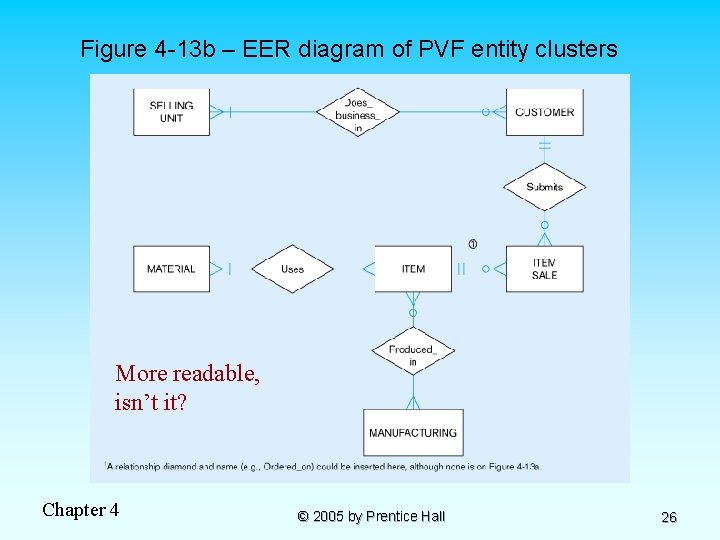
Figure 4 -13 b – EER diagram of PVF entity clusters More readable, isn’t it? Chapter 4 © 2005 by Prentice Hall 26
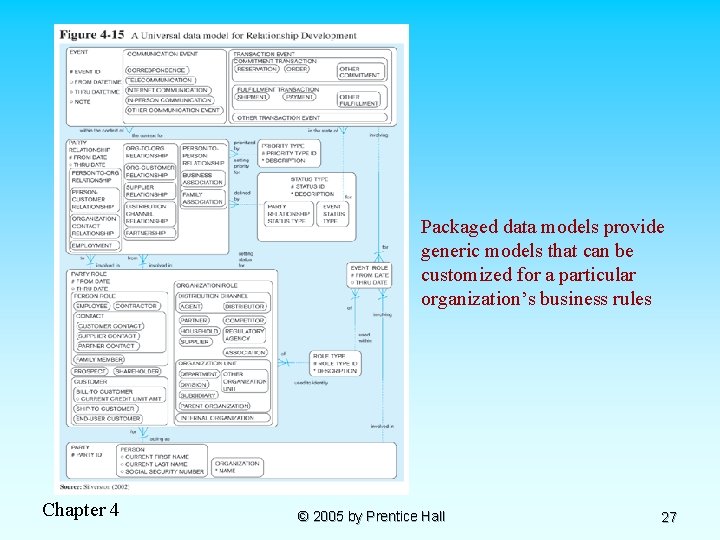
Packaged data models provide generic models that can be customized for a particular organization’s business rules Chapter 4 © 2005 by Prentice Hall 27
Business rules n n Statements that define or constrain some aspect of the business. Classification of business rules: n n n Derivation – rule derived from other knowledge, often in the form of a formula using attribute values Structural assertion – rule expressing static structure. Includes attributes, relationships, and definitions Action assertion – rule expressing constraints/control of organizational actions Chapter 4 © 2005 by Prentice Hall 28
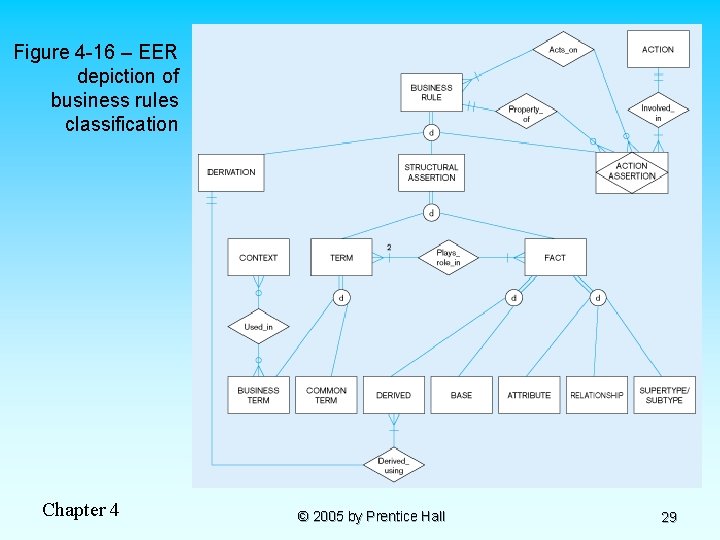
Figure 4 -16 – EER depiction of business rules classification Chapter 4 © 2005 by Prentice Hall 29
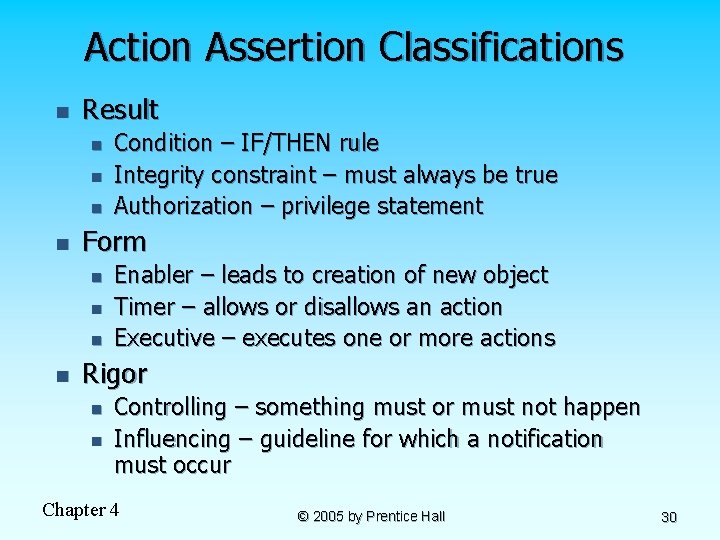
Action Assertion Classifications n Result n n Form n n Condition – IF/THEN rule Integrity constraint – must always be true Authorization – privilege statement Enabler – leads to creation of new object Timer – allows or disallows an action Executive – executes one or more actions Rigor n n Controlling – something must or must not happen Influencing – guideline for which a notification must occur Chapter 4 © 2005 by Prentice Hall 30
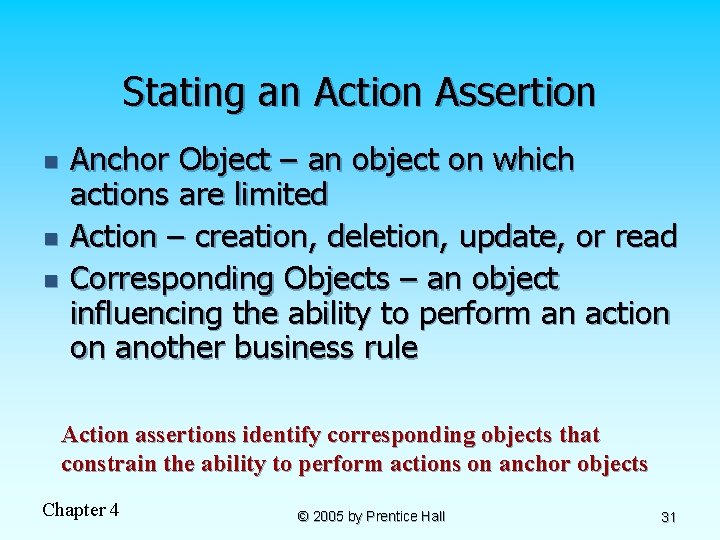
Stating an Action Assertion n Anchor Object – an object on which actions are limited Action – creation, deletion, update, or read Corresponding Objects – an object influencing the ability to perform an action on another business rule Action assertions identify corresponding objects that constrain the ability to perform actions on anchor objects Chapter 4 © 2005 by Prentice Hall 31
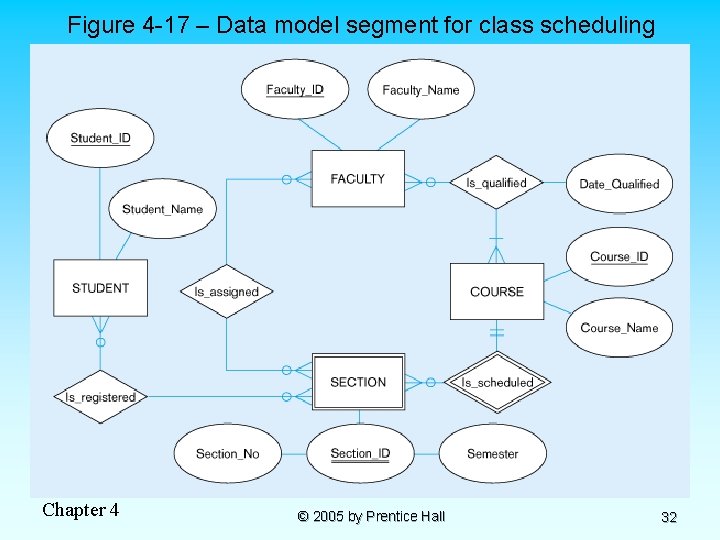
Figure 4 -17 – Data model segment for class scheduling Chapter 4 © 2005 by Prentice Hall 32
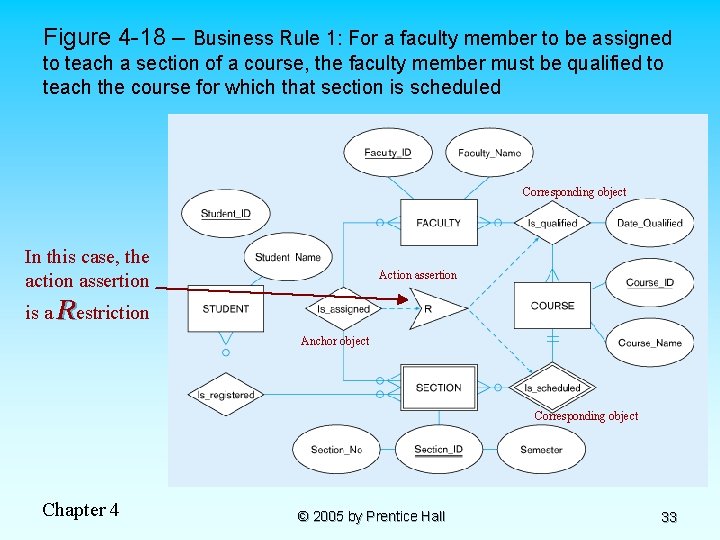
Figure 4 -18 – Business Rule 1: For a faculty member to be assigned to teach a section of a course, the faculty member must be qualified to teach the course for which that section is scheduled Corresponding object In this case, the action assertion Action assertion is a Restriction Anchor object Corresponding object Chapter 4 © 2005 by Prentice Hall 33
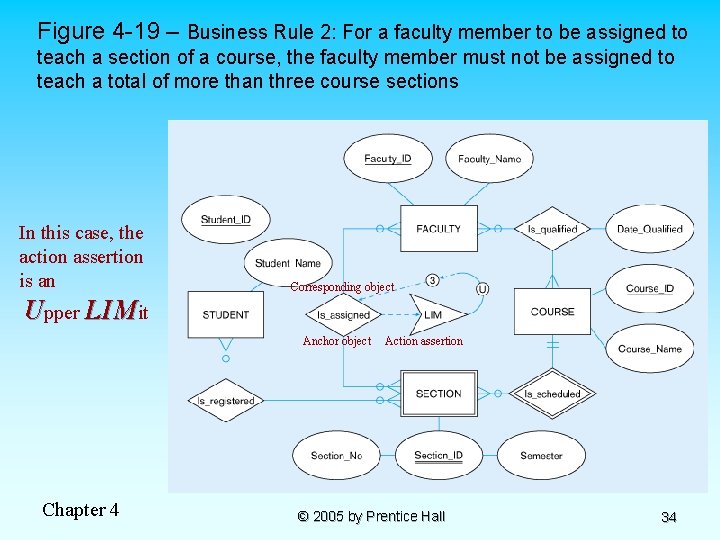
Figure 4 -19 – Business Rule 2: For a faculty member to be assigned to teach a section of a course, the faculty member must not be assigned to teach a total of more than three course sections In this case, the action assertion is an Upper LIMit Corresponding object Anchor object Chapter 4 Action assertion © 2005 by Prentice Hall 34
- Slides: 34