
Chapter 4 Sounds in Space OUTLINE Doppler Reverberation
Chapter 4 Sounds in Space
OUTLINE Doppler Reverberation • Reflections • Flutter & Standing Waves • Resonance Absorption & Diffusion Digital Reverb Echo and Delay

Doppler Effect
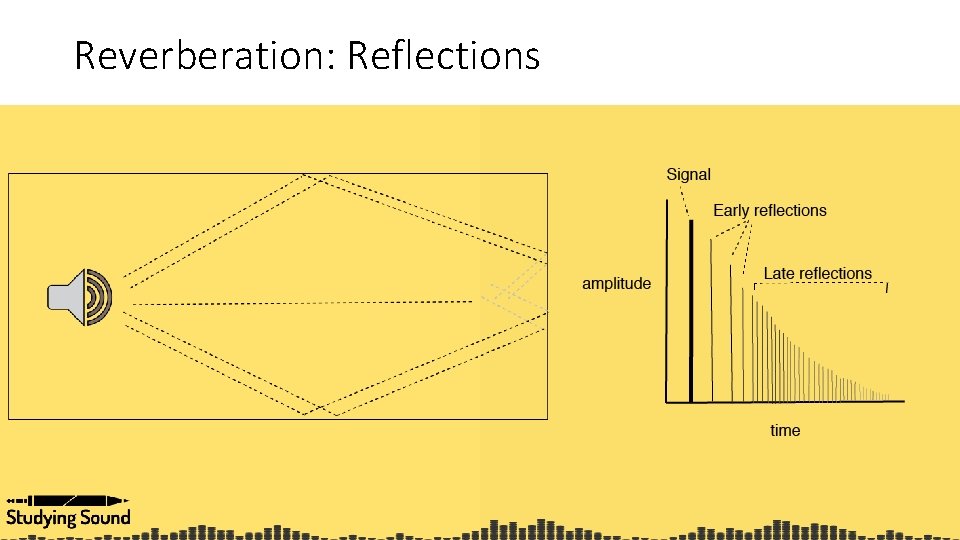
Reverberation: Reflections
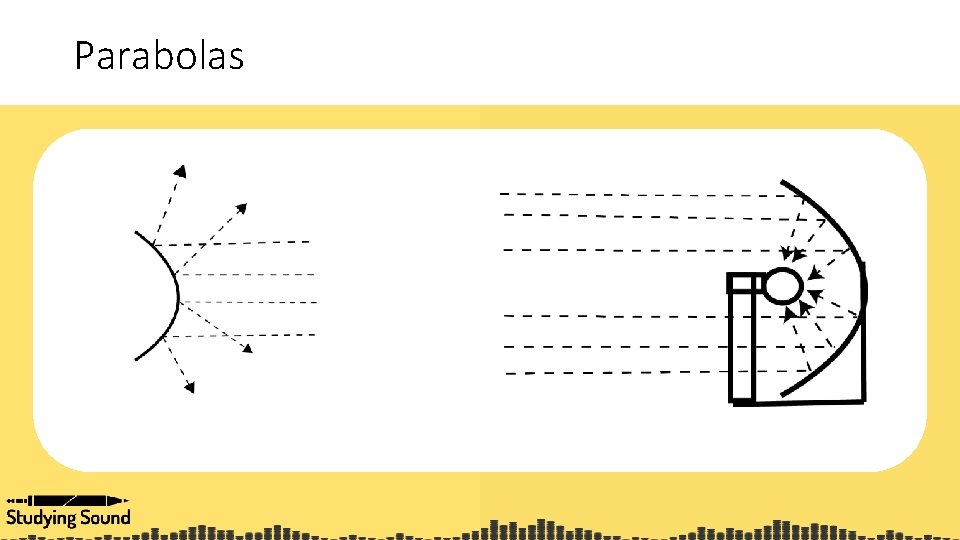
Parabolas
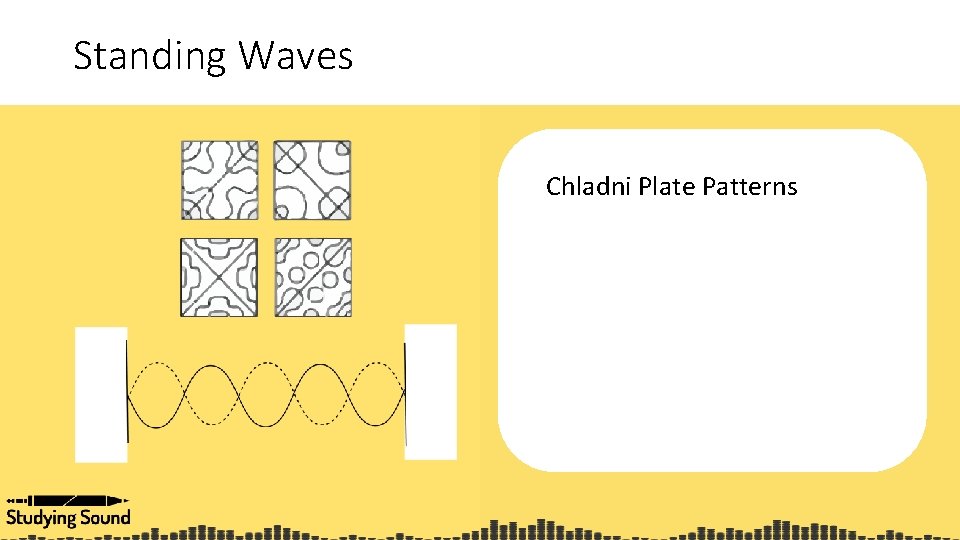
Standing Waves Chladni Plate Patterns
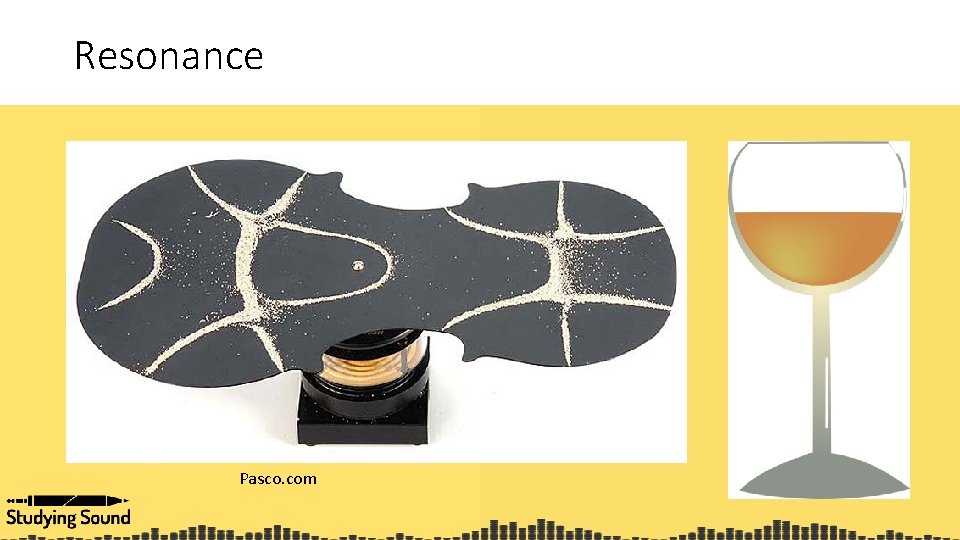
Resonance Pasco. com
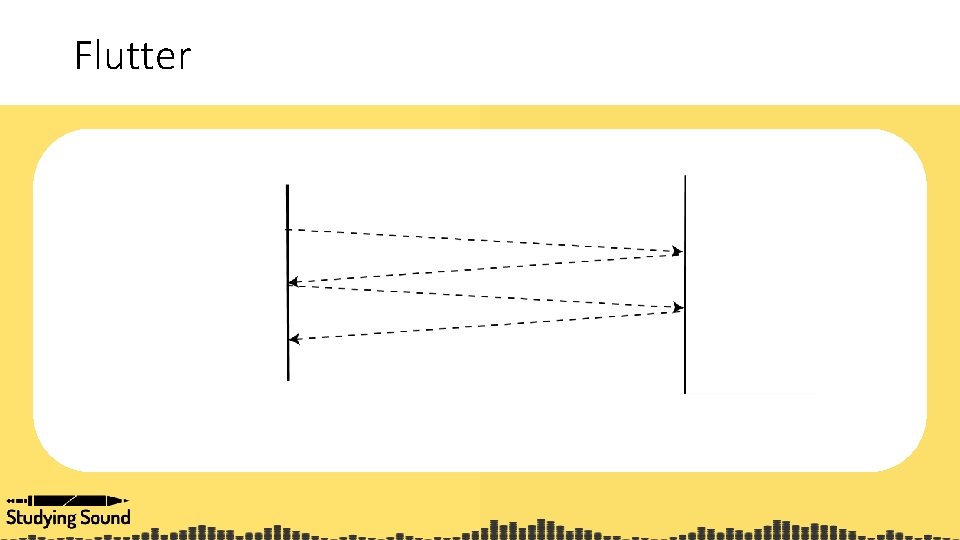
Flutter
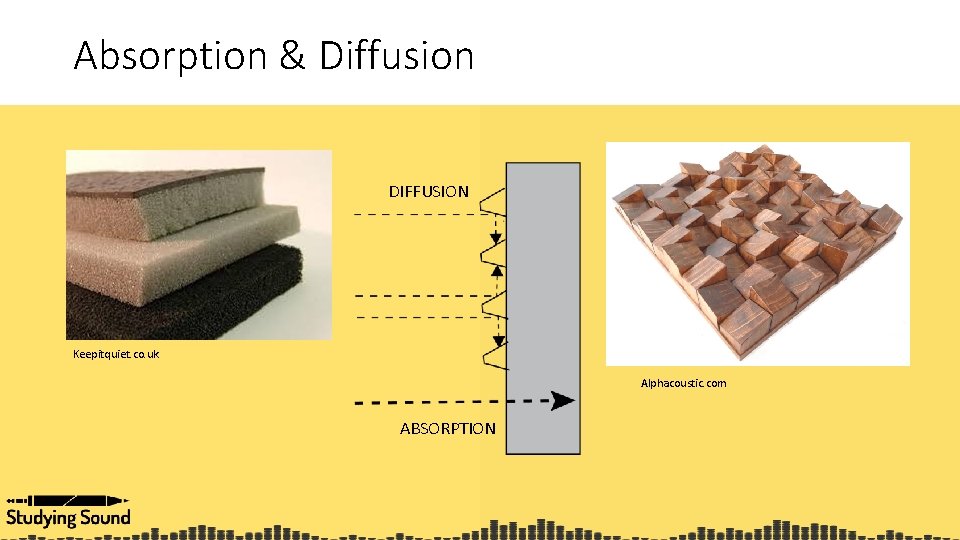
Absorption & Diffusion DIFFUSION Keepitquiet. co. uk Alphacoustic. com ABSORPTION
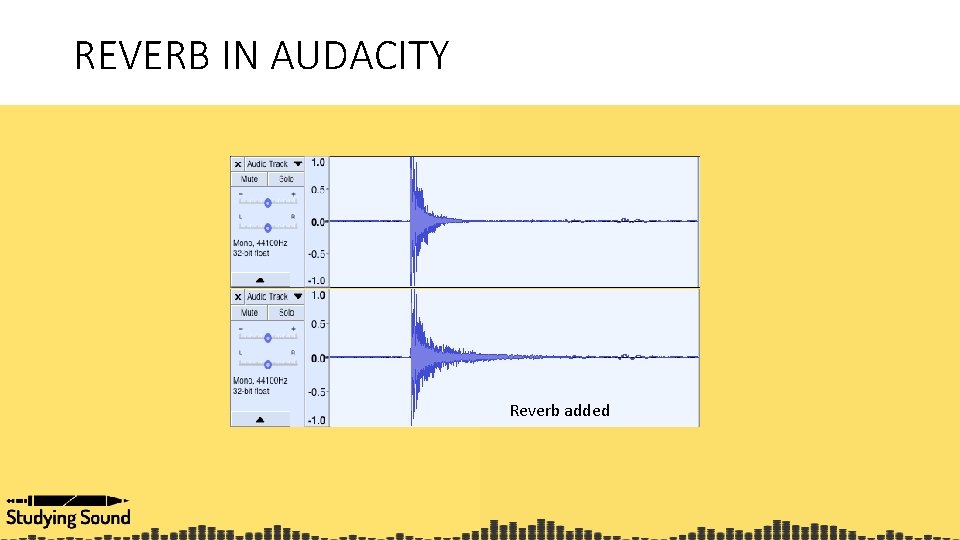
REVERB IN AUDACITY Reverb added
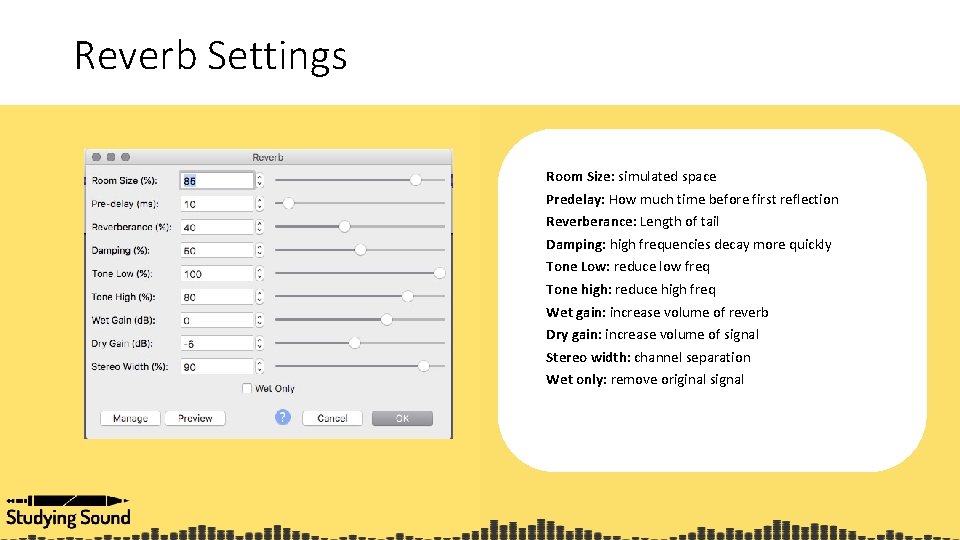
Reverb Settings Room Size: simulated space Predelay: How much time before first reflection Reverberance: Length of tail Damping: high frequencies decay more quickly Tone Low: reduce low freq Tone high: reduce high freq Wet gain: increase volume of reverb Dry gain: increase volume of signal Stereo width: channel separation Wet only: remove original signal
Preverb 1. Duplicate a sound file (Ctr/Cmd A, Ctrl/Cmd C + tracks > add new > mono track, Ctrl/Cmd V) 2. Reverse Track 2 (Effects > Reverse) 3. Apply reverb Effects > Reverberation > Manage> Factory Presets > Large Room 4. Reverse Track 2 again (Effects > Reverse) 5. Tracks > Mix and Render
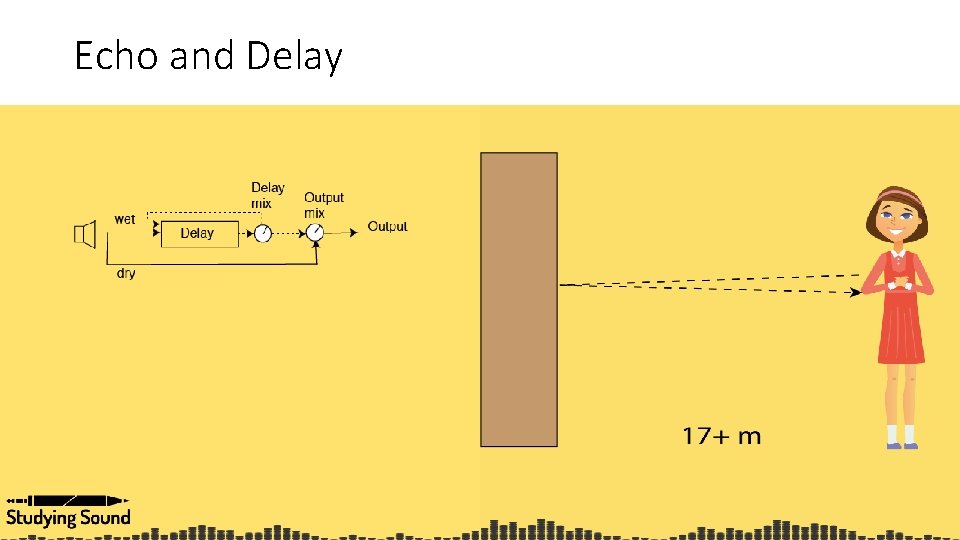
Echo and Delay
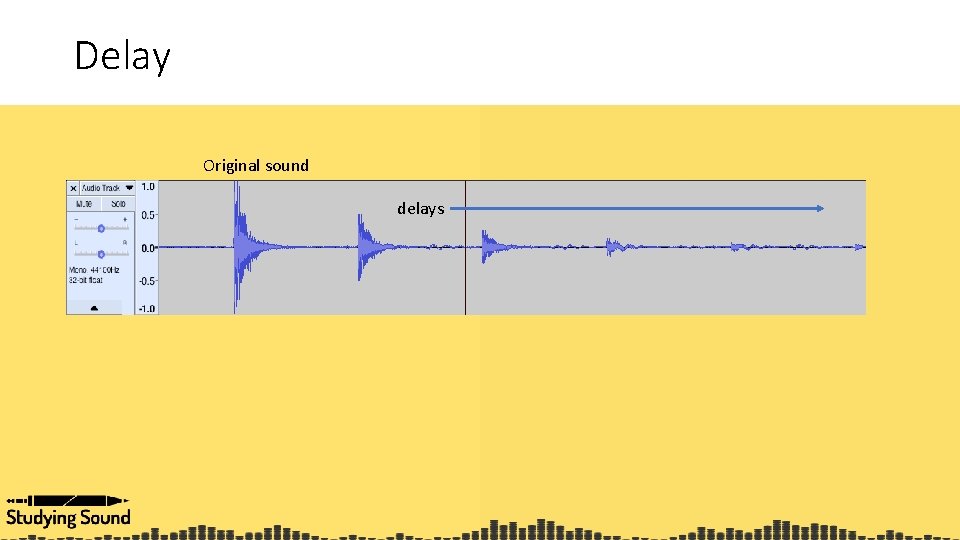
Delay Original sound delays
Delay Type: regular, bouncing ball (reduces time as repeats), reverse bouncing ball (increases time as repeats) Delay Level Per Echo: Amount of change in amplitude in each delay Delay Time: time between repeats Pitch Change Effect: delay will change frequency/tempo LQ Pitch Shift: Changes frequency while maintaining time Pitch change per echo: in semitones
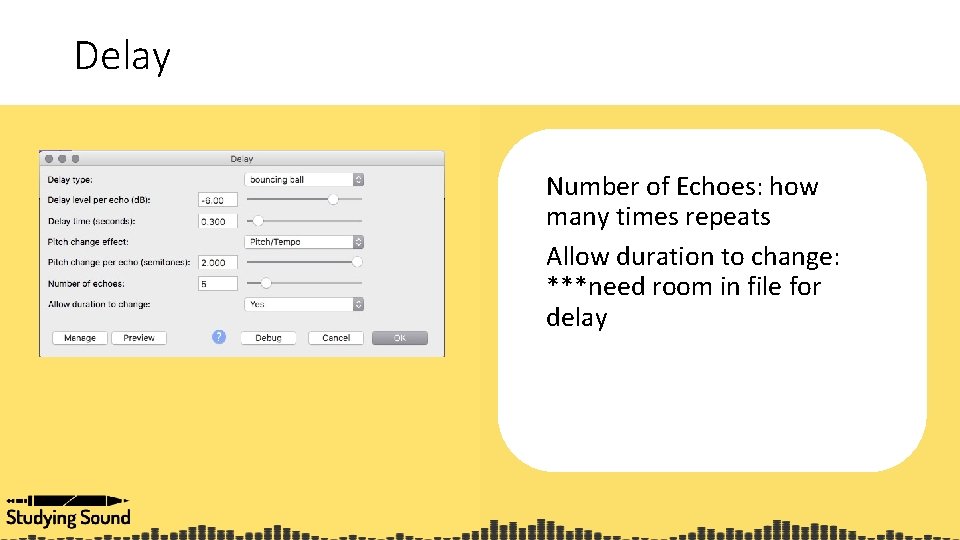
Delay Number of Echoes: how many times repeats Allow duration to change: ***need room in file for delay
ADT & Chorus: Multiple delays with deviations to create effect of chorus singing Automatic Double Tracking: ADT: automated chorus-style effect
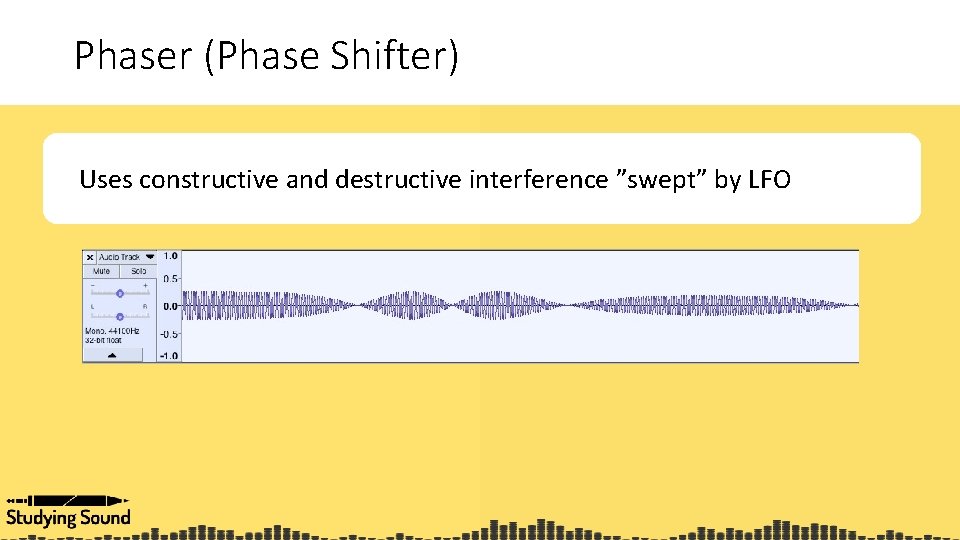
Phaser (Phase Shifter) Uses constructive and destructive interference ”swept” by LFO
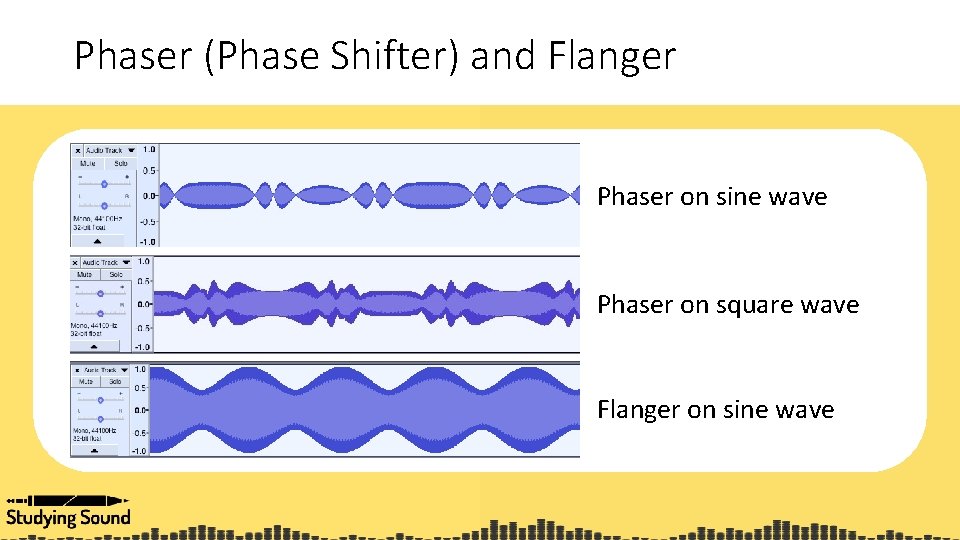
Phaser (Phase Shifter) and Flanger Phaser on sine wave Phaser on square wave Flanger on sine wave
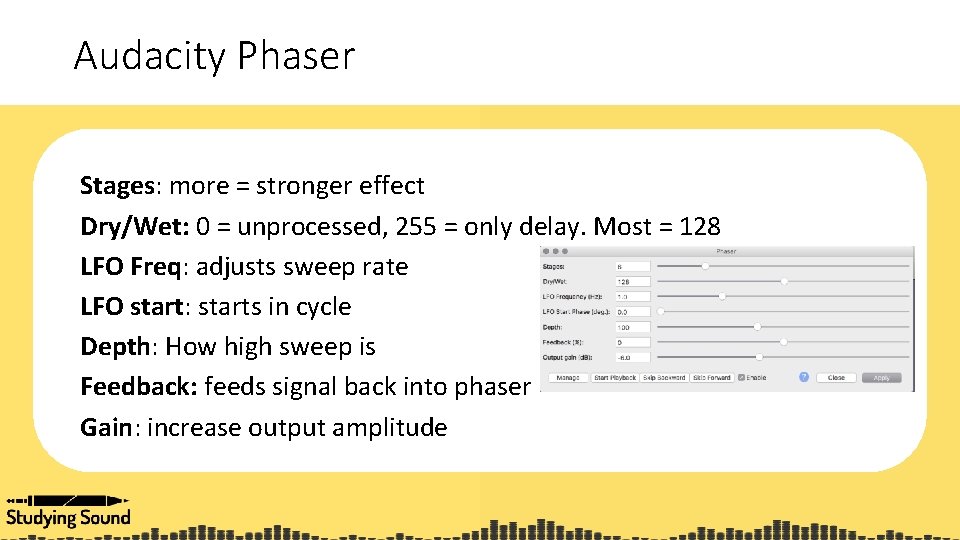
Audacity Phaser Stages: more = stronger effect Dry/Wet: 0 = unprocessed, 255 = only delay. Most = 128 LFO Freq: adjusts sweep rate LFO start: starts in cycle Depth: How high sweep is Feedback: feeds signal back into phaser Gain: increase output amplitude
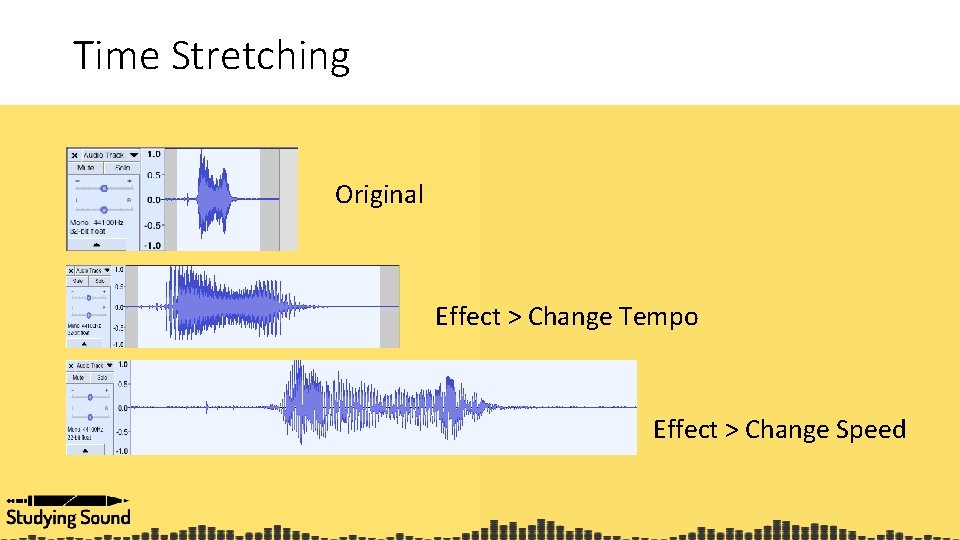
Time Stretching Original Effect > Change Tempo Effect > Change Speed
Worldizing– Walter Murch
- Slides: 22