
CHAPTER 4 SKELETAL MUSCLE Muscle Characteristics Excitability irritability
CHAPTER 4 SKELETAL MUSCLE

Muscle Characteristics • Excitability (irritability) Respond to a stimulus • Contractility Generate force (pulling or tensile) • Extensibility Stretch or lengthen • Elasticity Return to shape after force removed

Structure and Function of Skeletal Muscle • Contractile component: force production • Non-contractile component: non-force-producing; connective tissues important for muscle’s physiological and mechanical performance • Muscle proteins • Contractile proteins (actin, myosin) • Regulatory proteins (troponin, tropomyosin) • Structural proteins (titin, myomesin)
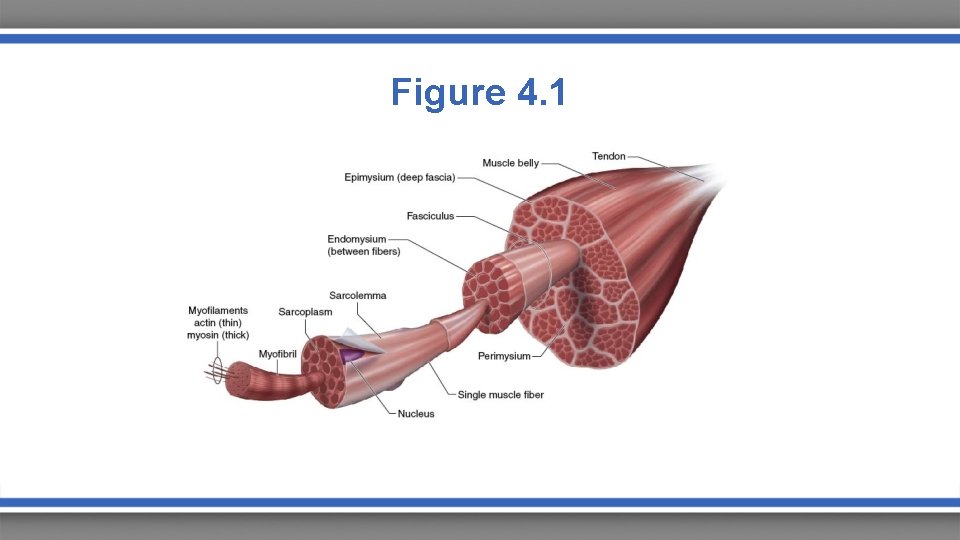
Figure 4. 1
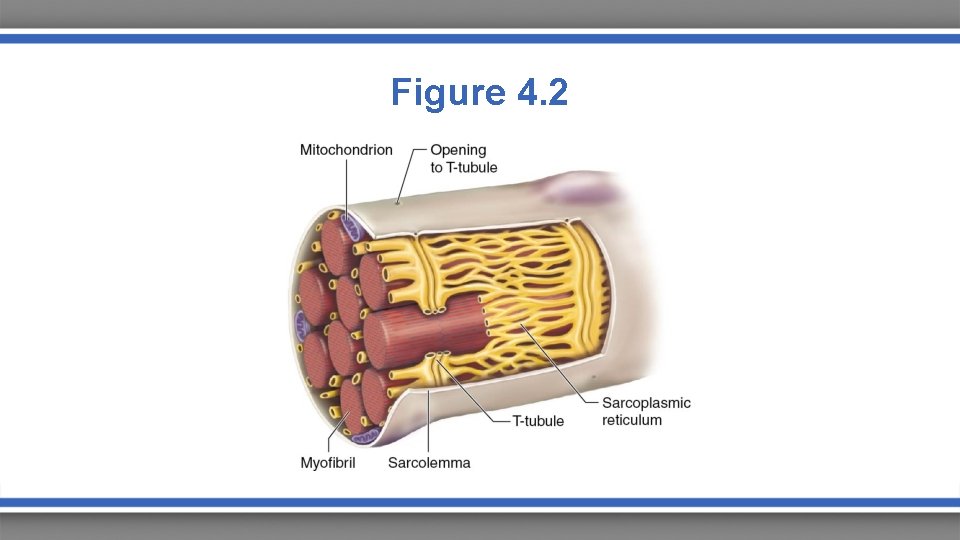
Figure 4. 2
Types of Muscle Action • Concentric: muscle active while shortening • Isometric: muscle active while maintaining constant length • Eccentric: muscle active while lengthening

Excitation–Contraction Coupling • The physiological steps that produce a muscle contraction • See figure 4. 4 and the steps outlined in the text
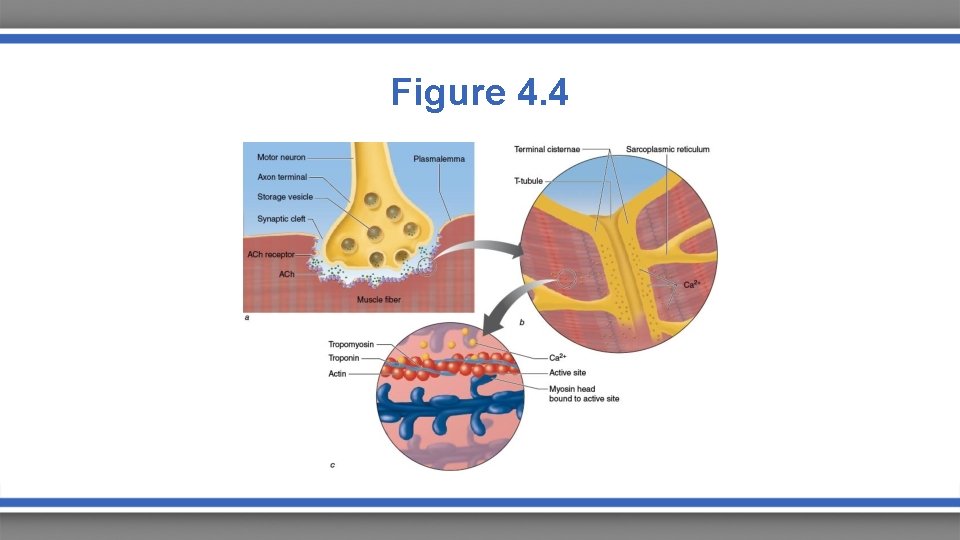
Figure 4. 4
Muscle Fiber Types • Type I: slow oxidative (SO) • Highest number of mitochondria, oxidative enzymes, myoglobin • Uses aerobic (i. e. , using oxygen) pathways • Type Iia: fast oxidative glycolytic (FOG) • Intermediate fibers, sharing characteristics of Type I and Type IIx • Uses anaerobic glycolysis (metabolizes sugar without using oxygen) • Type Iix: fast glycolytic (FG) • High glycogen and glycolytic enzyme content, myosin ATPase activity • Uses anaerobic glycolysis (metabolizes sugar without using oxygen) • See table 4. 1
Muscle Fiber Recruitment • Motor unit: lower motor neuron (LMN) and all of the muscle fibers it innervates • Henneman’s size principle: nervous system recruits muscle fibers in order, starting with the smallest, most aerobic, and fatigue resistant motor units, followed by the larger, least aerobic, and easily fatigued motor units
Muscle Fiber Arrangement • Fusiform (longitudinal) • Unipennate • Bipennate • Multipennate • Triangular (radiate)
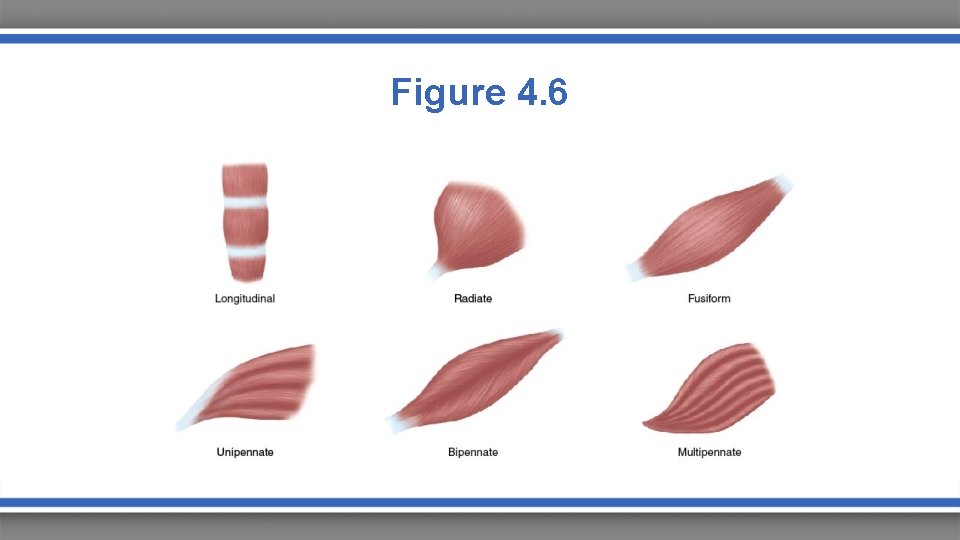
Figure 4. 6

Length–Tension and Force–Velocity Relationship • A muscle’s force-production capability is a function of its length. • The force-production capability depends on the contraction velocity.
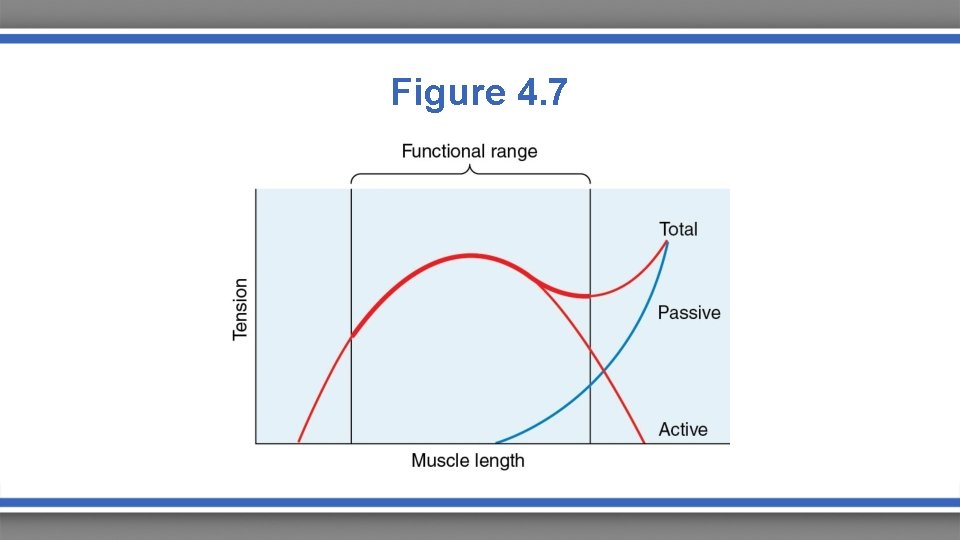
Figure 4. 7
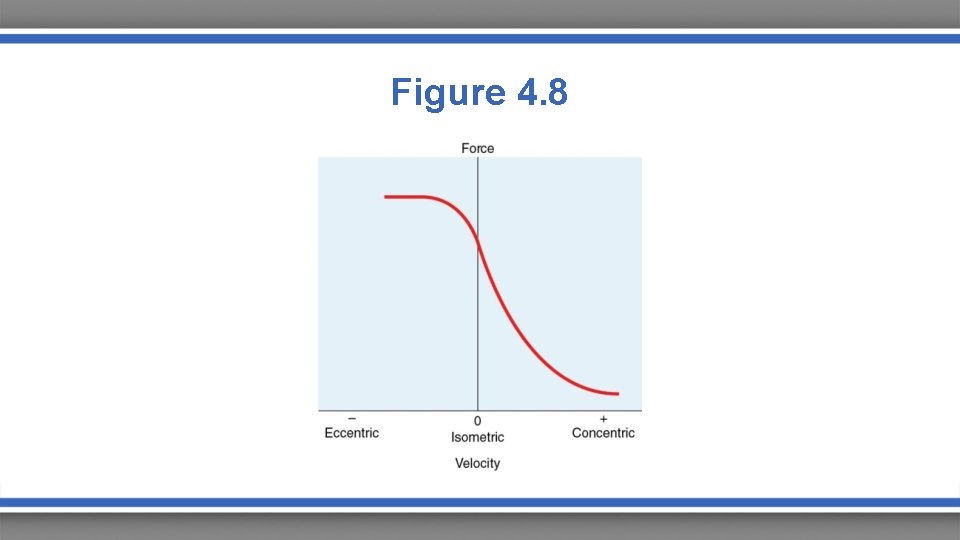
Figure 4. 8
Stretch–Shortening Cycle • An eccentric action immediately followed by concentric action of the same muscle • Results in enhanced force-production capability • Application → Plyometric exercises • Proposed mechanisms for stretch–shortening cycle • • Time force development Elastic energy Force potentiation Reflexes
Muscle Names Muscles are named based on their • Size • Shape • Location • Action • Attachment sites • Number of origins or muscle bellies • Fiber direction See table 4. 2 for a complete list of muscle terminology
Muscle Groups • Group names represent a collection of muscles rather than a single muscle • Examples: • Quadricep group: vastus medialis, vastus lateralis, vastus intermedius, rectus femoris • Hamstring group: semimembranosus, semitendinosus, biceps femoris • Rotator cuff: subscapularis, supraspinatus, infraspinatus, teres minor • Triceps surae: gastrocnemius, soleus
Muscles of Major Joints • See tables 4. 3 through 4. 7 for muscle actions throughout the body • Nonitalicized muscles are the prime movers • Italicized muscles are the assistant movers • See figures 4. 11 through 4. 15
Muscle Injury, Pain, and Soreness • Musculotendinous strain injury • • Osteotendinous junction Body of tendon Myotendinous junction Belly (substance) of muscle • Delayed onset muscle soreness (DOMS) • Diffuse muscle soreness appearing 48 -72 hours after intense exercise • Likely due to muscle damage following eccentric muscle action
- Slides: 20