
Chapter 4 Sections 1 3 MAIN CONCEPTS Motion
- Slides: 12
Chapter 4 Sections 1 -3 MAIN CONCEPTS • Motion along x axis is independent of motion along y axis. • This fact is a result of the properties of vectors and Newton’s laws (coming soon). • Motion between the x and y axes is connected by the time variable, t.
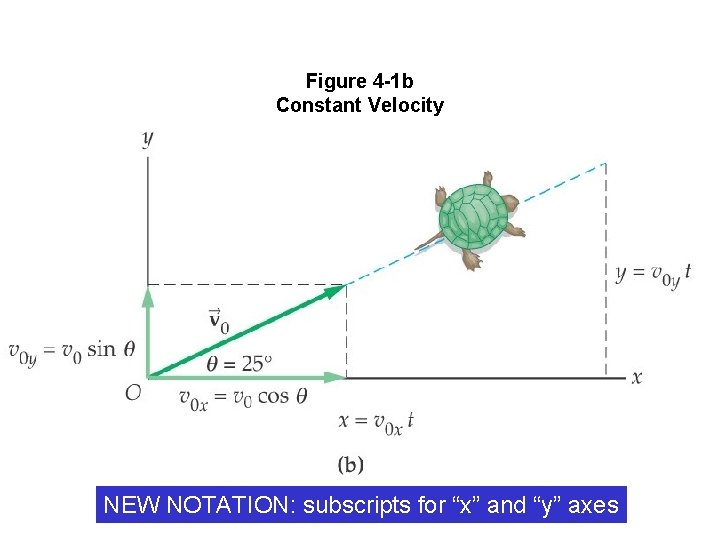
Figure 4 -1 b Constant Velocity NEW NOTATION: subscripts for “x” and “y” axes
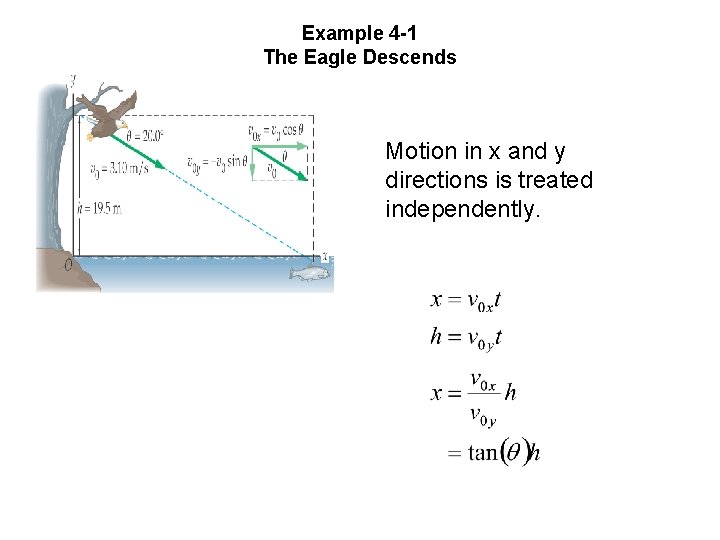
Example 4 -1 The Eagle Descends Motion in x and y directions is treated independently.
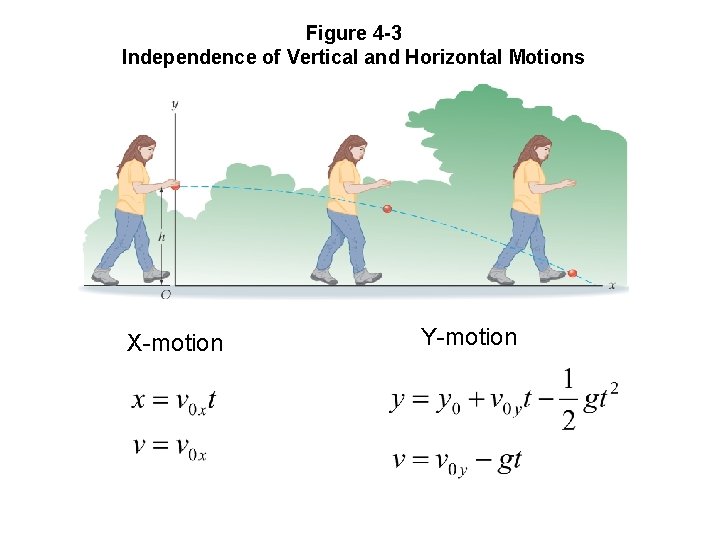
Figure 4 -3 Independence of Vertical and Horizontal Motions X-motion Y-motion
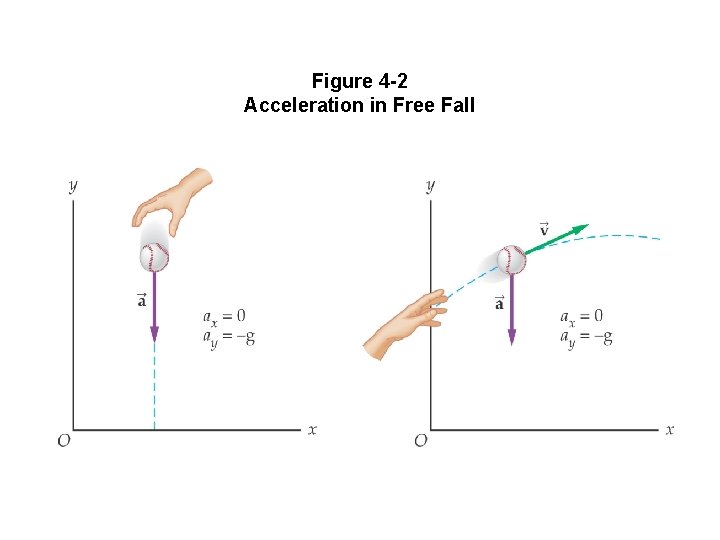
Figure 4 -2 Acceleration in Free Fall
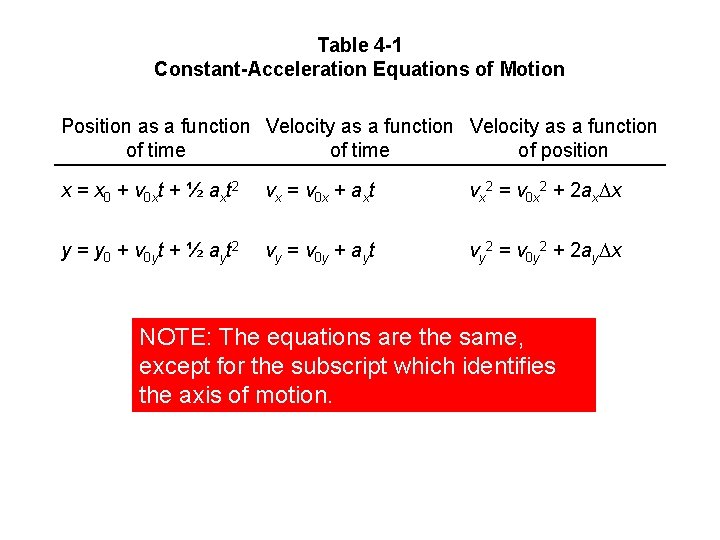
Table 4 -1 Constant-Acceleration Equations of Motion Position as a function Velocity as a function of time of position x = x 0 + v 0 xt + ½ axt 2 vx = v 0 x + axt vx 2 = v 0 x 2 + 2 ax. Dx y = y 0 + v 0 yt + ½ ayt 2 vy = v 0 y + ayt vy 2 = v 0 y 2 + 2 ay. Dx NOTE: The equations are the same, except for the subscript which identifies the axis of motion.
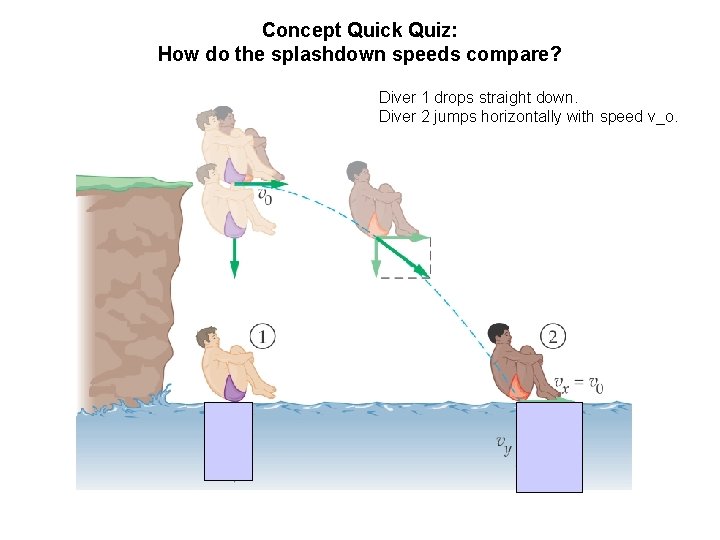
Concept Quick Quiz: How do the splashdown speeds compare? Diver 1 drops straight down. Diver 2 jumps horizontally with speed v_o.
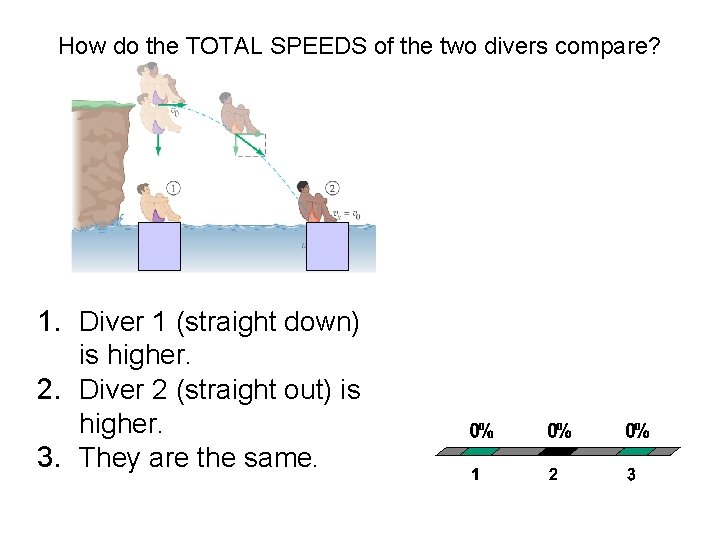
How do the TOTAL SPEEDS of the two divers compare? 1. Diver 1 (straight down) is higher. 2. Diver 2 (straight out) is higher. 3. They are the same.
Physlets • I 3. 4 showing the independence of x and y motions
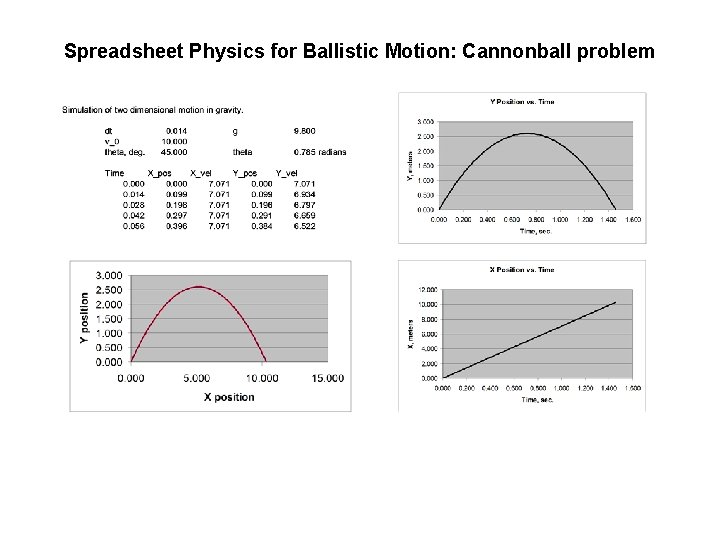
Spreadsheet Physics for Ballistic Motion: Cannonball problem
Physlets • Exploration 3. 5, illustrating projectile motion
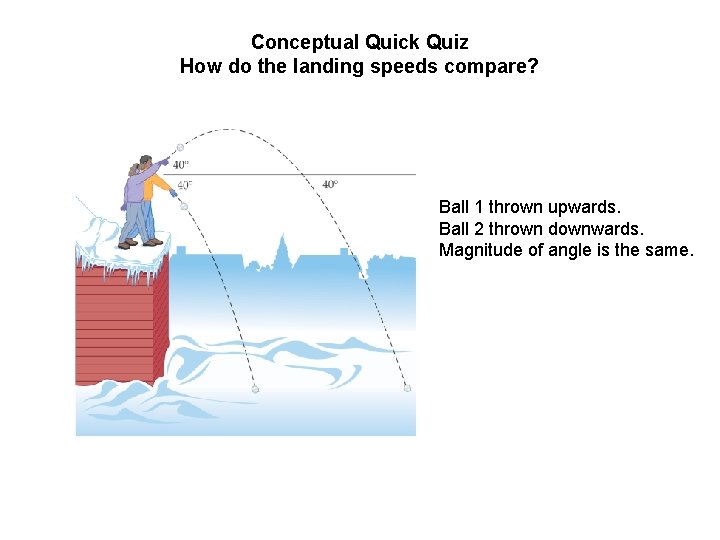
Conceptual Quick Quiz How do the landing speeds compare? Ball 1 thrown upwards. Ball 2 thrown downwards. Magnitude of angle is the same.