
Chapter 4 Section 12 Changes in Demand Demand








- Slides: 12
Chapter 4 Section 1/2 Changes in Demand
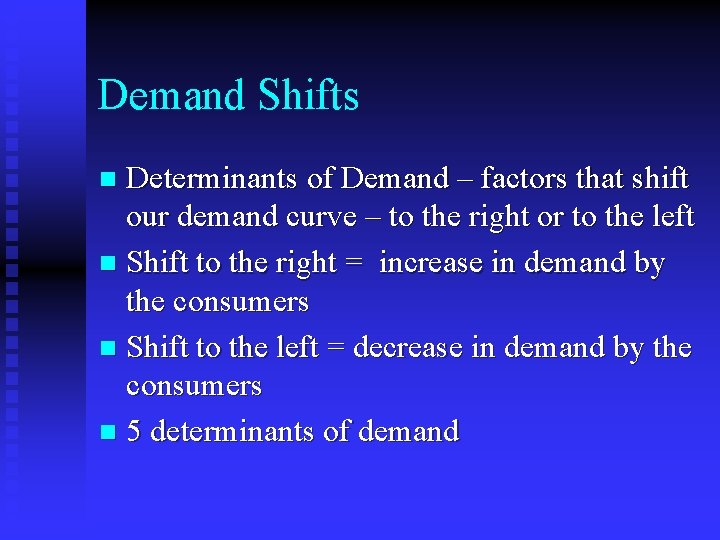
Demand Shifts Determinants of Demand – factors that shift our demand curve – to the right or to the left n Shift to the right = increase in demand by the consumers n Shift to the left = decrease in demand by the consumers n 5 determinants of demand n
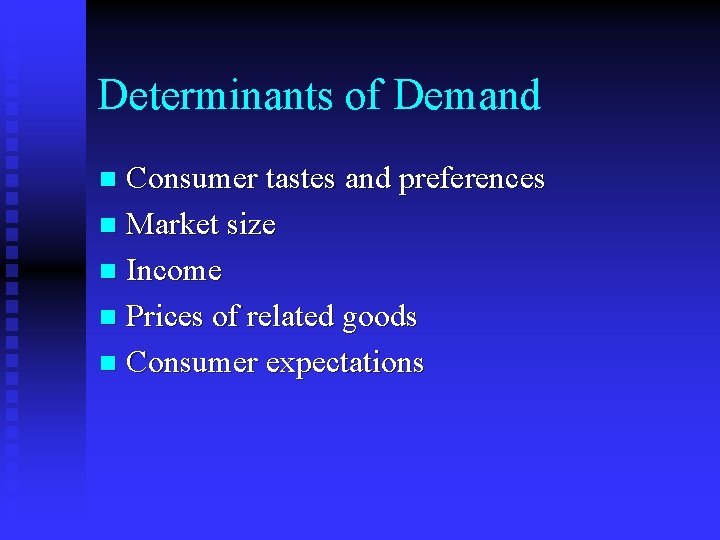
Determinants of Demand Consumer tastes and preferences n Market size n Income n Prices of related goods n Consumer expectations n
Substitute Goods n Goods that can be used to replace the purchase of similar goods when prices rise
Complementary Goods n n Goods that are commonly used with other goods. Example – peanut butter and jelly
Elasticity of Demand Chapter 4 Section 2
Elasticity of Demand The degree to which changes in a goods price affect the quantity demanded by consumers. n The demand for a product can be either inelastic or elastic. n
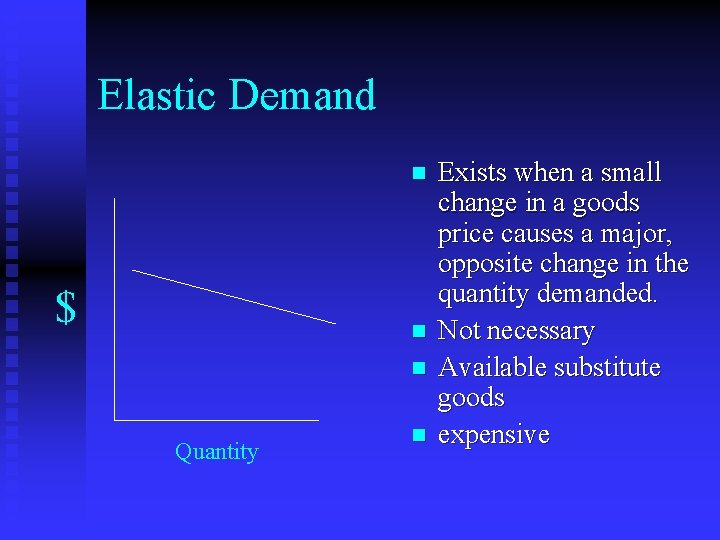
Elastic Demand n $ n n Quantity n Exists when a small change in a goods price causes a major, opposite change in the quantity demanded. Not necessary Available substitute goods expensive
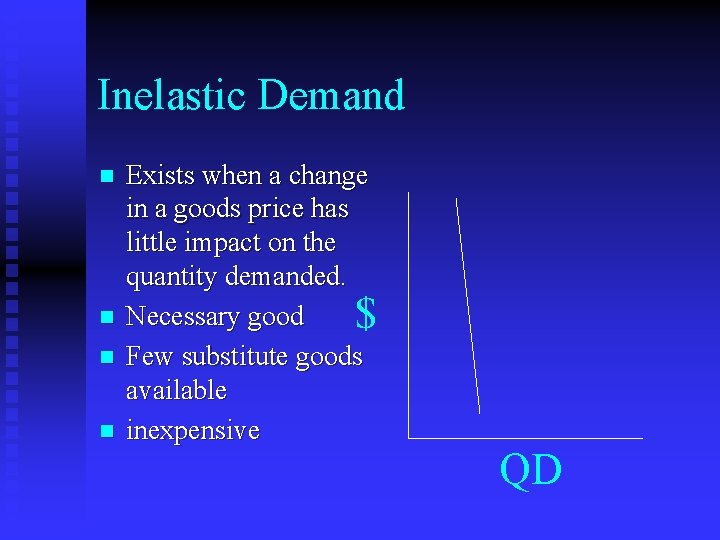
Inelastic Demand n n Exists when a change in a goods price has little impact on the quantity demanded. Necessary good $ Few substitute goods available inexpensive QD
Measuring Elasticity Easy way to measure the elasticity of an item is through the total revenue test. n Total Revenue – By measuring the total revenue of a business before and after changes in the price, you can determine the elasticity of demand for that product. n
Measuring Elasticity n A drop in a business’s total revenue because of a price increase indicates elastic demand for that product. A rise in a business’s total revenue because of a price increase indicates inelastic demand for that product. Percentage change in QD Percentage change in Price
Maximize Total Revenue n Measuring the varying elasticity of demand for a product allows owners to maximize their revenue.