
Chapter 4 Scale Factors and Similarity Key Terms
- Slides: 10
Chapter 4 – Scale Factors and Similarity Key Terms • Polygon – a two-dimensional closed figure made of three or more line segments
4. 4 Similar Polygons Learning Outcome: To be able to identify, draw, and explain similar polygons and solve problems using the properties of similar polygons
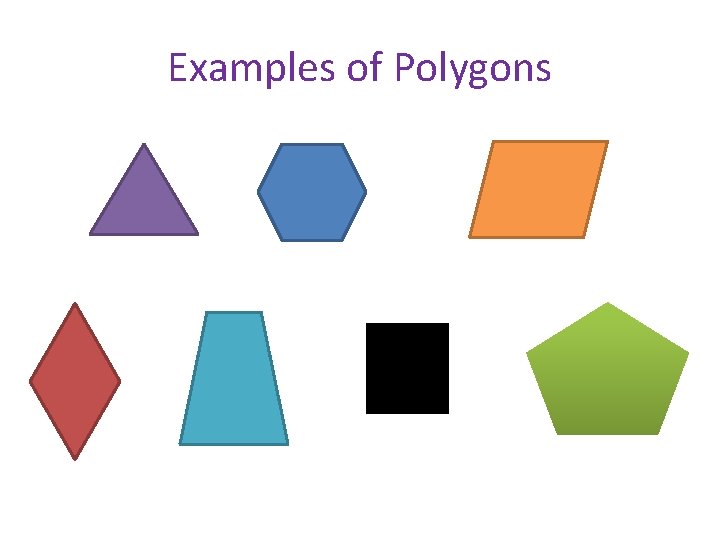
Examples of Polygons
Similar Polygons • Similar polygons which have been multiplied by a scale factor show an enlargement or reduction. Therefore, similar polygons have: • Corresponding Angles - Equal internal angles • Corresponding Side Lengths - Proportional side lengths (because of scale factor) • But unlike Similar Triangles BOTH need to be true for the polygons to be similar.
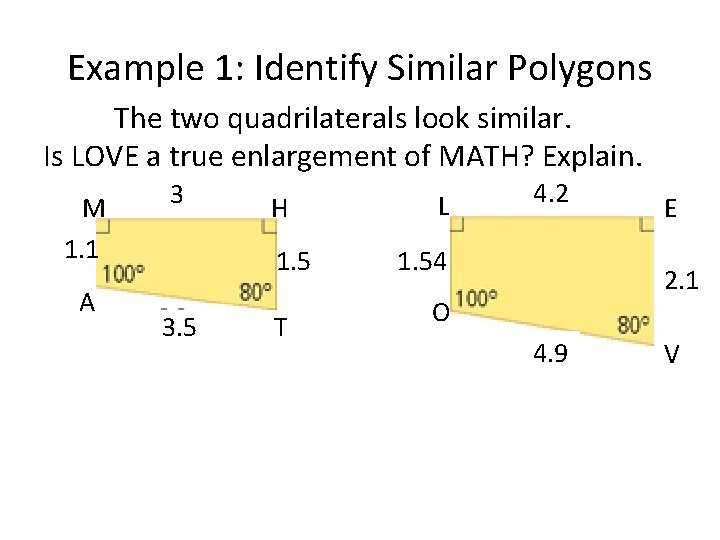
Example 1: Identify Similar Polygons The two quadrilaterals look similar. Is LOVE a true enlargement of MATH? Explain. M 1. 1 A 3 H 1. 5 3. 5 T L 4. 2 1. 54 E 2. 1 O 4. 9 V
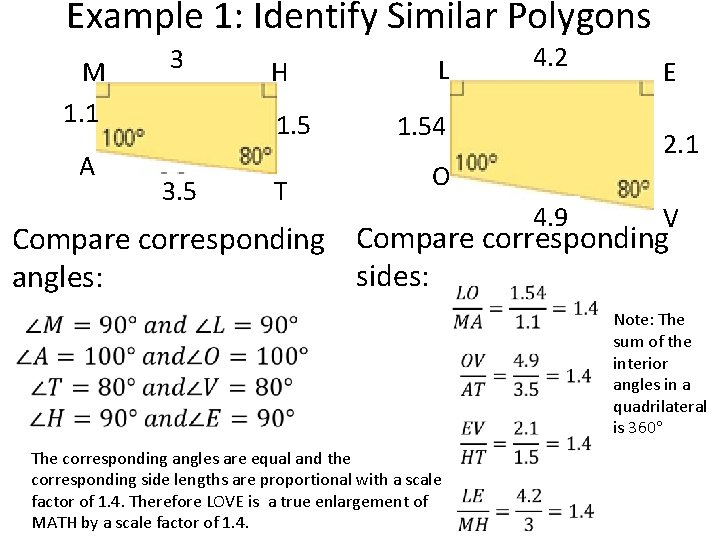
Example 1: Identify Similar Polygons M 1. 1 A 3 H 1. 5 3. 5 T L 4. 2 1. 54 E 2. 1 O 4. 9 V Compare corresponding sides: angles: Note: The sum of the interior angles in a quadrilateral is 360 The corresponding angles are equal and the corresponding side lengths are proportional with a scale factor of 1. 4. Therefore LOVE is a true enlargement of MATH by a scale factor of 1. 4.
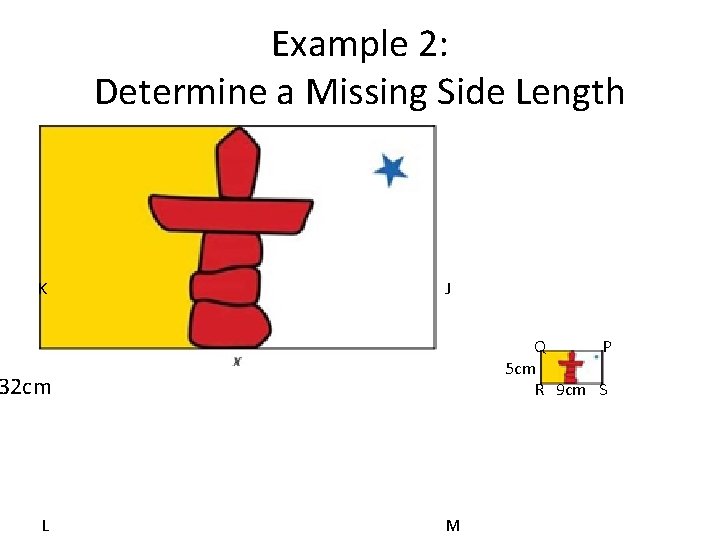
Example 2: Determine a Missing Side Length K J Q P 5 cm R 9 cm S 32 cm L M
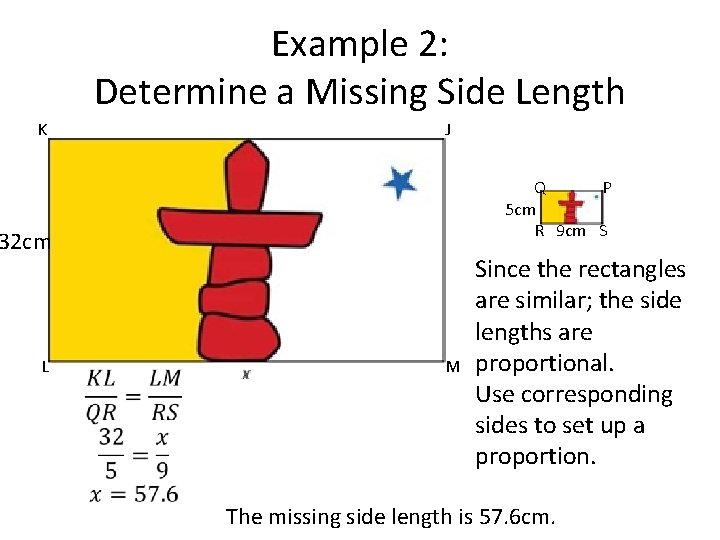
Example 2: Determine a Missing Side Length K J Q P 5 cm R 9 cm S 32 cm L M Since the rectangles are similar; the side lengths are proportional. Use corresponding sides to set up a proportion. The missing side length is 57. 6 cm.
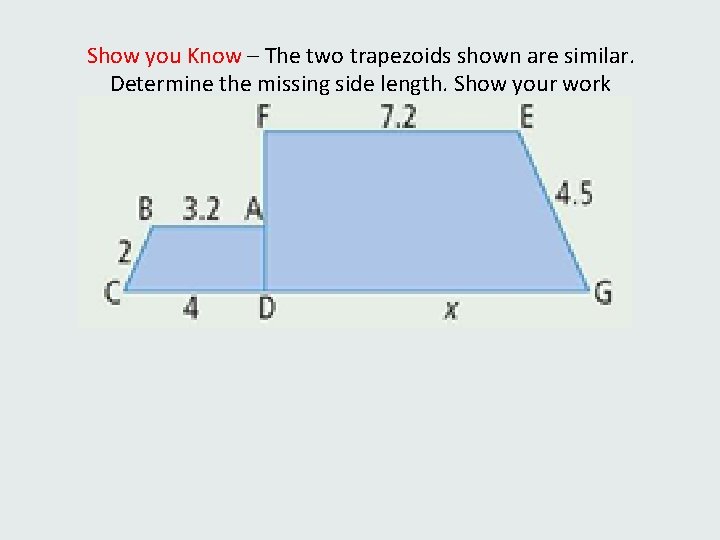
Show you Know – The two trapezoids shown are similar. Determine the missing side length. Show your work
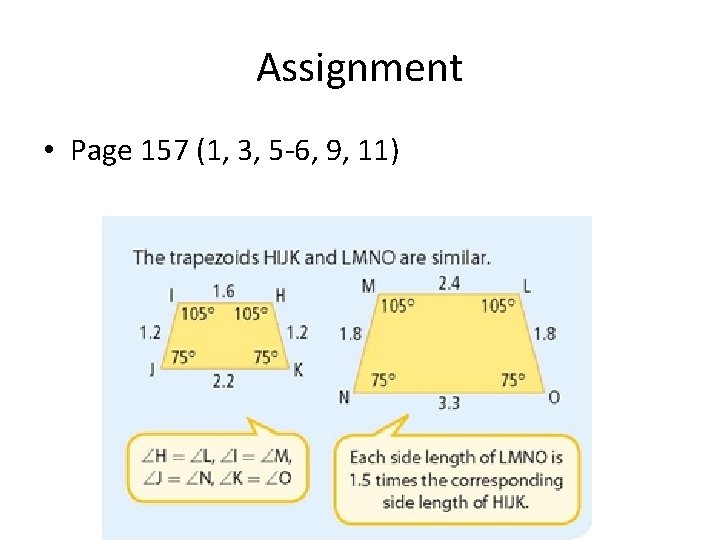
Assignment • Page 157 (1, 3, 5 -6, 9, 11)