
CHAPTER 4 RULES AND REGULATIONS FOR SAFE DRIVING
- Slides: 44
CHAPTER 4 –RULES AND REGULATIONS FOR SAFE DRIVING Period 4
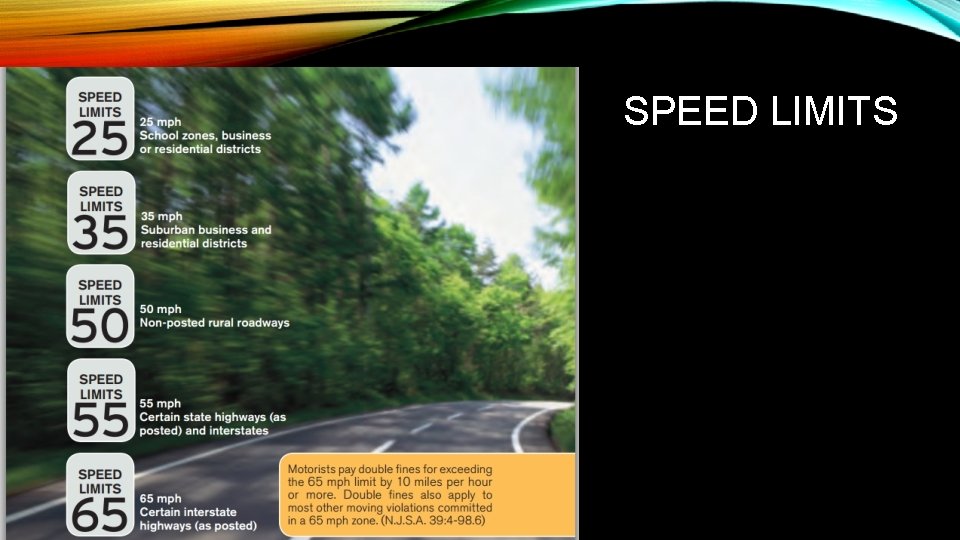
SPEED LIMITS
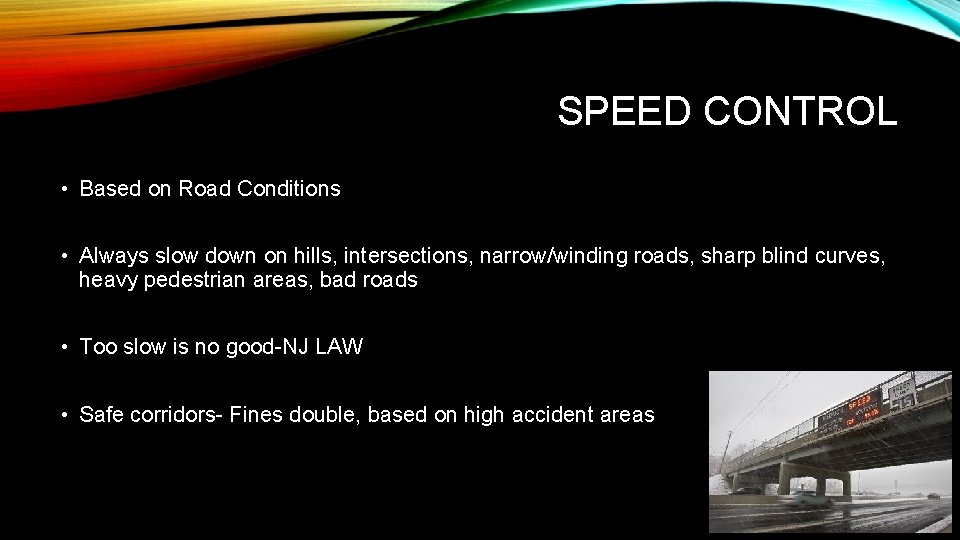
SPEED CONTROL • Based on Road Conditions • Always slow down on hills, intersections, narrow/winding roads, sharp blind curves, heavy pedestrian areas, bad roads • Too slow is no good-NJ LAW • Safe corridors- Fines double, based on high accident areas
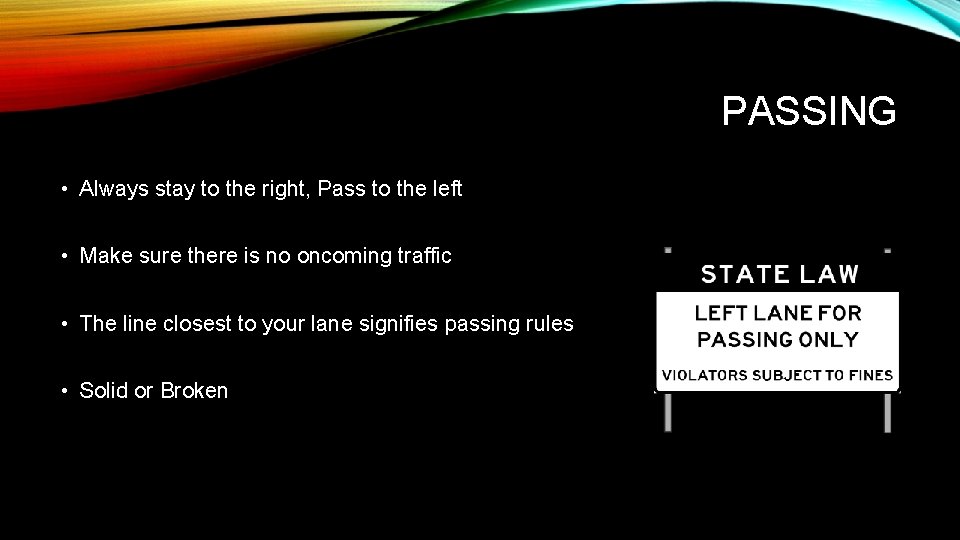
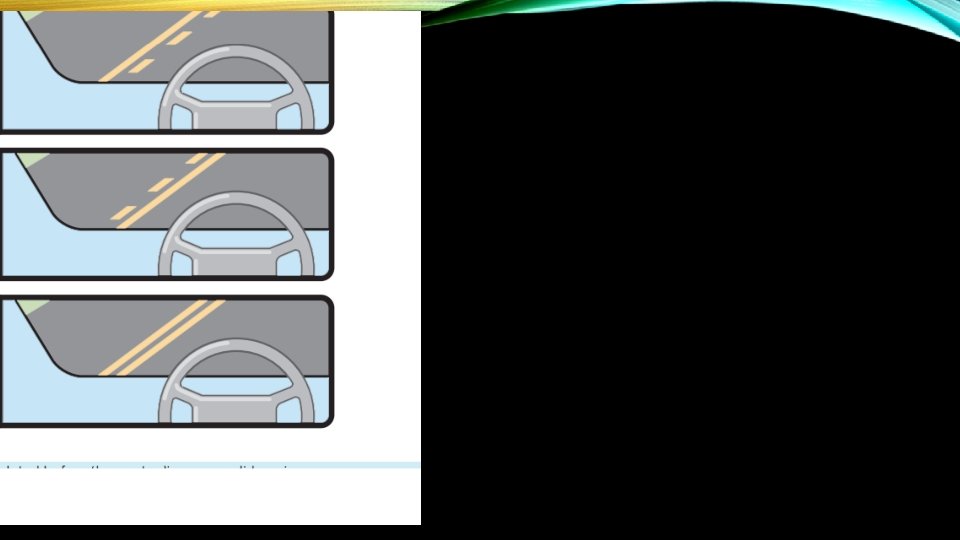
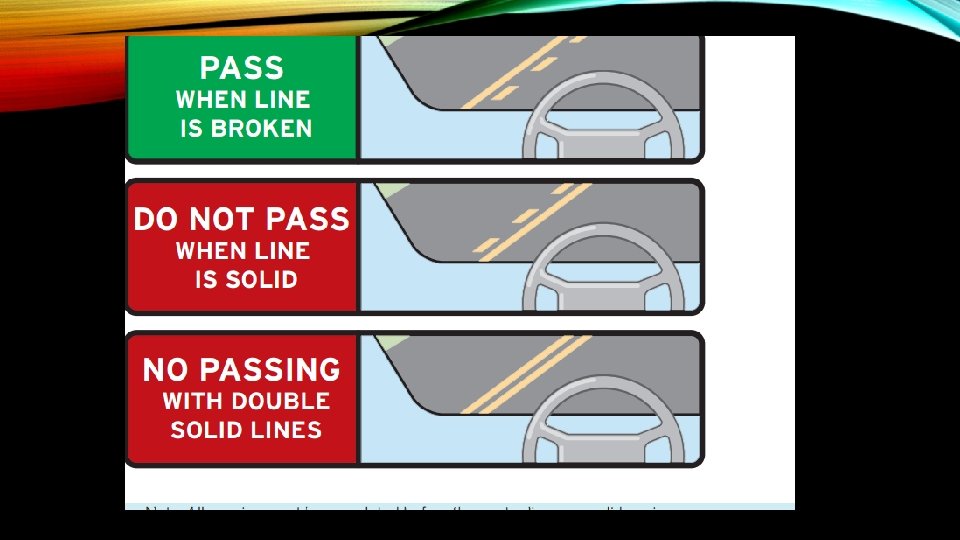
PASSING • Always stay to the right, Pass to the left • Make sure there is no oncoming traffic • The line closest to your lane signifies passing rules • Solid or Broken
PASSING CONTINUED • Can only pass on the right when it is a multi-lane highway • Never pass on right in shoulder, illegal in NJ • Never pass on hill or corner, intersection, railroad crossing, narrow bridges & tunnels, signage, behind a vehicle that has stopped for pedestrians
KEEP TO THE RIGHT • Must stay as close to the right shoulder as possible • Must only pass on left • Multi-lane highways must be in the furthermost right lane • Once you pass get back to the right
YIELDING: RIGHT OF WAY • Emergency Vehicles- Police, EMT, Fire • Buses- Re-entering flow of traffic • Postal Vehicles- Re-entering flow of traffic • Motorized or Mobility-assistance devices: In crosswalk or crossing the road • Other vehicles in an intersection
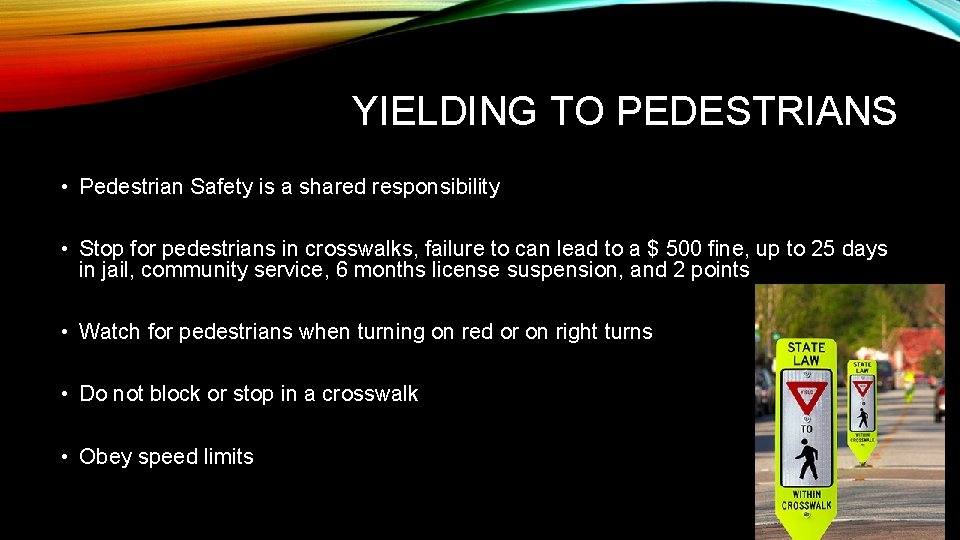
YIELDING TO PEDESTRIANS • Pedestrian Safety is a shared responsibility • Stop for pedestrians in crosswalks, failure to can lead to a $ 500 fine, up to 25 days in jail, community service, 6 months license suspension, and 2 points • Watch for pedestrians when turning on red or on right turns • Do not block or stop in a crosswalk • Obey speed limits
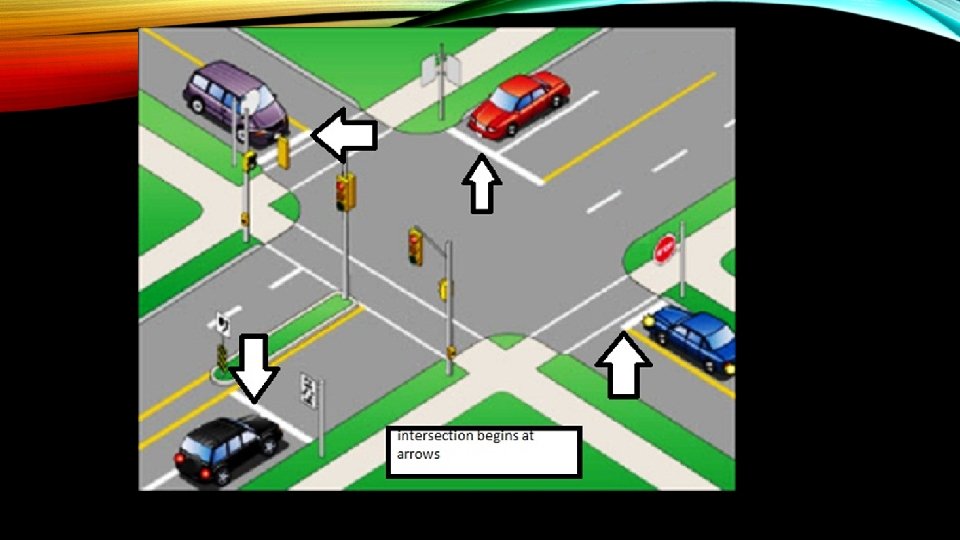
INTERSECTIONS • Where two or more roads cross or merge at angles • Most collisions occur in an intersection • A single solid white line means that you need to stop for a traffic light or stop sign
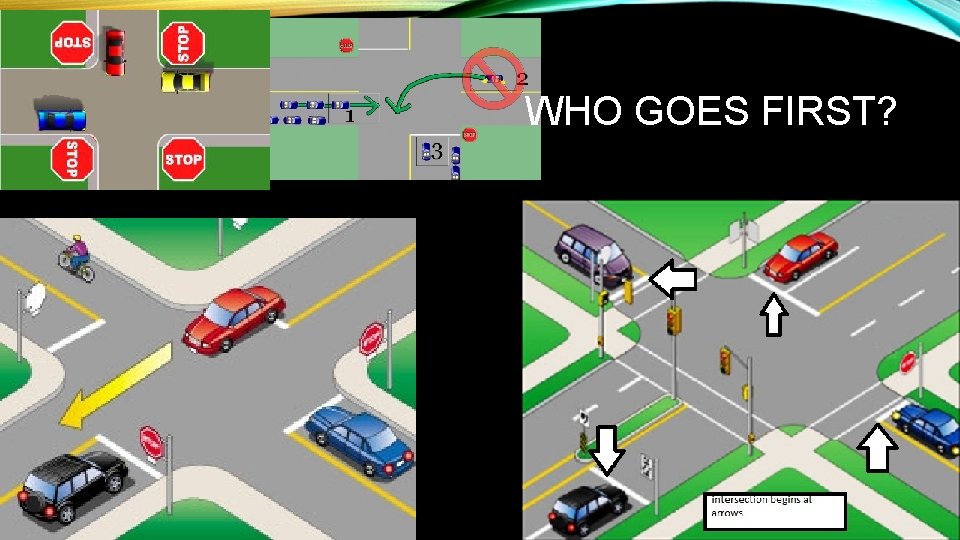
CONTROLLED INTERSECTIONS • Considered controlled by traffic lights, stop signs, or law enforcement • First person to arrive has right away • If both arrive at the same time=person to right has the right of way • Always yield to oncoming traffic when making left turn • Must stop within 5 feet away from the nearest crosswalk/white line
WHO GOES FIRST?
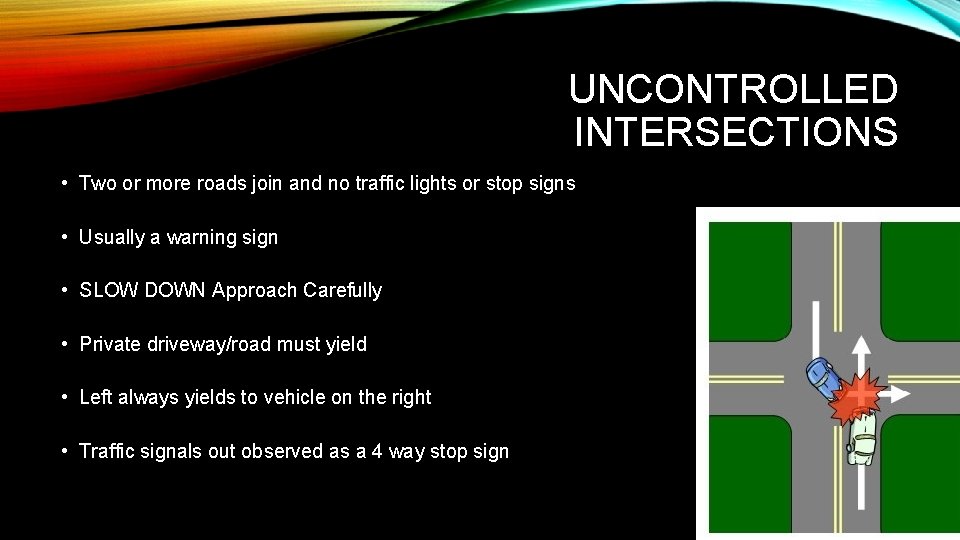
UNCONTROLLED INTERSECTIONS • Two or more roads join and no traffic lights or stop signs • Usually a warning sign • SLOW DOWN Approach Carefully • Private driveway/road must yield • Left always yields to vehicle on the right • Traffic signals out observed as a 4 way stop sign
TRAFFIC CIRCLES • Blind areas are common in rural areas…be sure to check before proceeding • Traffic Circles-Have no set rules for entering, driving in, and exiting…follow signage • Traffic circles traffic patterns are usually dictated by the major road that enters the circle- If unsure the car on the left yields to the car on the right
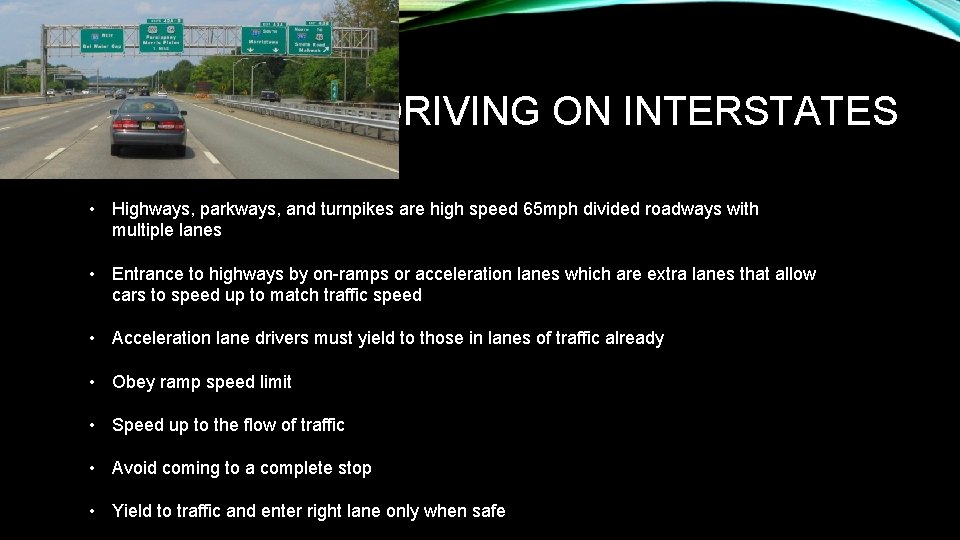
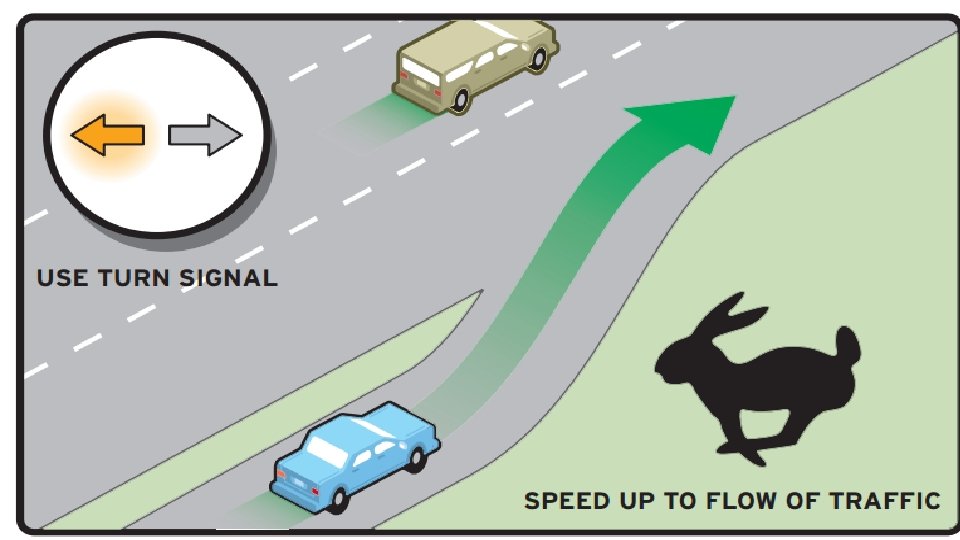
DRIVING ON INTERSTATES • Highways, parkways, and turnpikes are high speed 65 mph divided roadways with multiple lanes • Entrance to highways by on-ramps or acceleration lanes which are extra lanes that allow cars to speed up to match traffic speed • Acceleration lane drivers must yield to those in lanes of traffic already • Obey ramp speed limit • Speed up to the flow of traffic • Avoid coming to a complete stop • Yield to traffic and enter right lane only when safe
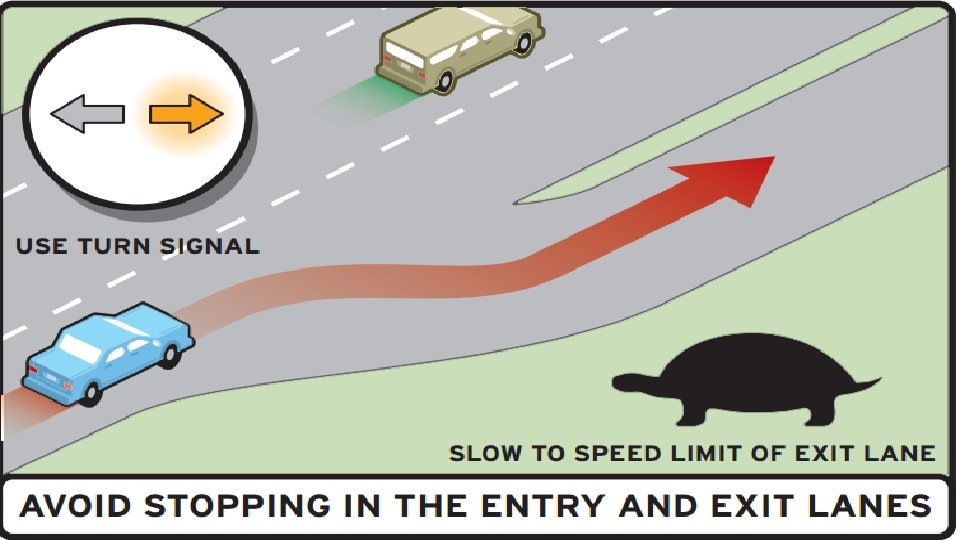
EXITING INTERSTATES • Exit ramps or deceleration lanes are used to exit an interstate • Exit only lanes, signage will designate • Begin to slow down when entering lane/Obey speed limit in deceleration lane • Check signage for proper lane for exit, left or right
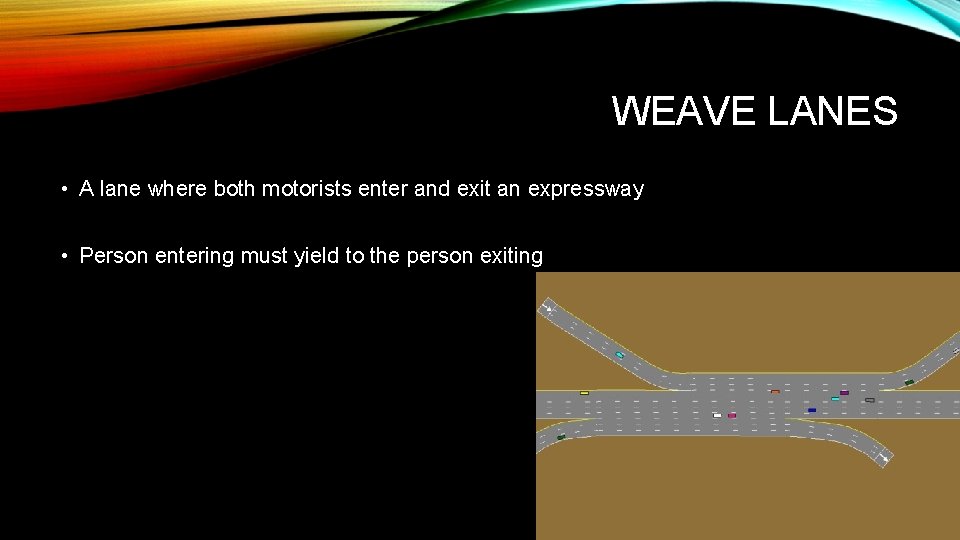
WEAVE LANES • A lane where both motorists enter and exit an expressway • Person entering must yield to the person exiting
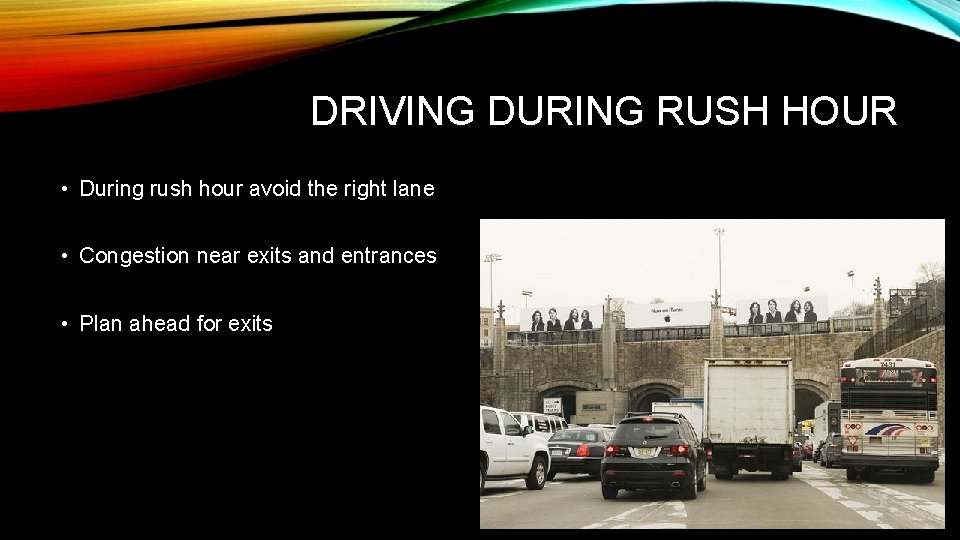
DRIVING DURING RUSH HOUR • During rush hour avoid the right lane • Congestion near exits and entrances • Plan ahead for exits
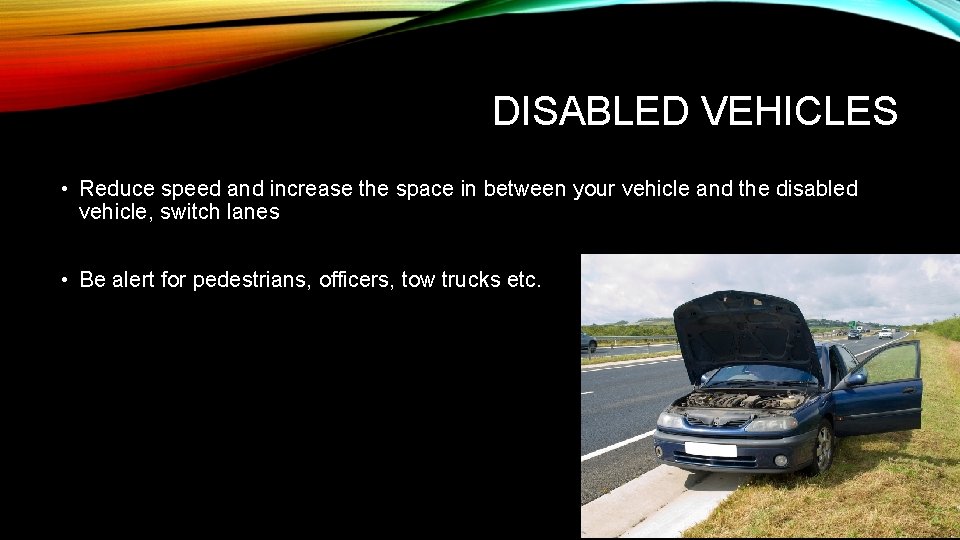
DISABLED VEHICLES • Reduce speed and increase the space in between your vehicle and the disabled vehicle, switch lanes • Be alert for pedestrians, officers, tow trucks etc.
IF YOUR CAR BECOMES DISABLED • Pull as far off the road as possible either onto the median or shoulder • Turn on hazard/emergency flashers • Stay in the vehicle and keep the doors locked • Call for help • Do not get into a stranger’s car
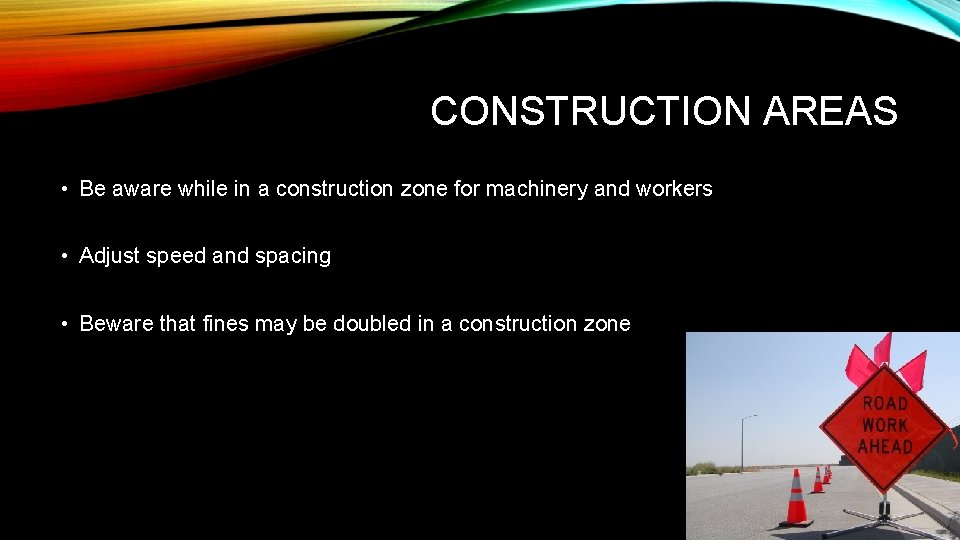
CONSTRUCTION AREAS • Be aware while in a construction zone for machinery and workers • Adjust speed and spacing • Beware that fines may be doubled in a construction zone
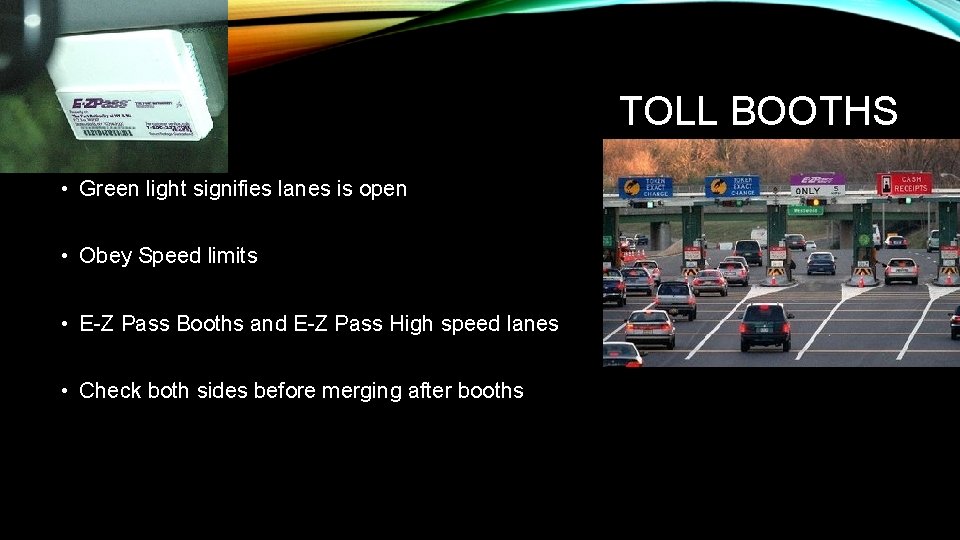
TOLL BOOTHS • Green light signifies lanes is open • Obey Speed limits • E-Z Pass Booths and E-Z Pass High speed lanes • Check both sides before merging after booths
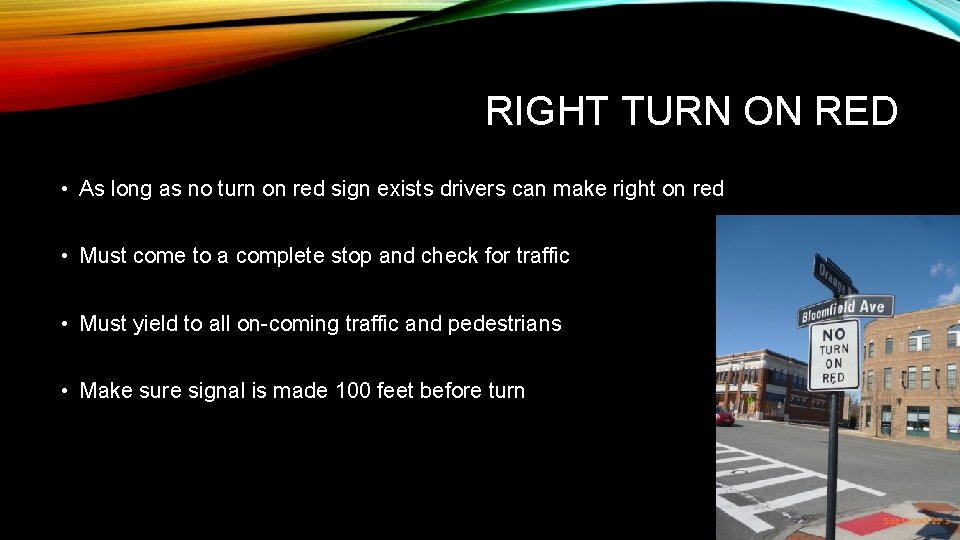
RIGHT TURN ON RED • As long as no turn on red sign exists drivers can make right on red • Must come to a complete stop and check for traffic • Must yield to all on-coming traffic and pedestrians • Make sure signal is made 100 feet before turn
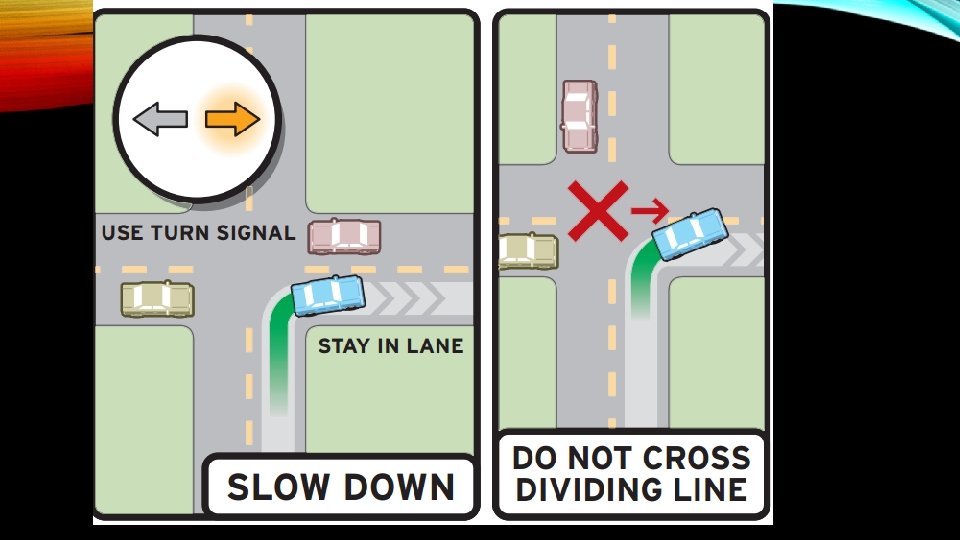
RIGHT TURNS • Slow down as you approach turn • Blinker on 100 feet before turn • Stay close to the corner/curb as possible • Do not swing into other lane, stay in the right lane
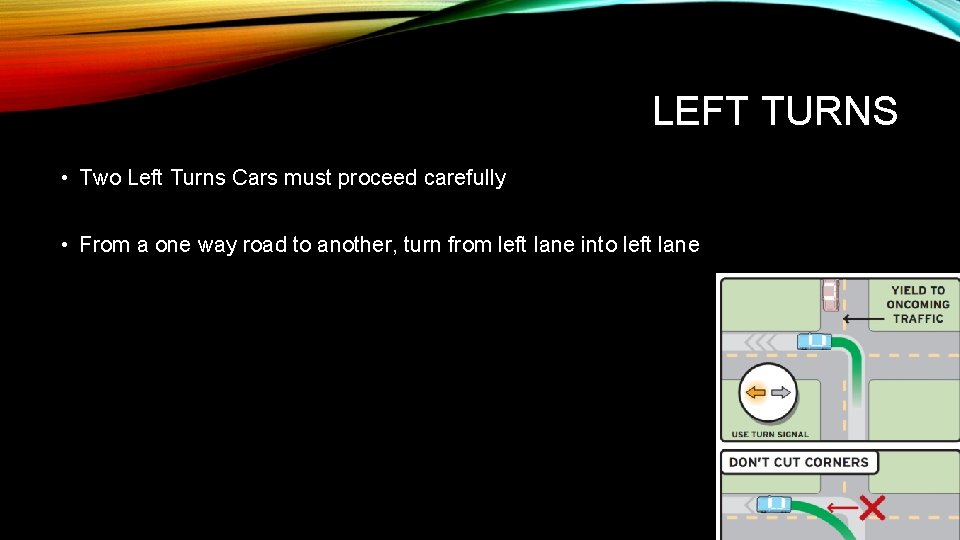
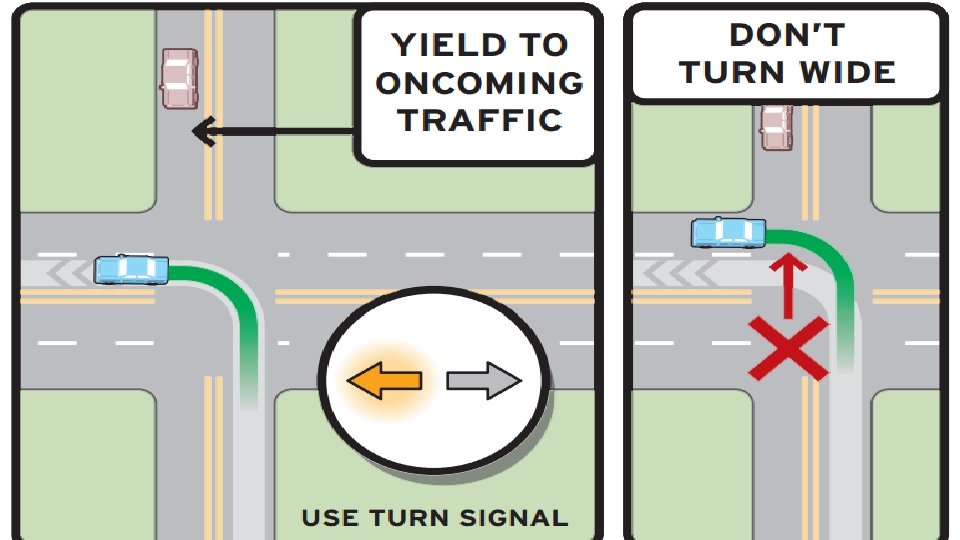
LEFT TURNS • Two Left Turns Cars must proceed carefully • From a one way road to another, turn from left lane into left lane
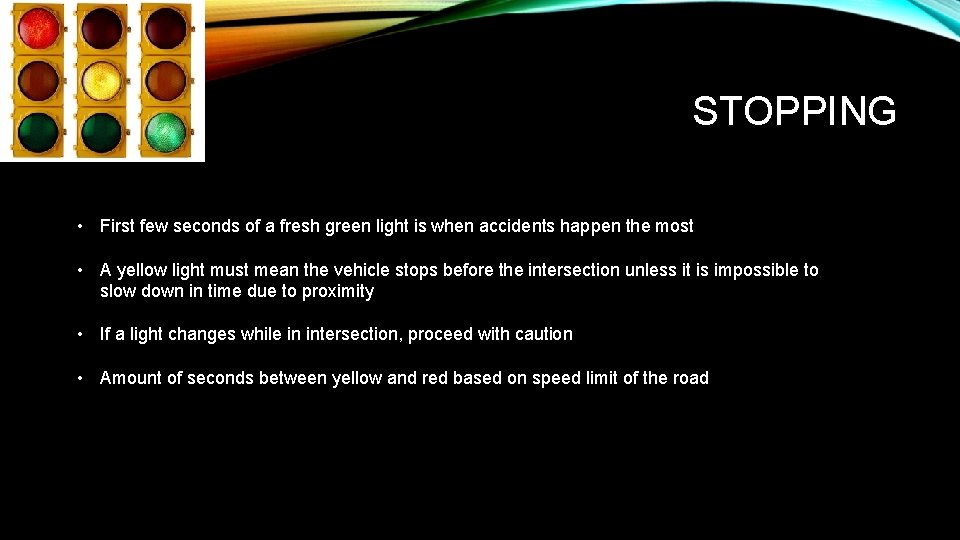
STOPPING • First few seconds of a fresh green light is when accidents happen the most • A yellow light must mean the vehicle stops before the intersection unless it is impossible to slow down in time due to proximity • If a light changes while in intersection, proceed with caution • Amount of seconds between yellow and red based on speed limit of the road
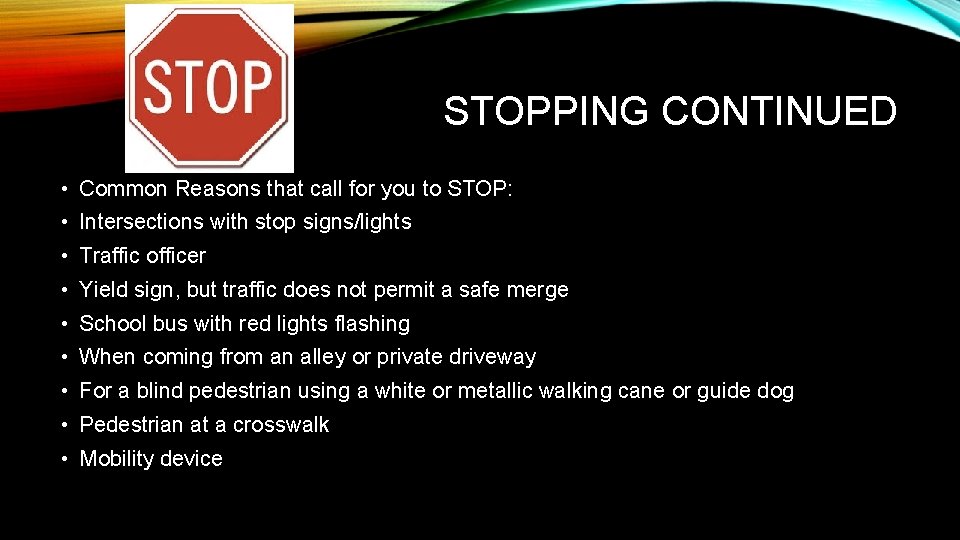
STOPPING CONTINUED • Common Reasons that call for you to STOP: • Intersections with stop signs/lights • Traffic officer • Yield sign, but traffic does not permit a safe merge • School bus with red lights flashing • When coming from an alley or private driveway • For a blind pedestrian using a white or metallic walking cane or guide dog • Pedestrian at a crosswalk • Mobility device
RAILROAD CROSSINGS • All crossings have warning systems-Lights, Buzzers, Gates, Bells, Etc. • A motorist must stop at 15 feet away from the crossing • Never attempt to cross with signals still active • Certain vehicles such as school buses and vehicles carrying hazardous materials must always stop regardless
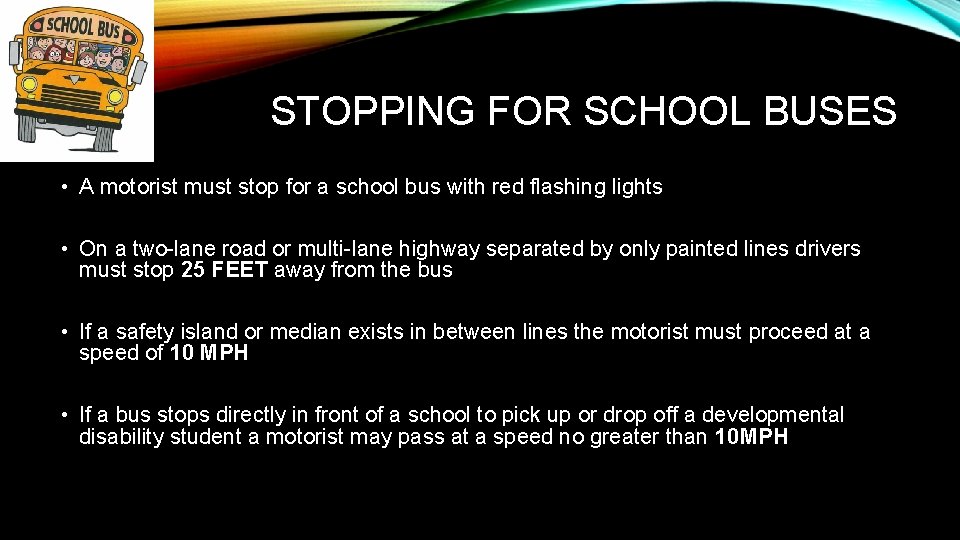
STOPPING FOR SCHOOL BUSES • A motorist must stop for a school bus with red flashing lights • On a two-lane road or multi-lane highway separated by only painted lines drivers must stop 25 FEET away from the bus • If a safety island or median exists in between lines the motorist must proceed at a speed of 10 MPH • If a bus stops directly in front of a school to pick up or drop off a developmental disability student a motorist may pass at a speed no greater than 10 MPH
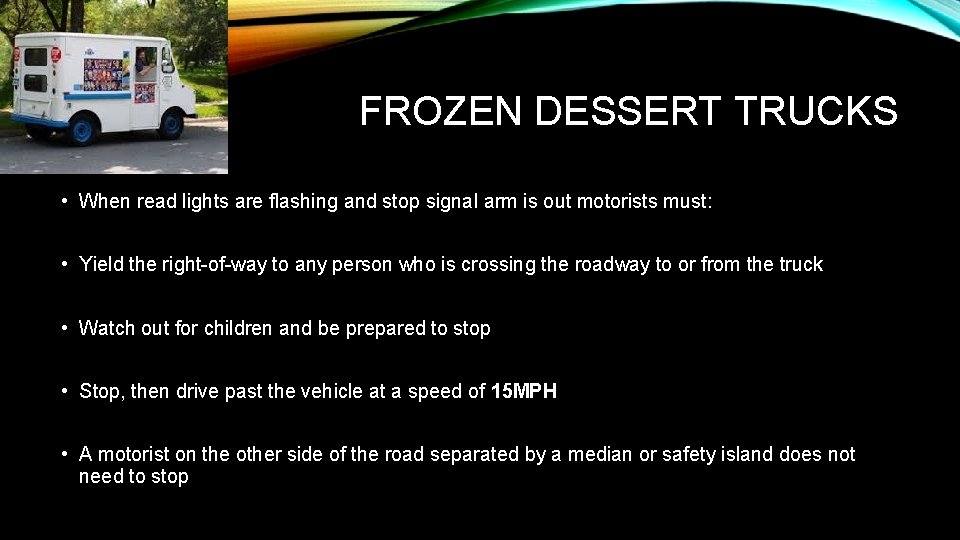
FROZEN DESSERT TRUCKS • When read lights are flashing and stop signal arm is out motorists must: • Yield the right-of-way to any person who is crossing the roadway to or from the truck • Watch out for children and be prepared to stop • Stop, then drive past the vehicle at a speed of 15 MPH • A motorist on the other side of the road separated by a median or safety island does not need to stop
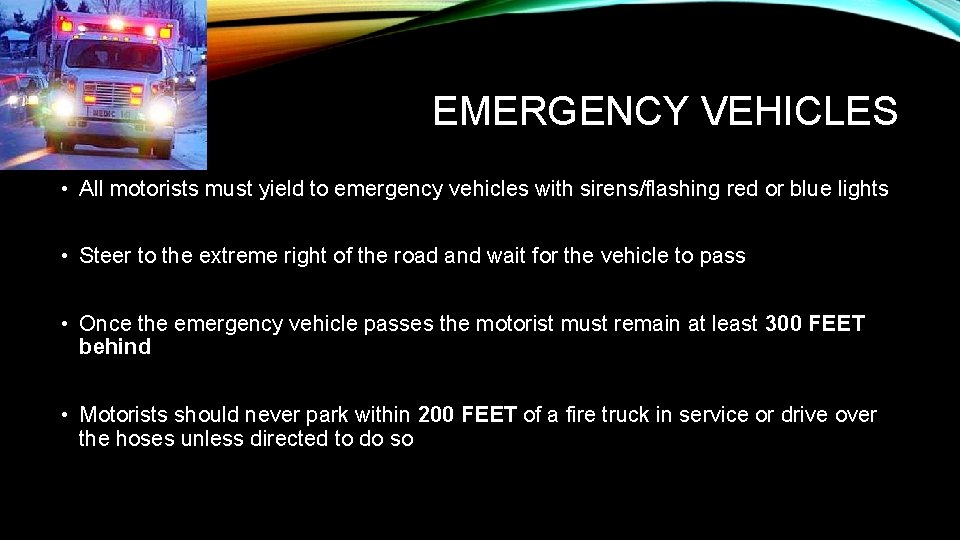
EMERGENCY VEHICLES • All motorists must yield to emergency vehicles with sirens/flashing red or blue lights • Steer to the extreme right of the road and wait for the vehicle to pass • Once the emergency vehicle passes the motorist must remain at least 300 FEET behind • Motorists should never park within 200 FEET of a fire truck in service or drive over the hoses unless directed to do so
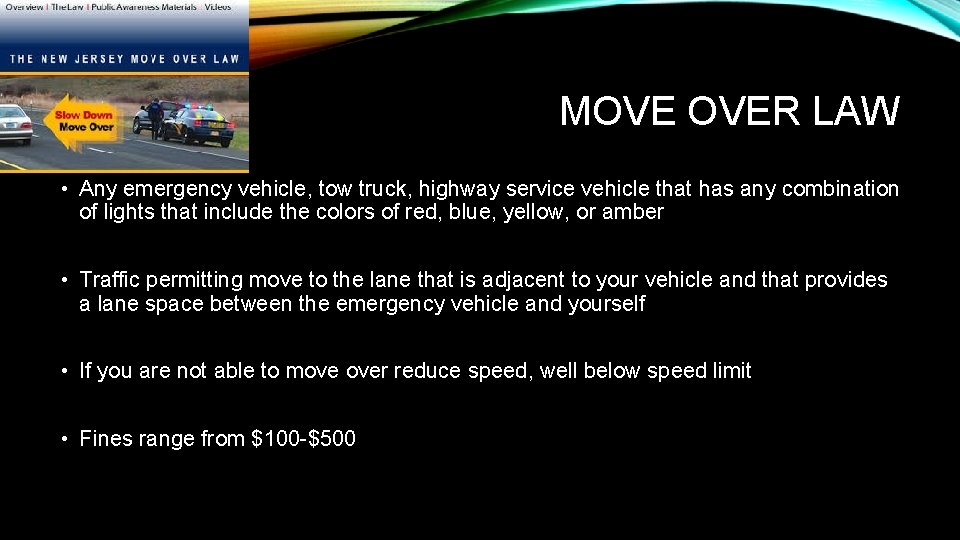
MOVE OVER LAW • Any emergency vehicle, tow truck, highway service vehicle that has any combination of lights that include the colors of red, blue, yellow, or amber • Traffic permitting move to the lane that is adjacent to your vehicle and that provides a lane space between the emergency vehicle and yourself • If you are not able to move over reduce speed, well below speed limit • Fines range from $100 -$500
HEADLIGHTS • Headlights must be used one half hour before sunrise & one half hour after sunset • Headlights must also be used in conditions when visibility is 500 ft or less and/or windshield wipers are on
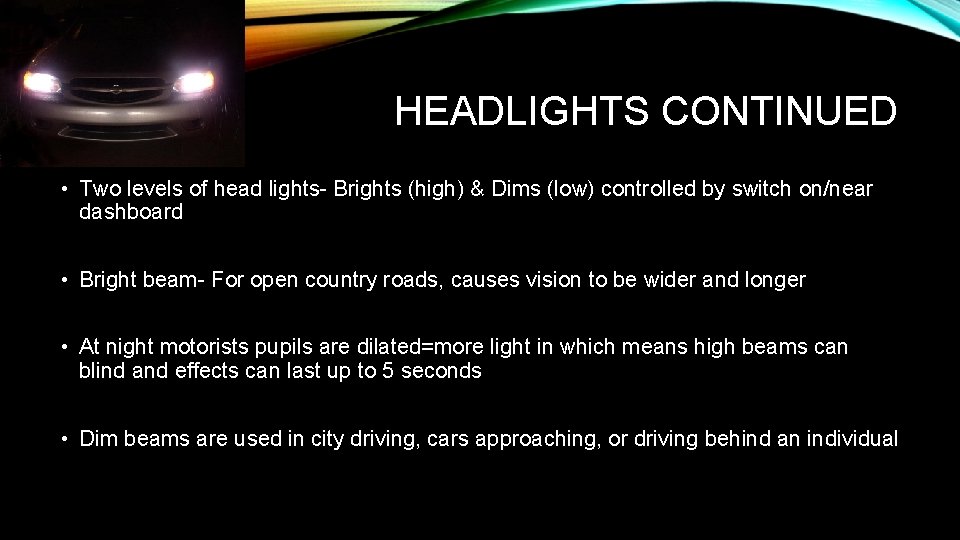
HEADLIGHTS CONTINUED • Two levels of head lights- Brights (high) & Dims (low) controlled by switch on/near dashboard • Bright beam- For open country roads, causes vision to be wider and longer • At night motorists pupils are dilated=more light in which means high beams can blind and effects can last up to 5 seconds • Dim beams are used in city driving, cars approaching, or driving behind an individual
OTHER TYPES OF LIGHTS ON A VEHICLE • Parking lights- Used for a short period of time in areas other than residential or business areas • Tail-lights: Turn on with headlights at night, during day turn on with brakes • brake Lights: Signifying slowing down or stopping when pressure is applied to brake • Interior Lights: To help illuminate the interior of the car especially at night • Fog lights- Accompany dim lights, used in foggy conditions to help improve visibility
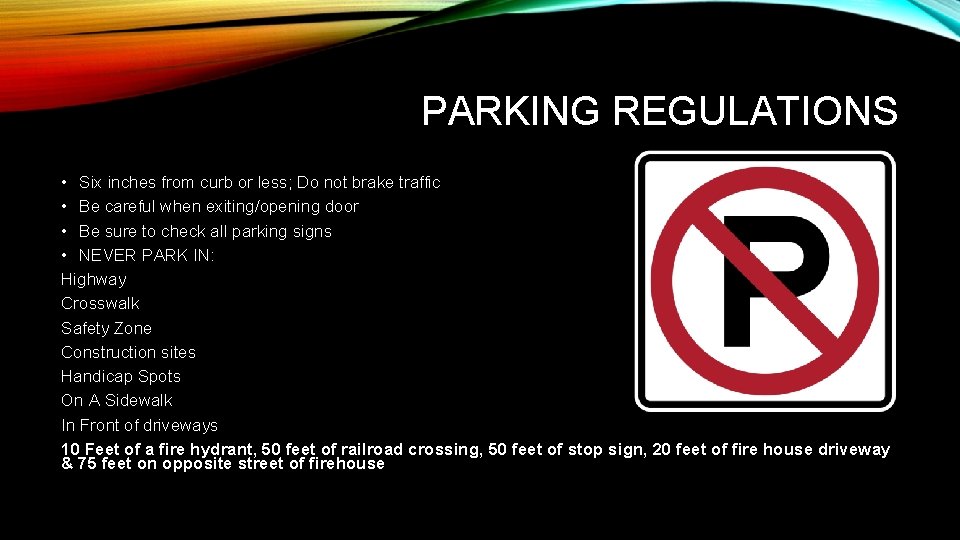
PARKING REGULATIONS • Six inches from curb or less; Do not brake traffic • Be careful when exiting/opening door • Be sure to check all parking signs • NEVER PARK IN: Highway Crosswalk Safety Zone Construction sites Handicap Spots On A Sidewalk In Front of driveways 10 Feet of a fire hydrant, 50 feet of railroad crossing, 50 feet of stop sign, 20 feet of fire house driveway & 75 feet on opposite street of firehouse
CELL PHONES • All handheld devices are illegal to use in NJ • Primary Offense • Hands free devices are legal • All GDL drivers cannot use both a hands-free or handheld electronic • 1 st- Offense 200 -400 Dollars • 2 nd-Offense within 10 Years- 400 -600 Dollars • 3 rd-Offense within 10 years- 600 -800; 3 points assessed; 90 days suspension • Kulesh’s, Kuberts’, and Bolis’ Law 2012 - An individual can be charged with vehicular manslaughter or assault by auto for an accident cause by a cellphone
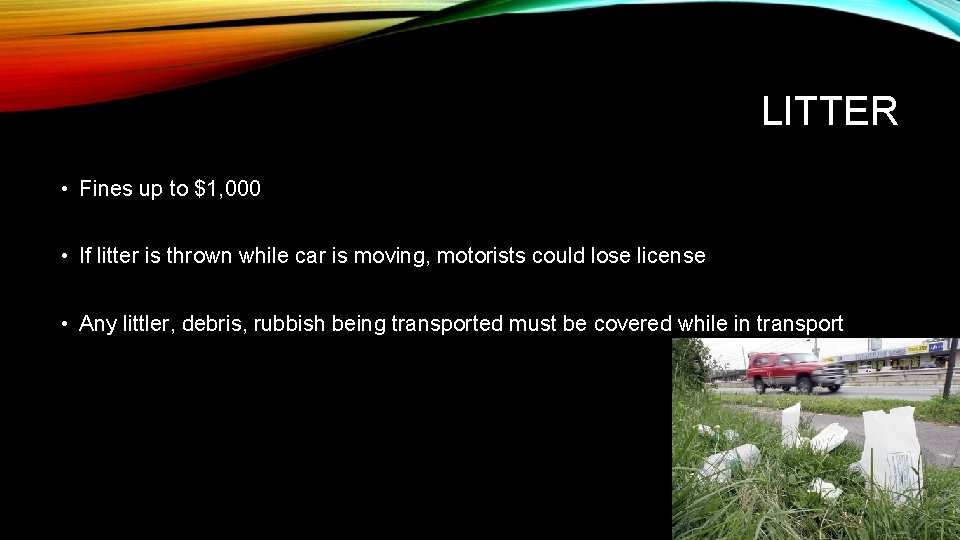
LITTER • Fines up to $1, 000 • If litter is thrown while car is moving, motorists could lose license • Any littler, debris, rubbish being transported must be covered while in transport