
Chapter 4 Respiration and Excretion Section 1 The



- Slides: 20
Chapter 4: Respiration and Excretion
Section 1: The Respiratory System
o Functions of the respiratory system – supply oxygen to the body § Breathing is the movement of the chest that brings air into the lungs and removes waste gases § Cellular respiration – oxygen is used by the cells to release energy from glucose § The waste products of cellular respiration are carbon dioxide and water
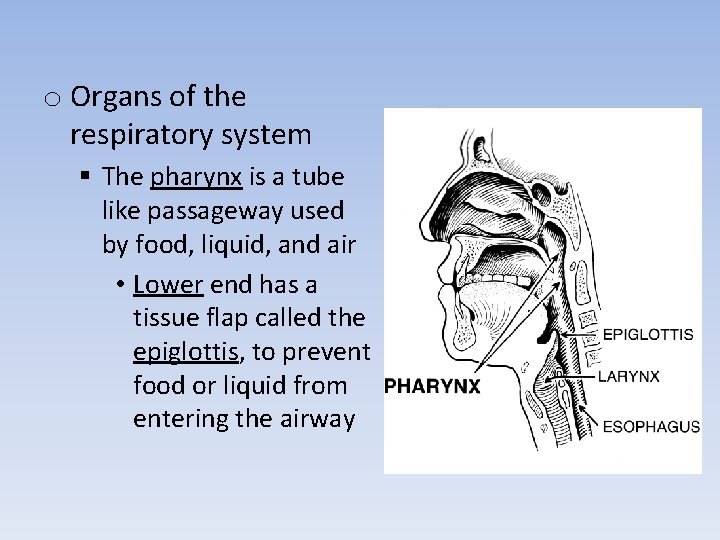
o Organs of the respiratory system § The pharynx is a tube like passageway used by food, liquid, and air • Lower end has a tissue flap called the epiglottis, to prevent food or liquid from entering the airway
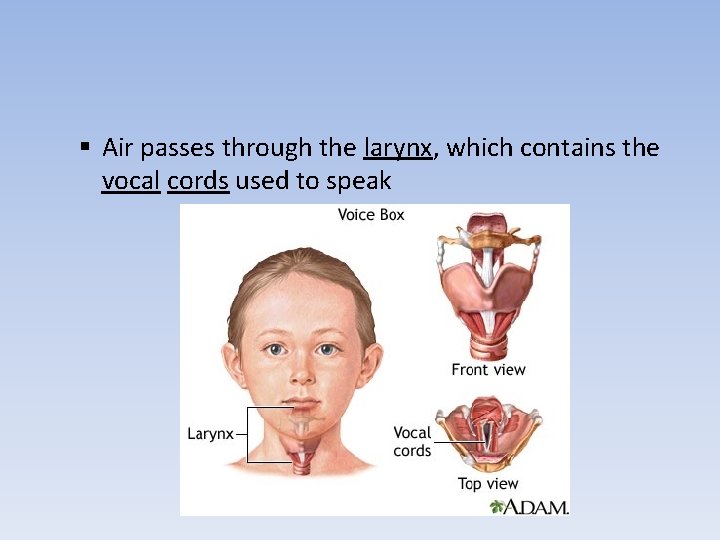
§ Air passes through the larynx, which contains the vocal cords used to speak
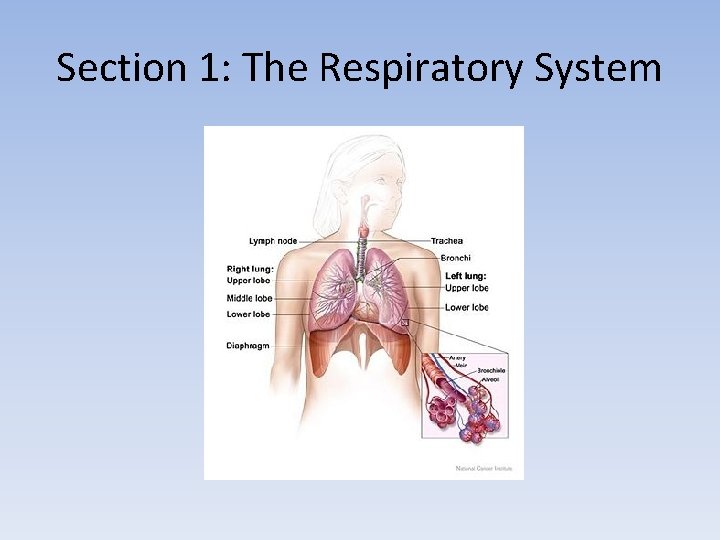
§ Trachea – tube held open by rings of cartilage • Lined with cilia and mucus membranes § At the lower end of the trachea, two short tubes called bronchi branch into smaller tubes § Smallest tubes are bronchioles, which end in clusters of alveoli § The alveoli are surrounded by capillaries • This is where oxygen enters the blood and waste products exit the blood
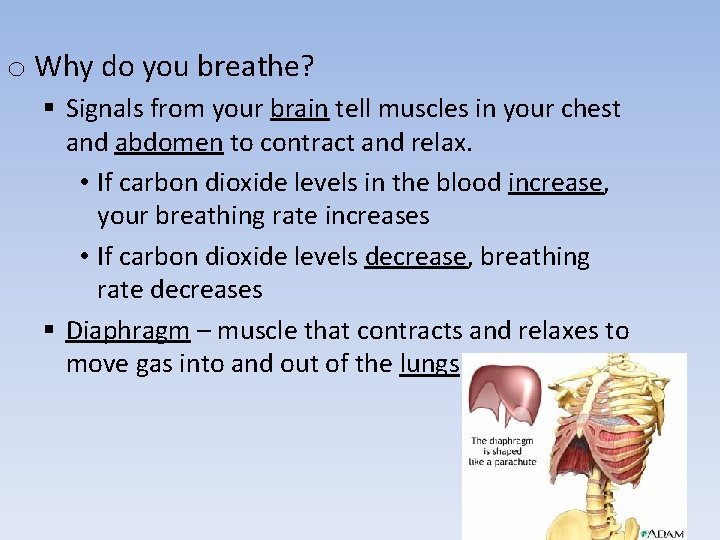
o Why do you breathe? § Signals from your brain tell muscles in your chest and abdomen to contract and relax. • If carbon dioxide levels in the blood increase, your breathing rate increases • If carbon dioxide levels decrease, breathing rate decreases § Diaphragm – muscle that contracts and relaxes to move gas into and out of the lungs
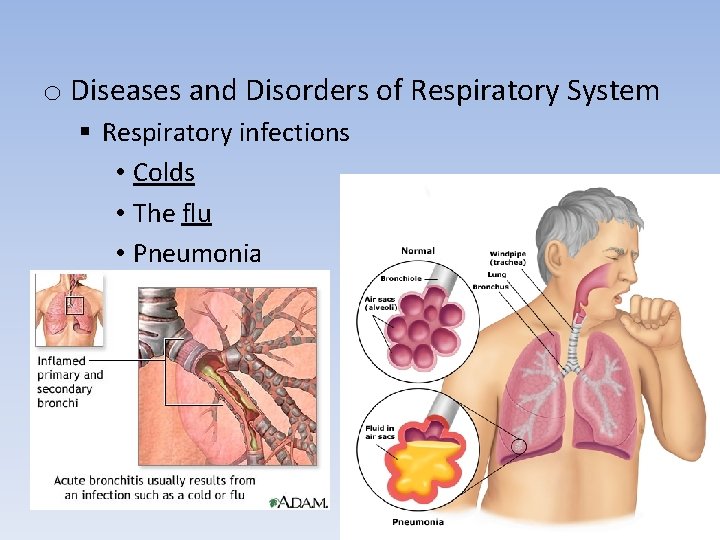
o Diseases and Disorders of Respiratory System § Respiratory infections • Colds • The flu • Pneumonia
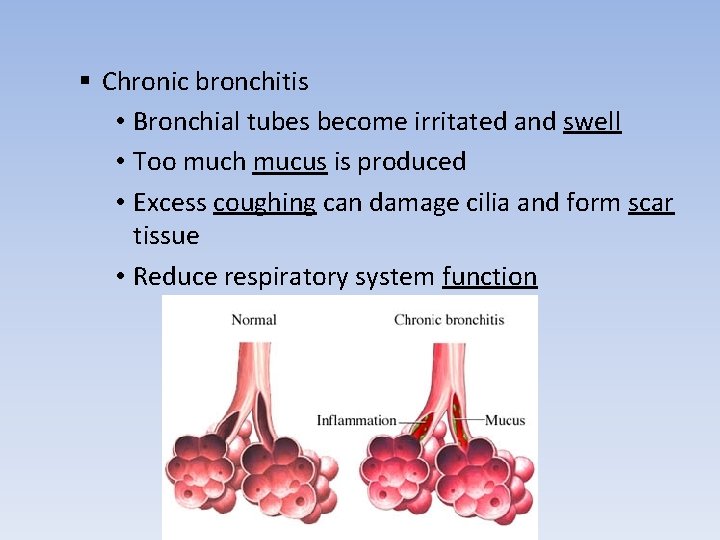
§ Chronic bronchitis • Bronchial tubes become irritated and swell • Too much mucus is produced • Excess coughing can damage cilia and form scar tissue • Reduce respiratory system function
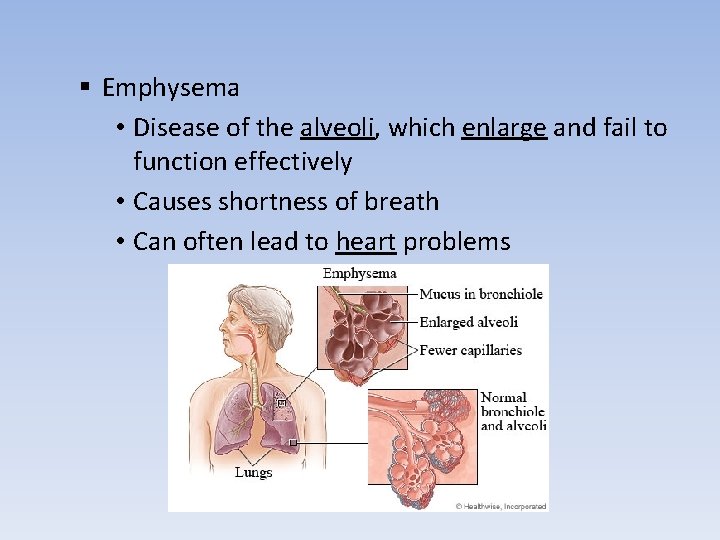
§ Emphysema • Disease of the alveoli, which enlarge and fail to function effectively • Causes shortness of breath • Can often lead to heart problems
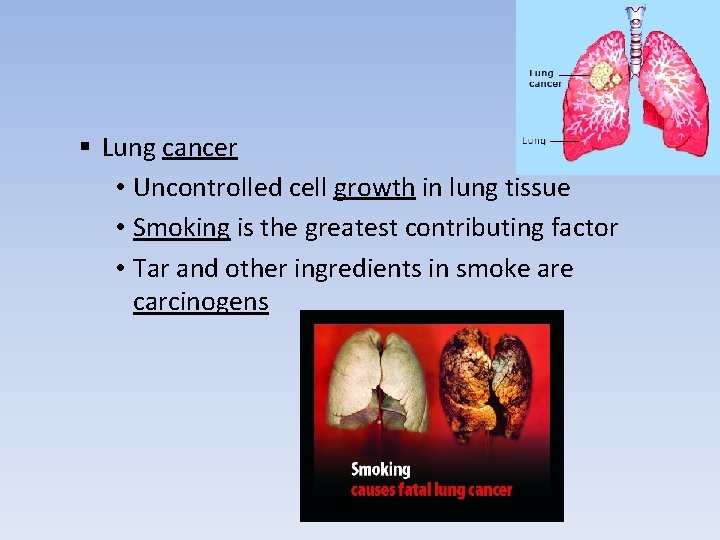
§ Lung cancer • Uncontrolled cell growth in lung tissue • Smoking is the greatest contributing factor • Tar and other ingredients in smoke are carcinogens
§ Asthma • Disorder in which bronchial tubes contract quickly, causing shortness of breath, wheezing, or coughing
Section 2: The Excretory System
o Functions of the excretory system – remove body wastes through the skin, and through the digestive, circulatory, respiratory, and urinary systems § Urinary system – gets rid of cell wastes which accumulate in the blood and controls blood volume
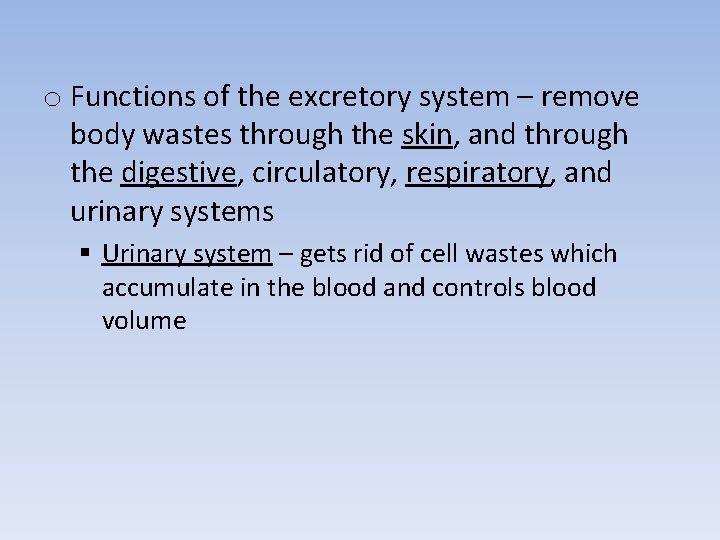
§ The part of the brain called the hypothalamus regulates amount of water in blood • If too much water, hormones from the hypothalamus tell kidneys to increase amount of urine and return less water to the blood • If too little water, hormones tell kidneys to decrease amount of urine and return more water to the blood
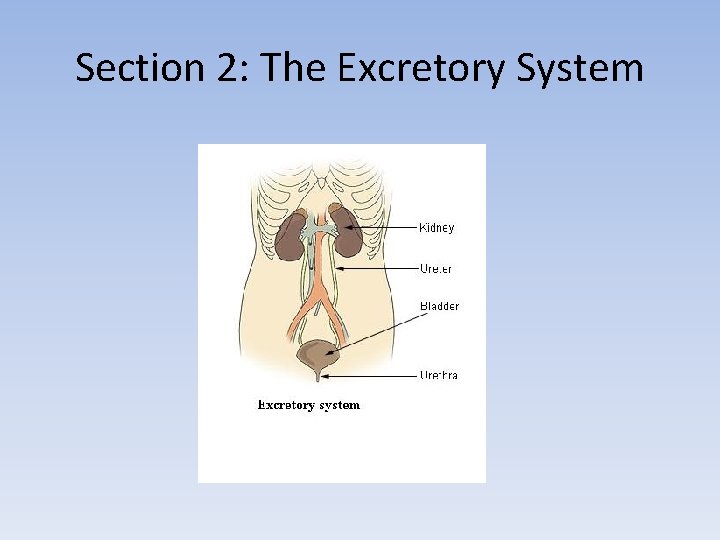
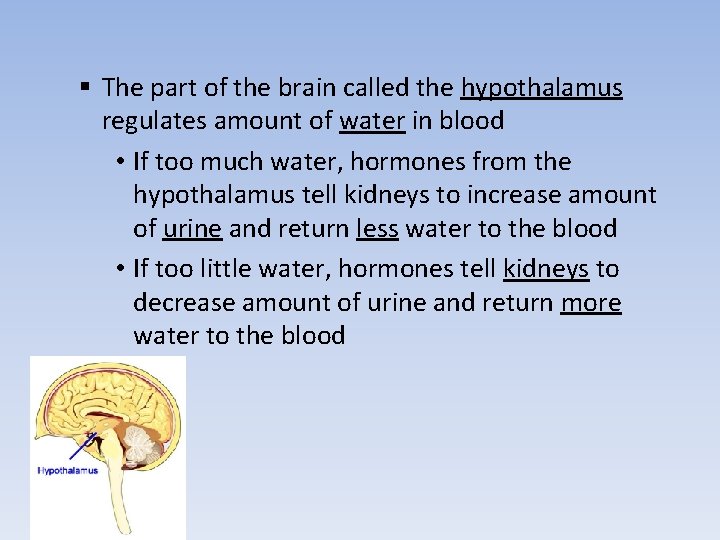
§ Organs of the urinary system • Two kidneys pass the blood through filtering units called nephrons
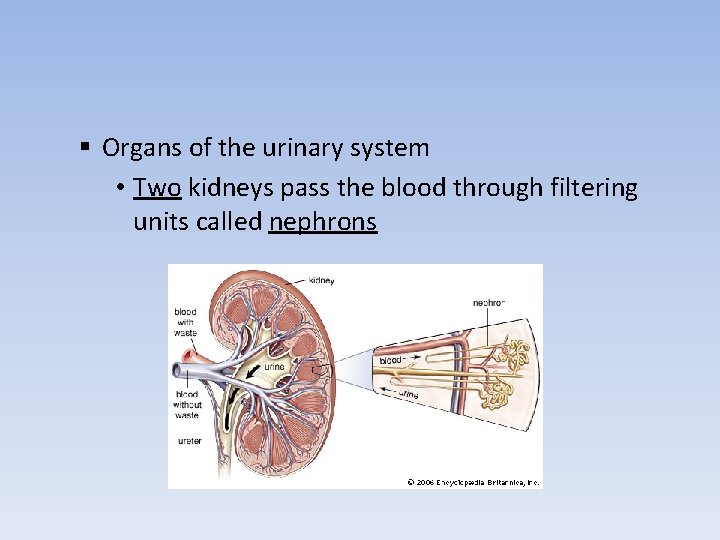
• Urine drains from kidneys to the bladder through tubes called ureters • The urethra passes urine out of the body
o Other organs of excretion – liver produces a chemical called urea which ends up in urine
o Urinary diseases and disorders § Infection often occur in the bladder but then spread to the kidneys § Ureters and urethra become blocked, interrupting the flow of urine and damaging the kidneys § Urine tests can detect urinary tract disorders and other health problems
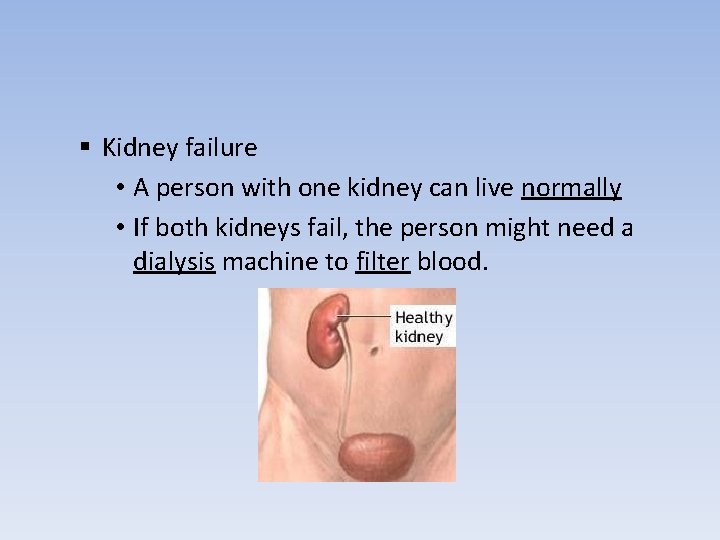
§ Kidney failure • A person with one kidney can live normally • If both kidneys fail, the person might need a dialysis machine to filter blood.