
Chapter 4 Reactions of Alkenes Adapted from Profs
- Slides: 49
Chapter 4 Reactions of Alkenes Adapted from Profs. Turro & Breslow, Columbia University and Prof. Irene Lee, Case Western Reserve University
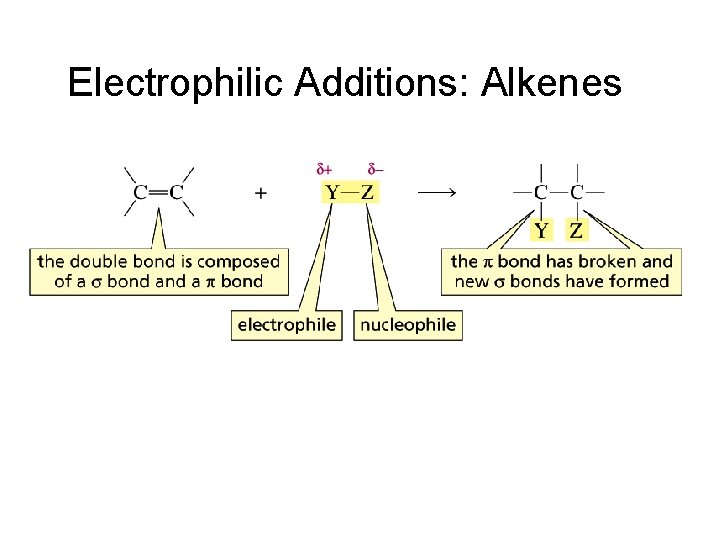
Electrophilic Additions: Alkenes
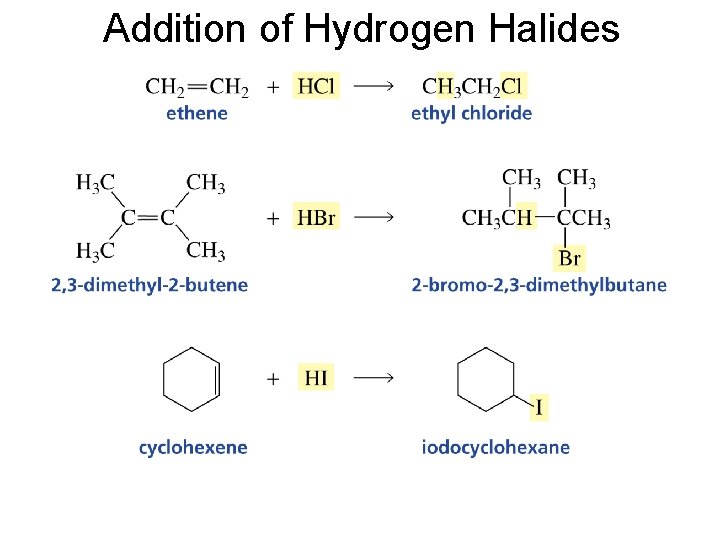
Addition of Hydrogen Halides
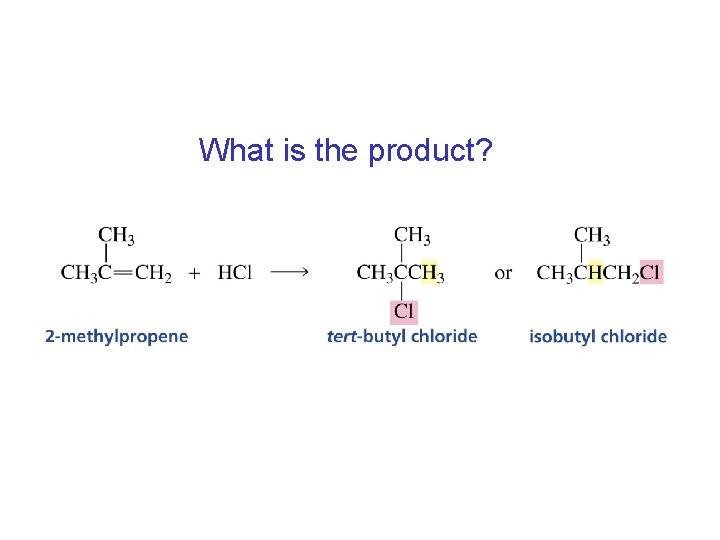
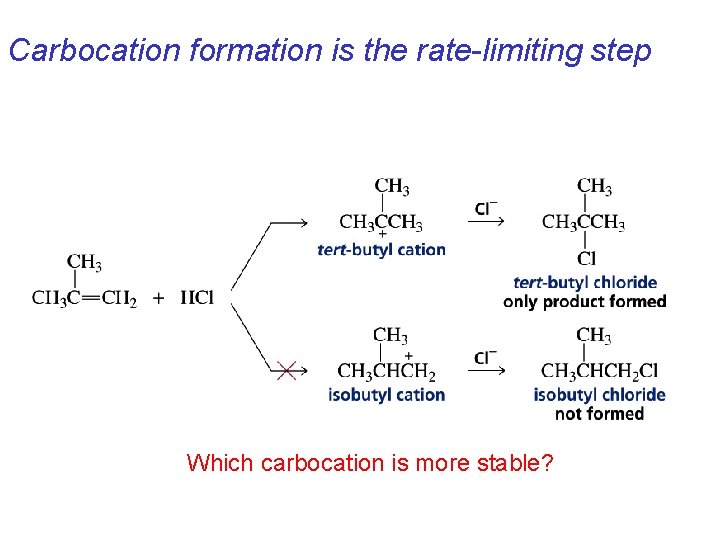
What is the product?
Carbocation formation is the rate-limiting step Which carbocation is more stable?
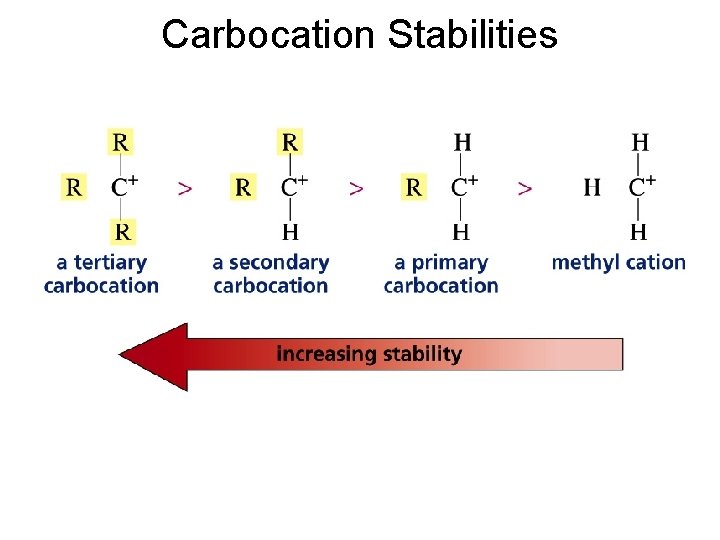
Carbocation Stabilities
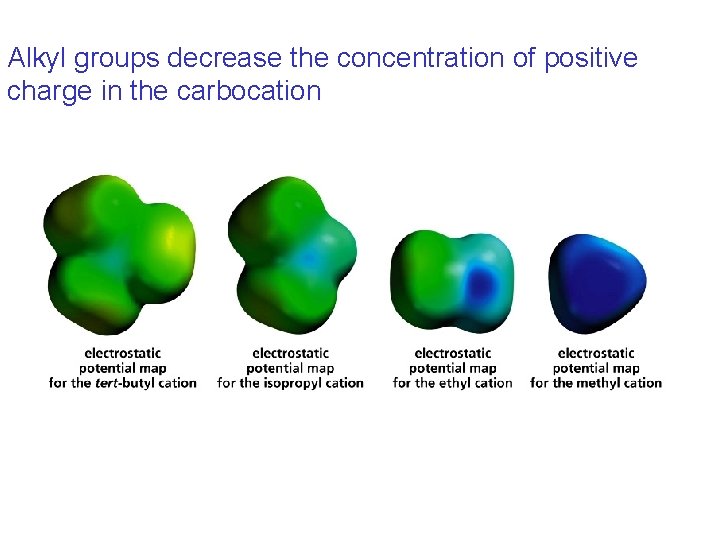
Alkyl groups decrease the concentration of positive charge in the carbocation
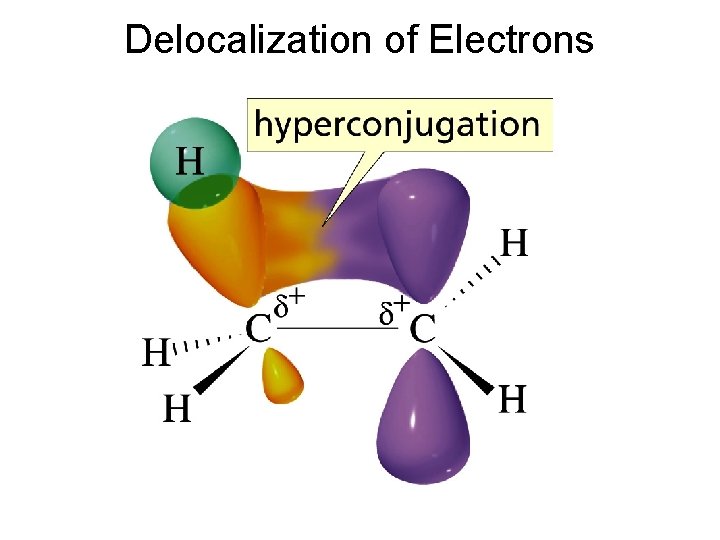
Delocalization of Electrons
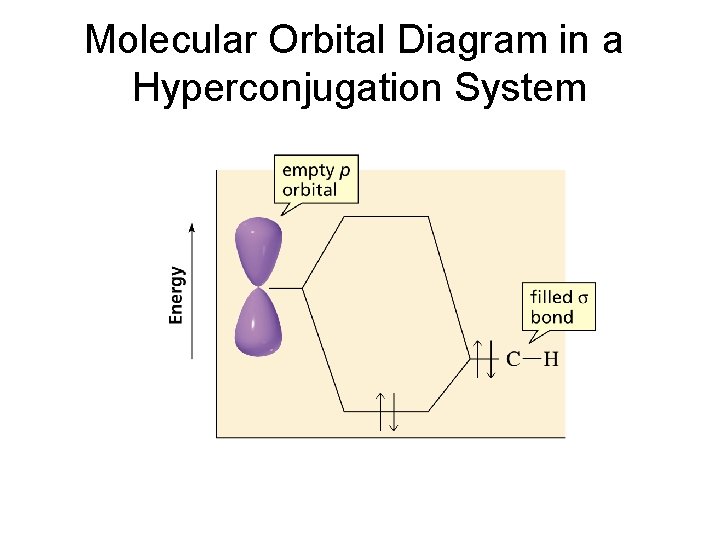
Molecular Orbital Diagram in a Hyperconjugation System
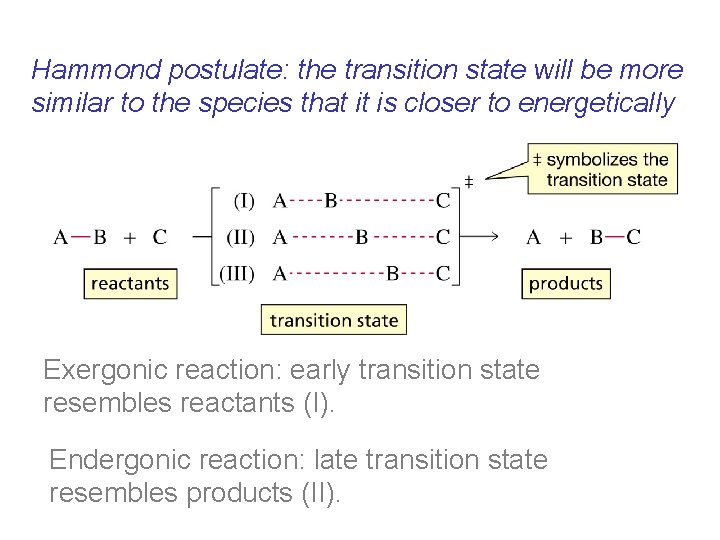
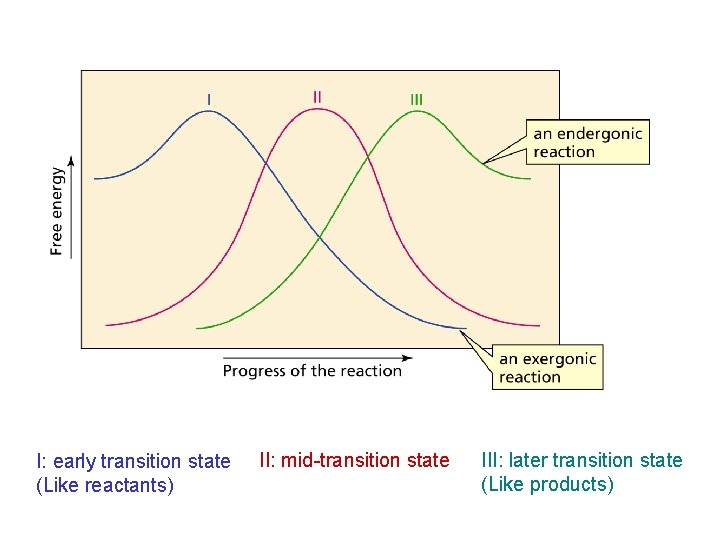
Hammond postulate: the transition state will be more similar to the species that it is closer to energetically Exergonic reaction: early transition state resembles reactants (I). Endergonic reaction: late transition state resembles products (II).
I: early transition state (Like reactants) II: mid-transition state III: later transition state (Like products)
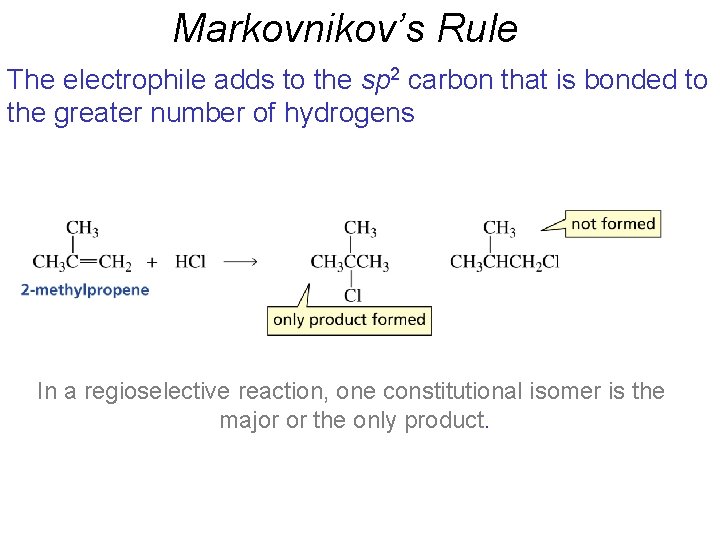
Markovnikov’s Rule The electrophile adds to the sp 2 carbon that is bonded to the greater number of hydrogens In a regioselective reaction, one constitutional isomer is the major or the only product.
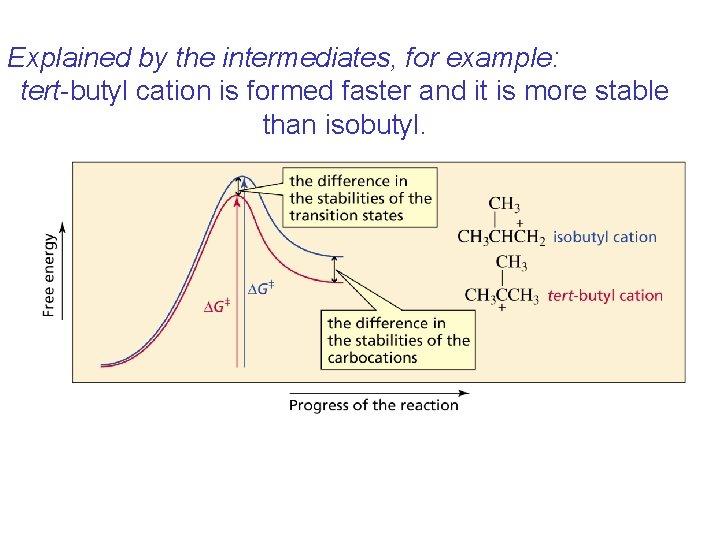
Explained by the intermediates, for example: tert-butyl cation is formed faster and it is more stable than isobutyl.
Regioselectivity of Hydrogen Halide Addition: Markovnikov's Rule
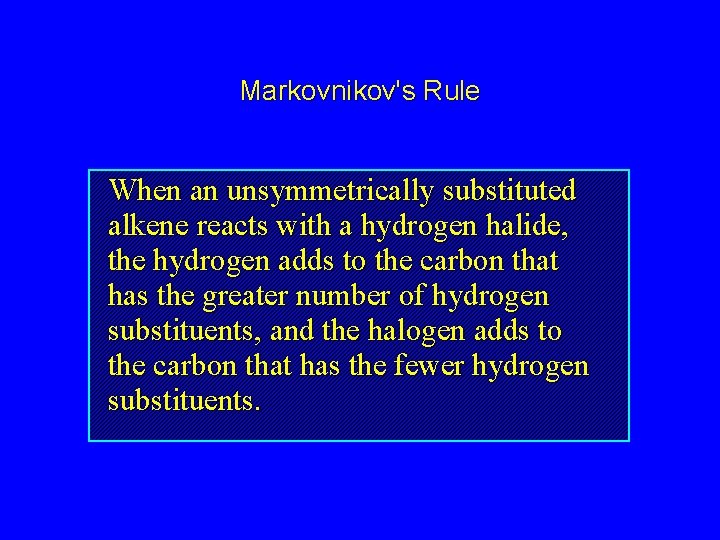
Markovnikov's Rule When an unsymmetrically substituted alkene reacts with a hydrogen halide, the hydrogen adds to the carbon that has the greater number of hydrogen substituents, and the halogen adds to the carbon that has the fewer hydrogen substituents.
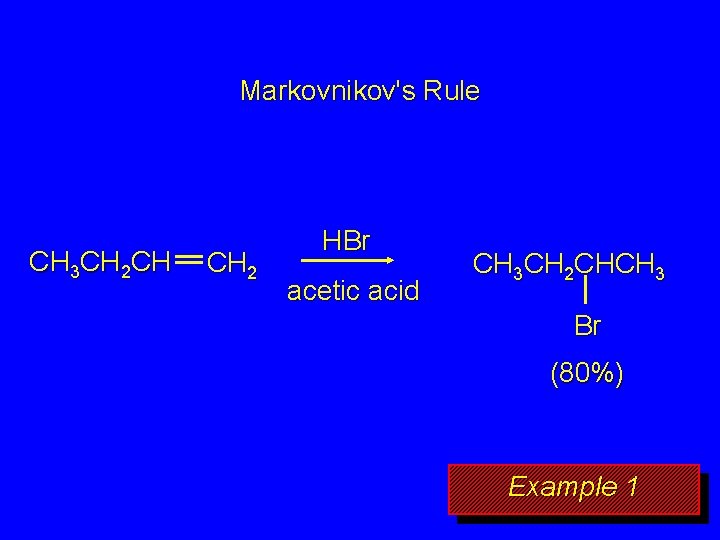
Markovnikov's Rule CH 3 CH 2 CH CH 2 HBr acetic acid CH 3 CH 2 CHCH 3 Br (80%) Example 1
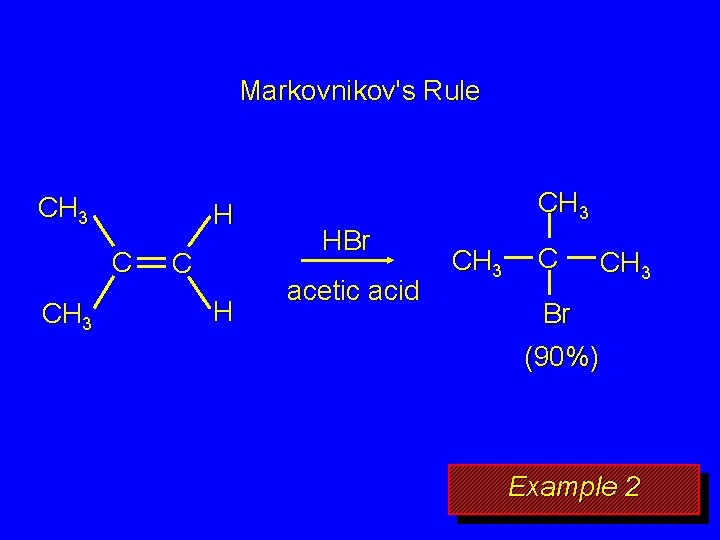
Markovnikov's Rule CH 3 H C CH 3 C H CH 3 HBr acetic acid CH 3 C CH 3 Br (90%) Example 2
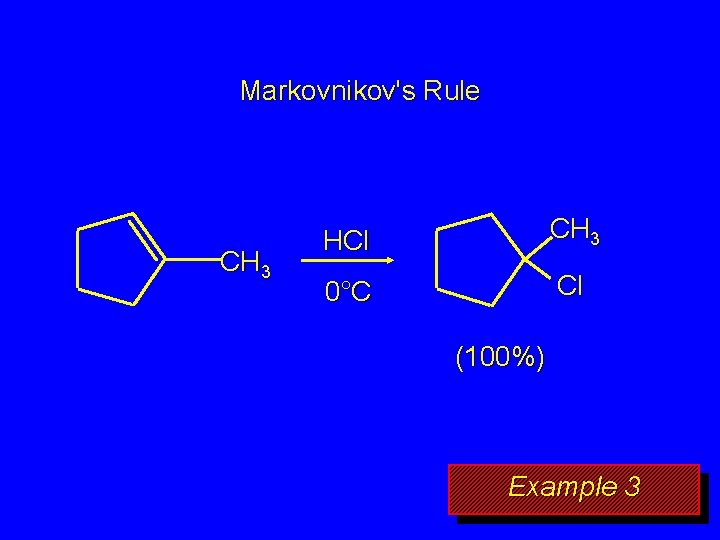
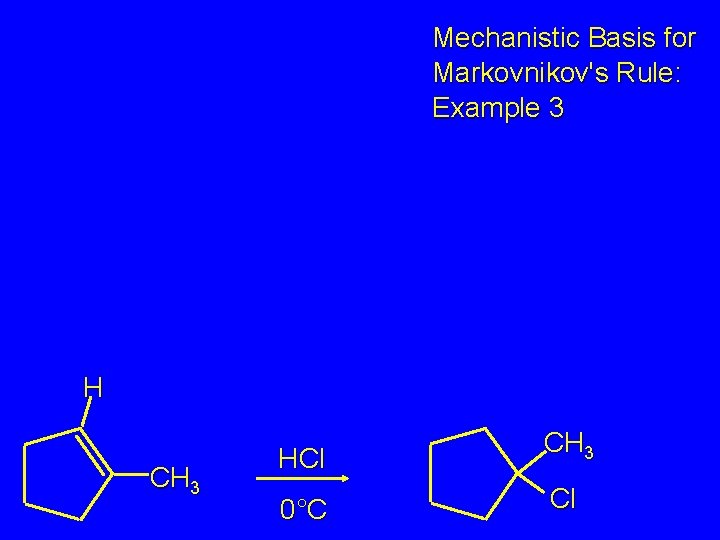
Markovnikov's Rule CH 3 HCl CH 3 0°C Cl (100%) Example 3
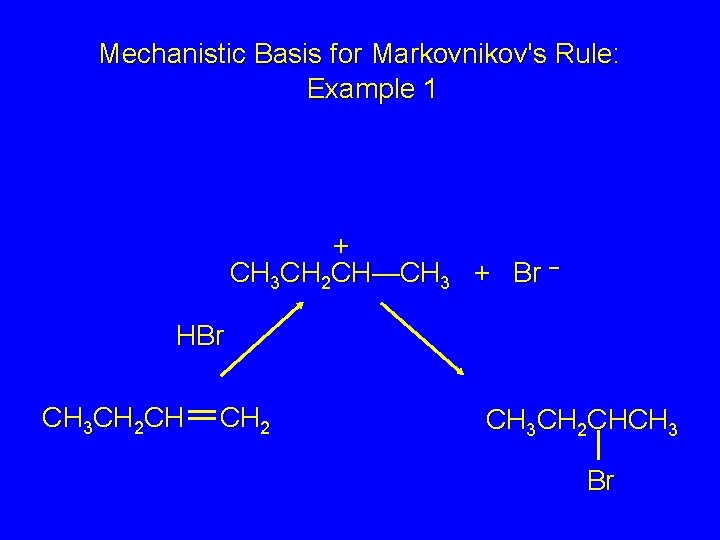
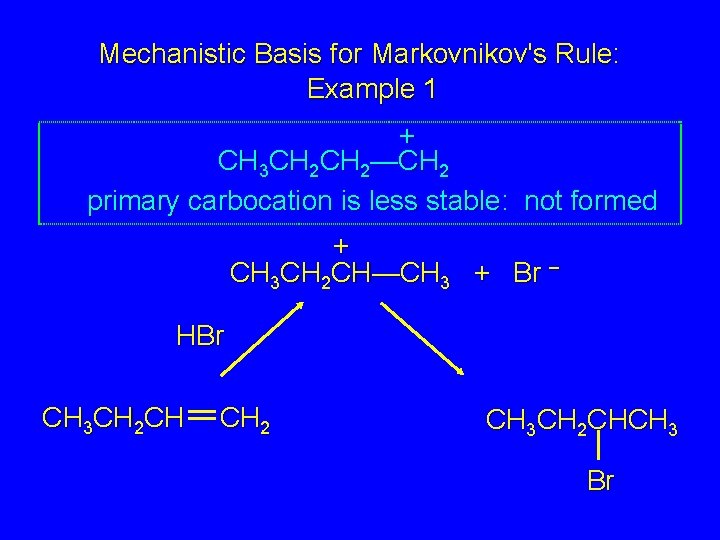
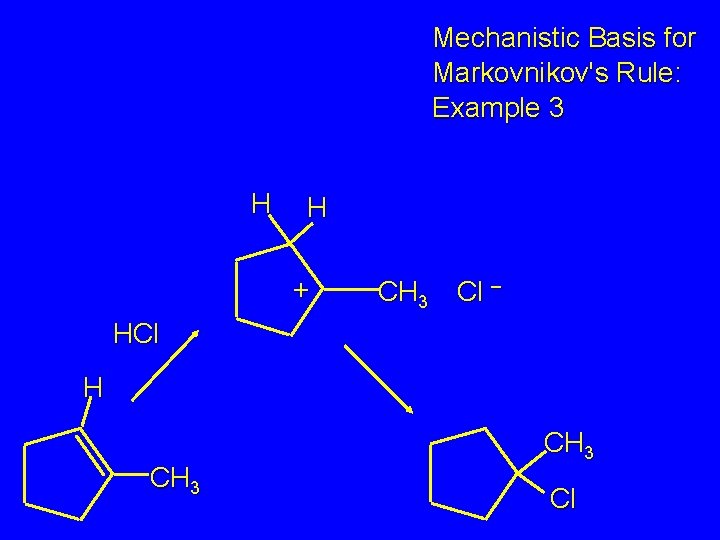
Mechanistic Basis for Markovnikov's Rule Protonation of double bond occurs in direction that gives more stable of two possible carbocations.
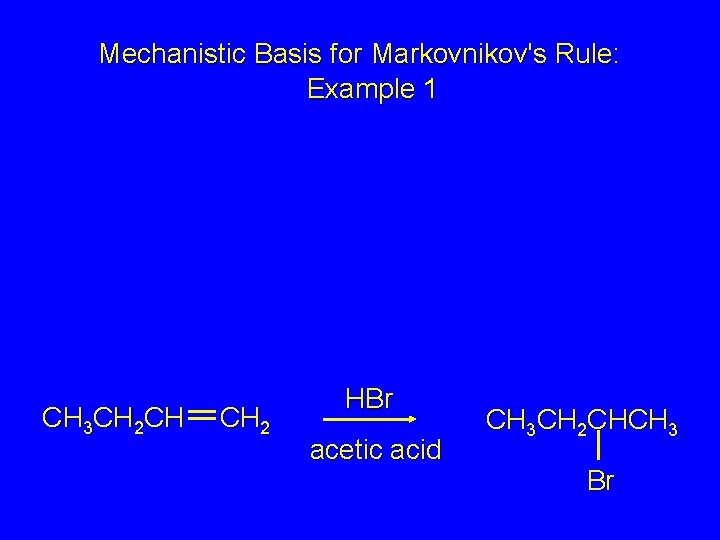
Mechanistic Basis for Markovnikov's Rule: Example 1 CH 3 CH 2 CH CH 2 HBr acetic acid CH 3 CH 2 CHCH 3 Br
Mechanistic Basis for Markovnikov's Rule: Example 1 + CH 3 CH 2 CH—CH 3 + Br – HBr CH 3 CH 2 CH CH 2 CH 3 CH 2 CHCH 3 Br
Mechanistic Basis for Markovnikov's Rule: Example 1 + CH 3 CH 2—CH 2 primary carbocation is less stable: not formed + CH 3 CH 2 CH—CH 3 + Br – HBr CH 3 CH 2 CH CH 2 CH 3 CH 2 CHCH 3 Br
Mechanistic Basis for Markovnikov's Rule: Example 3 H CH 3 HCl CH 3 0°C Cl
Mechanistic Basis for Markovnikov's Rule: Example 3 H H + CH 3 Cl – HCl H CH 3 Cl
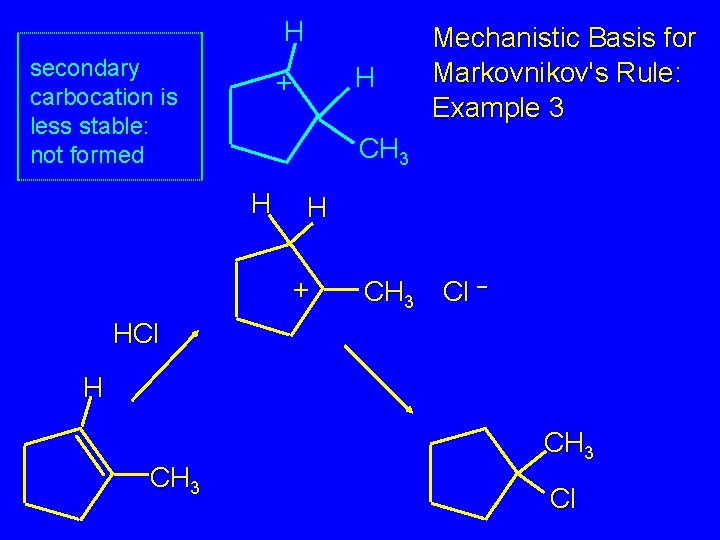
H secondary carbocation is less stable: not formed H + Mechanistic Basis for Markovnikov's Rule: Example 3 CH 3 H H + CH 3 Cl – HCl H CH 3 Cl
Carbocation Rearrangements in Hydrogen Halide Addition to Alkenes
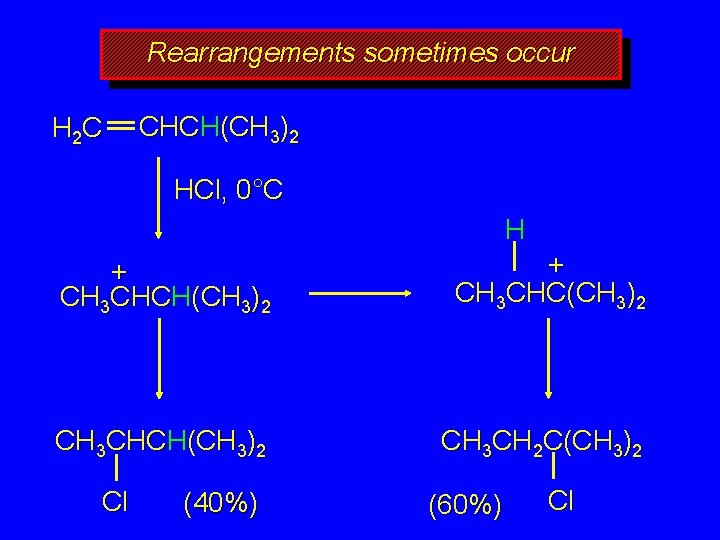
Rearrangements sometimes occur H 2 C CHCH(CH 3)2 HCl, 0°C H + CH 3 CHCH(CH 3)2 + CH 3 CHC(CH 3)2 CH 3 CHCH(CH 3)2 CH 3 CH 2 C(CH 3)2 Cl (40%) (60%) Cl
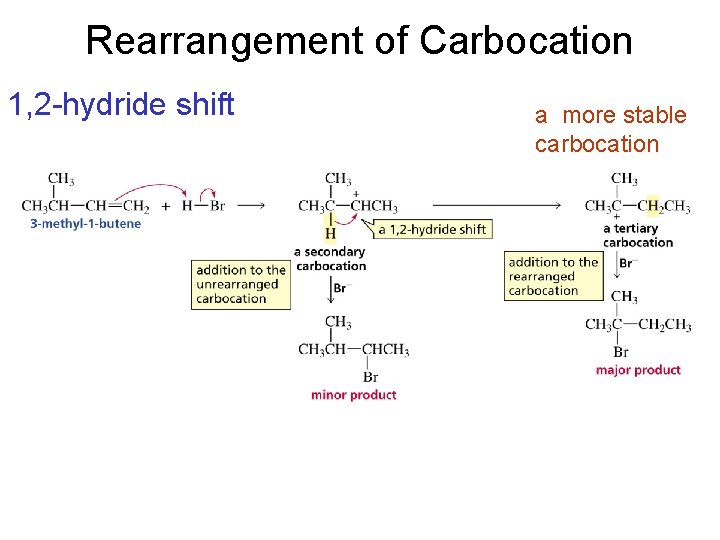
Rearrangement of Carbocation 1, 2 -hydride shift a more stable carbocation
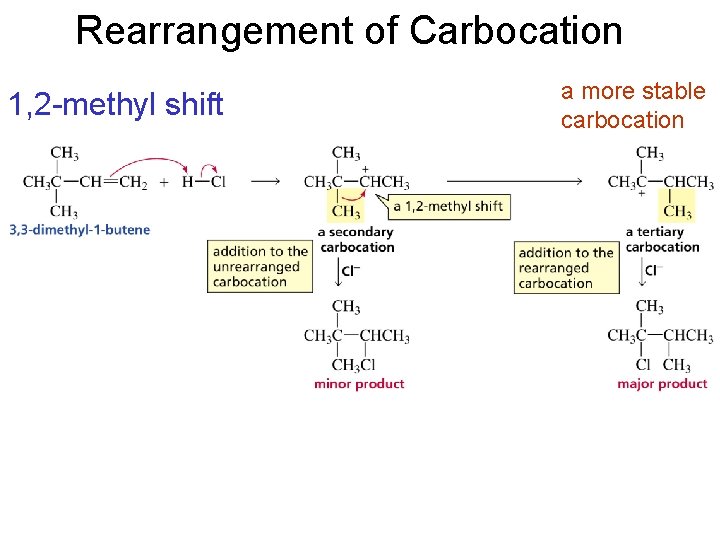
Rearrangement of Carbocation 1, 2 -methyl shift a more stable carbocation
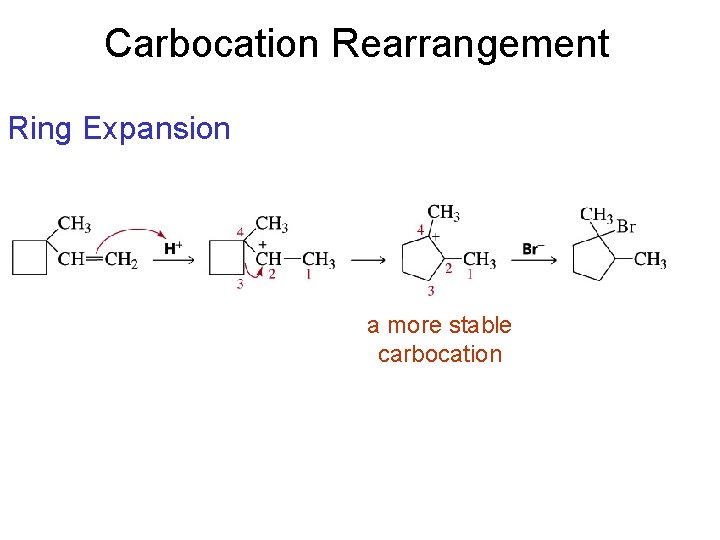
Carbocation Rearrangement Ring Expansion a more stable carbocation
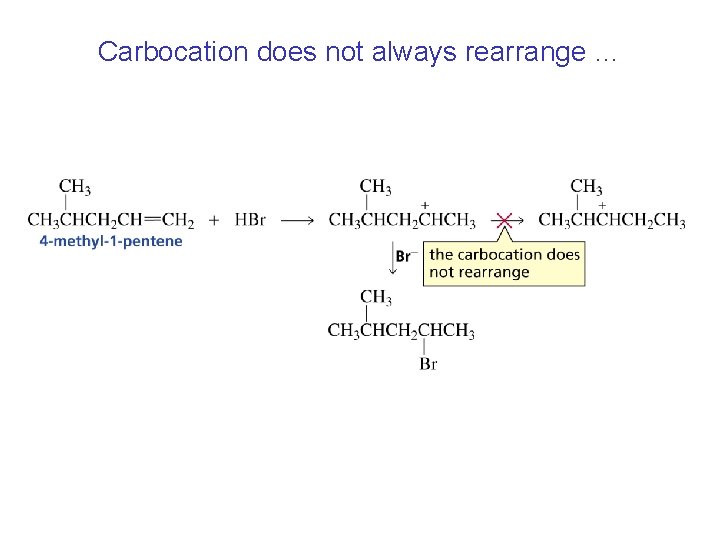
Carbocation does not always rearrange …
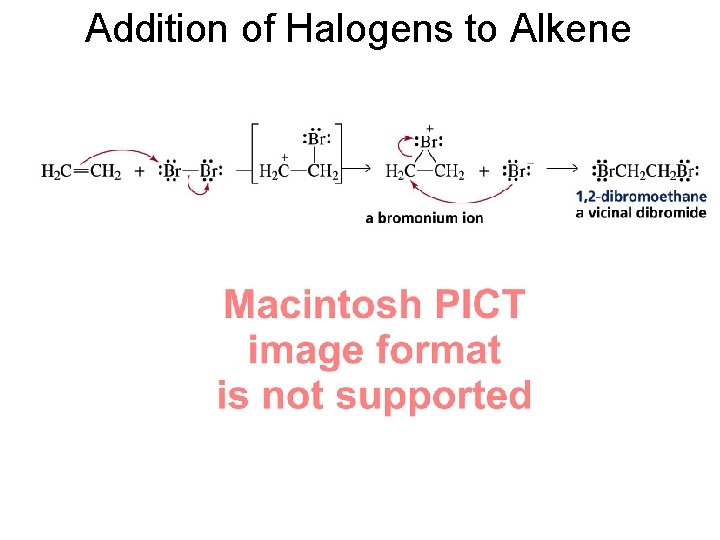
Addition of Halogens to Alkene
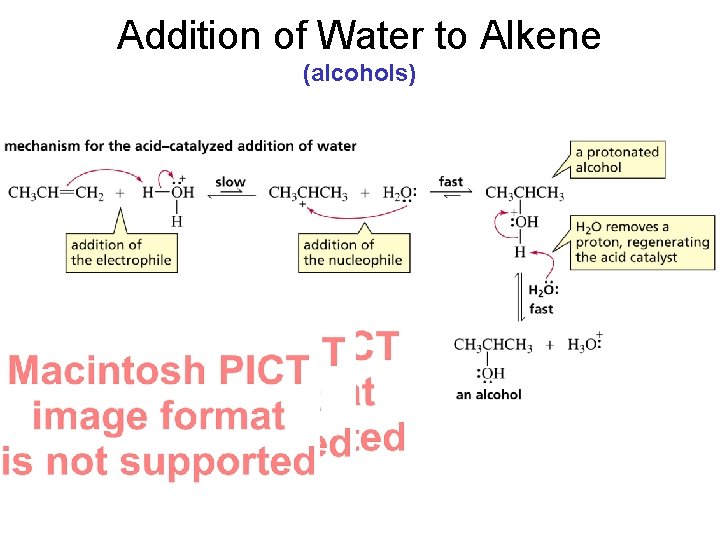
Addition of Water to Alkene (alcohols)
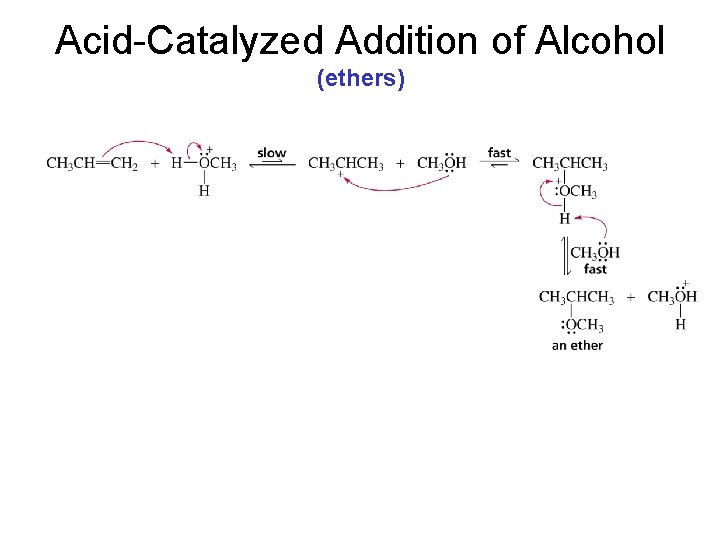
Acid-Catalyzed Addition of Alcohol (ethers)
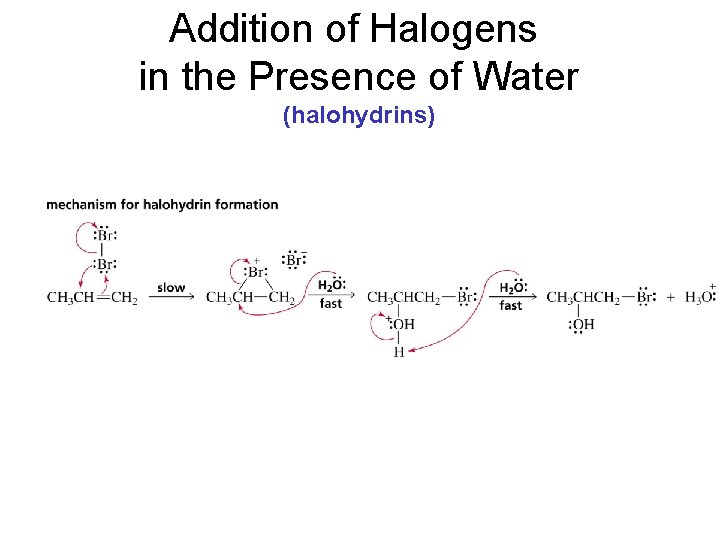
Addition of Halogens in the Presence of Water (halohydrins)
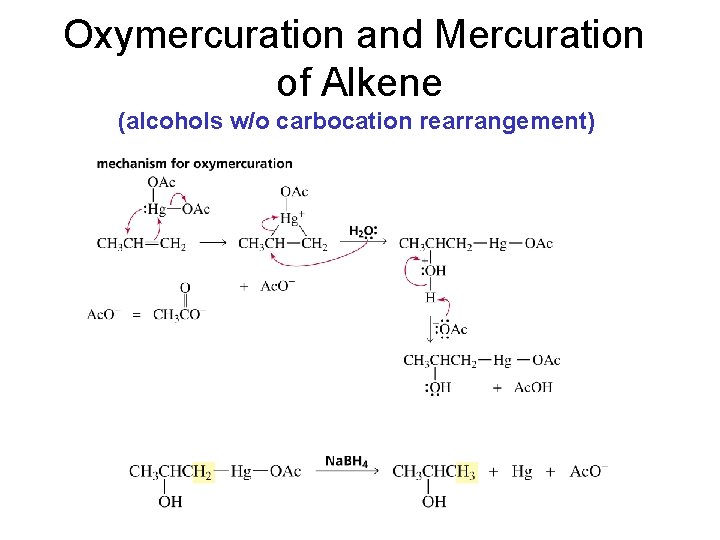
Oxymercuration and Mercuration of Alkene (alcohols w/o carbocation rearrangement)
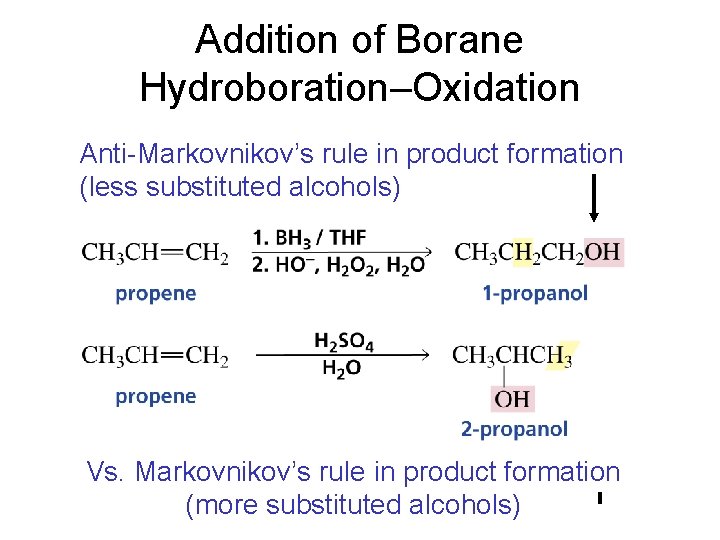
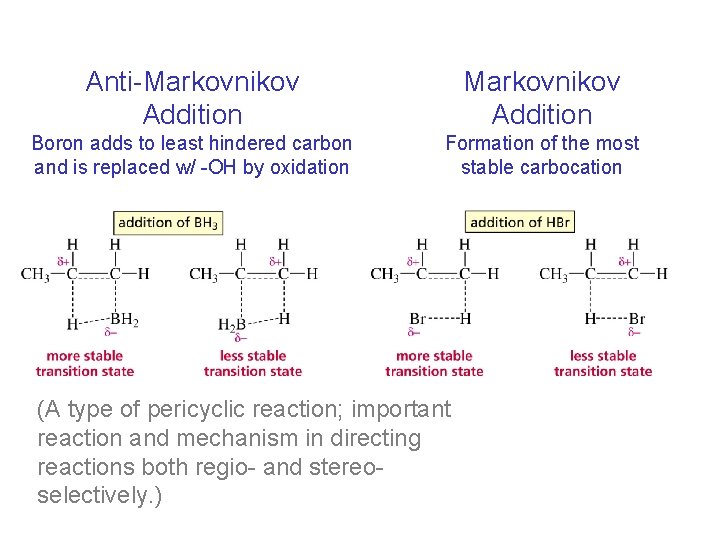
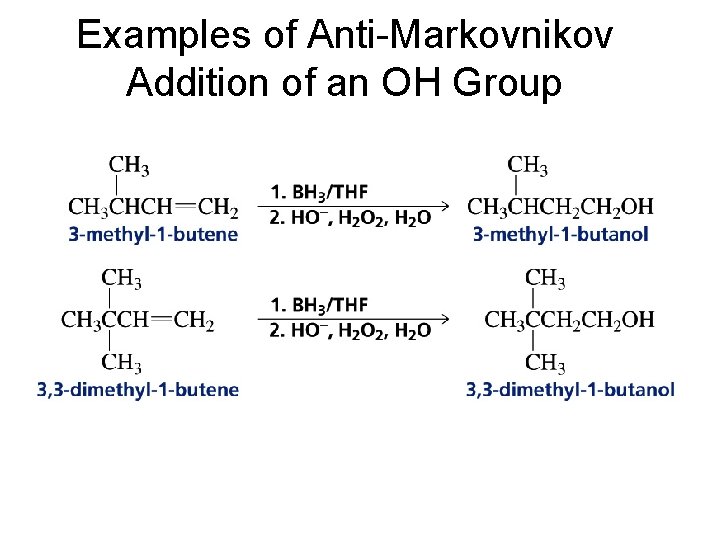
Addition of Borane Hydroboration–Oxidation Anti-Markovnikov’s rule in product formation (less substituted alcohols) Vs. Markovnikov’s rule in product formation (more substituted alcohols)
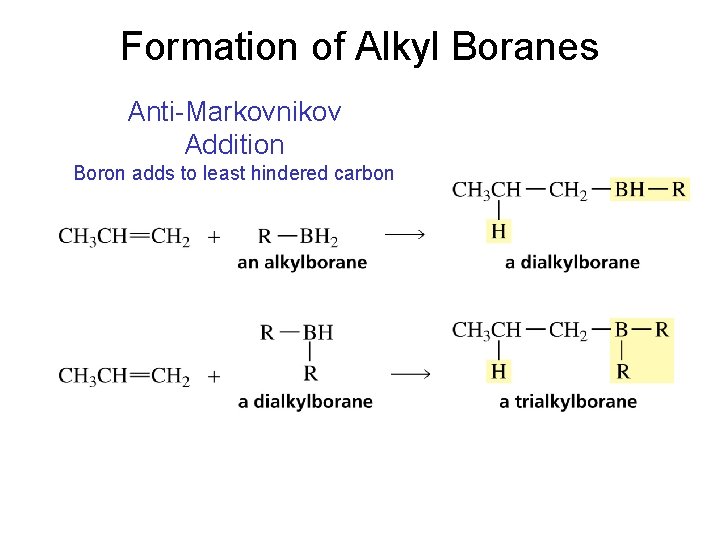
Formation of Alkyl Boranes Anti-Markovnikov Addition Boron adds to least hindered carbon
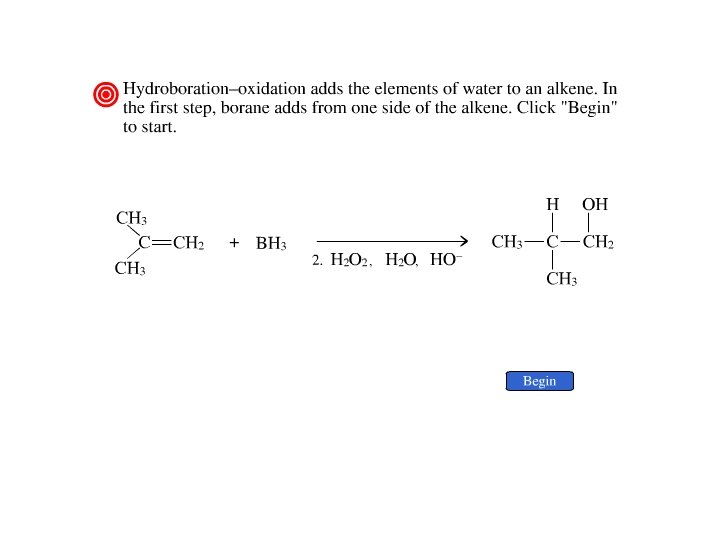
Anti-Markovnikov Addition Boron adds to least hindered carbon and is replaced w/ -OH by oxidation Formation of the most stable carbocation (A type of pericyclic reaction; important reaction and mechanism in directing reactions both regio- and stereoselectively. )
Examples of Anti-Markovnikov Addition of an OH Group
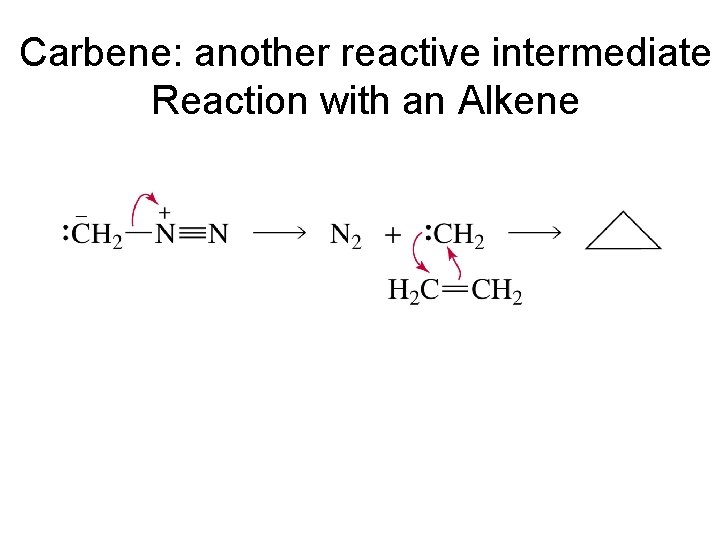
Carbene: another reactive intermediate Reaction with an Alkene
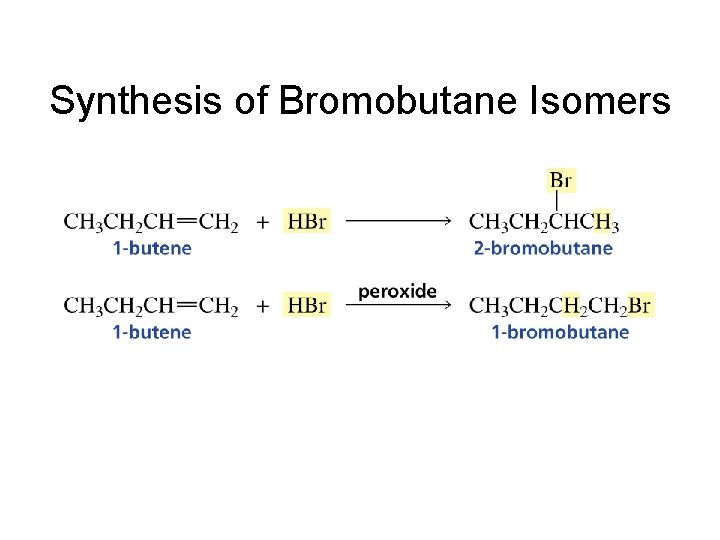
Synthesis of Bromobutane Isomers
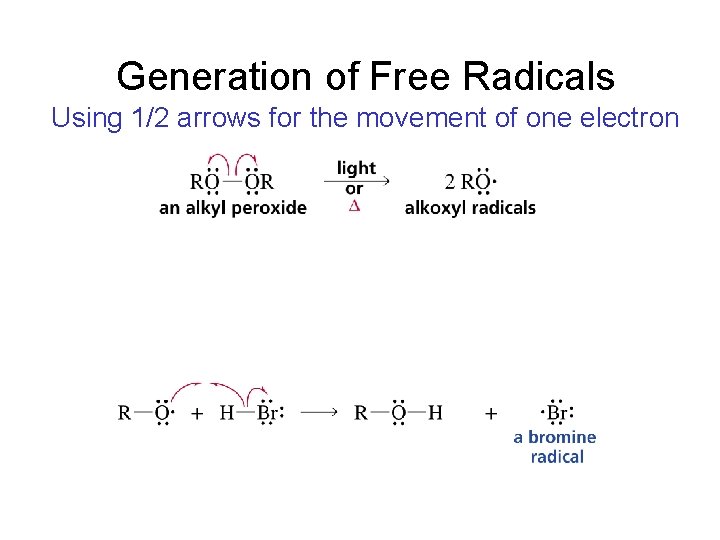
Generation of Free Radicals Using 1/2 arrows for the movement of one electron
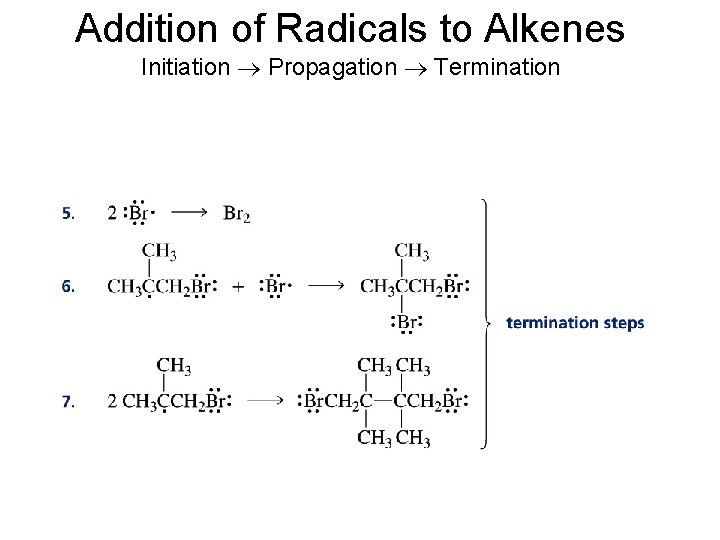
Addition of Radicals to Alkenes Initiation Propagation Termination
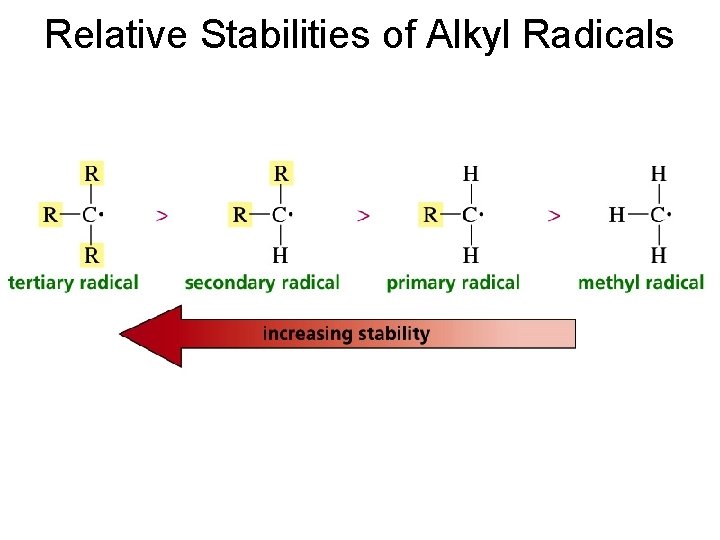
Relative Stabilities of Alkyl Radicals
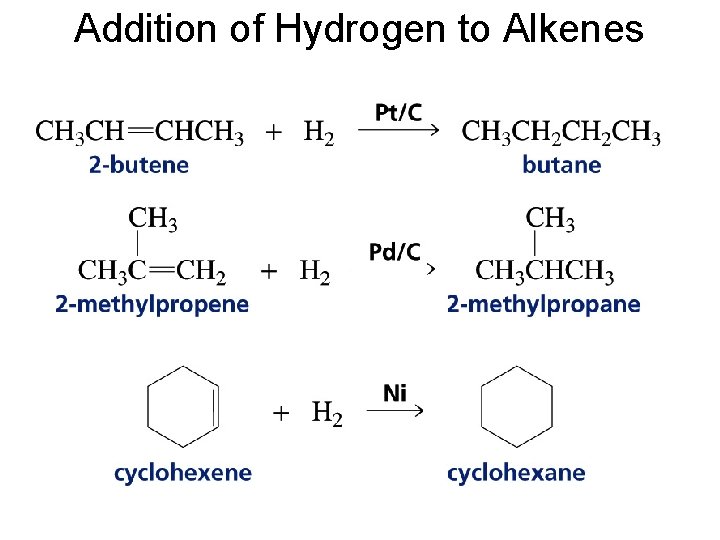
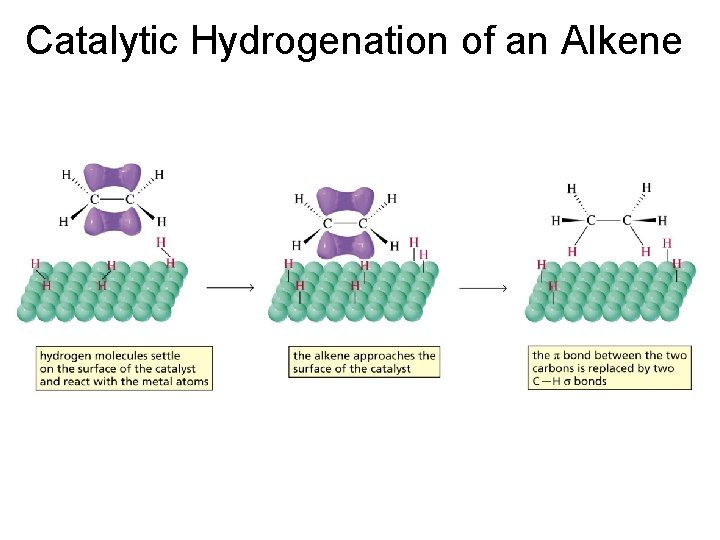
Addition of Hydrogen to Alkenes
Catalytic Hydrogenation of an Alkene