
Chapter 4 Prenatal Development Birth and the Newborn
Chapter 4: Prenatal Development, Birth, and the Newborn Module 4. 1 From Conception to Birth Module 4. 2 Influences on Prenatal Development Module 4. 3 Happy Birthday! Module 4. 4 The Newborn Children and Their Development, 3/e by Robert Kail
4. 1 From Conception to Birth Period of the Zygote Period of the Embryo Period of the Fetus
4. 1 Period of the Zygote • Begins when egg is fertilized in the fallopian tube. • Period of rapid cell division • Ends 2 weeks later when the zygote is implanted in the wall of the uterus
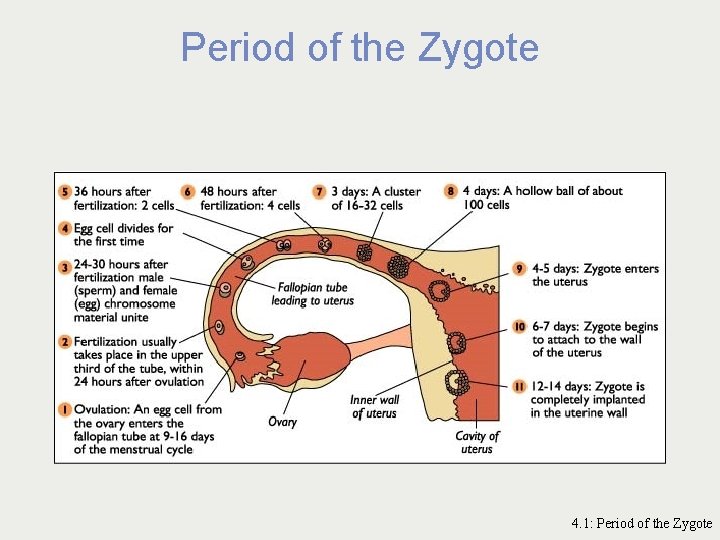
Period of the Zygote 4. 1: Period of the Zygote
4. 1 Period of the Embryo • From 3 to 8 weeks after conception • Body parts are formed during this period • Embryo rests in the amnion filled with amniotic fluid • Umbilical cord joins embryo to placenta
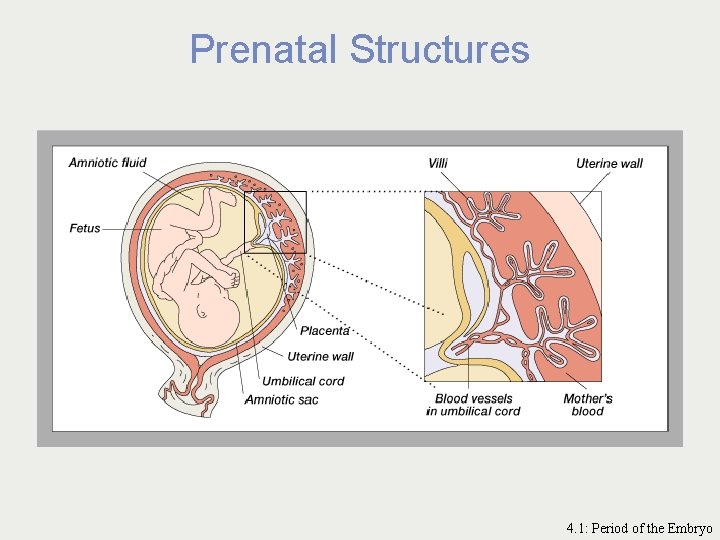
Prenatal Structures 4. 1: Period of the Embryo
4. 1 Period of the Fetus • From 9 weeks after conception to birth • Increase in size and systems begin to function • Age of viability: occurs at 22 to 28 weeks and fetus has a chance to survive
4. 2 Influences on Prenatal Development General Risk Factors Teratogens: Diseases, Drugs, and Environmental Hazards How Teratogens Influence Prenatal Development Prenatal Diagnosis and Treatment
4. 2 General Risk Factors • Nutrition: adequate amount of food, protein, vitamins, & minerals • Stress: decreases oxygen to fetus, weakens mother’s immune system, and lead to unhealthy behaviors such as smoking or drinking alcohol • Mother’s Age: neither too young, nor too old is best
4. 2 Teratogens: Diseases, Drugs, and Environmental Hazards • Many diseases pass through the placenta directly and attack the fetus and others attack at birth • Potentially dangerous drugs are not limited to cocaine but include alcohol, caffeine, and aspirin • Environmental hazards are treacherous because we’re often unaware of their presence
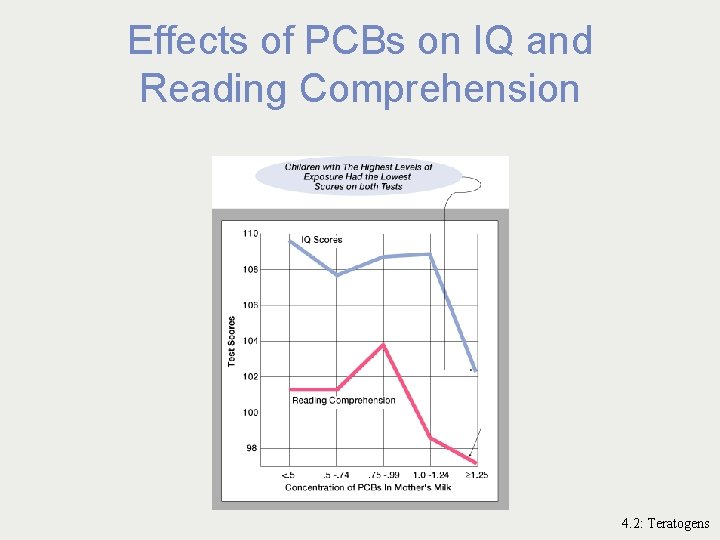
Effects of PCBs on IQ and Reading Comprehension 4. 2: Teratogens
4. 2 How Teratogens Influence Prenatal Development • Teratogens are not universally harmful • Teratogens harm particular structures at a particular point in development in particular animals • Impact depends on the dose • Damage is not always evident at birth
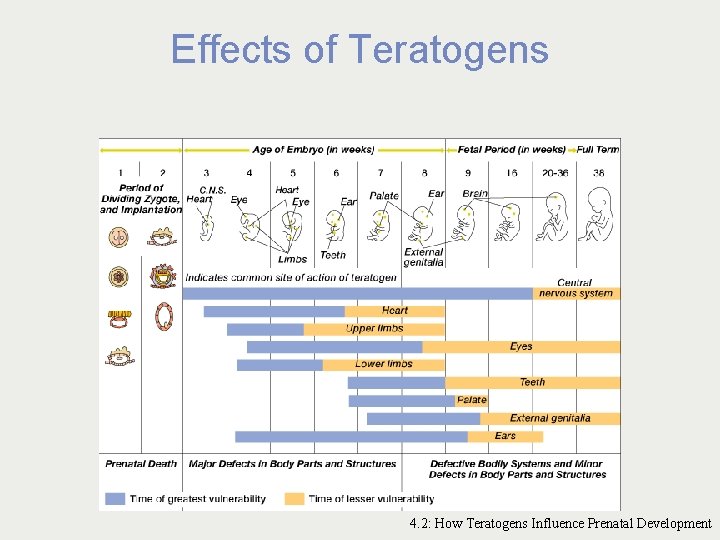
Effects of Teratogens 4. 2: How Teratogens Influence Prenatal Development
4. 2 Prenatal Diagnosis and Treatment • Diagnosis: ultrasound, amniocentesis, and chorionic villus sampling can detect physical deformities and genetic disorders • Treatment: fetal medicine and genetic engineering are experimental
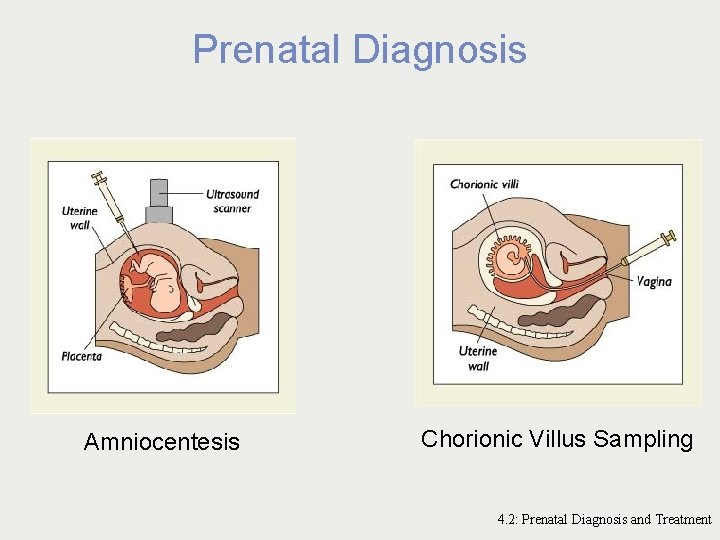
Prenatal Diagnosis Amniocentesis Chorionic Villus Sampling 4. 2: Prenatal Diagnosis and Treatment
4. 3 Happy Birthday! Labor and Delivery Approaches to Childbirth Adjusting to Parenthood Birth Complications
4. 3 Labor and Delivery • Stage 1: starts when the muscles of the uterus contract and ends when the cervix is fully enlarged (about 10 cm) • Stage 2: baby is pushed through the birth canal • Stage 3: placenta is expelled
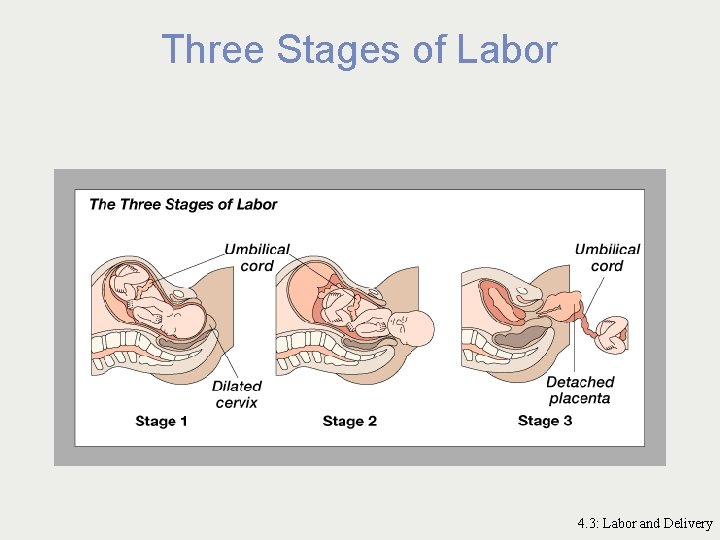
Three Stages of Labor 4. 3: Labor and Delivery
4. 3 Approaches to Childbirth • Childbirth classes provide information about pregnancy and childbirth • Childbirth classes teach pain control through deep breathing, imagery, and supportive coaching • Mothers who attend classes use less medication during labor and feel more positive about labor and birth
4. 3 Adjusting to Parenthood • Parents often reorganize old routines • Half of all new moms feel some irritation, resentment, and crying • 10 -15% feel more severe postpartum depression • Postpartum depression affects warmth and enthusiasm of mothering
4. 3 Birth Complications • Lack of oxygen (hypoxia): Often leads to surgical removal of the fetus (C-section) • Premature and Small-for-date infants • Prematurity is less serious than being small-fordate • Infant morality is relatively high in the United States compared to other industrialized countries
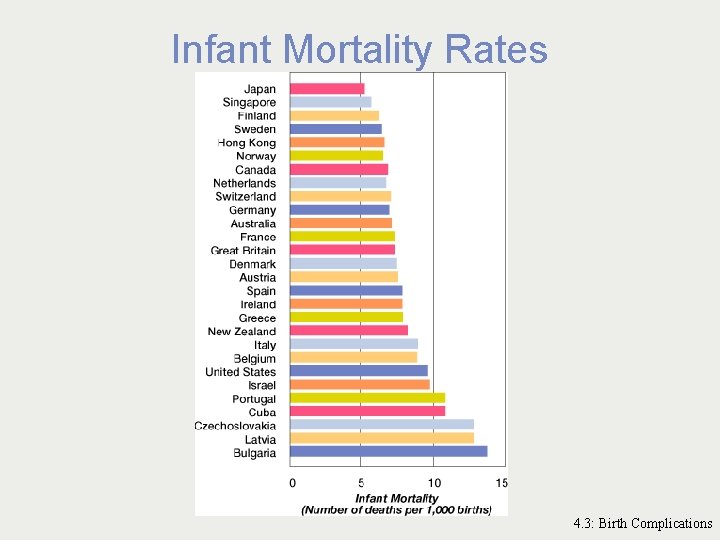
Infant Mortality Rates 4. 3: Birth Complications
4. 4 The Newborn Assessing the Newborn The Newborn’s Reflexes Newborn States Perception and Learning in the Newborn
4. 4 Assessing the Newborn • The Apgar assesses newborns’ health including activity, pulse, grimace, appearance, and respiration • The Neonatal Behavioral Assessment Scale (NBAS) is a comprehensive assessment of infants that includes measures of alertness and consolability
4. 4 The Newborn’s Reflexes • Newborns’ reflexes prepare them to interact with the world • Some reflexes are important to survival (e. g. , rooting and sucking) • Some protect the newborn (e. g. , blink and withdrawal) • Some are foundations for later motor behavior
4. 4 Newborn States • 4 primary states: alert inactivity, waking activity, crying, sleeping • 3 distinctive types of cries: hungry, mad, and basic • Half of newborns’ sleep is REM • Sleeping on one’s back may prevent SIDS
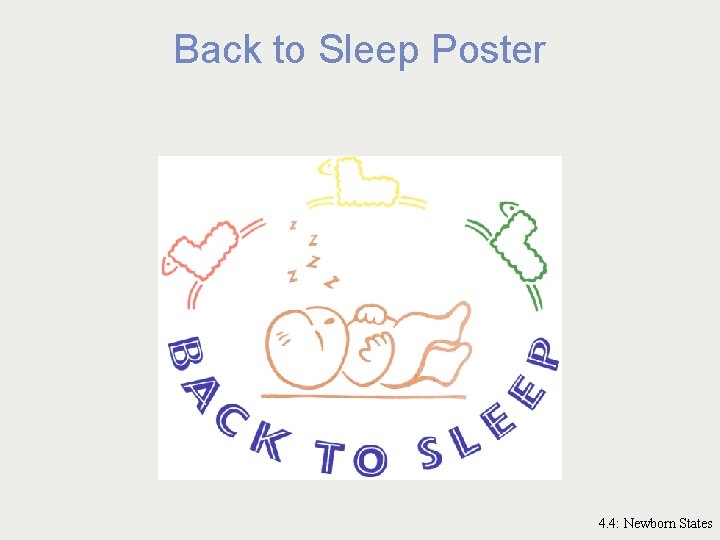
Back to Sleep Poster 4. 4: Newborn States
4. 4 Perception and Learning in the Newborn • All the basic perceptual processes are operating at birth • Newborns can see, hear, taste, smell, and feel • Newborns can also learn and remember
- Slides: 28