
Chapter 4 Poverty and Disrepute Book Deviant Behavior
Chapter 4: Poverty and Disrepute Book: Deviant Behavior, 12 th Edition Author: Erich Goode
Getting Started: Key Questions • What is the relationship between poverty and deviance? • What does poverty look like in the United States? • Why is poverty considered shameful, disgraceful, even contemptible? • What relationship does poverty have with other forms of deviance?
Poverty: A Cause or a Form of Deviance? Or Both? Poverty has both a relative and absolute dimension. • The degree of poverty varies from one society to another, and hence, so does the stigma that adheres to it. • Poverty is absolute because, among the poverty-stricken everywhere, illness and premature death are more common. • Virtually everywhere, the well-off assume the poor to be less moral, less trustworthy, more likely to engage in criminal behavior.
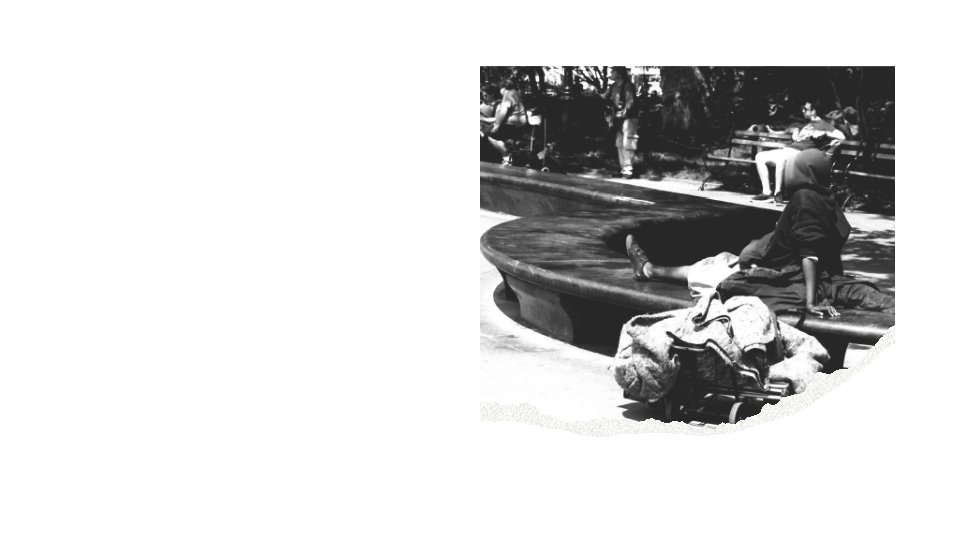
The Affluent Stigmatize the Poor Poverty “carries with it a moral stain as vexing as material uncertainty itself. ” – David Harvey • For many, success implies virtue, and poverty implies failure. • Failure is widely considered a sign of immorality. Poor people are typically blamed for their poverty, considered inferior, not only by the well-off but also by themselves. • Poverty is stigmatized, shamed, despised. • The homeless and impoverished are unwelcome in most affluent neighborhoods; they are discouraged from entering them.
Perspectives on Poverty and Stigma: Malthus and Weber Thomas Malthus – Suggested the poor should starve to death as a means of population control. Max Weber – Social strata adapt religious beliefs to their own socioeconomic needs. • He referred to this tendency as elective affinity. • Privileged classes adapt religious doctrines to pronounce that the poor are responsible for their poverty. • And the poor interpret their poverty as the will of God, anticipating their reward in heaven.

Perspectives on Poverty and Stigma: David Matza argued that, while all poverty is disreputable, the poor consist of three layers, indicating degrees of disrepute. • The most disreputable are those who refuse to work, are disaffiliated, remain on the margins of society by choice, and cause the most problems for the society, including crime and delinquency, mental illness, and are content to live a life of squalor, demoralization, and pauperization.
Contemporary Perspectives on Poverty and Stigma. • Melvin Lerner: the just world hypothesis suggests that people (rich or poor) get what they deserve, leading to victim blaming. • Amartya Sen and Diego Zavaleta Reyles: poverty leads to self-stigmatization, “the inability to appear in public without shame, ” and ‘is associated with laziness, incompetence, or criminality. ” • Loïc Wacquant: stigmatized populations experience advanced marginality, hypersurveillance, and the “penalization of misery. ”
Poverty in the United States America’s income distribution is the most inequitably distributed among the dozen most industrialized nations of the world (GINI. 480 in 2019)—and it is becoming more maldistributed over time. • The median American income decreasing. • The wealthiest Americans are becoming increasingly wealthy. The nation’s poorest regions also rank among the lowest in education.
Poverty in the United States: Recent Changes Poverty, as defined by the U. S. Government, means lacking the resources to meet basic nutritional needs for healthy living. • 2016: Federal poverty threshold: • 2 -person household: $16, 151 • 4 -person household: $24, 339 • The poorest cities are in the Midwest “Rustbelt. ” • Rural poverty is especially pronounced.

Unemployment figures do not include: • Discouraged workers • Part-time and underemployed • When unemployment benefits run out • “Shadow” economy • Incarcerated workers Unemployed laborers have elevated incidence of depression, self-injury (parasuicide), and suicide.
Welfare The higher social strata consider welfare recipients lazy, and undeserving poor. • To receive welfare, poor people endure rituals of degradation. Related types of stigma: • internalization, or the belief among the poor that they deserve to be stigmatized. • anticipation of future stigma and hence, a low image of themselves.
The Indignity of Begging “Begging combines indignity of admitting to being impoverished with humiliating oneself by abjectly asking someone else for small sums of money. "
Homelessness Short-term homelessness is both widespread and commonplace. Long-term homeless tend to be more common among men - many previously incarcerated, with relatively low educational attainment, significant mental health issues, and drug use problems. NIMBY, or “not in my back yard, ” is the mentality that seeks to keep deviant, undesirable people out of a given community.
Poverty and Health and wellness inequality influences who gets to grow old. • Poor people are at a higher risk of disease and debilitating mental disorders. • Poverty and income inequality both impact lifespan. • Poverty deprives people of the opportunity to participate fully in society. Goffman – illness leads to disqualification “from full social acceptance. ”
Poverty and Race in the United States Compounded deprivation is the aggregative impact of racism, being poverty-stricken, living in a poor neighborhood, etc. • Racism exacerbates the corrosive impact of poverty. • African Americans and Latinos are more likely to live in predominantly poor neighborhoods than whites • Mental health and well-being are negatively impacted. • Economic advancement for African Americans generally does not reduce prejudice.

Summary Poverty is a deviant condition. • Poor people are stigmatized, especially in achievement-oriented cultures. • Poverty is further punished through surveillance, incarceration. • Poverty rates fluctuate. • Americans believe poor are to blame for their poverty. • Racism exacerbates poverty, causing compounded deprivation.
- Slides: 16